Skip to content
Plant Care Basics
  • Plants A-Z
  • Problems and Fixes
    • Root Rot and Overwatering
    • Pests and Diseases
    • Yellow Leaves
    • Brown Tips and Spots
    • Drooping and Wilting
    • Not Growing or Leggy
  • How-To Guides
    • Watering
    • Soil and Potting Mix
    • Repotting
    • Propagation
    • Pruning and Training
    • Light and Fertilizer
    • Identify and Compare
    • Complete Care Guides
    • More Guides
  • Pet Safety

Pothos Care

Home » Pothos Care

Pothos care: proven light, water and soil habits for full-size leaves (2026 Masterclass)
September 19, 2026 by PANG NAM FUI
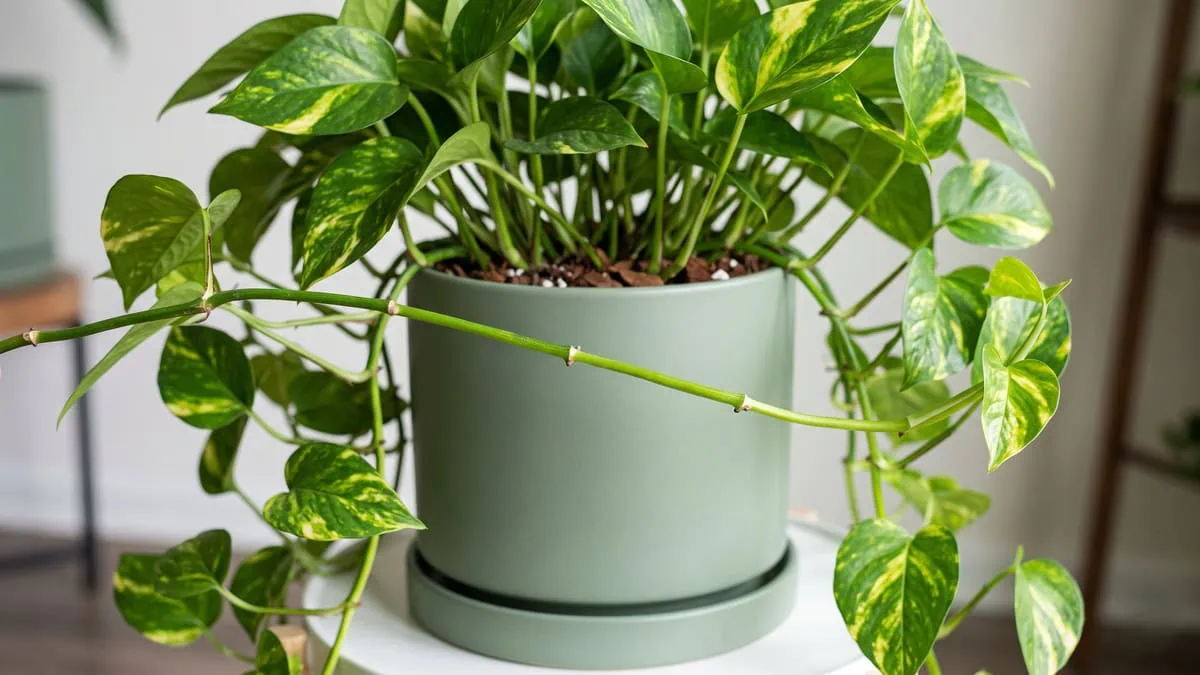
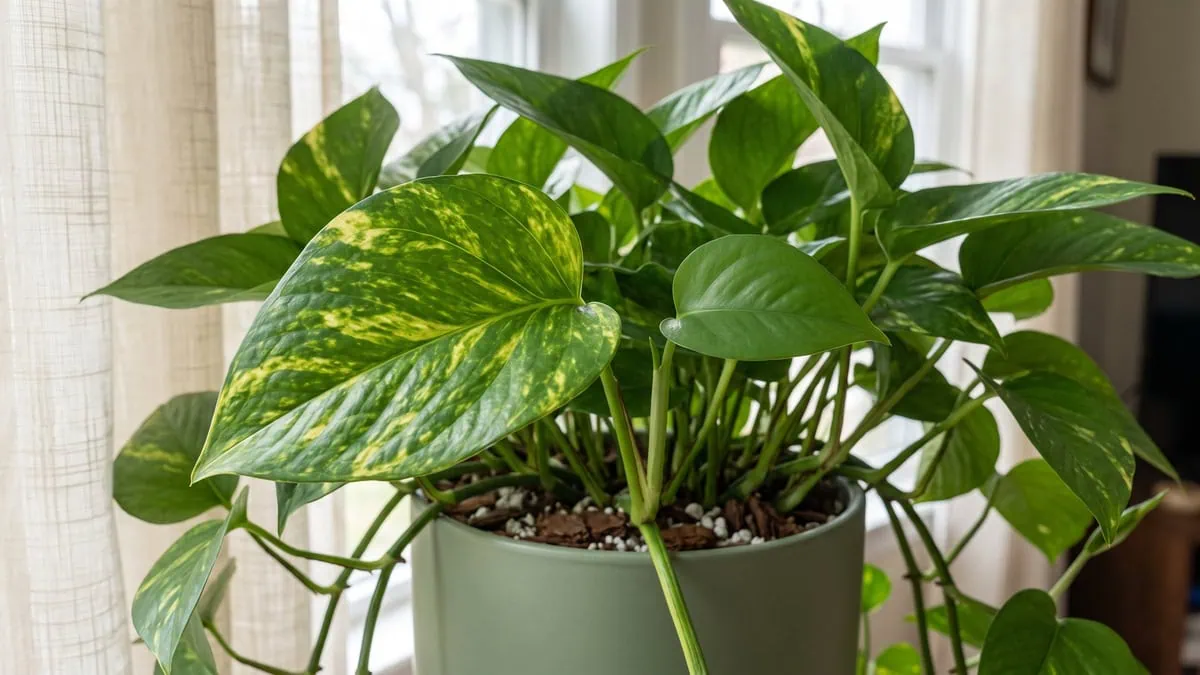
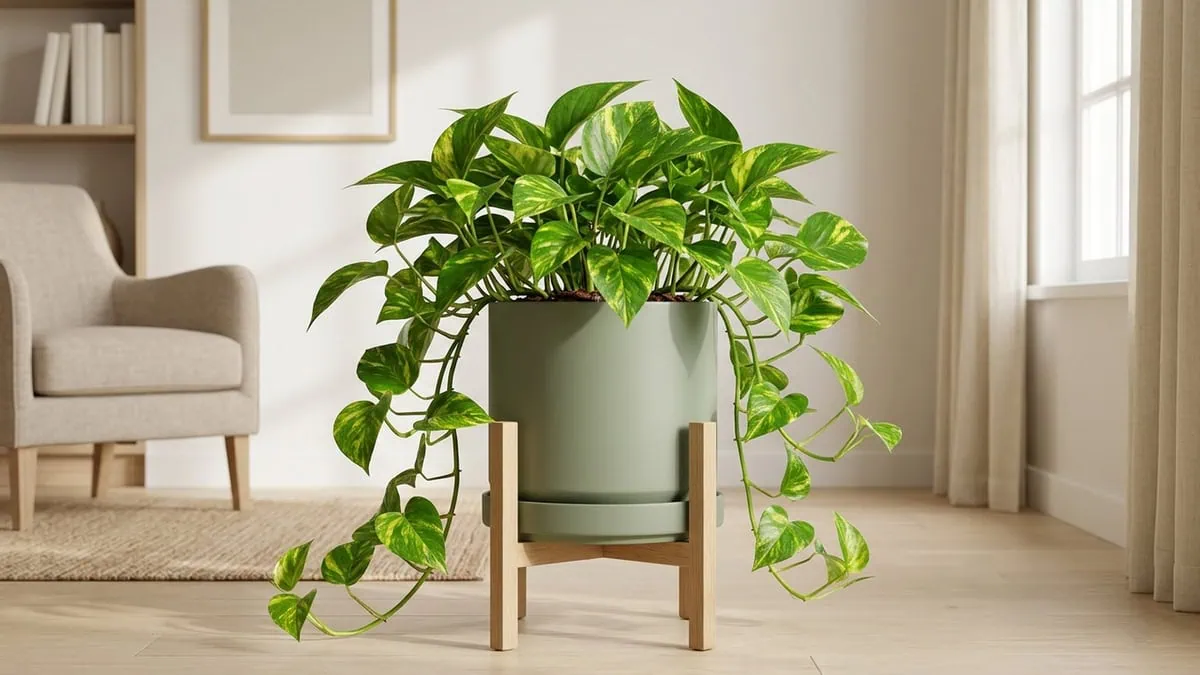
Pothos care at its best: a full, thriving golden Pothos trailing from a shelf in a bright, warm living room.

Caring for a Pothos comes down to three habits I keep every week. I water on dry-down instead of a schedule, hold it in bright indirect light, and pot it in a mix with real air in it. That is what brings the leaves in at full size.
Categories Pothos Care

Home » Pothos Care

Why is my Pothos turning yellow? Read the leaf, then the soil — the 3-check test

September 19, 2026 by PANG NAM FUI
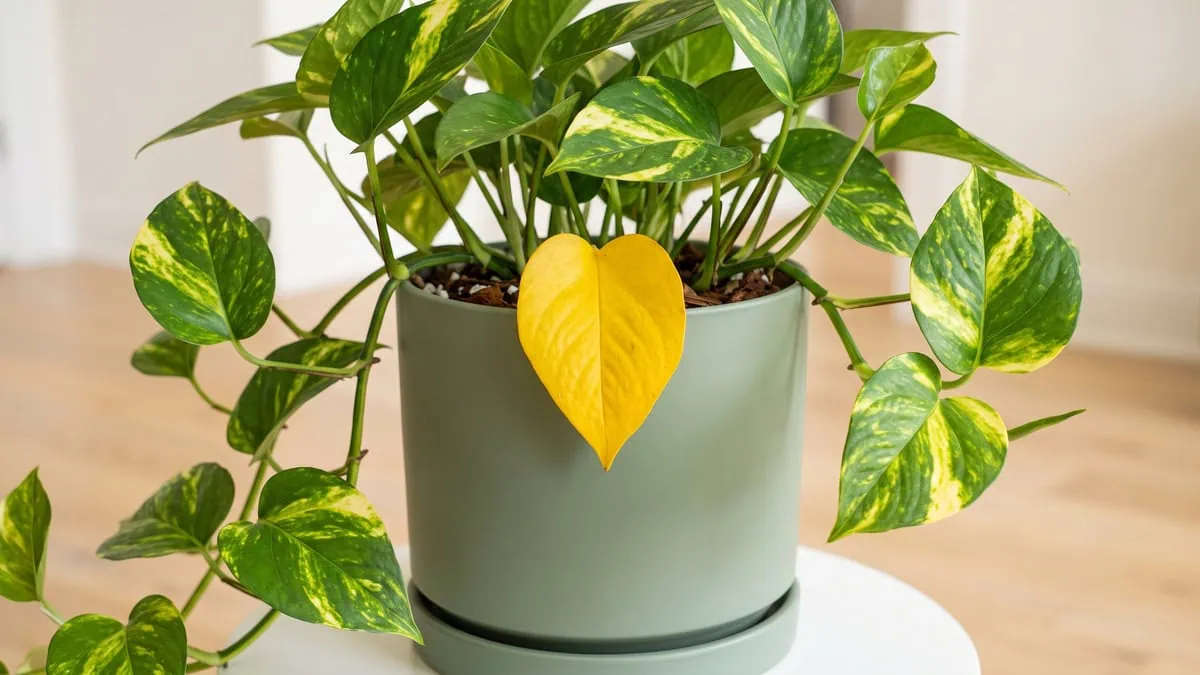
Why is my Pothos turning yellow: a golden Pothos carrying yellowed leaves above its pot of damp mix.

A yellow leaf on a Pothos is a reading, not a verdict. I check which leaves turned, how many went at once, and how wet the mix still is underneath, because one low leaf and five at once mean two different things.

Categories Pothos Care

Home » Pothos Care

How to save a Pothos from root rot: the firm-root check and the rescue order

September 11, 2026 by PANG NAM FUI
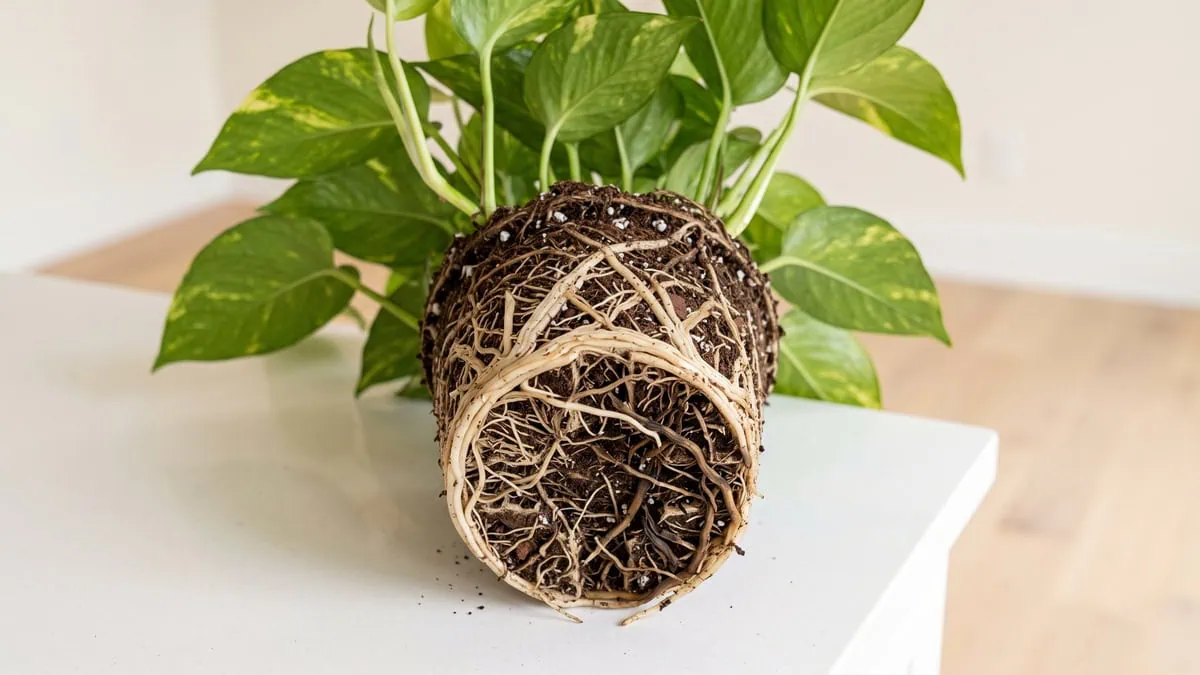
How to save a Pothos from root rot: a rinsed root ball showing firm white roots beside blackened rotted ones.

A Pothos with rot still comes back if about half its roots are firm. I squeeze them first, cut only what is hollow, then move the plant into a pot sized to what survived rather than to the leaves above it.

Categories Pothos Care

Home » Pothos Care

How often to water a Pothos? The dowel test that reads the whole pot

September 19, 2026 by PANG NAM FUI
How often to water a Pothos: a dowel drawn from the pot with a clear line between damp dark wood and dry.

Watering a Pothos on a schedule is what kills it. I push a slim dowel to the bottom of the pot and read the damp line instead, because the surface dries days before the mix around the deepest roots does.

Categories Pothos Care

Home » Pothos Care

How to fix a leggy Pothos: where to cut, how far back, and what regrows

September 19, 2026 by PANG NAM FUI
How to fix a leggy Pothos: one bare, stretched vine standing out from an otherwise full golden plant.

A stretched Pothos is really a light problem, and pruning is what finishes it rather than what starts it. I measure the gap between two leaf joints, cut just above a node so the dormant bud below wakes up, then leave the plant alone through a quiet few weeks.

Categories Pothos Care

Home » Pothos Care

How to propagate Pothos from cuttings step by step — first roots in 1 to 2 weeks

September 19, 2026 by PANG NAM FUI
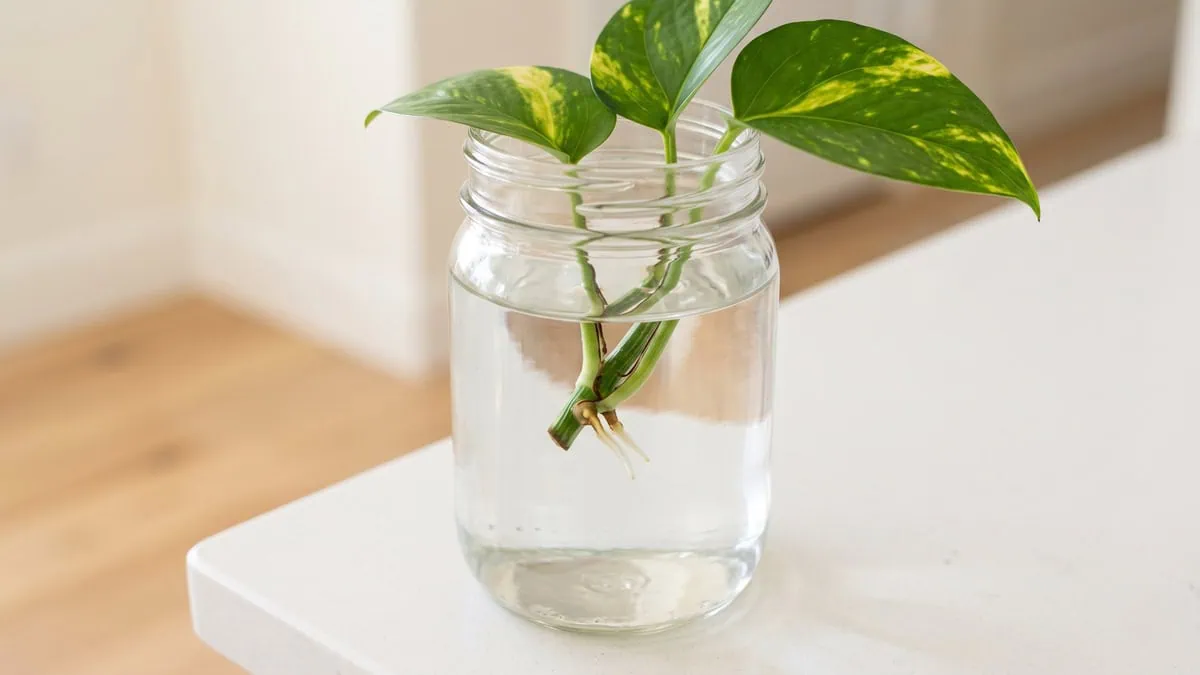
How to propagate Pothos from cuttings step by step: one cutting in water with first white roots at the node.

A Pothos cutting roots in water within one to two weeks if it carries a node. I cut just below one, strip the leaf that would sit under the waterline, keep every node submerged, and refresh the jar each week until roots show.

Categories Pothos Care

Home » Pothos Care

How to get rid of mealybugs on Pothos: clear the leaf axils, then hold the schedule

September 11, 2026 by PANG NAM FUI
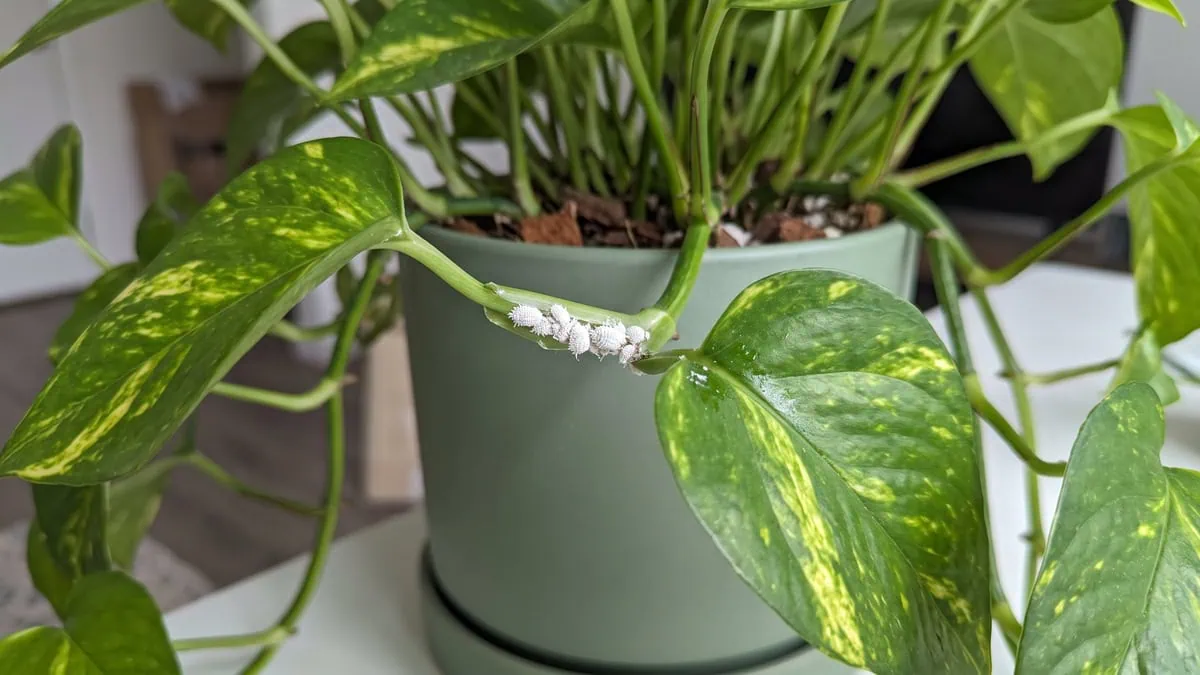
How to get rid of mealybugs on Pothos: a white waxy cluster lodged in a leaf axil on an undamaged stem.

A single pass never settles mealybugs, because the insects sit deep in the leaf joints where a mist cannot reach them. I clear those joints by hand with alcohol on a cotton bud, then hold a fixed repeat until new foliage comes in unmarked.

Categories Pothos Care

Home » Pothos Care

Why does my Pothos have brown spots? Water-soaked lesion or dry scorch

September 11, 2026 by PANG NAM FUI
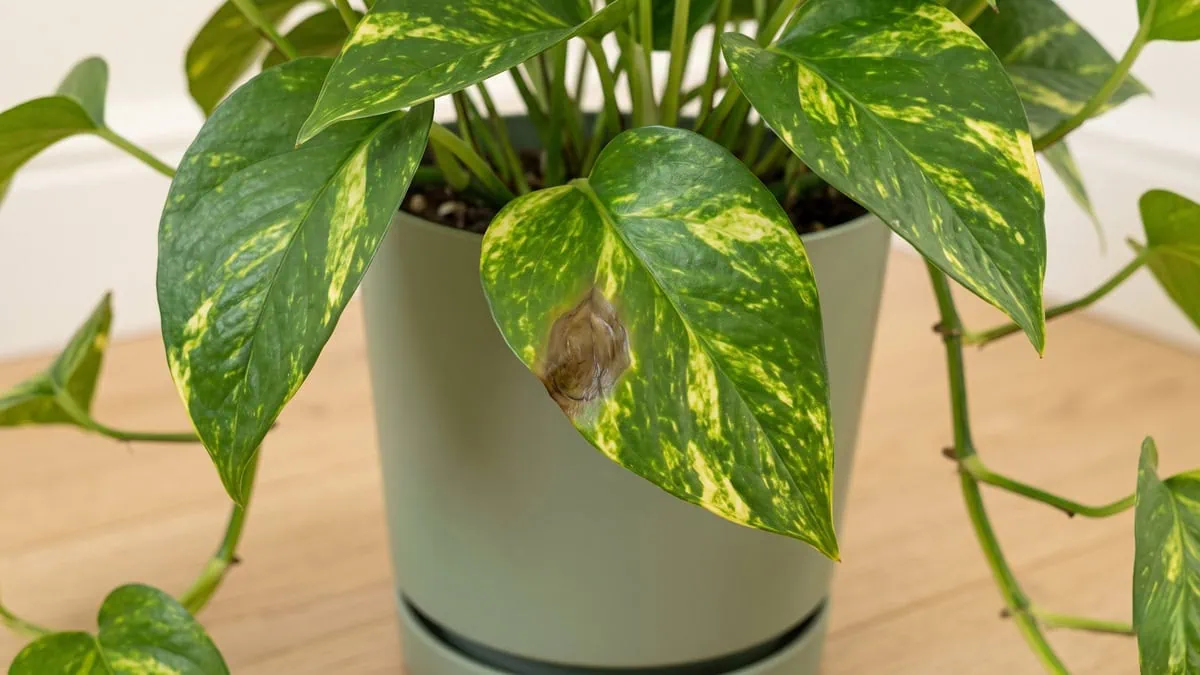
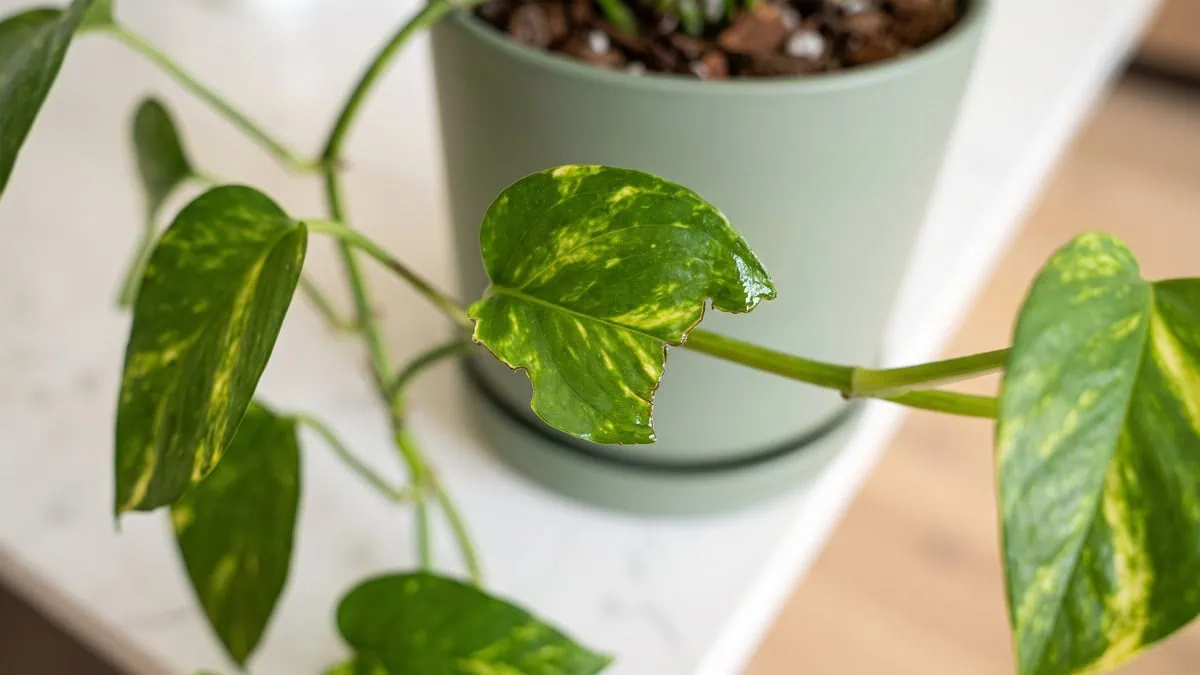
Why does my Pothos have brown spots: a macro of one brown mark on a leaf, its texture and edge readable.

Two very different problems leave brown spots on this vine, and the boundary of each mark is what separates them. I look at whether the rim is limp and wet or hard and papery, then whether a pale ring around it is still advancing.

Categories Pothos Care

Home » Pothos Care

How much light does a Pothos need? Foot-candle bands — window by window

September 19, 2026 by PANG NAM FUI
How much light does a Pothos need? Light requirements read on one vine: a marbled leaf beside a small green one.

A Pothos survives in far less light than it needs to look good, which is why one number never answers this. I work in three bands instead, and I read which one a plant is in from the size of the newest leaves.

Categories Pothos Care

Home » Pothos Care

How to identify Pothos varieties: a visual identification key for one plant in hand

September 11, 2026 by PANG NAM FUI
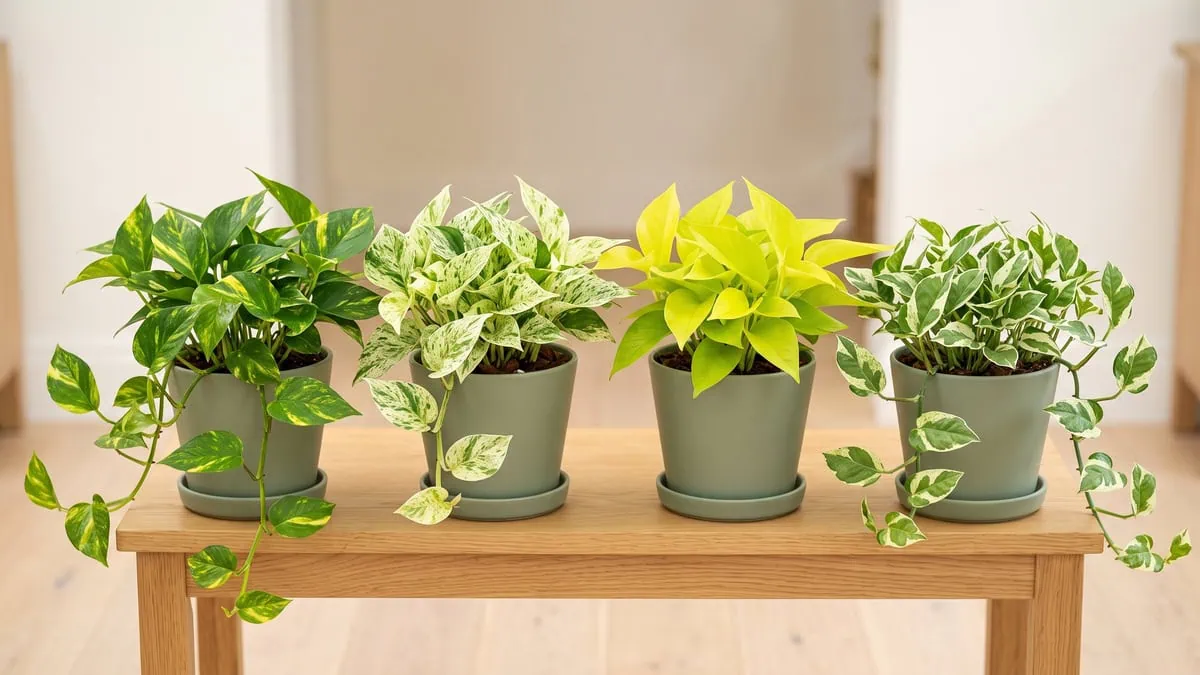
How to identify Pothos varieties: four whole potted plants side by side on one table, one of each kind.

Naming a Pothos variety takes four leaf characters read in a fixed order, not a photo match. I work through them one at a time on a settled leaf, and I say so plainly when a plant is still too young to call.

Categories Pothos Care

Home » Pothos Care

Pothos vs Philodendron: 3 fingertip checks to identify yours

September 11, 2026 by PANG NAM FUI
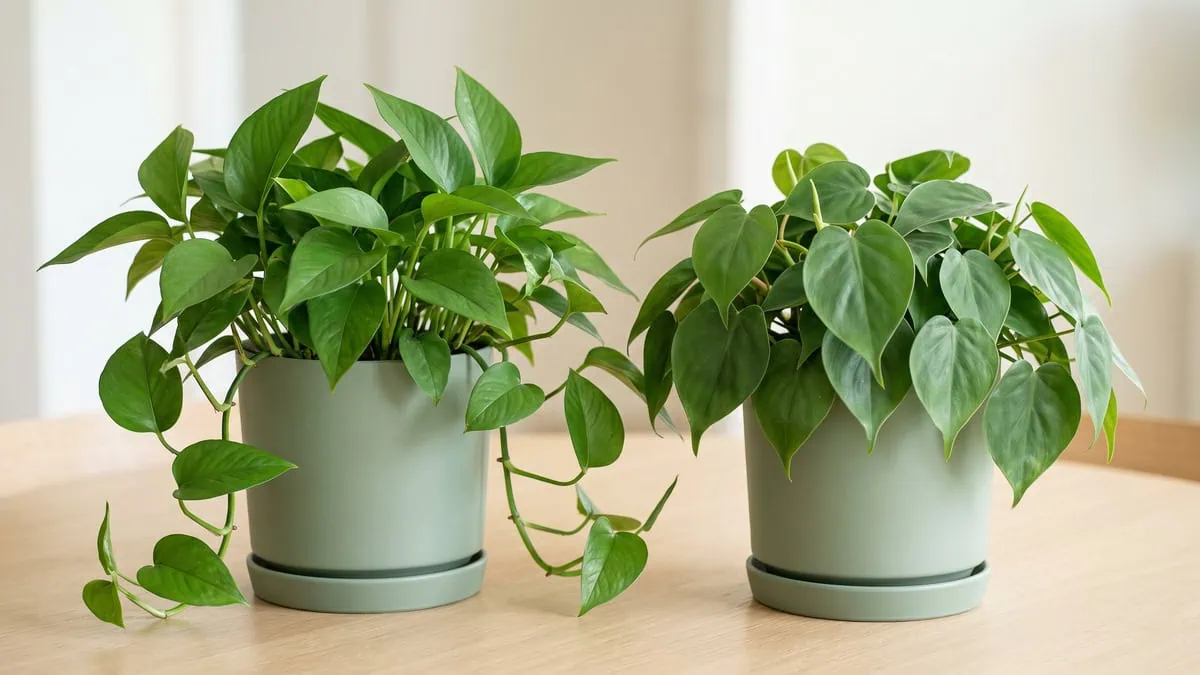
Pothos vs Philodendron compared side by side on one table, a golden Pothos beside a heart-leaf Philodendron.

Telling a Pothos from a Philodendron takes one fingertip and about ten seconds. I check the node for aerial roots, then run a thumb down the stalk for the groove, and the answer holds even when no new leaf is opening.

Categories Pothos Care

Home » Pothos Care

How to repot a Pothos without killing it: step by step, root ball intact

September 19, 2026 by PANG NAM FUI
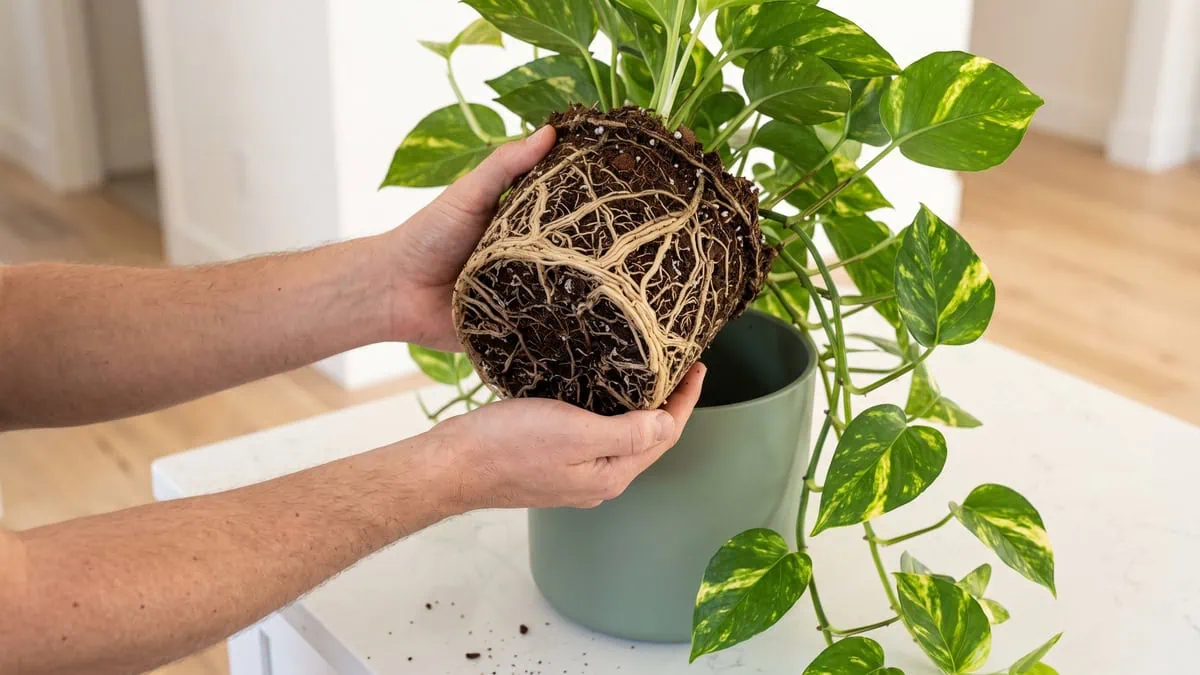
How to repot a Pothos without killing it: repotting with two hands, the intact unrinsed root ball eased out.

Most of the damage done in a repot comes from washing the roots off and from sizing the new pot up too far. I keep the root ball whole and unrinsed, go one pot size up and no further, then set the plant back in the exact spot it already lived in.

Categories Pothos Care

Home » Pothos Care

How to train a Pothos on a moss pole: install, tie and moisture in order

September 11, 2026 by PANG NAM FUI
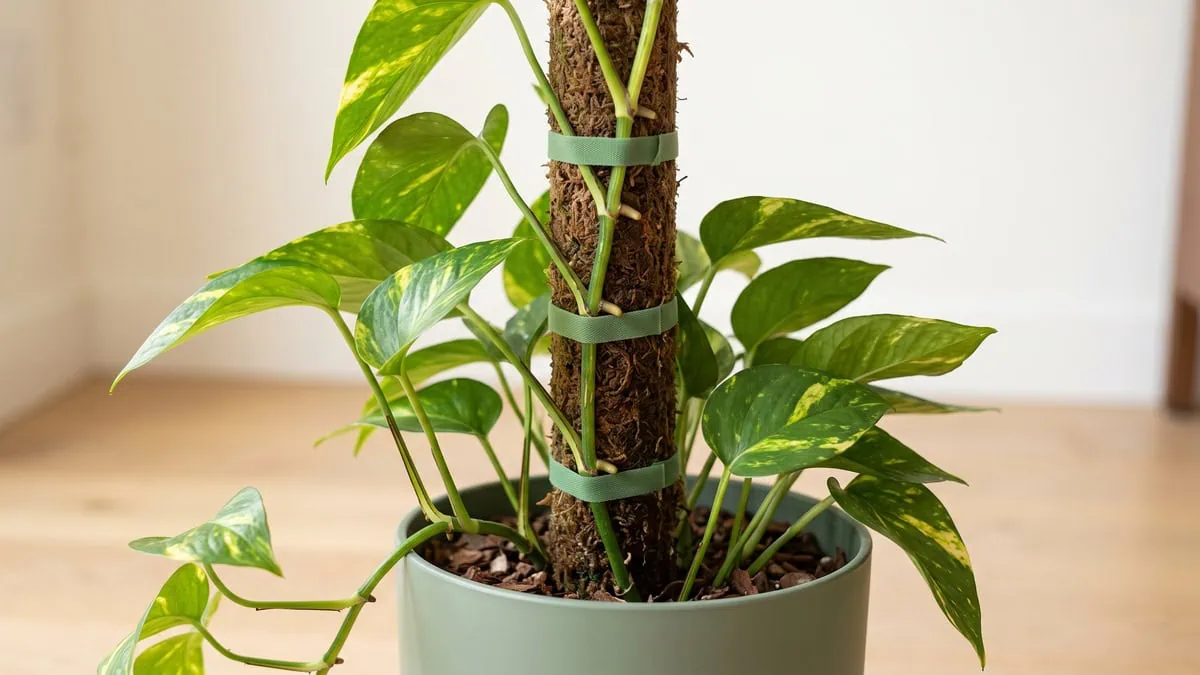
How to train a Pothos on a moss pole: vine nodes pressed against damp moss and held by slack green ties.

Training this vine up a moss pole works by gripping rather than leaning, so a dry column gives its aerial roots nothing at all to hold. I wet the surface before anything else, press each joint against it, and leave every fastening loose.

Categories Pothos Care

Home » Pothos Care

Why is my Pothos curling and drooping? The 2-inch soil test that settles it

September 11, 2026 by PANG NAM FUI
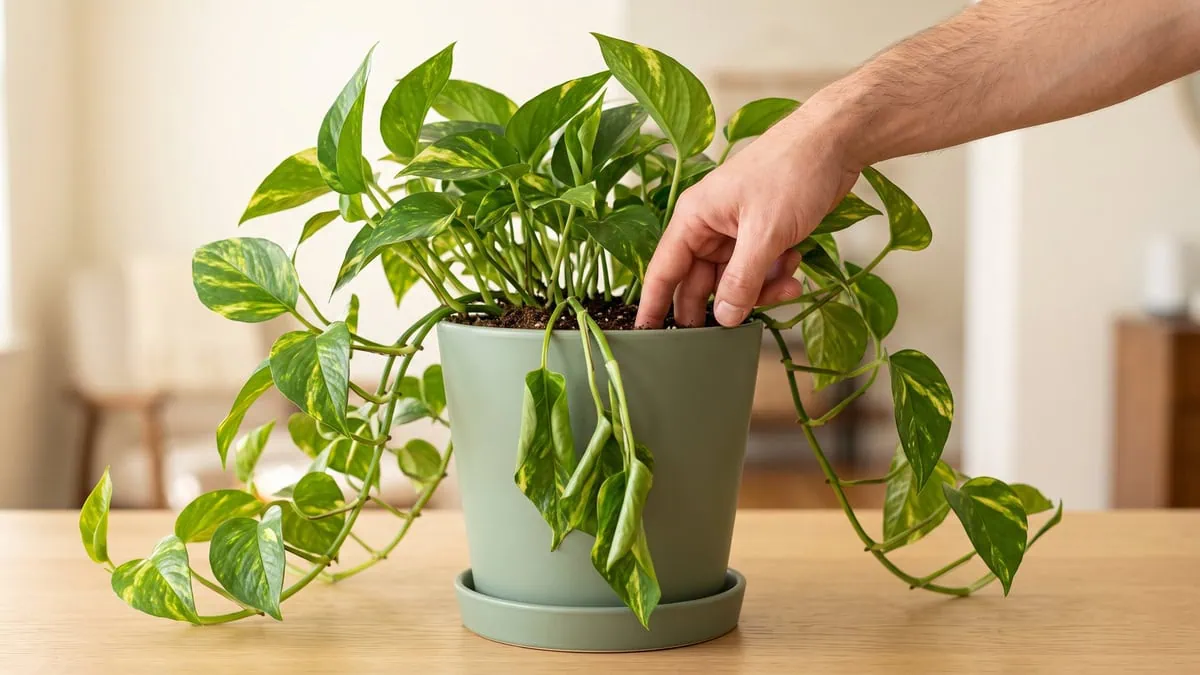
Why is my Pothos curling and drooping: a hand testing the mix while a limp inward-curled vine hangs over the rim.

A limp curled Pothos looks the same whether the mix is soaked or bone dry, so the leaf cannot answer this on its own. I go two inches into the medium and lift the pot, and those two readings together settle it.

Categories Pothos Care

Home » Pothos Care

Is Pothos toxic to cats and dogs? The signs, the timeline, the fix

September 19, 2026 by PANG NAM FUI
Is Pothos toxic to cats and dogs: a trailing vine with one leaf freshly torn at the edge, the tear faintly damp.

A Pothos carries needle-shaped crystals in its leaves and stems, and a pet that chews one feels it at the mouth within minutes. I keep the chewed piece, rinse the mouth, and put the plant somewhere a curious animal cannot reach.

Categories Pothos Care

Home » Pothos Care

What is the best soil for a Pothos? The 1:1:1 mix and the 30-second drain test

September 19, 2026 by PANG NAM FUI
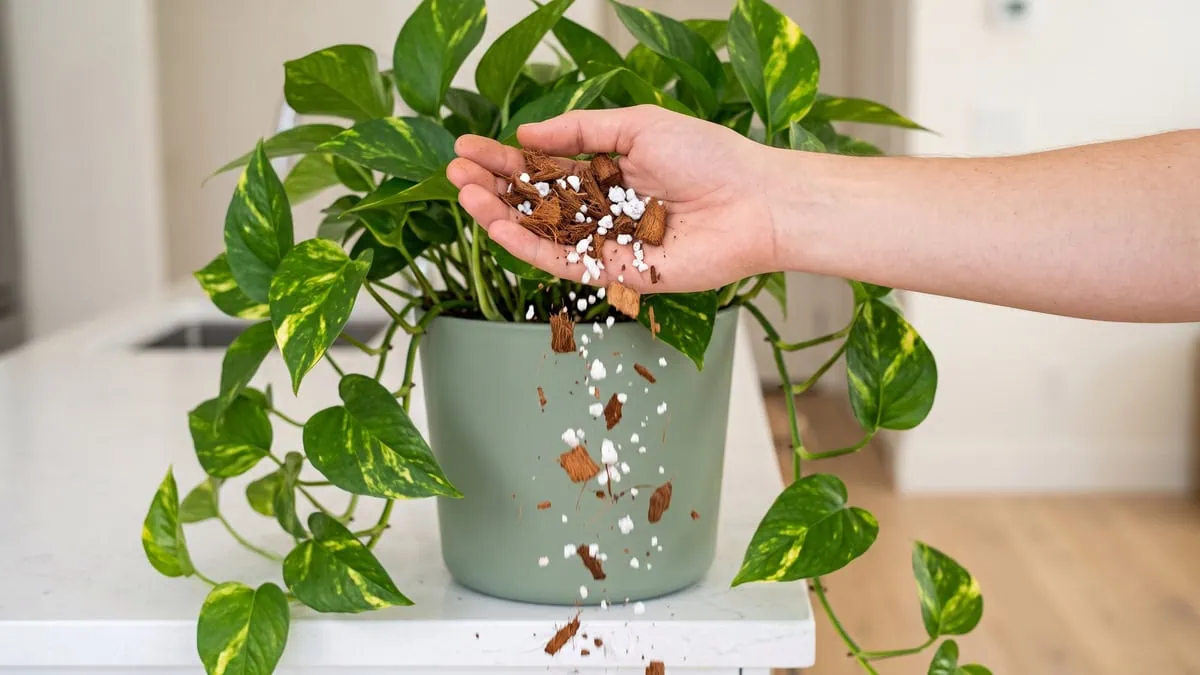
What is the best soil for a Pothos: a hand releasing mixed coir, bark and perlite, the particles falling loose.

A Pothos wants a mix with air in it, which ordinary bagged potting soil does not have on its own. I build it from equal parts coir, bark and perlite, then prove the result with a clock rather than trusting the recipe.

Categories Pothos Care
PANG NAM FUI, founder of Plant Care Basics and plant care expert.

Hi, I'm Pang. Founder of Plant Care Basics. I share simple, well-researched advice to help beginners develop a green thumb. Welcome to my green corner!

You May Also Like

Is a snake plant toxic to cats and dogs? A Dracaena trifasciata with a pet-chewed lower leaf indoors.

Is a snake plant toxic to cats and dogs? Yes, but rarely an emergency

My cat mouthed a low leaf, and I learned my snake plant is toxic to cats and dogs in a mild, soap-like way that upsets the gut for a day. I cover the poisoning symptoms, what to do at home, and the height trick that keeps my curious pets out of reach.
Peace lily varieties and how to identify them: a twelve-cell grid, one distinct selection standing in each cell.

Peace lily varieties and how to identify them: the three traits you can see

Three visible traits name a selection, and I read them in order: the white marking pattern, then the blade surface, then two measurements taken with a plain rule. No flower is needed and no root ball comes out of the pot, which is why an unlabeled shelf plant is rarely a mystery.
Best soil mix for a parlor palm in a pot: three ingredient piles laid out side by side in proportion.

Best soil mix for a parlor palm in a pot: one-third aggregate, by volume

Potting soil straight from the bag packs down and holds water long after a parlor palm has finished with it. I show what a blend that breathes looks like, how I pick the container size before the material, and the pale film that says the medium is spent.
Aloe vera vs other Aloe plants how to tell them apart: four rosette succulents side by side in their own pots.

Aloe vera vs other Aloe plants how to tell them apart — the four cues that decide it

Four Aloe look-alikes sit on one shelf and only one is the true species. I work through the rosette and its short stem, the speckling that fades with leaf age, the margin read side by side, and why the name on the pot settles nothing at all.
Why are my Phalaenopsis orchid leaves wrinkled and limp — a moth orchid with soft, accordion-folded, downward-folding leaves.

Why are my Phalaenopsis orchid leaves wrinkled and limp? The root-first answer

Wrinkled, limp Phalaenopsis leaves almost always trace to the roots, not thirst. I read root color through the clear pot, lift it for weight, and finger-test the bark before watering — then I sort normal yellowing from rot. Inside is the full triage that separates over-watering from a plant that is simply dry.
Why does my fiddle leaf fig have brown edges and patches? One leaf shows a dried, shrunken edge.

Why does my fiddle leaf fig have brown edges and patches? Read the soil first

A browning edge sends most people to the leaf, and I go to the pot instead. This guide runs the two-inch check that settles it, separates a salt crust and dry air from a dry root zone, and shows exactly how far along a dead edge I am willing to trim.
Why is my ZZ plant turning yellow: a Zamioculcas zamiifolia yellowing from its lower leaflets up in a terracotta pot.

Why is my ZZ plant turning yellow? Read the leaf pattern first

A yellowing ZZ leaflet used to send me reaching for the watering can, which only made things worse. On a ZZ, the yellow almost always traces back to soggy soil rotting the rhizome, not thirst. I walk you through the three-look pattern check that points to the one real cause before you water again.
How to fertilize a parlor palm without salt buildup: a white crust ringing the medium surface and the pot rim.

How to fertilize a parlor palm without salt buildup: strength, timing and flushing

Salt buildup is a feeding habit, not bad luck. I cut the liquid feed to half strength, measure it into the can rather than pouring by eye, and flush the container through with clear water long before a white crust reaches the pot rim.

  • Privacy Policy
  • Cookie Policy (EU)
  • Terms of Service
  • Image License
  • About Us
  • Contact Us
  • Sitemap
© 2026 Plant Care Basics. All Rights Reserved.
Manage Consent
To provide the best experiences, we use technologies like cookies to store and/or access device information. Consenting to these technologies will allow us to process data such as browsing behavior or unique IDs on this site. Not consenting or withdrawing consent, may adversely affect certain features and functions.
Functional Always active
The technical storage or access is strictly necessary for the legitimate purpose of enabling the use of a specific service explicitly requested by the subscriber or user, or for the sole purpose of carrying out the transmission of a communication over an electronic communications network.
Preferences
The technical storage or access is necessary for the legitimate purpose of storing preferences that are not requested by the subscriber or user.
Statistics
The technical storage or access that is used exclusively for statistical purposes. The technical storage or access that is used exclusively for anonymous statistical purposes. Without a subpoena, voluntary compliance on the part of your Internet Service Provider, or additional records from a third party, information stored or retrieved for this purpose alone cannot usually be used to identify you.
Marketing
The technical storage or access is required to create user profiles to send advertising, or to track the user on a website or across several websites for similar marketing purposes.
  • Manage options
  • Manage services
  • Manage {vendor_count} vendors
  • Read more about these purposes
View preferences
  • {title}
  • {title}
  • {title}