
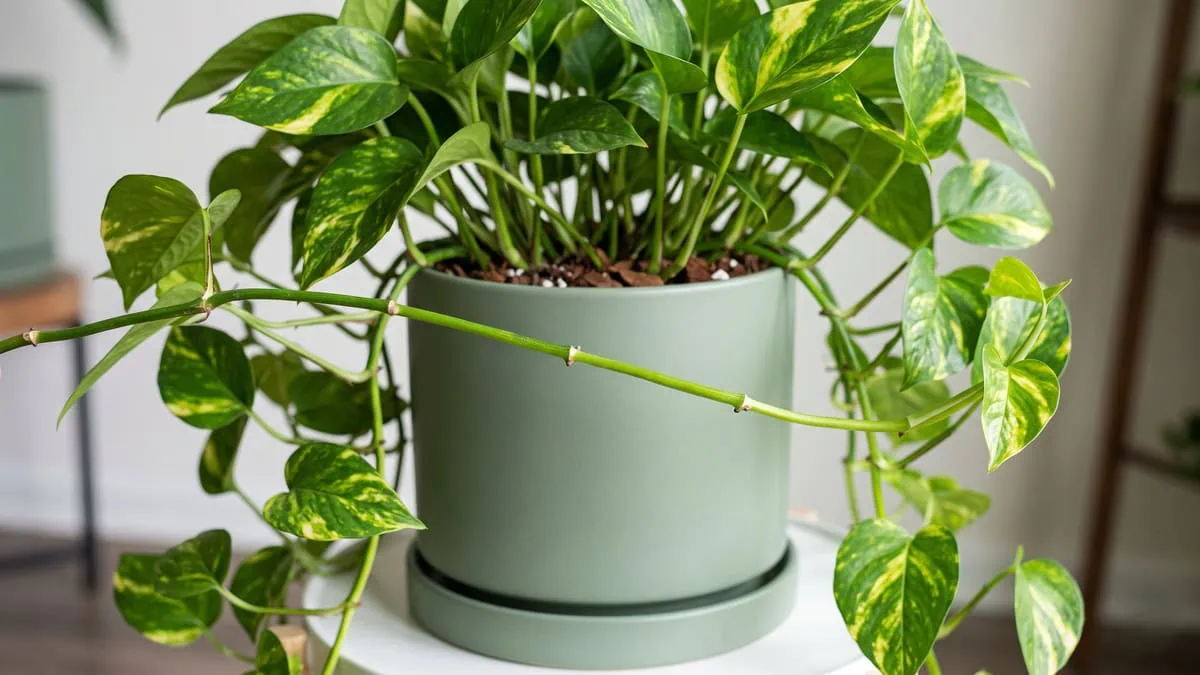
🎯 Quick Answer: fixing a leggy Pothos
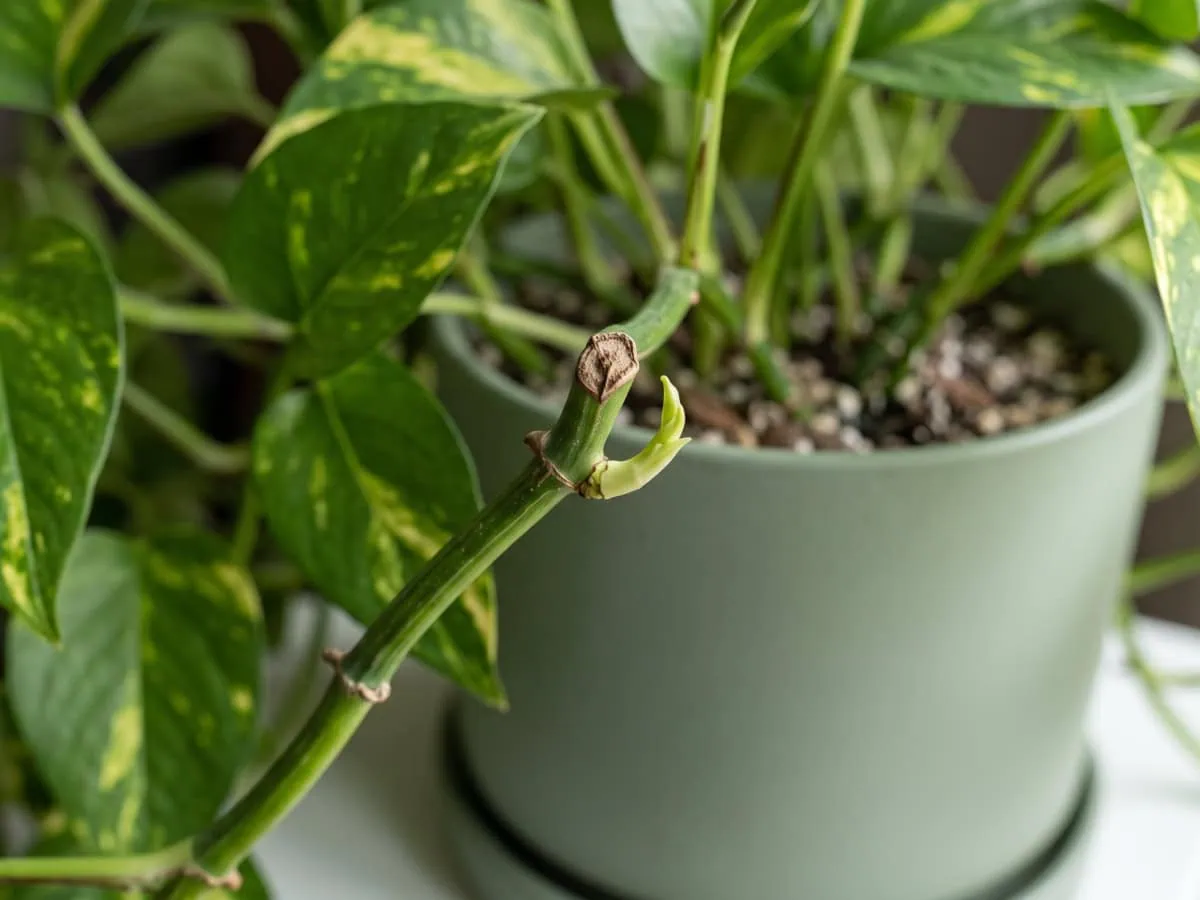
How to fix a leggy Pothos — Epipremnum aureum, family Araceae — is cut placement, or the stub dies. Leave 1/16 to 3/16 inch above a node. Legginess is stretched internodes, not length. Take no more than a third, leaving leaves behind. Fresh shoots break low in about three weeks.
- Measure two gaps: compare newest leaf spacing against the oldest growth
- Read the bare nodes: crescent scars mean leaves fell and will not return
- Clean nodes: smooth joints mean leaves never formed there, so light is short
- Feel for the joint: a slight swelling marks every node on a leafless stem
- One vine stays one vine: fullness comes from adding stems, not from care alone
A three-foot cord of bare green stem, one tuft of leaves stranded at the far end, nothing in between — that was vine after vine of my Pothos inside a single year. Each weighed less in the hand than the empty pot it grew in.
Let me try that again. I blamed the pruning I had skipped. Instead of cutting harder, I realized the gap between two leaf joints was the reading that mattered: that internode stretches when light runs short, and the axillary bud at each node stays dormant while the growing tip is still attached.
That one reading splits every stretched vine into two cases, and each case takes a different cut. Get the placement right and a bare stem rebuilds itself. Get it wrong and you lose the segment along with the wait, so it is worth knowing the wider care picture a pruned vine returns to.
Nothing in this job is complicated. Every number the whole thing turns on is collected immediately below, before a single cut.
How to fix a leggy Pothos at a glance
| Pothos specs | What to do or expect |
|---|---|
| Cut placement | Just above a node, 2-5 mm of stem left above the joint |
| Maximum removal in one session | Up to one third of the plant at once, never all the leaves |
| Regrowth signal | Fresh shoots low on the plant in about three weeks |
| Sharpened snips wiped down before the cut? | Yes |
| Will lost leaves return on the same bare segment? | No – that segment reroots or comes off |
Tap the button below to get more plant fixes in your Google Search results

Table of Contents
Read the stem before you reach for the scissors
Legginess is a measurement, not a look, and the following sections turn it into two readings you can take.
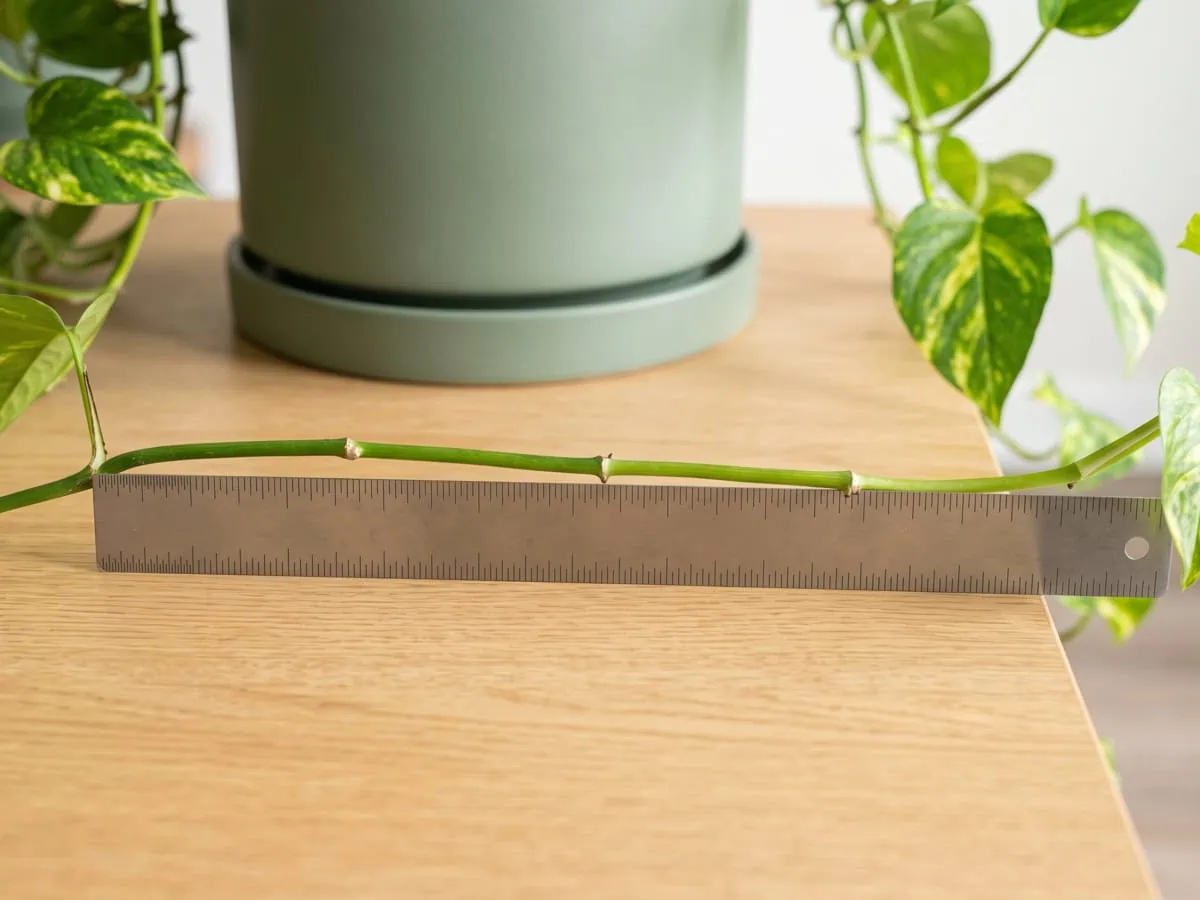
Measure the gap between two leaf joints
One number separates a stretched vine from a healthy one: the length of bare stem sitting between two leaf joints, a span most care pages describe and never measure, so take the reading off your own plant instead.
Do it in three moves:
- Measure the bare stem between two leaf joints on the newest growth.
- Measure the same span low on the vine, on growth made before the plant moved.
- Compare the two. A wider new gap means the stretch is happening now.
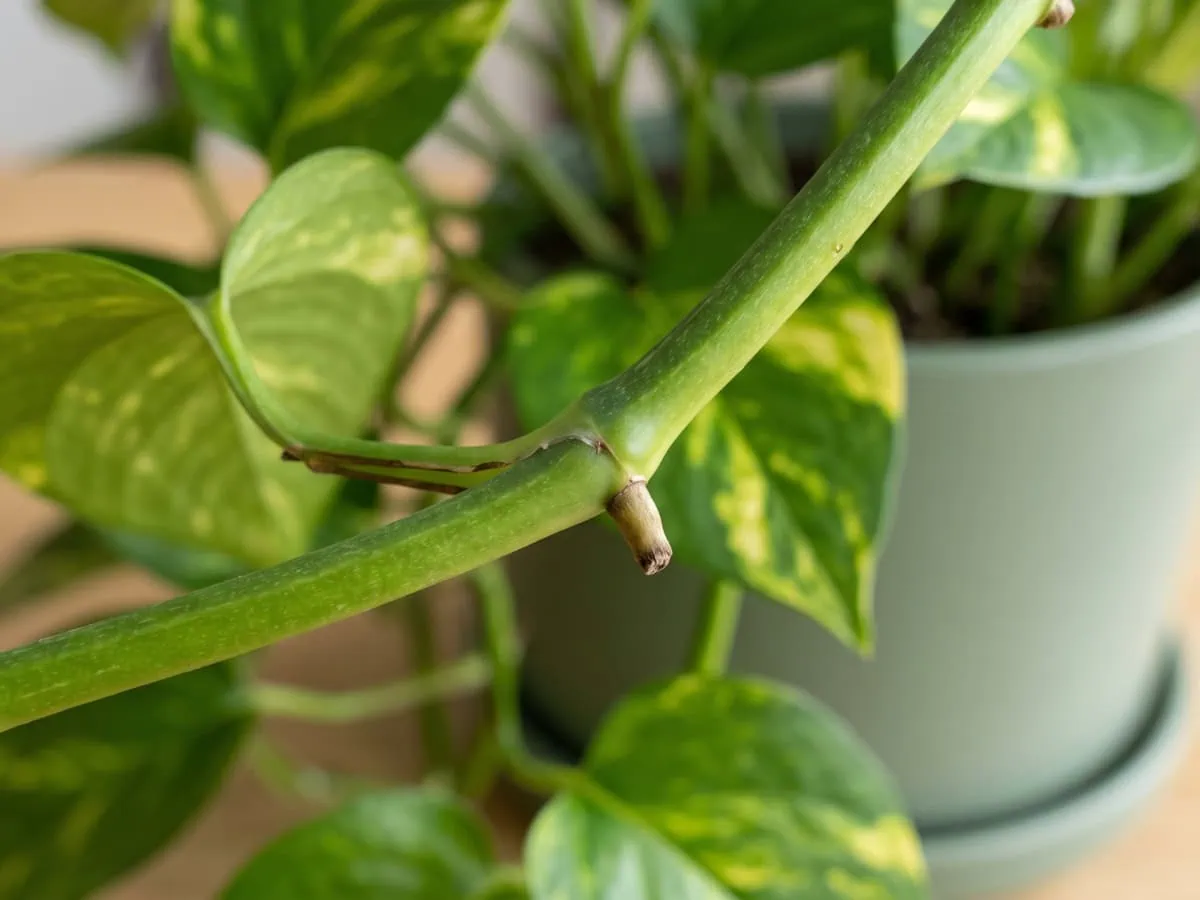
- Node: the slightly swollen joint where a leaf attaches and a root can start.
- Internode: the bare stem between two nodes, and the part that stretches.
Length on its own will fool you. One long vine is this plant’s ordinary architecture, so a six-foot runner proves nothing about its health by itself. What the comparison catches is how much light this vine actually needs to hold its spacing.
Check the bare nodes for leaf scars
Run a fingertip down the bare stretch. Look hard at each joint. The “why does my pothos only grow leaves at the vine tips” question comes down to what those joints are carrying.
- Crescent scar: a leaf formed here and dropped, and it will not come back on this segment.
- Smooth joint: no leaf ever formed, because the stem ran on light it did not have.
Leaf drop has its own causes: a dry spell, a pest event, or plain age on an old vine. So the honest first move is the dry-down check that governs watering, not the scissors.
Two stretched vines, two different causes
Those two joint types are two different plants in your hand, so they take different work. A stripped four-foot vine comes up off the bench with no resistance behind it at all, while the same span carrying leaves has real weight in the palm.
| What the bare nodes show | What that vine needs |
|---|---|
| Crescent leaf scars | Leaves formed and dropped; that segment reroots or comes off |
| Smooth unmarked joints | Leaves never formed; brighter placement plus a cut fixes it |
The scarred vines were the ones I used to write off as dead weight. They rebuild.
Tap the button below to get more plant fixes in your Google Search results

Where the cut goes, and how much to take
Placement decides the outcome. Leave 2-5 mm of stem above a node, roughly 1/16 to 3/16 inch, and the bud beneath it takes over. Clemson Cooperative Extension puts where a pruning cut belongs on the stem just above a node.
Why removing the tip wakes the buds below
Every node already carries a bud, and it stays shut while the growing tip is attached, because that tip sends a hormone signal down the stem which holds the buds below it dormant.
So does pruning a pothos make it bushier? Yes. Take the tip off, the signal stops, and one growing point becomes two or three.
- Apical dominance: the growing tip holding every bud below it dormant.
- Axillary bud: the dormant growth point waiting at each node.
Speculative, but the hold seems to fade with distance: buds nearest the cut break first, while those far down the vine sit it out.
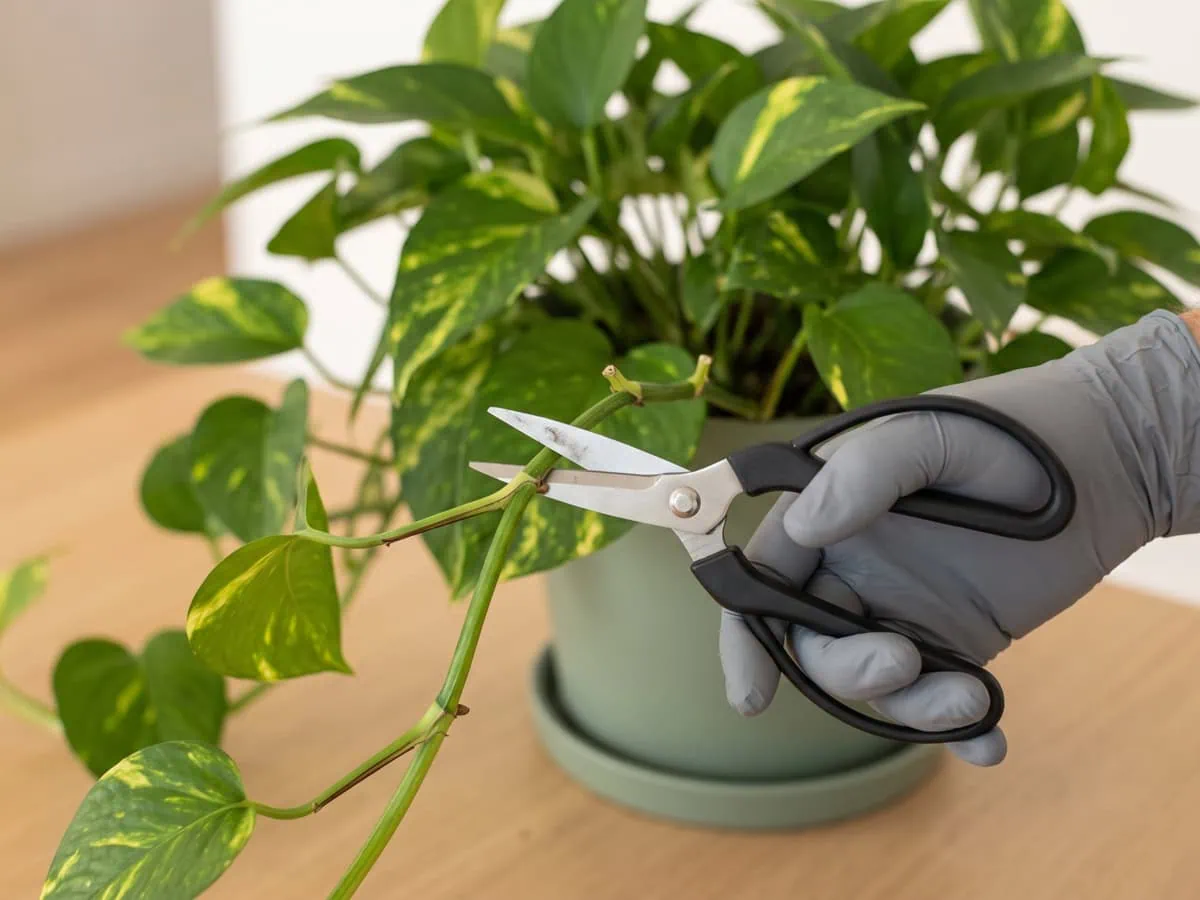
Cut 2 to 5 mm above a node
Knowing where to cut pothos to encourage new growth is a question of scale. Millimeters, not inches. Aim just past the joint and leave the joint undamaged.
- Find the swollen joint nearest the length you want to keep.
- Wipe the blade, then cut a stub the width of the stem above it.
- Keep the trimmed tip, because it roots.
Cut mid-internode and nothing sits below the wound, so the stub browns back to the next joint down. That joint is what every new stem comes from.
How much to remove, and when to cut
Take no more than one third of the plant in a session, and never strip every leaf, because the foliage left behind funds the regrowth.
A third of a leggy vine weighs almost nothing: lift the pot before and after, and you barely feel the difference.
This plant’s sap carries needle-shaped calcium oxalate crystals, so cutting needs three habits.
- Wear nitrile or thick gardening gloves whenever you handle cut sap.
- Rinse skin with cold running water for at least 60 seconds, and keep unwashed hands from your eyes and mouth.
- Use a sharpened blade, wiped with alcohol before the first cut.
If a severe skin reaction develops (blistering or intense burning), seek medical attention immediately. For chemical exposure, you can also contact Poison Control (1-800-222-1222 in the US).
And timing is a plant-state call, not a date. Cut when the vine has pushed a new leaf recently, because one cut under weak light regrows stretched. Cutting my own vines, I went deeper than the leaf count could carry, and that stub sat blank for weeks.
Rebuilding a fuller Pothos after the cut
Fullness is two jobs. Pruning branches a single vine; only added stems fill the pot. One vine stays one vine.
Root a bare node without cutting it off
Knowing how to fix a pothos with long bare stems without losing the vine comes down to one move. Root it where it lies.
- Coil the bare stretch back over the substrate, leaves up.
- Press each node into firm contact with the mix, since resting on top does nothing.
- Pin either side of the node with a hairpin if it springs back.
The myth is that a bare stretch of vine is spent and has to come off. It is not. Every joint along it still carries a dormant bud, and pressed into damp mix that joint roots where it lies.
What the myth gets right is narrow: the leaves that already dropped never come back on that same segment. The segment itself rebuilds.
Roots start at the pinned nodes and growth points follow. The parent roots keep the vine fed. One documented method, not a rule.
Add stems to the same pot for density
Every trimmed tip you kept is a stem you can put back, which is how to make a leggy pothos fuller in one season rather than three.
Root the tips first, then set them into the bare patches of the parent pot: the method sits in rooting the trimmed vine tips into new plants.
- Several stems sharing one pot reads as full; one never will.
- Set them into whatever bare areas the crown leaves open.
- Give the crown brighter light so the new spacing holds.
A rebuilt crown gives the pot real heft in both hands. The bare vine let it swing off one finger.
A supported vine also carries larger leaves, but that is getting a vine to climb a support instead of trail.
The recovery window: what normal silence looks like
Fresh shoots break low in about three weeks, and until then the plant looks bare and does nothing visible, which I mistook for failure more than once.
Hold the fertilizer two to four weeks and resume once new shoots are actively growing, a general houseplant figure rather than a species measurement.
- Days 1-14: no visible change at the cut or at the base.
- Around week 3: fresh shoots break low on the plant.
- Weeks 3-6: compact new stems fill in.
Frequently asked questions about leggy Pothos vines
Should I trim my leggy pothos?
Yes. Trimming is the fastest way to rebuild fullness on a stretched vine. Cut just above a node, take no more than a third of the plant in one session, and leave one or two leaves so the regrowth is funded. New shoots appear low in about three weeks, and the trimmed tips root for reuse in the same pot.
Why is my pothos so long and stringy?
Stringy growth is elongated internodes: the bare stem between two leaf joints stretches when light runs short. Two different vines look alike. Check each bare joint — a crescent scar means a leaf formed and dropped, so that segment will not grow leaves again, while a smooth joint means no leaf formed and brighter placement plus a cut will fix it.
Can you prune pothos to make it bushy?
Yes. Pruning converts one growing point into two or three, which is exactly what reads as bushy. Each node on the vine already holds a dormant bud, and the growing tip keeps those buds shut; removing the tip ends that signal and the nearest buds break first. Expect fresh shoots low on the plant, not new leaves on the old bare stem.
How to revive leggy pothos?
Revive a leggy Pothos in three moves. First, compare the gap between two leaf joints on new growth against the same gap on old growth, to confirm the stretch is current.
Second, move the plant to brighter indirect light. Third, cut back to a node, keeping foliage, then root the trimmed tips and plant them back into the pot’s empty gaps.
Will pothos grow back if cut?
Yes, from the bud at the node just below the cut. Placement decides the outcome: leave a stub of 1/16 to 3/16 inch above a joint and the bud beneath takes over, but a cut placed between joints leaves a stub with nothing beneath it to activate, and it dies back. Bare nodes stay viable, so a stripped vine is not spent.
How does pruning a leggy pothos make it fuller?
Pruning removes the growing tip, and with it the hormone signal that holds every bud below it dormant. Those buds then break, so one stem becomes two or three and the plant reads as fuller.
Expect the change low on the plant, where fresh shoots break in about three weeks. The bare stem you cut from does not regrow its lost leaves.
How far back should I cut my pothos?
Two conditions govern the depth, not a percentage. Every stem you keep must still carry a node, and enough leaves must stay to fund the regrowth. In practice that caps any one session at one third of the plant, at most, and rules out stripping every last leaf — a moderately stretched vine needs a shallower cut than a badly stretched one.
Field-tested on a bare vine. Ready to make the first cut?
The scissors were never the hard part. Two joints, one measurement. That comparison tells you whether the bare stretch in front of you shed its foliage and needs rerooting, or never made any and needs light plus a cut.
Lift the pot at week three. The weight has not changed. That is normal.
Steady light is what holds the new spacing once the cut has been made.
Measure two gaps tonight, then decide where the blade goes: that is how to fix a leggy Pothos, a measurement rather than a guess. May every cut land just above a node, and three shoots rise where one bare vine hung.
Tap the button below to get more plant fixes in your Google Search results