🎯 Quick Answer: mealybugs on Pothos
How to get rid of mealybugs on Pothos, Epipremnum aureum of the Araceae family, is an interval. The colony crashes on a 7-to-10-day repeat pass. Swab every visible cluster by hand, then spray on that interval. Hold it a full month on a trailing vine.
- Stop rule: three straight weeks with zero sightings, then stop.
- Why it repeats: one pass clears adults; eggs and crawlers survive.
- Damage sign: a sticky film on the blades below each cluster.
- Escape hatch: no control after two or three weekly passes, remove it.
- Entry route: a new plant carried them in, not your watering.
The first cluster I ever missed sat deep in a leaf axil, and under a thumbnail it felt like dry lint rather than anything alive. Years of plants taught me the texture instead: cottony, faintly greasy at the rim, smearing rather than brushing off.
Honestly? I was treating mealybugs like a leaf problem (note to self: check the joints, not the blades), but the real fix had nothing to do with that. It was the node.
Every swollen joint where a petiole clasps the stem is a sheltered pocket, and a trailing vine keeps adding fresh ones as it lengthens. One thorough pass never finishes the job. Clear the pest first, then rebuild from how a clean plant is kept clean afterwards.
Reframe it this way: the schedule is the real work here, and the table below sets every number you will hold to for the next month.
How to get rid of mealybugs on Pothos at a glance
| Pothos specs | Recommended care |
|---|---|
| Pest confirmed by | White waxy cottony masses wedged into leaf axils and nodes |
| Look-alikes to rule out | Spider mites: fine webbing, pale stippling. Scale: immobile bumps |
| Spray alcohol over the foliage? | No – swab or wipe each visible cluster instead |
| Alcohol strength ceiling | 70% isopropyl; spot-test one leaf and wait a day |
| Contact spray options | Insecticidal soap at 1-2%, or neem oil at the label rate |
| Repeat interval | Every 7-10 days, matched to the egg-to-crawler window |
| Isolate the plant while the schedule runs? | Yes – keep it clear of the collection until sightings stop |
Tap the button below to get more plant fixes in your Google Search results

Table of Contents
Is it mealybugs, spider mites, or scale?
The deposit names the pest faster than the damage does. Three deposits follow, one at a time.
White cottony masses in the leaf axils and nodes
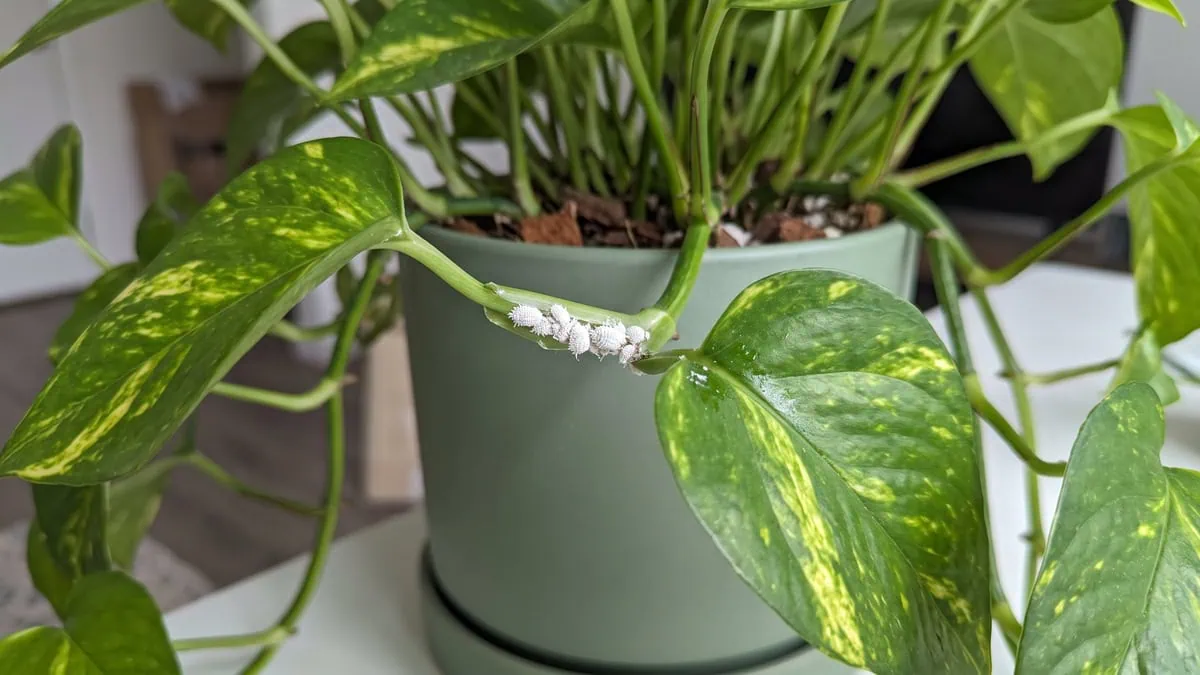
Mealybugs sit as white, waxy, cottony masses wedged into the leaf axil, the tight pocket where a petiole clasps the stem at a node. Adults run about 1/8 to 1/4 inch long and barely move.
Texture settles it. Press one with a fingertip and it smears into a greasy white streak instead of flaking off, and the blade below carries a sticky honeydew film that traps dust.
Anyone typing “what are the white cottony bugs on my pothos leaves” is describing that smear (the youngest stage is finer than any published size range, which is why the first inspection reads clean).
Fine webbing and pale stippling on leaf undersides
Spider mites leave no visible body at arm’s length. Use a hand lens. Pale pin-prick stippling shows first, then fine silky webbing across the underside and along the midrib once a colony establishes.
Draw a fingertip over a stippled underside and it feels faintly gritty, like dust that will not wipe clean. Warm, dry, dusty air drives them, so a heated room makes it worse.
That is why guidance on “how to get rid of spider mites on pothos” starts with a forceful water rinse of both leaf surfaces.
Hard immobile bumps that do not brush off the stem
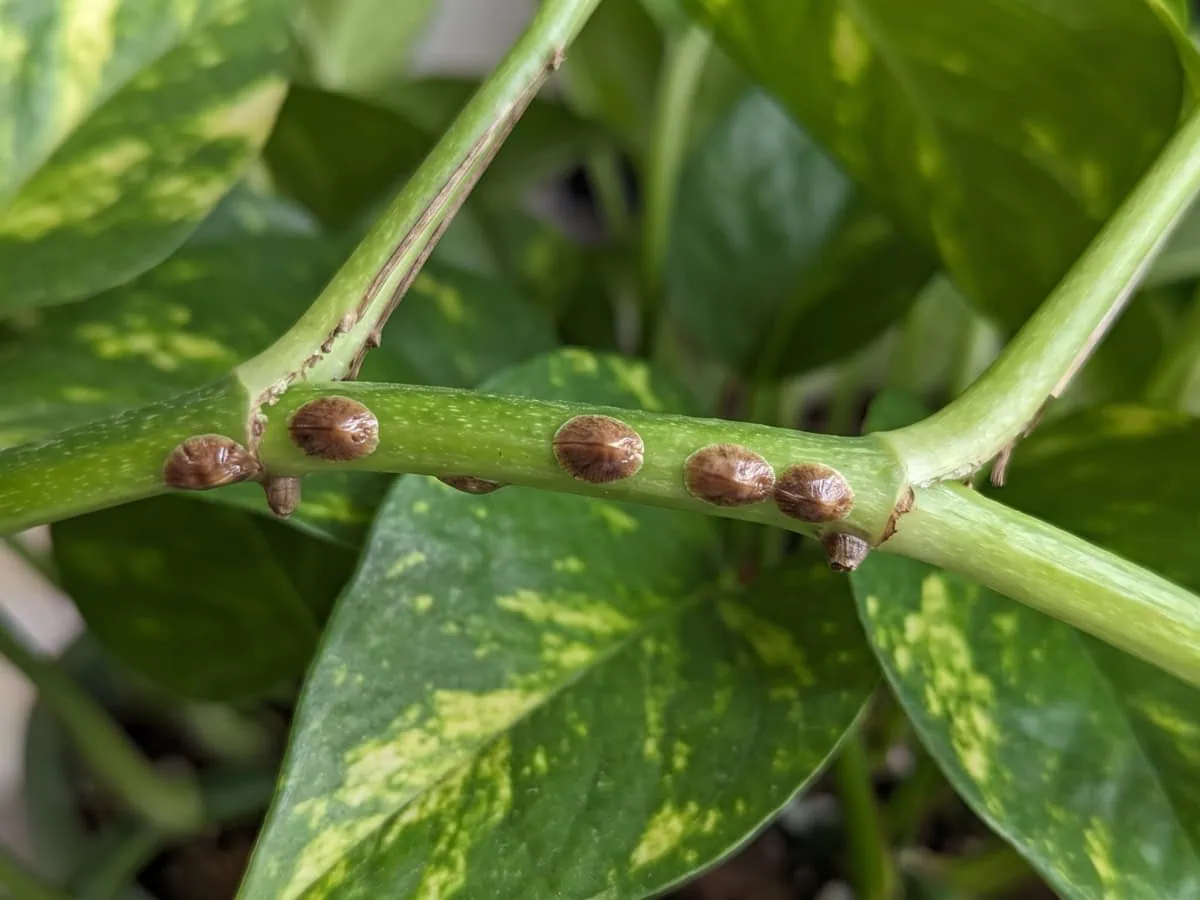
Scale reads as a hard, immobile bump on a stem or leaf underside, roughly 1/16 to 1/2 inch across and sitting flush like a tiny fish scale. It does not brush off.
Push one sideways with a thumbnail and it resists, then lifts away whole, leaving a shallow dry mark (a mealybug deposit disintegrates under the same pressure). Readers asking “what are the brown scale bumps on my pothos stems” are holding a settled adult under her armored cover.
The mobile stage is the one a spray reaches.
Crawler: the newly hatched, mobile stage that carries no waxy coating yet, which is the short window when a contact spray reaches the insect directly.
| Pest | What you see, and whether it moves |
|---|---|
| Mealybugs | Cottony masses in leaf axils; smear when pressed; slow-moving |
| Spider mites | Pale stippling then fine webbing on undersides; bodies barely visible |
| Scale | Hard bumps on stems; lift away whole; settled adults never move |
Verdict: Call it mealybugs when the deposit is cottony, sits in a leaf axil and smears under a fingertip; webbing points to mites, and an unyielding bump points to scale.
Tap the button below to get more plant fixes in your Google Search results

Removal sequence: swab first, then spray on a schedule
Removal runs in one order: swab every cluster you can see, then spray on a fixed interval. Each half gets its own section below.
Rubbing alcohol at 70 percent, swabbed not sprayed
The short answer to “does rubbing alcohol kill pothos mealybugs” is yes, on contact: 70 percent isopropyl on a cotton swab breaks the waxy coat and reaches the insect beneath. Swab, never spray.
Coverage decides this, not dwell time. Alcohol leaves no residual film, so whatever the cotton misses survives the pass. Every joint, every time.
The cotton drags where the wax has gone and glides where it has not. That pocket at the leaf axil (more on this below) is what every pass has to get into. Work vine by vine.
Never spray 70 percent alcohol across the foliage. Swab or wipe each cluster you can find instead, and spot-test one leaf a day ahead of any wider pass.
Insecticidal soap and neem: read the label, not a recipe
Clemson Cooperative Extension’s insecticidal soap factsheet puts the working strength at 1 to 2 percent, or 2.5 to 5 tablespoons per gallon. According to Clemson Cooperative Extension Home and Garden Information Center, insecticidal soap as a contact spray for houseplant pests reaches only what it touches.
Neem is a clarified horticultural oil at about 1 percent indoors. But recipes are quoted per liter, per quart and per gallon interchangeably, which is how a mix ends up four times too strong.
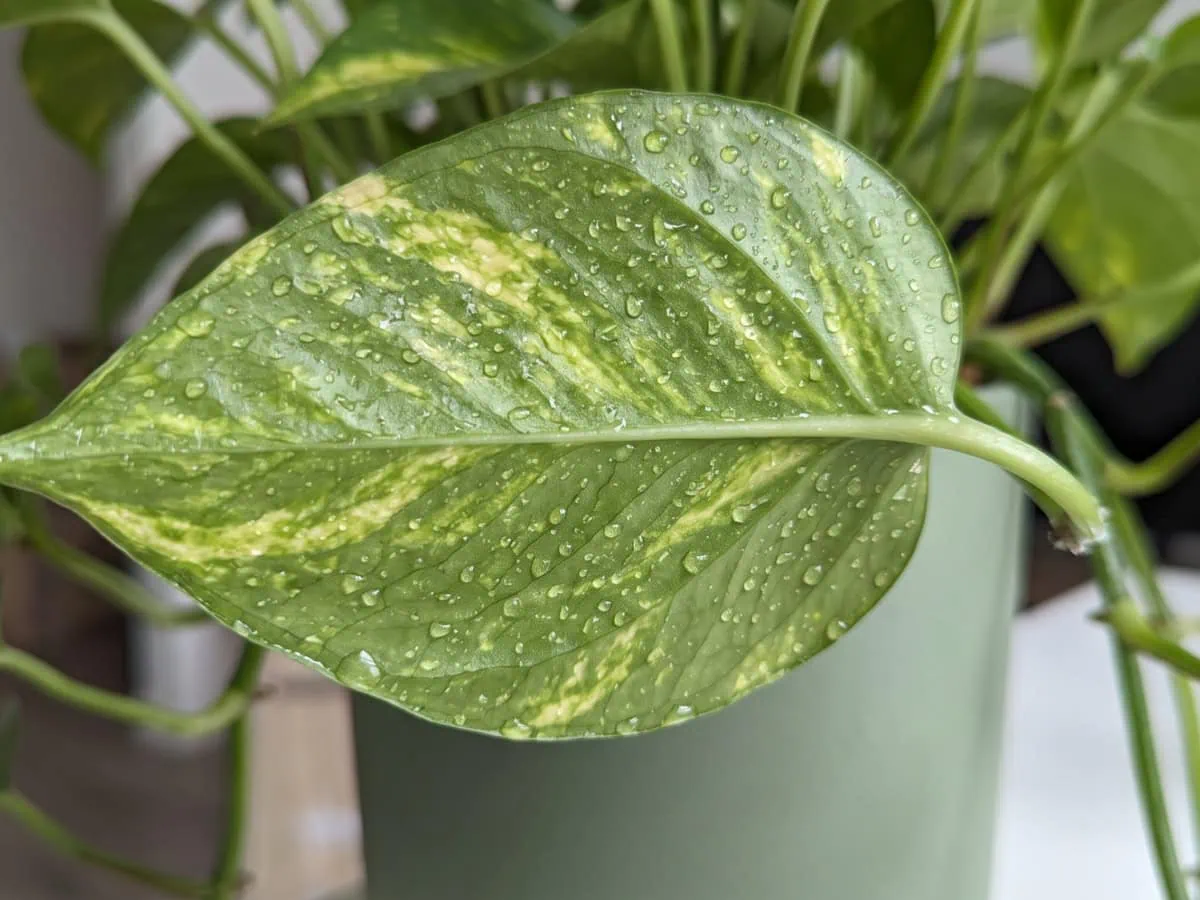
Read the label, start low, and move the plant off the glass before spraying. Burn shows within hours as wilting or edge browning; rinse it off and compare the marks with dark blotches and crisped leaf margins.
A stronger systemic product is not the shortcut it looks like; the waxy coat blunts it. Contact still wins.
Repeat every 7 to 10 days until three weeks are clear
Search “how often should I spray pothos to remove bugs” and the answer is one interval: every 7 to 10 days. Eggs hatch in about a week to ten days, and the new crawler carries no waxy coat.
Stop only after three straight weeks with zero sightings. One sighting restarts it. On a trailing vine, hold the schedule a full month regardless, because the plant keeps pushing new nodes no pass has touched (each one a fresh pocket).
The passes I have watched fail were the ones called clean too early. If the population is not under control after two or three weekly passes, removing the plant becomes reasonable. And leaves still yellowing once the pest is gone point to leaves that yellow from the oldest growth upward.
What the feeding does, and why it came back
Mealybugs damage a Pothos by drawing sap, and they return by riding in on a new plant. Damage first, then the entry route.
Why new leaves curl while older leaves only pale
Sap is the mechanism. Mealybugs suck phloem sap, and feeding on new growth is what produces leaf and shoot distortion.
Draw that sap off at the node feeding a still-expanding leaf and the blade sets crooked rather than flat (the newest leaf at the tip shows it first, never the mature blade below). Swab those clusters like any other.
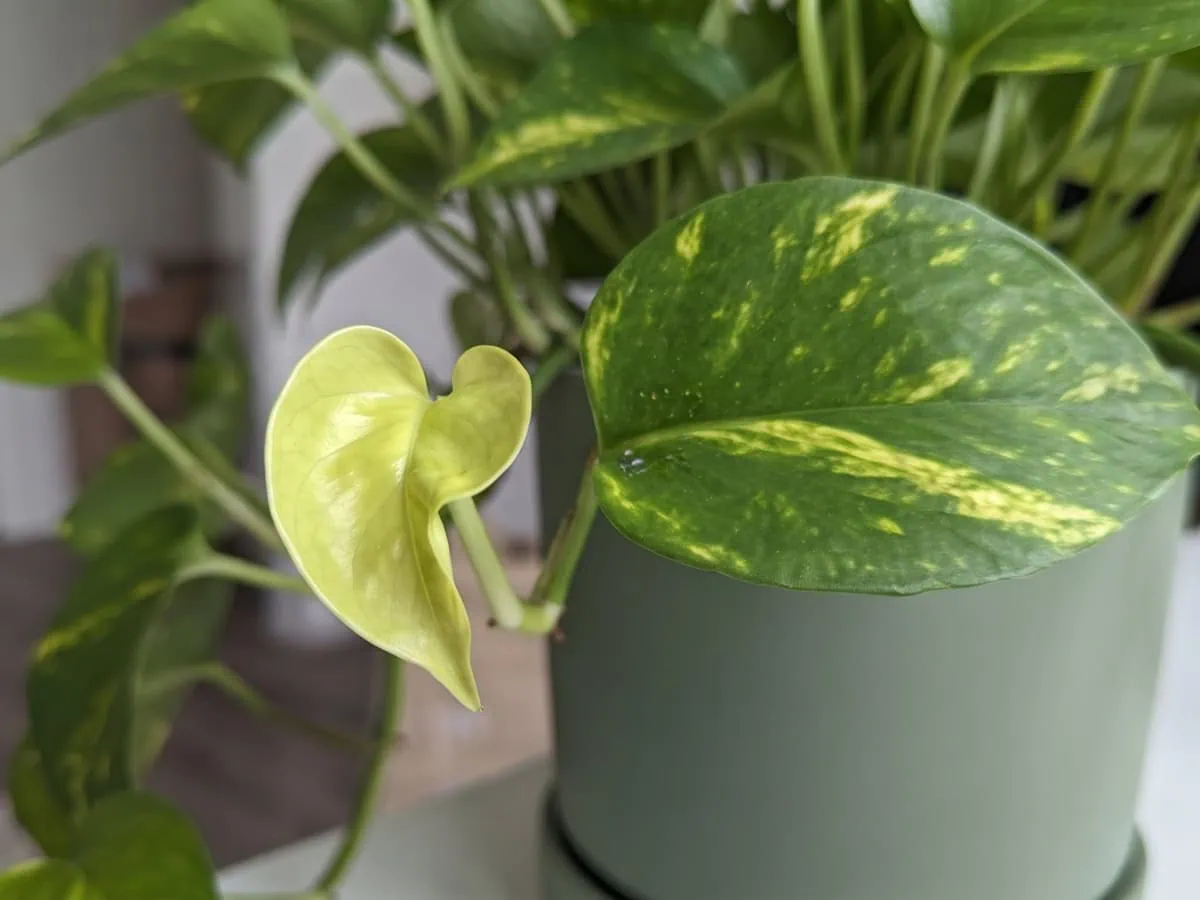
An older leaf is already built, so it only pales as chlorophyll thins. And the honeydew film grows sooty mold that shades what is left: the blade turns tacky under a fingertip, the way a countertop feels after something sugary was wiped up but not rinsed.
Curl with no insect anywhere on the vine is a different fault, closer to limp foliage that curls inward.
Where an indoor infestation actually comes from
Almost every indoor infestation walks in on a new plant. Nothing arrives on its own. It rides in on something brought home, then moves to whatever sits beside it.
In my experience — though n=1 — outbreaks cluster in the dry heated stretch rather than the humid one. But the evidence splits here, and no reliable humidity band exists for this pest indoors.
Which matters, because this vine prefers 50 to 70 percent humidity yet tolerates ordinary dry household air, and a heated room reads 10 to 30 (raising it helps the plant either way).
The levers not in dispute are physical: quarantine anything new before it joins the shelf, inspect on a set day, wipe the blades clean, and keep the pots from touching each other.
What will not work: less water, predators, vinegar
Three popular fixes do nothing here. Watering less is the first. The driver is soft, nitrogen-rich growth from over-feeding, not how much water the pot gets.
Feed at half strength and drop to monthly or nothing once growth stalls (that is the real lever). Cutting water instead starts a second problem, because this vine holds no water reserve.
Predatory insects are the second. They belong outdoors or in a greenhouse, and a release of them will not establish on a single houseplant standing in a room.
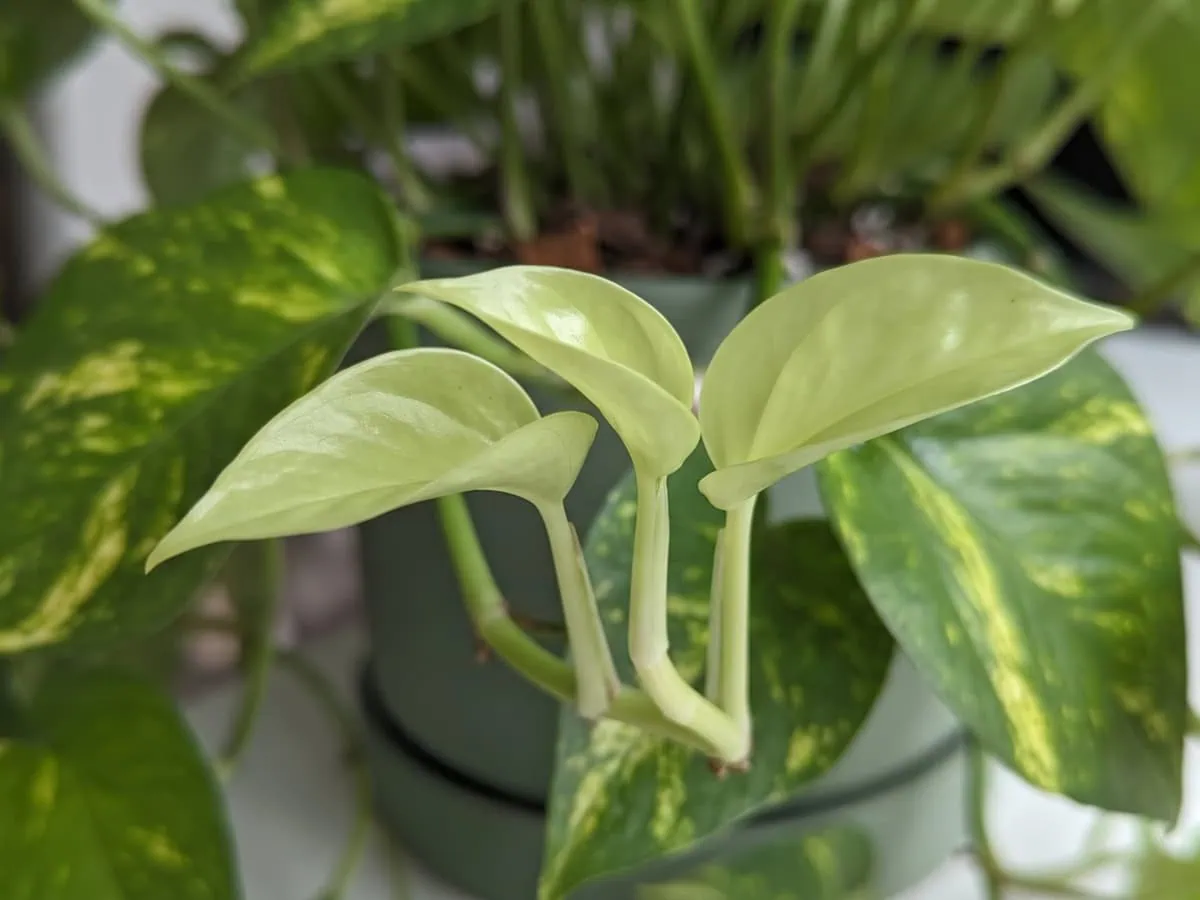
Vinegar is the third. Per University of Maryland Extension, acetic acid attacks the cell membranes of the foliage it contacts, desiccating leaf tissue on contact; it works on the leaf, not on the wax-armored insect sitting on it.
Use the alcohol swab and the soap or neem schedule instead. If the medium has stayed soggy through every pass, the fault underneath is a soggy medium and blackened roots, not the pest.
Frequently asked questions about mealybugs on pothos
What kills mealybugs immediately?
Rubbing alcohol kills a mealybug on contact, which makes a cotton swab the fastest single move available. Colorado State University Extension records alcohol sprays at 25 to 50 percent, and swabbing individual insects as an effective control on houseplants; the 70 percent working strength here stays on the swab, never on the blades. None of it leaves a residual film, so clearing one cluster quickly never replaces the repeat pass seven to ten days later, once new crawlers hatch.
Can a plant recover from mealybugs?
Yes, and early, consistent intervention returns many plants to full health, including a heavily infested specimen given intensive care. Recovery shows in the newest leaves rather than the old ones, because expanding tissue is what mealybug feeding distorts; they open flat instead of crooked. Hold the swab-and-spray schedule while that new growth comes in, and judge progress on the newest leaf, never the oldest.
Does overwatering cause mealybugs?
No, watering volume is not what draws this pest in; soft, nitrogen-rich new growth is. That makes feeding practice the real lever: cut fertilizer to half strength, and stop entirely once growth stalls under low light. Watering less instead starts a second problem, because this vine carries no water-storage organ to buffer a dry spell, and the chain still runs through nitrogen.
Will mealy bugs ever go away?
Yes, on a fixed schedule: repeat every 7 to 10 days, and stop only after three straight weeks with zero sightings. Eggs hatch inside that same window, so one pass clears the adults while the next generation of crawlers is still shielded. On a trailing vine, hold the routine a full month, because every fresh node is another pocket no pass has reached.
Can I spray vinegar on mealybugs?
No. Acetic acid attacks the cell membranes of the foliage it contacts and desiccates leaf tissue on contact, while the wax coat shielding the insect blunts what reaches it. Use 70 percent isopropyl on a swab for visible clusters, then insecticidal soap at 1 to 2 percent on the repeat schedule. Spot-test any improvised household mixture on one leaf first and watch that leaf for a full day before going wider.
Should I throw away a plant with mealybugs?
Not first: persist through two or three weekly passes, since removal only becomes reasonable if the population is still not under control after that. Root-zone involvement is the other tipping point published guidance names. Where clusters sit on a few stems, cut and bag those vines at once; on a trailing plant that is population reduction, not a last resort.
How to get rid of mealybugs without killing plants?
Work from the gentlest tool upward: swab first, spray second, and never reach for something stronger to shortcut the schedule. Spot-test any spray on one leaf and wait a day, keeping insecticidal soap out of direct sun and off a plant that is already dry. Rinse the foliage if leaf edges brown within hours, and keep alcohol on the insect, not across the blades.
What do mealy bugs hate the most?
Nothing you can set on a thermostat, because no reliable humidity band exists for this pest indoors. Climate is the wrong lever to reach for here; what actually holds up is physical. Quarantine every new plant before it joins the shelf, inspect on a fixed day, wipe the blades clean, and keep the pots from touching, since a colony walks between crowded plants.
The 3-move mealybug protocol: swab, spray, hold
Look — three moves finish this: swab every axil, spray on the interval, hold until three straight weeks read clean. Most people stop after the first move, feel the blade go smooth under a thumb, and call it done two weeks early (the schedule, not the strength, is what ends an infestation).
Three weeks clean. That is the test. Anything less is a pause, not an end.
Once the pest is gone, the sticky film it left is the next thing worth reading, and a plain-water wipe is usually owed (dust settles on that film fast). Work the calendar, and how to get rid of mealybugs on Pothos becomes a job with an end date rather than one you keep restarting.
Three straight weeks of a swab coming back clean is the only sentence this pest understands.
Tap the button below to get more plant fixes in your Google Search results