🚨 Emergency 30-Second Answer: saving a rotting ZZ plant
Stop watering now — a rotting Zamioculcas zamiifolia, a member of the Araceae family whose sap irritates skin, is drowning. Cut every mushy rhizome back to firm, pale tissue. Sterilize the blade first, and again between cuts.
That is how to save a ZZ plant from root rot. Cut out the dark rot, dry the wounds, then repot into a gritty, fast-draining mix. Hold water for about a week, and rewater only once the mix has dried all the way through.
If even one firm, pale rhizome survives the cut, the plant can rebuild. If every piece is brown and soft throughout, it is past saving.
- Rot reads: dark, soft, sour-smelling; firm rhizome stays pale and plump
- Cut margin: a half-inch beyond every rot line, not at it
- False thirst: a wilt over wet soil means rot, not drought
- Skip the dip: no chemical soak reverses rot inside a rhizome
- Recovery sign: one firm new spear, weeks to months after cutting
A ZZ plant that has rotted is a quiet emergency. The leaves yellow. The stalks flop.
The soil still feels damp, and every instinct says the plant is thirsty. It isn’t.
Instead of reaching for the watering can, I realized years ago that a wilting ZZ over wet soil is usually the opposite problem — the fat, water-storing rhizome underground has drowned in a substrate too saturated to hold oxygen, and has cut off the plant’s own water supply.
The ZZ plant (Zamioculcas zamiifolia, formerly Caladium zamiifolium) banks water in a woody rhizome to ride out drought. That same rhizome suffocates in soggy soil. Then it rots.
The rescue below is the exact sequence I use to cut the rot out and save a firm rhizome. For the long game that keeps rot from ever starting, read the complete routine for a healthy ZZ plant.
Take a breath — the rescue is more straightforward than the panic suggests. The following table lays out every move at a glance before you work through the steps below.
How to save a ZZ plant from root rot at a glance
| Rescue step | What to do |
|---|---|
| First move | Stop watering and slide the plant out of its pot now |
| What to cut | Every soft, dark, mushy rhizome and root, back to firm pale tissue |
| Blade prep | Sterilize with 70% isopropyl alcohol, and again between cuts |
| Cut surfaces | Air-dry until dry to the touch, then dust with cinnamon |
| New home | Fresh, fast-draining gritty mix in a terracotta pot with a drainage hole |
| First watering | Withhold about a week, then only once the mix is fully dry |
| Salvageable? | Yes, if any firm, pale rhizome remains after cutting |
| Sterile blade required? | Yes, always; a dirty blade re-infects the fresh cut |
Tap the button below to get more plant fixes in your Google Search results

Table of Contents
How to rescue a rotting ZZ plant
Rescuing a rotting ZZ plant comes down to four fast moves. Speed matters.
- Unpot the plant.
- Cut the rot out.
- Dry the wounds.
- Repot dry.
Every extra hour in soggy soil eats more firm tissue. Start the moment you suspect rot.
A cut ZZ rhizome leaks sap loaded with microscopic needle-like crystals (calcium oxalate raphides) that irritate skin and eyes. Wear nitrile or thick gardening gloves for every cut, and if sap touches your skin, rinse it under cold running water for at least 60 seconds. If a severe skin reaction develops, such as blistering or intense burning, seek medical attention immediately. For chemical exposure, you can also contact Poison Control (1-800-222-1222 in the US).
Work on a dry surface with dry hands, then take the following steps in order.
Unpot and read the rhizomes
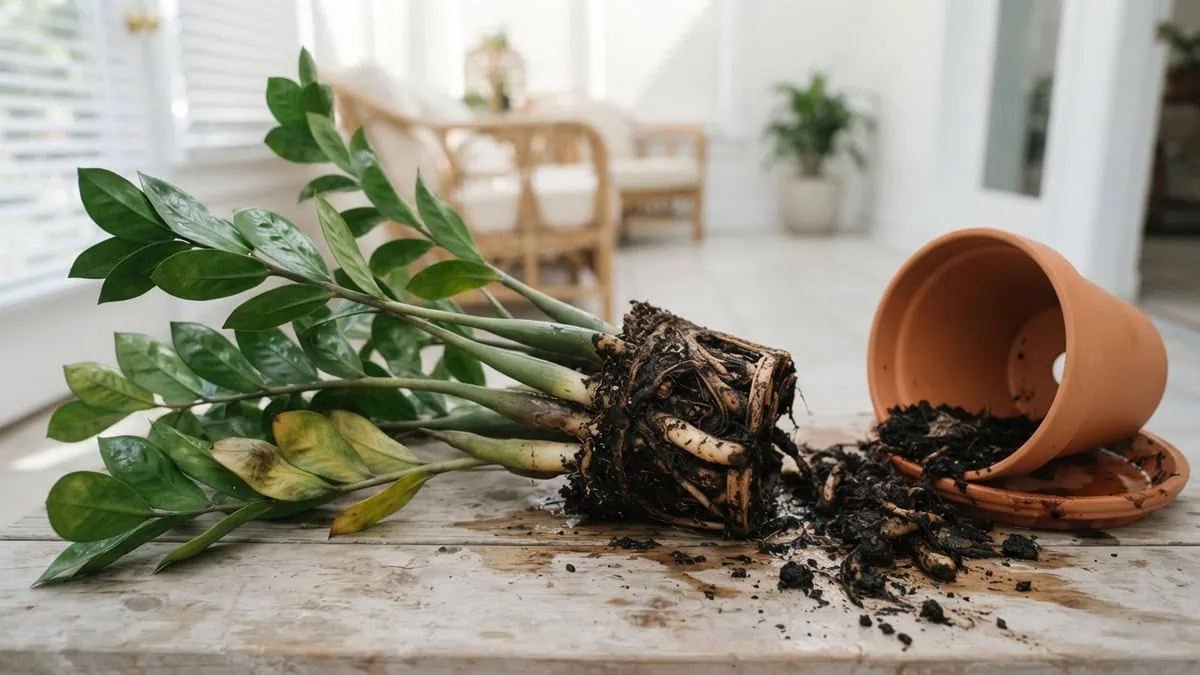
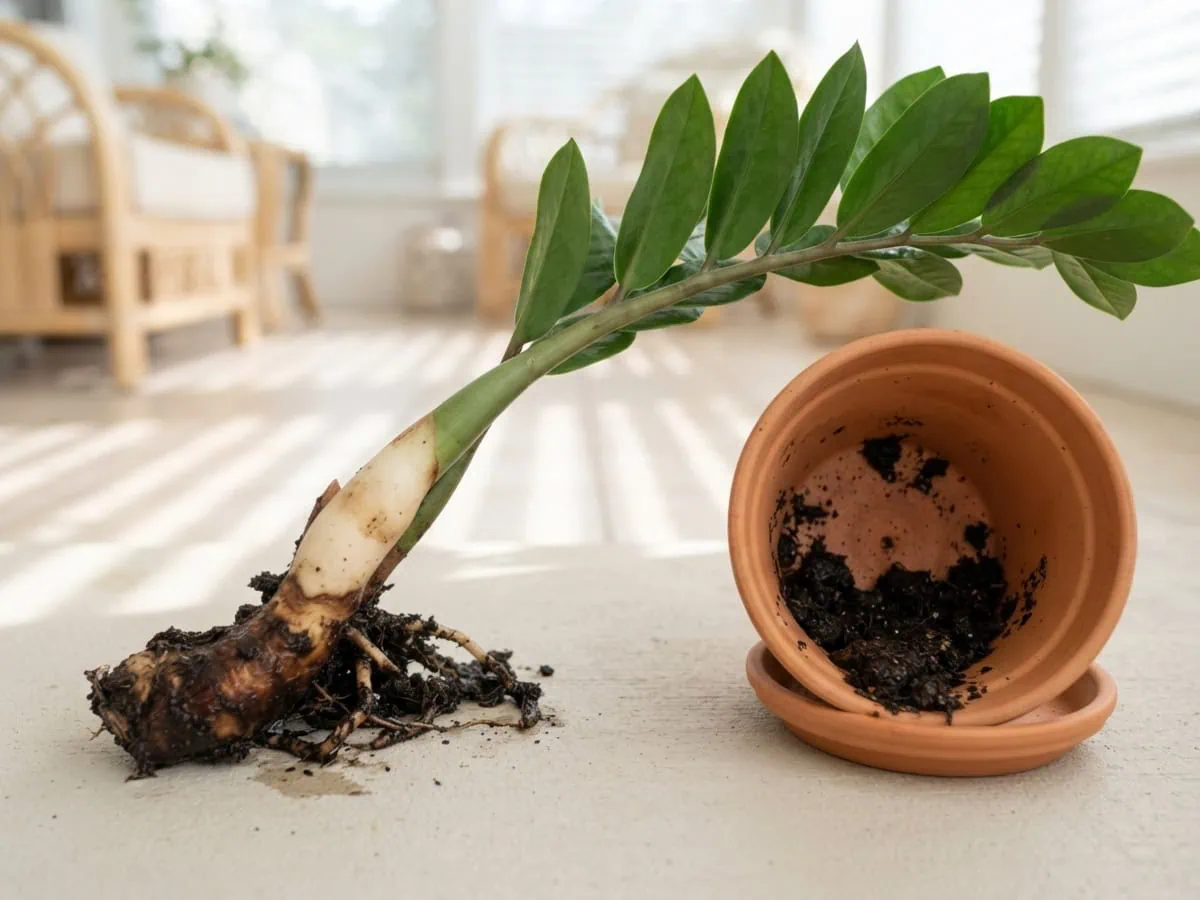
Knowing how to tell if a ZZ plant rhizome is rotting starts the moment you unpot it. Brush the wet mix off the fat, potato-like underground stems.
A healthy rhizome is firm, plump, and pale. Off-white to tan, with firm white roots. Rotted tissue is the opposite.
Brown-to-black, soft, water-soaked, often sour-smelling. That color line is your map. Where pale tissue turns dark and mushy, the rot front sits.
If the top is fading, the leaves that are turning yellow told you the same story.
Cut every soft rhizome back to firm tissue
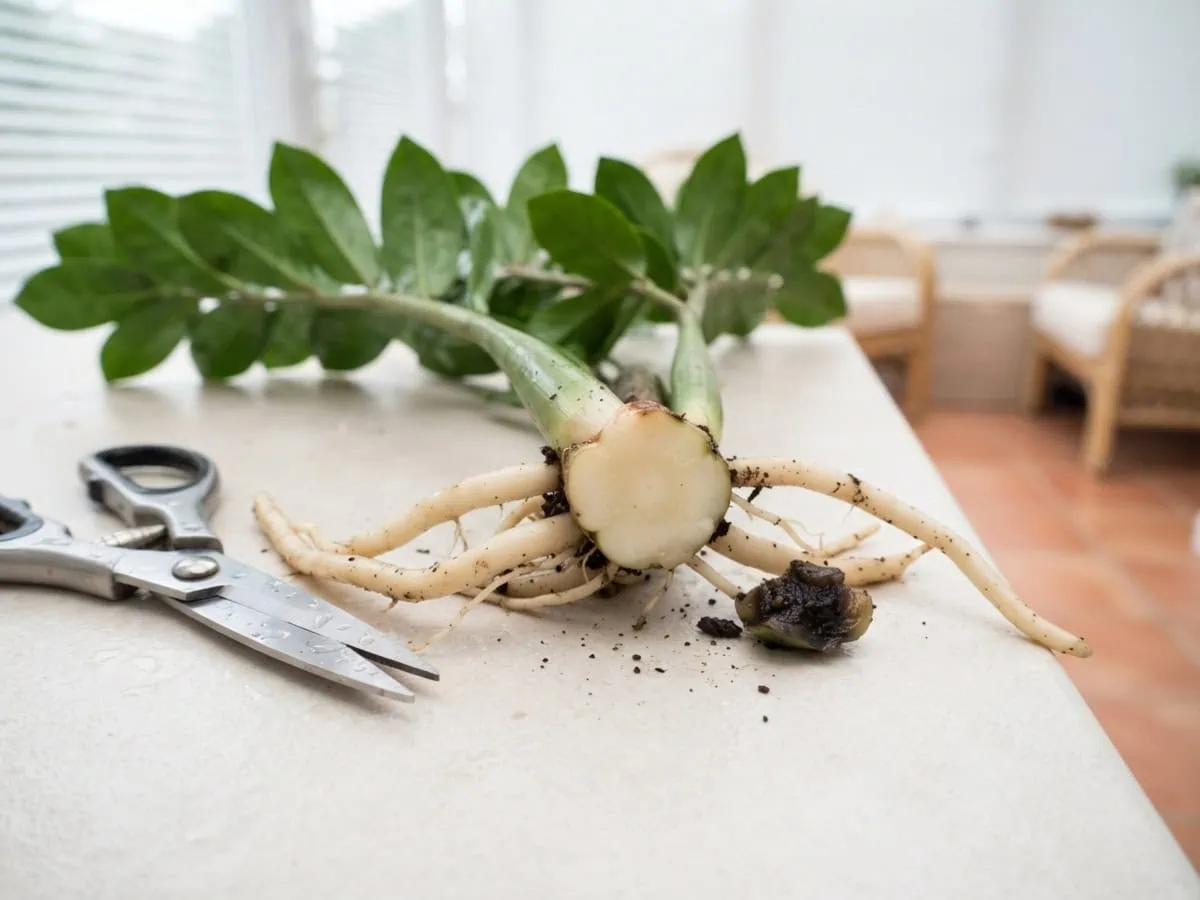
Yes, cut off every rotting stem and rhizome, back to firm, pale tissue. The question — should you cut off rotting ZZ plant stems — has one blunt answer: all of them.
Sterilize the blade first. Wipe sharp scissors with 70% isopropyl alcohol, or soak them in one part bleach to nine parts water for ten minutes, then rinse. That step is not optional.
Cut a half-inch into firm tissue above each rot margin, so nothing browned stays behind. And re-sterilize between cuts, because a blade that just passed through soft rot carries it straight into the next clean rhizome and undoes the whole rescue.
Keep going until every cross-section is solid, pale, and potato-firm (low-key skeptical about any brown you are tempted to leave).
Dry the cuts, then repot into a fresh gritty mix
Once the rot is gone, air-dry the cut faces. Set the plant somewhere warm and shaded until every surface is dry to the touch.
A light dusting of cinnamon on the dry cuts is a gentler finish than any chemical soak, though the drying does most of the work. Always test on a small area first. Results may vary depending on your specific conditions.
Then repot into a fast-draining gritty mix — roughly two parts of a coir-based potting mix to one part pumice — in a plain terracotta pot with a drainage hole. Keep it snug, and put no gravel in the bottom.
A big volume of damp soil around a small rhizome started this. For the full recipe, here is mixing a fast-draining substrate that resists rot.
Tap the button below to get more plant fixes in your Google Search results

Why a drought-tough rhizome rots, and whether it can be saved
A drought-tough ZZ rots because the water-storing rhizome that lets it survive dry spells suffocates when the soil stays wet, but a rescue works as long as some firm rhizome survives the cut. The next sections cover why it happens, how much you can save, and what recovery looks like.
Why a water-storing rhizome rots after overwatering
A ZZ plant rotting at the base after overwatering is a paradox with a simple cause. The plant evolved to bank water in a woody underground rhizome and coast through drought. Its whole design assumes the soil dries out between drinks.
Keep that soil saturated and the air pockets fill. Oxygen around the rhizome crashes. The starved tissue rots from the base up.
In my testing, the rhizome is what hides this. It banks enough water to keep the leaves looking normal while the tissue below fails.
Into that soggy tissue moves a water-mold — a peer-reviewed report describes the water-mold rot documented at the base of this species.
Per a report in the journal Plant Disease, the culprit is Phytophthora, an oomycete water-mold. Not the vague bacteria many pages blame. Relatives like Pythium and Rhizoctonia often join them.
How much firm rhizome you need to keep to save it
The short answer to “can you save a ZZ plant with mushy stems” is usually yes. One firm, pale chunk of rhizome left after the cutting is enough. That is the whole salvage rule.
A ZZ rebuilds its top growth from energy banked in the rhizome, so one solid, potato-firm piece with clean, dry-cut faces is enough to regrow from.
But if every rhizome and root is brown and soft to the center, nothing solid can power a comeback, and the kinder call is to discard this plant and start fresh — which also keeps the rot away from the rest of your collection.
Feel for firmness. Pale and solid means keep. Soft and dark means cut.
What recovery looks like and how long it takes
There is no fixed clock on “how long does a ZZ plant take to recover from root rot”. It is a slow-growing plant, so recovery runs in weeks to months, not days. Watch the plant, not the calendar.
The rescue is holding when three signs line up.
- The remaining stalks stop yellowing.
- The fresh mix dries down normally instead of staying soggy.
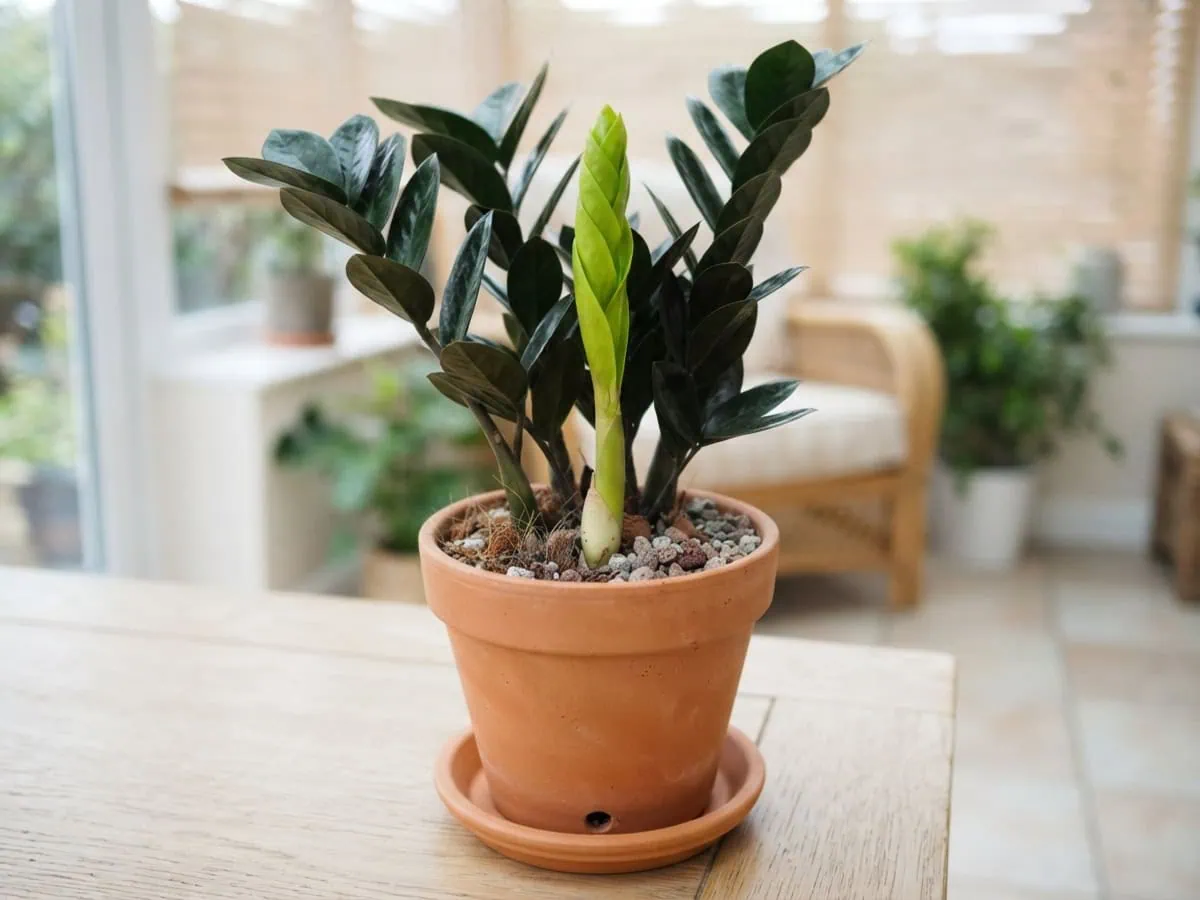
- A firm new spear pushes up from a surviving rhizome.
That spear is proof the rhizome is alive and feeding again.
Before each rewater, read the mix the ZZ-correct way. Push a wooden skewer to the bottom of the pot, then pull it out. Damp grit clinging to the wood means wait.
Bone-dry and clean means pour. A shallow finger test only reads the top two inches, which turn dry long before the root zone does.
A clean move helps it settle, so if the repot rattled the plant, see repotting cleanly without transplant shock. Until then, leave it warm, bright, and dry.
The rot-rescue myths that make things worse
Two myths do the most damage to a rotting ZZ, and both feel like help. Take the following corrections to heart before you touch the plant.
The ‘chemical dip’ myth, and what to use instead
The most common bad advice is to soak or spray the living roots in hydrogen peroxide, as if rot were a stain you could bleach away. It isn’t. Rot is dead, oxygen-starved tissue colonized by a water-mold.
So the fix is mechanical. Cut the dead material out, then reset the air-and-water balance in the pot. No spray reaches inside a mushy rhizome to reverse it.
Save the peroxide for sterilizing your empty pot and blade, where it does real work, and keep it off living tissue entirely. After the cuts are made, let them air-dry and dust them with a little cinnamon.
Simple, dry, and clean beats a dramatic chemical dip every time. Air-drying asks nothing of the pale, firm tissue you just fought to keep — it lets the cut face callus over while the surviving rhizome gets back to work.
Why watering a wilting, rotting plant backfires
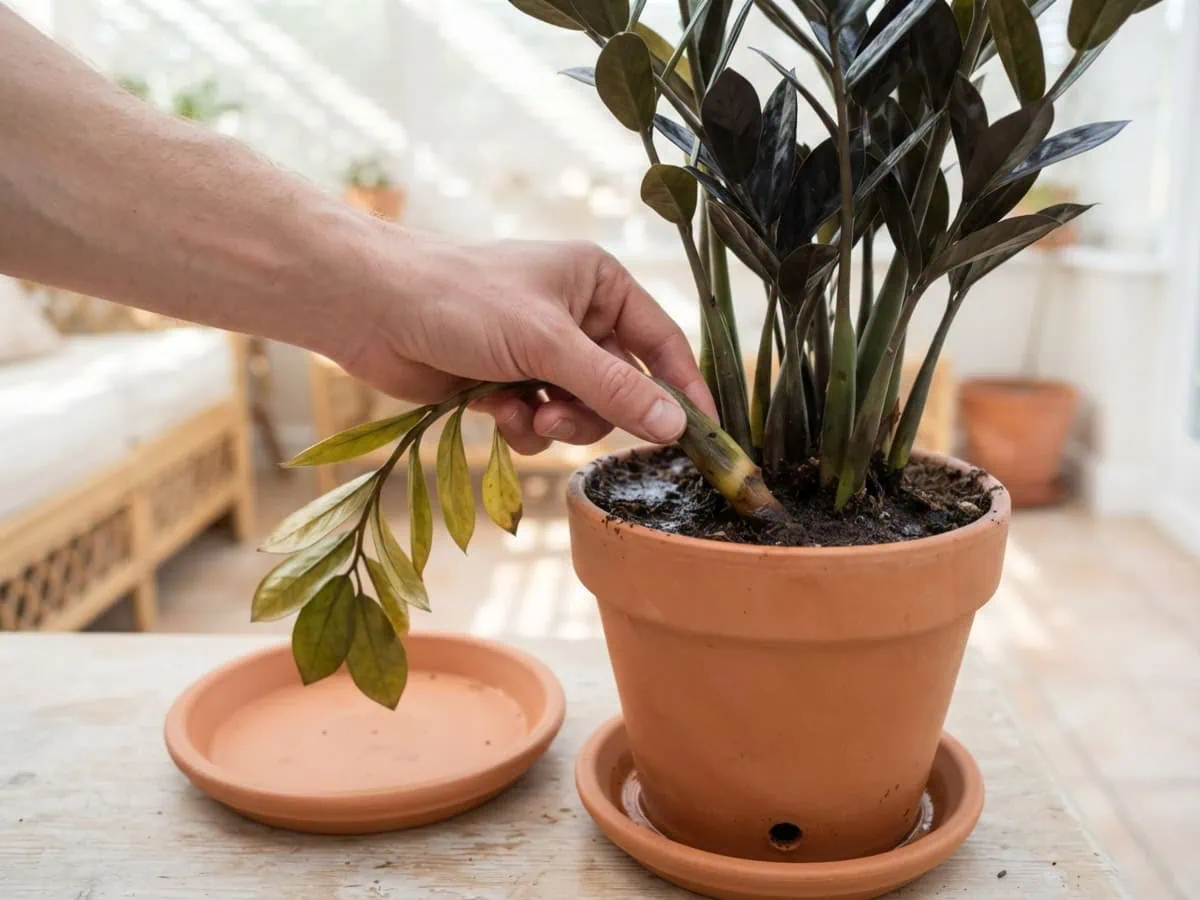
The second myth is that a drooping, wilting ZZ needs a drink. It is the exact move that finishes off the plant. Rotted roots can no longer take up water.
So the canopy wilts and looks thirsty even while the soil is soaking wet, and pouring in more water only drowns whatever rhizome is left.
Before you water a sagging ZZ, run three quick checks.
- Soil: still damp days after the last drink.
- Stalk base: soft and browning under a light squeeze.
- Smell: a sour note at the soil line.
Wet soil plus a base gone soft and brown means rot. Not thirst. This same false-thirst signal is why stems that droop and fall open so often get watered to death.
Do not talk yourself into a quick top-up that skips the cutting. Any soft tissue you leave behind keeps eating into the healthy rhizome until the whole plant is gone.
ZZ plant root rot: frequently asked questions
Can a plant recover from root rot by itself?
No. Root rot does not resolve on its own — the dead tissue keeps spreading until you cut it out. Left alone, a water-mold rot advances through the rhizome and roots until nothing firm remains.
The only path to recovery is to unpot the plant, cut every soft, dark section back to firm pale tissue, dry the cuts, and repot into a dry, fast-draining mix.
What does ZZ plant root rot look like?
ZZ plant root rot looks like soft, dark, water-soaked rhizomes and stalk bases, often with a sour smell. Below the soil, healthy tissue is firm and pale, while rotted tissue is brown-to-black and collapses under a light press. Above the soil, the giveaway is a plant that yellows and flops while the soil is still damp — wet soil plus a mushy base points to rot, not thirst.
How to fix root rot without replanting?
You generally cannot fix established root rot without unpotting and repotting. The rot lives on the rhizome and roots below the surface, so the dead tissue has to be exposed and cut away, which means lifting the plant out of its soggy soil.
No in-pot spray or drench reliably reverses it. A real rescue means lifting the plant, cutting to firm tissue, and resetting it in fresh, dry mix.
How to tell if ZZ plant is dying?
A dying ZZ shows widespread yellowing, a soft or shriveled stalk base, and a wilt that persists even in wet soil. Firm droop that perks up after watering usually just means it was thirsty.
The dangerous pattern is mushy stems and a foul-smelling, discolored base, which points to advanced rot. To confirm, unpot it and press the rhizome: a firm, pale section means it can still be saved.
How do you perk up a ZZ plant?
How you perk up a ZZ plant depends on the cause, and watering is often the wrong move. If the stalks flop over wet soil and the base feels soft, the plant is rotting — cut out the rot and repot dry.
If the soil is bone-dry and the rhizome is firm, a good soak and a full dry-down is all it needs. Read the soil first.
Lesson locked: cut out the rot, then keep it bone-dry
A rotting ZZ plant looks like a lost cause. In my experience it rarely is. Cut every soft, dark rhizome back to firm, pale tissue.
Dry the wounds. Repot into a gritty, barely-damp mix, then leave the rhizome to rebuild in its own slow time.
The habit that stops rot from coming back is the watering rhythm the plant actually wants, so your next step is getting the watering rhythm right so rot never returns.
Remember the one number that matters. Zero soft tissue left behind, and zero standing water in the saucer.
Master that, and how to save a ZZ plant from root rot becomes a skill you need only once. May the rot stop at your blade, your saved rhizome ride firm and dry, and a new glossy spear rise to show the rescue held.
Tap the button below to get more plant fixes in your Google Search results