Skip to content
Plant Care Basics
  • Snake Plant Care
  • ZZ Plant Care
  • Pothos Care
  • Monstera Care
  • Peace Lily Care
  • Moth Orchid Care

Moth Orchid Care

Home » Moth Orchid Care

Phalaenopsis orchid care: complete indoor guide to reliable reblooming (2026 Masterclass)
July 13, 2026 by PANG NAM FUI
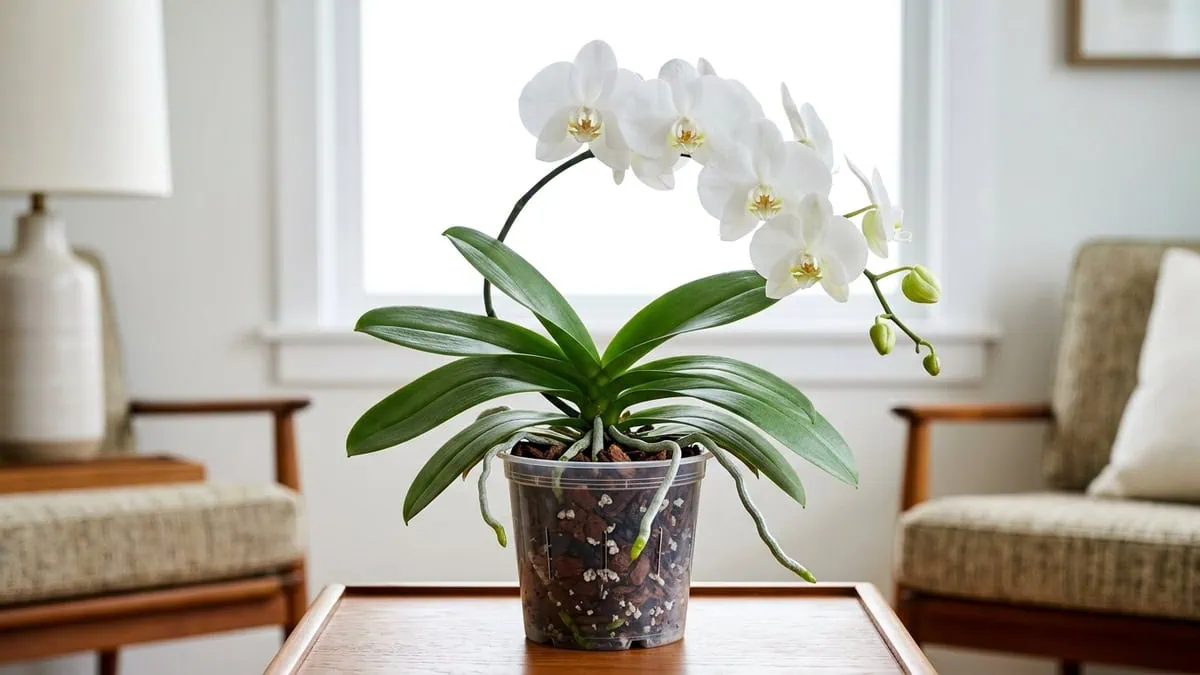
Phalaenopsis orchid care guide — a thriving Phalaenopsis moth orchid in bright bloom over silver-green roots in a clear pot.

Caring for a Phalaenopsis orchid begins in the roots, not the calendar — a lesson five lost moth orchids taught me. This guide gathers the light, watering, humidity, and cool-night targets I rely on, the simple reasons a healthy orchid reblooms year after year.
Categories Moth Orchid Care

Home » Moth Orchid Care

How to water a Phalaenopsis orchid without killing it: read the roots first

July 13, 2026 by PANG NAM FUI
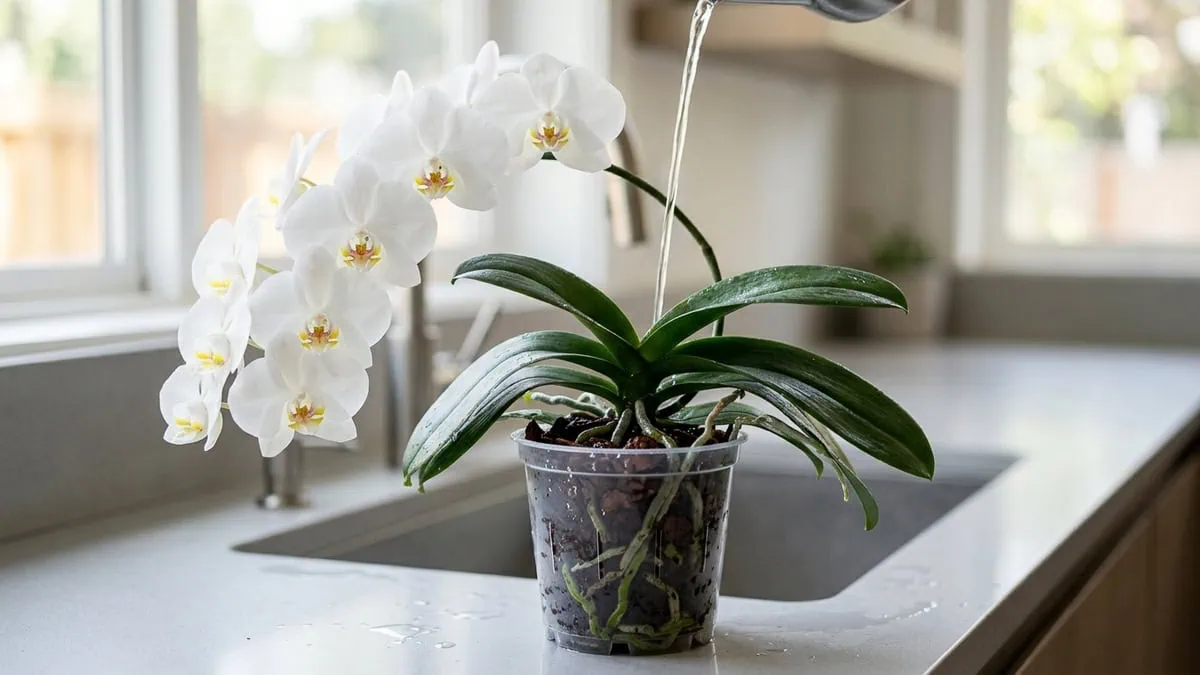
How to water a Phalaenopsis orchid without killing it: water poured into a clear-potted moth orchid draining in the sink.

I water my Phalaenopsis orchid by reading its roots instead of the calendar — silver velamen means soak, green means wait. The limp leaf is usually a root problem, not thirst, so a steady soak-and-drain rhythm keeps the crown dry and the roots breathing between waterings.

Categories Moth Orchid Care

Home » Moth Orchid Care

How to save a Phalaenopsis orchid with root rot: the root-trim rescue

July 13, 2026 by PANG NAM FUI
How to save a Phalaenopsis orchid with root rot: a whole moth orchid lifted to show its brown, mushy rotted root ball.

When a Phalaenopsis orchid is hit by root rot, I rescue it the same way every time — read the roots, cut away every soft brown one, and repot into dry, open bark. Even a plant stripped to its crown can rebuild inside a humidity chamber. Here is the full root-trim rescue, step by step.

Categories Moth Orchid Care

Home » Moth Orchid Care

How to fix Phalaenopsis orchid crown rot: before it reaches the roots

June 27, 2026 by PANG NAM FUI
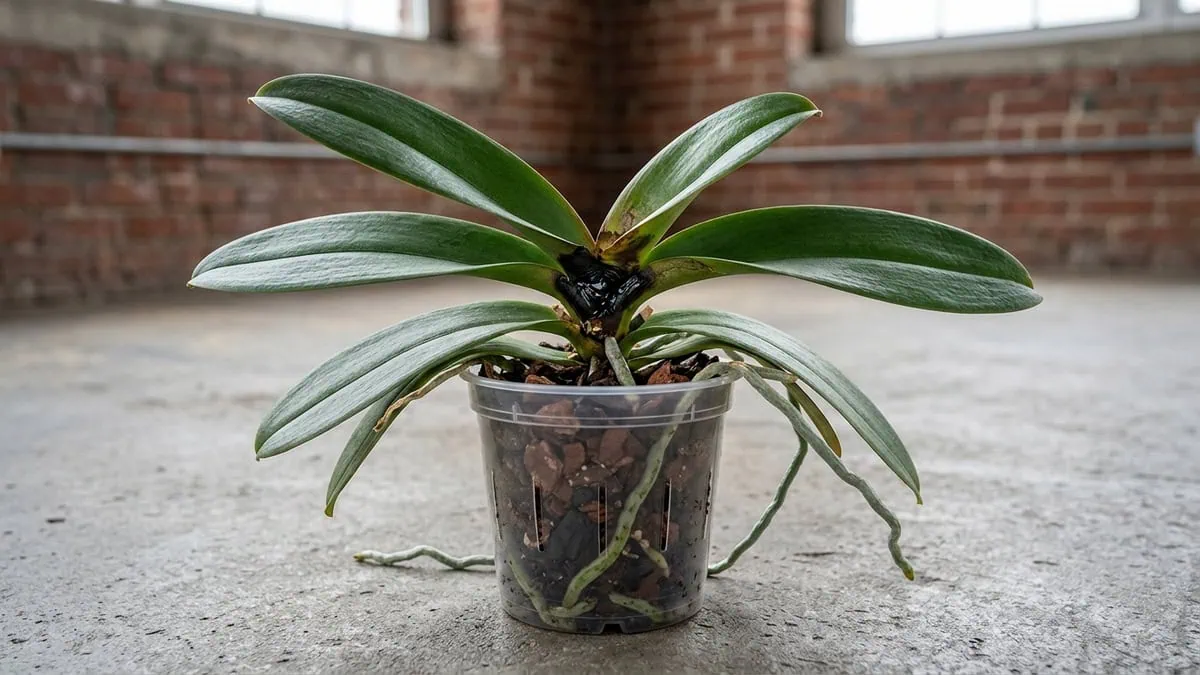
How to fix Phalaenopsis orchid crown rot — a moth orchid showing a black, water-soaked rotted crown center in a clear pot.

Crown rot can blacken a Phalaenopsis from the center out, but I can usually stop it. I cut the soft, water-soaked tissue back to firm green, dust the cut, and dry the crown fast — and even a lost growing point can still push a keiki.

Categories Moth Orchid Care

Home » Moth Orchid Care

Why are my Phalaenopsis orchid leaves wrinkled and limp? The root-first answer

June 27, 2026 by PANG NAM FUI
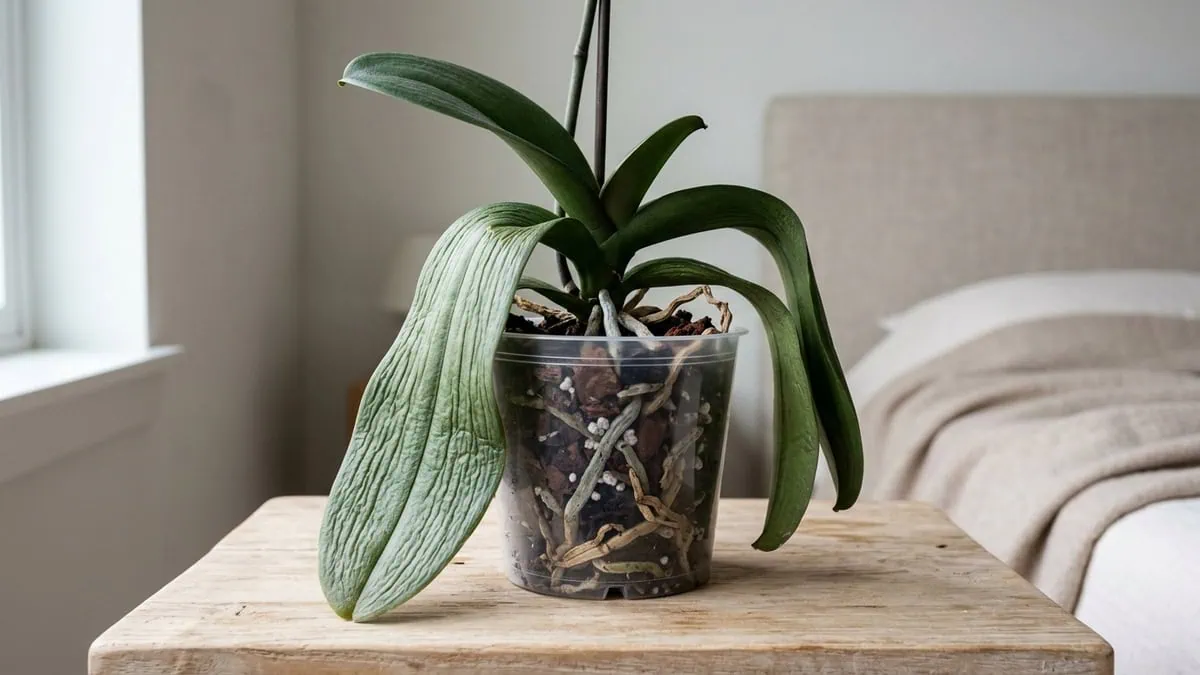
Why are my Phalaenopsis orchid leaves wrinkled and limp — a moth orchid with soft, accordion-folded, downward-folding leaves.

Wrinkled, limp Phalaenopsis leaves almost always trace to the roots, not thirst. I read root color through the clear pot, lift it for weight, and finger-test the bark before watering — then I sort normal yellowing from rot. Inside is the full triage that separates over-watering from a plant that is simply dry.

Categories Moth Orchid Care

Home » Moth Orchid Care

How to get rid of mealybugs and scale on Phalaenopsis orchids — what actually works

August 17, 2026 by PANG NAM FUI
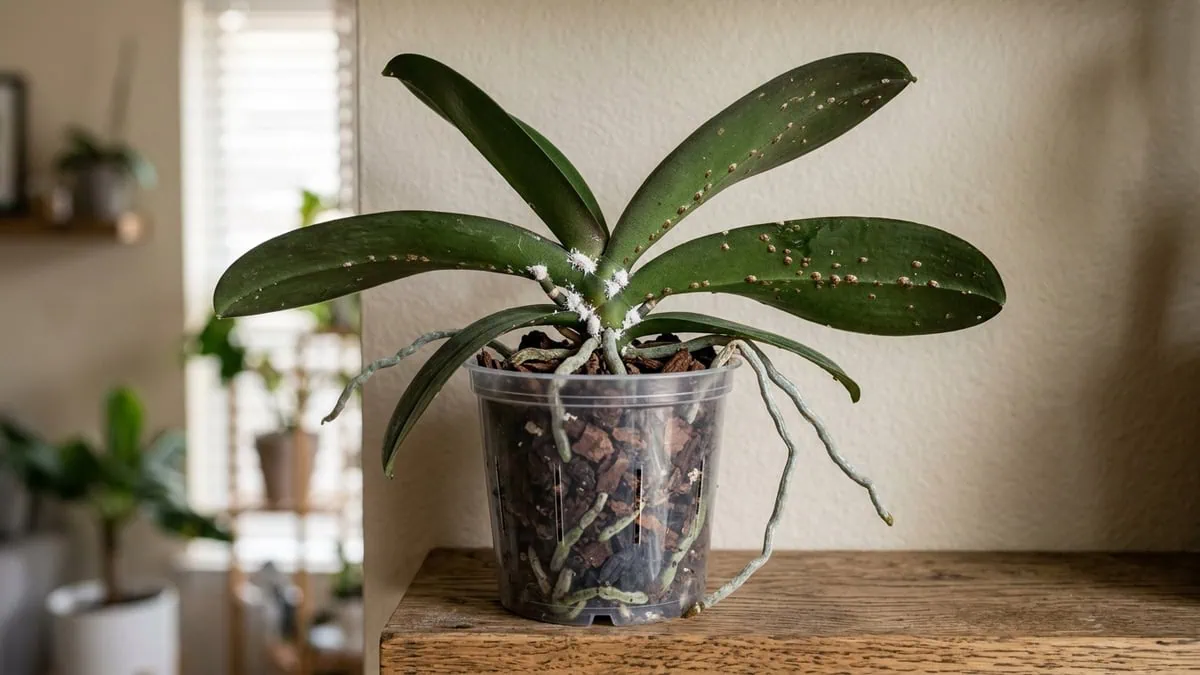
How to get rid of mealybugs and scale on Phalaenopsis orchids: cottony clusters on a moth orchid's leaf joints.

A cottony speck of mealybugs in a Phalaenopsis leaf joint is how the trouble starts, and I ignored mine far too long. Here I walk you through telling mealybugs, scale, and spider mites apart, then the swab-oil-repot rhythm that finally cleared my moth orchids for good.

Categories Moth Orchid Care

Home » Moth Orchid Care

How to treat Phalaenopsis orchid leaf spot disease: bacterial vs fungal

June 27, 2026 by PANG NAM FUI
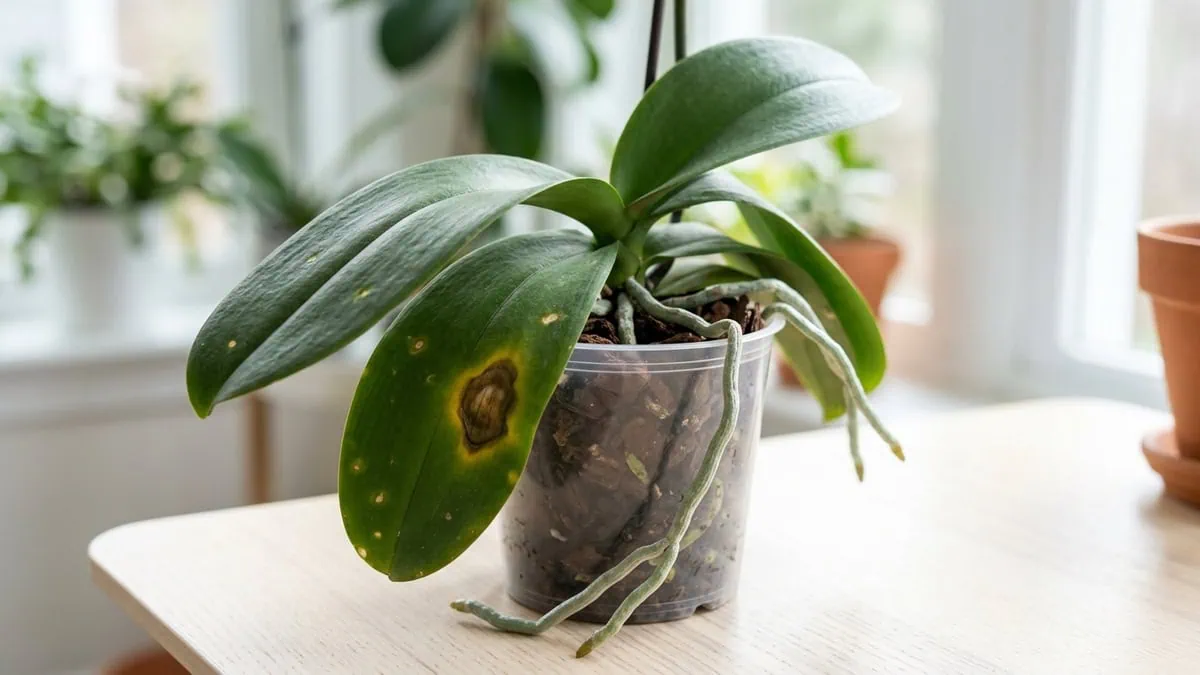
How to treat Phalaenopsis orchid leaf spot disease — a moth orchid leaf marked by a sunken, yellow-haloed brown lesion.

Treating a Phalaenopsis orchid leaf spot is surgery, not spraying. I show you how I tell a real disease from a harmless look-alike, cut the lesion out with a sterilized blade, seal it with cinnamon, and keep the foliage dry so nothing comes back.

Categories Moth Orchid Care

Home » Moth Orchid Care

How to repot a Phalaenopsis orchid step by step: after it finishes blooming

July 13, 2026 by PANG NAM FUI
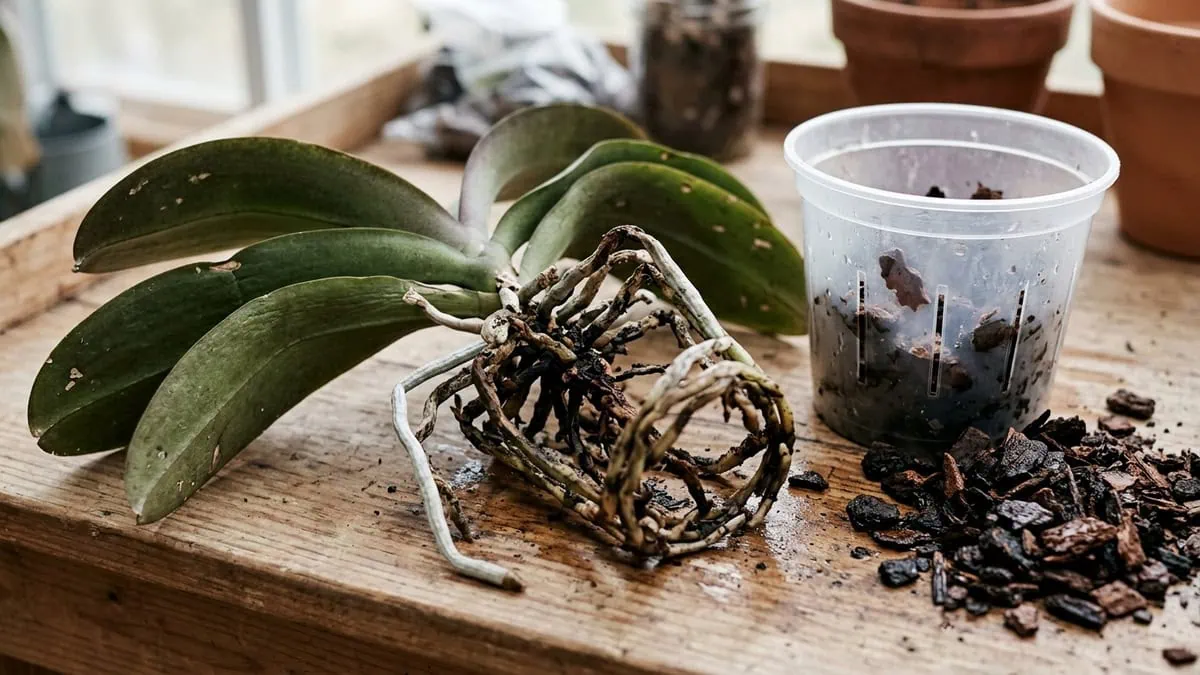
How to repot a Phalaenopsis orchid step by step: bare silver roots out of the old pot, over fresh bark in a clear pot.

Repotting a Phalaenopsis orchid goes smoothest in the short window after its last flower fades and new root tips emerge. I check that the roots are firm and silver, refresh the chunky bark and charcoal mix, and dust any trimmed ends with cinnamon before settling the plant back in.

Categories Moth Orchid Care

Home » Moth Orchid Care

How to fix a Phalaenopsis orchid dying after repotting: shock, not failure

June 27, 2026 by PANG NAM FUI
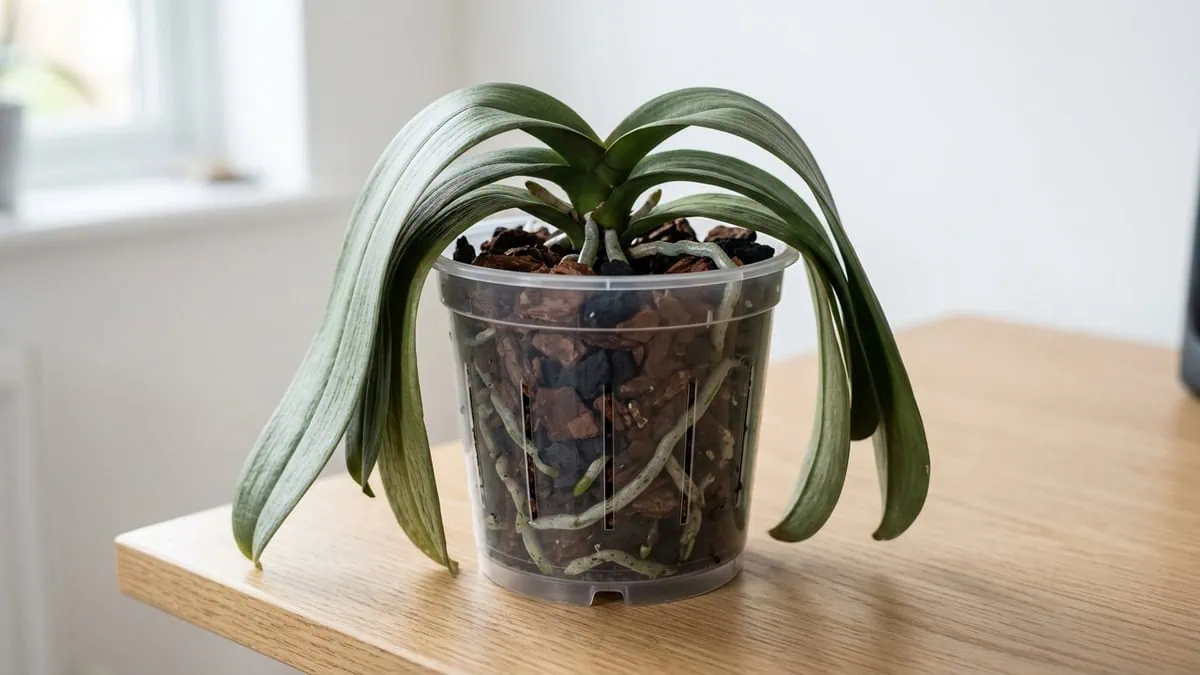
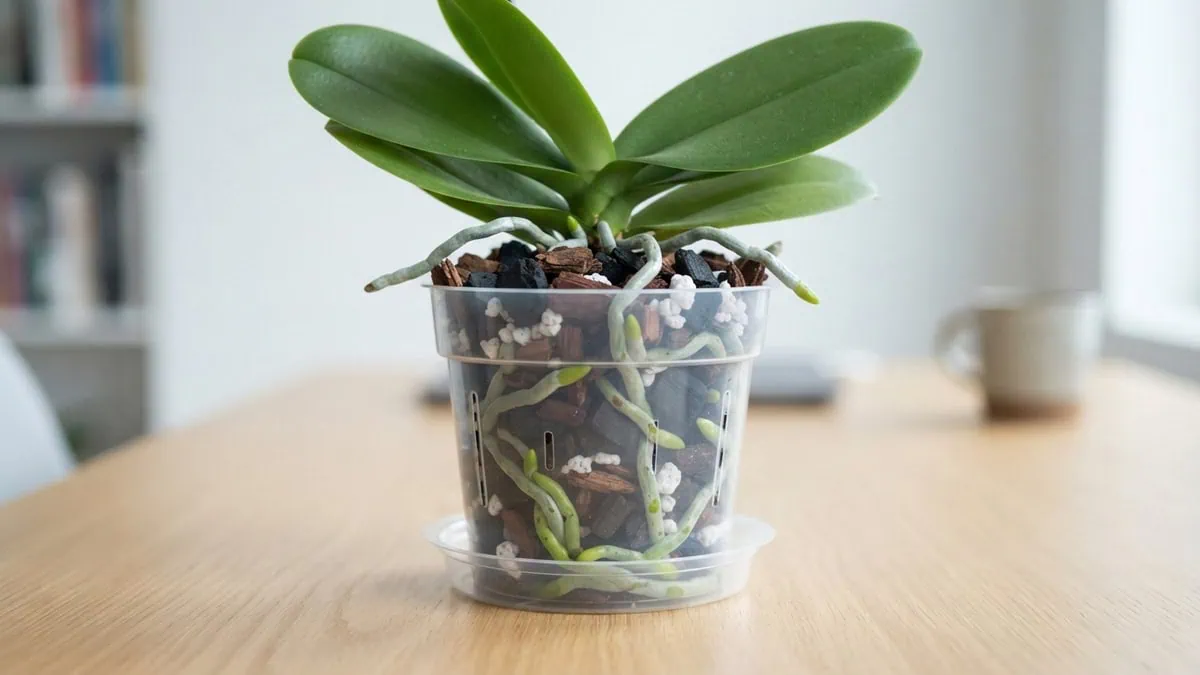
How to fix a Phalaenopsis orchid dying after repotting: limp leaves but firm silver velamen roots in a clear pot.

When a Phalaenopsis collapses days after a repot, it usually means transplant shock, not death. I read the roots before I do anything else: firm and silvery means wait, mushy and brown means trim. Then I give the plant four to six quiet weeks to rebuild its velamen and re-anchor.

Categories Moth Orchid Care

Home » Moth Orchid Care

How to get a Phalaenopsis orchid to rebloom: the night-temperature drop

June 27, 2026 by PANG NAM FUI
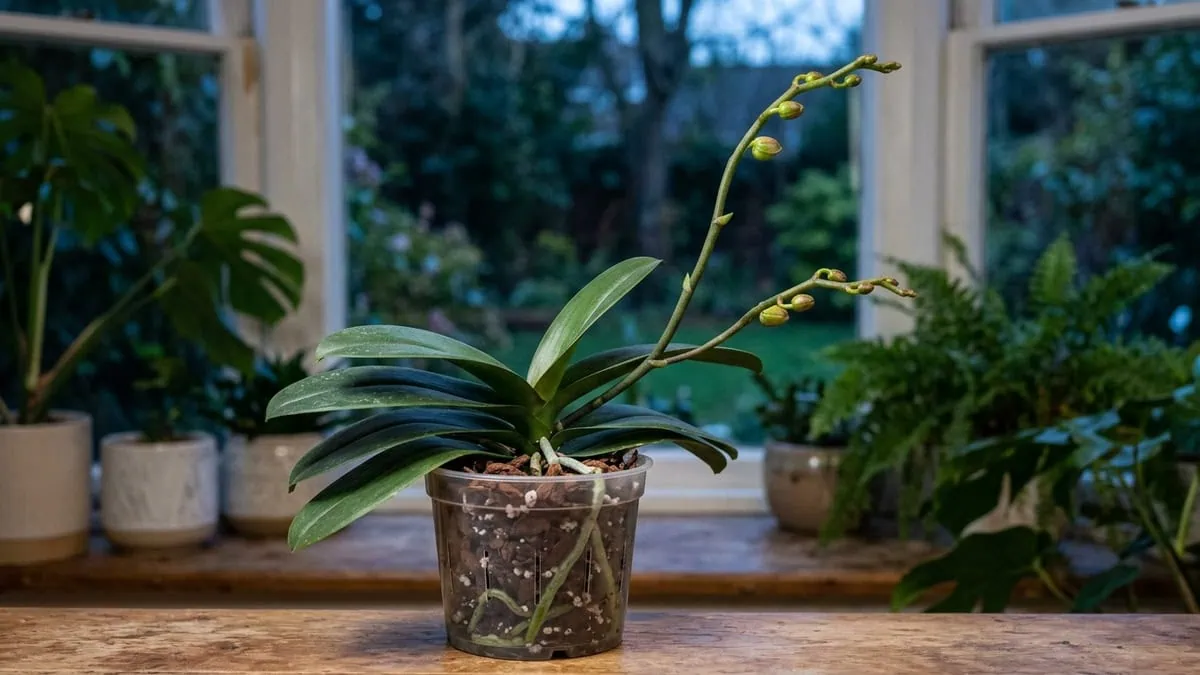
How to get a Phalaenopsis orchid to rebloom: a moth orchid pushing a new mitten-tipped flower spike in cool evening light.

I get a moth orchid to rebloom by cooling its nights to 55-60°F for two to three weeks, holding days under 82°F, and keeping it in bright, indirect light. No coffee grounds or Epsom salt set a spike — the cool-night drop and the leaves do, and I show where to re-cut a spent one.

Categories Moth Orchid Care

Home » Moth Orchid Care

Why is my Phalaenopsis orchid dropping buds and flowers? Stop the bud blast

June 27, 2026 by PANG NAM FUI
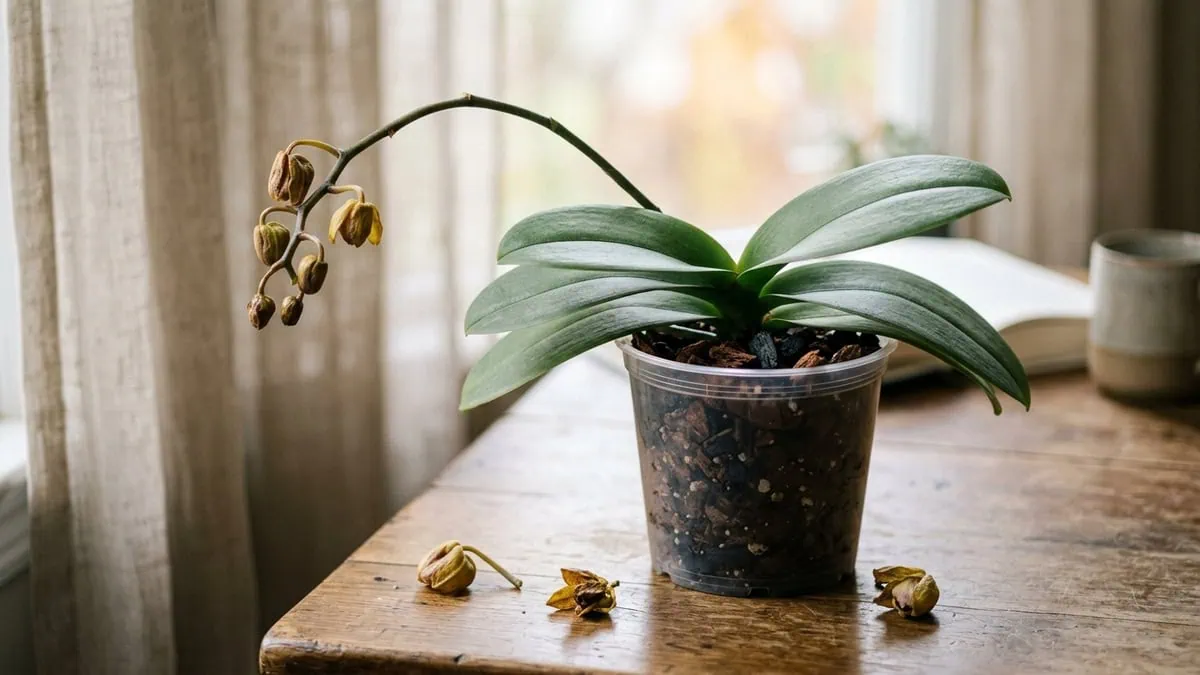
Why is my Phalaenopsis orchid dropping buds and flowers? The spike hangs with yellowing, shrivelled, falling buds.

When my Phalaenopsis orchid started dropping its buds and flowers, I learned the loss is almost never a pest — it is bud blast, an environmental jolt. I show you how to read the cold draft, ethylene, humidity, and watering triggers, then steady each one so the remaining buds hold and open.

Categories Moth Orchid Care

Home » Moth Orchid Care

How to propagate a Phalaenopsis orchid from a keiki: step by step

June 27, 2026 by PANG NAM FUI
How to propagate a Phalaenopsis orchid from a keiki: a separated baby plantlet beside its new bark-filled clear pot.

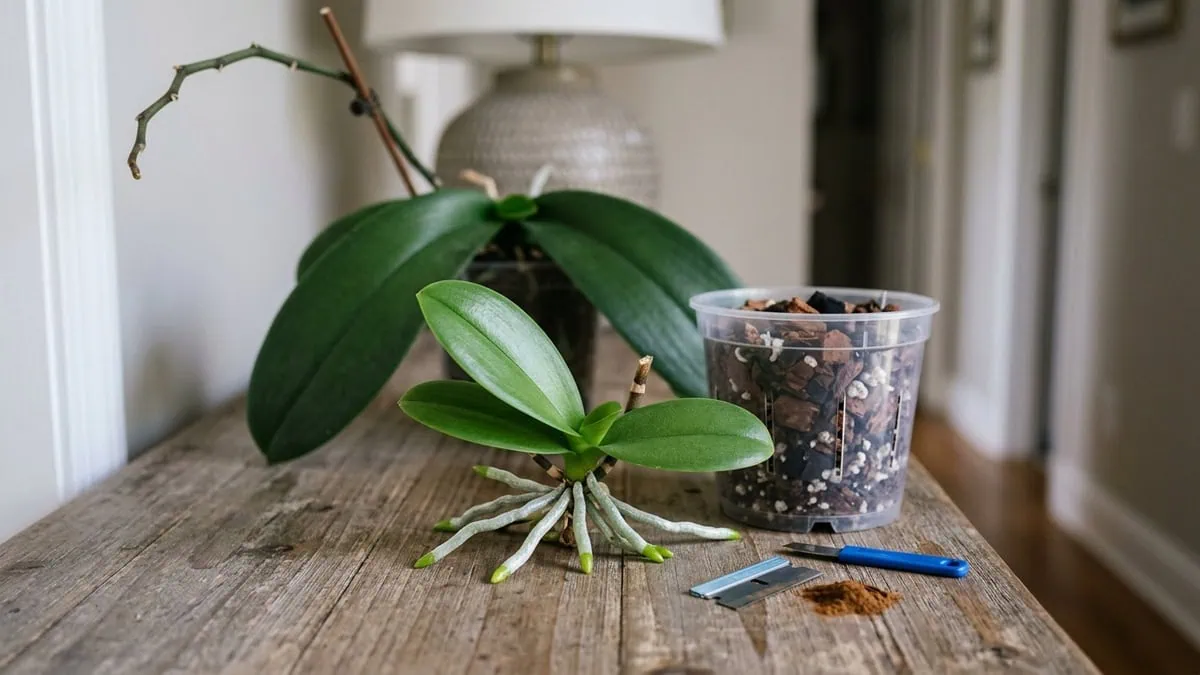
Propagating a Phalaenopsis orchid means separating a keiki — a baby clone the plant grows on its spike — not rooting a cutting. I wait until the plantlet owns three leaves and its own 2-to-3-inch roots, then make one clean cut and pot it in fine bark.

Categories Moth Orchid Care

Home » Moth Orchid Care

How to fertilize a Phalaenopsis orchid without fertilizer burn — weakly, weekly

July 13, 2026 by PANG NAM FUI
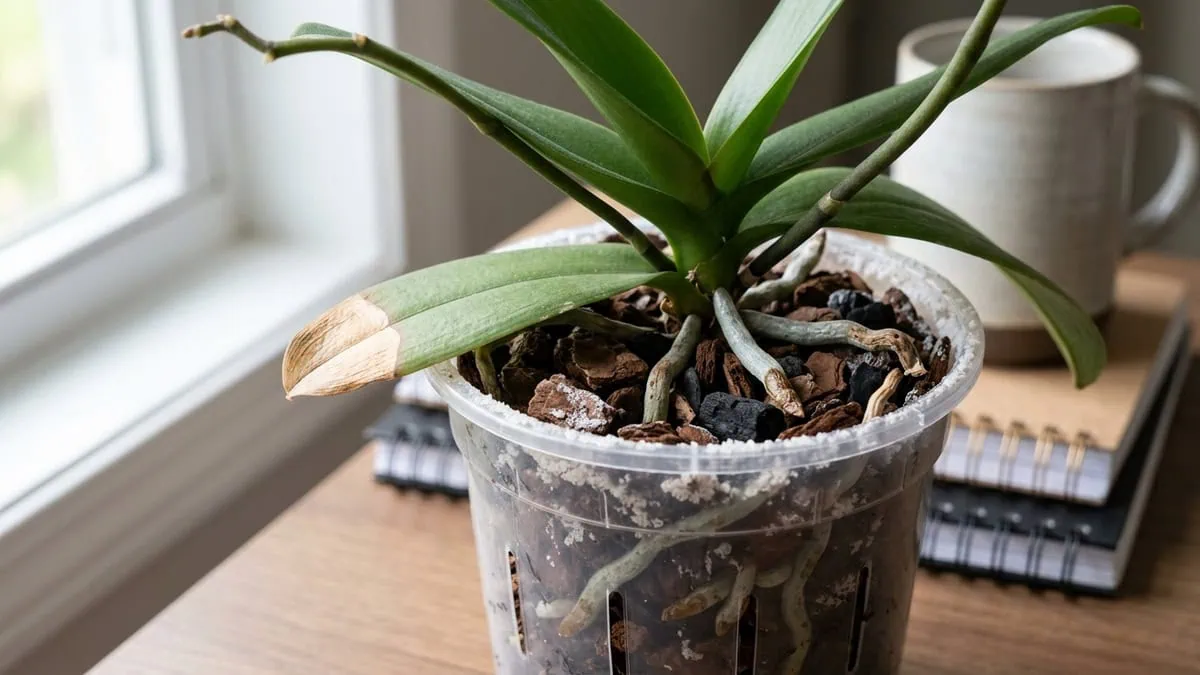
How to fertilize a Phalaenopsis orchid without fertilizer burn: a white salt crust on the bark and a scorched leaf tip.

I feed my Phalaenopsis orchid weak and often — about a quarter of the label strength — so the bare, sponge-like velamen roots never meet a salt spike they cannot dilute. Inside: the wet-the-bark-first order I follow, the burn signs at the leaf tip, and the plain-water flush that stops the crust forming.

Categories Moth Orchid Care

Home » Moth Orchid Care

What is the best soil for a Phalaenopsis orchid? Chunky bark, never potting soil

July 13, 2026 by PANG NAM FUI
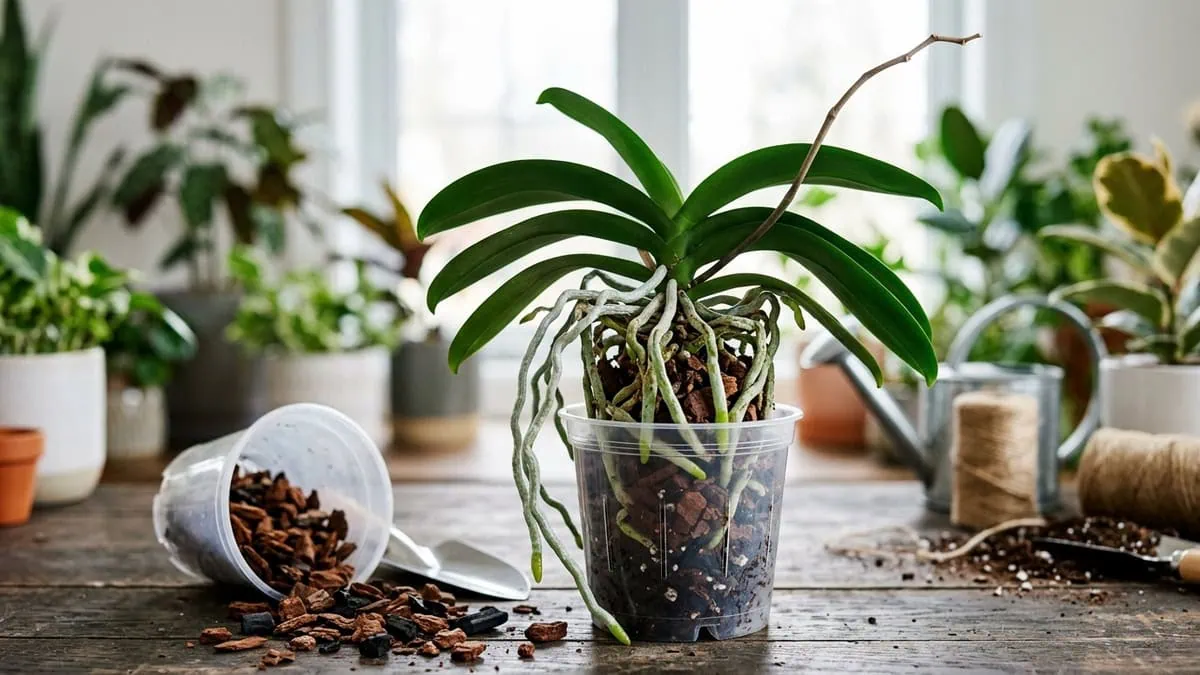
What is the best soil for a Phalaenopsis orchid? Chunky fir bark, silvery velamen roots visible through a clear pot.

For two years I blamed myself for losing moth orchids, when the real culprit was the dense mix I kept potting them in. A Phalaenopsis roots in coarse, airy bark, not soil, and inside I cover the right particle size, a simple home recipe, and how to catch a mix that has broken down.

Categories Moth Orchid Care
PANG NAM FUI, founder of Plant Care Basics and plant care expert.

Hi, I'm Pang. Founder of Plant Care Basics. I share simple, well-researched advice to help beginners develop a green thumb. Welcome to my green corner!

You May Also Like

Why is my Monstera deliciosa turning yellow? One lower blade yellowed above the mix, older leaves first.

Why is my Monstera deliciosa turning yellow? Start with the substrate check

Every yellow leaf I have chased on a Monstera deliciosa turned out to be a root-zone story rather than a feeding one. I push a skewer two or three inches down, read what it brings up, change a single thing, and let the next leaf tell me whether it worked.
What is the best soil for a snake plant? A gritty, fast-draining mix, shown here beside a potted Dracaena trifasciata.

What is the best soil for a snake plant? A fast-draining, gritty mix that blocks rot

I lost two snake plants to a bag of ordinary potting soil before it clicked: the problem was never the brand, it was drainage. Now I build a lean, mostly mineral blend and skip the gravel-layer myth entirely. The payoff is roots that ride dry and firm between soaks.
How to fix a Phalaenopsis orchid dying after repotting: limp leaves but firm silver velamen roots in a clear pot.

How to fix a Phalaenopsis orchid dying after repotting: shock, not failure

When a Phalaenopsis collapses days after a repot, it usually means transplant shock, not death. I read the roots before I do anything else: firm and silvery means wait, mushy and brown means trim. Then I give the plant four to six quiet weeks to rebuild its velamen and re-anchor.
How to propagate Pothos from cuttings step by step: one cutting in water with first white roots at the node.

How to propagate Pothos from cuttings step by step — first roots in 1 to 2 weeks

A Pothos cutting roots in water within one to two weeks if it carries a node. I cut just below one, strip the leaf that would sit under the waterline, keep every node submerged, and refresh the jar each week until roots show.
What is the best soil for a Monstera deliciosa? A solid pot-shaped block beside bark, peat, perlite and grit.

What is the best soil for a Monstera deliciosa? A chunky aroid mix, squeeze-tested

The mix killed more of my early Monstera deliciosa than any pest ever did. Now I blend equal parts bark, peat and perlite, top it with grit, and squeeze a damp handful before potting: if it holds together like clay it goes back in the bowl.
How to save a Pothos from root rot: a rinsed root ball showing firm white roots beside blackened rotted ones.

How to save a Pothos from root rot: the firm-root check and the rescue order

A Pothos with rot still comes back if about half its roots are firm. I squeeze them first, cut only what is hollow, then move the plant into a pot sized to what survived rather than to the leaves above it.
Why is my Pothos turning yellow: a golden Pothos carrying yellowed leaves above its pot of damp mix.

Why is my Pothos turning yellow? Read the leaf, then the soil — the 3-check test

A yellow leaf on a Pothos is a reading, not a verdict. I check which leaves turned, how many went at once, and how wet the mix still is underneath, because one low leaf and five at once mean two different things.
How much light does a Monstera deliciosa need? Here it sits in a dim corner, the mix still dark and wet.

How much light does a Monstera deliciosa need? The one-foot shadow test

The clearest sign my Monstera deliciosa was short of light had nothing to do with the leaves: the mix stayed wet for a week. Now I run a shadow test at the pot, keep the plant a few feet from a bright window, and read node spacing for the rest.

  • Privacy Policy
  • Cookie Policy (EU)
  • Terms of Service
  • Image License
  • About Us
  • Contact Us
  • Sitemap
© 2026 Plant Care Basics. All Rights Reserved.
Manage Consent
To provide the best experiences, we use technologies like cookies to store and/or access device information. Consenting to these technologies will allow us to process data such as browsing behavior or unique IDs on this site. Not consenting or withdrawing consent, may adversely affect certain features and functions.
Functional Always active
The technical storage or access is strictly necessary for the legitimate purpose of enabling the use of a specific service explicitly requested by the subscriber or user, or for the sole purpose of carrying out the transmission of a communication over an electronic communications network.
Preferences
The technical storage or access is necessary for the legitimate purpose of storing preferences that are not requested by the subscriber or user.
Statistics
The technical storage or access that is used exclusively for statistical purposes. The technical storage or access that is used exclusively for anonymous statistical purposes. Without a subpoena, voluntary compliance on the part of your Internet Service Provider, or additional records from a third party, information stored or retrieved for this purpose alone cannot usually be used to identify you.
Marketing
The technical storage or access is required to create user profiles to send advertising, or to track the user on a website or across several websites for similar marketing purposes.
  • Manage options
  • Manage services
  • Manage {vendor_count} vendors
  • Read more about these purposes
View preferences
  • {title}
  • {title}
  • {title}