
🎯 Quick Answer: Pothos and your pets
Yes, and the injury is mechanical rather than chemical: chewed tissue releases microscopic needles that pierce soft mouth tissue. Epipremnum aureum, a member of the Araceae family, carries those crystals in every leaf and stem. Ask “is Pothos toxic to cats and dogs” and the ASPCA verdict covers both.
- Confirm first: check the vine for a fresh tear before assuming a chew
- Rinse, never force: offer water; do not syringe liquid into the mouth
- Call the matching line: animal and human exposures use two different numbers
- Watch the airway: noisy breathing or a swelling tongue means go now
- Hang it high: clip trailing stems so nothing dangles within a jump
Get the one-page care card for this guide, plus a printable A4 copy
We condense this guide into one card for your phone and a print version for the pot shelf. Enter your email and we send both to your inbox. Subscribe once, then request the card of any guide you read.
By subscribing you agree to get emails from Plant Care Basics about plant care guides, about once a week at most. Unsubscribe in one click. Privacy policy
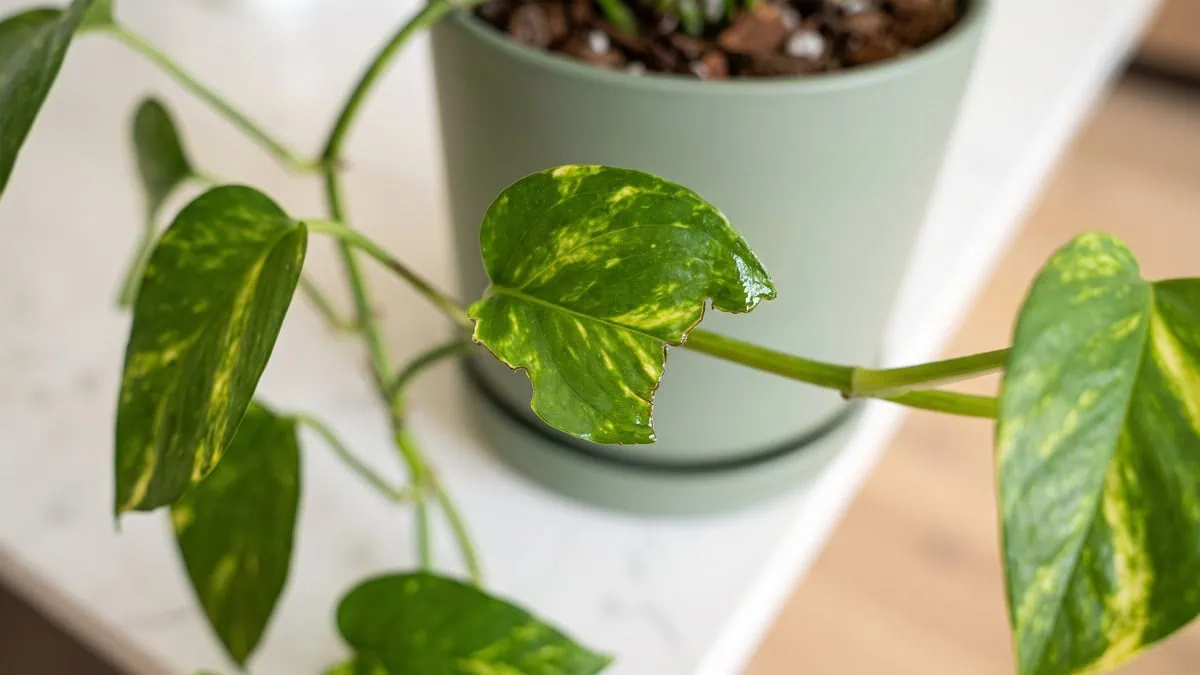
A chewed notch on a trailing Pothos stem looks like nothing. It is not. Quick aside: the bead of clear sap on that tear is what matters, not the missing tissue.
Across years of hanging pots, over which this vine added 12 to 18 inches a month, I read height as the safety measure. Wrong measure entirely.
Height was the wrong measure because the hazard is anatomical: needle-shaped crystals packed inside specialized cells, released when tissue is crushed. Strike that. Crushing releases them; chewing drives them in, and that is why a bite hurts immediately.
Both animals get one verdict from one authority; what you owe a cat, a dog or a toddler differs mainly in which number you dial. For the growing side, start with keeping it healthy alongside everything else it needs.
Every safety answer is collected immediately below in one block: act on it now, and come back for the reasoning afterwards.
Pothos toxicity at a glance: is Pothos toxic to cats and dogs?
| Pothos specs | Safety answer |
|---|---|
| Pet safe? | No – toxic to cats and dogs (ASPCA) |
| Toxic principle | Insoluble calcium oxalate raphides (needle-shaped crystals) |
| Toxic parts | All parts carry the crystals; foliage carries the highest concentration |
| Typical signs, cats and dogs | Oral irritation, intense burning of mouth, tongue and lips, excessive drooling, vomiting, difficulty swallowing |
| Onset | Within minutes of chewing |
| Risk to people? | Yes – the same crystals; child mouthing and crushed-stem sap are the routes |
| Variety effect | None – every named variety carries the same crystals |
| Severity direction | Scales with the amount taken in; rarely fatal, usually a self-limiting mouth reaction |
You are subscribed
Press the button and we prepare this guide's one-page care card and its A4 print copy and email both to you within a few minutes.
Tap the button below to get more plant fixes in your Google Search results

Table of Contents
The needle crystals that make this vine risky
Every Pothos holds the same toxic principle. The ASPCA names the agent as insoluble calcium oxalates – crystals that never dissolve, so they never stop being sharp. Golden, Marble Queen, Neon, Jade: the pattern changes, the risk does not.
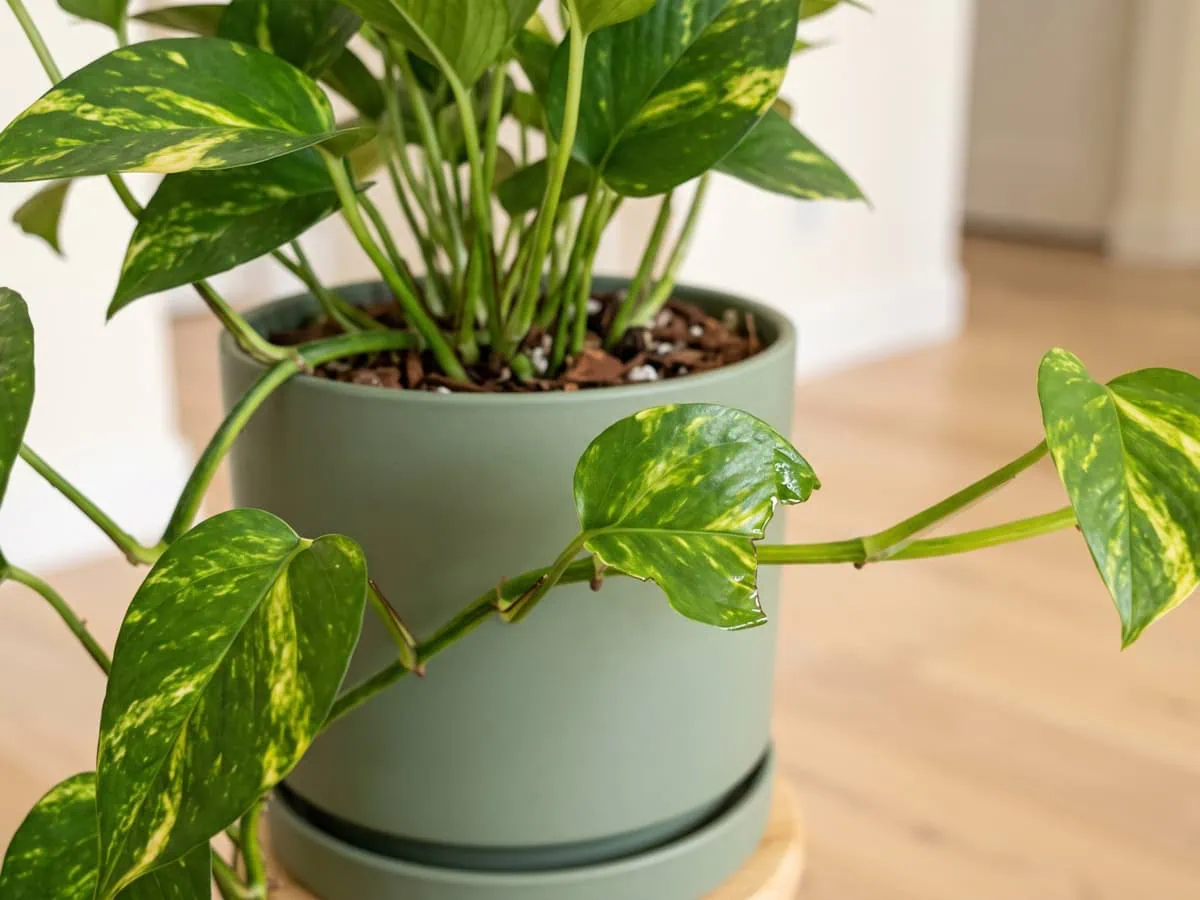
Dose direction matters more than the label. All parts carry the crystals, the guides that grade them by part put the heaviest load in the foliage, and symptom intensity tracks how much went in.
And one label correction belongs up front. Satin and silk pothos are trade names for another genus, so check the look-alike genus sold under the same shelf label. Mechanism first, then what it does not do, then people.
How a bite releases the crystals
Chewing is the trigger, not contact. The needles stack in bundles – raphides – in cells that exist only to hold them, sealed in the cell’s fluid store, the vacuole.
- Raphides: needle-shaped crystals stacked in tight bundles in plant tissue.
- Crystal idioblast: a cell whose only job is holding one bundle.
The plant builds them from oxalic acid and calcium drawn from its environment. Why it makes them is unsettled; one guide says they deter feeding. I’m honestly not sure why this works — but it does.
What these crystals do not do
Local injury is the whole mechanism. The needles act only on surfaces they touch, producing pain and swelling, not absorption. Three claims circulate that it does not support:
- That the crystals build into stones and end in kidney failure
- That a chew starts a delayed multi-hour clock
- That the reaction reaches the heart or lungs
But one rare exception is real, and only one published guide reports it: at large quantities, crystals can appear in the urine, needing veterinary management. Not organ failure.
This information is for educational purposes only and is not a substitute for professional veterinary advice. If your pet ingests any part of this plant, seek immediate veterinary intervention or contact the ASPCA Animal Poison Control Center (888-426-4435) or the Pet Poison Helpline (855-764-7661) immediately.
People and children: the same crystals
The “is pothos toxic to humans or children” question has the same answer. A child who bites a leaf gets immediate mouth burning, and larger exposures bring pain and swelling that make swallowing hard, with airway involvement only in rare severe cases.
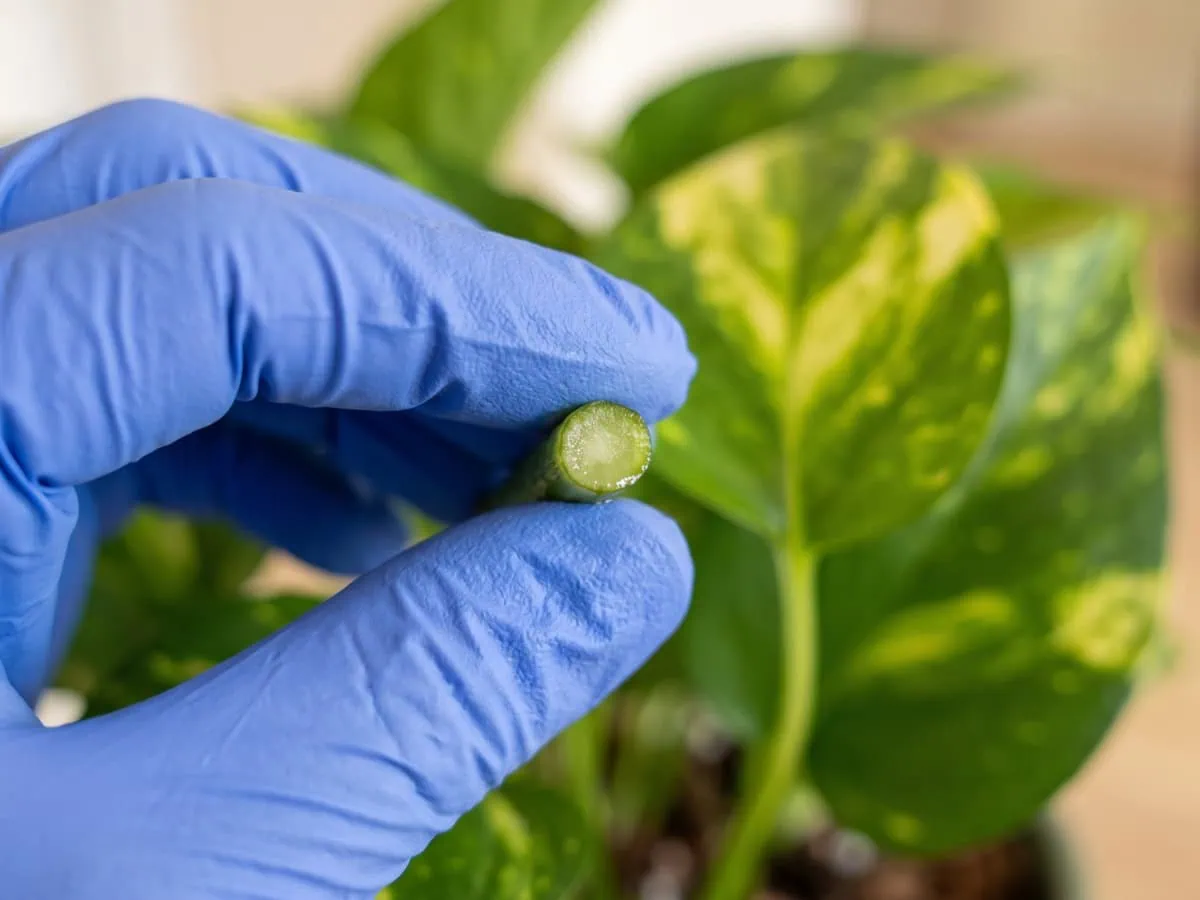
Sap on crushed tissue brings rash, redness and dermatitis; in an eye it can abrade the cornea. Wear gloves for cutting, rinse any contact straight away, wash hands before your face.
This content is for informational purposes only. If you experience a severe reaction, seek medical attention. For suspected ingestion by a child, contact Poison Control (1-800-222-1222 in the US) immediately.
Get the one-page care card for this guide, plus a printable A4 copy
We condense this guide into one card for your phone and a print version for the pot shelf. Enter your email and we send both to your inbox. Subscribe once, then request the card of any guide you read.
By subscribing you agree to get emails from Plant Care Basics about plant care guides, about once a week at most. Unsubscribe in one click. Privacy policy
Tap the button below to get more plant fixes in your Google Search results

What does Pothos toxicity look like in cats and dogs?
Signs begin within minutes of chewing, not hours. Four care write-ups agree on that onset, and it has a consequence: an animal that chewed two hours ago and shows nothing most likely swallowed none.
Duration is the messier half. Improvement usually starts within several hours once exposure stops, and a minor mouthful can take days. Below come the behavioral cues, then cats, then dogs.
Behavior first: what you notice in the room
You register behavior before a symptom. The animal is off in a way you could not describe: a cat that has met this plant goes quiet and low, never loud.
A cat that normally squirms goes heavy and still in your hands. Dead weight, where there is usually a fight. That cue comes first:
- Pawing at the face or throat
- Yelping or whining out of nowhere
- Panting, or a stress yawn on repeat
- Fast, darting, panicked movement
- Guarding the mouth, refusing to be touched
Cats mask pain, which is why behavior fires first.
Mouth and gut signs in cats
The symptoms of pothos poisoning in cats form one cluster, which the ASPCA lists as a single set:
- Oral irritation, with intense burning of mouth, tongue and lips
- Excessive drooling, usually the first thing seen
- Vomiting, and visible difficulty swallowing
Every one is the same injury from a different angle – one mouth, one place.
The same picture in dogs
Owners asking are pothos poisonous to dogs get the identical answer from the same source: the ASPCA publishes one clinical-sign set covering both species, and an independent extension listing records the same picture.
Noisy breathing, a swelling tongue, or an animal that cannot swallow its own saliva turns monitoring into a call now. For an animal, the ASPCA Animal Poison Control Center runs a 24-hour line on (888) 426-4435; the Pet Poison Helpline on (855) 764-7661 is a paid 24/7 alternative.
For a person or child, call Poison Control on 1-800-222-1222. The routes are not interchangeable.
What to do in the first ten minutes after a chew
Whichever variety sits on your shelf – telling the named varieties apart by leaf pattern changes nothing – the first ten minutes run the same. Confirm, rinse, call – the sections below take them in order.
Confirm the chew before you act
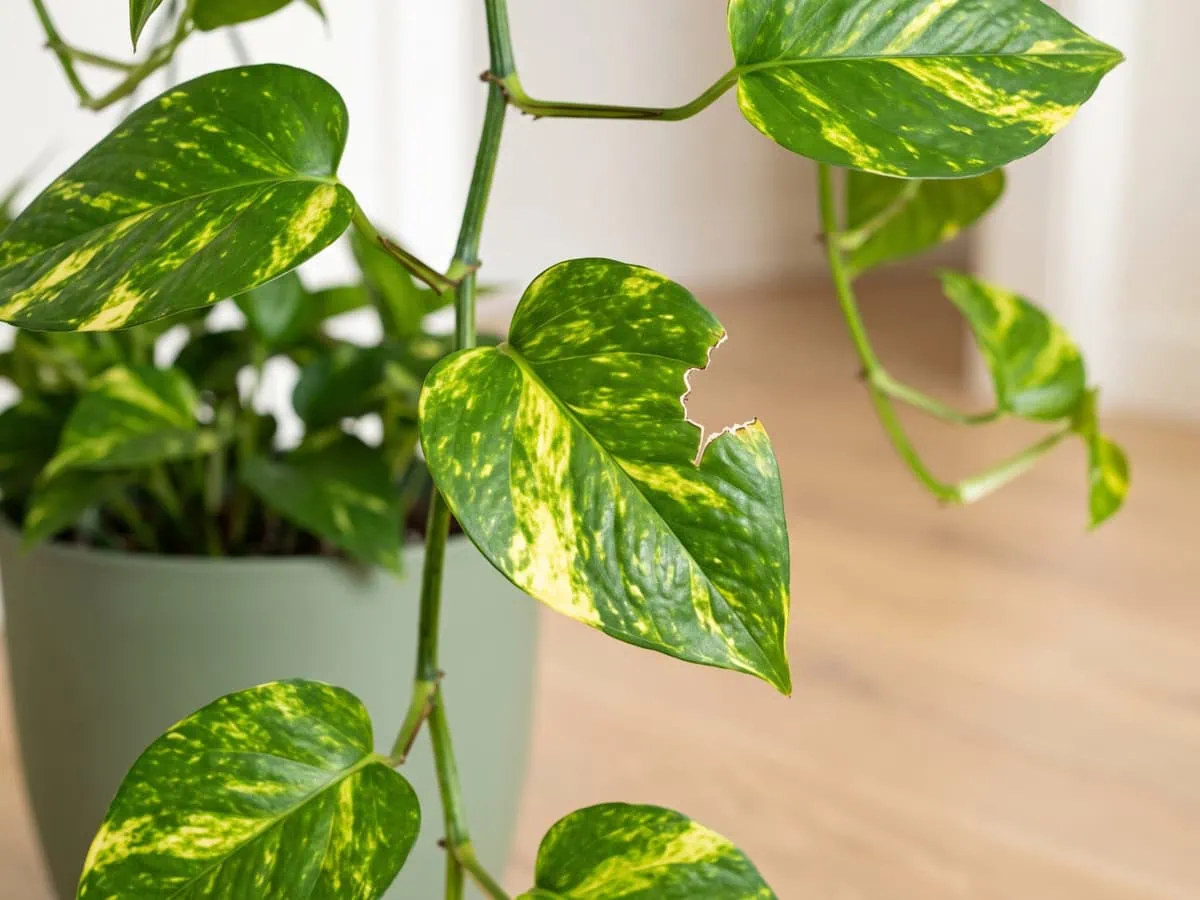
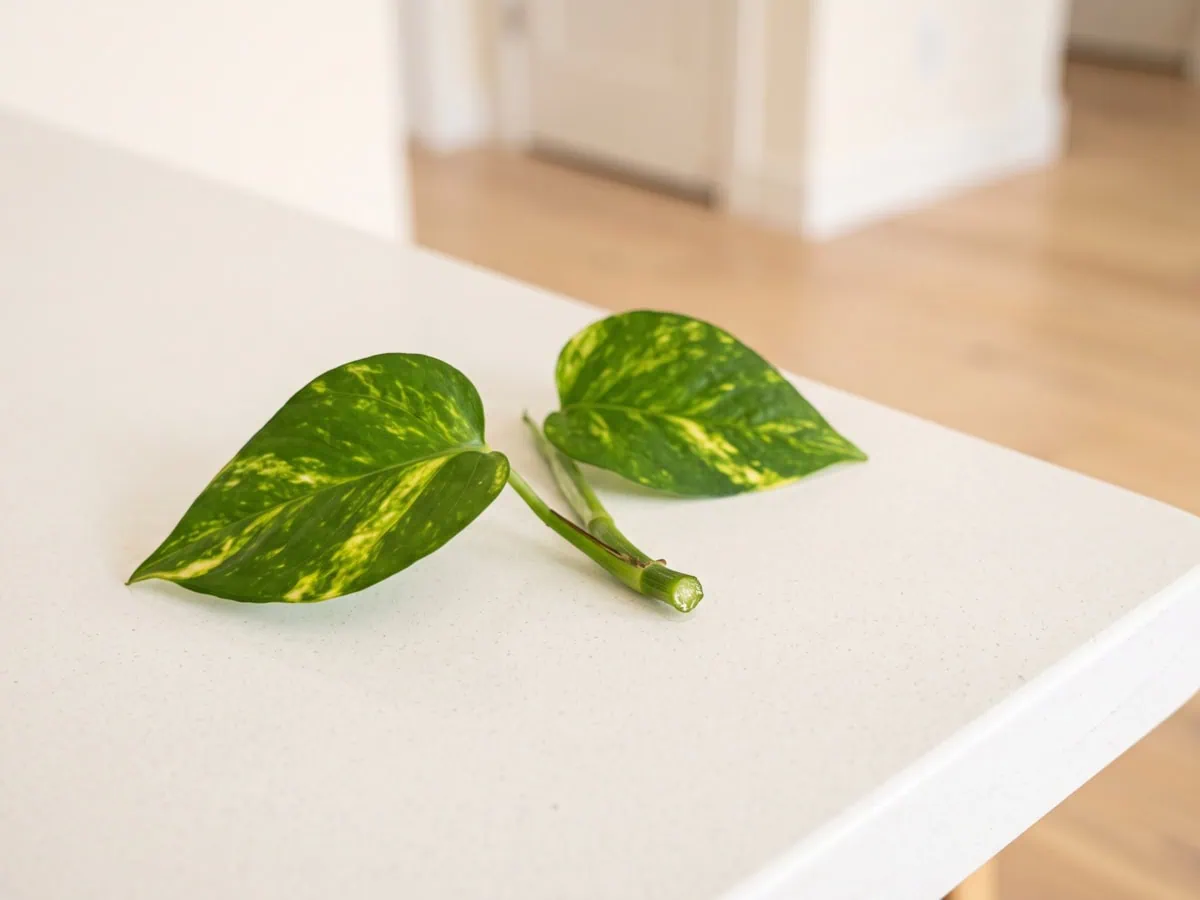
Start by proving the plant did it. If nobody saw it, lift the pot down and look for a fresh tear – a bright wet break, not a dry edge.
The pot gives a second reading worth taking: barely there when bone-dry, solid an hour after watering, and that difference tells you whether anybody has been at it. Nearly every write-up skips it. A drooling animal beside a vine is no proof.
Rinse, offer water, and who to call
The “what happens if my cat eats a pothos leaf” answer runs in four moves:
- Clear any plant material still in the mouth, if you can reach safely
- Rinse or offer water – offer it, never force it
- Photograph the plant, or pocket a piece, before dialing
- Call the routed line and do what it says
Match the line to the patient, not the plant. The two services are separate, with separate numbers, all above.
Two at-home remedies circulate that nobody explains. Some offer milk or soft dairy as a soothing rinse with no mechanism given; one hands the owner antihistamines and pain medication while its own escalation section keeps them professional. Water and a call are what every reliable source agrees on.
Placement that keeps a curious cat out
Every answer to “how to keep cats away from pothos plants” starts with separation you never police, and the strongest is training the vines upward onto a damp moss totem.
But height alone is a trap. A cat cannot judge a plant unsafe, so what matters is the gap from the lowest leaf to the nearest surface it launches from.
This vine runs 6 to 8 feet of stem indoors, so a pot hung safely today dangles into reach in weeks. Cutting long bare runners back above a node is the other half.
- Stone top-dressing, which deters digging
- A pot of oats for greens
- A clip above a node when the lowest leaf drops in reach
Frequently asked questions about Pothos and pets
After a chew, owners ask these.
What happens if a cat eats pothos?
The pain starts within minutes. Chewing tears open cells holding bundles of needle-shaped crystals, and those needles embed in lips, tongue and throat on contact, which is why the reaction is instant rather than delayed.
Drooling, pawing at the face, vomiting and trouble swallowing follow. Most cats spit it straight out, which keeps the dose small, and improvement usually begins within hours.
Can I have a pothos if I have a cat?
Yes, provided you place it rather than trust the cat. The plant is toxic to cats, but the route is physical: remove reach, remove the incident.
Hang it, shelve it high, or train it up a pole, then keep the lowest leaf above whatever the cat can jump from. That measurement, taken from the furniture rather than the floor, decides whether it holds.
What happens if a dog eats pothos?
The same thing that happens to a cat. The ASPCA publishes one clinical-sign set covering both: oral irritation, intense burning of the mouth, tongue and lips, excessive drooling, vomiting and difficulty swallowing.
The more a dog takes in, the harder the reaction, and that amount is the one variable that moves it. Confirm, rinse without forcing liquid, call the line.
How long does pothos poisoning last in cats?
Improvement usually begins within several hours once exposure stops. A minor mouthful can take a few days to clear, and the variable is how much tissue was swallowed rather than spat out.
Published figures disagree by an order of magnitude, worth knowing before you set expectations. Anything still worsening rather than settling belongs on the phone, not on a clock.
How long does it take for plant poisoning to show in cats?
It takes minutes with this plant. Four write-ups agree that signs appear within minutes of chewing, because the injury is mechanical rather than absorbed.
That speed is useful in reverse: an animal that chewed two hours ago and still shows nothing most likely swallowed none of it. A delayed onset points somewhere else, and that is worth saying to whoever you call.
How to keep pothos away from cats?
Separate them physically, because deterrents that depend on the cat are unreliable. Elevation works only when the trailing growth is clipped, since this vine adds 12 to 18 inches a month.
Three tactics carry most of the load: stone top-dressing deters digging, a pot of oats redirects the greens habit, and a pole turns a hanging plant into a climbing one.
Can cats sense poisonous plants?
No, not reliably enough to be a safety plan. Animals are known to nibble hazardous plants, so the owner removes the opportunity rather than trusting the animal.
What happens instead is that most animals spit the mouthful out at once, because the pain is immediate. That reflex limits the dose after the fact, which is why placement does the real work.
Why is my cat attracted to golden pothos?
Cats eat greens for their own digestive reasons, and this plant offers the shape they like. Trailing, grass-like foliage moving in a draft is indistinguishable from a toy.
That combination, not flavor, is why a hanging vine draws more chew incidents than a rigid upright plant. Give the greens habit its own container, and shorten the stems below cat height.
End the hang-it-and-hope era
The pot that finally taught me this hung at shoulder height and still lost a leaf, because the stem below grew a foot while I counted height, not reach. It came down light in my hand.
Nothing here is unpredictable. Needle crystals in every leaf, pain within minutes, no hazard once reach is gone.
The real question is not whether to keep it, but where the lowest leaf lands tonight, and whether you can find the right number at 2am.
Settle both and “is Pothos toxic to cats and dogs” turns from an emergency into a placement decision you made once. Turn the vine over, find the torn edge, then call the line that matches whoever chewed it – and breathe.
Get the one-page care card for this guide, plus a printable A4 copy
We condense this guide into one card for your phone and a print version for the pot shelf. Enter your email and we send both to your inbox. Subscribe once, then request the card of any guide you read.
By subscribing you agree to get emails from Plant Care Basics about plant care guides, about once a week at most. Unsubscribe in one click. Privacy policy
Tap the button below to get more plant fixes in your Google Search results