🛠️ Quick Prep Summary: repotting a Pothos
Almost all of how to repot a Pothos without killing it happens before the plant leaves its pot. Epipremnum aureum moves best when the root ball stays whole. The new pot gains only 1-2 inches.
Nothing gets rinsed. Gather these three things first.
- A pot 1-2 inches wider: with one open drainage hole in its base
- Sterilized bypass snips: for any soft or blackened roots you find
- Timing: only while the plant is pushing new leaves
Get the one-page care card for this guide, plus a printable A4 copy
We condense this guide into one card for your phone and a print version for the pot shelf. Enter your email and we send both to your inbox. Subscribe once, then request the card of any guide you read.
By subscribing you agree to get emails from Plant Care Basics about plant care guides, about once a week at most. Unsubscribe in one click. Privacy policy
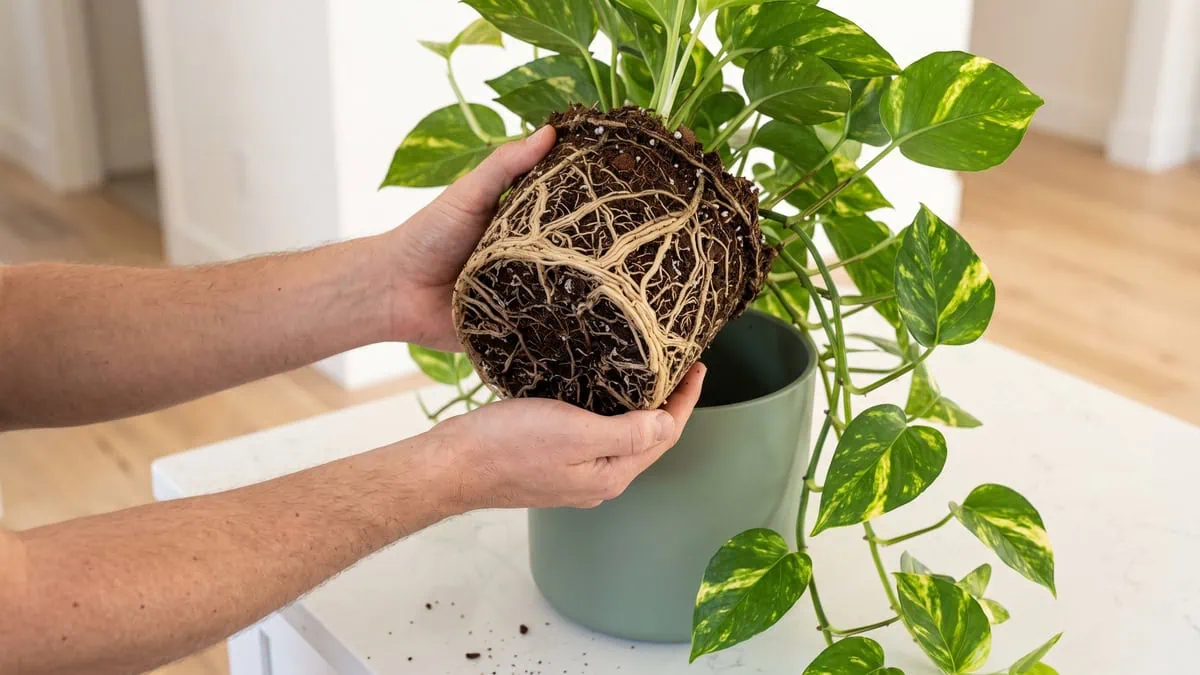
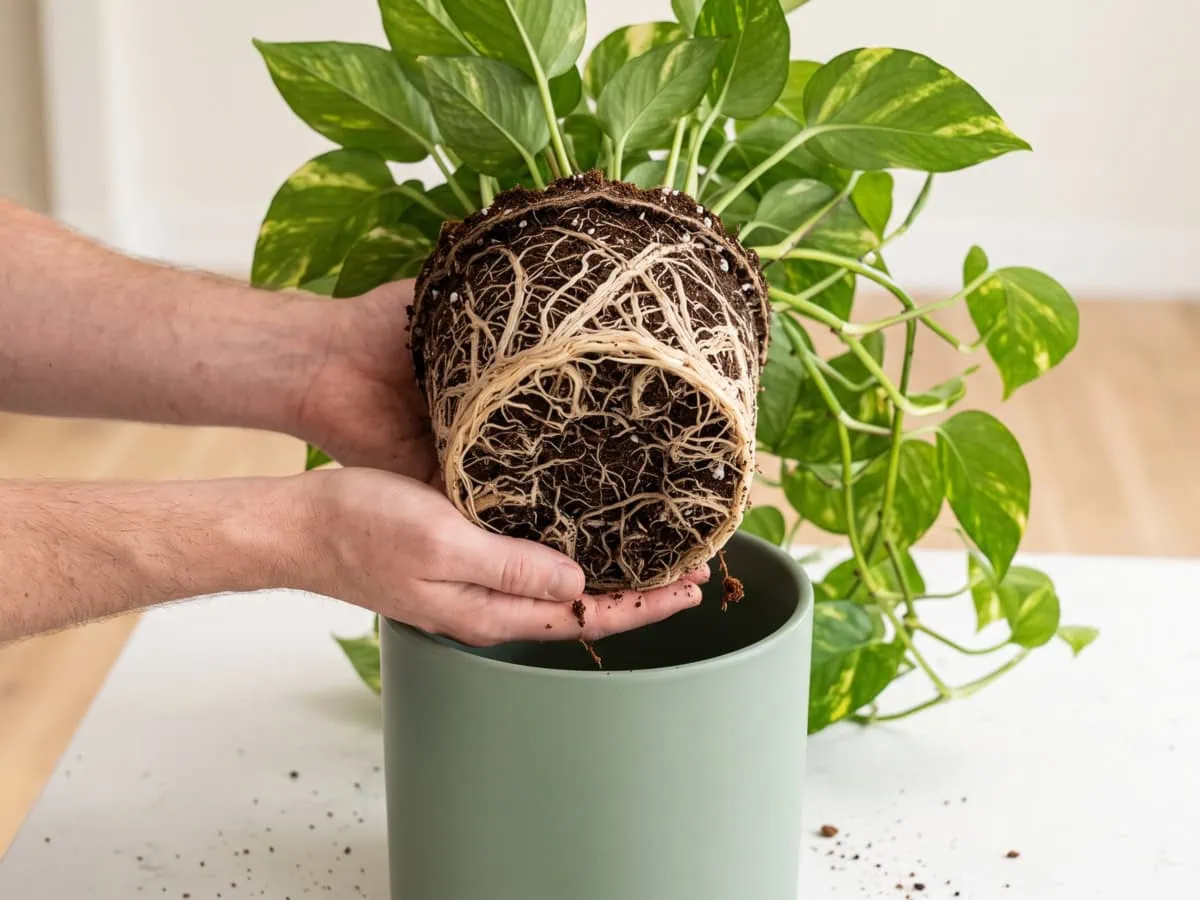
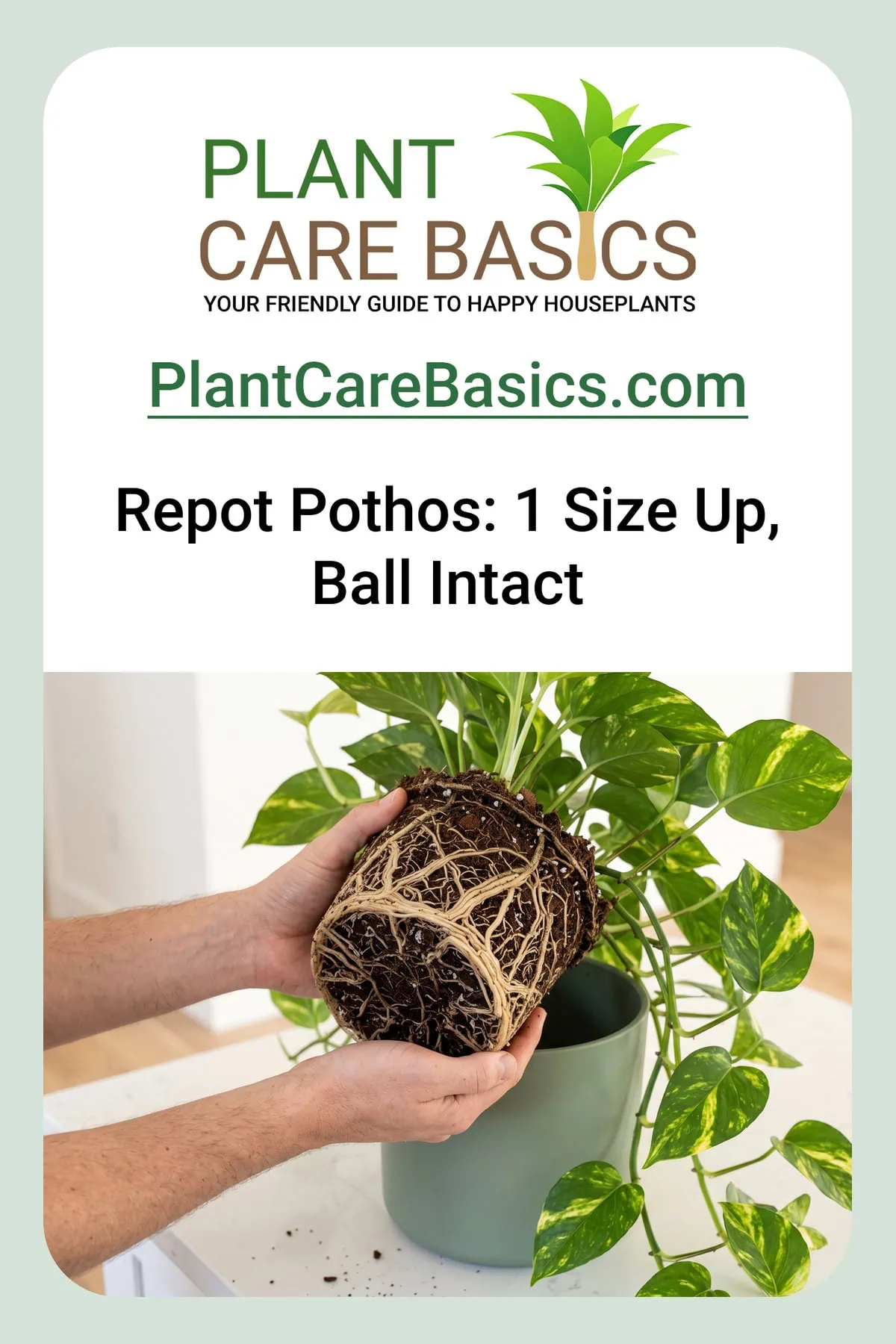
The pot lifted away and the root ball came with it, a felted mat of circling roots wound so tight that the potting mix had almost vanished from the bottom third. After many of those moves, the part nobody photographs is the part that decides it, which still surprises me.
The plant rarely fails as you pull it out. It fails three days later, in a pot too big and too wet.
A bigger pot feels generous, and it is the single instinct this operation punishes. A Pothos root system grips and drinks through short adventitious roots borne at the stem nodes, so it works the volume it already occupies rather than reaching out for more.
Hmm, on reflection, calling the pot the problem is too loose. The real problem is the volume of wet mix no root has reached yet.
The method below is subtraction: move the mass undisturbed, drop only what falls away by itself, and climb a single container step. This operation interrupts a standing rhythm worth knowing first.
The whole operation fits into one set of specs underneath, and every figure in it is something you can lay out on the bench beforehand.
How to repot a Pothos without killing it: quick specs and requirements
| Pothos specs | Requirement |
|---|---|
| Difficulty level | Low (beginner) |
| Time needed | 20-40 min |
| Best timing | While the plant is actively growing |
| Container step-up | 1-2 inches larger in diameter |
| Receiving pot must drain from its base? | Yes |
| Snips sterilized before the root trim? | Yes |
| Old medium removed | About one-third, root ball kept intact |
| First watering | Immediately, until it drains |
You are subscribed
Press the button and we prepare this guide's one-page care card and its A4 print copy and email both to you within a few minutes.
Tap the button below to get more plant fixes in your Google Search results

Table of Contents
Before you start: timing, tools, and the root-ball check
Four checks decide whether this move helps the plant or sets it back. All happen before it leaves the old pot. Work through the four sections below in order.
Read the root ball, not the calendar
The root mass triggers this, never a date. Slide the plant out and read the outer face: circling roots wound into rings, with potting mix scarce in the bottom third, is the rootbound state, and it means the pot is full.
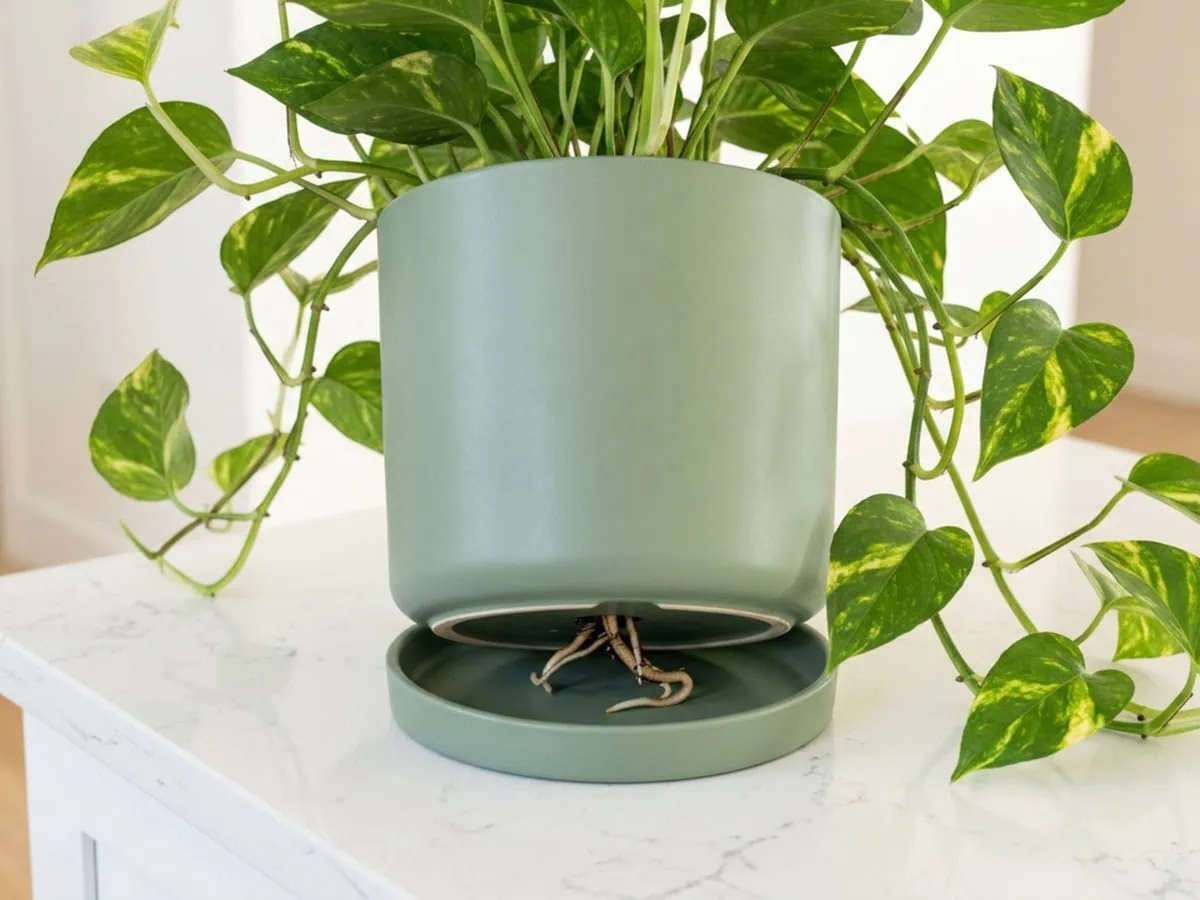
One published threshold puts the line at roughly 75 percent roots to 25 percent mix. Then three more signals say the same thing. Roots out the drainage hole, stalled growth, a pot that dries within days.
Growers who type “when does a pothos need to be repotted” want an interval, and one to two years is the answer the market keeps repeating back at them. Hold it as background. It is not the test.
According to the University of Maryland Extension, how a pot-bound root mass starts to behave is the real signal. Water races through too fast to soak the center, and the leaves then answer with tip dieback and marginal necrosis (browning creeping in from the edge).
Pick a pot only one size up
One size up means 1 to 2 inches of added diameter. A 6-inch pot goes to an 8-inch. A 4-inch goes to a 6-inch.
The phrase “what size pot does a pothos need” gets typed by people already holding something too large. Match the pot to the root mass rather than the shelf.
That case is rare. One exception: a 6-inch plant whose roots have fused into a solid block can jump to a 10-inch pot.
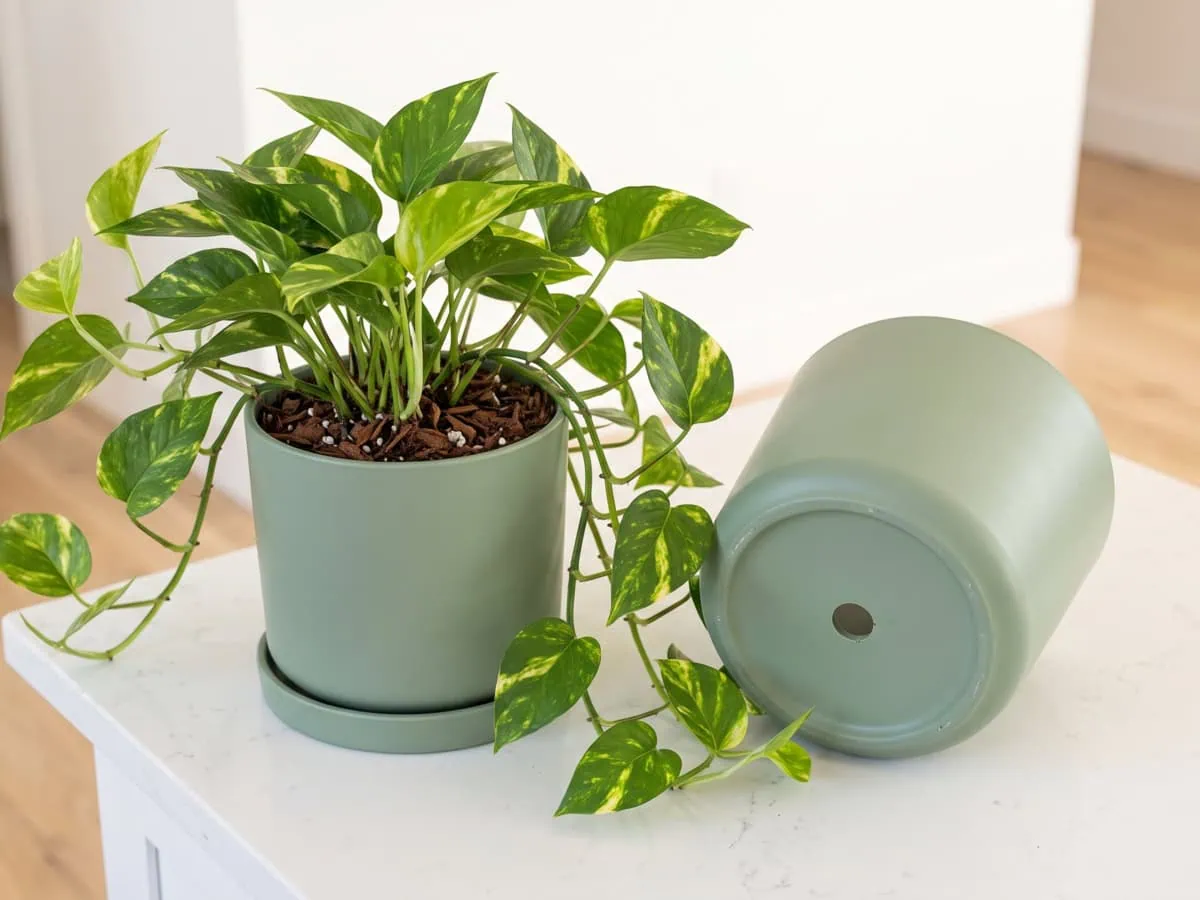
Terracotta or plastic: Match the pot to your habit
Container material changes how fast the mix gives up water, and so how often you water. The material has never once decided the outcome for me; the drainage hole and the watering hand did all the deciding.
- [PROS] Terracotta breathes through its wall, so the mix dries faster. (Best For: a heavy-handed waterer)
- [CONS] Terracotta wants water more often and cracks if dropped.
Verdict: Choose terracotta if your Pothos has ever sat in soggy mix, because this species tolerates a fast dry-down and suffers from the opposite.
Soak a new terracotta pot for a few hours first. Dry clay pulls moisture straight out of the fresh mix.
Water two days ahead and stage your tools
Water the plant a day or two before the move. Damp mix holds together as a block and slides free. Bone-dry mix crumbles off the roots as you lift.
First lay out the new pot, the snips, and enough fresh medium. Settle what belongs in the mix you are about to pot it into before you start.
A dowel pushed to the bottom of the old pot reads the moisture (pull it out and look for crumbs clinging to the wood).
Get the one-page care card for this guide, plus a printable A4 copy
We condense this guide into one card for your phone and a print version for the pot shelf. Enter your email and we send both to your inbox. Subscribe once, then request the card of any guide you read.
By subscribing you agree to get emails from Plant Care Basics about plant care guides, about once a week at most. Unsubscribe in one click. Privacy policy
Tap the button below to get more plant fixes in your Google Search results

The step by step Pothos repotting sequence
The sequence runs six steps and takes 20-40 minutes once the tools are out. Work the six below in order, because each sets up the next.
Step 1: Gather the trailing vines into a loose sleeve
Slide the trailing vines into a pillowcase and tie it loosely near the top. The bundle lifts aside in one motion, and no stem snaps at a node (the swollen point where every aerial root sits). Release it once the mix is in.
Step 2: Tip the pot and free the root ball
Lay the pot on its side and squeeze the walls, then invert it while your palm supports the crown. Tap the rim until the root ball slides out whole. Never pull by the stems.
Anyone searching “how to repot a rootbound pothos” is one hard tug from tearing the mass in half, so squeeze and tap rather than force it. The block comes away cool and heavy, dense with firm white roots.
Step 3: Shed about a third of the spent mix
Work roughly one-third of the old medium off the outside of the block with your fingers. Loose crumbs that drop under light pressure come away; anything bound inside stays. Stop there (one-third is where published guidance converges, and the retained mix carries the plant through re-establishment).
Trimmed root ends weep a white sap carrying insoluble calcium oxalate raphides, and it lands on hands that are already wet with mix, which is how it travels. Gloves go on for the trim. Any sap that reaches skin gets sixty seconds of cold running water before anything else happens, and nothing touches your eyes or mouth until the gloves are off and your hands are washed.
If a severe skin reaction develops (blistering or intense burning), seek medical attention immediately. For chemical exposure, you can also contact Poison Control (1-800-222-1222 in the US).
Step 4: Inspect the roots and trim only the soft ones
A root that is still working feels solid between finger and thumb and shows fine white side branches. Failing roots run brown to black and mushy, and the outer sheath slides off the core when you pinch it, which is the clearest signal you will get all afternoon. Take those off with sterilized snips.
Nothing else comes off. On a sound root ball there may be none at all.
Step 5: Set the root ball below the rim and backfill
Add fresh mix to the base until the top of the root ball sits an inch or two below the rim, at its previous depth. Backfill with a chunky coir-based aroid mix, 1 part coco coir to 1 part orchid bark to 1 part perlite, top-dressed with a thin layer of fine orchid bark. Firm it only enough to hold the plant upright, so the surface gives under a fingertip.
Step 6: Soak until water runs from the drainage hole
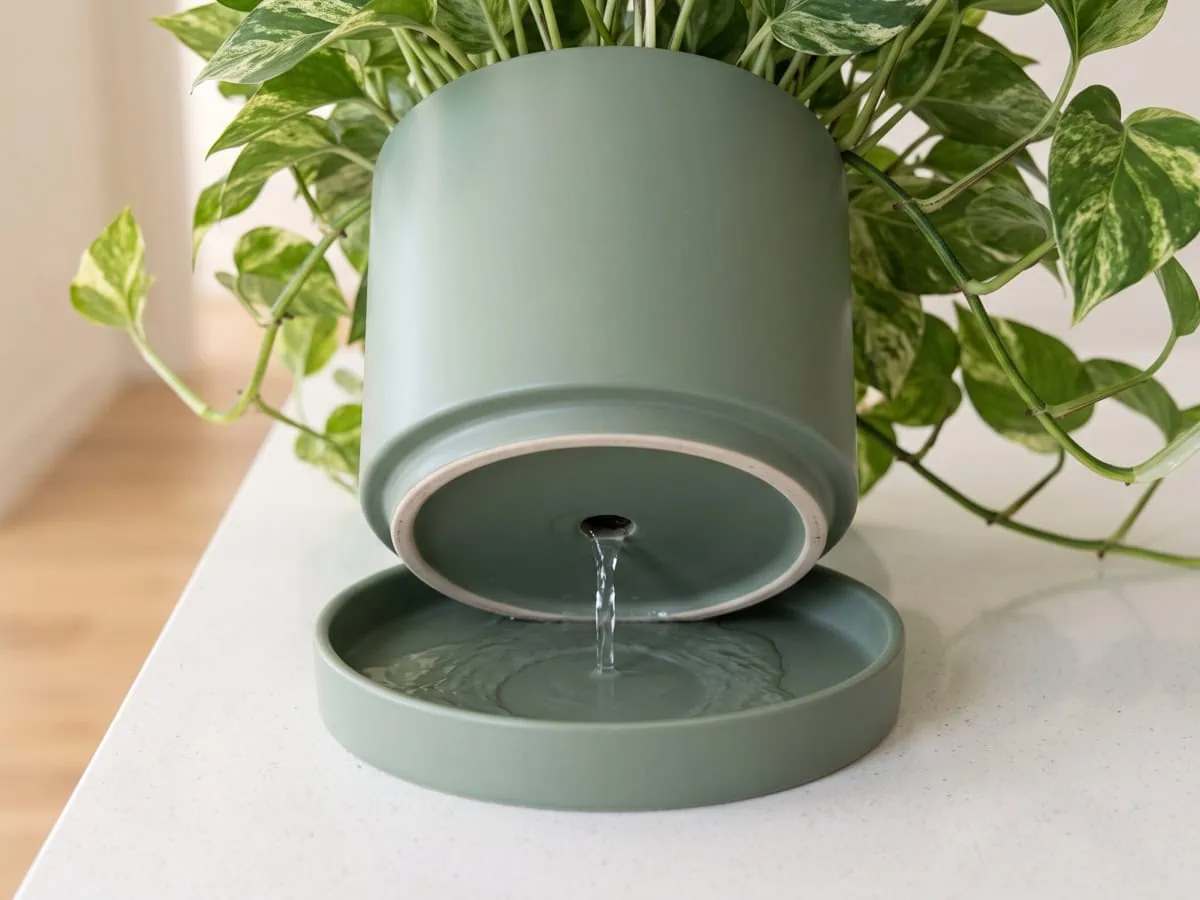
Water immediately and thoroughly, until it runs from the drainage hole. Let it drain fully. Anyone asking “should I water my pothos right after repotting” is weighing rot risk, and the answer holds because this soak is mechanical: it collapses the air pockets against freshly disturbed roots.
Repeat if the mix went in dry, and watch the surface settle a finger’s width. This pour does not reset the schedule; the ordinary watering rhythm to return to afterwards is unchanged.
The first three weeks after the move
A repotted Pothos looks worse before it looks better. The first three weeks are where most owners undo their own work. The four sections below mark what is normal and where the line sits.
What a normal droop looks like, and for how long
Start with the biology. It explains the whole window. Lifting a plant tears the fine root hairs that do most of the water uptake, so the roots briefly cannot supply what the leaves keep losing.
The blades go soft and flat. The plant reads as thirsty and waterlogged at once. How fast that balance rebuilds varies: I have a hunch about this but no peer-reviewed source, and extension guidance stops at qualitative recovery.
The searchable version of this is “why is my pothos wilting after repotting”. The practical answer is a window of two to four weeks with little new growth. Hold water steady and change nothing else.
If the limpness arrived with no repotting event behind it, the wider set of causes behind limp, curling foliage is the place to look instead.
Return it to the exact spot it already lived in
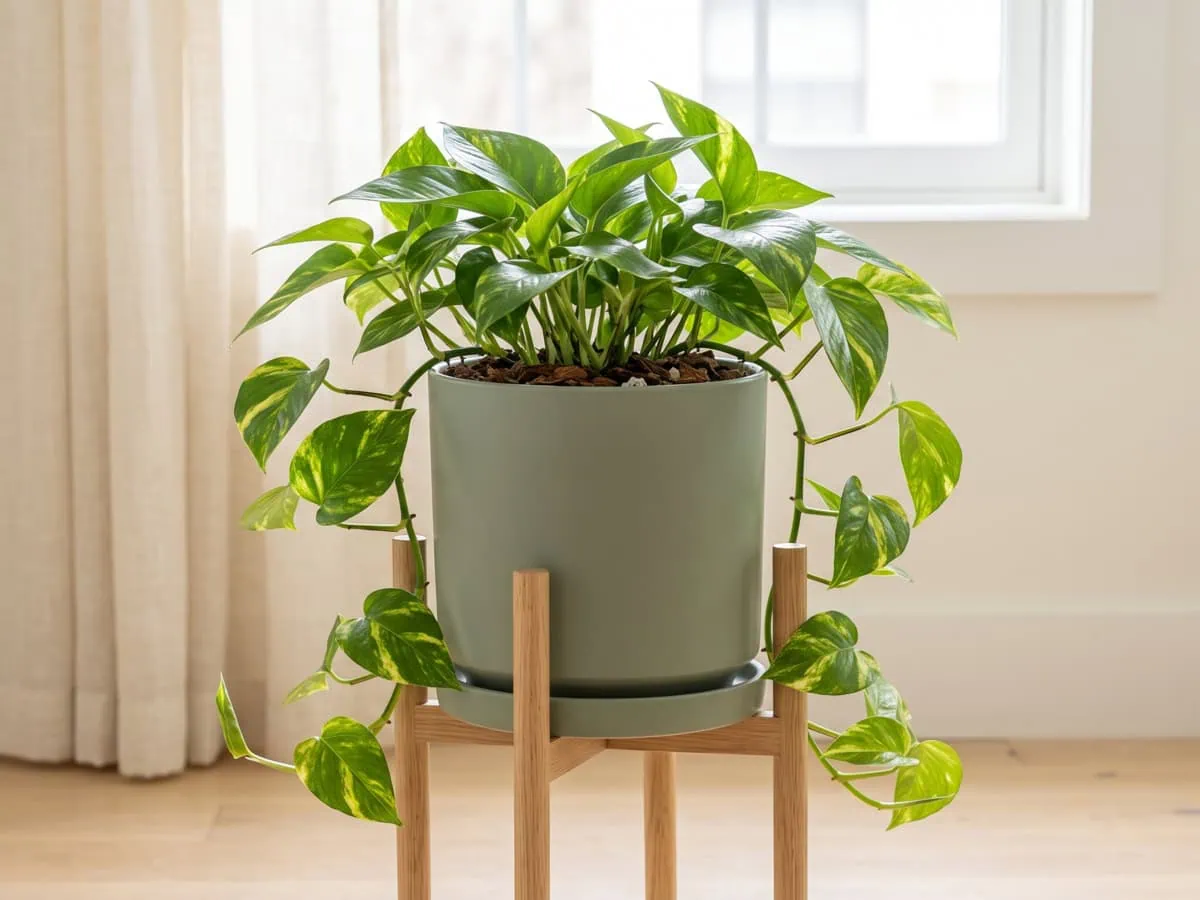
Put the pot back where it stood. Changing the light and moving the plant on the same day makes the droop unreadable, because you cannot tell which change caused it.
Keep the window, the distance, and the routine identical for the first week (one variable at a time is the whole discipline). Direct sun stays off for a few days, and a badly disturbed plant can sit slightly dimmer than usual. That is not coddling; it is measurement.
Hold the feed until new leaves appear
Skip fertilizer for four to six weeks after the move. Fresh medium already carries nutrients, and a root surface that is still rebuilding has no absorbing tissue to take up dissolved salts. Early salt just concentrates in the pot.
What ends the hold is a new leaf unfurling, not a date on the wall. Then resume at half strength every two weeks while the plant is actively growing (a balanced houseplant feed, nothing specialized).
When the droop means stop and check the roots
Escalate when the droop deepens instead of holding steady, spreads to growth that was firm, or arrives with a change at the base of the stems. That is not settling in.
Slide the plant out and look. Firm and white means wait; brown to black and mushy, with the outer sheath sliding off the core, means the problem sits below the mix.
At that point the job changes, because rescuing a plant whose roots have already turned soft is a different operation.
Common mistakes that set a fresh repot back
Four habits do more damage than the operation itself. Two are still taught as good practice. Read the four below before you set up the new pot.
The gravel layer myth and the hole it cannot replace
A layer of gravel, lava rock, or pebbles at the base does not replace a drainage hole. The extension guidance is blunt: it does not make up for the missing hole, and without one the mix stays wet and the roots fail.
The reason to act is visible. Water has nowhere to leave. It collects at the base, the lowest inch of mix never dries, and air cannot reach roots sitting in it.
The fix that keeps the decorative pot in play is double potting. Grow the plant in a plain inner pot that drains, drop that inside the display pot, and tip out every drop underneath (a saucer you cannot empty is the same trap).
Do not repot a plant you brought home last week
Give a newly bought or delivered plant two to four weeks before you move it. That figure rests on one source. Hold it as a default, not a law.
The plant is already adjusting to your light, your air, and your watering hand, and root disturbance lands harder than on a settled plant.
The wait ends after a full week with no fresh leaf loss (leaves already yellow on arrival do not count). One exception: a real trigger from the root-ball check. Roots out the drainage hole do not wait.
Bare-rooting and rinsing: why both go too far
Never rinse the roots. Never shake the root ball bare. One widely repeated answer says to strip the old medium because it is spent, and most care guides contradict it.
About one-third comes off. The retained portion is what the plant re-establishes through, and stripping it turns a routine move into a collapse.
Rinsing does the same damage faster, because it strips the fine root hairs carrying most of the water uptake.
The pot that is too big, and what happens in it
An oversized pot is not a harmless margin. Wrap a small root mass in a large volume of fresh mix and most of it holds water no root can reach, which is a waterlogged root zone rather than a slow-drying one.
That matters more here than for most plants. A Pothos has no organ to live off while it waits out a wet spell. Its whole buffer is thick waxy leaves and roots that fail when they sit wet.
The step-up therefore stays at 1 to 2 inches rather than a jump to the biggest pot on the shelf (the same root mass in a snug pot is fine).
Frequently asked questions about repotting a Pothos
What are the biggest mistakes when repotting?
Four mistakes cause most of the damage after a repot. They are an oversized pot, a gravel layer standing in for a drainage hole, stripping the root ball, and moving a plant that arrived days earlier.
Each is one fault in disguise: more wet medium than the roots can occupy. A quieter fifth is changing the light the same day, which makes the droop impossible to read.
Are Pothos sensitive to repotting?
No. Pothos is one of the more forgiving houseplants to move, provided the root ball stays intact. Sensitivity rises the moment roots are disturbed hard: rinsing or shaking the mass bare tears the fine root hairs carrying most of the water uptake, which is what produces the limp, flattened leaves people call transplant shock. Keep the block whole, step up one size, and most plants show nothing worse than a few soft days.
Do Pothos like to be in tight pots?
Yes, within limits. This plant tolerates a snug pot far better than an oversized one, because a large volume of unoccupied wet mix is what rots its roots.
The limit arrives when roughly 75 percent of the root ball is root and only a quarter is mix, water races through without soaking the center, and the leaf tips and margins start browning. Snug is comfortable; solidly pot-bound is not.
How much of the old soil should you remove when repotting a Pothos?
Remove about one-third, and no more. Work the loose outer material off with your fingers, take whatever drops under light pressure, and leave anything bound inside the mass alone.
The retained two-thirds is what the plant re-establishes through, which is why published guidance stops short of a bare root ball. Never rinse: that strips the fine hairs doing most of the water uptake.
How soon after repotting should you water a Pothos?
Water it immediately and thoroughly, until water runs from the drainage hole. The purpose is mechanical rather than nutritional: the water collapses the air pockets left around freshly disturbed roots and settles the mix into contact with them.
Repeat the soak if the medium went in dry, and top up any mix that sinks. After that, return to the normal let-it-dry cadence; this first pour does not reset the schedule.
Read the root ball, act once, and grow on
Most of this job is refusing to do things. The mass travels intact, the container climbs one notch, and the first pour settles what your hands did not.
So the plant tells you when it has finished adjusting: a new leaf unfurls, and the question turns to the everyday watering cadence rather than anything on this page.
The check never changes. Firm and pale under a thumb, wait. Soft and dark, look lower.
Which is exactly what the extra headroom buys you. That is the whole of how to repot a Pothos without killing it.
Go up one size, keep the root ball whole, and the only thing your Pothos will notice is more room to run.
Get the one-page care card for this guide, plus a printable A4 copy
We condense this guide into one card for your phone and a print version for the pot shelf. Enter your email and we send both to your inbox. Subscribe once, then request the card of any guide you read.
By subscribing you agree to get emails from Plant Care Basics about plant care guides, about once a week at most. Unsubscribe in one click. Privacy policy
Tap the button below to get more plant fixes in your Google Search results