Skip to content
Plant Care Basics
  • Plants A-Z
  • Problems and Fixes
    • Root Rot and Overwatering
    • Pests and Diseases
    • Yellow Leaves
    • Brown Tips and Spots
    • Drooping and Wilting
    • Not Growing or Leggy
  • How-To Guides
    • Watering
    • Soil and Potting Mix
    • Repotting
    • Propagation
    • Pruning and Training
    • Light and Fertilizer
    • Identify and Compare
    • Complete Care Guides
    • More Guides
  • Pet Safety

Aloe Care

Home » Aloe Care

Indoor Aloe vera plant care guide: proven light, water and cold limits (2026 Masterclass)

September 11, 2026 by Pang
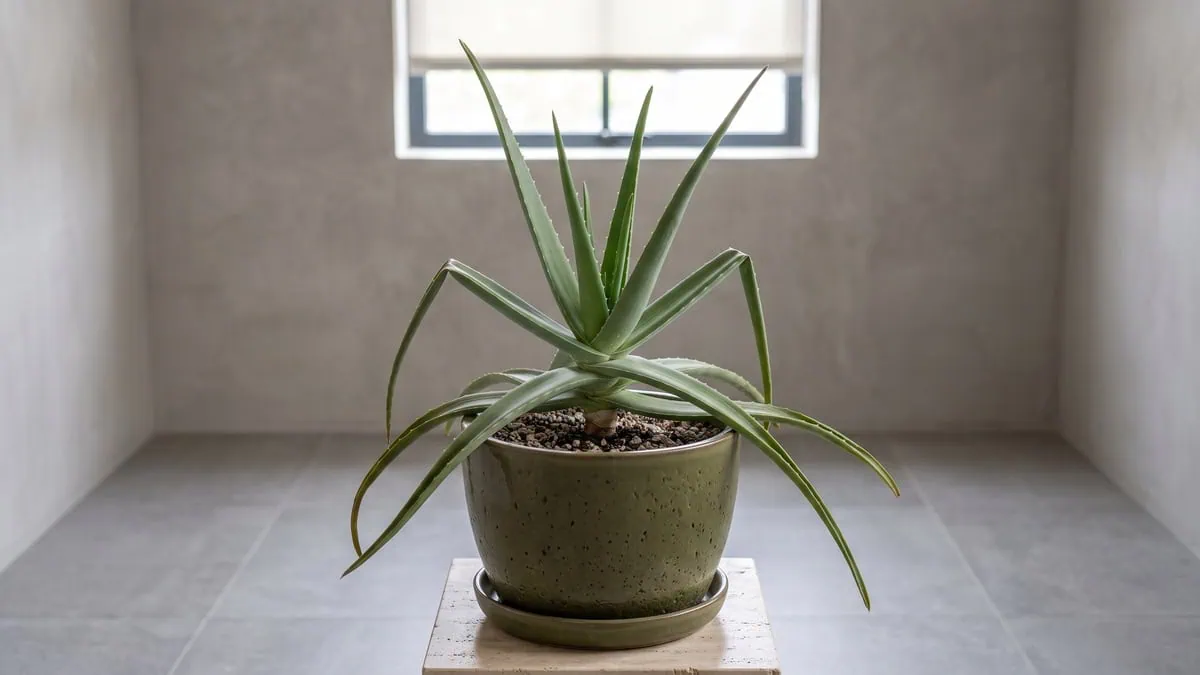
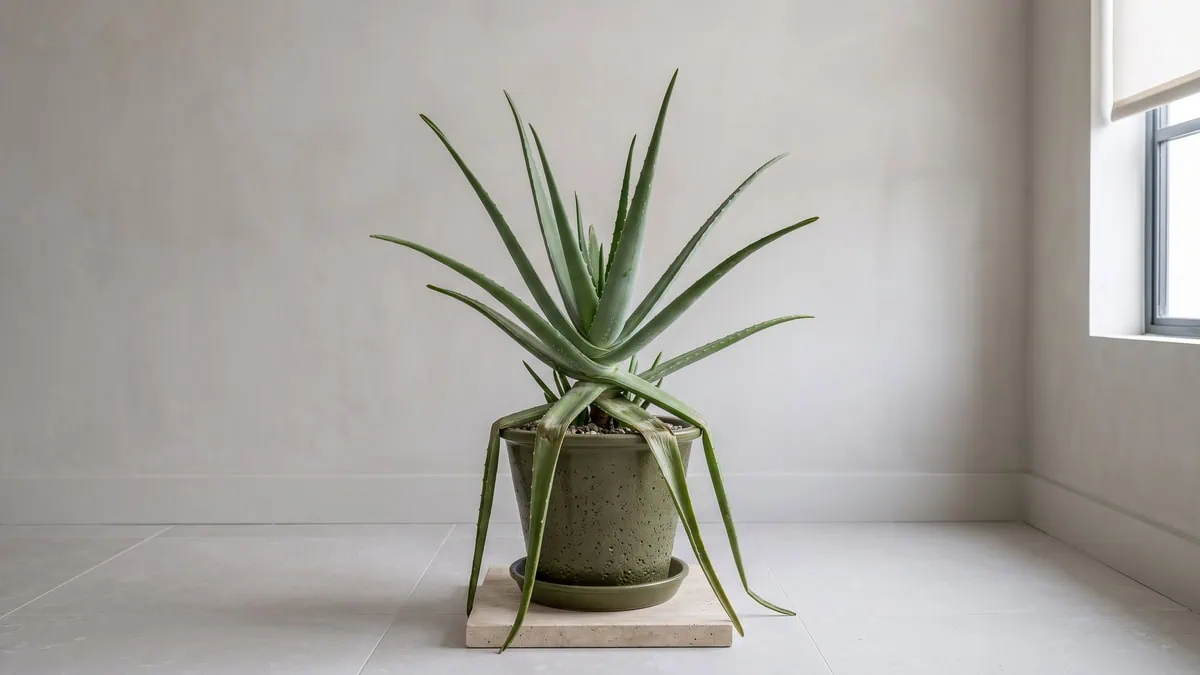
Indoor Aloe vera plant care guide: a large healthy Aloe vera stands in an olive green pot beside a window.

I lost my first Aloe vera to a watering can, not to a cold window. This guide sets out the light band, the dry-down interval, the cold floor and the gritty mix ratio I now use indoors, plus the check I run first when something looks wrong.
Categories Aloe Care

Home » Aloe Care

How to fix Aloe vera root rot without losing the plant: the cut-and-callus rescue

September 11, 2026 by Pang
How to fix Aloe vera root rot without losing the plant: the rosette tipped out beside its pot, roots blackened.

A firm rosette tells you nothing about what is under the mix. Here is the rescue I run on an Aloe vera whose root zone has failed: unpot it, read the roots, cut back to firm tissue, dry the cut face until it is dull, and replant dry.

Categories Aloe Care

Home » Aloe Care

How often to water Aloe vera indoors step by step: read the pot, not the calendar

September 11, 2026 by Pang
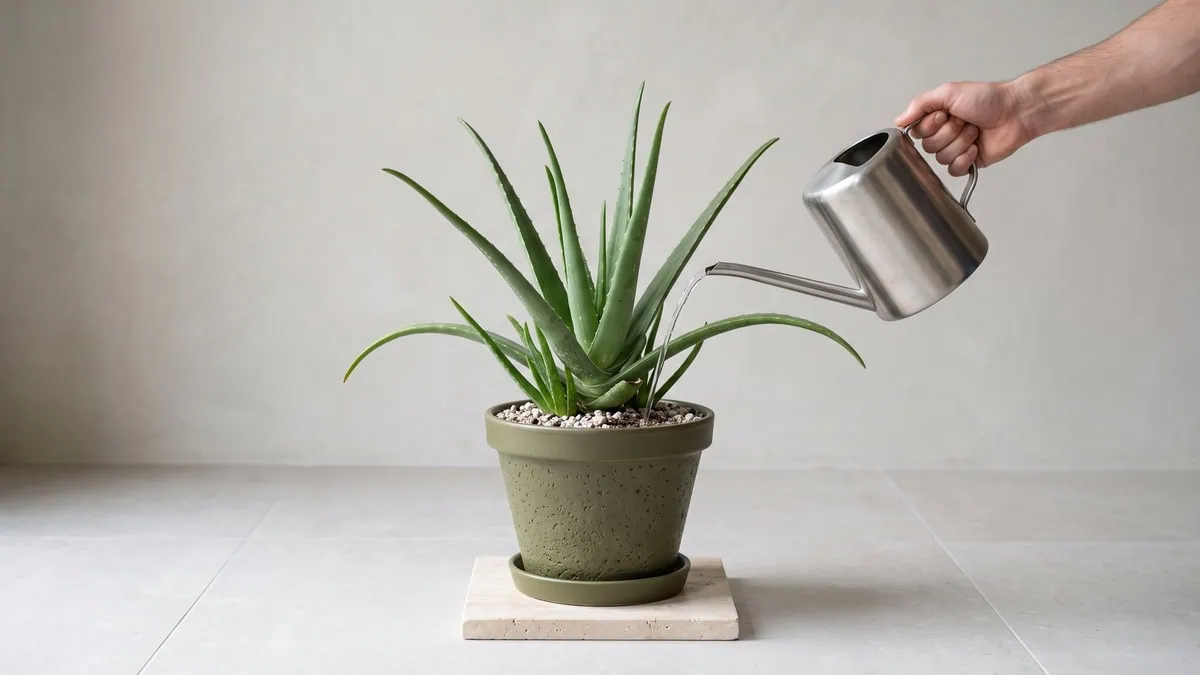
How often to water Aloe vera indoors step by step: water pouring from a steel can into the pot mix.

A date on a chart cannot know how fast your pot dries. I water my Aloe vera by what the mix tells me: probe to depth, soak until it runs from the base, empty the saucer, then wait for that same dryness to come back before I go again.

Categories Aloe Care

Home » Aloe Care

Why are my Aloe vera leaves limp and shriveled? Start with the press test

September 11, 2026 by Pang
Why are my Aloe vera leaves limp and shriveled: outer leaves folded flat over the rim, center still upright.

Two very different faults make an Aloe vera rosette go slack, and watering the wrong one finishes it. I press one leaf against a firm one first: leathery means thirst, soft and mushy means the roots are gone. Here is the order I work in after that.

Categories Aloe Care

Home » Aloe Care

How to fix a leggy Aloe vera drooping over the pot: check the crown first

September 11, 2026 by Pang
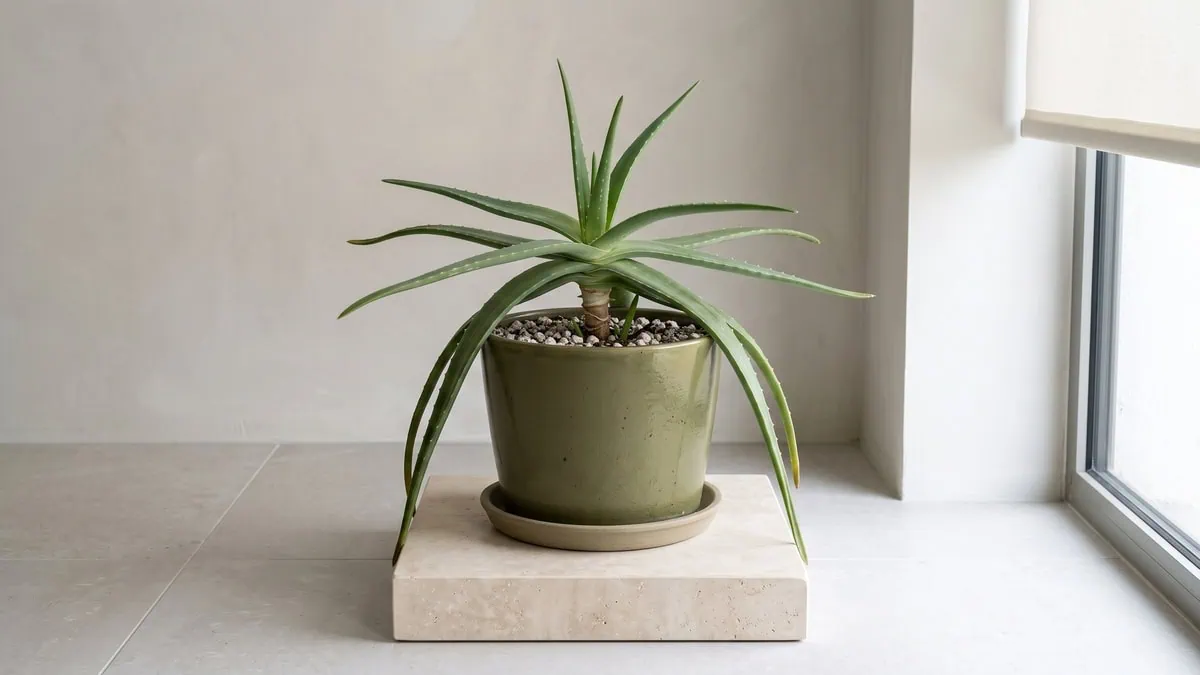
How to fix a leggy Aloe vera drooping over the pot: the rosette flattened out with bare stem below.

A rosette that lies open over the rim is telling you about light, not about support. I check the crown first, then read the leaf scars on the bare stem, and only then decide whether to move the plant brighter or start it again from the top.

Categories Aloe Care

Home » Aloe Care

How to get rid of mealybugs and scale on Aloe vera step by step: the lift-and-look test

September 11, 2026 by Pang
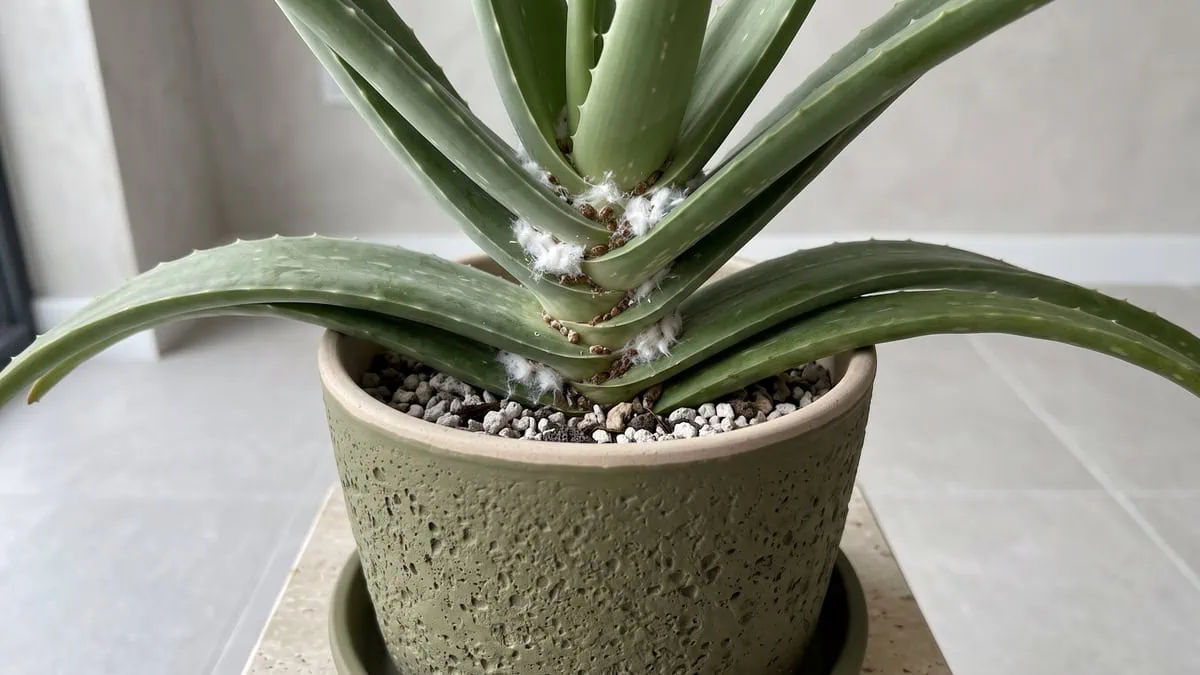
How to get rid of mealybugs and scale on Aloe vera step by step: white wool and brown bumps in the joins.

Mealybugs and scale hide in the same place on an Aloe vera: the tight joins where one leaf meets the next. I wipe them out with an alcohol swab, then lift the plant out of its pot to check the root zone, and I keep repeating the round until nothing new shows.

Categories Aloe Care

Home » Aloe Care

Best soil mix for Aloe vera vs cactus potting mix: which one drains fast enough?

September 11, 2026 by Pang
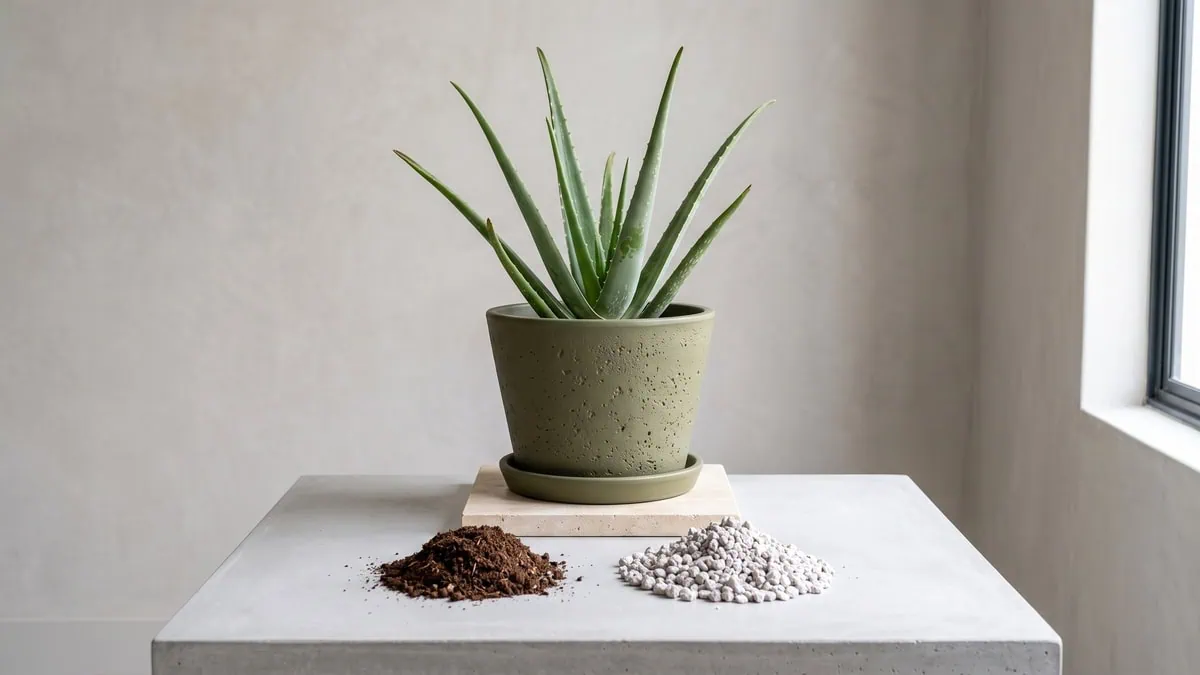
Best soil mix for Aloe vera vs cactus potting mix: two separate component heaps on the bench.

Bagged succulent soil is a starting point, not an answer. I raise the mineral share with coarse pumice until the pot runs through and dries out fast, and I check the change by weight two days after a soak rather than by reading the bag.

Categories Aloe Care

Home » Aloe Care

How to propagate Aloe vera pups after separating them: the first 12 weeks

September 11, 2026 by Pang
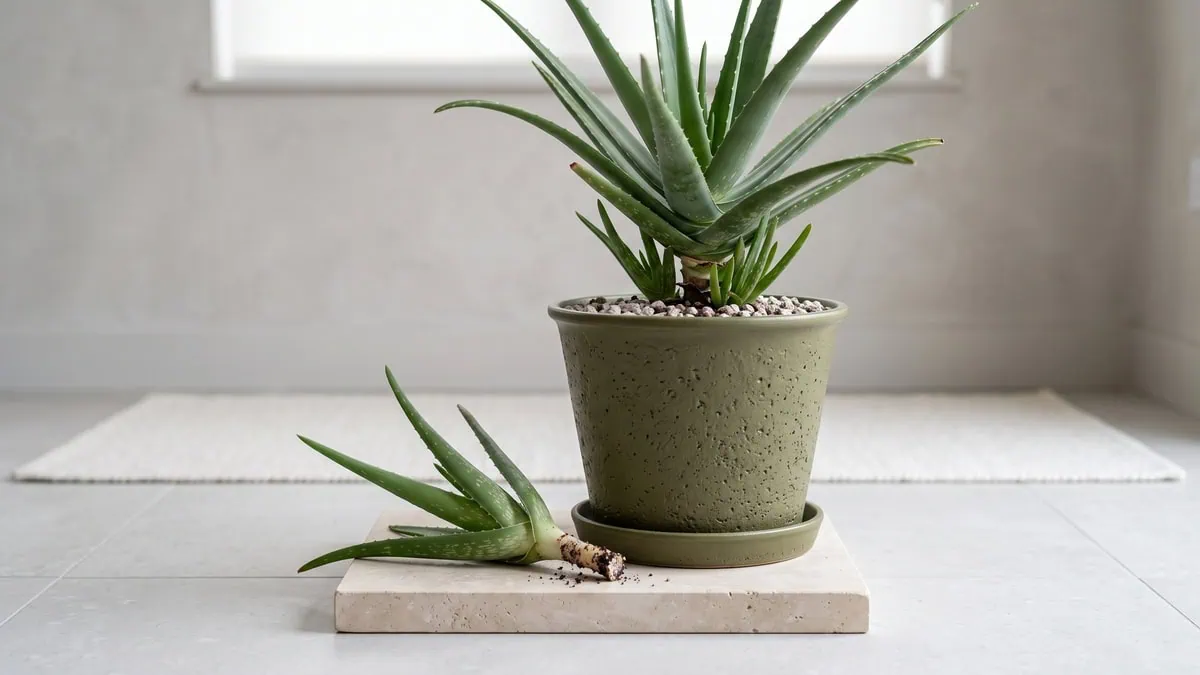
How to propagate Aloe vera pups after separating them: a just-parted pup lying beside the parent, base bare.

A pup with roots of its own is a plant; a pup without them is a cutting. Before I separate anything I check underneath, and after potting I keep the medium dry and read the leaves for the first three months rather than watering on habit.

Categories Aloe Care

Home » Aloe Care

Is Aloe vera toxic to cats and dogs indoors? The leaf layer that settles it

September 11, 2026 by Pang
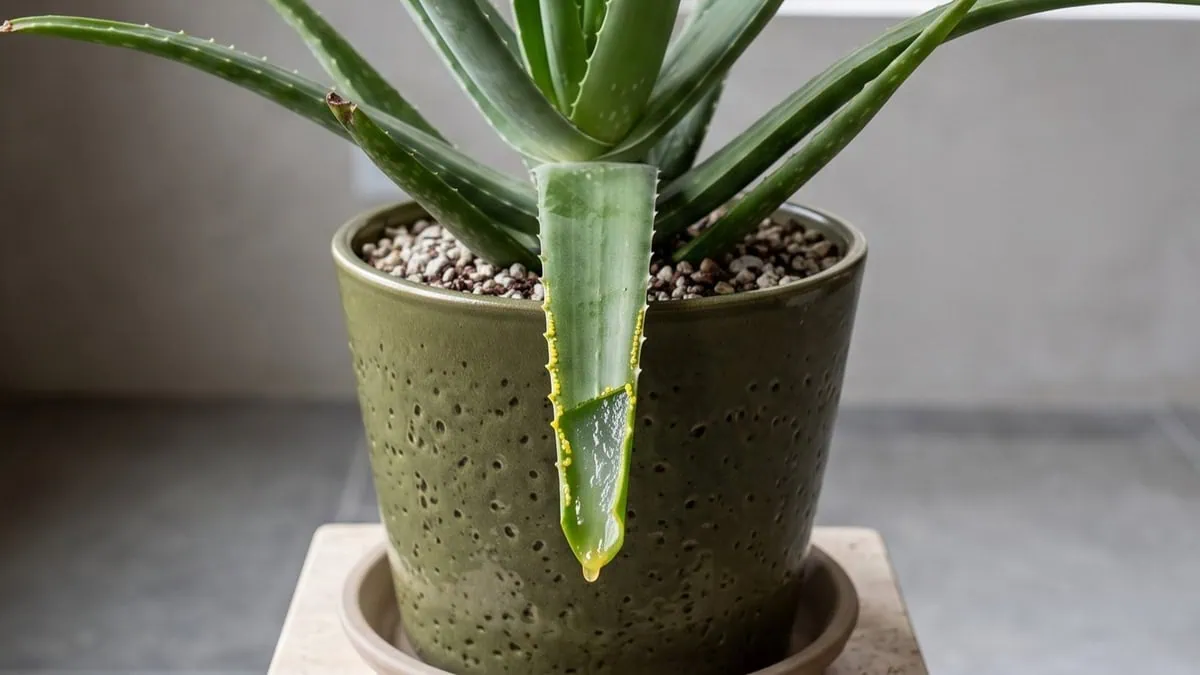
Is Aloe vera toxic to cats and dogs indoors: a freshly snapped leaf showing yellow fluid and clear gel.

One Aloe vera leaf layer carries the problem for cats and dogs, and it is not the clear gel everybody knows. I show where the bitter yellow fluid sits, what a bite leaves on the floor, and how I place the pot so an animal cannot climb up to it.

Categories Aloe Care

Home » Aloe Care

How to repot Aloe vera without transplant shock: the dry settling window

October 25, 2026 by Pang
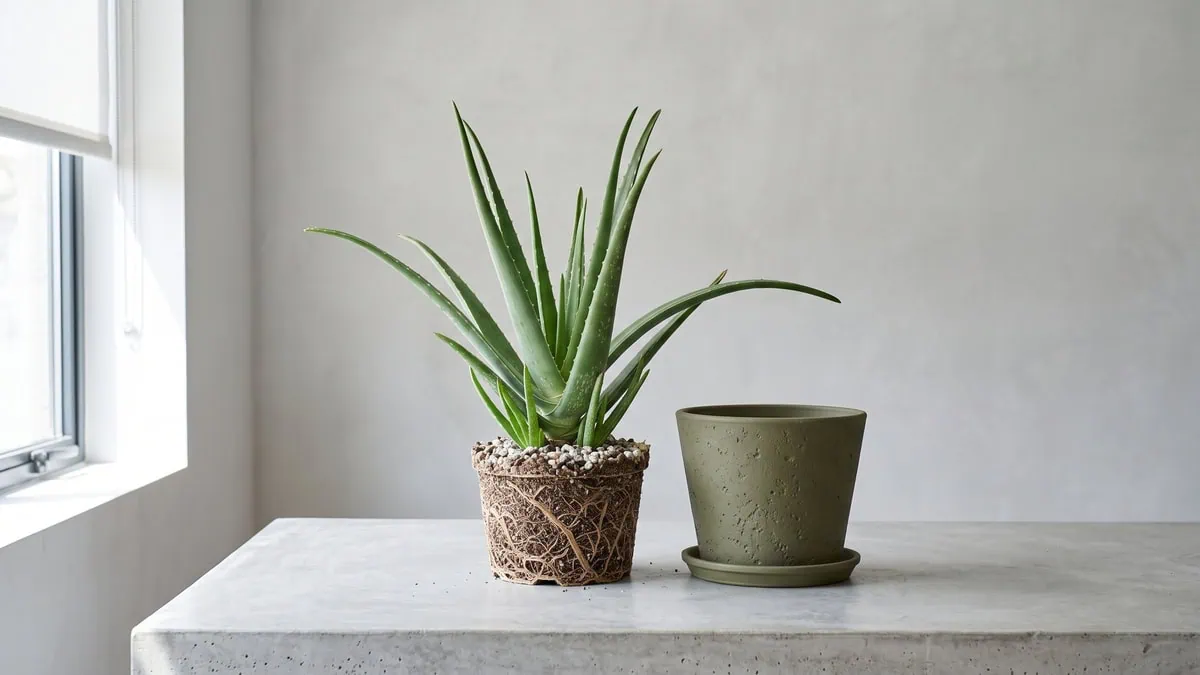
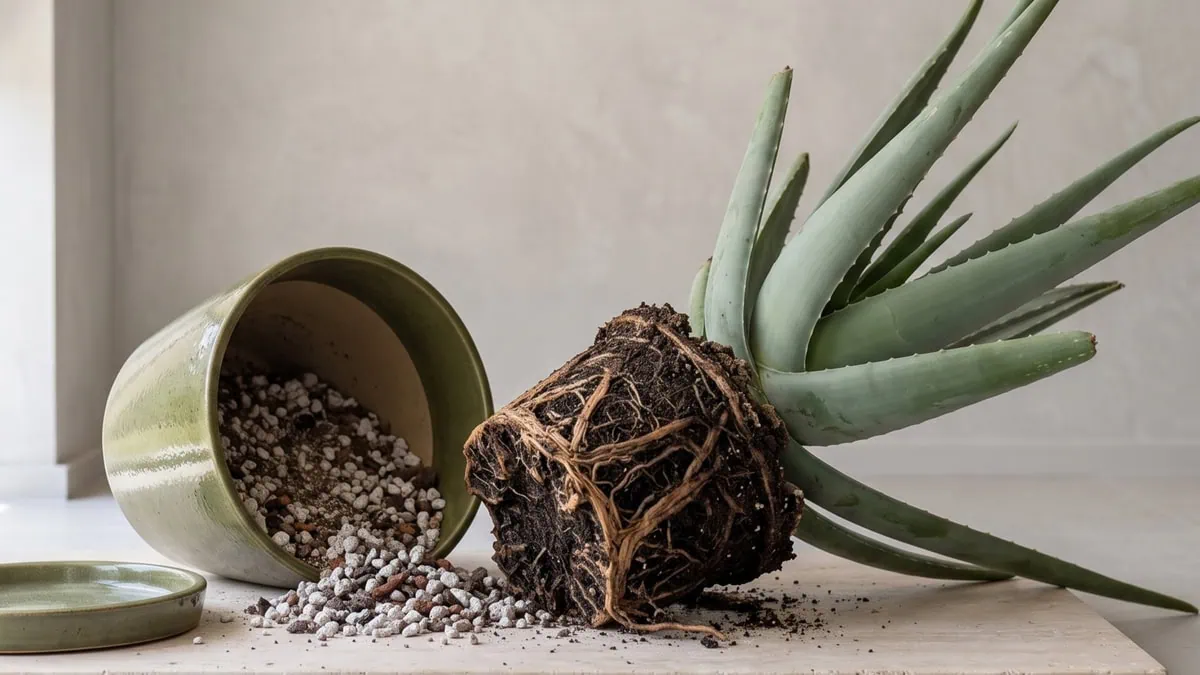
How to repot Aloe vera without transplant shock: the plant out of its pot, root ball whole, empty pot beside.

Most of the trouble people call shock is water given too early. I lift the whole root ball out, take off only what falls away, backfill into gritty mix and then leave the pot dry for about a week before the first watering goes in.

Categories Aloe Care

Home » Aloe Care

Aloe vera vs other Aloe plants how to tell them apart — the four cues that decide it

September 11, 2026 by Pang
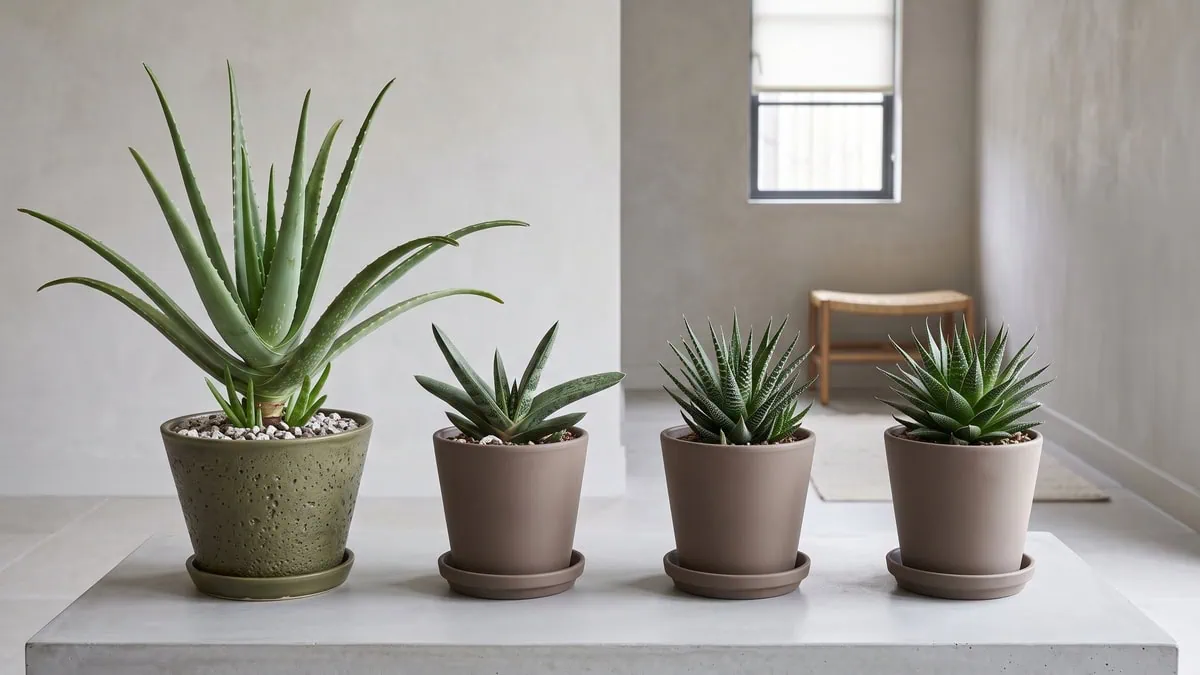
Aloe vera vs other Aloe plants how to tell them apart: four rosette succulents side by side in their own pots.

Four Aloe look-alikes sit on one shelf and only one is the true species. I work through the rosette and its short stem, the speckling that fades with leaf age, the margin read side by side, and why the name on the pot settles nothing at all.

Categories Aloe Care

Home » Aloe Care

How to overwinter Aloe vera indoors without cold damage: the four cold lines

September 11, 2026 by Pang
How to overwinter Aloe vera indoors without cold damage: the lowest leaf folded out by a closed window.

Cold does not arrive as one number. I work an Aloe vera through the dark months on four temperature lines, keep it off the glass at night, cut the watering right back, and know which tissue signs mean cold injury rather than a wet root zone.

Categories Aloe Care

Home » Aloe Care

How to cut Aloe vera leaves without hurting the plant or yourself: a 5-step method

September 11, 2026 by Pang
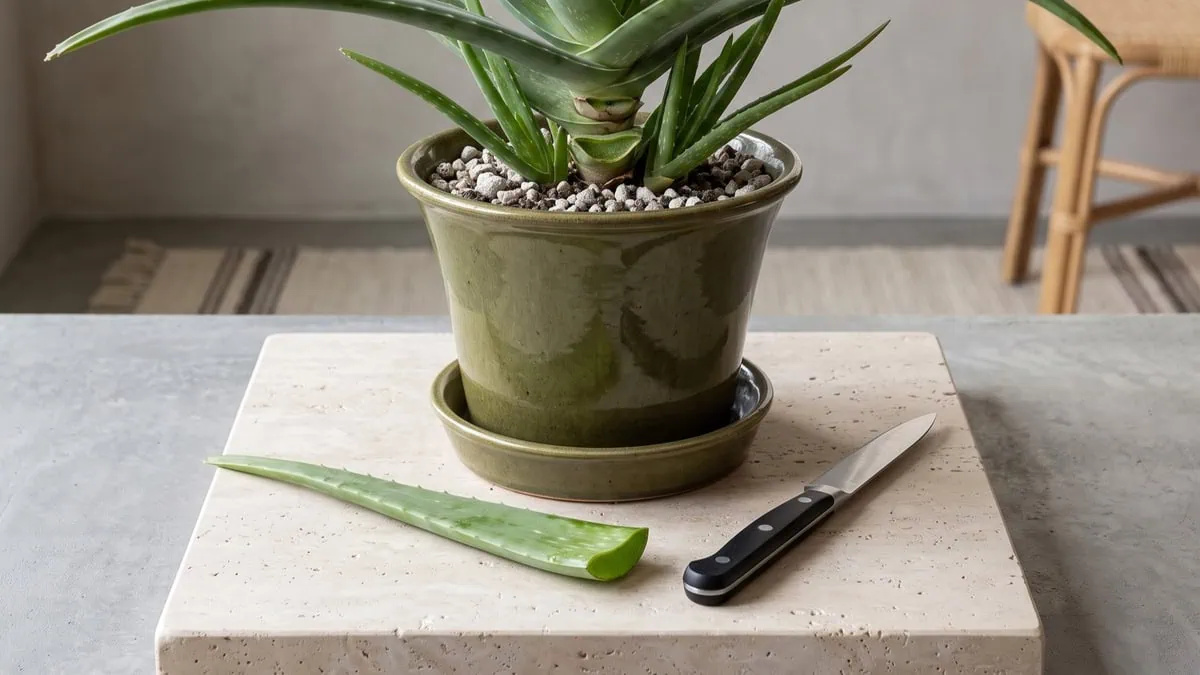
How to cut Aloe vera leaves without hurting the plant or yourself: a cut leaf beside a flat straight blade.

Taking a leaf is easy; taking it without marking the plant or your skin needs an order. I choose the oldest outer leaf, cut flat at its base with a straight sharp blade, stand it cut-end down to drain, and leave the wound to close on its own.

Categories Aloe Care

Home » Aloe Care

How to root a bare Aloe vera with no roots step by step: dry the cut first

September 11, 2026 by Pang
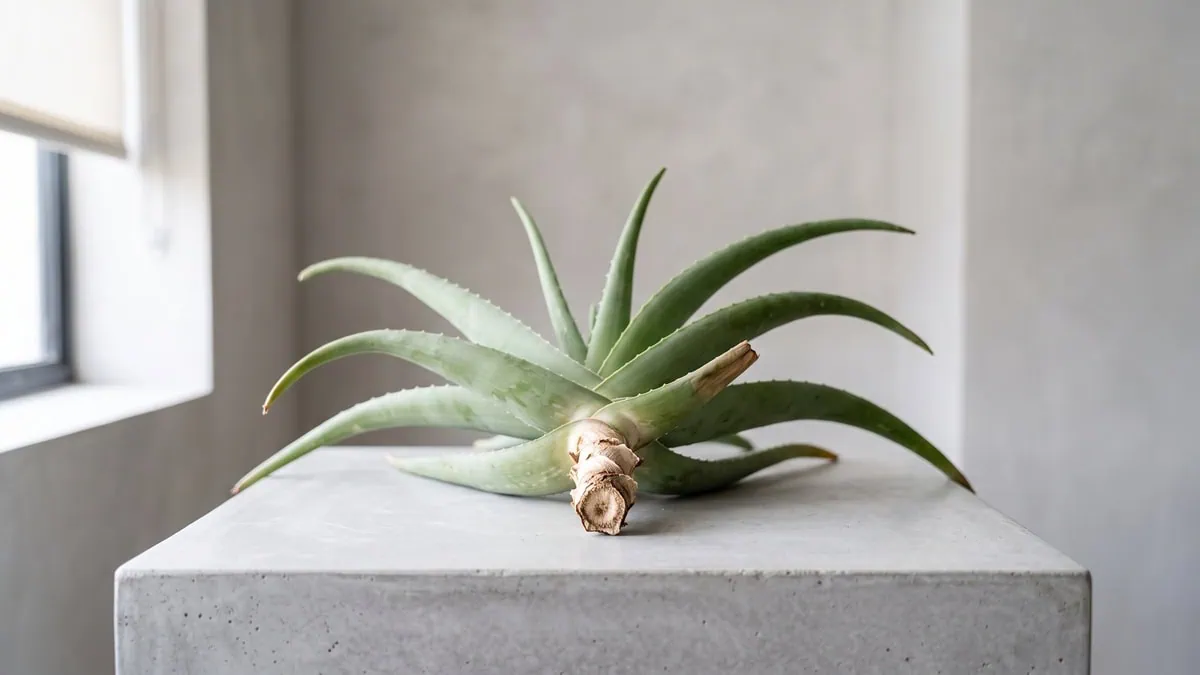
How to root a bare Aloe vera with no roots step by step: the rootless rosette lying with its base dry.

A rootless rosette does not need water, it needs a dry cut and time. I cut back until the stem reads firm, leave the face to dry until it is no longer tacky, plant shallow into gritty mix, and hold the first watering until the plant resists a pull.

Categories Aloe Care

Home » Aloe Care

Why does my Aloe vera have brown spots and dark patches? Press before you cut

October 25, 2026 by Pang
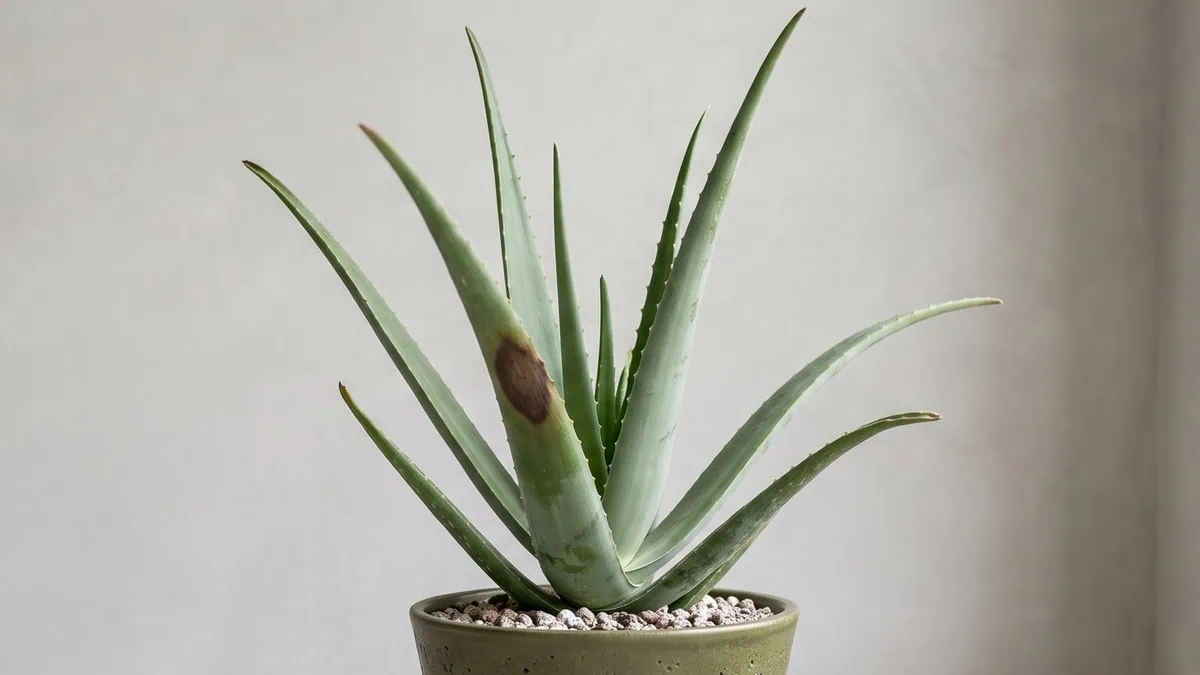
Why does my Aloe vera have brown spots and dark patches: one marked leaf beside a completely clean one.

A dark patch is not one fault, it is four. I press first: soft and sunken goes one way, dry and firm another, sun-facing marks a third, and pale scattered markings on young Aloe vera leaves were never damage at all. Here is the order.

Categories Aloe Care
Pang Nam Fui, founder of Plant Care Basics and plant care expert.

Hi, I'm Pang. Founder of Plant Care Basics. I share simple, well-researched advice to help beginners develop a green thumb. Welcome to my green corner!

You May Also Like

Why is my ZZ plant not growing new shoots? A healthy Zamioculcas zamiifolia raising one fresh lime-green new spear.

Why is my ZZ plant not growing new shoots? Slow by design, or genuinely stalled

When my ZZ plant stopped pushing new shoots, I learned that a long, still pause is almost always normal, not a stall. New spears are funded by light and banked in the rhizome, so I walk you through what a healthy slow-growth year looks like and the one lever that actually restarts growth.
Why is my fiddle leaf fig not growing new leaves? The growing point sits closed at the top.

Why is my fiddle leaf fig not growing new leaves? The flush pattern behind the pause

New leaves arrive in flushes, so a quiet growing point is usually a light supply question rather than a fault, and I read it that way. This guide sets how long a pause stays normal, reads the light at the leaf itself, and shows what feeding ahead of growth leaves behind.
How to propagate Aloe vera pups after separating them: a just-parted pup lying beside the parent, base bare.

How to propagate Aloe vera pups after separating them: the first 12 weeks

A pup with roots of its own is a plant; a pup without them is a cutting. Before I separate anything I check underneath, and after potting I keep the medium dry and read the leaves for the first three months rather than watering on habit.
How to fix fertilizer burn on a fiddle leaf fig: a pale crust on the mix, lower leaves dead.

How to fix fertilizer burn on a fiddle leaf fig: read the crust before you flush

Pouring water through a pot is easy, and doing it before I know what the crust is only wastes the run. This guide confirms salt injury under the crust first, sets how much water the corrective flush takes, and names the new leaf I wait for before feeding again.
How to revive a peace lily after repotting: the clump limp and low straight after the move, old pot and spent mix beside it.

How to revive a peace lily after repotting: the first-hour test and the two-week window

A limp plant straight after a move is not automatically a failure, so I water it through once and come back an hour later. Lifting means it was dry. Staying flat means the roots have stopped drawing, and the two weeks that follow are about subtracting rather than adding.
How to fertilize a Phalaenopsis orchid without fertilizer burn: a white salt crust on the bark and a scorched leaf tip.

How to fertilize a Phalaenopsis orchid without fertilizer burn — weakly, weekly

I feed my Phalaenopsis orchid weak and often — about a quarter of the label strength — so the bare, sponge-like velamen roots never meet a salt spike they cannot dilute. Inside: the wet-the-bark-first order I follow, the burn signs at the leaf tip, and the plain-water flush that stops the crust forming.
Snake plant care guide: a healthy Dracaena trifasciata with stiff cross-banded upright leaves in a terracotta pot.

Snake plant care: a science-backed manual for firm, upright leaves (2026 masterclass)

I keep caring for a snake plant to one habit: let the gritty mix dry through, then soak. This drought-built Dracaena banks water in its leaves and rhizome, so a soggy pot — not neglect — is what rots it. Inside I map light in foot-candles, the terracotta-versus-plastic call, feeding, and the pet question.
How to divide and propagate a peace lily: two hands easing the root ball apart into halves, each keeping its own roots.

How to divide and propagate a peace lily: one clump into several plants

Leaf cuttings do not work on this plant, so propagating a peace lily means splitting the clump rather than rooting a blade. I water 1 day ahead so the root ball comes out damp, brush the surface back to find where the fans already separate, and give every piece roots of its own.

  • Privacy Policy
  • Cookie Policy (EU)
  • Terms of Service
  • Image License
  • About Us
  • Contact Us
  • Sitemap
© 2026 Plant Care Basics. All Rights Reserved.
Manage Consent
To provide the best experiences, we use technologies like cookies to store and/or access device information. Consenting to these technologies will allow us to process data such as browsing behavior or unique IDs on this site. Not consenting or withdrawing consent, may adversely affect certain features and functions.
Functional Always active
The technical storage or access is strictly necessary for the legitimate purpose of enabling the use of a specific service explicitly requested by the subscriber or user, or for the sole purpose of carrying out the transmission of a communication over an electronic communications network.
Preferences
The technical storage or access is necessary for the legitimate purpose of storing preferences that are not requested by the subscriber or user.
Statistics
The technical storage or access that is used exclusively for statistical purposes. The technical storage or access that is used exclusively for anonymous statistical purposes. Without a subpoena, voluntary compliance on the part of your Internet Service Provider, or additional records from a third party, information stored or retrieved for this purpose alone cannot usually be used to identify you.
Marketing
The technical storage or access is required to create user profiles to send advertising, or to track the user on a website or across several websites for similar marketing purposes.
  • Manage options
  • Manage services
  • Manage {vendor_count} vendors
  • Read more about these purposes
View preferences
  • {title}
  • {title}
  • {title}