🎯 Quick Answer: telling Aloe vera from other aloes
Aloe vera vs other aloe plants how to tell them apart shifts to 1/16 in teeth on an Asphodelaceae family rosette. Four cues decide it: leaf teeth, margin color, speckling age, and flower color. On a windowsill the last cue rarely appears, so the first three settle most plants.
- Check the newest leaf: speckling shows on young blades and fades as they mature
- Run a fingertip: feel whitish triangular teeth along both leaf margins
- Ignore the tag: trade labels still carry a superseded synonym name
- Skip flower color: an indoor plant rarely blooms, so that cue waits
- Keep pets away: every true Aloe stays toxic to cats and dogs
Get the one-page care card for this guide, plus a printable A4 copy
We condense this guide into one card for your phone and a print version for the pot shelf. Enter your email and we send both to your inbox. Subscribe once, then request the card of any guide you read.
By subscribing you agree to get emails from Plant Care Basics about plant care guides, about once a week at most. Unsubscribe in one click. Privacy policy
Real talk: the whitish teeth along an Aloe leaf edge tell you more than the tag ever will. I have handled plenty of supposed Aloe vera plants, and several sat elsewhere in the genus Aloe (more on this below). The rosette pattern fooled me every time; the marginal teeth never did.
Conventional identification advice sends you to the flowers first. Updating my earlier point… the real fix is the leaf edge, because Aloe vera stores its water in a thick inner gel behind a waxy rind, and that build leaves triangular teeth about 1/16 in (2 mm) long on a faintly pink margin line.
Run a fingertip along that margin on a cold morning: the blade feels chilled right through to its core, and the teeth catch at the skin. Trade tags still print the synonym Aloe barbadensis Miller. Once the name is settled, the rest is growing the true species on a sunny sill.
The tag argument is easier to settle than it sounds. Four cues stand side by side underneath, so you can check your own plant against them.
Aloe vera vs other Aloe plants how to tell them apart: the at-a-glance identity card
| What to check | What it tells you |
|---|---|
| Accepted botanical name | Aloe vera (L.) Burm.f. |
| Name most often printed in trade | Aloe barbadensis Mill., a synonym of the accepted name |
| Do adult leaves keep their white spots? | No – the speckling of young leaves fades as the leaves mature |
| Leaf margin at a glance | Whitish triangular teeth about 2 mm along a faintly pinkish edge line |
| Pet safe? | No – toxic to cats, dogs and horses (ASPCA) |
You are subscribed
Press the button and we prepare this guide's one-page care card and its A4 print copy and email both to you within a few minutes.
Tap the button below to get more plant fixes in your Google Search results

Table of Contents
Is it the true species? The four cues that decide it
Four visible cues settle the question, and the whitish 1/16 in marginal teeth outrank the rest. Start with the toothed leaf margin, then the two leaf generations, then the short-stemmed rosette, and leave flower color last. The following sections take the two cues that give indoor readers the most trouble.
Query “how can i tell if my plant is really aloe vera” and flat lists come back. In my own bench work the order mattered more than the list. I check the margin first, because the teeth and the pink edge line survive a dim room.

Which cues survive a dim windowsill
Low light rewrites the plant. Leaves stretch, spacing widens, and color pales, so a dim shelf gives you stretched growth from a dim position rather than the compact shape those cue lists quietly assume you are holding. But the margin holds: teeth and edge color stay put while shape drifts.
Press a fingertip to the blade after an hour on a cool windowsill and it reads colder than the ceramic rim beside it. The teeth still rasp. That contrast is what a dim room cannot erase.
White speckling is a young-leaf cue
The question people actually ask is “do real aloe vera leaves keep their white spots as adults” and the answer is no. Pale flecks scatter across young blades, then fade as those blades mature; dark patches that are damage rather than markings are a separate question.
So compare two generations on the same plant instead. Both candidates are speckled at that size. Two leaf ages, one plant.
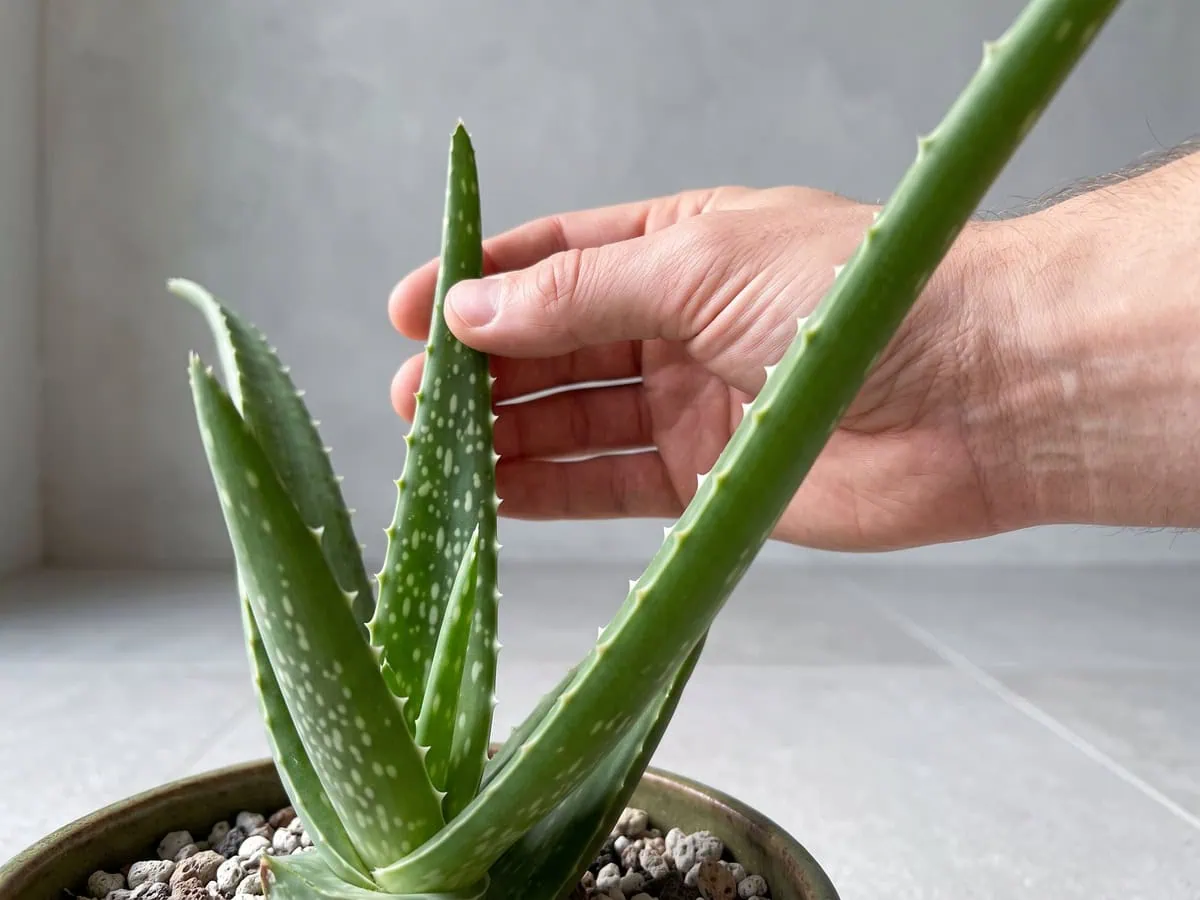
Hold the newest inner leaf beside the oldest outer one and compare them.
- Leaf margin first: whitish teeth about 1/16 in on a pinkish edge line.
- Leaf generations second: young speckling against a plain mature blade on one plant.
- Rosette build third: one short-stemmed crown with offsets crowded at its base.
- Flower color last, since an indoor plant rarely offers it.
Get the one-page care card for this guide, plus a printable A4 copy
We condense this guide into one card for your phone and a print version for the pot shelf. Enter your email and we send both to your inbox. Subscribe once, then request the card of any guide you read.
By subscribing you agree to get emails from Plant Care Basics about plant care guides, about once a week at most. Unsubscribe in one click. Privacy policy
Tap the button below to get more plant fixes in your Google Search results

Aloe vera vs the look-alikes you actually meet indoors
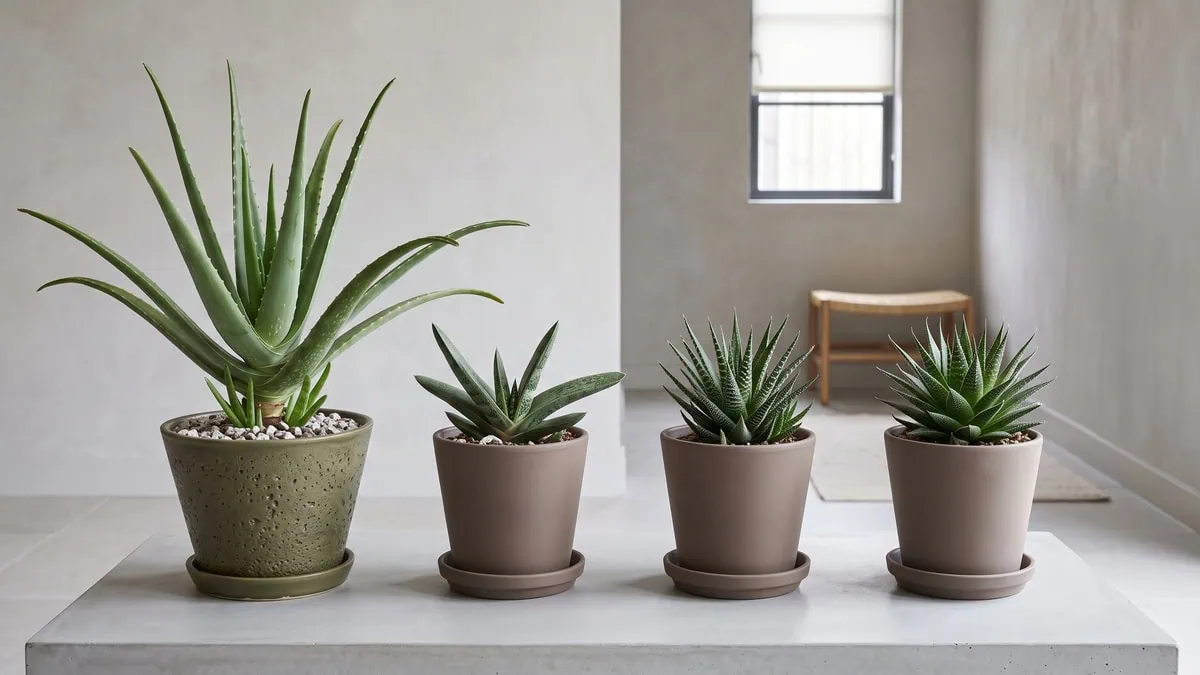
Only a handful of rosette succulents share a shelf with true Aloe, and none of them carries its 1/16 in teeth. Below, the toothed margin comes first and the floral cue last.
Published look-alike lists run from one genus to four families. None filters for what actually sells as a houseplant. According to Frontiers in Plant Science, leaf structure compared across the genus Aloe separates tissue a photograph cannot show.
| What you see | Aloe vera | The look-alike that carries it |
|---|---|---|
| Leaf margin | Whitish triangular teeth about 2 mm on a pinkish line | Gasteria bicolor: smooth margins, no marginal teeth at all |
| Leaf surface | Plain gray-green, speckles only on young blades | Haworthiopsis attenuata: white tubercle bands kept into maturity |
| Plant build | One short-stemmed rosette with offsets at the base | Gasteria bicolor stacks leaves in two ranks; Aristaloe aristata stays a small stemless rosette |
| Common name on the tag | Aloe, a genus label, not a species | Sold as aloe, though Aristaloe left the genus in 2014 |
Verdict: Check the margin first, because 1/16 in teeth on a pinkish line hold while build and markings shift.
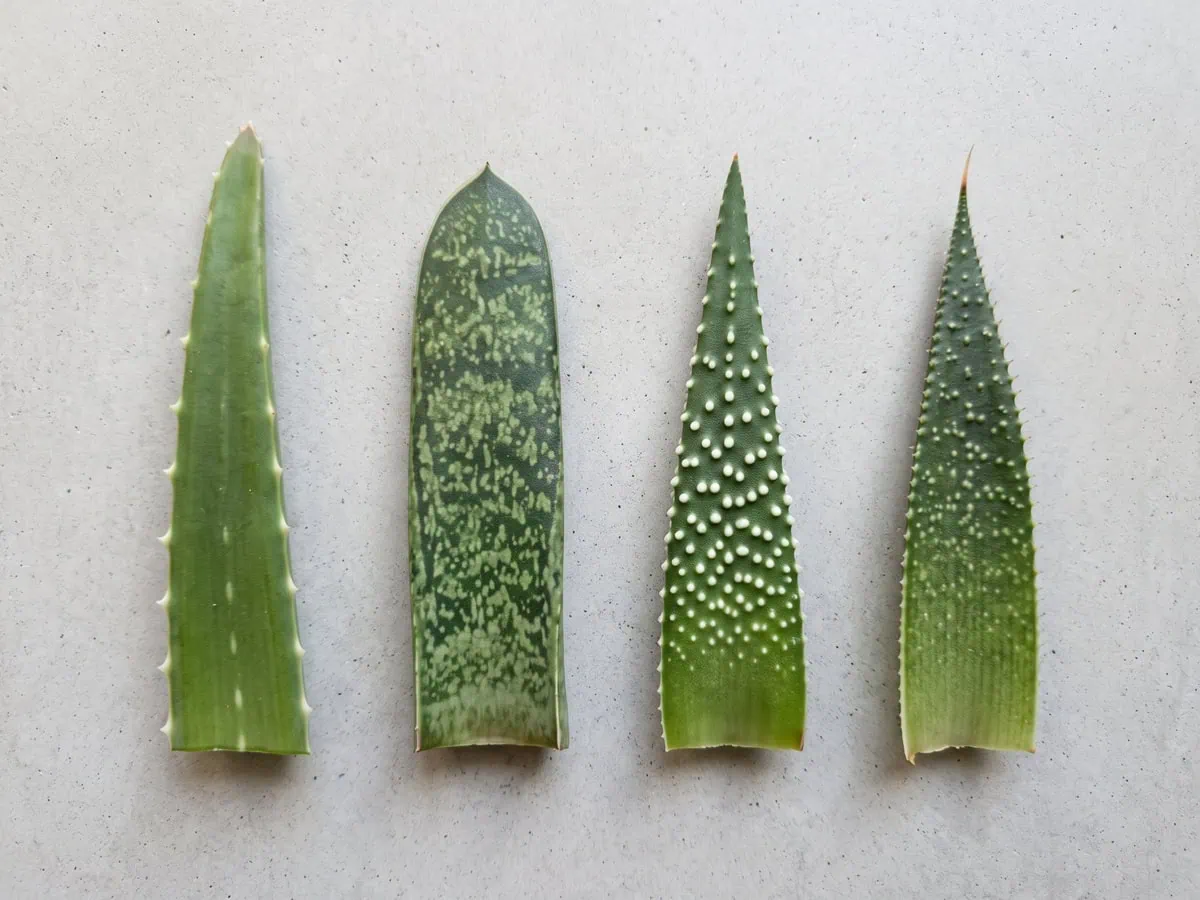
Rosette shape, leaf teeth and margin color
Run a thumb outward along one leaf edge. The teeth sit as small firm triangles, and the edge line under them reads faintly pink. On a cool sill the blade drinks heat from your skin faster than the pumice grit at its base, and that chill is the one reading a dim room never distorts.
Odor decides nothing here. The skin of both traded forms smells the same when cut, so a sniff test tells you which tissue you cut.
Every plant here stays out of reach of pets. Aloe is listed toxic to cats, dogs and horses, and an animal that has chewed a leaf needs the ASPCA Animal Poison Control Center at (888) 426-4435.
The signs to expect are set out in what a chewed leaf actually does to a cat or a dog. This information is for educational purposes only and is not a substitute for professional veterinary advice. If your pet ingests any part of this plant, seek immediate veterinary intervention or contact the ASPCA Animal Poison Control Center (888-426-4435) or the Pet Poison Helpline (855-764-7661) immediately.
Flower color: the cue an indoor plant rarely gives
Search “what color are true aloe vera flowers” and the answers split four ways. Yellow leads, yet other accounts give yellow-orange, a yellow-to-red range, or white. I’m still figuring this out… so the flower confirms, it never decides.
Stalk branching splits published descriptions the same way, so it adds no more weight. And an indoor plant can go years without a bloom, which is exactly why the cue that decides the argument in print is the one your windowsill withholds. Read the leaf.
Why the label on the pot gets the name wrong
Trade labels drift because Aloe barbadensis still sells. Two names come first below, then the mistakes they cause.
Barbadensis, vera and the author name on a tag
Ask “is aloe barbadensis the same plant as aloe vera” and the answer is yes. One name has priority, the other is a synonym, and the surname after either one belongs to the botanist who described the plant (yes, this sounds pedantic — bear with me). It is not a variety.
The second plant sold under that name is described three incompatible ways in sources. One account calls it a variety, another a separate plant, a third an unaccepted name. Its markings stay into maturity.
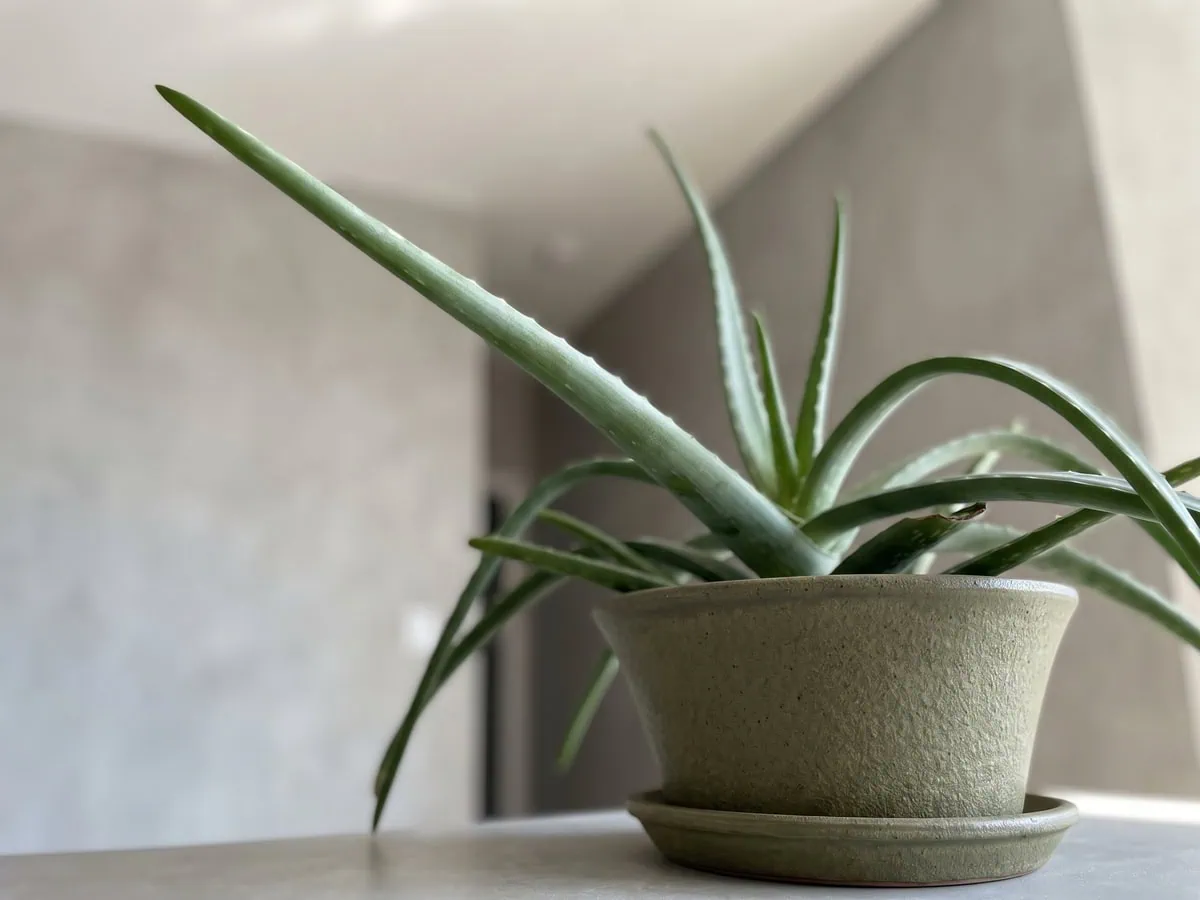
The word Aloe on a tag is a genus label, not a species name. Several plants sold under it have been moved out of the genus altogether, so the word on the tag names a shelf category rather than the plant it sits on.
Held at the glass for ten minutes, a mislabeled rosette still reads colder along its teeth than at its crown.
Common label mistakes and how to avoid them
Search “why do aloe vera plants from stores get labeled wrong” and three habits recur. Sellers print the superseded name, call the author a variety, and file one plant twice.
So a larger plant reads more clearly, because the cues only appear at size. Then read the margin, the two leaf generations, and the crown. Tag last, plant first.
A wrongly named plant still gets watered like an Aloe, which is how limp, hollow leaves and what they mean becomes the next question on the shelf.
Myth: a listing carrying the older binomial proves the plant is the real thing. Fact: that name is the superseded one, so filtering listings by it filters by an obsolete string.
Myth: a surname after the name marks a variety. Fact: it marks the botanist who described the plant.
Frequently asked questions about telling aloes apart
How do I tell what Aloe plant I have?
Start at the leaf margin first, because the teeth and the edge line survive poor light. True Aloe grows whitish triangular teeth about 1/16 in long on a faintly pinkish line, along a plain gray-green blade.
Then check the build: one short-stemmed rosette with offsets crowded at the base, rather than a woody branching stem or dense white tubercles on the leaf face.
How can I identify Aloe vera plants?
Read three characters in order: the toothed margin, the two leaf generations on one plant, and the crown. Whitish teeth about 1/16 in sit on a faintly pink edge line.
Young blades carry pale speckles that fade as they mature, so hold a new inner leaf beside an old outer one. The rosette stays short-stemmed and throws offsets at its base.
Is there a difference between an Aloe plant and an Aloe vera plant?
Yes. Aloe is a genus label covering a very large group, while Aloe vera is one species inside it. A tag reading only Aloe therefore names a shelf category rather than a plant.
Under that word, several plants have since moved to other genera, so the two names no longer line up. Check the plant in your hands, not the word on its tag.
What can be mistaken for Aloe vera?
Three rosette succulents offered at the same size cause most of the confusion, and each fails a different cue. One keeps banded white markings into maturity instead of losing juvenile speckles.
Another builds a woody branching stem rather than one short crown, and a third shows smooth margins where true Aloe holds firm teeth. Wider published lists mostly name outdoor plants.
Are there any poisonous types of Aloe vera?
No named type, form or trade variety of this species is safer than another, so identifying your plant correctly never buys you a pet-safe one. Every true Aloe on the shelf carries the same listing.
Sorting a real Aloe vera from a look-alike therefore changes what you feed and water it, never where you stand it. Placement and the signs after a bite belong to the dedicated toxicity article.
What does a full grown Aloe vera plant look like?
A mature plant is a low mound roughly 1-2 ft tall and 1-2 ft across, not a tall specimen. It holds around two dozen thick lance-shaped leaves, each 12-20 in long and 2-3 in wide at the base.
The leaves rise from a short stout stem, with offsets crowded at the base. Reaching that size indoors takes four to five years.
What are the different types of Aloe plants?
The genus holds a very large number of species, and several plants once counted inside it have been moved to other genera. True Aloe stands as one plain type species in the trade.
The types in most listicles are separate species and hybrids rather than forms of one plant. A variety name on a tag is a hypothesis, not an answer.
How to identify pure Aloe vera?
No laboratory-free test settles it outright, so the practical route is a ranked set of visible cues. Check the toothed margin, then the two leaf generations, then the short-stemmed crown.
Flower color comes last, because an indoor plant can go years without blooming and the published colors disagree. A plant that clears the first three cues is the species.
Check it, name it, then grow it
Four cues run in one order: edge, generations, crown, bloom. Between you and me — the toothed edge alone settles most windowsill specimens, since 1/16 in points on a pink rib hold firm when light and pot size shift everything else. The blade reads colder than the wooden skewer beside it after ten minutes on the sill.
Name the plant first. Margin, then name. Aloe vera vs other aloe plants how to tell them apart ends at the leaf, and the full care routine for the true species picks up from there.
Your tag can be wrong; the toothed margin and the fading speckle on a mature leaf cannot.
Get the one-page care card for this guide, plus a printable A4 copy
We condense this guide into one card for your phone and a print version for the pot shelf. Enter your email and we send both to your inbox. Subscribe once, then request the card of any guide you read.
By subscribing you agree to get emails from Plant Care Basics about plant care guides, about once a week at most. Unsubscribe in one click. Privacy policy
Tap the button below to get more plant fixes in your Google Search results