🎯 Quick Answer: the best mix in one scoop
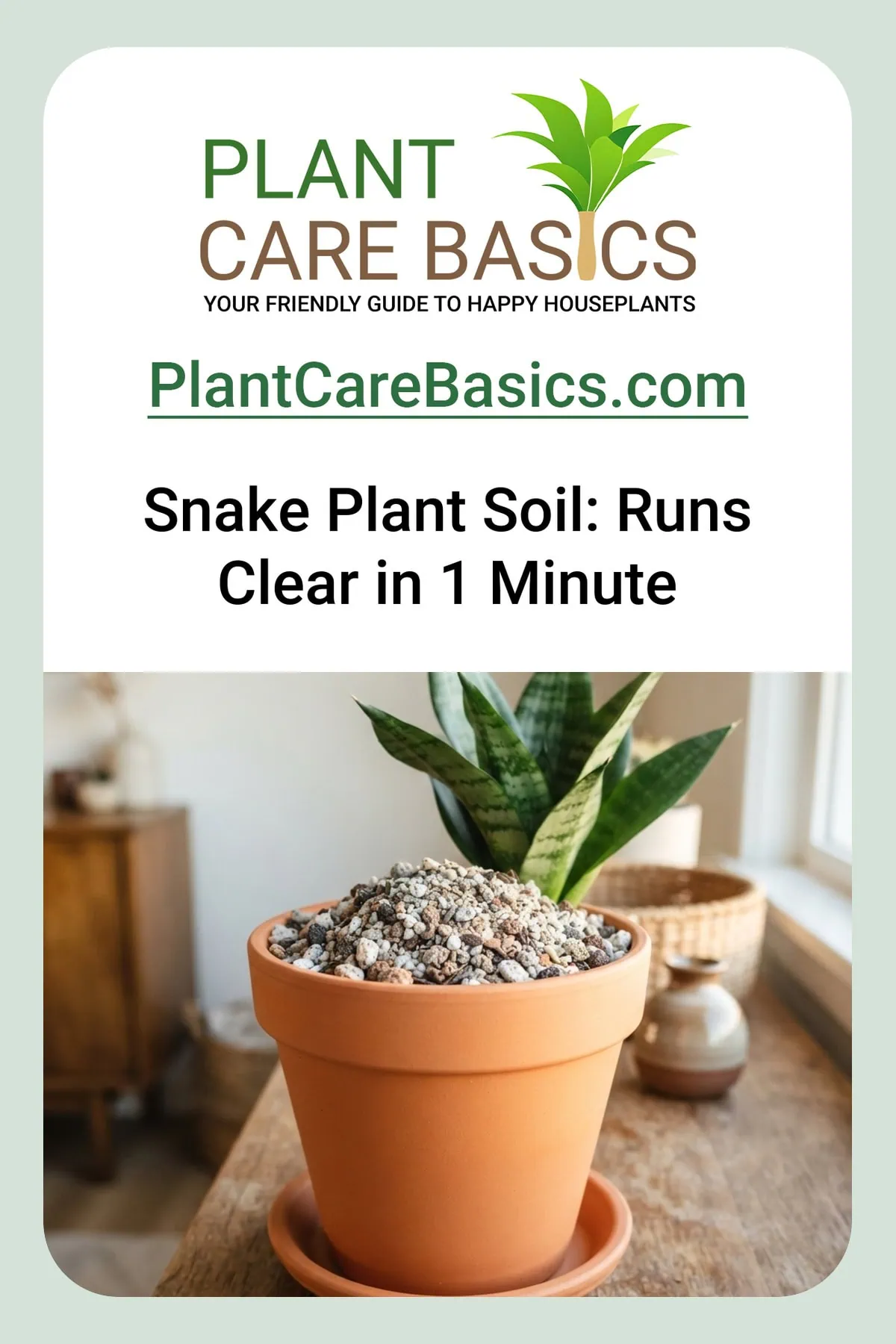
A snake plant’s growth plateaus in wet soil, so Dracaena trifasciata, an Asparagaceae succulent, needs two parts grit to one part organic. Every grower eventually asks what is the best soil for a snake plant. The answer is drainage, not a brand name on the bag.
- Amend, don’t replace: cut any bagged mix with extra coarse grit
- Aim for gritty: the blend should feel open, not dense or spongy
- Run the pour test: water should clear the pot within 1 minute
- Pick pumice: it holds its structure longer than lightweight perlite
- Watch the base: a soft, wet base means the mix held too long
Get the one-page care card for this guide, plus a printable A4 copy
We condense this guide into one card for your phone and a print version for the pot shelf. Enter your email and we send both to your inbox. Subscribe once, then request the card of any guide you read.
By subscribing you agree to get emails from Plant Care Basics about plant care guides, about once a week at most. Unsubscribe in one click. Privacy policy
Let me level with you: I lost snake plants to nothing but a bag of ordinary potting soil — no pumice, no coarse sand, no coir. The mix looked perfect on top.
Underneath, it never really dried. The base turned soft and slid apart in my fingers. By then, the rhizome had already rotted.
Conventional “well-draining” advice nearly lost me another — the real fix is not the label but a physical property to watch. Let me rewind for a second… draining fast is only half of it — the mix also has to dry out between soaks. A snake plant (Dracaena trifasciata) banks water in its fleshy leaves and a thick underground rhizome (more on this below), the same tissue that rots when the soil stays soaked.
Get the drainage right and a snake plant shrugs off neglect; get it wrong and no watering schedule saves it. For the plant’s whole care picture, start with the full snake plant care guide.
Take a breath before you shop — the following table boils every soil decision down to a few numbers you can check against any bag on the shelf.
What is the best soil for a snake plant, at a glance
| Snake plant soil specs | Recommended choice |
|---|---|
| Ideal soil type | Fast-draining, gritty cactus or succulent-style mix |
| Simple baseline recipe | About 2 parts mineral grit to 1 part organic mix |
| Target pH | Slightly acidic to neutral; avoid alkaline, limey mixes |
| Key drainage amendment | Coarse pumice or perlite |
| Drains fast enough? | Yes — water should run straight through within 1 minute |
| Pure cactus mix on its own? | No — cut it about half with houseplant mix |
| Gravel layer at the pot bottom? | No — it lifts the wet zone up into the roots |
| Semi-hydro or LECA friendly? | No — it roots poorly in constant standing water |
This information is for educational purposes only and is not a substitute for professional veterinary advice. If your pet ingests any part of this plant, seek immediate veterinary intervention or contact the ASPCA Animal Poison Control Center at 888-426-4435 or the Pet Poison Helpline at 855-764-7661 immediately.
You are subscribed
Press the button and we prepare this guide's one-page care card and its A4 print copy and email both to you within a few minutes.
Tap the button below to get more plant fixes in your Google Search results

Table of Contents
What to plant a snake plant in: the fast-draining mix
The right home for a snake plant is a lean, fast-draining medium — mostly grit, with just enough organic matter to hold light moisture. The rest is detail.
The two-to-one base: houseplant mix plus grit
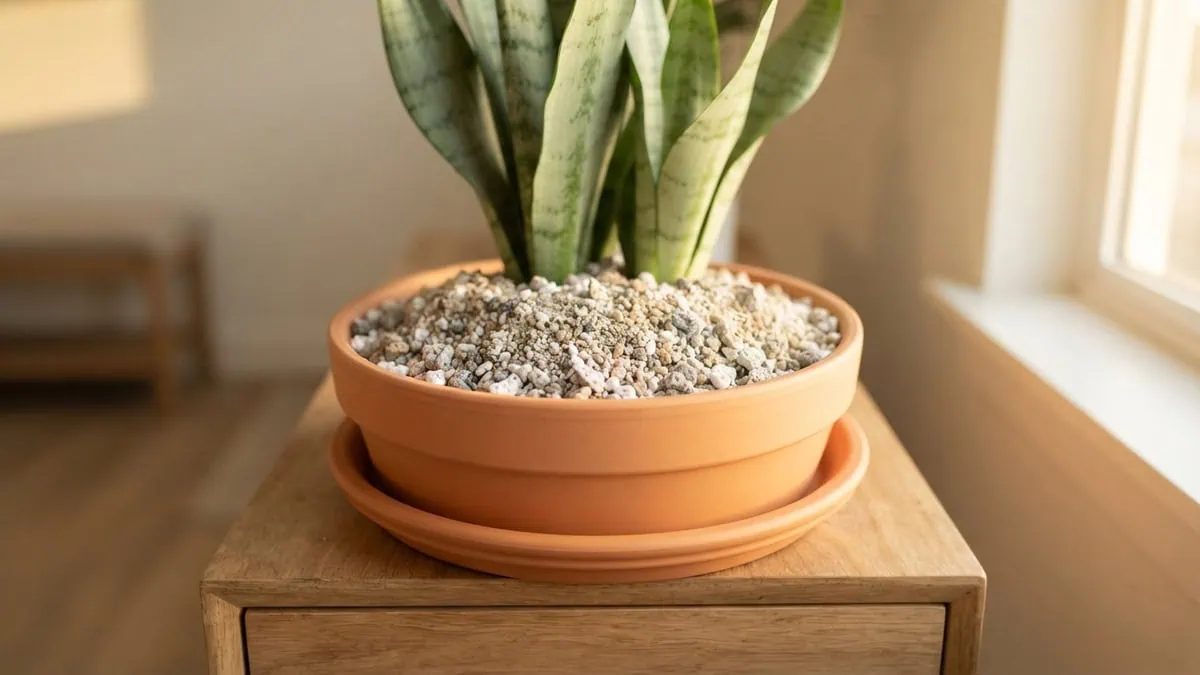
Start with a ratio you can eyeball: two parts mineral grit to one part organic. If you have searched “what is the best soil mix for a snake plant,” that two-to-one blend is the answer behind a dozen fancier recipes.
The grit — coarse perlite, pumice, or coarse sand — opens air channels so water drains fast, while the organic part, a scoop of houseplant mix or a little coconut coir, holds the trace of moisture the plant actually uses. Lean drier, not wetter: in a dim room or a water-holding plastic pot, push the grit toward half the pot — the same gritty ground it would find on a rocky African slope.
What each amendment actually does
Learning how to make your own snake plant soil mix gets easier once you know why each bag behaves differently — they are not interchangeable “drainage stuff.”
- Perlite: light and easy to find, but it floats to the surface and crumbles over time.
- Pumice: heavier and more durable, so it stays blended and keeps a tall pot stable.
- Coarse sand: adds ballast — use coarse builder’s sand, because fine sand packs down and defeats drainage.
- Coconut coir: holds a little water and re-wets easily, a cleaner organic choice than peat.
- Peat: holds a lot of moisture and, once fully dry, refuses to re-wet.
According to the University of Maryland Extension, roots grow in the open air spaces between the particles of a container mix, so the medium has to stay light and airy. The coarser the grit, the more of those air pockets the mix holds — and that air around the roots is exactly what a rot-prone succulent lacks in a dense, peaty bag.
The drains-in-minutes test
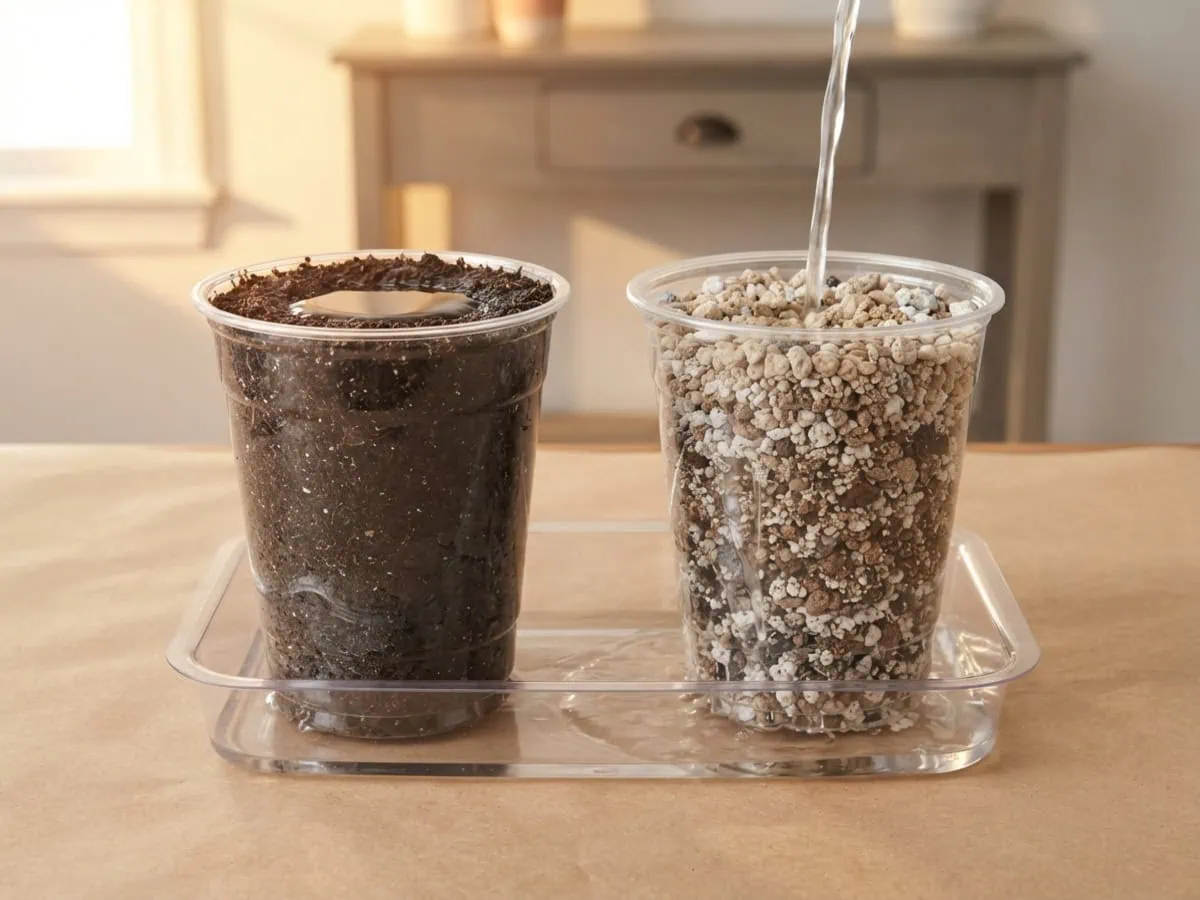
Do not trust the word “well-draining” on a bag — test it. Pour water through a scoopful and watch the bottom. A good snake plant mix sheets it straight through and runs clear within 1 minute.
A failed mix pools for the next hour. You can hear it, too — a gritty mix makes a quick, sandy hiss as the water sheets past, where a peat-heavy mix goes quiet and holds. If the water sits or takes minutes to clear, add more grit and test again before the plant goes in.
Build the mix by scoops, no measuring cups: two scoops of coarse grit (perlite, pumice, or coarse sand) to one scoop of houseplant mix. Pour water through a test handful first — if it runs clear within 1 minute, you are ready to pot.
Once the blend passes that pour test, you are ready for potting the plant up into that fresh mix without drowning it.
Get the one-page care card for this guide, plus a printable A4 copy
We condense this guide into one card for your phone and a print version for the pot shelf. Enter your email and we send both to your inbox. Subscribe once, then request the card of any guide you read.
By subscribing you agree to get emails from Plant Care Basics about plant care guides, about once a week at most. Unsubscribe in one click. Privacy policy
Tap the button below to get more plant fixes in your Google Search results

Bagged options: regular potting mix vs cactus mix
Two bagged shortcuts sit on every shelf — standard potting mix and cactus or succulent mix — and neither is quite right for a snake plant straight from the bag. You can even hear the difference. Dry cactus mix rattles like coarse sand; peaty potting mix lands with a damp, silent thud.
What matters is not the label. It is how long each mix stays wet — so the following table lines them up on the factors that decide whether roots breathe or drown.
| Factor | Regular potting mix | Cactus or succulent mix |
|---|---|---|
| Drainage speed | Slow; holds water for hours | Fast; can dry almost too quickly |
| Moisture held | Too much for a succulent | Little; may want a touch more organic |
| Use straight from the bag? | No — amend with grit first | Almost; cut about half with potting mix |
| Rot risk if unamended | High | Low |
Verdict: Reach for the cactus or succulent mix. Soften it with about half its volume of standard potting mix, so it drains fast without drying to dust in a low-light room.
Can you use regular potting soil?
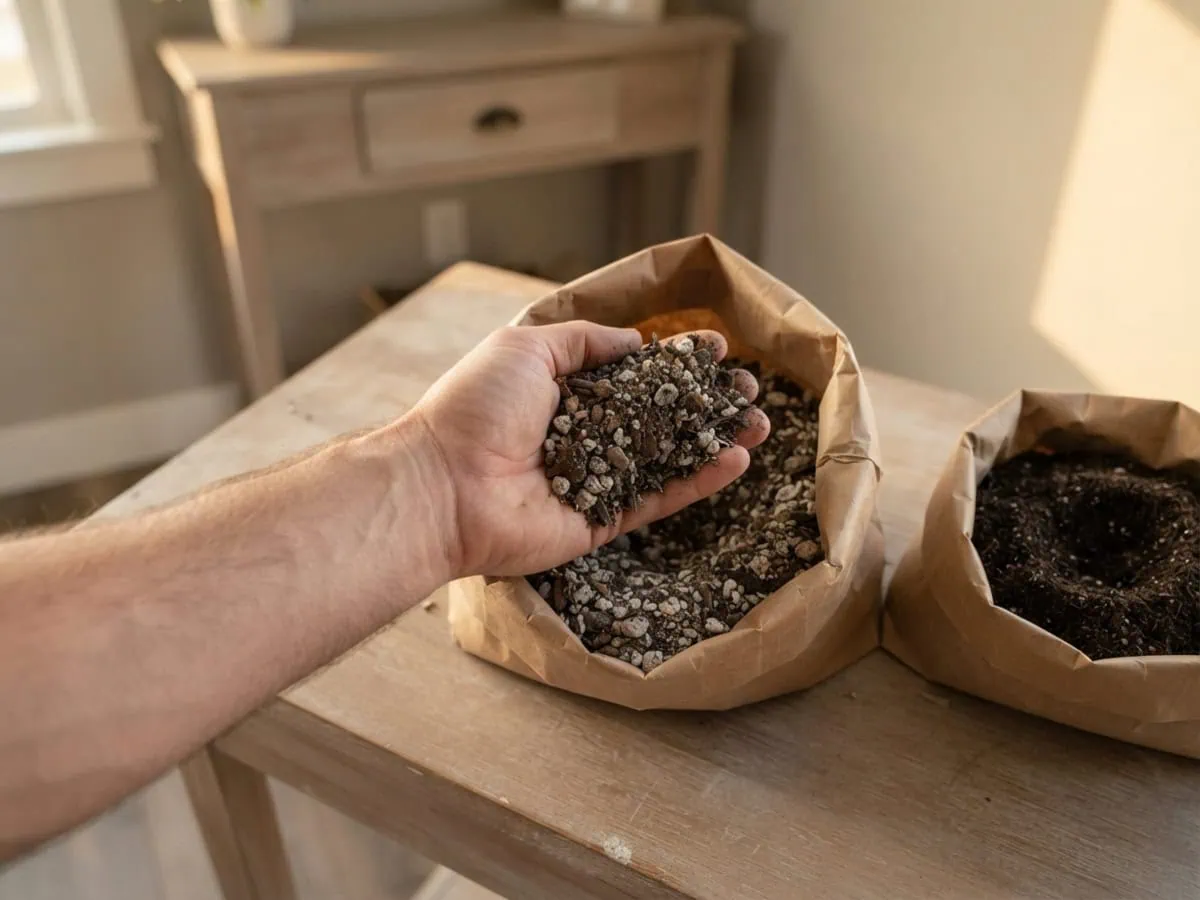
You can, but not straight from the bag. The question “can i use regular potting soil for a snake plant” comes up constantly, and the honest answer is yes — only after you cut it hard with grit.
On its own it is engineered to hold moisture, the last thing a drought-adapted rhizome wants; blend in an equal or greater volume of perlite, pumice, or coarse sand until it feels open and gritty rather than dense. Amended that way, even an ordinary bag becomes a good snake plant medium.
Is cactus or succulent soil good for a snake plant?
Ask “is cactus soil good for snake plants” and the answer is a qualified yes: a cactus and succulent mix is one of the closest ready-made matches, because it drains fast. Close to ideal — but not quite plug-and-play.
A pure cactus bag can dry almost too quickly indoors, where low light slows evaporation, so cut it half-and-half with houseplant mix to hold a whisper of moisture between soaks. And ignore the “desert plant” label: a snake plant is not a true desert cactus but a plant of seasonally dry, rocky West-Central Africa, so it wants a lean mix, not bone-dry gravel.
Soil pH and the slow drift toward alkaline
Soil pH is the one number nobody can pin down for a snake plant. Aim for a mildly acidic to neutral mix and steer clear of anything alkaline or limey; the general sweet spot sits slightly acidic, and that band is what this plant wants.
Take this with a grain of salt — I keep pH in the background, not a dial to obsess over. What matters more is the slow drift. Hard tap water leaves mineral deposits that nudge mixes toward alkaline over months, so if leaves pale despite correct watering and light, refreshing the mix resets the balance long before any test kit would.
Why drainage matters, and the soil myths to skip
Drainage is not a nicety for a snake plant — it is the single lever that decides whether the roots get oxygen or suffocate. The mechanism is simple, and two popular soil habits work directly against it.
How soggy soil starves the roots
The short version of “do snake plants need well draining soil” is yes, and the reason is oxygen, not tidiness. Roots pull oxygen from the air pockets between soil particles. When a dense mix stays waterlogged, water floods those pockets and forces the air out, so the roots — surrounded by water — can no longer take it up, and the water-storing tissue that makes a snake plant so tough starts to die back.
No air, no roots. It really is that blunt.
That dying tissue becomes the open door rot walks through, which is why a gritty, fast-draining mix does more than tidy runoff — it keeps the root zone breathing. But if the damage is done, rescuing roots that soggy soil has already rotted is a separate job from choosing a mix.
Skip the gravel layer at the bottom
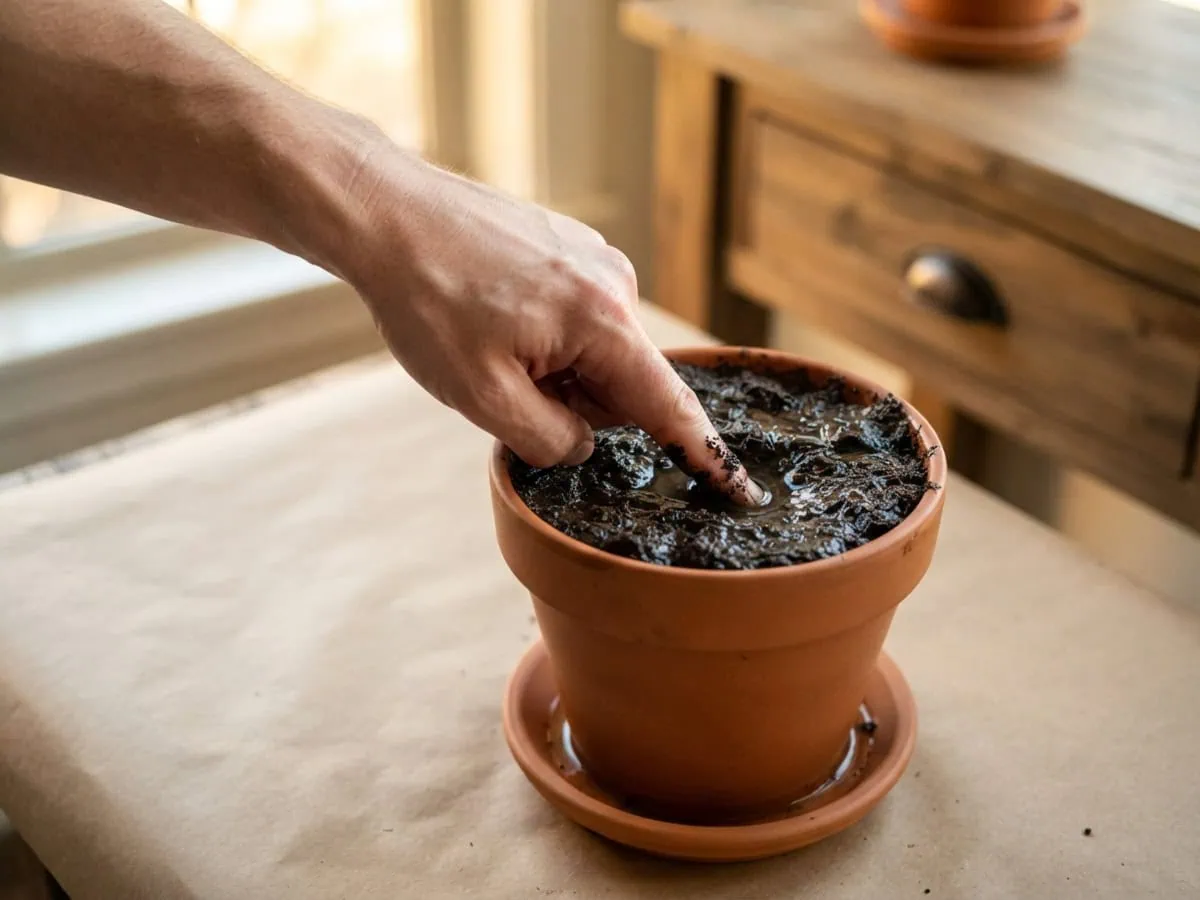
The counterintuitive part (yes, this sounds backwards — bear with me): a layer of gravel or broken pottery at the bottom of the pot does not improve drainage at all. But it makes things worse.
Water does not rush from fine soil down into a coarse layer; instead it “perches,” pooling in the soil just above the rocks until that band is saturated. So all a gravel layer does is lift the wettest zone up closer to the roots — the exact opposite of what a base-rotting plant needs.
Myth: a gravel layer at the bottom helps a snake plant drain, and cactus mix is too dry to bother with. Fact: gravel lifts the waterlogged zone into the roots, and cactus mix is a fine base once softened with about half potting mix. The mix itself does the draining — never a layer tucked under it.
Signs your mix is holding too much water
You do not need a lab to tell a mix has failed — the plant and the pot report it for you. The surface stays dark and damp days after you watered. The pot feels heavy long after a soak.
Fungus gnats drift up when you water, because they breed in soil that never dries. And, worst of all, the lower leaves yellow while the base turns soft — press it and it gives with a wet, quiet squelch instead of a firm push-back.
A heavy pot, a dark surface, and rising gnats are three tells that trace back to one cause. Fix it at the source by repotting into a grittier blend, and once the mix drains fast, how the mix changes your watering rhythm follows on its own.
Snake plant soil: your questions answered
What should I repot my snake plant in?
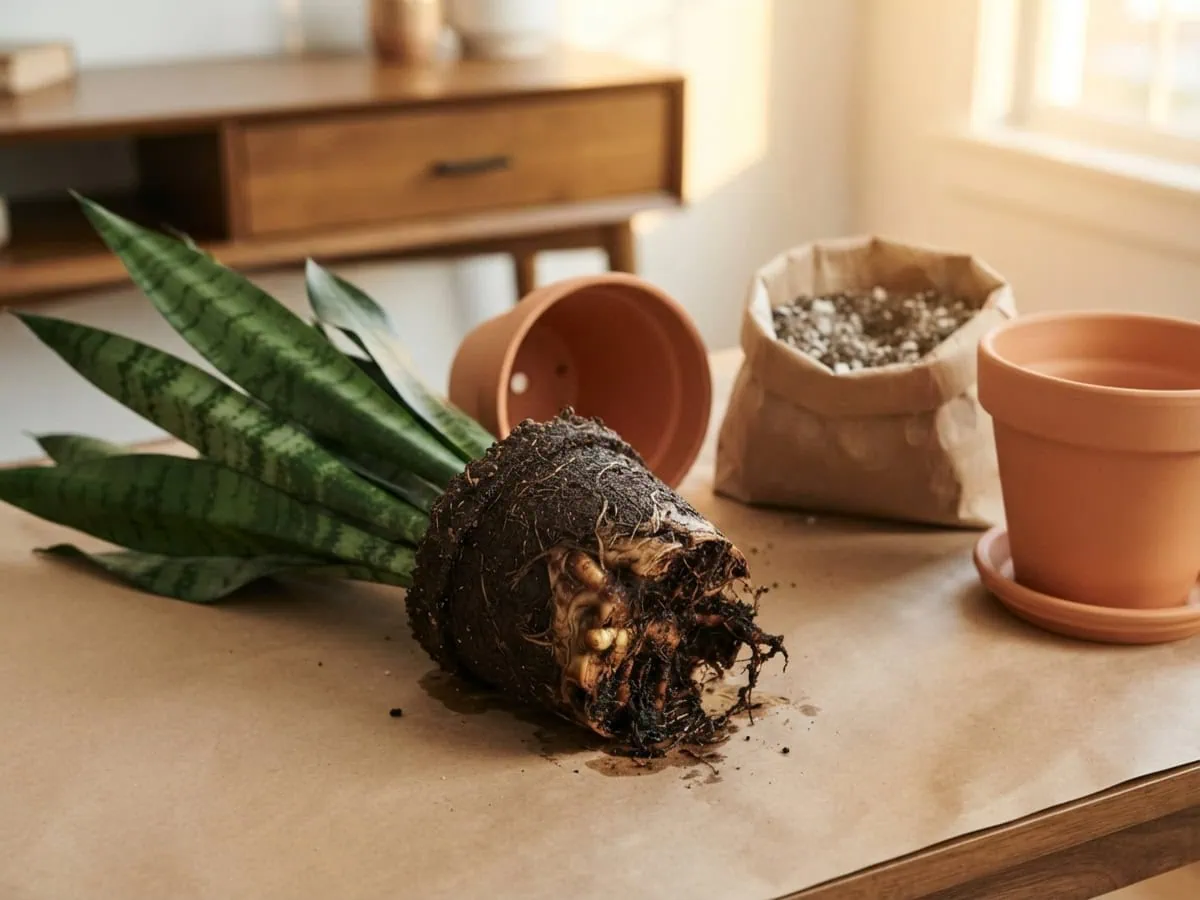
Repot a snake plant into a fast-draining, gritty mix — about two parts mineral grit to one part organic. Blend coarse perlite, pumice, or coarse sand with bagged houseplant mix or a little coconut coir.
A ready-made cactus and succulent mix works too, ideally cut about half with houseplant mix. Whatever you choose, it should drain within 1 minute, not hold water for hours.
Can I put a snake plant in regular potting soil?
You can, but not straight from the bag. Standard potting soil holds too much water for a drought-adapted succulent and invites root rot.
Amend it first: mix in an equal or greater volume of coarse grit — perlite, pumice, or coarse sand — until the blend feels open and gritty and drains within 1 minute. Amended that way, plain potting soil becomes a safe base.
What do snake plants grow best in?
Snake plants grow best in a lean, fast-draining, mostly mineral medium that echoes the rocky, seasonally dry ground of their native West-Central Africa. Build it from coarse sand, pumice, or perlite with a smaller organic fraction for light moisture and nutrients. The aim is a root zone that stays airy and quick to dry, never one that sits in standing water for hours.
What is the best soil mix for snake plants?
The best soil mix for snake plants is roughly two parts mineral grit to one part organic material. Blend coarse sand, pumice, or perlite with houseplant mix or coconut coir, or start with a cactus and succulent mix and add extra grit.
Skip any gravel layer at the bottom, which traps water. Test the blend by pouring water through — it should run clear within 1 minute.
Is cactus mix good for snake plants?
Yes — a cactus and succulent mix is one of the closest ready-made matches, because it is built to drain quickly. The one caveat is that a pure cactus bag can dry almost too fast in a low-light room, so cut it roughly half-and-half with standard houseplant mix. That blend drains freely while still holding a trace of moisture between waterings.
Is all-purpose potting mix good for snake plants?
All-purpose potting mix is not ideal on its own, because it is built to hold moisture — the opposite of what a rot-prone snake plant wants. Used straight, it stays wet far too long. It becomes a good base only after you cut it with coarse grit, so at least half the volume is perlite, pumice, or coarse sand that keeps the mix open and quick to drain.
Prove it yourself: the drains-in-minutes test
You do not have to trust me, or any bag’s marketing. Quick aside: the one habit that saved every snake plant I own was testing the mix instead of reading the label.
Scoop your finished blend, pour water through, and listen for the fast, sandy rush that means the grit is doing its job before the water runs clear within 1 minute. Get the mix gritty and free-draining, and the rot that fells most snake plants never even gets started.
In the end, what is the best soil for a snake plant comes down to that one provable trait — water that runs through in seconds, not hours. May your snake plant’s mix drain in seconds, and its roots ride dry and firm between every soak.
Get the one-page care card for this guide, plus a printable A4 copy
We condense this guide into one card for your phone and a print version for the pot shelf. Enter your email and we send both to your inbox. Subscribe once, then request the card of any guide you read.
By subscribing you agree to get emails from Plant Care Basics about plant care guides, about once a week at most. Unsubscribe in one click. Privacy policy
Tap the button below to get more plant fixes in your Google Search results