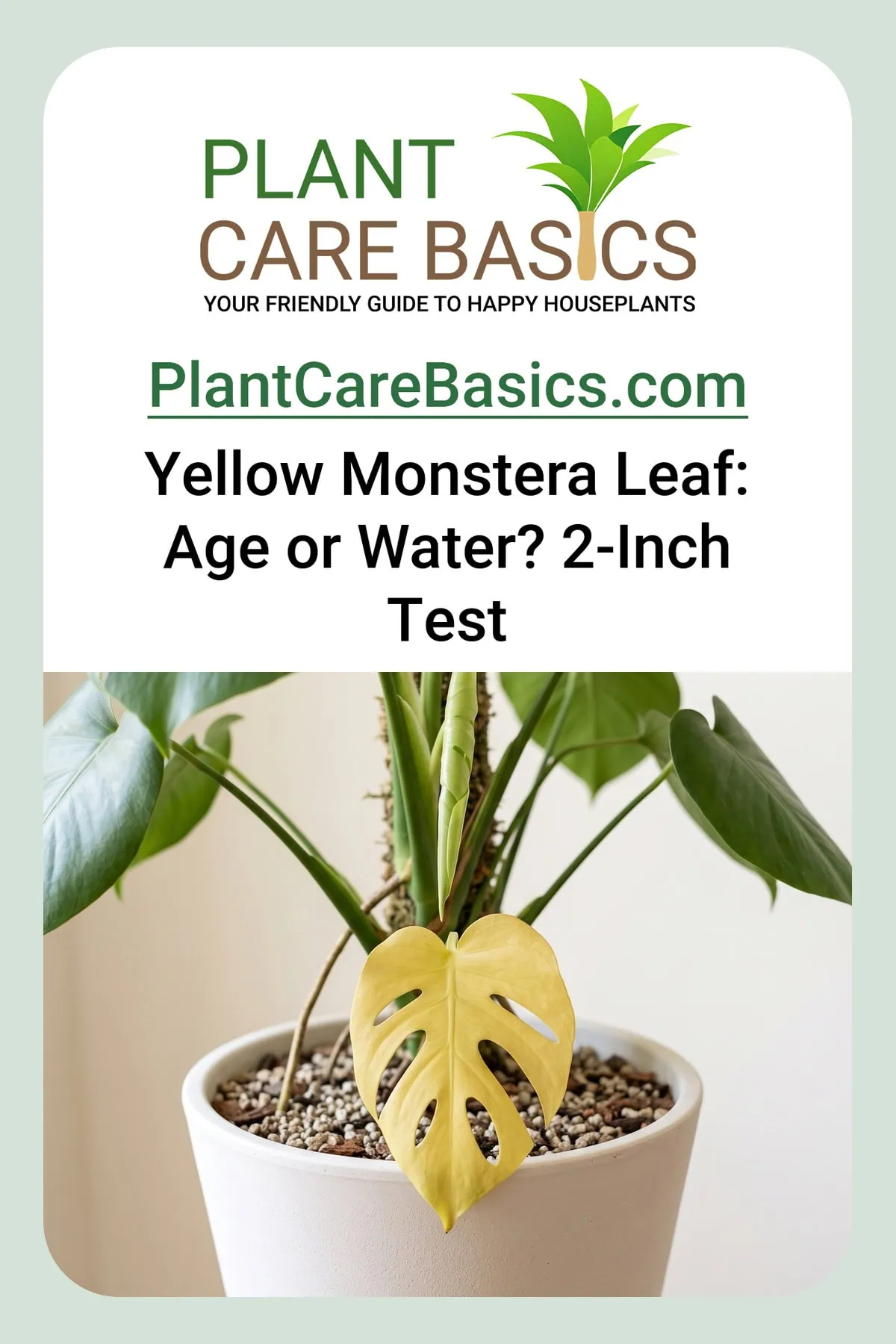
🚨 Emergency 30-Second Answer: yellow leaves on a Monstera deliciosa
Stop watering now — on this Monstera deliciosa, an Araceae family aroid, the answer sits at the top 1-2 inches. Why is my Monstera deliciosa turning yellow is decided in that layer of mix, not on the leaf. Wet at that depth points to too much water.
Dry at that depth, on limp or crisp-edged blades, points the other way. One old lower leaf on a plant still pushing new growth is ordinary shedding. Yellowing that climbs into new leaves is the urgent pattern.
The mix decides which of those you have, so change one thing and wait for the next leaf.
- Wet at depth: dark brown or black spotting on the yellow blade
- Dry at depth: crisp brown margins, papery edges and limp, drooping blades
- Curled, dull blades: a dry mix, a cold draft, or crowded roots
- Pale with green veins: a nutrient signal, not a watering fault at all
- White film on a leaf: a surface fungus on the blade, never an insect problem
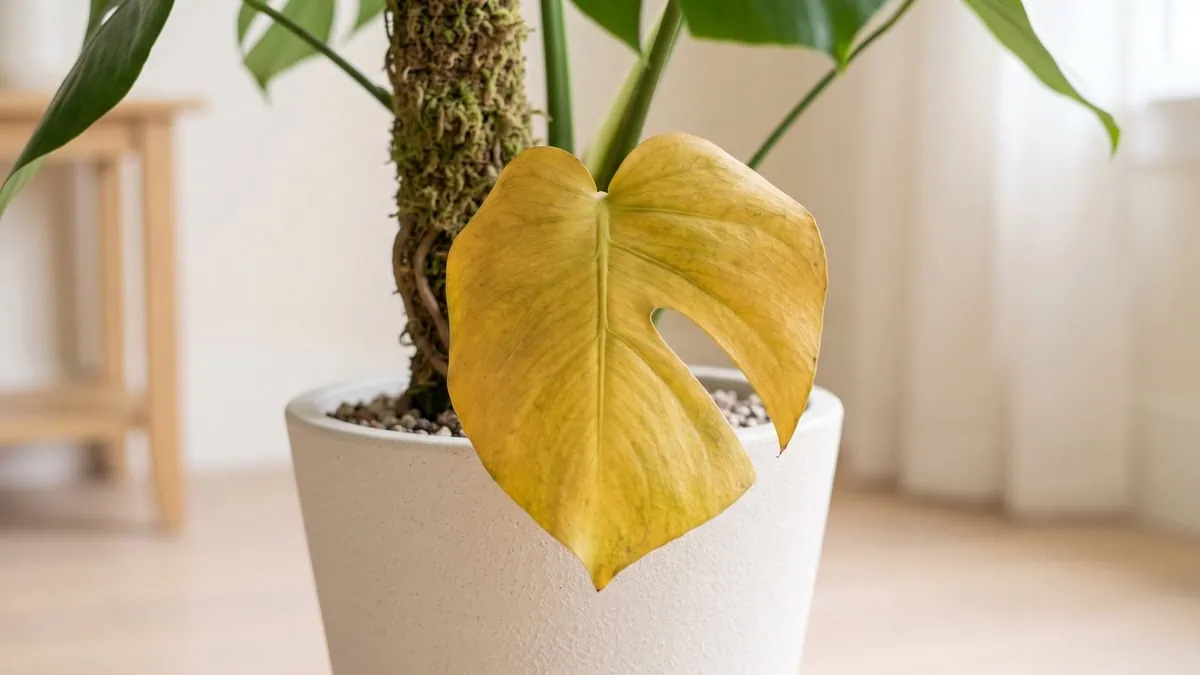
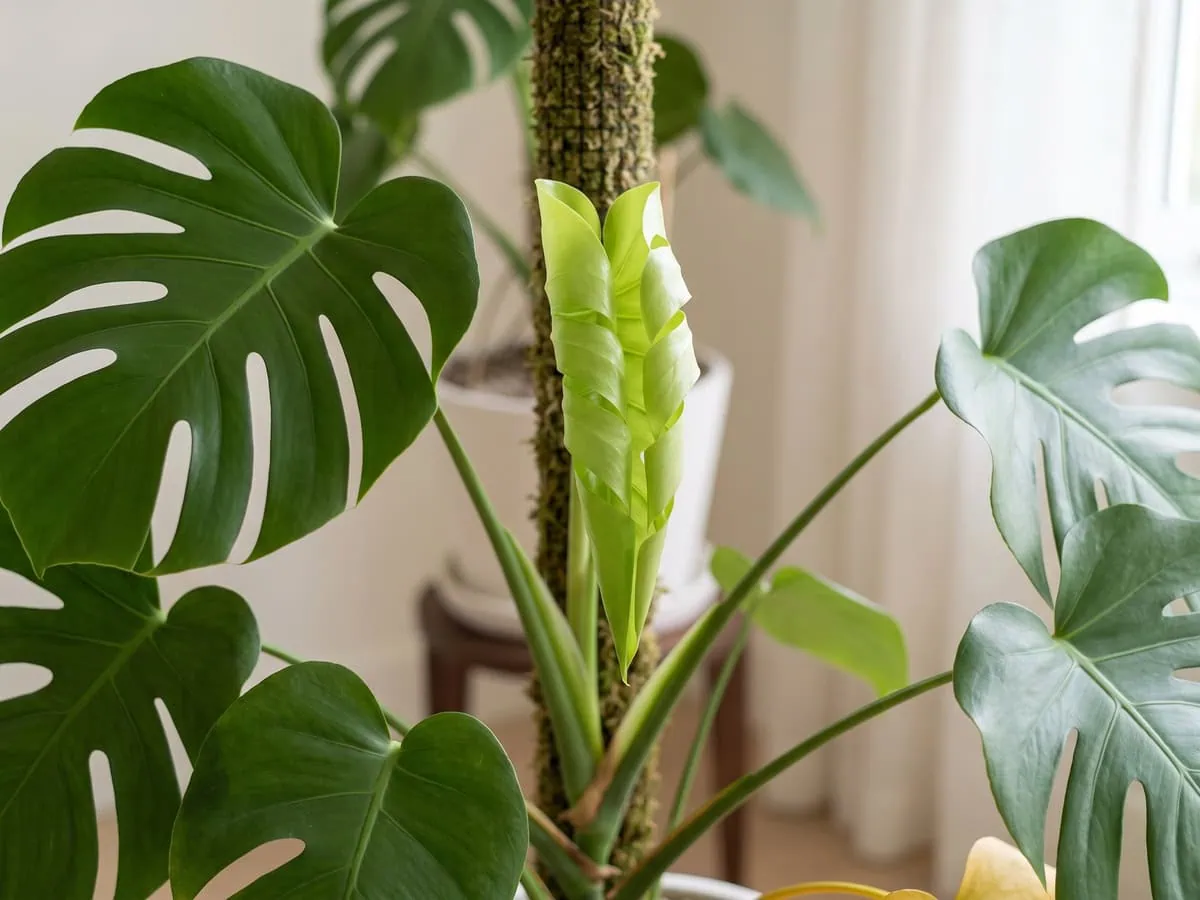
The lowest blade sits the color of weak tea, and the spear above it is still tightly rolled and pale green. That pair is the whole question.
The mistake I kept making was reaching for the watering can the moment a leaf turned; what fixed it was reading the mix first. A yellow blade is a late report, because the roots run short of air days before the color shows up at all. The mix reports first.
Yellow is not one problem. It is the shared end point of ordinary old-age shedding, called leaf senescence, plus a cold vent and other abiotic factors, and stressed and dying roots. Work the checks in order and you will not undo your own fix; the full routine behind them sits in the complete indoor growing routine for this plant.
Take a breath — nothing here is lost yet. The following table is the fast reference I wish I had while that leaf was still on the plant.
Why is my Monstera deliciosa turning yellow? A fast reference card
| What to check | What it tells you |
|---|---|
| Substrate check depth | Top 1-2 inches dry to a finger or wooden skewer |
| Does a yellowed leaf turn green again? | No – the blade is spent; the plant recovers, the leaf does not |
| Is one yellow lower leaf normal? | Yes – when new growth is still unfurling |
| First-response order | Substrate, then light, then roots, then blades – one change at a time |
| Escalation marker | Yellowing that reaches new growth, or several leaves yielding at once |
Tap the button below to get more plant fixes in your Google Search results

Table of Contents
Stop watering and read the substrate first
Read the mix before you change anything else, because the top 1-2 inches decides which yellowing this is. A finger or a thin wooden skewer about a quarter inch across settles it in seconds. Mix first, then leaf, then the reflexes that undo both — that is the order this page runs in.
Do not water again until the mix reads dry at that depth. Watering a saturated pot turns a yellow leaf into a failed root system. If the mix is wet and the blades are limp, the roots are already short of air.
The 2-3 inch reading and what it rules out
Push the skewer down 2-3 inches, past the crust, so the top 1-2 inches read honestly (yeah, learned this the hard way). The surface dries first and lies about the root zone. Wet down there under a dry crust is the over-watering picture.
Dry down there, on a blade that has faded from the margin inward — green to butter yellow to brown over a week or two — is the opposite fault. So the same probe rules one out.
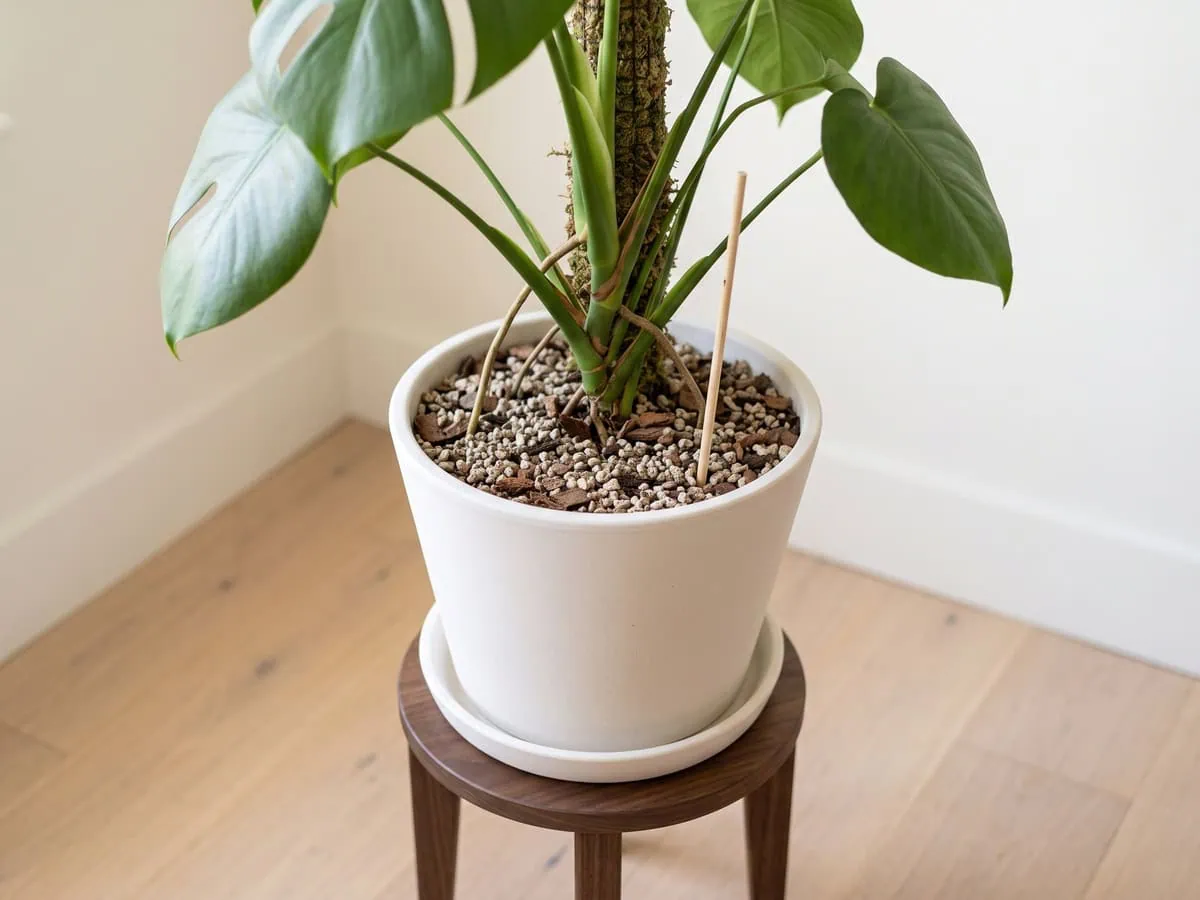
That is what the skewer is for. Every time. Fungus gnats over the mix confirm a surface that never dries, and that surface is where root-zone failure starts on this plant.
Check in one order: substrate, light, roots, blades
Work substrate, then light, then roots, then blades. Substrate is free to check, and its wrong answer does the most damage. Light comes second, because faded color with stretched spacing is a different fault from a wet pot.
Roots come third, and only if the first two check out; what a failing root system looks like when you lift the plant out is the reference for that inspection. Blades come last. They are the slowest to report.
Change one thing, then wait for the next leaf
Change one variable, then stop. Four corrections in one week tell you nothing about which one worked. Water, feed, move and repot in the same week stacks three fresh stresses on short roots.
Leaves already committed keep yellowing for weeks after the cause is corrected. The honest marker is a new leaf unfurling clean.
Tap the button below to get more plant fixes in your Google Search results

Read which leaf, what color and how fast
Read the leaf’s age, its color and how fast it changed. Those three separate the causes that share one yellow. According to the NC State Extension Gardener Handbook, discoloration of this kind traces to abiotic plant disorders more often than to a pathogen.
Across the pots I have tracked, those three reads settle a yellow leaf faster than any single symptom does, because each one rules out a different half of the possible causes. Each read gets its own section below.
- Age: the oldest lower blade, or a leaf that is still unfurling.
- Color: uniform yellow, pale tissue with green veins, or brown at the margin.
- Speed: one leaf over a week or two, or several at once.
One old lower leaf while new growth keeps coming
One oldest leaf yellowing while a spear unfurls above it is leaf senescence. The plant empties that doomed blade, then drops it. Nothing to fix.
But yellow arriving on new growth reverses the reading, and it moves the problem from the leaf to the root zone. Check the mix that same day.
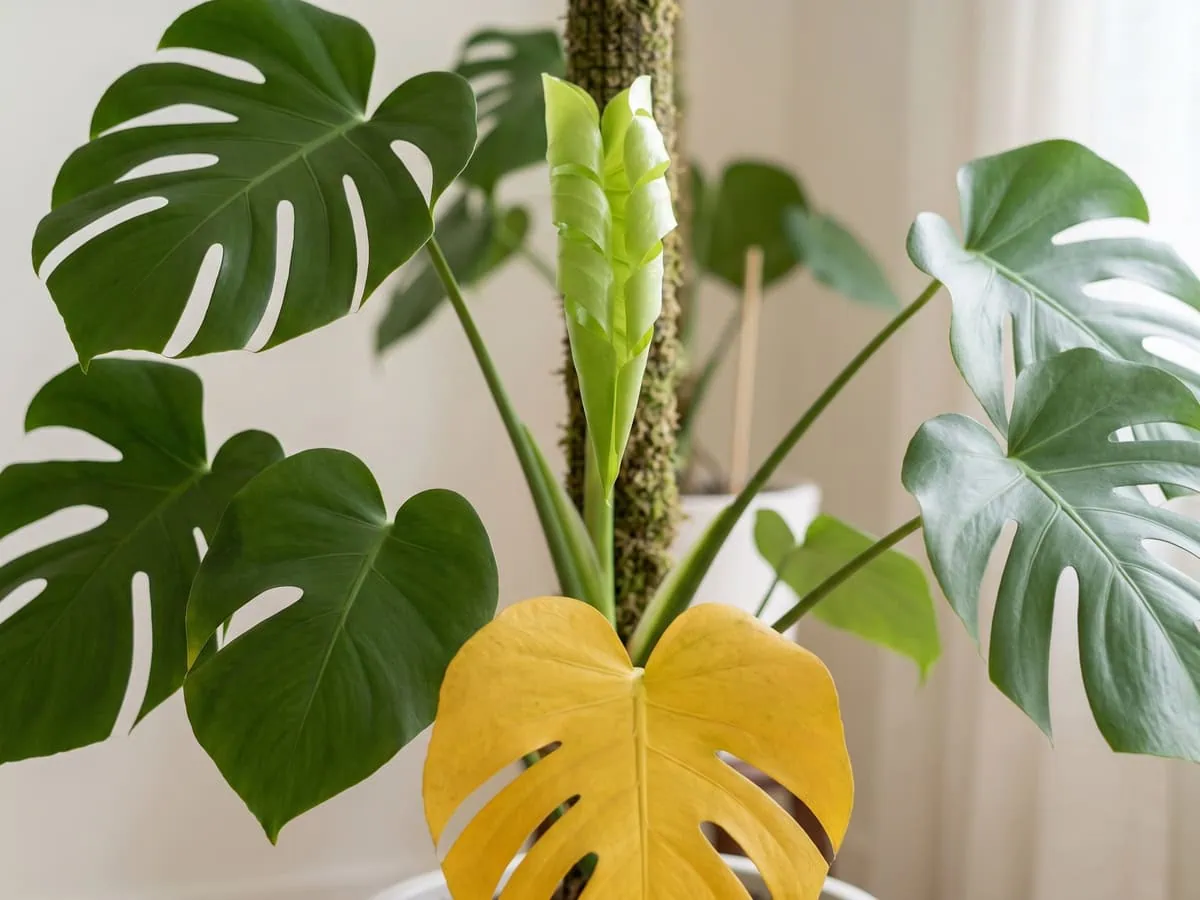
Pale new leaves with stretched spacing are a light story, and the light level that keeps new leaves full size settles it.
Curled, limp and drooping blades
Curl and droop point at water movement, not at the blade. Type “why are my Monstera deliciosa leaves curling” into a search bar and you get four answers; the mix reading picks one. Curling over a bone-dry mix, then, is thirst.
Curling over a wet mix, though, is different. Those are roots that can no longer move water. The searches behind “Monstera deliciosa drooping and wilting leaves” land on the same fork, plus a root ball with no room left.
Blades still limp hours after a thorough watering were never thirsty. Read the signals that say the roots have run out of room before you water again.
Dark marks, crisp edges and pale veins
Look at what the brown is doing at the edge. Crisp, papery margins on a firm leaf are a drying or salt story. The answer to “how to fix brown crispy tips on Monstera deliciosa” is a deep flush of plain water through the pot, then a steadier watering rhythm afterward.
A white crust on the mix surface or the pot rim confirms the salt case. And check where the damage sits: marks on the side facing cold glass or a vent are an exposure pattern, not an age pattern.
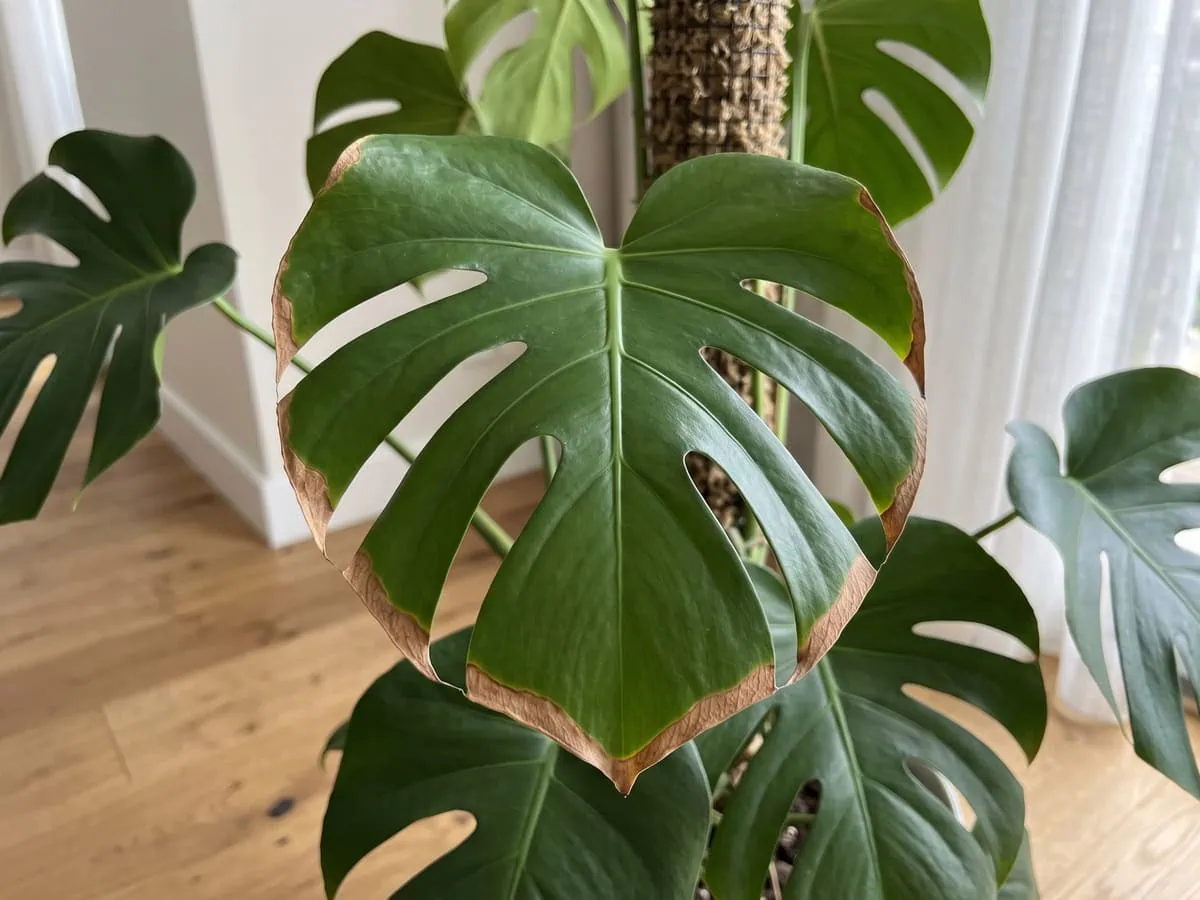
Dark, spreading marks read differently. A search for “black spots on Monstera deliciosa leaves” collapses two causes: soft spotting over a wet mix, and dry residue that wipes off.
A mark running yellow at the rim, brown in the middle and black at its center over several days is still spreading. A flat tan mark has finished. Pale tissue with green veins is interveinal chlorosis, a nutrient signal; silvery stippling belongs with identifying and clearing sap-feeding pests indoors.
Common yellowing mistakes and what not to do
Three reflexes turn one yellow leaf into a lost plant: misting it, spraying it, and cutting it off early. Each of the three is taken apart on its own terms here.
Misting does nothing for a yellow leaf
Misting cannot change why a leaf turned yellow. Droplets sit on the blade, evaporate within minutes, and the air reads exactly as it did before. Extension guidance is blunt on this: misting is not an effective way to raise relative humidity.
And it wastes the thing that matters, which is time, because while the sprayer is in your hand the mix is still wet or still bone dry. Read the mix instead. Wet blades overnight also hand surface fungi the film of water they need to settle.
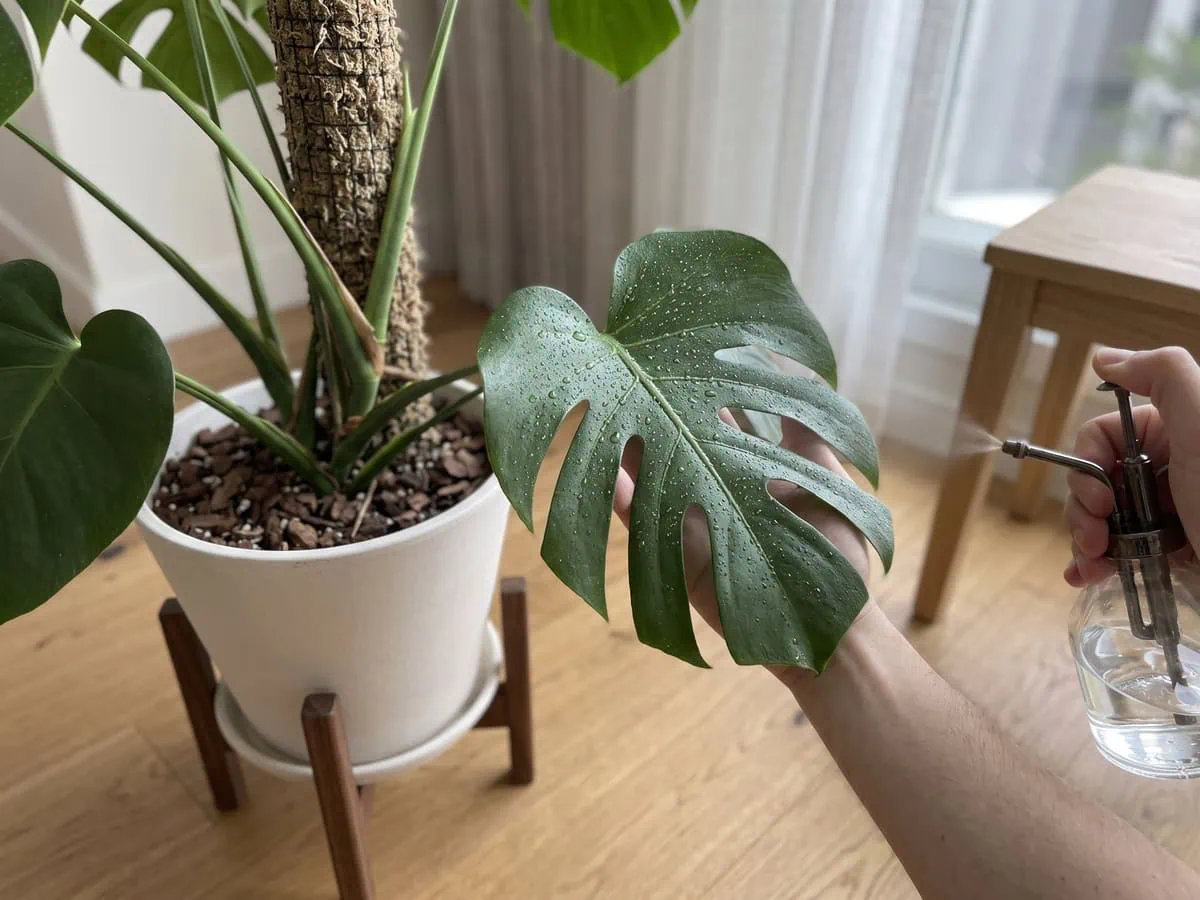
I have watched owners mist a yellowing plant for weeks. The leaf finished on its own schedule anyway. The rhythm they needed is how the watering interval is actually decided.
White film is not an insect problem
White film on a blade is a surface fungus, never an insect. Fungal threads group together into visible signs such as powdery mildew, which is why an insect spray does nothing to it. Type “powdery mildew on Monstera deliciosa leaves” into a search bar and the results still route you to pest pages.
Most white on this plant is not fungal at all. Work three look-alikes in order, because the first two lift off and the third does not:
- Household dust: a flat gray-white haze spread evenly over the upper surface, gone with a dry cloth.
- Hard-water spotting: chalky white flecks and rings where droplets dried in place, gone with a damp cloth.
- Mite stippling: fine silvery-white speckling that stays put, with the insects themselves on the underside.
A film that survives all three is the fungal case, and on this species that is rare enough to be the last identification you reach for. Crust on the mix surface or the pot rim is a fourth thing, and that one is fertilizer salt. Salt, not fungus.
Do not cut a leaf that is still working
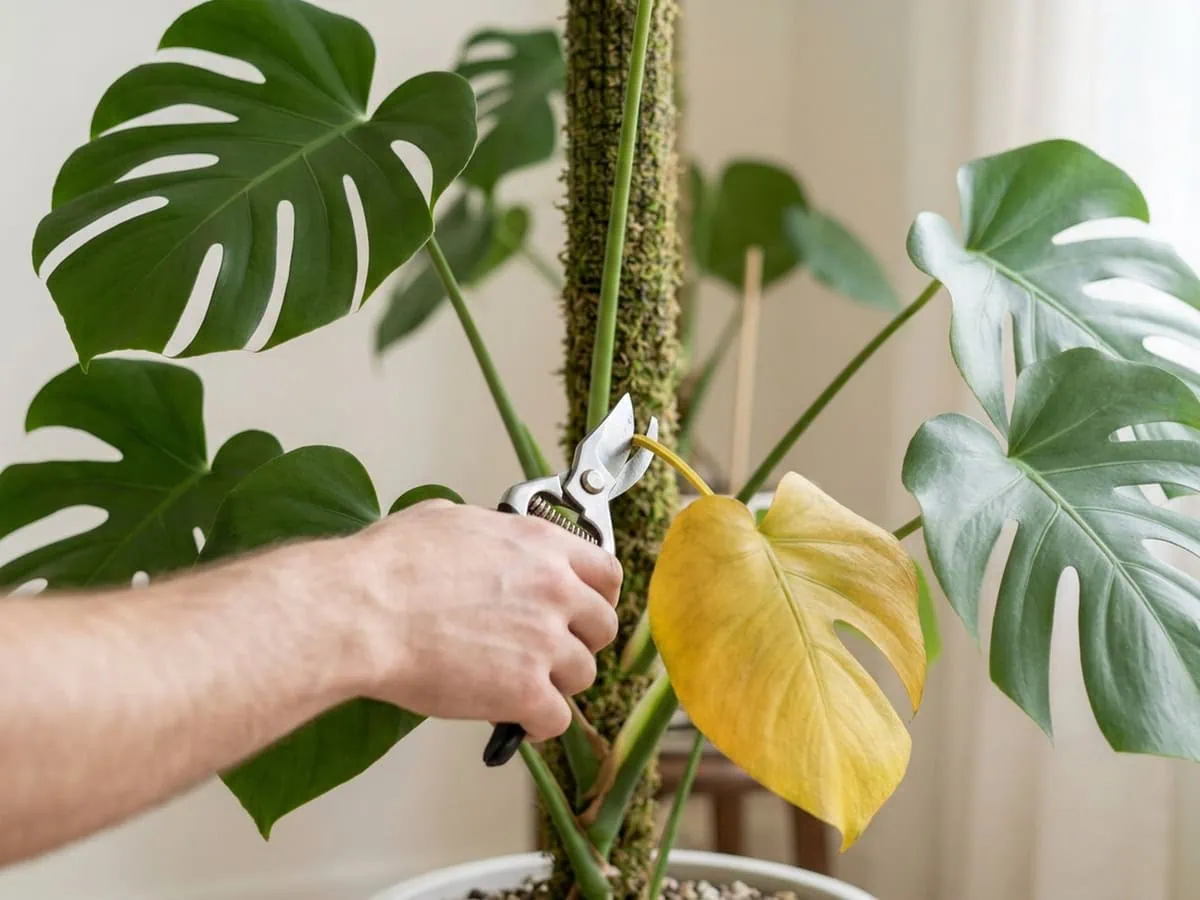
Leave a yellowing leaf attached until it has finished. Green tissue still feeds the plant, and the plant is still pulling nutrients out of that blade before it lets go. Cutting early takes both.
There is a second reason to wait. A cut leaves an open wound where rot can enter, while the plant’s own release, a slow sealing-off called leaf abscission, detaches the leaf without one.
A finished leaf lifts away under a gentle pull; one that resists is not done yet. Prune it for looks if you want to, but call it that. That is a different decision.
Frequently asked questions about yellow Monstera deliciosa leaves
How to fix a yellowing Monstera?
Check the mix at the top 1-2 inches, then correct one thing and stop. If it reads wet there, no more water until it dries to that trigger.
A dry reading there means hydrating the entire soil volume rather than wetting the surface, then letting it dry out uniformly before the next drink. Water until it drains from the holes, empty the saucer, and wait for the next leaf.
How do I make my Monstera healthy again?
Fix the root zone first, then work outward in a fixed order: substrate, light, roots, blades. One change at a time, and the substrate goes first.
Hold the fertilizer until the plant is actively growing again, because a plant whose growth has stalled has no use for the boost and the salts stay behind in the mix. Recovery is measured in a clean new leaf, never in days on a calendar.
What are the signs of an overwatered Monstera?
A wet mix with limp blades, yellowing that starts on the lower and inner leaves, and dark brown or black spotting on the yellow tissue. All three point the same way.
Gnats drifting off the surface confirm a mix that never dries. The trap is that a suffocating plant wilts exactly like a thirsty one, so the mix reading, not the drooping, settles it.
Can Monstera leaves come back from being yellow?
No. The plant comes back; that leaf does not, and no correction re-greens spent tissue.
Expect committed leaves to keep yellowing for a while after the cause is corrected, which is why owners so often undo a good fix. The first honest sign of recovery is a new leaf unfurling clean and full size, and that arrives on a timescale of months rather than weeks. That spent leaf can come off once it lets go on its own.
Should I cut off yellow Monstera leaves?
Not while any green remains on the blade, because that tissue is still feeding the plant and still being emptied.
Wait until the leaf lifts away under a gentle pull. A cut made earlier leaves an open wound where rot can enter, while the plant’s own release seals the joint as it detaches. Nothing is gained by taking it a week early.
Can a yellowing leaf turn green again?
No. Yellowed tissue on a part-yellow blade stays yellow, even after the cause is corrected, because the color change runs one way only.
The green that is left keeps working, which is the argument for leaving the leaf attached rather than tidying it away. Read the next leaf to unfurl for the verdict on your correction, not the leaf that prompted it.
Can overwatering cause yellow Monstera leaves?
Yes, and it is the single most common cause of yellowing on indoor plants. Saturated mix holds no air, so the roots suffocate. They fail well before the canopy shows it.
In my experience the two water faults arrive in near-equal numbers, and the dry one is missed more often. That is why the reading at depth decides it rather than the color of the leaf.
Lesson locked. Take the reading before you take the watering can
You are not looking at a mystery. The leaf has already reported the mix. Ten seconds with a finger or a thin skewer settles it, and wet at depth or dry at depth sorts the yellow into the two piles it actually comes in.
Then change one thing. Wait. The question waiting behind this one is which yellowing earns a root inspection and which earns nothing at all, and that answer arrives with the next spear rather than today.
Judge the new leaf, not the tired one below it. Clean green edge to edge, then, is the verdict worth having. The next time you ask why is my Monstera deliciosa turning yellow, you will already know where the answer lives.
The top two inches of that chunky mix answer this question faster than any leaf will, and the next spear to unfurl is your confirmation.
Tap the button below to get more plant fixes in your Google Search results