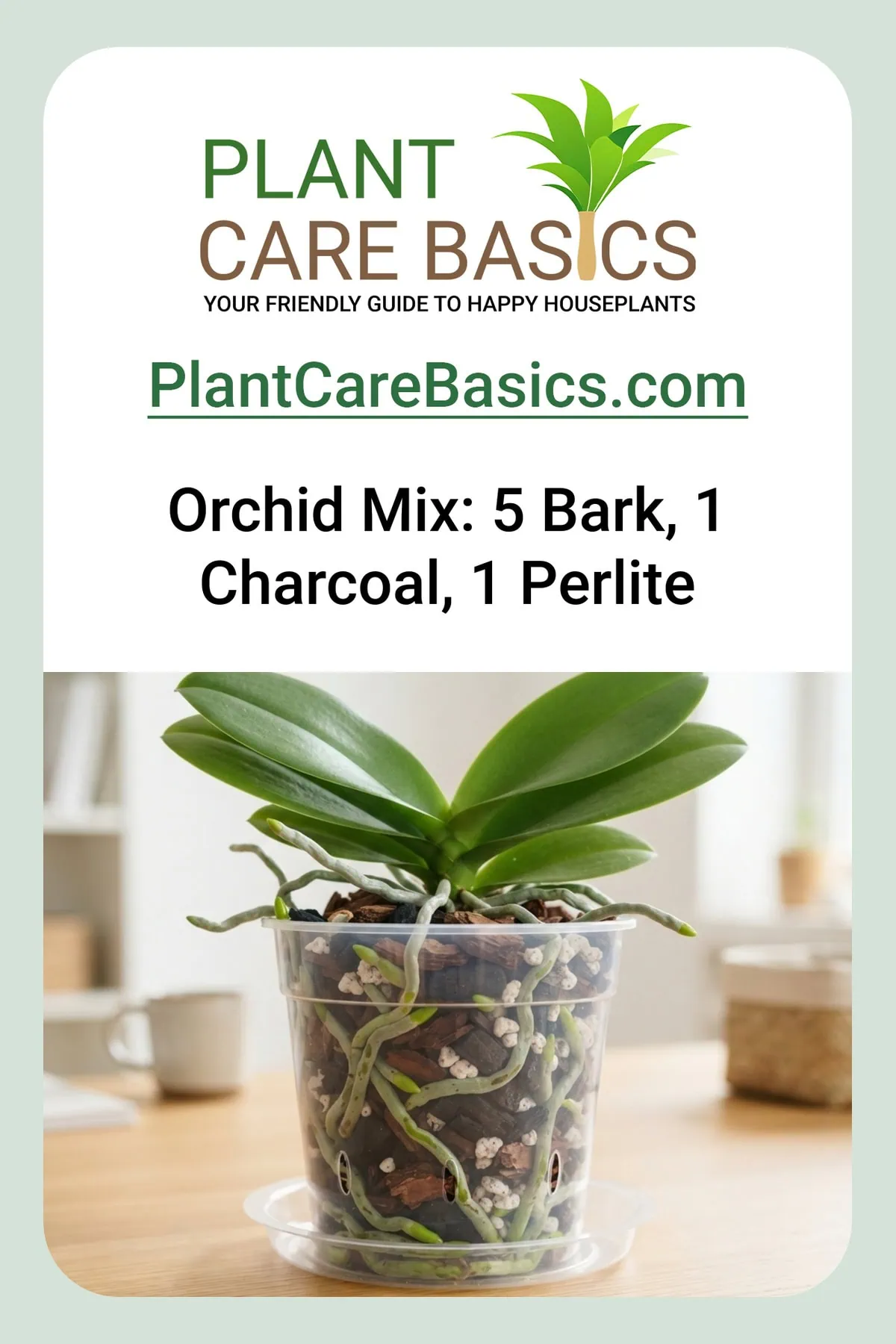
🎯 Quick Answer: the best soil for a moth orchid
The best soil for a Phalaenopsis orchid (family Orchidaceae) shifts with one rule: chunky medium-grade fir bark at 1/4-1/2 inch, never soil. Its roots wear a spongy silver sheath — velamen — that must gulp air between waterings. A dense potting mix drowns and rots them.
- Base medium: chunky, medium-grade fir or orchid bark that drains fast
- Never use: regular potting soil, loam, or fine coconut coir pith
- Squeeze test: open gaps show between pieces when the grade is right
- Match your room: lean coarser in humid air, finer when dry
- Read the roots: a clear pot shows silver when dry, green when wet
Quick story: I lost moth orchids before I finally understood what a Phalaenopsis root actually wants. Each one sat in a dense, generic mix, because I assumed an orchid roots in ordinary soil like any other houseplant (stay with me here). Then I squeezed a root and it collapsed — hollow, mushy, and cold.
The soggy mix is the visible problem. The actual problem is anatomy. A Phalaenopsis root is sheathed in velamen — a spongy, silver layer of dead cells that gulps air between soakings, then dries again, just as it would on a bare tree branch in the wild.
Backtrack: it does not sip water through fine soil. It breathes.
Fix the medium and the hard parts — watering, rot, reblooming — settle into place. The right answer is mechanical, not mysterious. For the full care picture, start with the wider indoor moth orchid care guide.
Take a breath — you do not need a chemistry degree for this. The following table sums up the whole best-soil answer at a glance before digging into the why.
What is the best soil for a Phalaenopsis orchid — quick specs
| Moth orchid specs | Recommended media |
|---|---|
| Base medium | Medium-grade fir or orchid bark — chunky, open, fast-draining |
| Fir bark particle size | 1/4-1/2 inch, medium grade for standard roots |
| Simple home recipe | 5 parts fir bark : 1 charcoal : 1 perlite |
| Bark vs sphagnum default | Fir bark for mature plants and beginners |
| Refresh interval | Sphagnum about 1 year; fir-bark blends 1-2 years |
| Is regular potting soil OK? | No — it holds too much water and starves roots of air |
| Are coconut husk chips OK? | Yes — chunky and airy, unlike fine coco coir |
Tap the button below to get more plant fixes in your Google Search results

Table of Contents
Why a Phalaenopsis grows in bark, not potting soil
A Phalaenopsis lives in bark because it is an epiphyte — its wild roots grip tree branches, never soil. The two sections below cover root biology, then the coconut trap. Get the medium wrong and you are not growing an orchid; you are composting it (FYI — a soggy, airless mix is the top reason a store-bought orchid fails early).
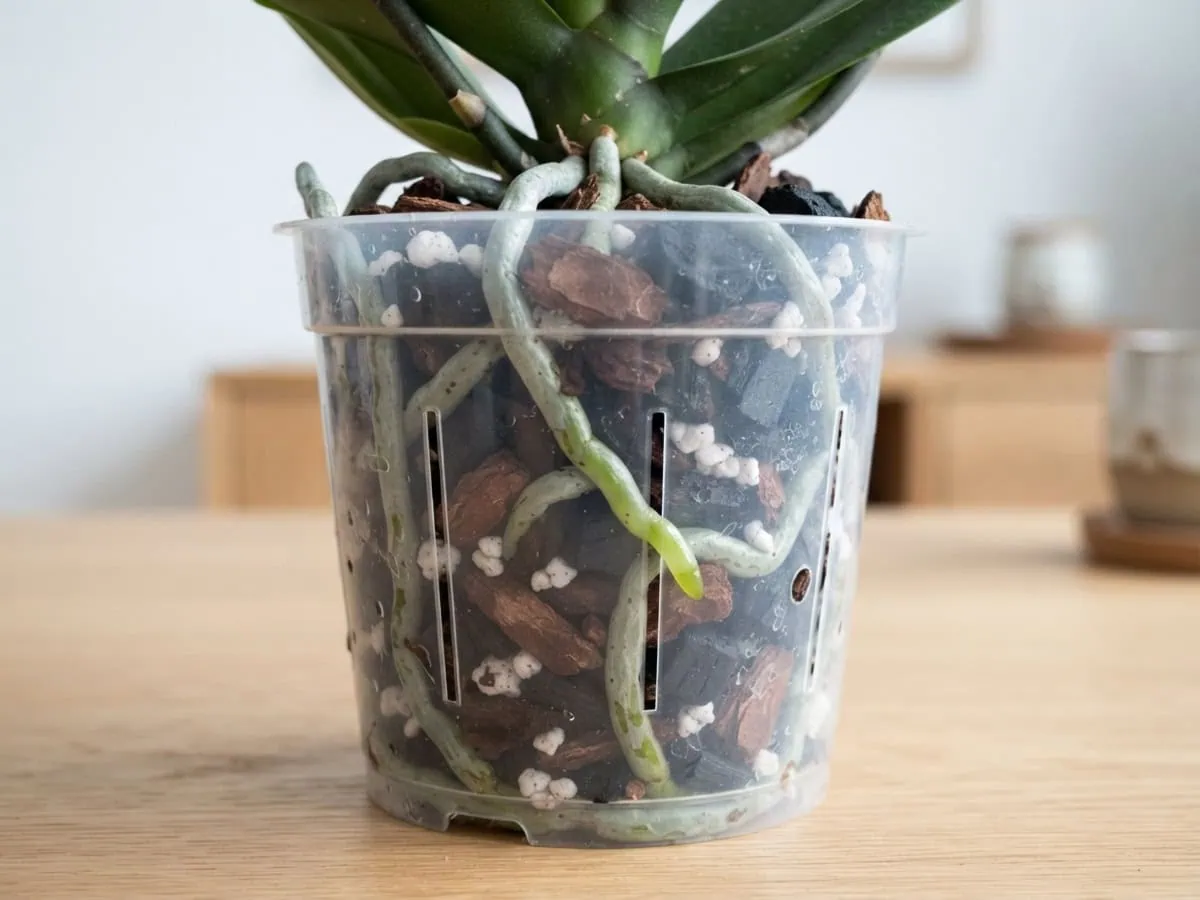
Velamen roots breathe air — dense soil suffocates them
Velamen is the secret. Each thick Phalaenopsis root wears it, drinking water in seconds, then drying over hours. Between soakings, that same tissue pulls oxygen straight through the root surface, because an orchid breathes largely through its roots, not just its leaves.
Velamen: the spongy, silvery layer of dead cells sheathing an orchid root, built to soak up water fast, then pull in air as it dries.
Dense potting soil breaks that rhythm. Fine particles pack tight, water fills every gap, and the air never arrives, so the root suffocates, blackens, and turns to cold mush.
That slow collapse is the same one behind rescuing roots lost to a soggy, broken-down mix. Chunky bark does the opposite: big, irregular pieces leave open channels that drain fast and refill with air, handing each root a wet-then-dry cycle instead of a swamp.
Coconut husk chips work; coco coir and potting soil don’t
Here the labels lie. Chunky coconut husk chips behave like bark — open, springy, and full of air pockets — and they make a perfectly good orchid medium. Fine coconut coir, the powdery pith sold for seed-starting, does the exact opposite: it holds water like a sponge and packs down airless, just like potting soil.
So the word “coconut” tells you nothing on its own. Particle openness is the only thing that counts. See gaps between the pieces, and roots can breathe; watch it smear into a dense pad, and it drowns them.
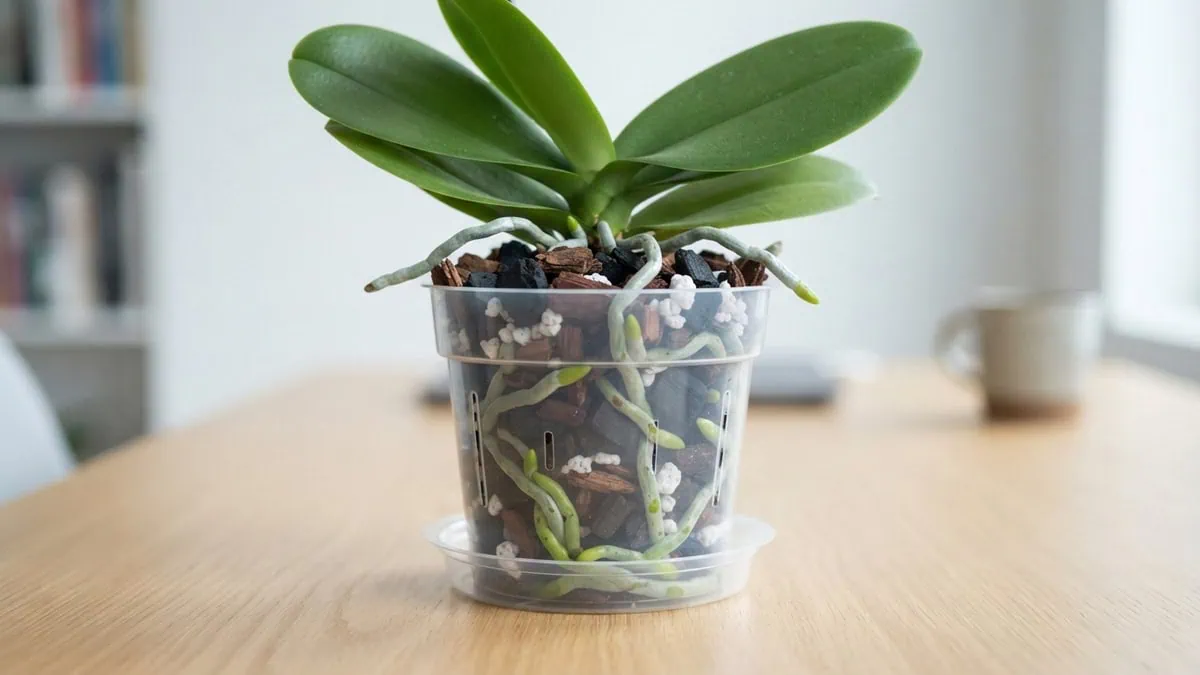
Grow your moth orchid in a clear plastic pot and let the roots report the medium’s state. Silver-gray roots mean the bark is dry and it is time to water; bright green roots mean it is still moist, so wait.
Tap the button below to get more plant fixes in your Google Search results

Bark, moss, or a blend: building the right mix
The best base for almost every home moth orchid is medium-grade fir bark, with a little charcoal and perlite folded in. The three sections below settle the particle size, the bark-versus-moss question, and a five-minute recipe. According to Clemson Cooperative Extension, the standard orchid potting media components come down to bark, charcoal, and sponge rock.
Fir bark and the right particle grade
The question I hear most, word for word, is “what size fir bark should I use for a Phalaenopsis orchid”. The answer is medium grade: the size both the American Orchid Society and the Missouri Botanical Garden recommend, the latter pinning it at roughly 1/4 to 1/2 inch chunks. One-inch nuggets drain too fast and dry the plant; sub-quarter-inch fines pack down soggy.
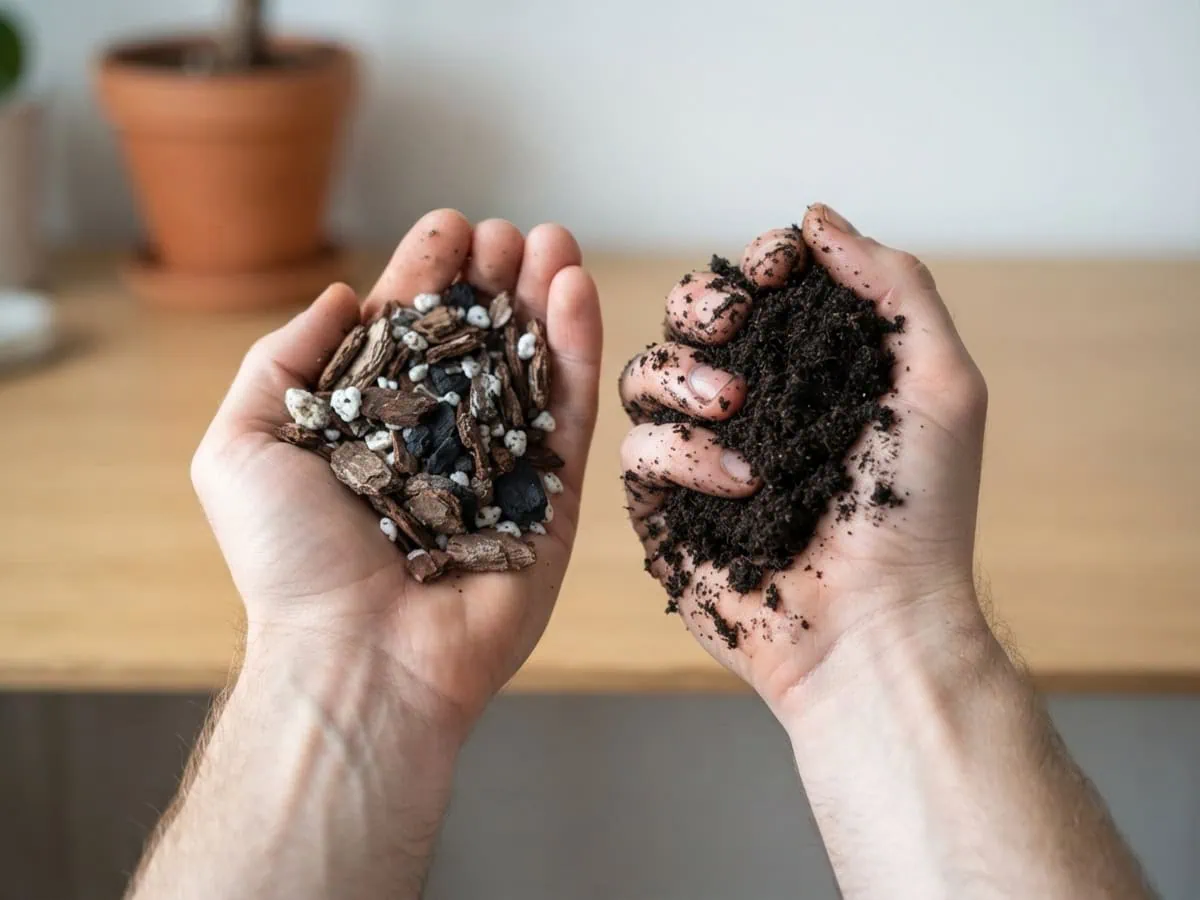
Aim for the biggest piece that still holds a moisture film after a soak. Squeeze a handful; if open gaps show between the pieces, the grade is right.
Sphagnum moss versus bark: which base to pick
Beginners always ask “is bark or sphagnum moss better for a Phalaenopsis orchid”, and the honest answer depends on you. For a mature plant and most beginners, fir bark wins — fast-draining and hard to overwater. Moss is the harder medium. Sphagnum holds far more water than bark and stays wet longer, suiting a seedling or a bone-dry room but punishing a heavy hand.
| Property | Fir bark | Sphagnum moss |
|---|---|---|
| Water holding | Low — drains fast, dries evenly | Very high — stays wet for days |
| Overwater risk | Low; forgiving for beginners | High; roots rot easily |
| Refresh interval | 1-2 years | About 1 year |
| Best for | Mature plants, average-to-humid homes | Young plants, very dry rooms |
Verdict: Choose fir bark for a mature moth orchid or if you tend to overwater; keep a moss-heavy mix only for a young plant, a very dry room, or a hands-off waterer.
Caveat: this might be wrong for your exact setup. The research even flips in the tropics, where pure sphagnum is called the best medium for young moth orchids in warm, fast-drying conditions — the same moss that rots roots in a cool, still room. Read your own home before trusting a flat verdict.
Truth is — I fought this for a year. I loved how a mossed orchid looked, then felt the roots go soft under the surface while the top still read bone-dry to my fingertip. The fix was not more attention; it was moving the two youngest into bark and leaving moss for one seedling on a warm sill.
A simple home recipe with perlite and charcoal
If you want “how to make your own Phalaenopsis orchid potting mix”, start with the Missouri Botanical Garden formula: 5 parts fir bark, 1 part horticultural charcoal, 1 part perlite by volume. Bark is the airy backbone, perlite props open extra channels, and charcoal soaks up fertilizer salts and slows decay.
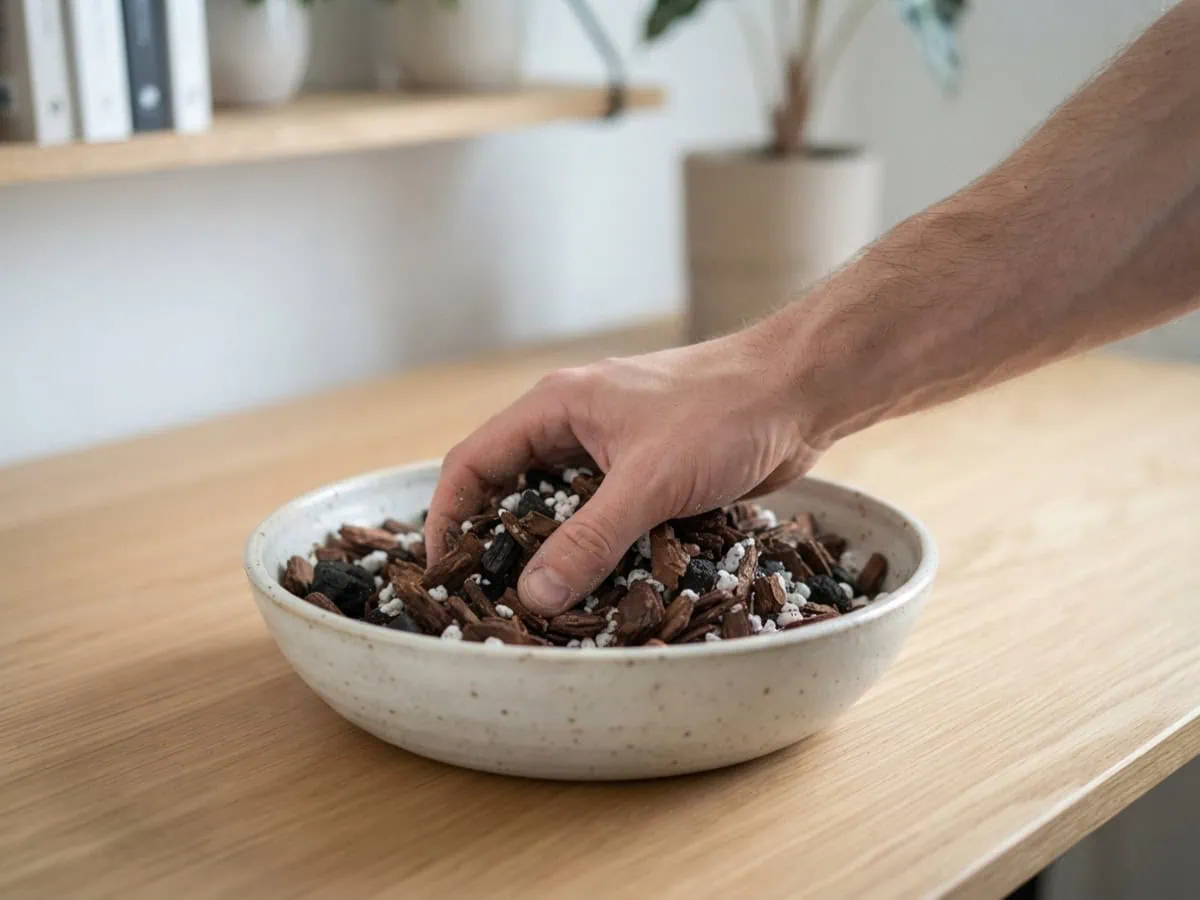
That charcoal job matters, because it ties straight into how absorbent media trap fertilizer salt. Fold the mix loosely, filling gaps between roots so no air pocket remains, but never press or tap the pot, where fine dust settles and holds water longest.
Potting-mix mistakes: bagged blends, home humidity, and spent bark
Most media failures trace to three fixable mistakes — trusting a bad bag, ignoring your own room, and running the mix long past its expiry. The sections below walk through each. None of them need a lab; just your eyes, your fingers, and a little healthy doubt.
Myth: any potting soil works, and a bag labeled for orchids is automatically better. Fact: a moth orchid is an epiphyte, so ordinary soil smothers its air-breathing roots, and a printed “orchid mix” label guarantees nothing — plenty of big-box bags run too fine, too aged, or moldy. Judge the material inside the bag, never the words on the front.
Judging a bagged ‘orchid mix’ on the shelf
So, “is bagged store orchid mix good enough for a Phalaenopsis“? Sometimes. But only when it is a genuinely coarse, chunky bark blend.
Look for pieces pea- to fingernail-size, no fine dust or soil-like fill, no musty smell or mold. A coarse mix of peat, fir bark, charcoal, and perlite is serviceable; a bag of small, aged, resinous crumbs is not.
When a bag flunks that look-and-feel test, either build your own from the recipe above or amend it — stir in extra coarse bark and perlite until the open gaps reappear.
Matching the medium to your home’s humidity
The best mix is conditional on your room, not absolute. A dry, heated home pulls moisture from bark fast, so a slightly finer or moss-boosted blend buys a safer margin between waterings. A humid or cool room flips that — lean coarse, skip the heavy moss, let the extra air keep roots from staying wet.
Match the medium to the air first, then set watering to the medium; the two are locked together. That is why the watering rhythm your mix decides really begins in the bag you pick.
How to tell your mix has broken down
Wondering “how can I tell when my Phalaenopsis potting mix has broken down”? Watch for three tells.
Fresh bark is coarse and firm and snaps when you bend it; spent bark crumbles into fine, dark, soil-like grit that sponges up water instead of breaking. The surface stays wet for days after a normal dry-down, and new roots start dying back into the cold mush.
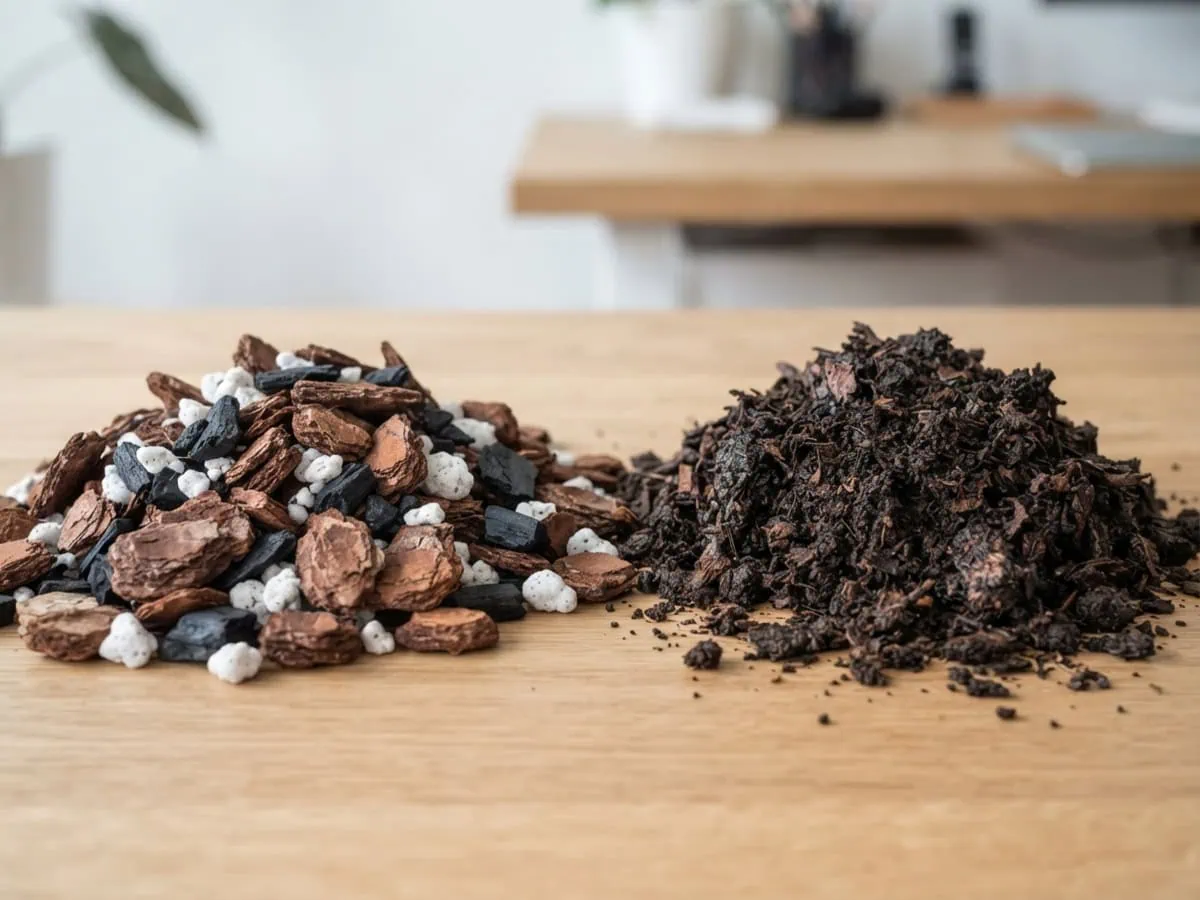
The mechanism is simple: as particles collapse, air pockets vanish, the root zone loses oxygen, and starved roots die and rot. Sphagnum earns a refresh yearly, fir-bark blends every one to two years, and a whitish salt crust (absorbent media hoarding fertilizer) means flush or repot early. That is where moving your orchid into fresh bark takes over.
Moth orchid potting-mix FAQ
What potting materials do Phalaenopsis prefer?
Phalaenopsis prefer coarse, airy, epiphyte-friendly materials — chiefly medium-grade fir or orchid bark, usually blended with horticultural charcoal and perlite. Sphagnum moss, coconut husk chips, lava rock, pumice, and LECA all serve as components or alternatives, each chosen for how much air and water it holds. The rule they share is open structure: velamen-coated roots must breathe between waterings, so every good material drains fast and never packs into a dense, airless pad.
Is potting soil good for orchids?
No. Regular potting soil is not good for moth orchids, because it holds far too much water and packs airless around roots built to breathe. A Phalaenopsis is an epiphyte — in the wild its velamen-covered roots grip tree bark in open air, absorbing brief rain and then drying. Sealed in dense soil, those roots suffocate and rot within weeks. Use a coarse, bark-based orchid mix instead, and save the potting soil for your leafy houseplants.
Do Phalaenopsis orchids need soil?
No — Phalaenopsis orchids do not need soil, and they actively suffer in it. As epiphytes, they evolved to root on tree bark, not in the ground, so they grow in a chunky, fast-draining orchid medium instead. A typical mix is medium-grade fir bark with a little charcoal and perlite; some growers use sphagnum moss or coconut husk chips. What the roots truly need is not soil but air, moisture in short bursts, and something coarse to grip.
What is the best potting mix for Phalaenopsis orchids?
The best potting mix for Phalaenopsis orchids is medium-grade fir bark at 1/4 to 1/2 inch, blended with a little charcoal and perlite. A reliable home recipe is 5 parts fir bark to 1 part horticultural charcoal to 1 part perlite by volume. Beginners do well starting with plain fir bark, which drains fast and resists overwatering. Match the blend to your home: lean coarser in a humid room, slightly finer or moss-boosted in a dry one.
What are common orchid potting mistakes?
The most common potting-mix mistakes are choosing the wrong material and keeping it too long. Growers plant a moth orchid in regular soil or fine coco coir, both of which suffocate the roots; they trust a big-box “orchid” bag that is really too fine and aged; or they run a broken-down mix that has crumbled into airless, water-logging grit. Others pack the medium down hard, erasing the air pockets. Pick coarse, chunky bark, then refresh it every one to two years.
Can orchids be planted in regular potting mix?
No — moth orchids should not be planted in regular potting mix. Standard mixes are built for terrestrial plants and stay dense and wet, while a Phalaenopsis root needs air moving through open bark. Planted in regular mix, the roots turn brown, soft, and mushy as they suffocate. If you brought home an orchid sitting in soil or tight wet moss, shift it into a coarse bark orchid medium at the next chance, and its new roots will run firm and silver again.
From a bag of soil to a mix that breathes
One line sums it up: a moth orchid is an epiphyte, so it lives in chunky bark, not dense soil. Pick medium-grade fir bark, add a little charcoal and perlite, match the blend to your room, and swap it out before it crumbles to grit.
Do that, and the guesswork around watering and rot mostly fades — the medium does the hard work for you. That simple.
Remember: silver velamen roots drink a soak in seconds, then breathe for days — but only if the bark leaves room. So next time someone asks what is the best soil for a Phalaenopsis orchid, answer in one breath: chunky bark, never soil. May your bark stay chunky and airy, and your moth orchid’s roots run silver-firm through every open gap.
Tap the button below to get more plant fixes in your Google Search results