🎯 Quick Answer: watering a Monstera deliciosa
Deciding how often to water a Monstera deliciosa turns on depth: Monstera deliciosa, Araceae family, recovers when the top 1-2 inches dry. Check two points on opposite sides, then water until it runs from the drainage hole. A fixed day is not a method.
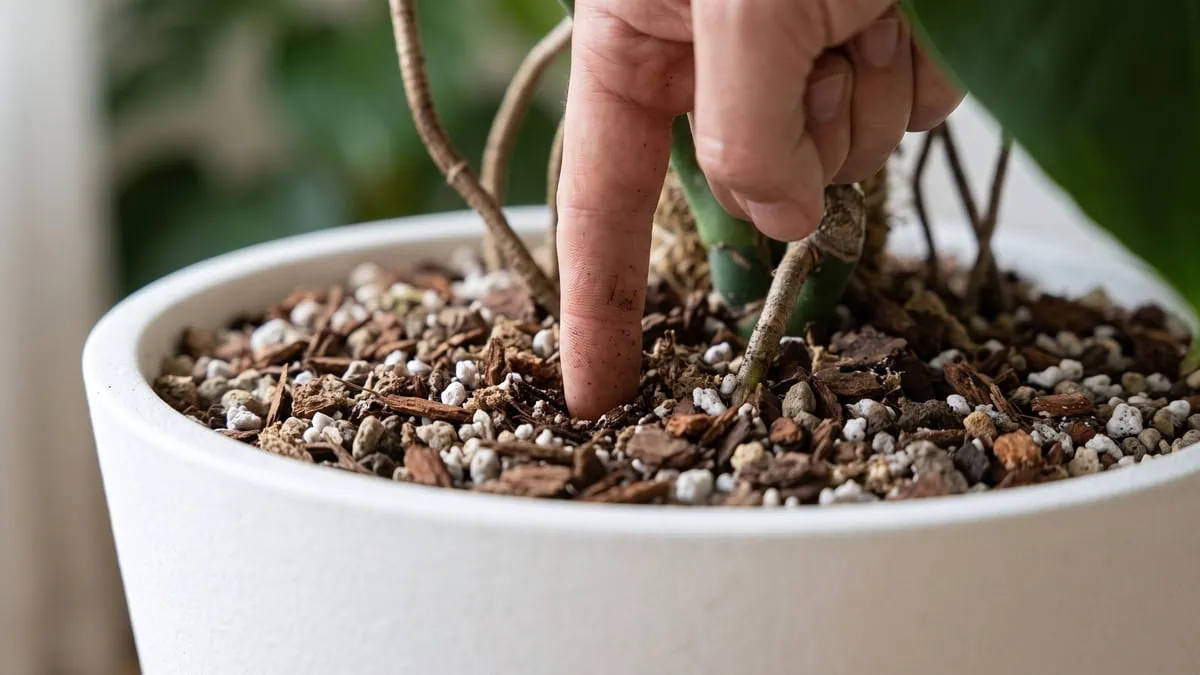
- Finger test: push in two knuckles; dry at that depth says water
- Skewer test: withdraw a quarter-inch wooden skewer; clean and dry signals water
- Pot lift: a drained-dry pot feels far lighter than a freshly watered one
- Drench and drain: water until it runs out, then empty the saucer
- Cold months: the same test fires less often as growth slows
Seven Monstera deliciosa passed through my care over seven years before watering stopped being guesswork, and two ended in leaf tipburn — papery margins that crisped over a fortnight while the mix stayed bone dry (more on this below). That was underwatering, not neglect. This plant stores no water, so the top inch or two dry-down check is your only warning.
Conventional watering advice nearly lost me the lot — water weekly, it said, and I did. Actually, I take that back: the schedule was not the whole fault, because the pot and the mix beneath it were quietly setting the pace all along, and no calendar can read either of them. The real fix was a finger.
Across 53 owner reports of Monstera decline, moisture deficit accounted for 8 — nearly as many as overwatering. So the check is the spine of the complete indoor routine this climbing aroid needs.
Full stop. Every number the watering decision turns on sits in one screen just under this line, so you can act tonight.
How often to water a Monstera deliciosa at a glance
| Monstera specs | What this plant needs |
|---|---|
| Water when | Top 1-2 inches dry to a finger or skewer, never on a fixed day |
| Growing medium | A chunky aroid mix of equal parts fine pine bark, sphagnum peat and perlite, top-dressed with a thin layer of coarse horticultural grit |
| Water type | Ordinary tap water; fluoride, chlorine and chloramine are all tolerated |
| Drainage hole required? | Yes – without one the mix stays saturated and roots lose air |
| Bottom watering suitable? | Yes – stand the pot in shallow water, then drain fully |
| Salt flush interval | At least 3 times the pot volume of clear water, every 4-6 months |
Tap the button below to get more plant fixes in your Google Search results

Table of Contents
How often to water a Monstera deliciosa indoors
There is no fixed interval — you water when the top 1-2 inches of the mix have gone dry, which in an airy aroid mix usually lands near weekly during active growth. Three short sections turn that into a ten-second test.
A fixed watering day is the single most repeated mistake in this topic. So schedule the check, never the pour.
The dryness trigger: top 1-2 inches
Depth decides it, not the day. Push a clean finger straight down, and if damp grains cling at the second knuckle, wait. Tested across several indoor pots here, that one habit ended more losses than anything else.
Test two points on opposite sides of the pot rather than one. A single poke can drop into an air gap in a bark-heavy mix and read dry while the core is still wet.
Three moisture checks that need no meter
Knowing how to tell when a Monstera deliciosa needs water comes down to three checks, and none of them needs an instrument.
- Finger: two knuckles down, roughly two inches. Dry there calls for water.
- Skewer: push the wooden skewer two inches in and withdraw it — clean and dry calls for water, damp grains clinging means wait another day.
- Weight: lift the pot the moment it finishes draining, then lift it again days later. The difference is unmistakable.
A moisture meter is the one tool worth skipping. Its probe reads the air gaps in a chunky bark mix rather than the mix itself — one recorded case has a meter walking an owner into chronic drought.
Drench, drain, and never a standing saucer
When the test says go, water until it runs freely from the drainage hole, then tip out the saucer. Small, frequent sips are what build the dry, water-repellent pockets this plant dies in.
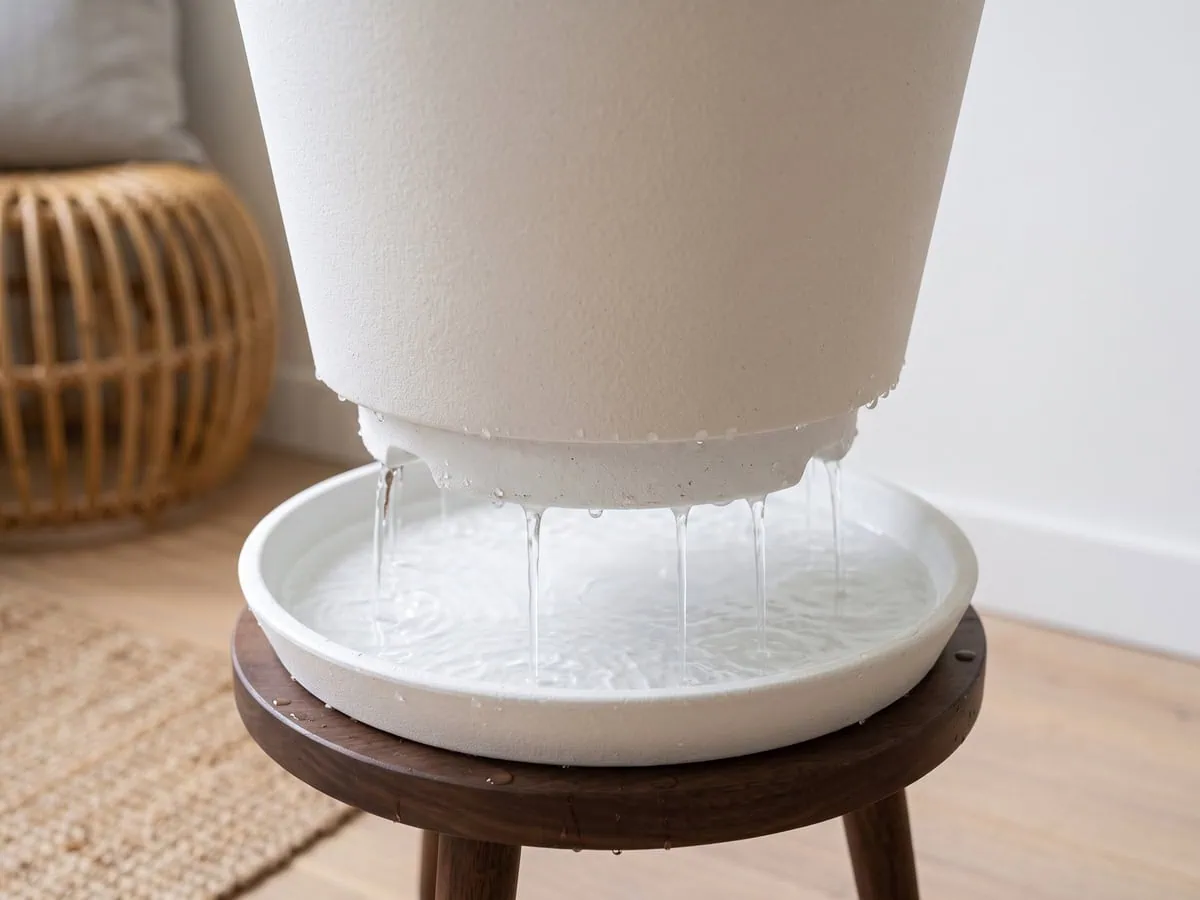
Because every full drench carries dissolved salts out with it, that habit also holds down the mineral crust behind brown, papery tips.
Container and medium move the interval further than the calendar ever does. An unglazed pot paired with a coarse gritty mix can dry faster than any household keeps up with, so the medium matters as much as the pot when you are building a mix that drains without drying out.
Away for a week? Water thoroughly, let it drain, and move the pot back from the brightest window so it drinks more slowly. Beyond roughly two weeks the honest answer is a person, not a gadget.
Tap the button below to get more plant fixes in your Google Search results

Signs you are watering too much or too little
Color alone settles nothing here, because both faults yellow a leaf; the mix underneath and the texture of the damage are what separate them. Four short sections take the two errors apart, one symptom at a time.
A plant wilting while the mix is still wet is not thirsty. The roots have already failed, and more water finishes the job, so go straight to what to do once the roots have already failed.
What too much water looks like
The signs of overwatering a Monstera deliciosa gather at the base and in the newest growth — yellowing that climbs into young leaves, dark brown or black spotting on the same blade, a black ring where the stem meets the mix, and roots that are brown and soft instead of firm and white.
Fungus gnats are a free wetness gauge, because they breed only in a surface layer that never dries. But the roots report it first, and silently.
What a thirsty plant looks like
The signs of underwatering a Monstera deliciosa run the other way: dry brown spotting on bone-dry mix, curled and dulled blades, and margins that turn papery rather than mushy (yes, this sounds pedantic — bear with me). The two patterns share a color and take opposite corrections, so the distinction earns its keep.
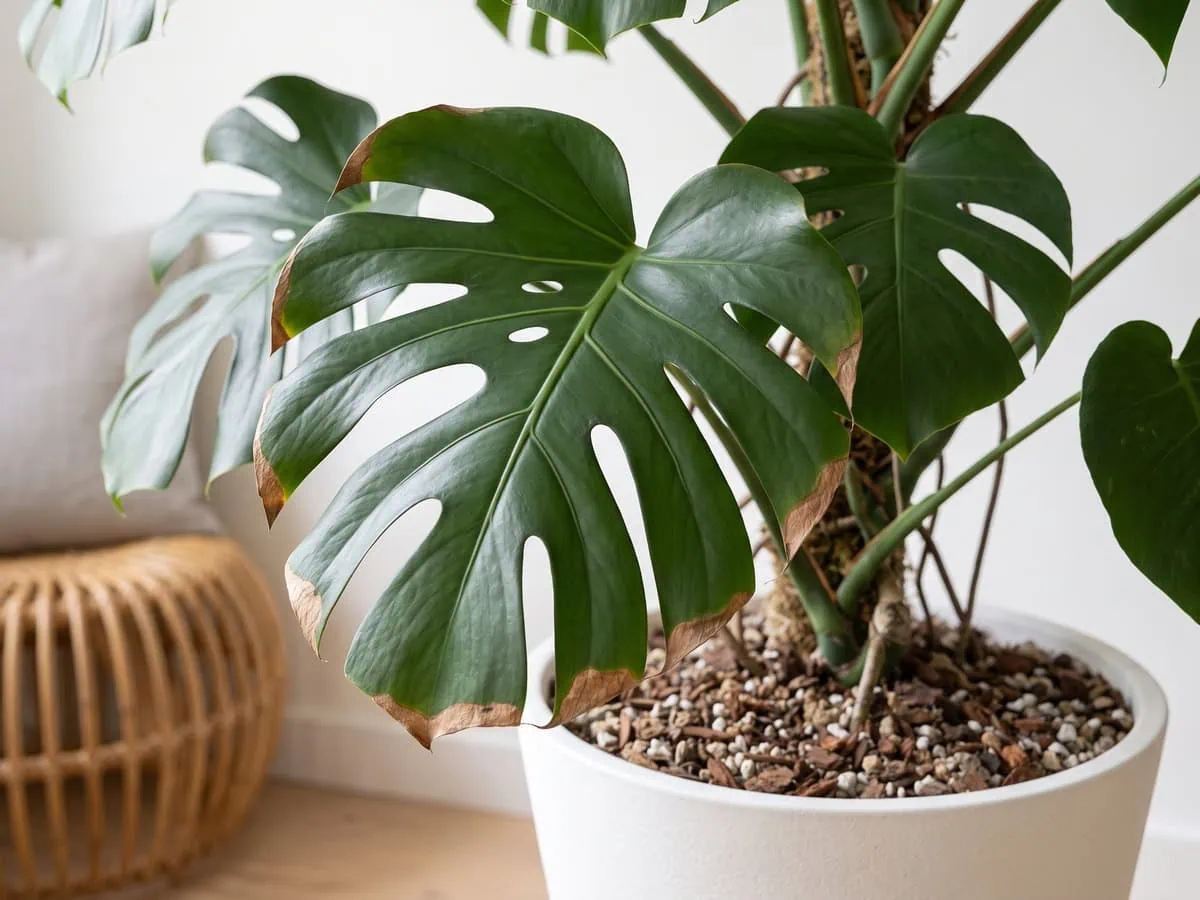
Opposite corrections, identical color. Over roughly a week the crisping creeps inward from the tip while the blade itself stays firm, whereas rot softens from the base first. For the full leaf-color split, work through the full leaf-color differential.
Rehydrating a mix that has gone bone dry
Water appearing at the drainage hole within seconds is bad news rather than success, because it means the pour ran down the pot wall and left the root ball as dry as it found it.
Pour slowly, wait, and pour again — rehydration takes several passes, not one. Keep going until the surface darkens and the pot regains its full drained weight. The pots that fooled me were always the ones that drained fastest.
Cold months and the slower interval
No Monstera deliciosa winter watering schedule is worth writing down. Shorter days and heater-dried air change how quickly the mix loses water, so the same test simply fires less often — expect something nearer a couple of times a month than weekly, and let the finger, not the month, decide.
Light drives that drying rate harder than room temperature does, which is why a plant shifted into a dimmer corner suddenly needs far less water than it did before the move — see how bright a spot this vine actually needs.
Tap, filtered or distilled: choosing your water
Ordinary tap water suits this plant, because no fluoride, chlorine or chloramine sensitivity is documented for Monstera deliciosa. Salt comes first, then the flush, then misting.
Type “tap water vs distilled water for Monstera deliciosa” into a search bar. What you meet is preference, not chemistry. The lists that do name fluoride-sensitive houseplants leave this species off.
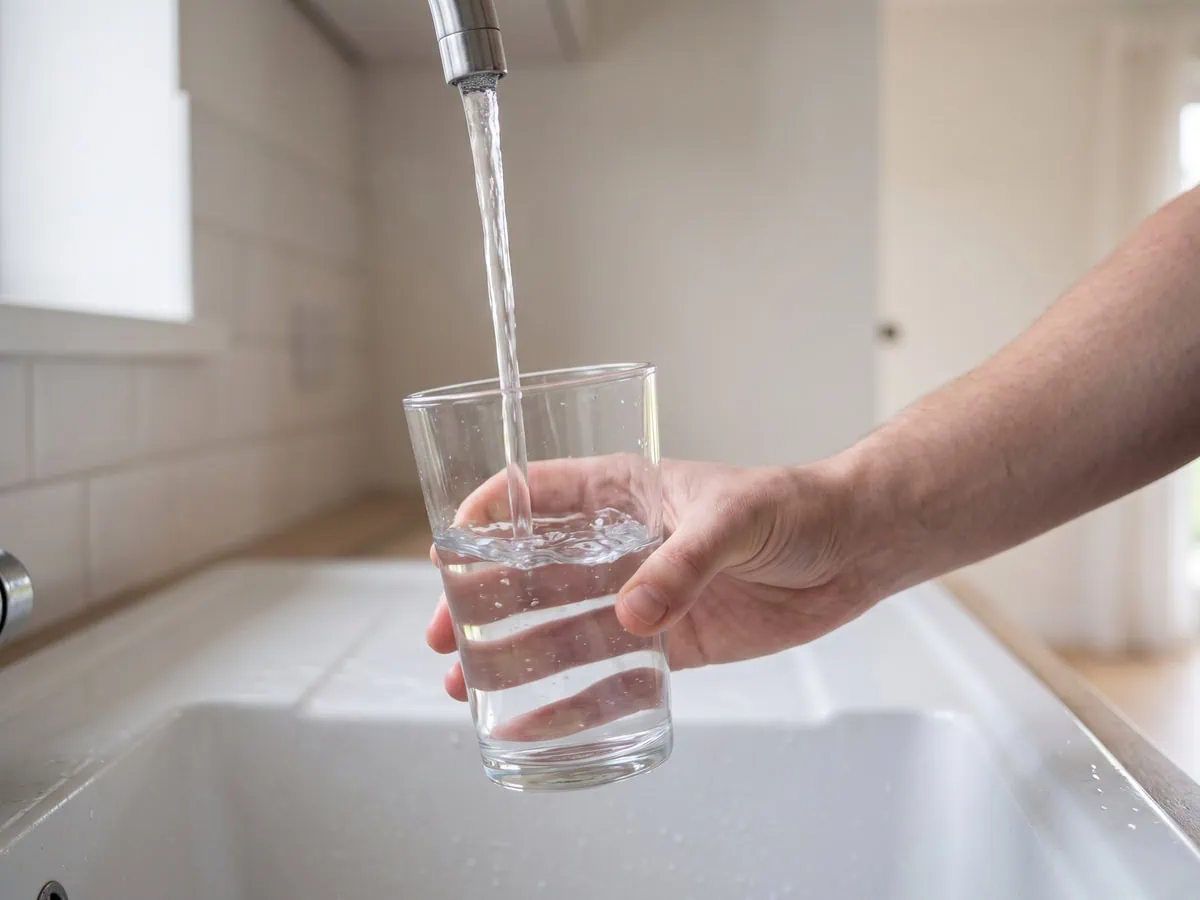
According to the CDC guidance on water disinfection with chlorine and chloramine, utilities dose chloramine because it stays active in the pipes.
The following table sets the four choices against what each one actually changes.
| Water source | What it changes for this plant |
|---|---|
| Ordinary tap water | Same result as filtered water here; salts still accumulate in the mix |
| Filtered water | Fewer dissolved minerals; ordinary tap water performs the same here |
| Distilled water or rainwater | Very low mineral load; slows crust forming on the surface |
| Water left standing overnight | Releases chlorine only; chloramine and fluoride stay put |
Verdict: Choose ordinary tap water for this species, because its brown tips come from built-up salt — not from the tap.
Salt buildup, not chlorine, is the real risk
Salt buildup is what browns the tips here. Dissolved fertilizer and minerals build up as water leaves the mix. Watch the rim: a chalky white crust that thickens over several months tells the same story the leaf margins tell.
One grower’s record only, so weigh it accordingly: the pots that crusted fastest in my own testing were the ones left standing in their own drainage. Salt-laden runoff climbs back up.
Flushing a pot that has crusted over
Flush with at least 3 times the pot volume of clear water. Let it drain, then empty the tray. Repeat every 4-6 months.
Where the crust is heavy and the pot is small, replacing the mix beats flushing it. That is the faster route.
Room-temperature water and the misting myth
Let the water come up to room temperature before it goes on the plant. Most care guides say nothing about water temperature. Read it as comfort — not a measured threshold.
Misting does not water anything. Extension testing finds the humidity lift lasts only until the droplets evaporate, so the mix under a misted plant stays exactly as dry as it was — the interval never moves.
Standing the watering can overnight is offered everywhere as a fix. It off-gasses chlorine only. Chloramine, which many utilities now use because it holds up in the pipes, does not leave that way, and neither does fluoride, so the wait buys nothing this plant needed.
So the water question resolves faster than its search volume suggests. Pour what comes out of the tap, drain it through, empty the saucer. Put the flush on the calendar instead.
Frequently asked questions about watering
Do Monsteras need to be watered daily?
No. Water when the top 1-2 inches of the mix are dry, which during active growth usually lands near weekly.
A cloudy week and a bright one dry the same pot at different rates, so a fixed watering day overrides the only signal that matters. Daily watering is not a gentler version of that mistake; it is the fastest route to the root-zone failure this plant dies of.
What does a thirsty Monstera look like?
A thirsty plant curls and dulls its blades while the mix underneath is bone dry. The margins turn papery rather than mushy.
Lift the pot and the second signal arrives at once: a drained-dry container weighs far less than a freshly watered one. Insufficient moisture scorch reads dry and brittle at the edge, whereas excess moisture leaves dark, soft spotting instead.
Should I bottom water my Monstera?
Yes. Stand the pot in shallow water until the surface darkens, then lift it out and let it drain completely.
Empty the saucer afterwards. Bottom watering never carries salts out of the pot the way a full top drench does, so alternate the two rather than relying on the tray alone. Otherwise salt buildup collects and surfaces later as brown, papery margins.
Do Monsteras like to sit in water?
No. Standing water fills the air spaces the roots breathe through, and suffocated roots fail quickly.
A pot without a drainage hole, or a decorative outer sleeve holding runoff, produces the same result as chronic overwatering. Tip the saucer out after every watering, and keep the grow pot removable so the runoff can actually leave. That single habit removes the commonest way this plant is lost indoors.
Do Monsteras like to be misted with water?
No. Misting is not a watering method, and it does not raise relative humidity for more than a few minutes.
The lift lasts only until the droplets evaporate, so saturated air around the leaf never persists. The mix beneath a misted plant stays exactly as dry as it was, which means the interval does not move. Wipe dust off the blades by all means, but do not count it as water.
Field-tested on the mix, not the calendar. Ready to try it?
Set the can down a moment. Everything above reduces to one habit: check the mix two knuckles down before you reach for the tumbler, and let what you feel there decide. No calendar required.
A few months of that changes the plant visibly — leaves holding their gloss instead of crisping at the margin, and a pot that stops swinging between swamp and dust. Next comes the mix itself. That is the guide to read after this one.
The habit is that small. Master how often to water a Monstera deliciosa and the rest of this plant’s care stops feeling like guesswork. Let the mix, not the calendar, decide when you pour, and your Monstera will hold every leaf it has earned.
Tap the button below to get more plant fixes in your Google Search results