🎯 Quick Answer: is Monstera deliciosa toxic to cats and dogs
Yes, it is toxic to both, and the injury is physical rather than chemical. Monstera deliciosa, a member of the Araceae family, carries insoluble calcium oxalates packed as needle-shaped bundles called raphides. Chewing fires those needles into the mouth, so the pain starts at once and stays local.
- Earliest sign: pawing at the mouth, then sudden heavy drooling
- Emergency: trouble swallowing or breathing means a veterinary hospital now
- Two hotlines: one number answers for animals, another for people
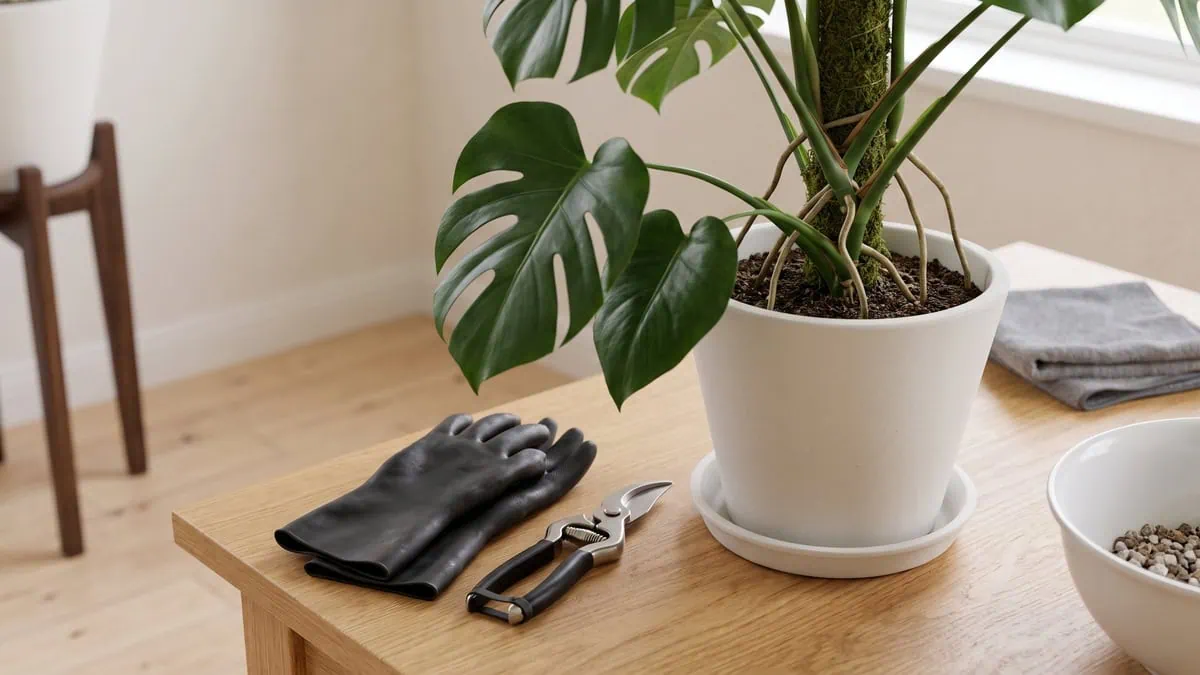
- Handling: wear gloves when you cut, repot or clear fallen pieces
- Real safeguard: block access, because height alone will not stop a cat
One aside before the animals: the earliest casualty here is usually your own hands. Seven years of testing this species has left me ten separate sap burns, every one at the moment I cut a stem (note to self: gloves live beside the shears). The mix smelled sour and waterlogged as I tipped that pot out.
Let me back up a step. Instead of reading that burn as chemical poisoning, I realized the leaves and stems carry insoluble calcium oxalates bundled into raphides, microscopic needles that fire on contact. They cut; they do not poison.
That distinction decides what you do for a cat, a dog or a child, and which of two emergency numbers you dial. The fundamentals behind growing this climbing aroid indoors sit in the main guide.
Before the detail, one card. Every published safety answer lives in it, so you can check a single line without rereading the page.
Is Monstera deliciosa toxic to cats and dogs: the safety facts at a glance
| Monstera specs | Safety answer |
|---|---|
| Pet safe? | No – toxic to cats and dogs (ASPCA) |
| Toxic principle | Insoluble calcium oxalates, carried as needle bundles called raphides |
| Toxic parts | Leaves, stems and stalks; no nibble-safe part |
| Safe around children? | No – the same crystals burn a child’s mouth |
| Onset and course | Immediate, local to mouth and throat, not systemic |
| Emergency line | Animals 888-426-4435 or 855-764-7661; people 1-800-222-1222 |
Tap the button below to get more plant fixes in your Google Search results

Table of Contents
The crystal behind the burn: what insoluble calcium oxalate does
The burn comes from a crystal, not a poison. According to the ASPCA, the toxic principle in this plant is insoluble calcium oxalates, and the leaves, stems and stalks store them as raphides, bundles of microscopic needles that fire the instant tissue is chewed. The word insoluble is doing the real work there.
The two sections below separate where those needles sit from what they actually do.
Which parts carry the raphides
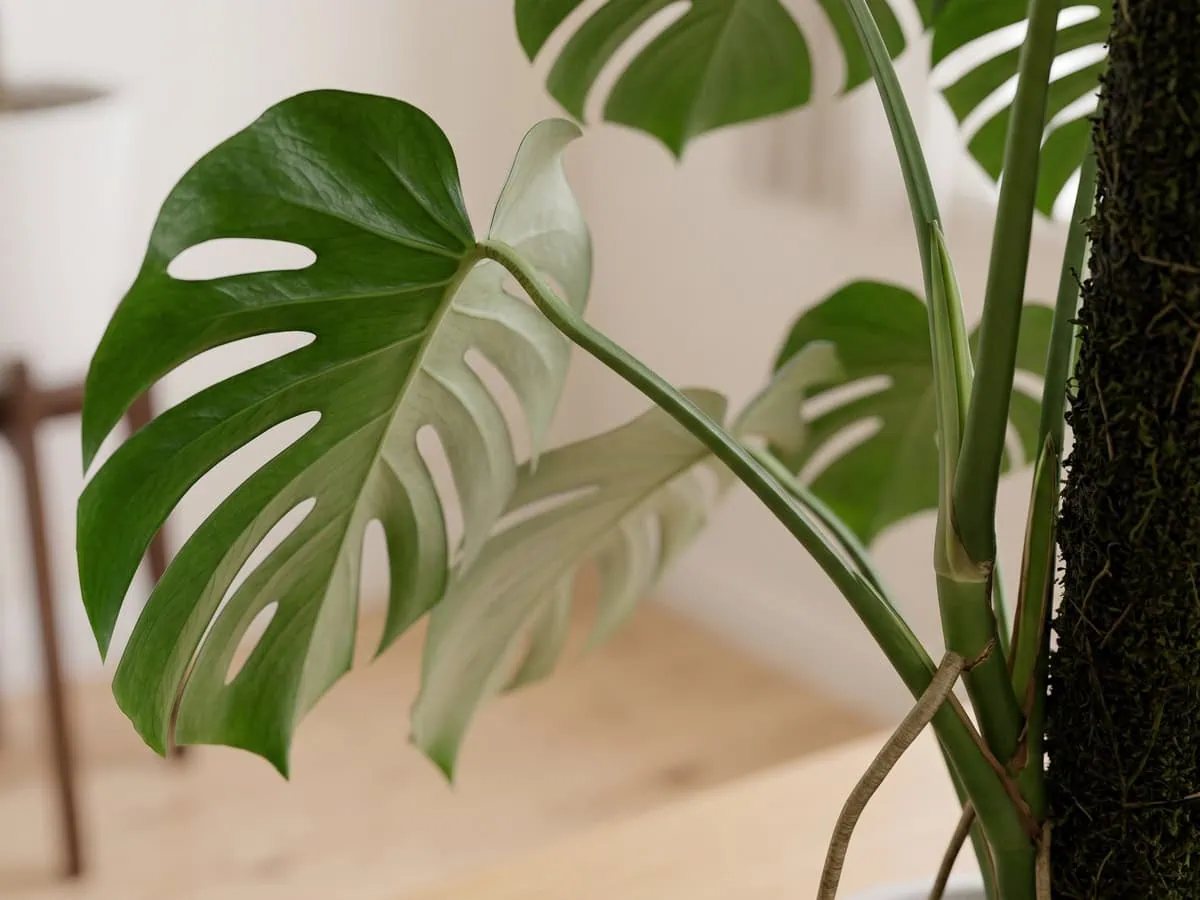
Every green part of this plant carries them. The safety data assigns the raphides to the leaves, the stems and the stalks, which means a chewed leaf, a snapped petiole and a trimmed stem all release the same load. There is no nibble-safe part to point an animal at.
- Leaves: the surface a curious cat reaches first
- Stems and stalks: the same crystals, exposed the moment they snap
- Unripe fruit: oxalic acid crystals, and severe discomfort if swallowed
- Ripe fruit only: edible, and almost never produced on a houseplant
So the practical rule is a housekeeping one rather than a botanical one. Clear the fallen piece off the substrate before it softens into the sour, wet-bark smell a saturated aroid mix gives off after a week, because a dropped leaf is the piece an animal actually finds.
Every fallen blade I have picked off this substrate was a lower leaf, wide enough at three feet across to drag clear of the pot.
Mechanical injury, not systemic poisoning
The crystals cut; they do not circulate. Chewing ruptures the cells that hold the raphide bundles, the needles embed in the lining of the mouth, tongue and lips, and the pain and swelling begin immediately because the damage is physical. That is also why the reaction stays where it started.
This matters because the internet keeps filing this plant under a different injury. You will meet pages that carry the crystal name across into dietary chemistry and out the other side into organ damage, but the crystal form here is the insoluble one, and its documented action is local irritation of the mouth and throat.
- What it is: immediate, local, mechanical irritation of mouth and throat
- What it is not: a systemic toxin traveling beyond the mouth
- Why animals stop: the burn arrives on the initial bite, not later
Tap the button below to get more plant fixes in your Google Search results

What an exposure looks like in a cat, a dog and a person
An exposure looks like sudden mouth pain, and it looks the same in all three. The authority publishes one clinical set for cats and dogs rather than splitting them: oral irritation, intense burning of mouth, tongue and lips, heavy drooling, vomiting and difficulty swallowing (each one is taken apart further down).
The three sections below lead with the cat, because that is the animal owners ask about most.
Cats: the first sign, then the rest
The earliest thing you see is the animal pawing at its mouth. Type “what happens if a cat eats a Monstera deliciosa leaf” into a search bar and you get lists, never the order. Order is what an owner who missed the chew needs.
- Earliest: pawing at the mouth, head shaking, a bitten-back retreat
- Then: heavy drooling, retching, refusing food
- Sometimes: vomiting and diarrhea as the mouth settles
Severity is usually low. Most exposures are managed at home, with no long-term effects expected. Rarely, a large exposure brings stomach pain or swelling at the back of the throat, and that swelling is the line: difficulty swallowing or breathing means a veterinary hospital, not a phone call. This information is for educational purposes only and is not a substitute for professional veterinary advice. If your pet ingests any part of this plant, seek immediate veterinary intervention or contact the ASPCA Animal Poison Control Center (888-426-4435) or the Pet Poison Helpline (855-764-7661) immediately.
Dogs: the fuller sign list
Dogs show the same oral set, in the same order. Anyone searching Monstera deliciosa poisoning symptoms in dogs meets plenty of pages calling the plant toxic and few describing it, so here is the watchable list: drooling, pawing at the mouth, retching, nausea, loss of appetite, vomiting and diarrhea.
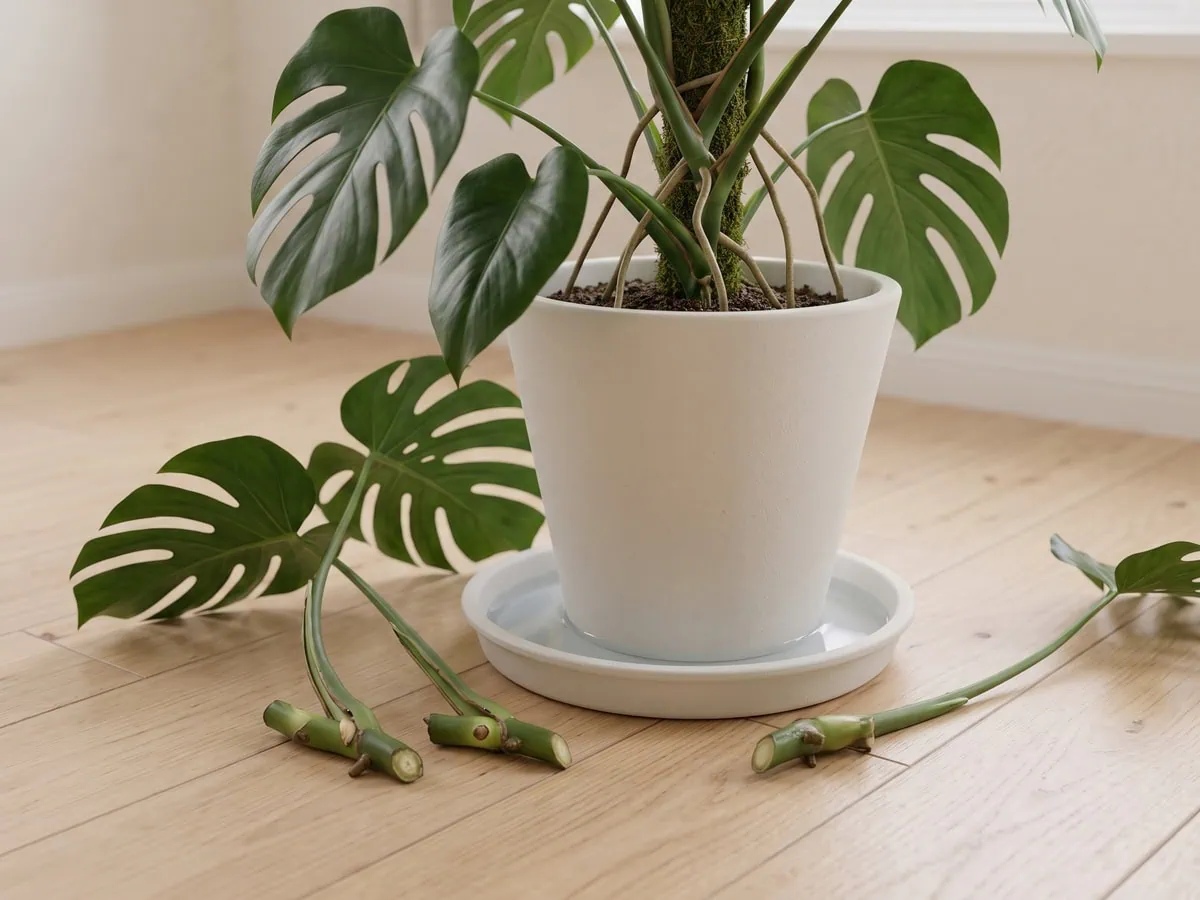
A dog meets this plant at floor level, which is where the where to make the cut on an overgrown stem question sends most trimmings. Sweep them up first. Then check the pot: one left standing in a full saucer takes on a flat, wet-cardboard smell, and that damp corner is where dropped pieces sit longest.
Children and infants, and what adults should expect
A child who bites a leaf gets the same needle injury an animal does. The answer to “is Monstera deliciosa toxic to humans” is yes, by the identical raphide mechanism: immediate mouth and lip burning, swelling, drooling and painful swallowing.
Severe oral exposures in this plant class can reach loss of speech, and one documented case involved an eighteen-month-old who gagged after chewing a leaf and recovered quickly. This content is for informational purposes only. If you experience a severe reaction, seek medical attention. For suspected ingestion by a child, contact Poison Control (1-800-222-1222 in the US) immediately.
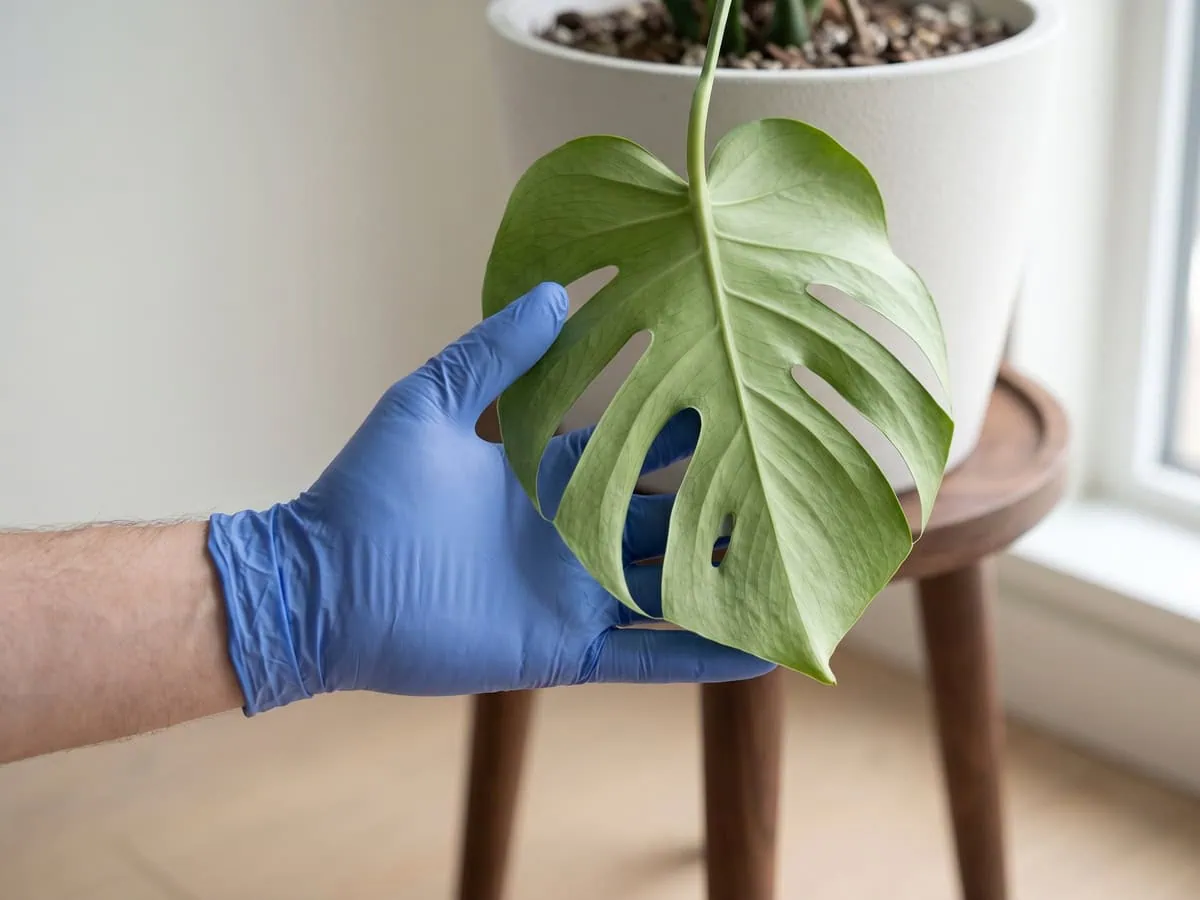
Adult skin is the exposure everyone forgets: it happens while you work. Wear nitrile gloves whenever you cut, and again when you are rooting a node cutting, because a fresh cut weeps for minutes.
- Rinse sap off skin under cold running water for at least 60 seconds
- Keep dripping stems and cuttings off shared tables and upholstery
- Wipe surfaces and wash your hands before you touch your face
If a severe skin reaction develops (blistering or intense burning), seek medical attention immediately. For chemical exposure, you can also contact Poison Control (1-800-222-1222 in the US).
Sharing a room with a toxic plant and a curious animal
You can share the room, provided the plant stands where the animal cannot reach it. Blocking access is the only measure that guarantees anything.
Parents typing “is Monstera deliciosa safe around children” get the same answer, and one worry can be dropped: this species almost never flowers indoors, so no pollen falls onto a carpet. A bedroom is no riskier than a hallway. Reach, and nothing else.
Below, the order runs from motive to method.
Why cats go for these leaves
Nobody has settled why a cat chews foliage that hurts it. No source settles it, so read the next line as an impression rather than a finding: the habit looks like ordinary feline chewing rather than an appetite for this leaf, which is why a pot of oat grass or catnip of its own beats scolding.
Height alone will not stop a cat
Height moves the crown, not the lowest leaf. A full-grown indoor plant stands seven to eight feet tall with blades spanning three feet, so the bottom of that canopy hangs at cat height. And a shelf is exactly what a cat climbs to.
- Floor specimen: a corner plant, never a shelf plant
- Three-foot span: the lowest blades reach into the room
- Shelves fail: the cat climbs up, then works down the petioles
The raised stand never solved it here, and stepping the pot up one size only widens the footprint.
Redirection and restricted access
Search “how to keep cats and dogs away from a Monstera deliciosa” and you get sprays and powders. They sit at the bottom of the stack because no extension source calls them reliable.
- Closed room, metal cage or hanging basket: the only guaranteed separation
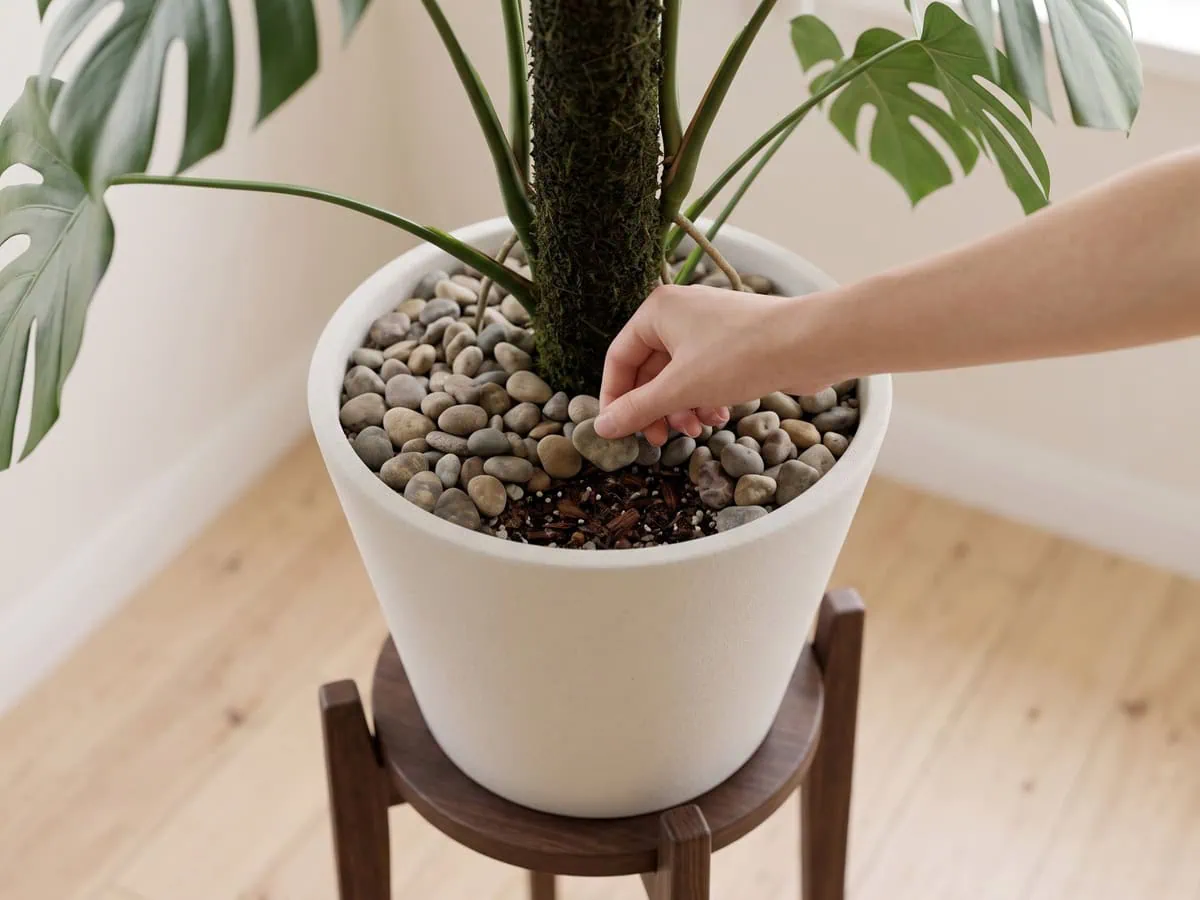
- One-inch river rock layer: deters the digging cats enjoy
- Repellent, or water then cayenne: makes foliage unpleasant
- Tower of stacked cups: rattles and startles a chewing cat
- Their own oat grass or catmint: removes the motive
- Sealed or outdoor bin for clippings: keeps debris out of reach
Only the first is a guarantee. Keep the rock thin enough to read moisture in the bark-and-perlite medium under this plant, and lift a corner of it once a month: a chalky, mineral smell coming off the coarse grit means the top-dressing has been sitting wet.
Frequently asked questions about Monstera deliciosa and pets
Can I keep my Monstera if I have a cat?
Yes, if the cat cannot reach it. The plant stays toxic either way, so the arrangement has to be physical: a room the cat does not enter, a hanging basket, a high shelf beyond its reach, or a cage.
Deterrent sprays and rattle traps lower interest, but no extension source calls them reliable on a determined animal. Regard them as a second line, never as the plan.
What happens if my cat eats a Monstera?
Its mouth burns within seconds. Chewing fires needle-shaped crystals into the lining of the mouth, tongue and lips, so the cat paws at its face, shakes its head and drools heavily, often refusing food afterwards.
Most exposures stay low in severity and settle at home. Call a veterinarian or the 24-hour animal line on 888-426-4435, and go straight to a hospital if swallowing or breathing is affected.
What is the most toxic house plant for cats?
Severity turns on the amount chewed and on the animal, so count every part of the plant as an irritant rather than ranking one part against another. What the poison-control data does support is a split by mechanism: some houseplants act on organs, while this one causes immediate local injury to the mouth and throat.
On that scale this species sits at the painful-but-manageable end. That is a reason to block access, not a reason to relax about it.
What happens if a dog eats Monstera?
The same oral injury, in the same order. The authority publishes one clinical set covering both animals: oral irritation, burning of the mouth, tongue and lips, heavy drooling, retching, vomiting and difficulty swallowing.
Dogs meet the plant at floor level, so fallen leaves and pruning debris are the usual route. Bin clippings away from the animal and sweep the corner behind the pot after any cutting session.
How to cat proof a Monstera plant?
Block access first, then reduce the appeal of what remains. A closed room, a suspended basket or a cage is the only step that guarantees separation; everything after it only lowers the odds of a chew.
Layer river rock over the surface to discourage digging, keep a pot of oat grass or catmint nearby as a legal target, and bin fallen leaves in a sealed or outdoor container.
Why does my cat lick my Monstera?
It is most likely ordinary chewing behavior rather than a craving for this plant. Cats strip and mouth foliage generally, and the veterinary guidance for it is redirection: give the animal its own pot of oat grass, catnip or catmint.
The licking matters here because the crystals fire on contact. Even a brief mouthful produces immediate burning, so the habit is worth breaking early.
Is it okay to have a Monstera in your bedroom?
Yes, on the same reach condition as any other room. This species almost never flowers indoors, so the pollen worry that drives the bedroom question does not apply, and there is nothing shed onto bedding.
What matters is whether a pet sleeps in that room and whether the lowest leaves hang within its reach. If both are true, the bedroom is the wrong room.
Is Monstera poisonous to babies?
Yes, and a crawling child is the exposure to plan around. The same crystals burn a small mouth on contact, bringing immediate pain, swelling, drooling and painful swallowing; one documented case involved an eighteen-month-old who gagged after chewing a leaf and recovered quickly.
Keep it out of reach entirely. For a suspected mouthful call 1-800-222-1222, and call 911 for severe swelling or any trouble breathing.
From guessing at the risk to placing this plant on purpose
No hedging on this one. The needles are permanent, so the real decision was never whether to own this plant — it was which room it stands in and who can reach the lowest leaf. Placement, not luck.
And the rest is routine. Gloves at the shears, clippings binned, both numbers saved before anyone needs them. Open a fresh bag of pine bark next time you pot it up and you get the resinous, sawmill smell of a sound mix.
Growing it well there is the next question. So the one you arrived with — is Monstera deliciosa toxic to cats and dogs — has a settled answer, and the only thing still open is where the pot stands. Every crystal in that leaf stays exactly where it is, so the only thing you actually control is how far the lowest leaf sits above the floor.
Tap the button below to get more plant fixes in your Google Search results