Skip to content
Plant Care Basics
  • Plants A-Z
  • Problems and Fixes
    • Root Rot and Overwatering
    • Pests and Diseases
    • Yellow Leaves
    • Brown Tips and Spots
    • Drooping and Wilting
    • Not Growing or Leggy
  • How-To Guides
    • Watering
    • Soil and Potting Mix
    • Repotting
    • Propagation
    • Pruning and Training
    • Light and Fertilizer
    • Identify and Compare
    • Complete Care Guides
    • More Guides
  • Pet Safety

Houseplant Care

Home » Houseplant Care » Page 7

What is the best soil for a Phalaenopsis orchid? Chunky bark, never potting soil
September 11, 2026 by Pang
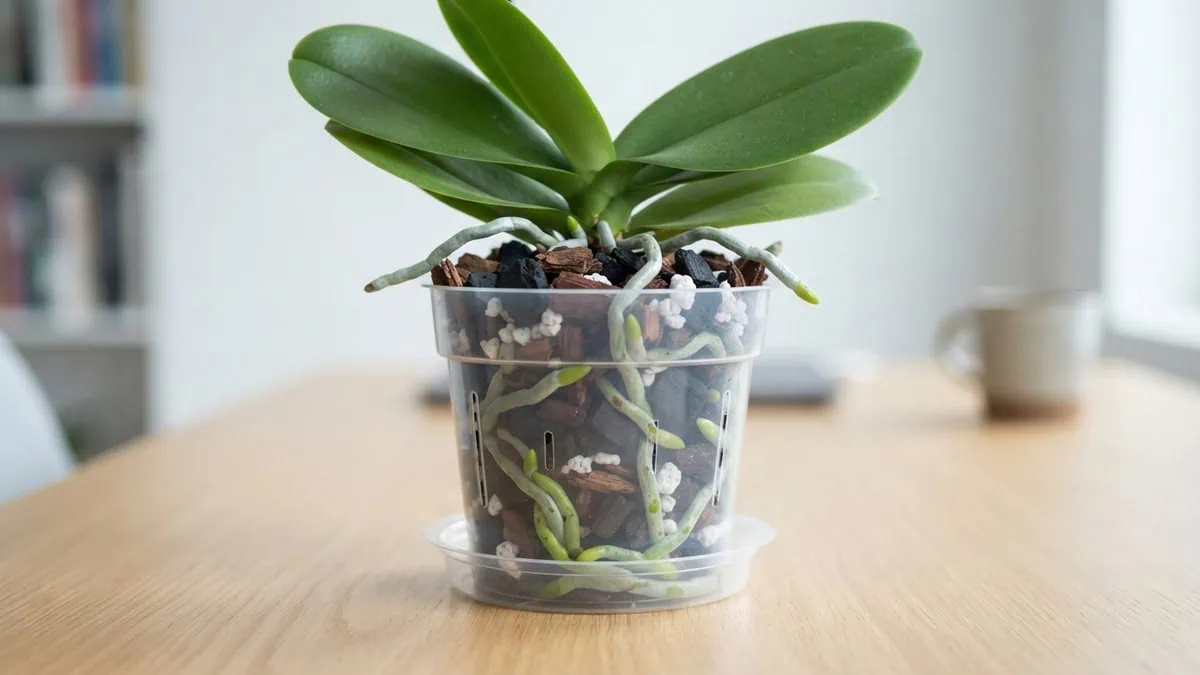
What is the best soil for a Phalaenopsis orchid? Chunky fir bark, silvery velamen roots visible through a clear pot.

For a long time I blamed myself for losing moth orchids, when the real culprit was the dense mix I kept potting them in. A Phalaenopsis roots in coarse, airy bark, not soil, and inside I cover the right particle size, a simple home recipe, and how to catch a mix that has broken down.
Categories Moth Orchid Care

Home » Houseplant Care » Page 7

Peace lily care: complete indoor guide to light, water and root health (2026 Masterclass)

September 19, 2026 by Pang
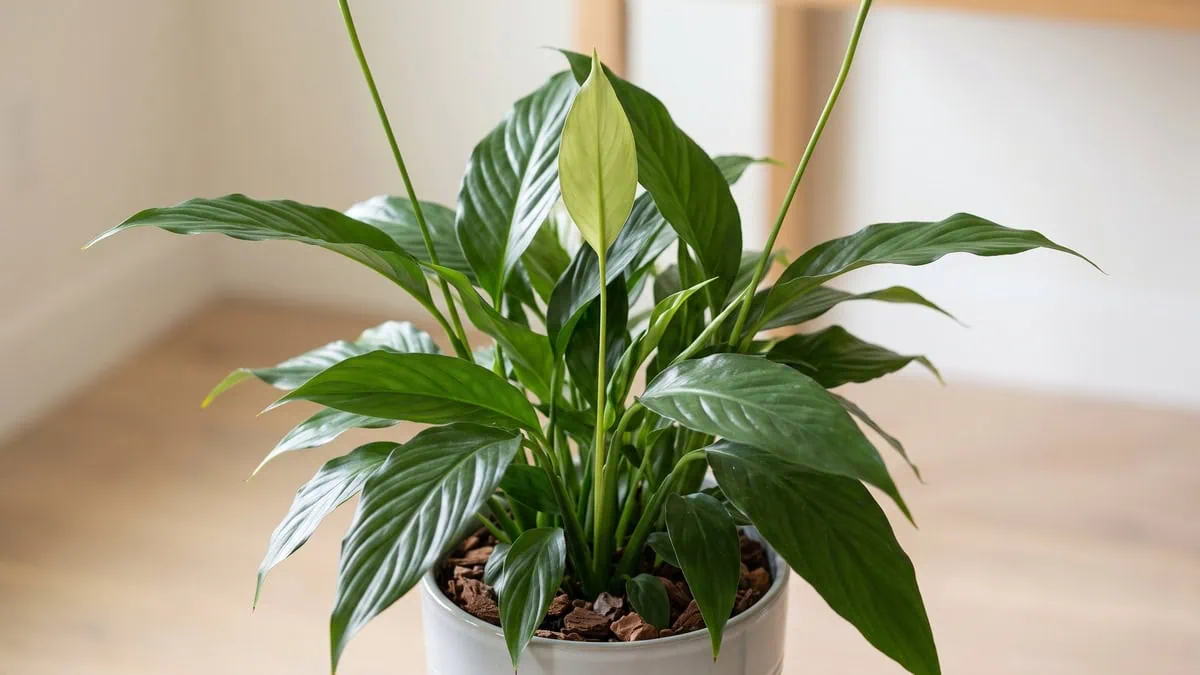
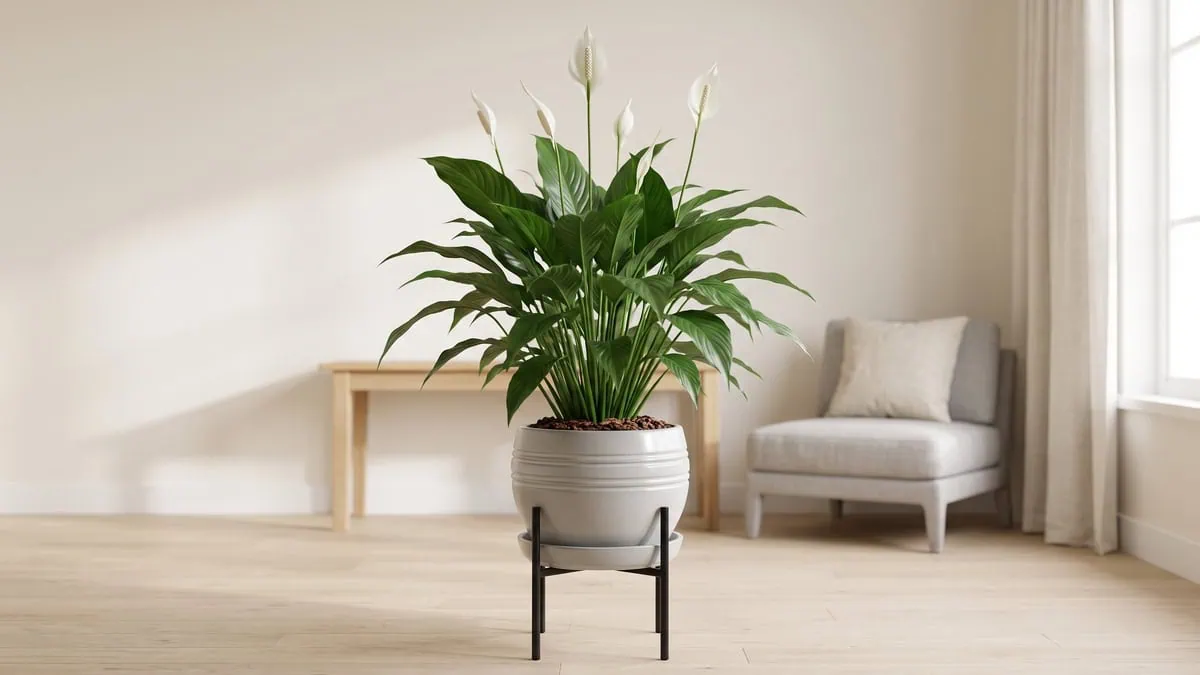
A peace lily care overview: a lush, unblemished clump standing as the centerpiece of a bright living room.

I grow this plant the way its forest floor does: a mix that drains while it stays damp, north light within about three feet of the glass, and a pot that is never left standing in its own runoff. Everything else in the care routine follows from those three settings.

Categories Peace Lily Care

Home » Houseplant Care » Page 7

Why is my peace lily drooping? The two-minute check that tells you what to do

October 25, 2026 by Pang
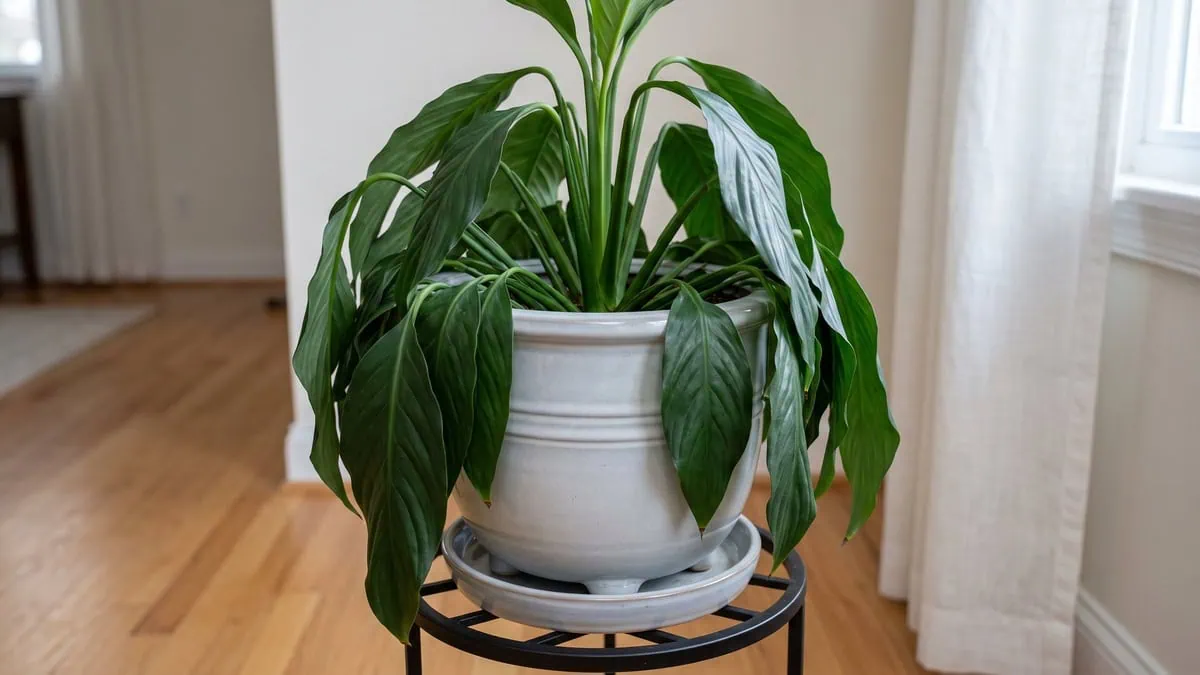
Why is my peace lily drooping: every blade hangs over the pot rim while the center crown stays upright.

A drooping clump looks the same whether the mix is soaked or bone dry, so I stop guessing and lift the pot instead. Weight settles it in seconds, the hairline gap at the soil line confirms it, and the speed of the recovery names which of the two I had.

Categories Peace Lily Care

Home » Houseplant Care » Page 7

Why are my peace lily leaves turning yellow? The 3-check blade-and-pot test

September 19, 2026 by Pang
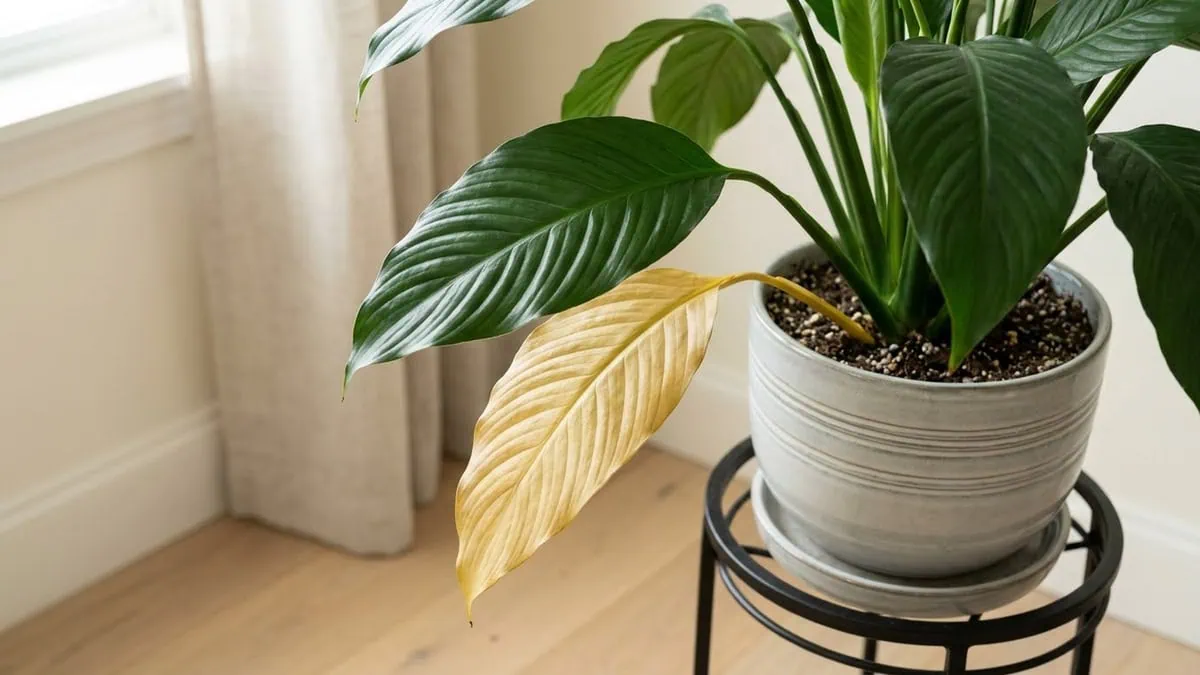
Why are my peace lily leaves turning yellow: one tan bottom blade beside the glossy dark green leaf above it.

Yellowing never reverses on the blade that has already turned, so I stop trying to rescue it and read the plant instead. Substrate weight, then water, then light, in that order. The newest leaf is where recovery actually shows up, and that is the one I watch.

Categories Peace Lily Care

Home » Houseplant Care » Page 7

How to save a peace lily with root rot: the firm-white root test

September 11, 2026 by Pang
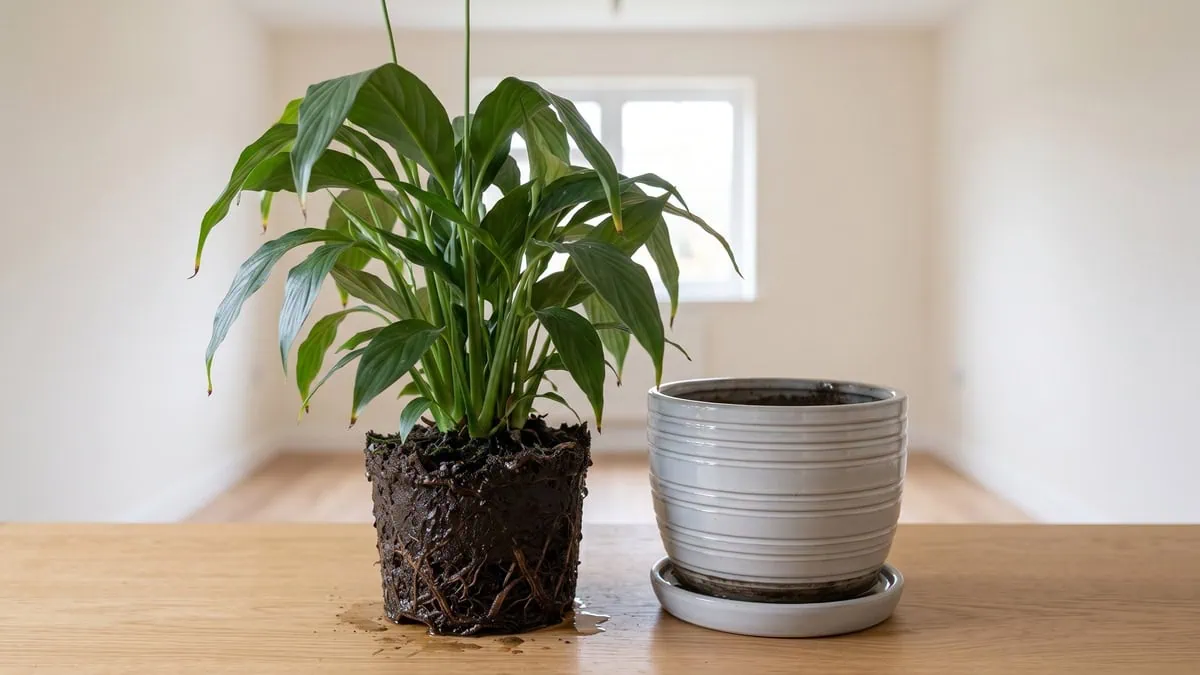
How to save a peace lily with root rot: the clump just out of its pot, root ball soaked black and slumped, no hands.

Leaf droop alone cannot name the cause, so I lift the plant out and read the roots the same day. Firm white tissue stays, anything soft goes, and a base that gives under a thumb ends the rescue there. What follows is subtraction: less water, no feed, steady light.

Categories Peace Lily Care

Home » Houseplant Care » Page 7

Why is my peace lily not flowering? The light and maturity check

September 19, 2026 by Pang
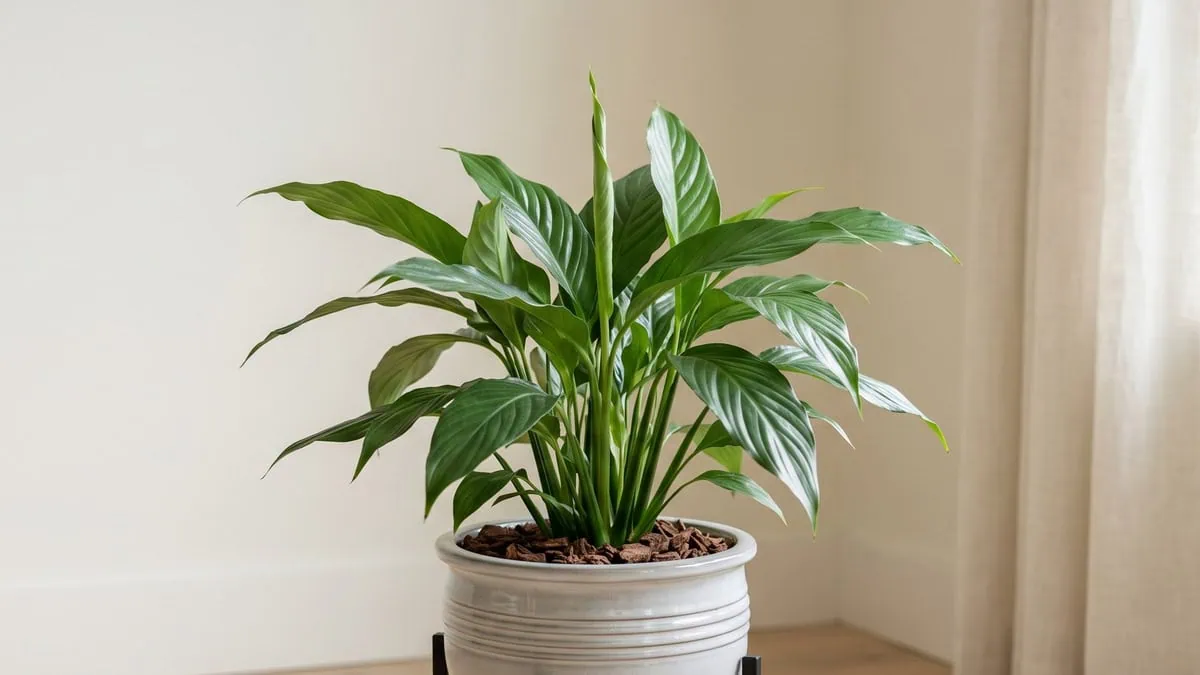
Why is my peace lily not flowering: a thriving green clump with one new leaf still rolled and no spathe at all.

Leaves keep coming and no spike ever rises, which looks like a mystery and is really a number. I check the light at leaf height first, then the size of the clump, then leave the peace lily alone for one full growth cycle before I judge whether anything changed.

Categories Peace Lily Care

Home » Houseplant Care » Page 7

How to revive a peace lily after repotting: the first-hour test and the two-week window

October 25, 2026 by Pang
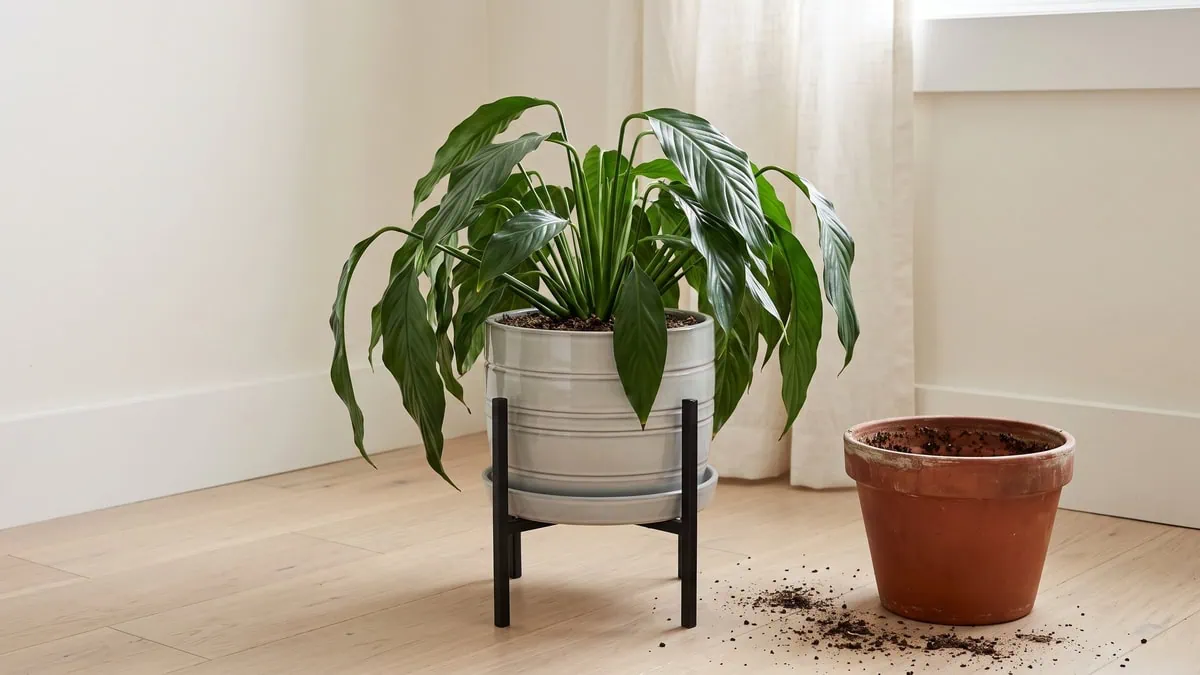
How to revive a peace lily after repotting: the clump limp and low straight after the move, old pot and spent mix beside it.

A limp plant straight after a move is not automatically a failure, so I water it through once and come back an hour later. Lifting means it was dry. Staying flat means the roots have stopped drawing, and the two weeks that follow are about subtracting rather than adding.

Categories Peace Lily Care

Home » Houseplant Care » Page 7

How to fix a leggy peace lily: light first, because there is no stem to cut back

September 11, 2026 by Pang
How to fix a leggy peace lily: long pale new blades standing out against the shorter deep green older ring.

There is no stem to cut back on this plant, so a stretched peace lily is fixed by moving it rather than by trimming it. I hold the newest leaf against an oldest one, read the stalk length and the color, then find the pot a brighter spot and turn it every watering.

Categories Peace Lily Care

Home » Houseplant Care » Page 7

How to get rid of peace lily pests: name the insect first, then work in order

September 19, 2026 by Pang
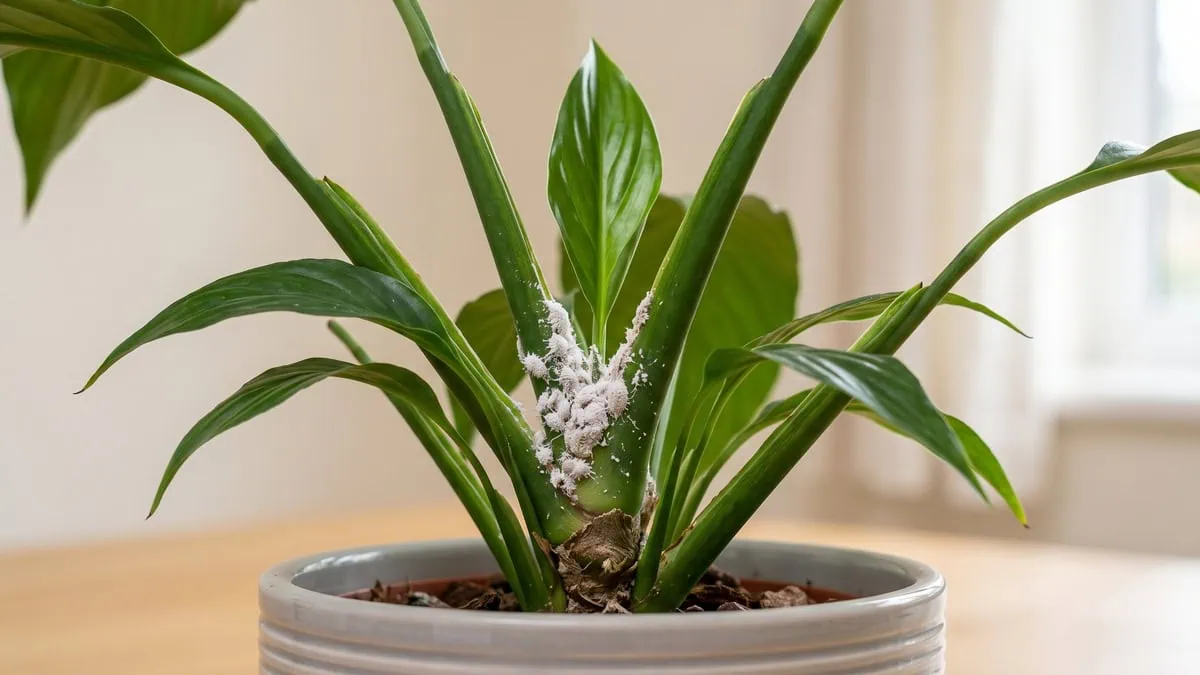
How to get rid of peace lily pests: white cottony clusters packed tight into the leaf joints of the clump.

I name the insect by where it sits before I reach for anything, because position separates the three peace lily pests in one look. Then the order matters more than the product: isolate the plant, take the insects off by hand, and use a single agent in one room.

Categories Peace Lily Care

Home » Houseplant Care » Page 7

How to divide and propagate a peace lily: one clump into several plants

September 19, 2026 by Pang
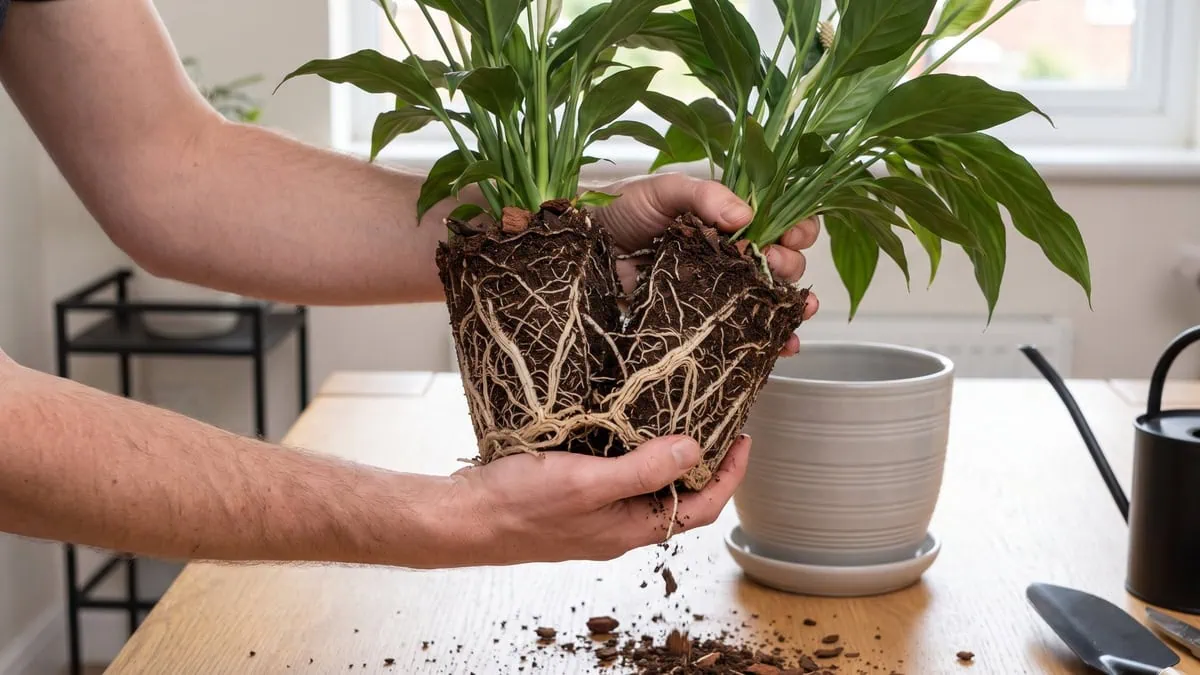
How to divide and propagate a peace lily: two hands easing the root ball apart into halves, each keeping its own roots.

Leaf cuttings do not work on this plant, so propagating a peace lily means splitting the clump rather than rooting a blade. I water 1 day ahead so the root ball comes out damp, brush the surface back to find where the fans already separate, and give every piece roots of its own.

Categories Peace Lily Care
Older posts
Newer posts
← Previous Page1 … Page6 Page7 Page8 … Page14 Next →
Pang Nam Fui, founder of Plant Care Basics and plant care expert.

Hi, I'm Pang. Founder of Plant Care Basics. I share simple, well-researched advice to help beginners develop a green thumb. Welcome to my green corner!

You May Also Like

A lineup showing how to identify snake plant varieties, telling each Dracaena trifasciata type by leaf shape and margin.

How to identify snake plant varieties: a leaf-shape visual guide

For years I bought snake plants by the tag instead of the leaf, and half of mine turned out mislabeled. I identify every variety now by reading three features in strict order — leaf cross-section, then margin color, then height — so the plant names itself, no sticker required.
How much light does a ZZ plant need? A glossy Zamioculcas zamiifolia thriving in bright, indirect light at a window.

How much light does a ZZ plant need? The foot-candle answer, not just bright indirect

A dim hallway once left my ZZ plant pale and stretched, so I dug into how much light it really needs. Here I map the foot-candle floor that keeps it alive, the bright, indirect range that makes it grow, and how to read the light on your own wall.
Aloe vera vs other Aloe plants how to tell them apart: four rosette succulents side by side in their own pots.

Aloe vera vs other Aloe plants how to tell them apart — the four cues that decide it

Four Aloe look-alikes sit on one shelf and only one is the true species. I work through the rosette and its short stem, the speckling that fades with leaf age, the margin read side by side, and why the name on the pot settles nothing at all.
How often to water Aloe vera indoors step by step: water pouring from a steel can into the pot mix.

How often to water Aloe vera indoors step by step: read the pot, not the calendar

A date on a chart cannot know how fast your pot dries. I water my Aloe vera by what the mix tells me: probe to depth, soak until it runs from the base, empty the saucer, then wait for that same dryness to come back before I go again.
Why is my peace lily not flowering: a thriving green clump with one new leaf still rolled and no spathe at all.

Why is my peace lily not flowering? The light and maturity check

Leaves keep coming and no spike ever rises, which looks like a mystery and is really a number. I check the light at leaf height first, then the size of the clump, then leave the peace lily alone for one full growth cycle before I judge whether anything changed.
Why is my snake plant falling over? A Dracaena trifasciata leans hard, gray-green leaves splaying from a terracotta pot.

Why is my snake plant falling over? The 4 causes and how to fix each

A snake plant falling over has four very different causes, and the fix depends on which one you are facing. I show you how to read the base and the light in under a minute, match the right correction, and skip the stake that only hides the real problem.
How to get rid of bugs on a snake plant: a Dracaena trifasciata with cottony mealybugs and pale stippling.

How to get rid of bugs on a snake plant: spot, isolate, clear

Clearing bugs off a snake plant starts with proving the white speck is alive, since half are not. I walk you through the 60-second wipe test that tells a live mealybug from harmless mineral crust, then the gentle, contact-only routine I trust to end an infestation without a systemic poison.
Why does my fiddle leaf fig have brown edges and patches? One leaf shows a dried, shrunken edge.

Why does my fiddle leaf fig have brown edges and patches? Read the soil first

A browning edge sends most people to the leaf, and I go to the pot instead. This guide runs the two-inch check that settles it, separates a salt crust and dry air from a dry root zone, and shows exactly how far along a dead edge I am willing to trim.

  • Privacy Policy
  • Cookie Policy (EU)
  • Terms of Service
  • Image License
  • About Us
  • Contact Us
  • Sitemap
© 2026 Plant Care Basics. All Rights Reserved.
Manage Consent
To provide the best experiences, we use technologies like cookies to store and/or access device information. Consenting to these technologies will allow us to process data such as browsing behavior or unique IDs on this site. Not consenting or withdrawing consent, may adversely affect certain features and functions.
Functional Always active
The technical storage or access is strictly necessary for the legitimate purpose of enabling the use of a specific service explicitly requested by the subscriber or user, or for the sole purpose of carrying out the transmission of a communication over an electronic communications network.
Preferences
The technical storage or access is necessary for the legitimate purpose of storing preferences that are not requested by the subscriber or user.
Statistics
The technical storage or access that is used exclusively for statistical purposes. The technical storage or access that is used exclusively for anonymous statistical purposes. Without a subpoena, voluntary compliance on the part of your Internet Service Provider, or additional records from a third party, information stored or retrieved for this purpose alone cannot usually be used to identify you.
Marketing
The technical storage or access is required to create user profiles to send advertising, or to track the user on a website or across several websites for similar marketing purposes.
  • Manage options
  • Manage services
  • Manage {vendor_count} vendors
  • Read more about these purposes
View preferences
  • {title}
  • {title}
  • {title}