🚨 Emergency 30-Second Answer: peace lily drooping
Stop watering right now — a drooping Spathiphyllum wallisii, a member of the Araceae family, needs the top 2 inches read before anything else. The question itself — why is my peace lily drooping — has two opposite answers.
One cause is simple thirst. The other is a root zone held so wet that the fine roots can no longer take water up. Lift the pot before you reach for the watering can.
Light means water thoroughly, then look again the same evening. Heavy means stop watering and inspect the roots instead.
- Before you water: read the top 2 inches and lift the pot
- Dry and light: water until it runs from the drainage holes
- Wet and heavy: stop watering, tip out the saucer, check the roots
- The timed check: look again that evening, then the next morning
- Never while it is down: no sugar water, no feed, and no repotting decision
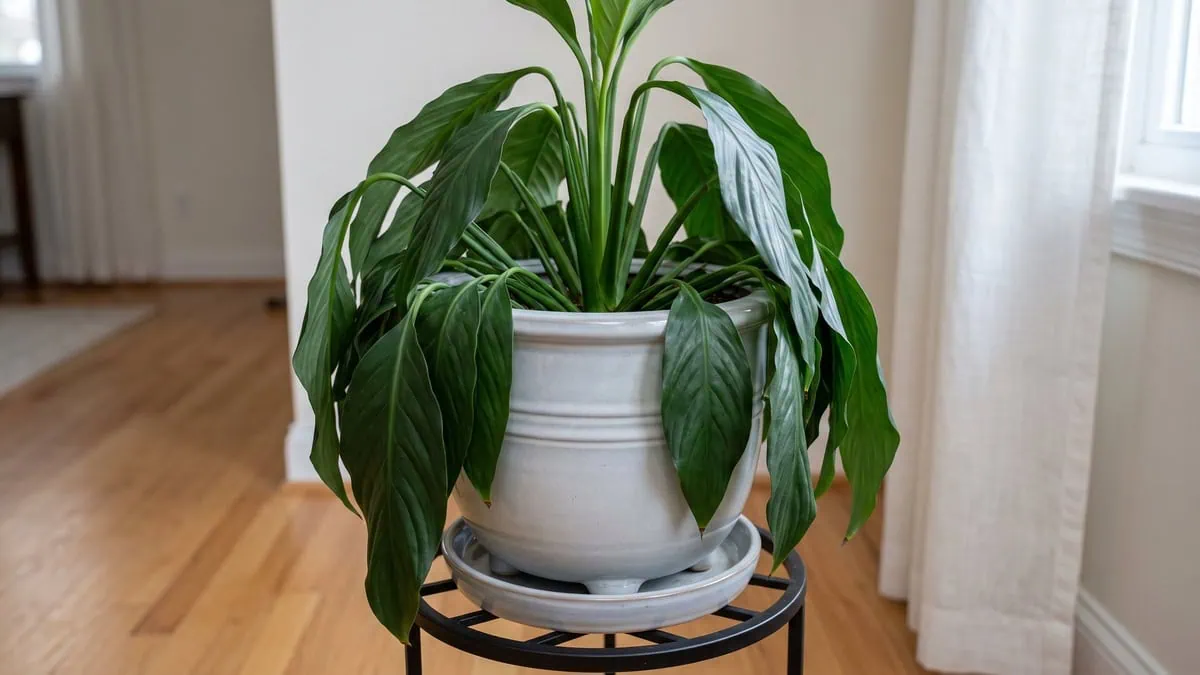
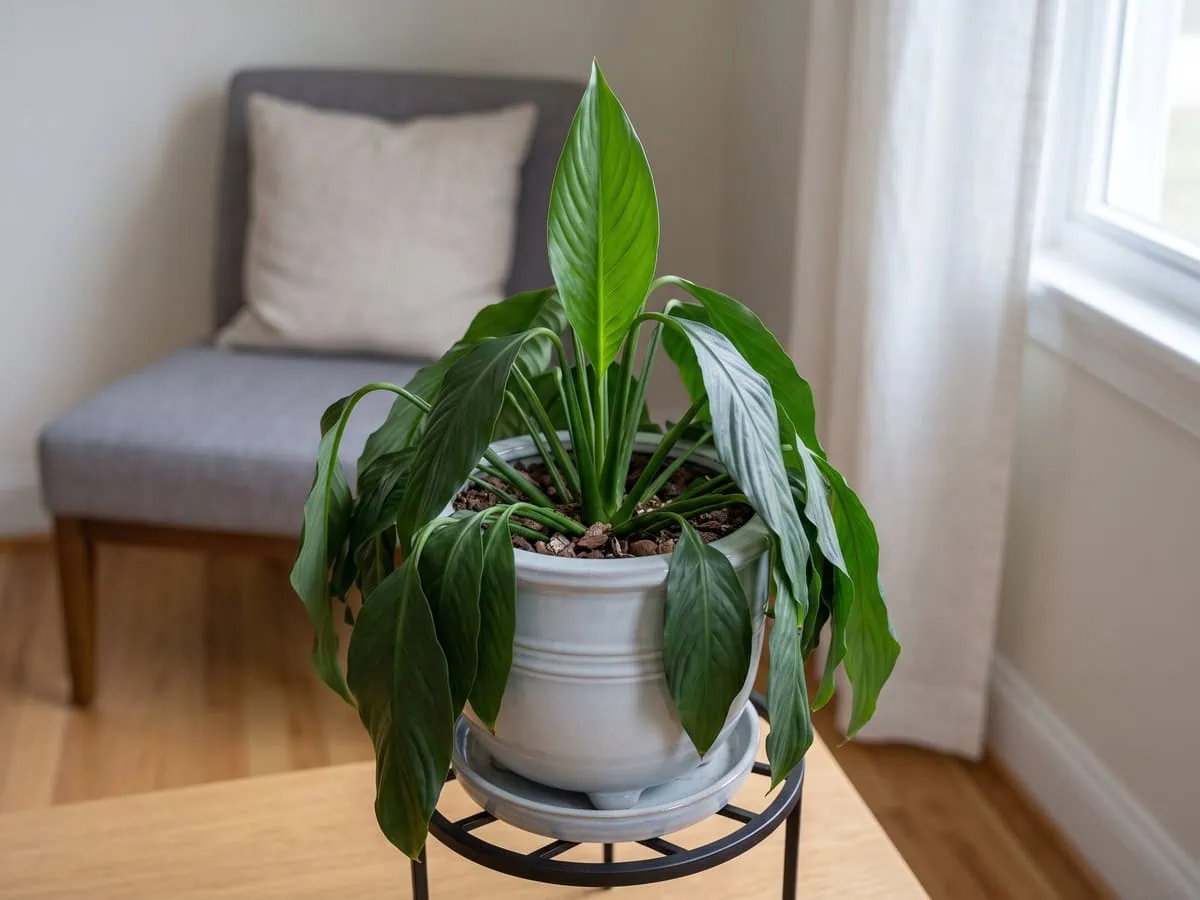
Every blade has folded down over the rim of the pot while the crown in the middle stays upright. That is turgor loss — the internal water pressure that holds a leaf flat has gone. It is the least specific signal this plant gives.
I assumed a droop meant a dry pot — until a set of side-by-side pots taught me that a waterlogged root zone produces exactly the same collapse, blade for blade. Excess water drives oxygen out of the medium and damages the fine roots, and roots that damaged can no longer pull anything up. Not thirst.
Read first. Two minutes with your hands settles which of the two you are looking at, and everything after that branches on the answer. For the wider routine these checks sit inside, the complete care guide walks through everything this aroid needs from a room.
Take a breath — nothing here is lost yet, and the following table puts both readings and what each one indicates in one place.
Why is my peace lily drooping? The readings at a glance
| What to check | Reading to expect |
|---|---|
| Recovery time after a thorough soak when the cause was thirst | Same day, often within hours |
| No response the next morning after that soak | Root-zone problem, not thirst |
| Substrate reading before watering | Top 2 inches dry to the touch |
| Container weight test | Lift when freshly watered, compare a week later |
| Growing medium | A peat-and-pine-bark foliage mix, 2 parts peat moss to 1 part pine bark, top-dressed with a thin layer of the same coarse pine bark |
| Drainage hole required? | Yes |
Tap the button below to get more plant fixes in your Google Search results

Table of Contents
Wet or dry? The two-minute reading that decides your next move
A drooping peace lily is either short of water or drowning in it, and the fix for one makes the other worse. The two readings below, pot weight and then finger depth, separate the two cases.
Do not water a drooping peace lily until you have read the pot. If the medium is already wet, more water takes the last of the oxygen with it.
The question people actually type is “how to tell if peace lily drooping is overwatering or underwatering”, and touch settles it where sight cannot, because both states arrive at the same flopped posture.
Lift the pot: what heavy and light actually tell you
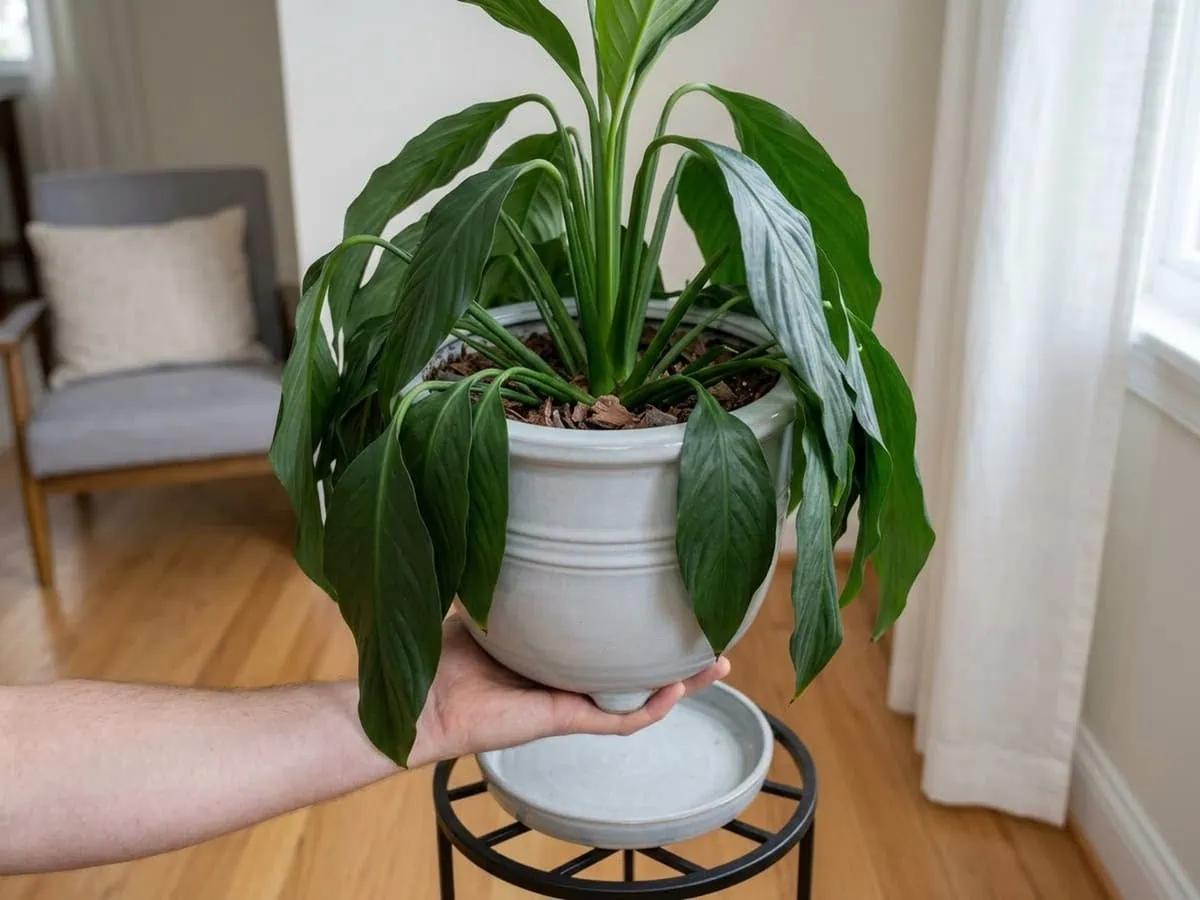
Lift the container the moment you notice the droop, and lift it again a week after a thorough watering (write the two weights down if you have to). The difference between those two lifts is your own scale, and no meter can hand it to you.
In my testing, a freshly watered pot of this mix feels dense, while a week later it feels almost empty. Look at the soil line where the medium meets the wall of the pot — a dried peat mix pulls back from the clay and leaves a hairline gap you can see.
Push a finger in: the top inch, and what it misses
Push a finger straight down to the second knuckle. Not the surface. The top 2 inches are the reading that matters, because a peat-and-bark mix can feel dry there while the core is still saturated.
So the finger is the second reading, never the only one. Weight reads the whole pot, while depth reads only the top. That gap is exactly what owners get caught in.
Read across, not down. The following table sets the two states side by side so you can read across rather than guess.
| Reading | Dry and light | Wet and heavy |
|---|---|---|
| Pot weight | Noticeably light for its size | Heavy, often with water still in the saucer |
| Top 2 inches | Dry and crumbling away from the wall | Damp, sometimes sour |
| Response to a soak | Standing back up the same day | No change by the next morning |
| What to do next | Water thoroughly | Stop watering and look at the roots |
Verdict: Reach for the watering can on the dry column only, because a saturated root zone cannot take up what you add.
That second column is the one owners misread. The University of Maryland Extension traces the failure to what a saturated root zone does to soil oxygen — once the air pocket is gone, the fine roots quit pulling water, and a flooded pot droops on exactly the same schedule as a bone-dry one.
Neither reading needs a gadget. But both need you to have lifted the same pot twice — once wet, once dry — so the comparison has something to measure.
If the interval keeps shortening, that is a different question, and the interval between one soak and the next answers it.
Tap the button below to get more plant fixes in your Google Search results

The first hour: what to do once you have the reading
A thorough soak settles the question inside a few hours — a dry plant stands back up the same day, while a waterlogged one does not move at all. That gap in timing is the test. Owners typing “will my drooping peace lily recover after watering” into a search bar are really asking which of the two they have.
So the order matters more than the effort. Look, then act. Then wait a full day before you change anything else.
Dry and light: water thoroughly, then check again
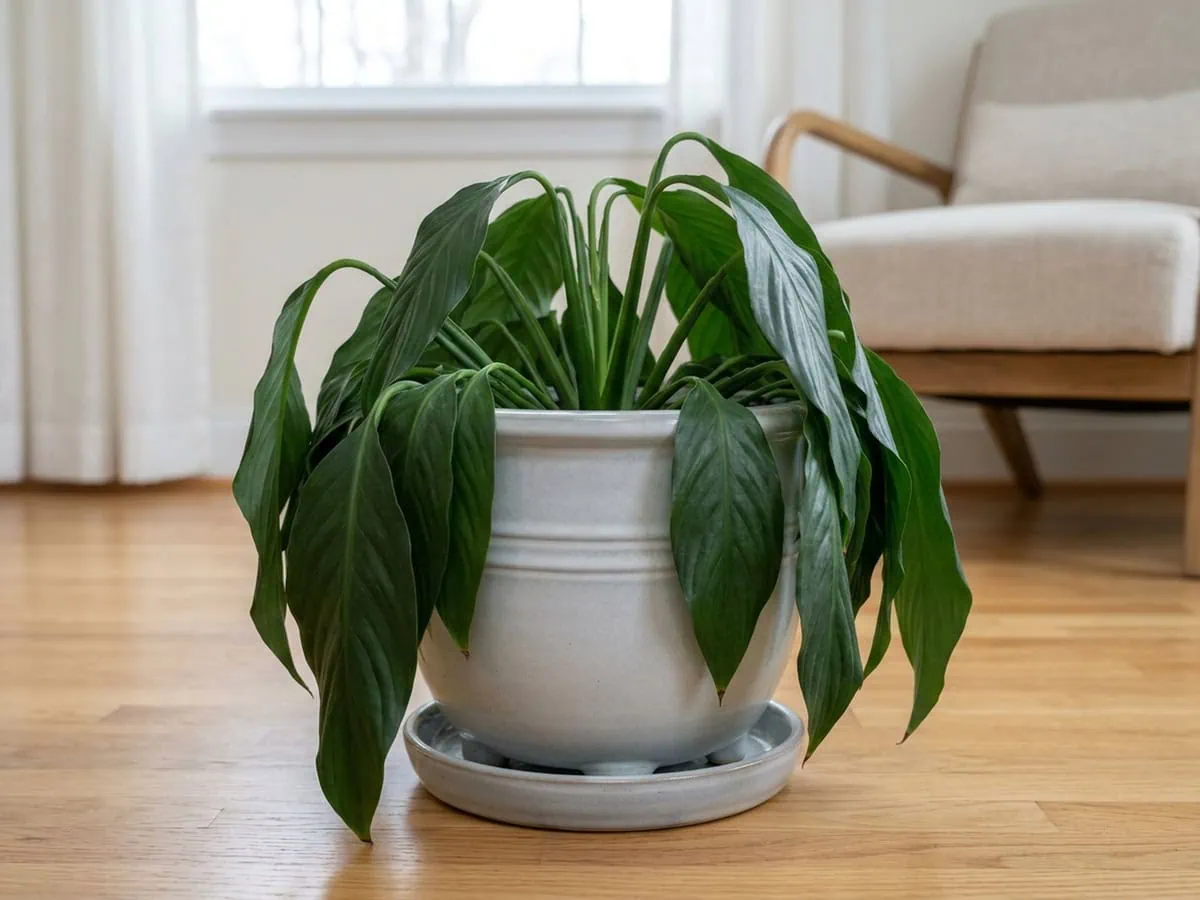
Carry the pot to the sink. Water slowly until the excess leaves the base, then tip the saucer out rather than letting it stand.
Twice, not once. A mix that has shrunk back from the wall repels that first pour, so several applications may be needed before it takes water at all — and where the rootball has gone properly water-repellent, setting the whole pot in a shallow tray lets it drink from below.
Over years of watching light pots come back, the fastest recoveries were the ones watered twice inside the hour rather than once and left alone. That is the honest answer to “how to perk up a drooping peace lily fast”. None exists.
Wet and heavy: stop watering and look at the roots
Stop watering and lift the whole plant out of its pot. The lowest leaves wilt first in the wet case, and that sign is the one most often read as thirst — which is why the roots settle it and the foliage cannot.
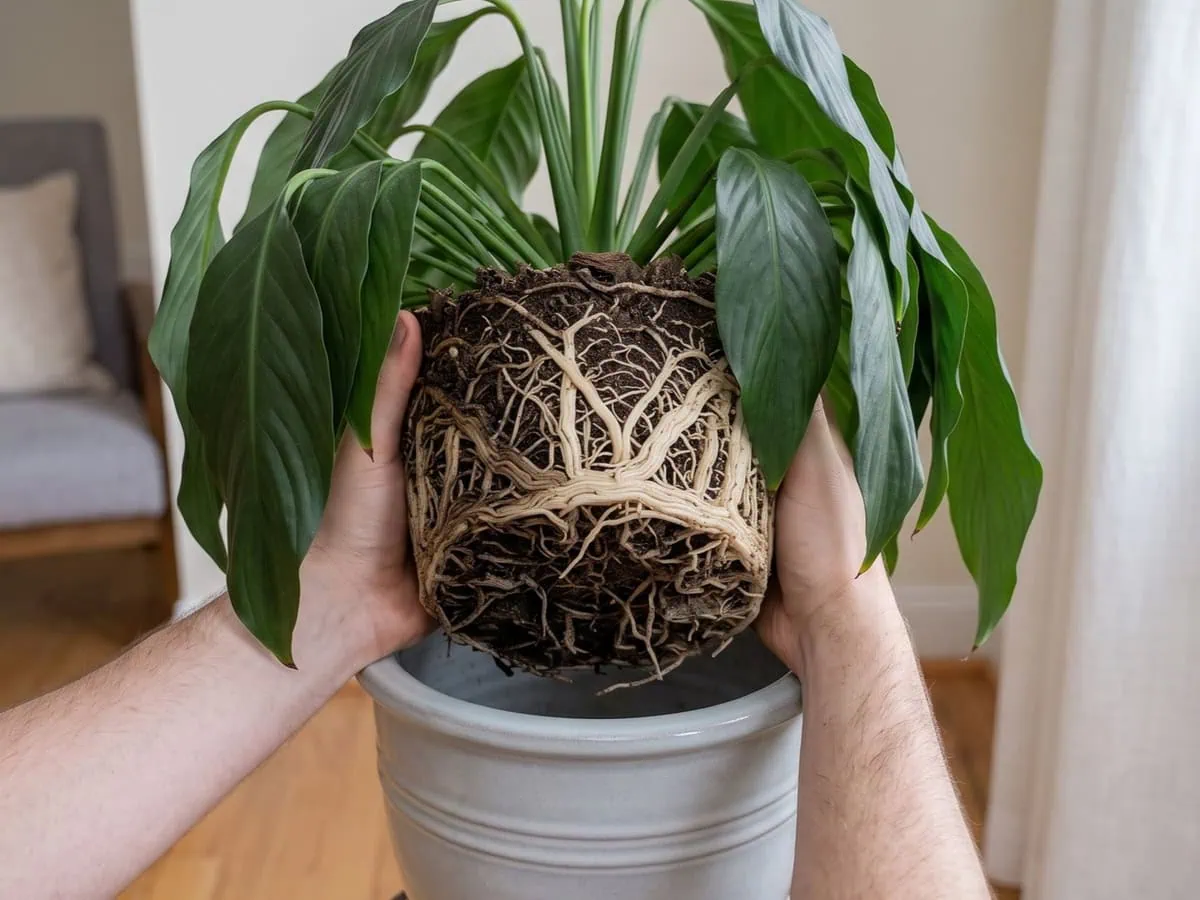
Healthy roots are firm and white, with fine feeder roots through them. Failed ones read as a gradient you can see at a glance: firm white gives way to tan, then to a soft brown-black that smears between finger and thumb and carries a sour smell.
The order of failure runs inward. Outer roots go first, then the rhizome, then the stem base blackening at the soil line. While firm rhizome tissue is still there, cutting back a failed root system and repotting into fresh medium is the route back.
When the base is soft the whole way through, the plant is past that point, and discarding it protects the plants sitting beside it.
When water is not the answer: cold air and tight roots
Some droops have nothing to do with the mix at all. Two placement faults produce them — a cold draft, and a root ball with nowhere left to go.
Cold air and drafts: the tip-and-edge signature
Chilling injury on this plant begins well above freezing. The measured band runs from just above 32F to 59F, with no visible injury at 52F and damage building the colder and longer the exposure.
The signature is positional. Injury starts at the tips and edges and works inward, going necrotic and blackening as it dies back to a dry, papery finish — a different picture from the even tan crisping dry air leaves behind.
Searches for “peace lily drooping after cold or draft exposure” tend to end at the thermostat. Moving air matters more than the number. Step the pot back from cold glass and out of any vent’s path.
Tight roots: when it droops again every few days
The other repeat offender is a root ball with no room left. Owners asking “why does my peace lily keep drooping between waterings” are usually watering a container whose roots have taken every gap, so water leaves the drainage holes almost as fast as it goes in.
Every bound clump I have lifted showed roots pushing out of those holes first. Step up about two inches of diameter and no more, because unused wet soil is where rot starts, and settling in once the roots are disturbed takes weeks.
What not to do while a peace lily is drooping
Sugar water does nothing here. No horticultural authority recommends it. An Epsom-salt drench is the same story — magnesium is a feeding question for a plant in active growth.
Misting will not lift the humidity of the room either, because the water evaporates off the blade within minutes. Skip the feed, skip the same-day repot, and do not read leaves that yellow from the bottom of the clump upward as a second emergency.
Wait. New growth that emerges and stays green is the marker, and each extra intervention makes it harder to tell which one worked.
Frequently asked questions about a drooping peace lily
How do you revive a droopy peace lily?
Read the pot before watering, because the same droop follows both a dry root ball and a drowned one. Lift it. A light pot calls for a thorough soak at the sink, then an emptied saucer.
Heavy signals the opposite: stop watering and lift the plant out to see the roots. Firm white roots come back on their own, while brown, soft, sour-smelling roots need cutting back to living tissue.
How long does it take for peace lily to perk up?
Recovery takes hours when thirst was the cause, and a dry plant given a thorough soak stands back up the same day. When the leaves are still down next morning, that delay is the answer.
The root zone, not the watering can, is then the problem. A plant recovering from lost roots works on a slower clock, measured in the weeks new leaves take to appear and stay green.
What does an overwatered peace lily look like?
An overwatered peace lily wilts from its lowest and innermost leaves first while the pot still feels heavy. Water often stands in the saucer, and the surface can smell sour.
Pulled from its container, the roots settle it. Healthy tissue is firm and white with fine feeder roots running through it, while failed tissue is brown to nearly black, soft, and smells.
Why is my peace lily drooping but the soil is moist?
Moist medium under a drooping plant points at the roots rather than at the watering schedule. Standing water pushes oxygen out of the mix and damages the fine roots, so the plant cannot drink even while its feet are wet.
The result looks exactly like drought. Weigh the pot in your hand, empty the saucer, and inspect the root ball before adding more.
How do I perk up my peace lily plant?
Water thoroughly at the sink once the pot reads light and the top 2 inches feel dry. Where the mix has pulled back from the wall, several passes may be needed, or a spell standing in a shallow tray so it drinks from below.
Then leave it alone for a day. Stacking a feed or a repot onto the same afternoon hides which action the plant responded to.
Does sugar water help a peace lily?
No. Sugar water does nothing for a drooping peace lily and has no place in the corrective sequence for this plant.
The same applies to an Epsom-salt drench, which is a feeding question for a plant already in active growth. A plant that is down needs its watering regime and its root zone corrected, not an additive poured over the top of the mix.
Lesson locked: take the reading before you reach for the water
Two opposite causes, one collapse — and the pot in your hands separates them. Light means water. Heavy means stop.
Look at the roots then, and let the medium breathe before anything else happens, because a saturated root zone cannot use what you add to it.
That one habit turns the most alarming thing this plant does into its most readable signal, and recovery shows first in the newest blade at the center of the clump, standing a little proud while the outer ring is still lying flat over the rim.
Next time the leaves go down, weigh the pot first. The answer to “why is my peace lily drooping” starts and ends with that lift.
One droop, two opposite answers — and your peace lily settles it the second you lift the pot.
Tap the button below to get more plant fixes in your Google Search results