🎯 Quick Answer: what a freshly repotted plant needs first
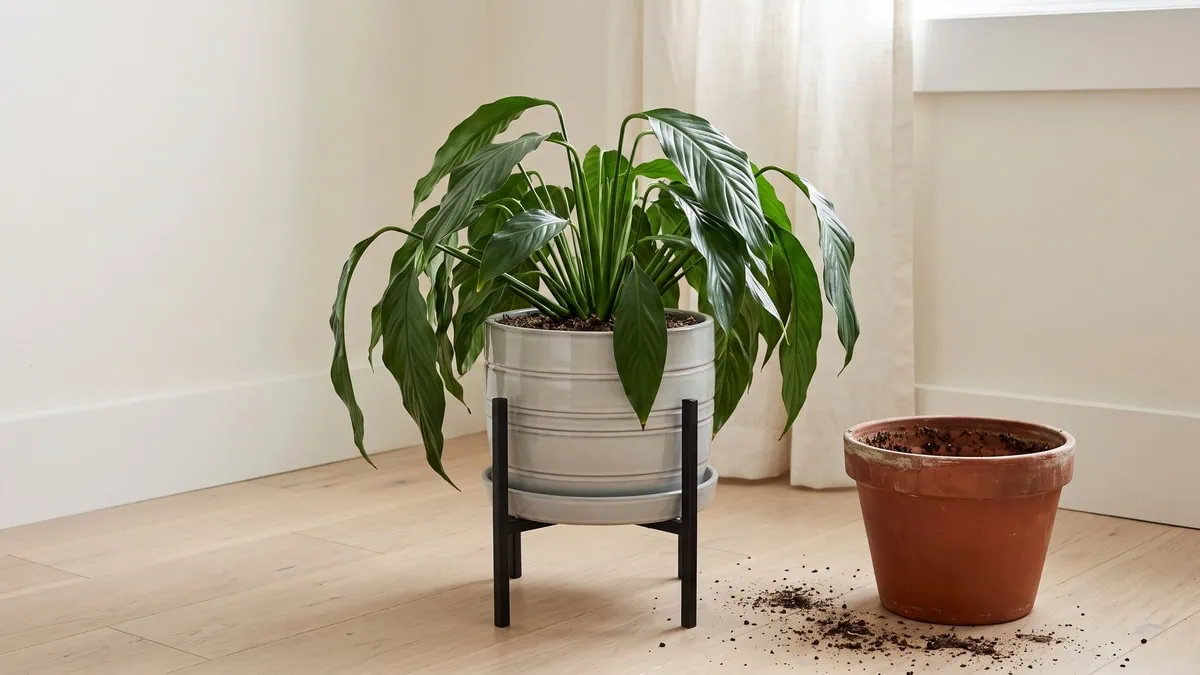
How to revive a peace lily after repotting begins with one fact: Spathiphyllum wallisii, an Araceae family member, collapses for 7-10 days. The droop is a water-supply failure, not thirst — injured roots cannot yet feed the blades. Hold the watering can, hold the fertilizer, judge nothing until fresh growth appears.
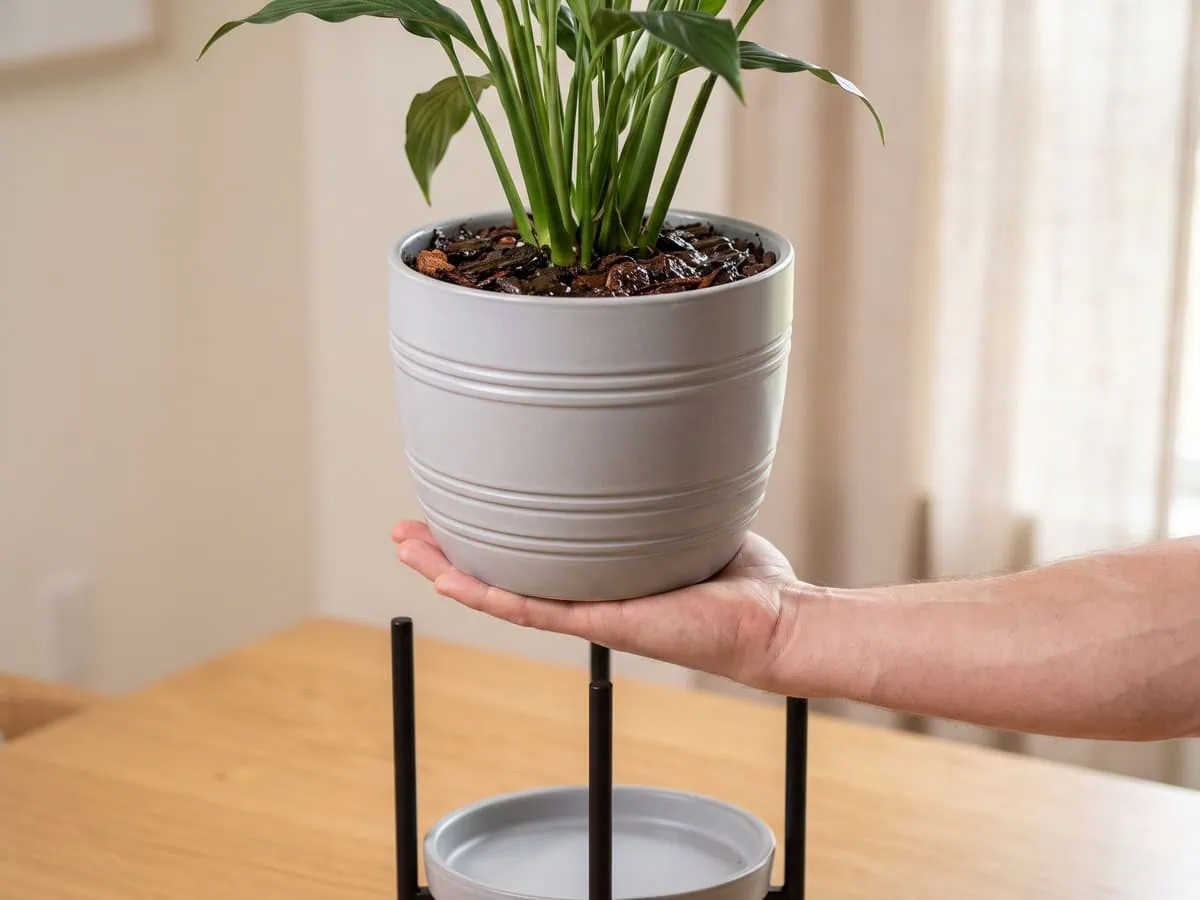
- First hour: lift the pot and feel its weight, then wait
- Watering: water only when the top two inches read dry
- Light: move it out of direct sun into steady indirect light
- Hands off: skip the second unpotting; every look tears live roots
- Marker: watch for one new furled spear before judging recovery
Get the one-page care card for this guide, plus a printable A4 copy
We condense this guide into one card for your phone and a print version for the pot shelf. Enter your email and we send both to your inbox. Subscribe once, then request the card of any guide you read.
By subscribing you agree to get emails from Plant Care Basics about plant care guides, about once a week at most. Unsubscribe in one click. Privacy policy
Truth is — the peace lily I repotted twice in three years looked worse after each move than it had all month. Both times I lifted a root ball whose surface felt gritty and shredded under my thumb (I still remember the texture), and both times I watered it again.
Conventional post-repotting advice nearly lost both: water it in well, keep the mix damp, unpot it if it sulks. Correction — what I meant was that the advice is mistimed, and the real fix is patience.
Nothing about this plant’s anatomy stores a backup supply — no tuber, no thick leaf, none of that exists here, so the root zone has to do all the work itself. A disturbed root ball cannot reach it for days. Nothing hurries it.
So the useful question after a repot is not what to add but what to read: pot weight in the first hour, then whether the collapse in front of you is transplant shock at all. For the wider routine, start with growing Spathiphyllum indoors.
None of this needs guesswork. The following table holds the six numbers I check after a repot, in the order I check them.
How to revive a peace lily after repotting: the numbers that decide it
| Peace lily repot checks | What the check tells you |
|---|---|
| Recovery window before you judge the plant | About 7-10 days in indirect light; roots re-establish over roughly 2-4 weeks. |
| First watering after the repot | Water thoroughly until it drains, then keep the mix moist but not soggy. |
| Pot step-up that starts the trouble | About a 2-inch diameter increase, so a 3-inch pot goes to 5-inch. |
| Root loss a healthy plant absorbs | Up to about one third of its roots. |
| Unpot again to look at the roots? | No — unless the base has gone soft or the mix smells foul. |
| Feed the plant while it recovers? | No — hold fertilizer until roots re-establish and new growth appears. |
You are subscribed
Press the button and we prepare this guide's one-page care card and its A4 print copy and email both to you within a few minutes.
Tap the button below to get more plant fixes in your Google Search results

Table of Contents
Transplant shock or a failing root zone? The first-hour water test
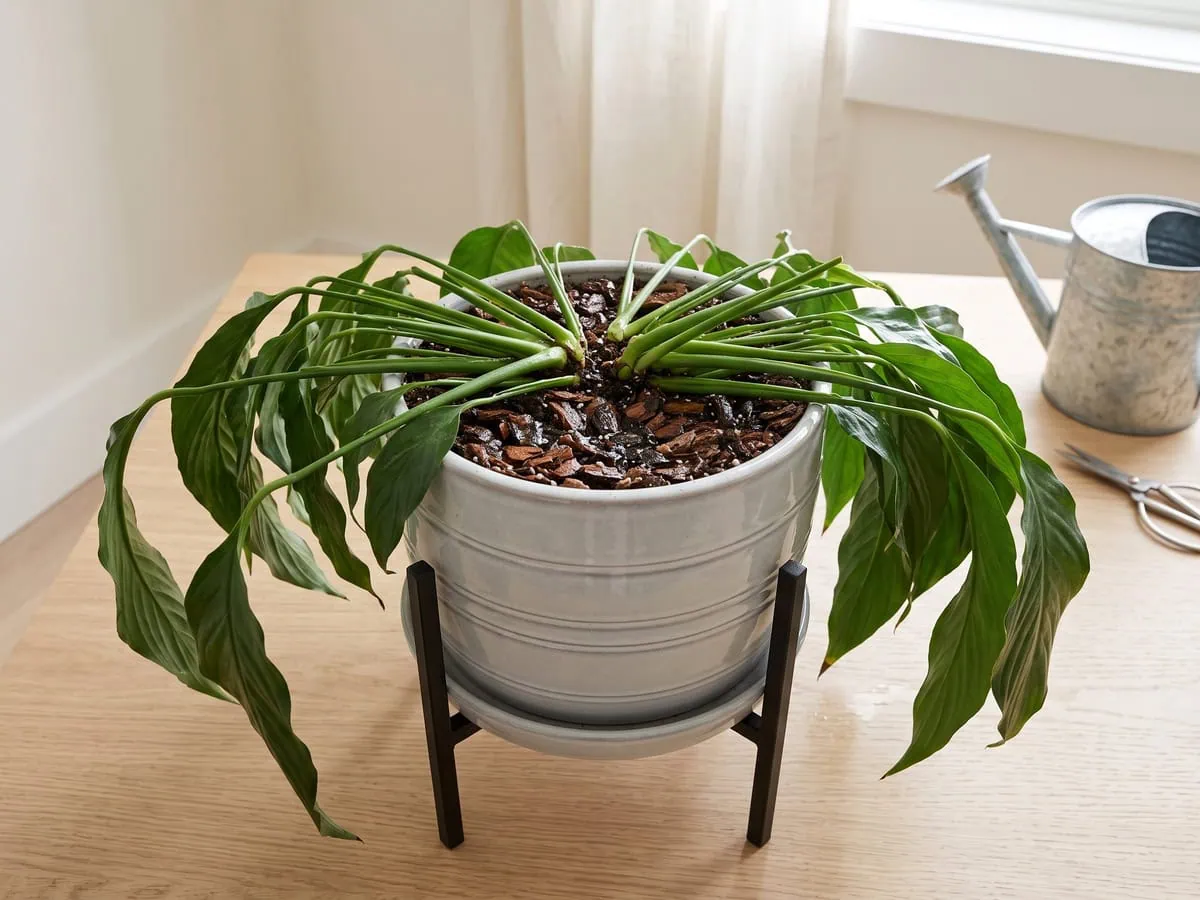
One hour after a thorough watering is the checkpoint that separates ordinary transplant shock from a root zone that is genuinely failing. A peace lily drooping and wilting after repotting will lift on that first read if the mix simply ran dry. It stays flat if the roots can no longer draw.
The following two sections take each outcome in turn: the normal droop first, then wet soil under a limp plant. According to the University of Maryland Extension Home and Garden Information Center, transplant shock follows root injury that leaves the plant unable to supply water — so this reading measures supply, not thirst.
| What you check | Ordinary shock | Failing root zone |
|---|---|---|
| One hour after a thorough soak | Blades lift and the arch returns | Blades stay flat, wet mix or not |
| Weight of the pot in the hand | Light for its size before watering | Heavy, and it stays heavy for days |
| Smell at the mix surface | Plain damp earth, nothing sharp | Sour, and the smell carries |
| Stalk bases at soil level | Firm, springing back under a fingertip | Soft, flattening under the same pressure |
Verdict: Read it as shock when the pot is light and the bases are firm, because working roots rehydrate within the hour.
Wet mix under a limp plant is not a signal to add water. The roots cannot move what is already there, and a second drink deepens the low-oxygen conditions that started the collapse.
What a normal post-repot droop looks like
Ordinary shock shows within a day of the move and lifts within the hour once water reaches the root ball. But it lifts only because enough working root survived — a peace lily keeps no backup supply in a tuber or a thick leaf, so whatever the mix is holding is all there is to draw on.
In my own repotting runs the tell was the blade between two fingertips — still stiff and faintly waxy rather than papery — while the stalks lay flat on the rim. Firm tissue under a collapsed posture means supply. Not thirst.
A droop with no repot behind it belongs to a droop that has nothing to do with a repot.
When wet soil and a limp plant mean something else
A plant still down after a soak has stopped taking water up. The mix reads wet because nothing is drinking it. Healthy roots are firm, white and carry numerous feeder roots; failed roots turn brown to black, go soft and mushy, and carry an odor.
Wilting of the lower leaves is that failure’s first sign, routinely mistaken for a missed watering. Skip the meter. One grower held off water for three weeks on a reading of wet while the plant went down from drought, so lift the pot instead: a wet mix weighs much more than a dry one.
Sour mix plus a soft base at the soil line is where this stops being a recovery question and becomes what to do when the root ball smells sour.
Get the one-page care card for this guide, plus a printable A4 copy
We condense this guide into one card for your phone and a print version for the pot shelf. Enter your email and we send both to your inbox. Subscribe once, then request the card of any guide you read.
By subscribing you agree to get emails from Plant Care Basics about plant care guides, about once a week at most. Unsubscribe in one click. Privacy policy
Tap the button below to get more plant fixes in your Google Search results

How long recovery takes, and what to check each week
Recovery after a repot runs about 7 to 10 days in indirect light, while the roots themselves re-establish over roughly two to four weeks. Those are two different clocks. The first governs how the plant looks, and the second governs what it can actually drink.
Type “how long does peace lily transplant shock last” into a search bar and the pages disagree — a few days to a couple of weeks, one to three weeks, one to two weeks — and not one of them attaches a condition to its own figure. Container size, root loss, room temperature: none of it is factored in.
Tentatively, the published numbers behind that range are greenhouse crop times measured at about 1,500 foot-candles, which describe a production bench rather than a living room, so read them as background rather than as your own timetable. So the honest reading of any recovery figure is a window with a checkpoint at the end of it, not a promise.
Week one: indirect light, no fertilizer
Week one is a holding pattern rather than an intervention. Keep the container in indirect light — near a north window, or a few feet back from an east one — and hold the fertilizer until the root zone re-establishes. Feeding a plant that cannot yet absorb loads salt into the mix instead of growth.
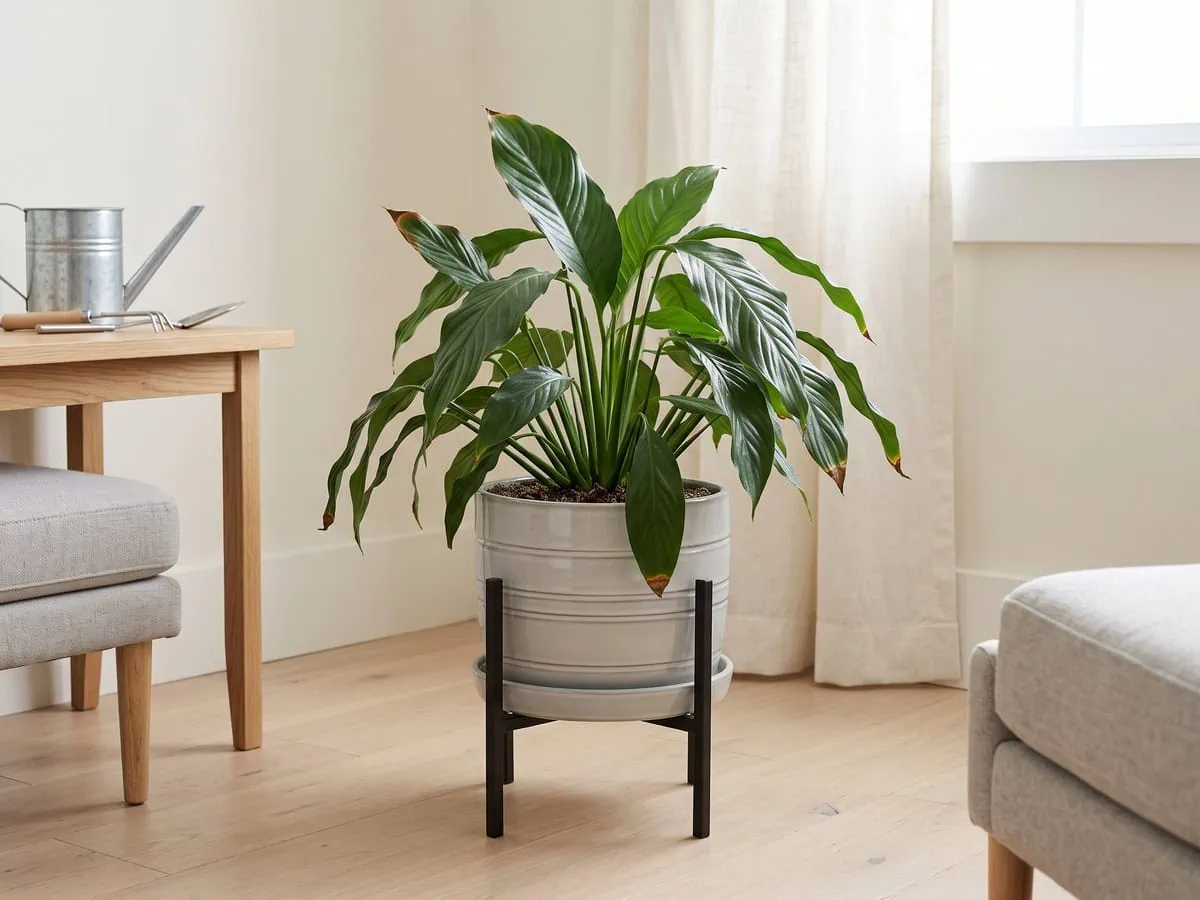
Room temperature does the rest at 68 to 70F. But the thing that undoes a good repot is moving air, not the number on the thermostat: a vent or a cold pane drives transpiration past what injured roots can refill, and the tips brown for it. Step the plant a few inches off the glass.
Weeks two to four: the new-leaf marker
Searching “peace lily not pushing out new leaves after repotting” turns up one instruction repeated everywhere, which is to wait for new growth, with no interval attached to it anywhere in extension guidance.
Across my own recovery runs I stopped counting days and started checking one thing each week. The newest furled spear at the center of the crown, pinched lightly between finger and thumb. Firm and tightly rolled means the plant is still building, and soft and slack in that same pinch means it is not.
Four weeks is the outer edge of that window, and week four is the checkpoint the whole recovery is judged on. A crown still upright with a green spear at its center is rebuilding, while a base that has gone soft is not. Then it is back to routine care and the ongoing watering rhythm once recovery is over.
What to do in the first two weeks, and what to skip
Two weeks of deliberate inaction rebuild more root than any intervention does, because a repotted peace lily is rebuilding supply rather than fighting disease. Order the fortnight by what you can take back.
Everything you can undo tomorrow comes first — tip the saucer out, step the pot off the vent, move it back from direct sun. None of it takes anything from the plant.
What you cannot undo comes last. A second unpotting tears live root off a plant that has none to spare, and a feed loads salt into a mix the roots cannot yet drink from.
- Plain watering can for one thorough soak, not a daily splash
- Shallow tray emptied after watering, never left standing
- Unlined gloves because the sap irritates skin on contact
The first watering after the repot
Water it through once, until it runs from the drainage holes, then leave it alone. The light-watering version circulating on this question belongs to a plant whose rotted roots were just cut away.
Type “should you water a peace lily right after repotting” into a search bar and both answers come back. The soak wins for a disturbed root ball (trust me on this), because it closes the air pockets a repot leaves.
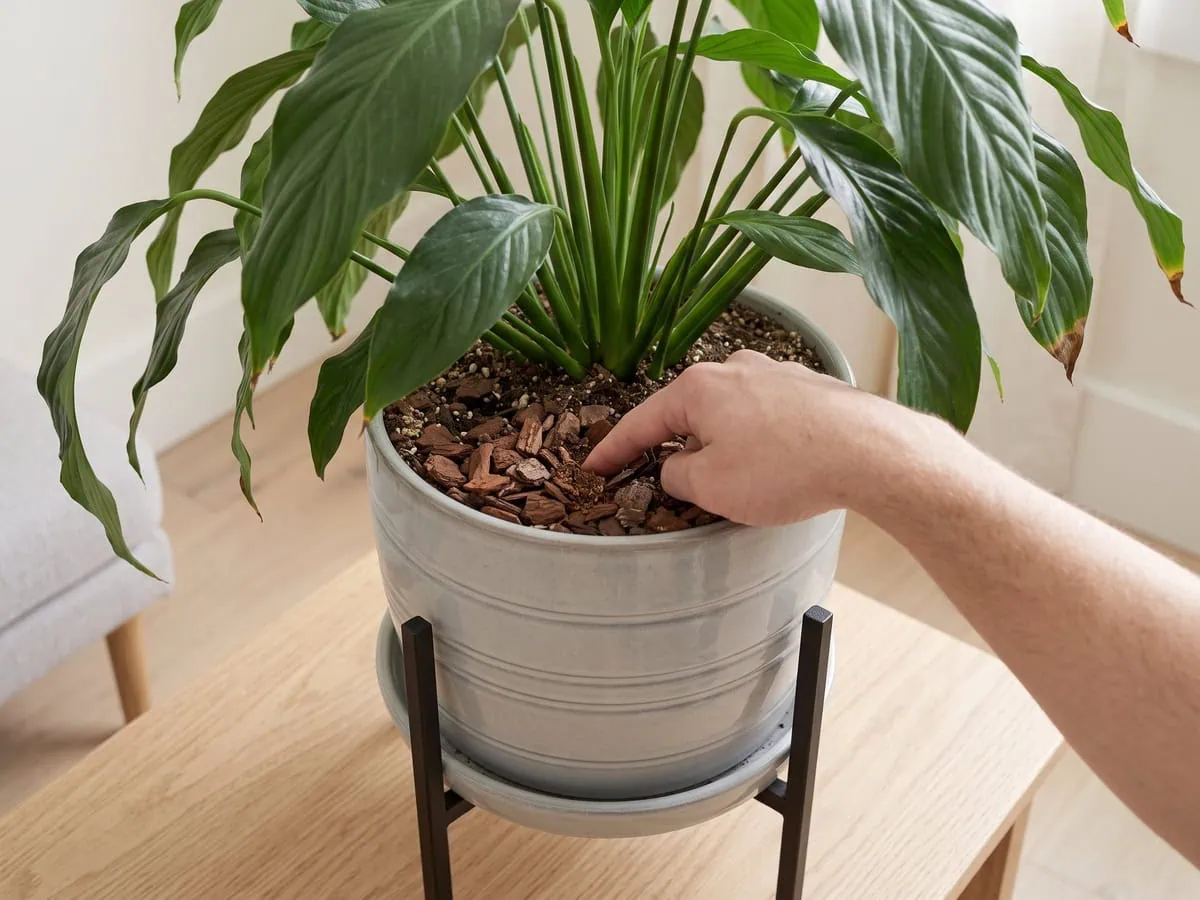
After that first soak, read the mix instead of the calendar. Push a finger two inches down: coarse pine bark rolling dry and gritty against the skin means water, a cool damp crumb means wait.
Why a second unpotting takes more than it finds
A second look removes more than it reveals. It strips another layer of fine root from a plant whose only reservoir is the mix around those roots. Wait.
The care guides I compared instruct root removal with no ceiling at all. A peace lily absorbs the loss of up to about one third of its roots, and firm white tissue stays whatever else goes.
One condition earns a second look, and only one. A base gone soft at the soil line, or a mix that smells sour when you lean over it.
Was the repot needed in the first place?
Most repotted peace lilies were repotted early. This plant tolerates a snug container and is harmed by a roomy one, so during recovery the answer is usually no. But the trigger is worth knowing.
Type “when should you repot a root bound peace lily” into a search bar and the signals all fire late — roots through the drainage holes, circling roots at the surface. The earlier one is functional: the same container dries out in fewer days than it used to.
Measure the step-up from the container, never from the plant. About two inches of extra diameter is the whole allowance — a 3-inch pot goes to a 5-inch pot.
The interval itself is not a calendar. Signals govern, and two years is only a fallback for anyone who wants a number; when that day comes, pair the larger pot with choosing a mix that drains freely.
Frequently asked questions about post-repot recovery
How long does it take a peace lily to recover after repotting?
About 7 to 10 days in indirect light is the visible part, with the roots themselves re-establishing over roughly two to four weeks. Those are two separate clocks, and the second one governs what the plant can actually drink.
The second clock is the one that governs. Published recovery figures come from greenhouse growing rather than from a living room, so read any single number as a window with a checkpoint at its end rather than as a promise.
How to help peace lily with transplant shock?
Soak it through once until it drains, move it into steady indirect light, and then stop intervening. Injured roots cannot supply the blades yet, so every extra action adds stress without adding supply.
Holding the fertilizer is part of the answer. Feeding a root zone that is still rebuilding loads salt into the mix instead of growth, so wait until new growth appears before resuming.
Will a droopy peace lily recover?
Yes, in most cases, provided the pot is light in the hand and the stalk bases are still firm at soil level. Those two readings separate routine shock from a root zone that is failing.
Any droop with no repot behind it is a different question and belongs to the drooping article in this series. Here the reading is taken one hour after a thorough watering, which is when working roots have had time to lift the blades.
Do peace lilies like big pots or little pots?
Little pots suit this plant, in practice. A peace lily tolerates a snug container and is actively harmed by a roomy one, so the step-up is capped at about two inches of extra diameter.
The failure mode behind that cap is unused wet soil. Roots cannot absorb a volume they have not reached, so the surplus stays saturated and feeds the waterlogged root zone that is this species’ leading cause of loss.
How often do peace lilies need repotting?
Signals decide the timing, not a schedule. The trigger is roots growing out through the drainage holes, not a date, and a plant that is merely snug is better left alone.
Two years is the fallback for anyone who wants an interval, and it is deliberately the longer of the two figures in circulation. This plant flowers better kept slightly tight, so an annual habit trades blooms for disturbance and risks the collapse that follows a needless repot.
The three-move post-repot recovery protocol
Three moves rebuild a repotted peace lily, and none of them is dramatic. Empty the saucer, hold the fertilizer, and leave the root ball alone. That is the fortnight.
Honestly? The hardest part is the third move, because every instinct at day three says to lift the plant and look — and the look itself takes another layer of fine root.
Check the stalk bases at soil level instead: firm under a fingertip means the crown is holding, flattening under it means it is not.
Once the crown holds and a new furled spear shows at the center, ordinary care resumes. Knowing how to revive a peace lily after repotting comes down to two quiet weeks and one weekly check.
Doing nothing is the work here — set the peace lily down, keep its mix barely damp, and let the roots knit in the dark where you cannot watch them.
Get the one-page care card for this guide, plus a printable A4 copy
We condense this guide into one card for your phone and a print version for the pot shelf. Enter your email and we send both to your inbox. Subscribe once, then request the card of any guide you read.
By subscribing you agree to get emails from Plant Care Basics about plant care guides, about once a week at most. Unsubscribe in one click. Privacy policy
Tap the button below to get more plant fixes in your Google Search results