🚨 Emergency 30-Second Answer: how to save a Pothos from root rot
Stop watering — Epipremnum aureum, a member of the Araceae family, survives while about half its root mass stays firm. Unpot it and rinse the roots before you cut anything.
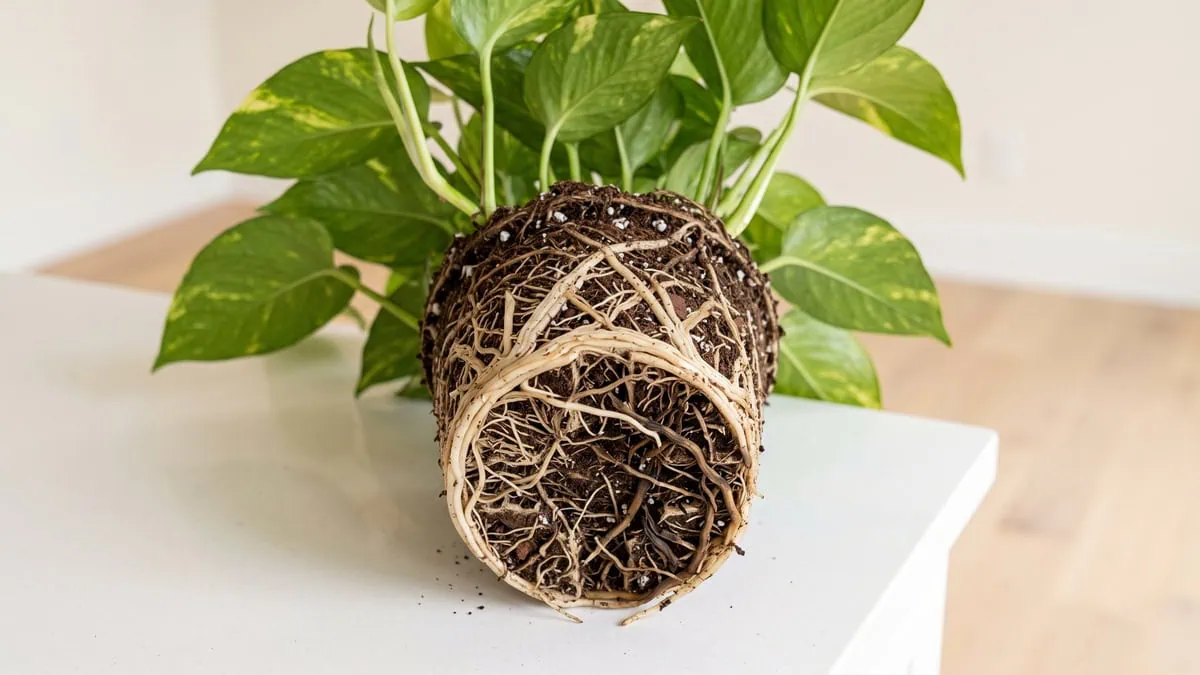
Firm, pale roots carrying fine feeder roots are sound. Brown to black roots that slide out of their own skin are gone. Trim every soft root back into firm tissue, sterilizing the blade between cuts.
Repot into fresh mix in a clean pot matched to what survived. Then wait — the first watering comes days later, not minutes.
- Confirm first: a limp vine over wet mix, not thirst
- Stop the water: empty the saucer and add no more today
- Air the cuts: let trimmed root ends dry before they meet mix
- Right-size the pot: match it to the roots that actually survived
- Delay the drink: hold the first watering for several days afterwards
The vine hung over the pot rim like wet string. Three days after a watering, the mix under it was still dark. I watered that pothos on a fixed day of the week, never on what the pot was telling me.
When I finally lifted it out, the outer skin of one root slid off the core between finger and thumb.
More water sounds right when a plant droops. It isn’t. Here’s what a suffocated root system does instead: Epipremnum aureum stores no water anywhere in its body, so when the mix turns anaerobic, the soil-borne water molds already living in it take the absorptive roots apart while the leaves read as thirsty.
So stop watering it today (FYI — this vine carries no tuber and no water-storing stem, so its roots are its entire supply line). Work the rescue in order, then rebuild the habit with the habits that keep a rescued plant out of trouble.
Nothing you are about to do needs a product off a shelf. One table carries the whole rescue in the order you meet it, from the first check through to the first new leaf.
How to save a Pothos from root rot: the rescue at a glance
| Rescue checkpoint | What to do or look for |
|---|---|
| Sound root check | Firm, pale white to tan, with numerous fine feeder roots |
| Rotted root check | Brown to black, soft; outer sheath slides off the core; sour smell |
| Rescue threshold | Roughly half the root mass still firm |
| Cut margin | Into firm tissue above the affected zone, not at the visible boundary |
| Tool sterilization | 10% bleach solution or alcohol, between cuts |
| Fixable without a repot? | No |
| Peroxide on living roots? | No – empty pots and tools only |
| First new growth after the rescue | About 4-8 weeks |
Tap the button below to get more plant fixes in your Google Search results

Table of Contents
Is it root rot? Check the mix before you cut
Wet mix under a drooping vine confirms this condition; the droop on its own never does.
The three checks below run in order, each narrowing what you are looking at.
Wet mix and a drooping vine: the check to run first
Push a finger two knuckles into the mix before you reach for the watering can, because damp at that depth under a slumped vine means the roots have stopped drinking. They do not want more.
Two more readings take seconds. A pot that has actually dried loses obvious weight, and the surface pales from dark to light. Yours does neither.
The “why does my pothos have mushy black roots” question comes down to one thing: the mix never dried between waterings. And when it stays wet, the darkening climbs from the root tips as a thin brown gradient long before a single leaf reacts.
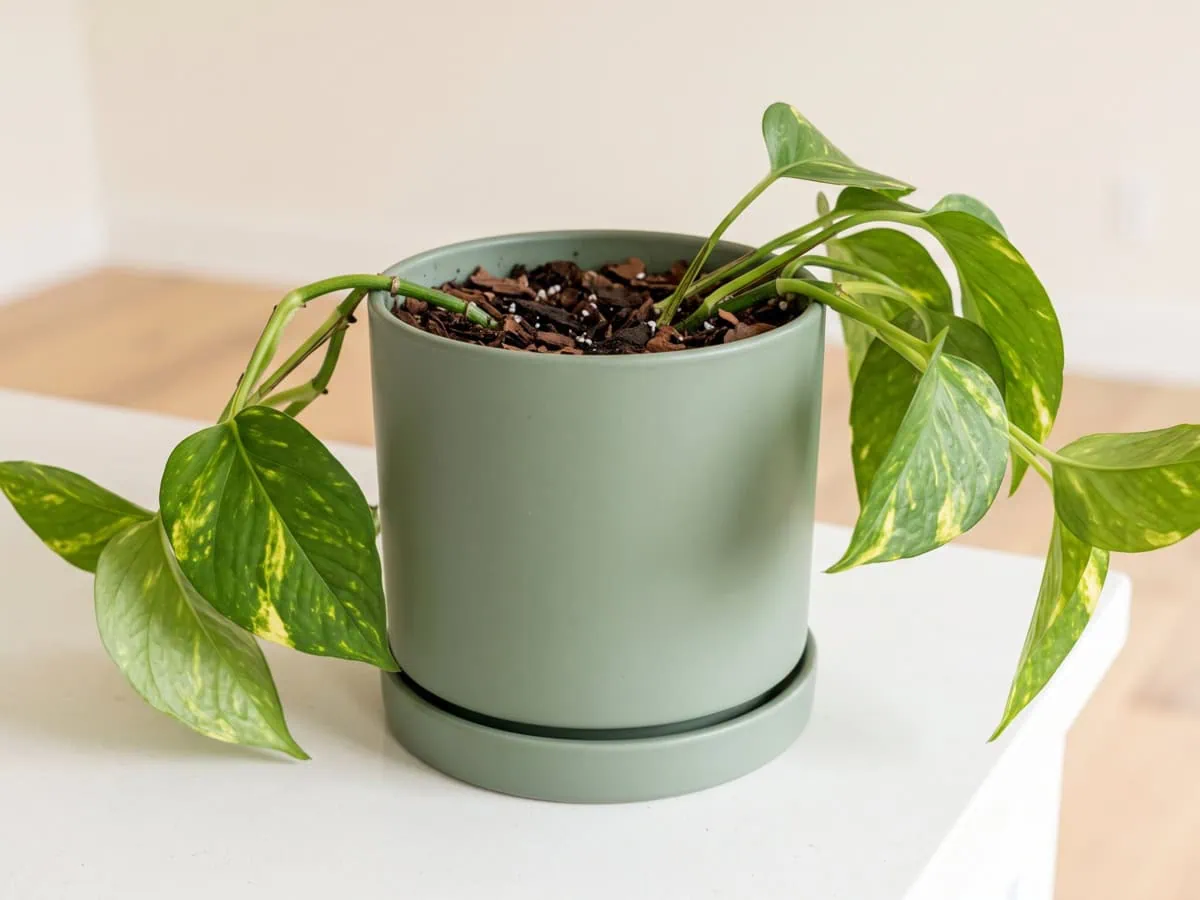
Leaves that curl and drop while keeping their color are a different fault, answered by curling and drooping leaves that hold their color.
What rotted roots look and feel like
If you searched “what does pothos root rot look like”, the answer is a color first, then a texture. Sound roots are firm and pale, white to tan, with fine feeder roots. Failing roots run brown to black and soften.
Pinch one. The outer sheath slides off a thin inner core, and the mix smells sour when you lean in. I run that pinch on every rescue pot I open.
It is the cue that settles it — color reads late, firmness reads now.
Per the University of Florida IFAS Extension, Phytophthora root rot is one of the root diseases documented on this plant. The pathogen is a water mold rather than a true fungus, and under irrigation it produces zoospores that swim and carry the infection onward. Reducing the water is what limits that spread, which is why drainage outranks any product.
Keep roughly half the root mass firm and the odds run your way. That half-mass line comes from rescue write-ups, not from a measured standard. Below that, or if the stem base has gone soft and dark, take firm cuttings above it and let the original go.
Gnats and white fuzz: what a soggy mix signals
People search “are fungus gnats a sign of an overwatered pothos” and the answer is yes, indirectly. The larvae live in the top two to three inches of mix, so a steady hatch means that layer never dries. They are not eating the roots.
White fuzz on the surface is the same signal, not a second problem. Just a wet surface. It is harmless in itself, and it marks a mix that never dries.
Neither sighting replaces the root check.
Tap the button below to get more plant fixes in your Google Search results

The rescue in order: trim, right-size the pot, then wait
The rescue runs in one order: trim to firm tissue, then match the pot, then delay the water. Each step below protects the one after it.
Where to cut rotten roots, and sterilizing between cuts
Rinse the root ball under lukewarm water until you can see what you are holding. Then cut.
The “how to trim rotten pothos roots” answer is a margin, not a boundary. Cut into firm pale tissue above the affected zone, because the damage runs further than the color shows. One rescue guide states that margin; the rest leave it unsaid.
Sterilize between cuts, not just before you start. A 10% bleach solution or alcohol on the blade stops you spreading it root to root. Let the cut ends air-dry before they meet mix.
Fresh mix, a clean pot sized to the roots that survived
Repot into a chunky coir-based aroid mix, 1 part coco coir to 1 part orchid bark to 1 part perlite, top-dressed with a thin layer of fine orchid bark. Old mix goes in the bin, never back around the roots.
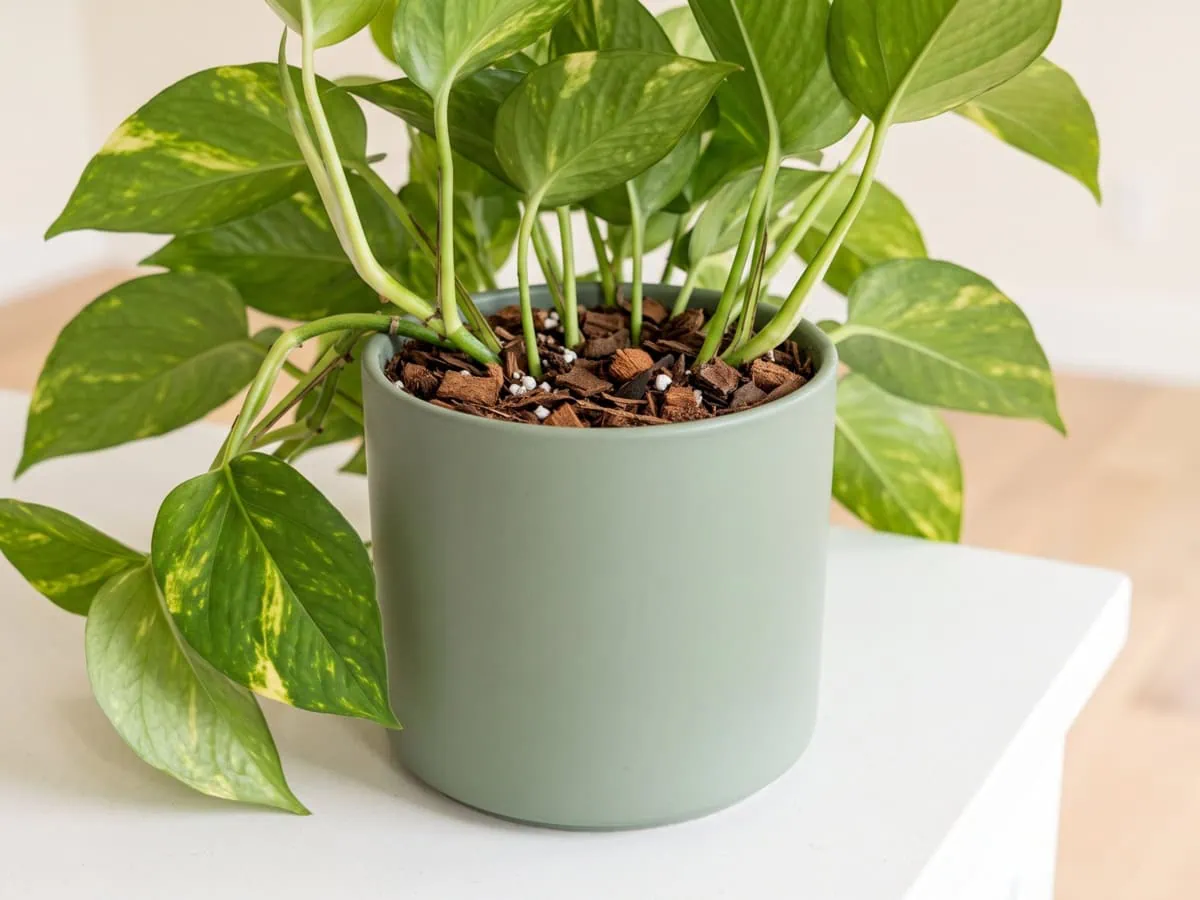
Scrub the pot with the same solution and dry it before the plant goes back. Bone dry, inside and out.
These organisms are soil-borne and can arrive in the bag or the nursery pot, so use pasteurized mix and check new arrivals.
Size it to the roots that survived the trim, not to the plant it used to be. A wide pot around a small root system holds water the roots cannot reach.
Skip the pebble layer at the base. It raises the wet zone rather than draining it. Follow the routine repotting sequence and pot sizing once the plant is out of trouble.
The first watering, and what recovery looks like
Do not water it in. Wait a few days so the cut surfaces close, then water once, lightly, and let it drain fully. After that, water when the top one to two inches are dry.
So can a pothos recover from root rot? Yes, when enough firm root remains — the first new leaf pushes out pale and tightly folded in about 4-8 weeks, and a short droop in the days right after the repot is normal, not failure. I have watched that stall unnerve more owners than the rot did.
That interval comes from one published account, not a settled standard. Once new growth is running again, set the rhythm by how often this plant actually wants water instead of by the calendar that caused this.
What not to do while a Pothos root system recovers
Three moves feel productive while a trimmed root system rebuilds, and all three set it back. Each is covered below with the reason it fails.
Trimming the top back by a set fraction
Cutting a fixed share of the foliage is the wrong instruction. The right amount is proportional. Remove roughly as much leaf area as you removed root, so the surviving roots are not feeding a canopy they can no longer supply.
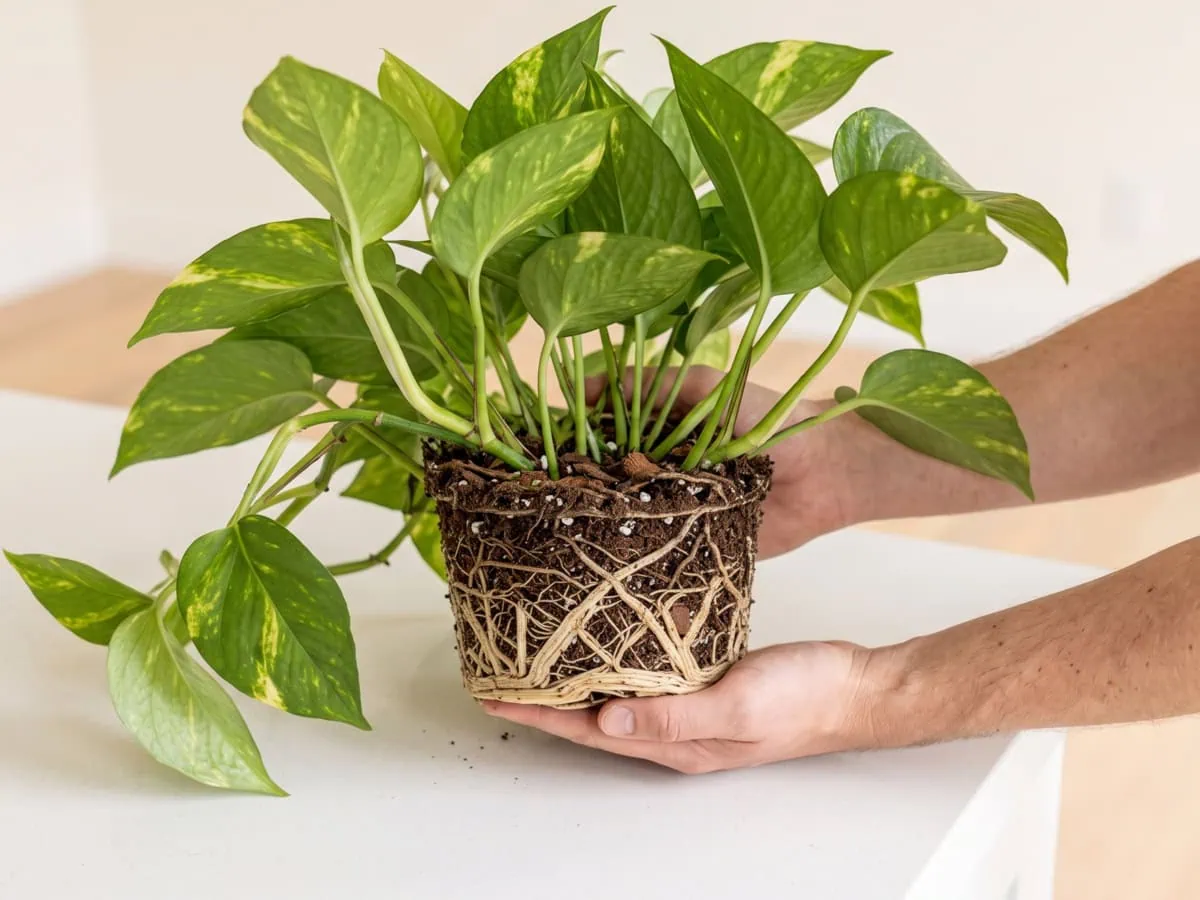
A plant that lost a third of its roots does not need half its leaves gone. A plant that lost most of them does. Take the oldest, dullest leaves first — gloss gone flat, edges yellowing at the tip — and leave the young ones working.
Peroxide, fungicide, and what they cannot reach
Household peroxide belongs on empty pots and tools, never on living roots. The surfaces you just cut are open tissue, and an oxidizer cannot tell rotted cells from sound ones.
For a cut surface, powdered cinnamon is the one thing worth dusting on. It works as an antifungal dressing on the wound, not as a rooting aid.
Skip the fungicide entirely. University extension does not recommend chemical fungicides for houseplant roots.
No shortcut. Sanitation and a dry-down do the work no bottle can.
Waiting it out and skipping the repot
This does not clear up on its own. Stopping the water slows the spread, but it rebuilds nothing that has already collapsed, and the organisms wait in the wet mix for the next drink.
Empty the saucer as well. Standing water keeps the bottom of the mix wet however dry the surface reads.
So can you skip the repot? Only in the mildest case, where a couple of soft root tips come away and the rest is firm — then drying the mix out hard is enough. Past that, the mix is the thing the trouble sits in.
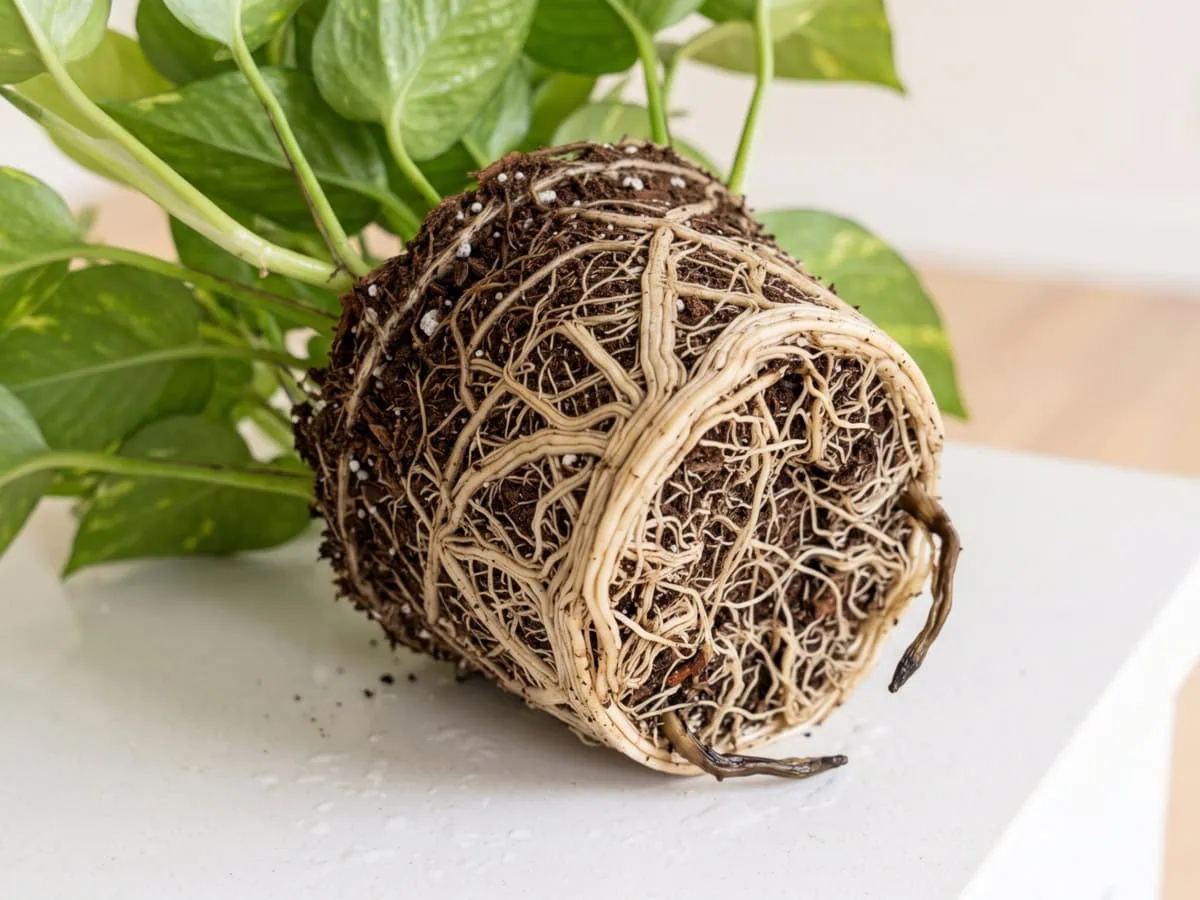
Rebuilding it around the airy mix that drains before roots suffocate is what stops the second round.
Frequently asked questions about Pothos root rot
The questions below are the ones that come up most often about this condition.
Can a pothos recover from root rot?
Yes, a pothos recovers when roughly half its root mass is still firm at the trim. Below that line, cuttings from healthy stem tissue are the safer route. The plant survives either way.
Recovery is not automatic. It follows removing every soft root, replacing the mix, and holding water back until the top one to two inches of mix dry out.
How to bring a dying pothos back to life?
A dying pothos comes back through one sequence: unpot, rinse, and cut every soft root into firm pale tissue. Repot into fresh mix in a pot sized to what survived. Sterilize the blade between cuts.
Reduce the foliage in proportion to the root loss. The surviving roots cannot feed a canopy that was built for a much bigger root system.
Can a plant recover from root rot by itself?
No. Root rot does not resolve on its own, because the soil-borne organisms keep working for as long as the mix stays wet and airless. Collapsed root tissue does not regenerate either.
Stopping the water slows the spread. It does not remove the damaged tissue or the contaminated mix, and both have to physically leave the pot before anything improves.
What does root rot on a pothos look like?
Rotted pothos roots run brown to black and soft, with the outer layer sloughing off the strand beneath at a pinch. Sound roots are firm and pale, white to tan, and carry numerous fine feeder roots.
Above the mix, the vine droops while the surface stays dark and damp days after watering. The pot itself smells off when you lift it.
How long does it take a plant to recover from root rot?
The first new leaf appears roughly four to eight weeks after the rescue repot goes in. A heavily trimmed plant runs longer, sometimes into months, and the new leaf is what tells you the roots are working again.
A short droop in the first days after repotting is normal. Continued softening at the stem base is not, and it points past the roots.
Can you fix root rot without repotting?
No, not once the roots have collapsed, because the old mix holds the organisms and the water that feed them. The mix has to leave the pot.
One narrow exception exists. If only a few root tips are soft and everything else is firm, drying the mix out hard can be enough on its own, and no unpotting is required.
Can you stop root rot once it starts?
Yes. Removing every soft root, replacing the mix and letting the pot dry down stops the spread, because the organisms need free water in the pore space to move.
Take the water away and they stall. What you cannot do is reverse tissue that has already gone soft, so the earlier the check happens, the more root there is left to keep.
Lesson locked. Take the root check first.
The whole rescue reduces to one habit: read the pot, then trust the roots. Nothing here needs a bottle. Sanitation, a right-sized pot and patience beat any product on the shelf.
Once new leaves are running, ask how often this vine wants water. A rhythm, not a calendar.
Knowing how to save a Pothos from root rot comes down to one sight: a pale new root tip threading through dark bark against the pot wall. May the next root you pinch stay firm all the way through, its skin gripping the core, and may your pothos never sit in a soggy pot again.
Tap the button below to get more plant fixes in your Google Search results