🚨 Emergency 30-Second Answer: yellow Pothos leaves
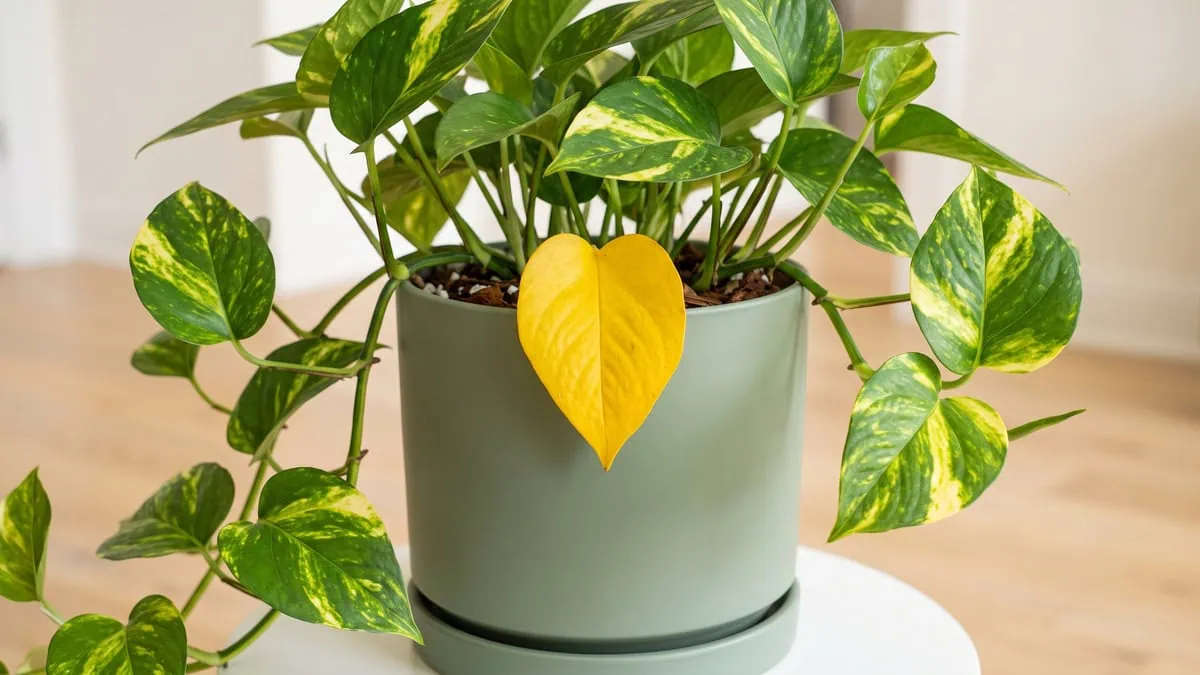
A flat yellow blade on Epipremnum aureum, a member of the Araceae family, reports a root-oxygen shortfall. The mix beneath it is still wet below 1-2 inches, not short of feed. The answer to why is my Pothos turning yellow starts in the pot, not on the leaf.
Push a finger down two knuckles and lift the pot. Wet mix plus a heavy pot means overwatering. Then read the roots: firm and white is fine, brown and mushy is not. One or two low leaves going yellow is normal aging, not a fault.
- First move: stop watering, then lift the pot and judge weight
- Root check: firm and white passes; brown, soft and sliding fails
- Timing lag: fresh yellow can surface a week after the fault
- Light floor: below 150 FC new leaves shrink and color fades
- Salt sign: white crust on the pot rim means flush thoroughly
The lowest leaf on my Pothos went the flat, even yellow of an old book page, while the leaf directly above it stayed glossy and firm under a thumb. That contrast is the whole story.
Conventional yellow-leaf advice nearly lost me that plant: feed it, mist it, move it somewhere brighter. The real fix was underneath. Nothing on this vine holds a reserve to spend while the roots are underwater.
So a mix that stays saturated shuts oxygen out of the root zone, and waterlogged soils damage roots well before chlorophyll leaves the blade and photosynthesis stalls. Put the watering can down, and mean it.
What the substrate reads, where the yellow sits, and what the roots feel like: read those three and the cause has nowhere left to hide. The table below gives you the numbers before any of that. If your plant is steady rather than failing, step back to the complete indoor care routine for this trailing aroid.
Take a breath — none of this is past fixing. Every number worth checking before you touch the plant is in the block directly under this line.
Why is my Pothos turning yellow — the fast read
| What to check | Recommended care |
|---|---|
| Most likely cause of a yellow blade | Overwatering into a wet, airless mix |
| Substrate state that permits re-watering | Top 1-2 inches dry to the touch |
| Senescence pattern that is normal | One or two lowest leaves, new growth continuing |
| Does a fully yellow blade turn green again? | No – that blade is spent |
| Remove the leaf, or leave it on? | Fully yellow, cut it; partly green, keep it |
| Feed a yellowing specimen right now? | No – check moisture and roots first |
| Comfortable indoor temperature band | 70-85F days, 60-70F nights |
Tap the button below to get more plant fixes in your Google Search results

Table of Contents
Stop watering and read the substrate before anything else
Hold the fertilizer and hold the watering can. Every reflex this symptom triggers — a feed, a spray, a shift to a brighter sill — leaves the wet mix sitting exactly where it is, and the mix is the thing that is failing. Nothing goes into this pot until the top 1-2 inches read dry.
The order below is substrate, then the plant above it, then the roots underneath.
The 1-2 inch dry-down check and a pot-weight cross-check
Two knuckles of finger into the mix, then judge what comes out. Dry that far means water; damp means wait. A finger only reads the top, though, so cross-check by weight — lift the pot when you know it is soaked, then lift it again three days on (the difference is unmistakable once you have felt it twice).
A long wooden dowel pushed to the bottom does the same job in a deep pot: damp mix clings to it and darkens the wood. That reading (not a calendar) decides how long this vine should go between drinks.
What an overwatered specimen looks like above the soil
An overwatered Pothos shows a cluster of signals at once, not one:
- Lower leaves going a uniform, flat yellow while new growth stays green
- Leaves dropping while the mix is still visibly damp
- Limp, soft blades on a pot that feels heavy in the hand
- Delicate fungus gnats about an eighth of an inch long around the pot
- White fuzz spreading across the soil surface
Gnat larvae sit in the top 2-3 inches (which is why drying that layer out removes them), so their presence is a moisture reading in itself.
Root color and firmness, the deciding check
Slide the plant out of its pot and look. Healthy roots are firm and white, with numerous fine feeder roots branching off them. Failing roots are brown to black and soft, and the outer sheath slides off the core between finger and thumb — that sliding sensation is the check, more than the color is.
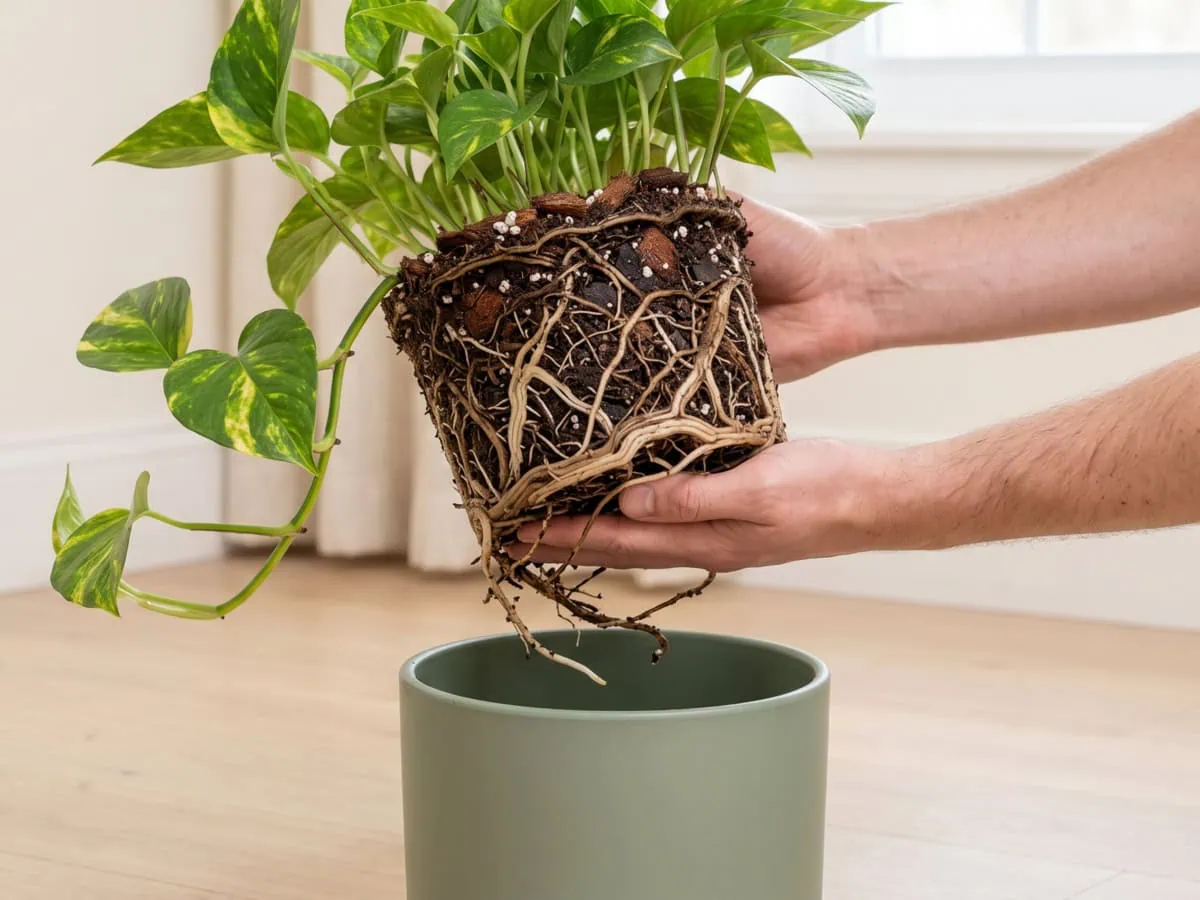
A bad odor confirms it. Across the pots I have opened, that slipping sheath shows up before any smell does. If most of what you pull out is firm and pale, the plant is recoverable on drainage alone; if it is not, follow the rescue sequence for roots that have already gone soft.
Tap the button below to get more plant fixes in your Google Search results

Sort the cause by pattern, position, and rate
Yellow reads three ways:
- Which leaves went
- Where they sit on the vine
- How fast they turned
The search phrase “why are several pothos leaves turning yellow at once” is a rate question, and rate settles fastest. The three sections below take those in turn.
Wet-soil yellow versus dry-soil yellow
Growers ask “are yellow pothos leaves overwatering or underwatering” because both ends produce yellow. The mix answers it (the leaf on its own cannot).
One table separates the two readings.
| Cue | Too wet | Too dry |
|---|---|---|
| Mix at 2 inches | Still damp, clings to a probe | Crumbles, pulls from the pot wall |
| Pot in the hand | Heavy for its size | Noticeably light |
| Blade feel | Limp and soft | Papery and thin |
| Roots | Brown, soft, sheath sliding | Firm and pale, no sliding sheath |
Verdict: Choose the wet branch when the pot is heavy and the blades are limp, because saturated mix is this plant’s most common failure.
One or two low leaves versus several at once
The question “is it normal for older pothos leaves to turn yellow” carries a yes, with two conditions (both have to hold). The yellowing leaves must be the oldest and lowest, and the vine tip must still be pushing new growth.
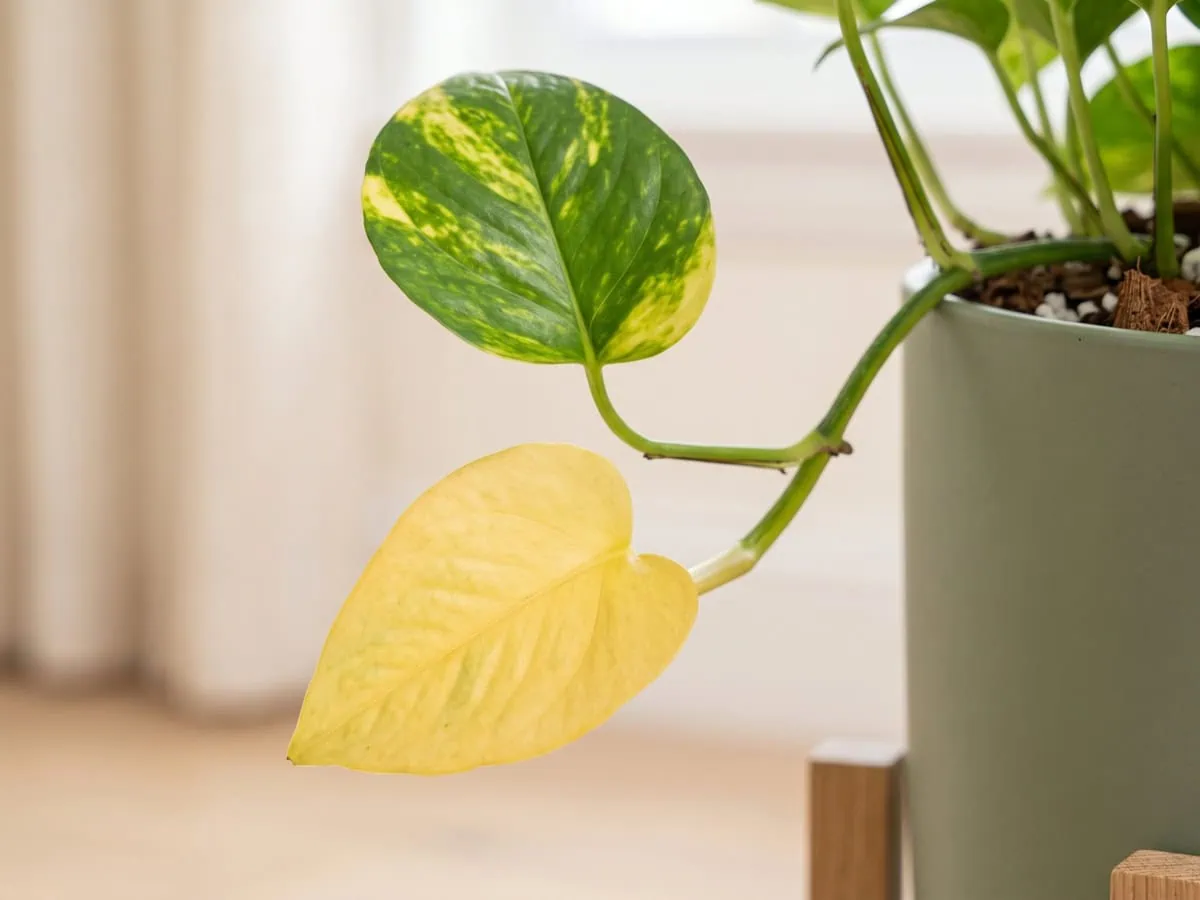
A leaf or two at a time on a plant that is otherwise growing is ordinary aging, or senescence, and the leaf goes papery-thin between the fingers before it drops.
Several at once is not. That change of rate is the signal. Straight back to the pot.
Light, temperature, and mineral patterns on the blade
I have moved a plant two feet and watched the next leaf come in a size larger. Under about 150 FC new leaves come in small and pale, and a variegated cultivar loses its cream; that is a placement problem, and the light level this vine actually needs indoors settles it.
Cold is the other edge: hold the room at 70-85F by day and 60-70F at night, and keep the pot off a cold pane (glass runs colder than the room), because chilling yellows leaves well above freezing.
A yellow blade with its veins still green is the mineral pattern, known as chlorosis. According to Wisconsin Horticulture, chlorosis sets in when soil chemistry locks iron and manganese away from the plant.
A plain, even pale-green fade across the whole blade points at nitrogen instead.
Common mistakes that turn one yellow leaf into ten
Most yellow leaves get worse because of what the owner reaches for next — a bottle, a spray, the shears — rather than because of the fault that started it. I have made all three. Three reflexes below do the damage.
Do not reach for fertilizer first
The search “do pothos leaves turn yellow from too much fertilizer” has a yes behind it. Excess salt burns tips and margins, and a white to gray crust that grits under the thumbnail on the soil surface or pot rim is the sign you can see. That is the tell.
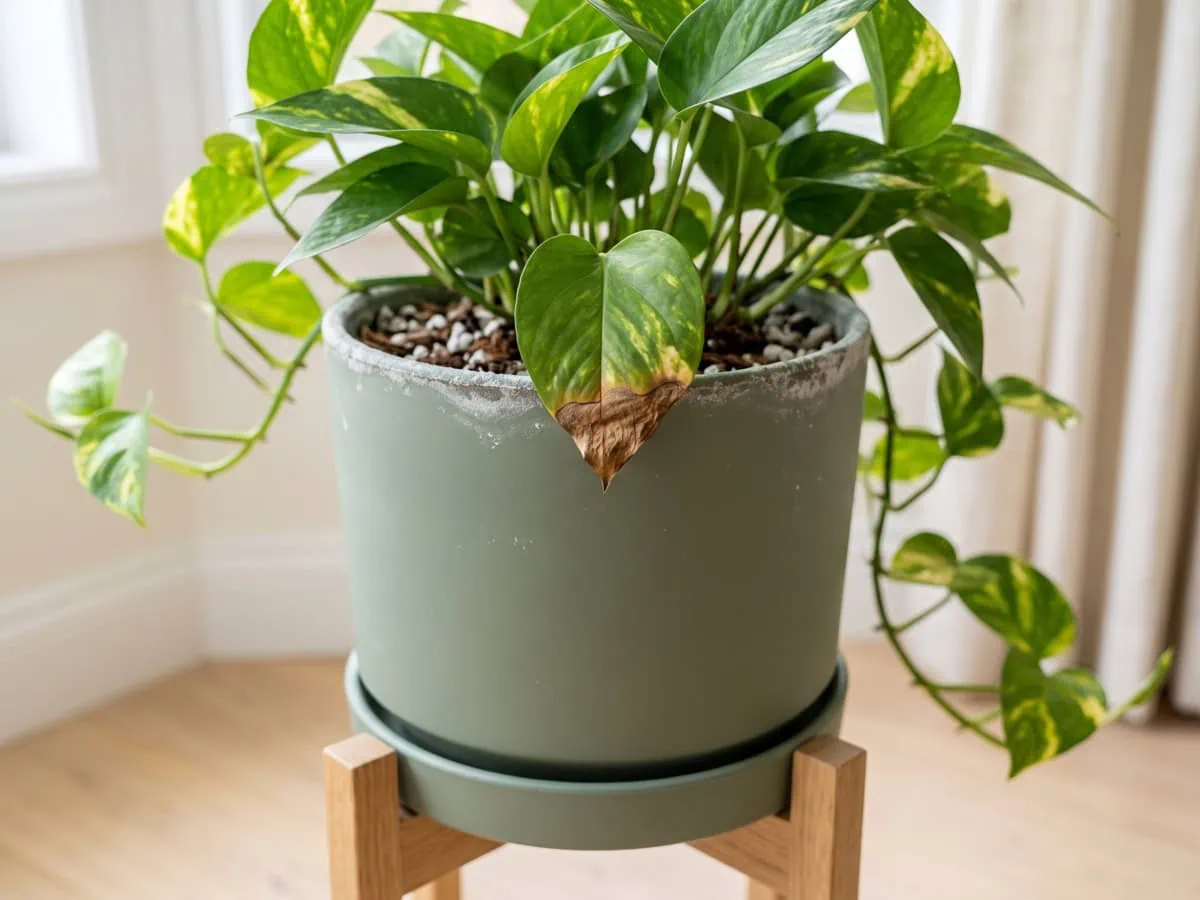
So confirm moisture and root condition before any feeding decision (in that order). Damaged roots cannot take up what you add, and the extra salt lands on tissue that is already struggling. When the plant is sound again, feed a balanced 20-20-20 or 10-10-10 at half strength, no more than every two weeks while it is actively growing.
Misting does not fix a yellow leaf
Misting raises humidity for minutes, not hours — the water evaporates and the reading returns to where it was. Not even close to the root zone, and nothing at all for a blade that has already gone yellow.
Grouping plants moves the number. A spray bottle does not.
Dry air is real, but it is a tip-and-edge factor here (pothos prefers 50-70% relative humidity and tolerates far less). If your marks are crisp brown edges rather than whole-blade yellow, read brown spotting and crisp margins on the blade instead.
Cut a fully yellow leaf, keep a partly green one
The answer to “should I cut off yellow pothos leaves” splits on how much green is left. A blade that has gone fully yellow will not come back (nothing you add restores that tissue).
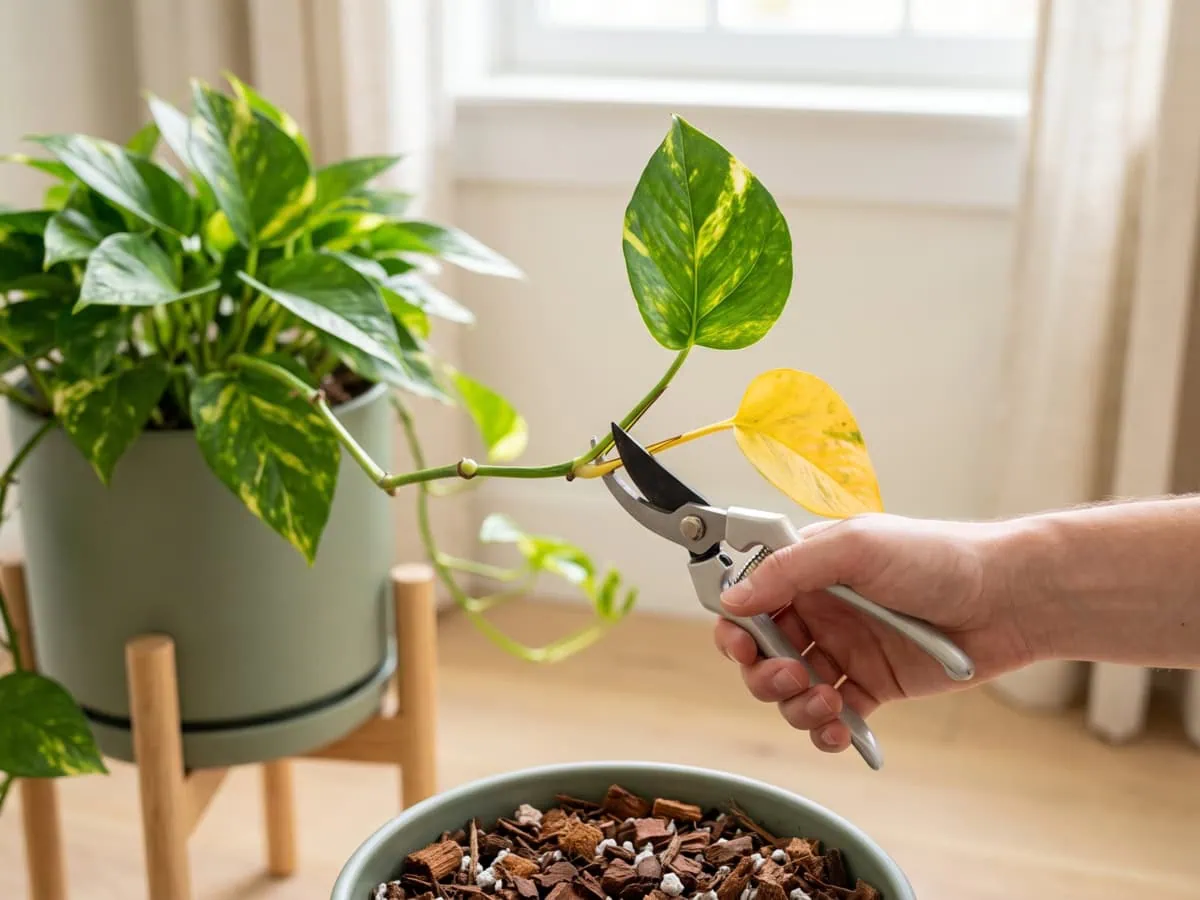
Remove it. A blade still holding green is still paying its way, so leave it while you fix the cause.
- Wipe the shear blades with alcohol before the first cut.
- Cut the leaf stalk close to the vine, missing the node beside it.
- Take no more than a third of the plant in one session.
- Leave healthy vine alone unless you want it fuller.
Frequently asked questions about yellow leaves
What does an overwatered pothos look like?
Wet-soil yellowing shows on the lowest and innermost leaves first, while the surface of the mix still reads damp.
Blades go limp rather than crisp, the pot feels heavy for its size, and leaves drop while the medium is visibly wet. Fungus gnats and white surface fuzz often appear with it. Underneath, the roots run brown and soft instead of firm and white.
Will yellow pothos leaves turn green again?
No. A blade that has gone fully yellow will not turn green again, because that tissue is already spent.
Cut it off at the leaf stalk with clean shears. A leaf still holding green is a different case: it still pays its way, so leave it on the vine while you correct what caused it (usually the pot, not the plant).
How often should a pothos be watered?
Water on the state of the mix, not on a calendar: the top 1-2 inches must read dry.
Light level, room warmth and pot size shift that interval constantly, so one plant can want water twice as often in a bright room as in a dim corner. The frequency schedule itself belongs to the dedicated watering guide, which sets the cadence room by room.
How do you revive overwatered pothos?
Recovery on this plant is judged at the vine tip, never on the blades already lost.
Expect a lag first: leaves that had already committed will finish going yellow and drop for a week or more after the fault is corrected, and that tail is not the correction failing. Meanwhile nothing is added — no feed, no fresh mix, no repot — while the roots are still under water. The proof is a new leaf unfurling at the growing tip, because no yellow blade anywhere on the vine will green up to tell you sooner.
Is it better to overwater pothos or underwater?
Underwatering is the safer error, because a dry Pothos usually recovers in full after one thorough soak.
A saturated one loses root tissue outright to rot, and this vine carries no water reserve in a tuber or a swollen stem. When the reading is ambiguous, wait one more day and check again (a dry day takes nothing from this plant).
How to bring a golden pothos back to life?
Revival starts in the pot: stop watering, let the top 1-2 inches dry, then read the roots.
Take off only the blades that have gone fully yellow, hold the fertilizer until the roots are firm again, and move the plant into brighter indirect light. Recovery shows up as new growth at the vine tip, never as color returning to an old leaf.
Skip the yellow-leaf myths and read the pot instead
Yellow is a reading, and a reading can be acted on. Not guesswork. The blade tells you which leaf gave up; the pot tells you why, and on this vine the pot is right far more often than the fertilizer bottle is.
And once the pot behaves, the next question is the one worth walking into: how long should this vine go between drinks, in your room, in your light? That interval is the whole subject of the watering guide.
Build the habit that answers why is my Pothos turning yellow, and the whole check takes ten seconds (no meter needed): a fingertip that comes out of the mix clean and dusty rather than cool and coated. One yellow leaf on a light pot is age. One yellow leaf on a heavy pot is a question you have already answered — and the answer was never in the bottle.
Tap the button below to get more plant fixes in your Google Search results