🎯 Quick Answer: read the soil, not the calendar
How often to water a ZZ plant decelerates to roughly every 7-14 days: Zamioculcas zamiifolia (family Araceae) banks weeks of water underground. Water only when the mix has dried down toward the pot’s bottom — not on a fixed day. Overwatering, not neglect, rots it.
- Err toward under-watering: it shrugs off drought but rots in soggy soil
- Weigh the pot: a bone-dry ZZ lifts startlingly light in the hand
- Skip the moisture meter: its short probe reads only the dry top inch
- Empty the saucer: after every soak, never let it sit in runoff
- When bone-dry, soak in batches: the mix absorbs it instead of channeling through
Real talk: I turned more than one Zamioculcas zamiifolia into mush, each one softened on a tidy weekly schedule — textbook overwatering while the pot still sat brick-heavy with the last watering. The tell was always weight. Never the leaves.
The watering schedule is the visible problem. The actual problem is that this plant stores its own reserve — a woody, potato-like rhizome plus swollen leaf-stalk bases that bank weeks of water underground (note to self: you are topping up a tank that is rarely empty).
Updating my earlier point, the number on the calendar was never the thing to fix; the soil was.
Get that one variable right and a ZZ plant forgives almost everything else – the premise behind how to keep a ZZ plant healthy.
Take a breath — if yours is drooping or going limp, the following table sorts the whole watering routine onto a single, calm screen.
How often to water a ZZ plant: quick-reference specs
| ZZ plant specs | Recommended care |
|---|---|
| Typical watering interval | Roughly every 7-14 days — a starting guide, not a calendar day |
| Water when | Dry deep down; check with a skewer to the pot’s bottom, not a finger |
| How to water | Soak from the top until water runs from the drainage holes |
| Pot ever left standing in runoff? | No |
| Safe gap without water | Very drought tolerant; a deep soak covers a 7-14 day absence |
| Cool, low-light months | Stretch the interval; growth slows, so water use drops |
| Occasional deep top-flush to clear salts? | Yes |
Tap the button below to get more plant fixes in your Google Search results

Table of Contents
How to tell when a ZZ plant needs water
Figuring out how to tell when a ZZ plant needs water is one question: is the mix dry deep down, not just on top? Per the University of Maryland Extension, how overwatering starves indoor plant roots of oxygen fells most houseplants, because standing water crowds out the air roots need.
The three checks below read that off the pot.
Why the mix has to dry out first
Because Zamioculcas zamiifolia banks water rather than sipping it. An underground rhizome and swollen leaf-stalk bases hold the reserve, and its weak crassulacean acid metabolism spends that store slowly.
Crassulacean acid metabolism (CAM): a water-thrifty style of photosynthesis that lets the plant take in air at night and lose far less moisture during the day.
Keep the soil wet and you invert all of it: poorly drained mix drives oxygen from the root zone, the fine roots suffocate, and rot climbs from the base. A mushy, collapsing plant belongs in rescuing a ZZ plant from root rot, not the watering can.
The half-depth skewer test
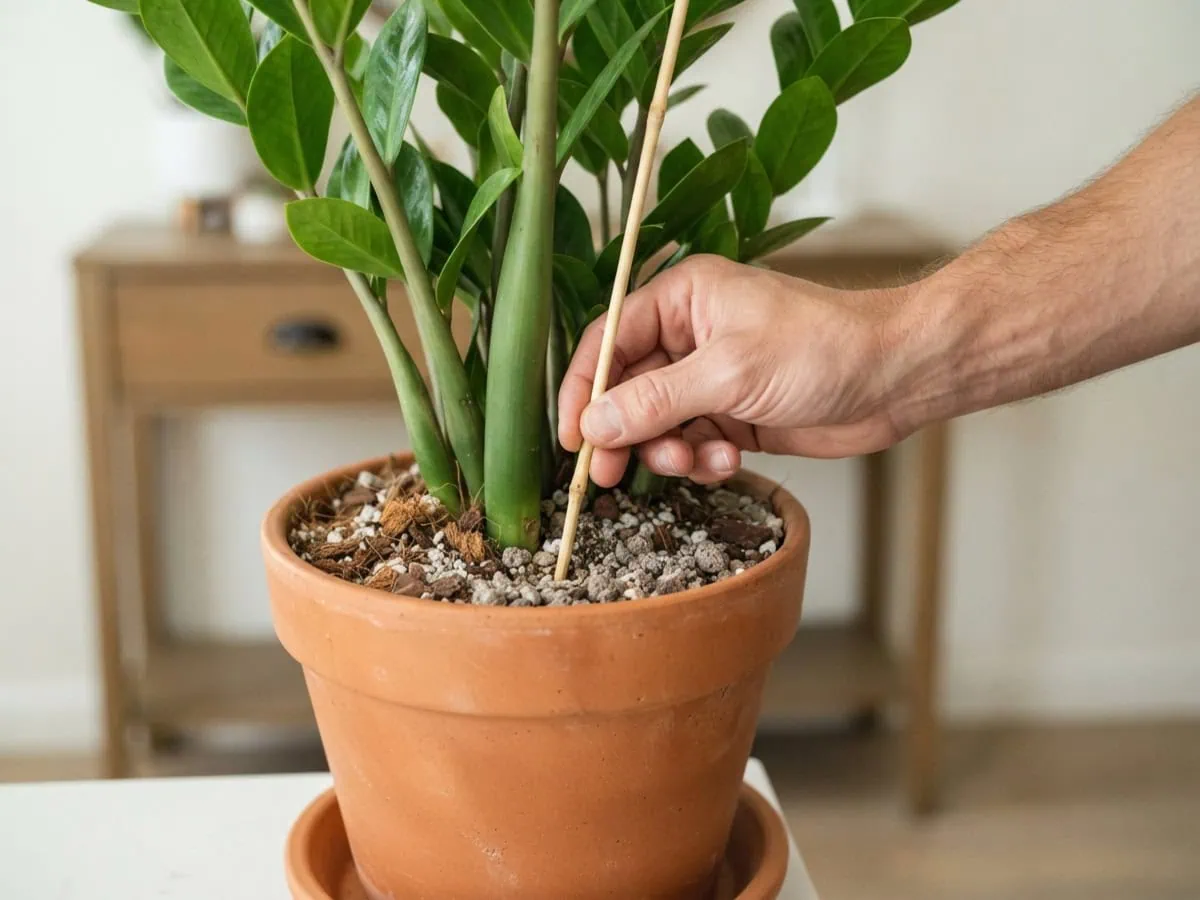
Skip the moisture meter. Push a bare bamboo skewer to at least half the pot’s depth, ideally the bottom and pull it back: powder-dry means water, damp grit clinging means wait.
A shallow finger fails, because the rhizomes sit low and hold moisture the top two inches never show — so the surest tell needs no tool at all: lift the pot, and a bone-dry ZZ is startlingly light while a freshly watered one feels packed with wet sand.
Reading the plant’s own watering feedback
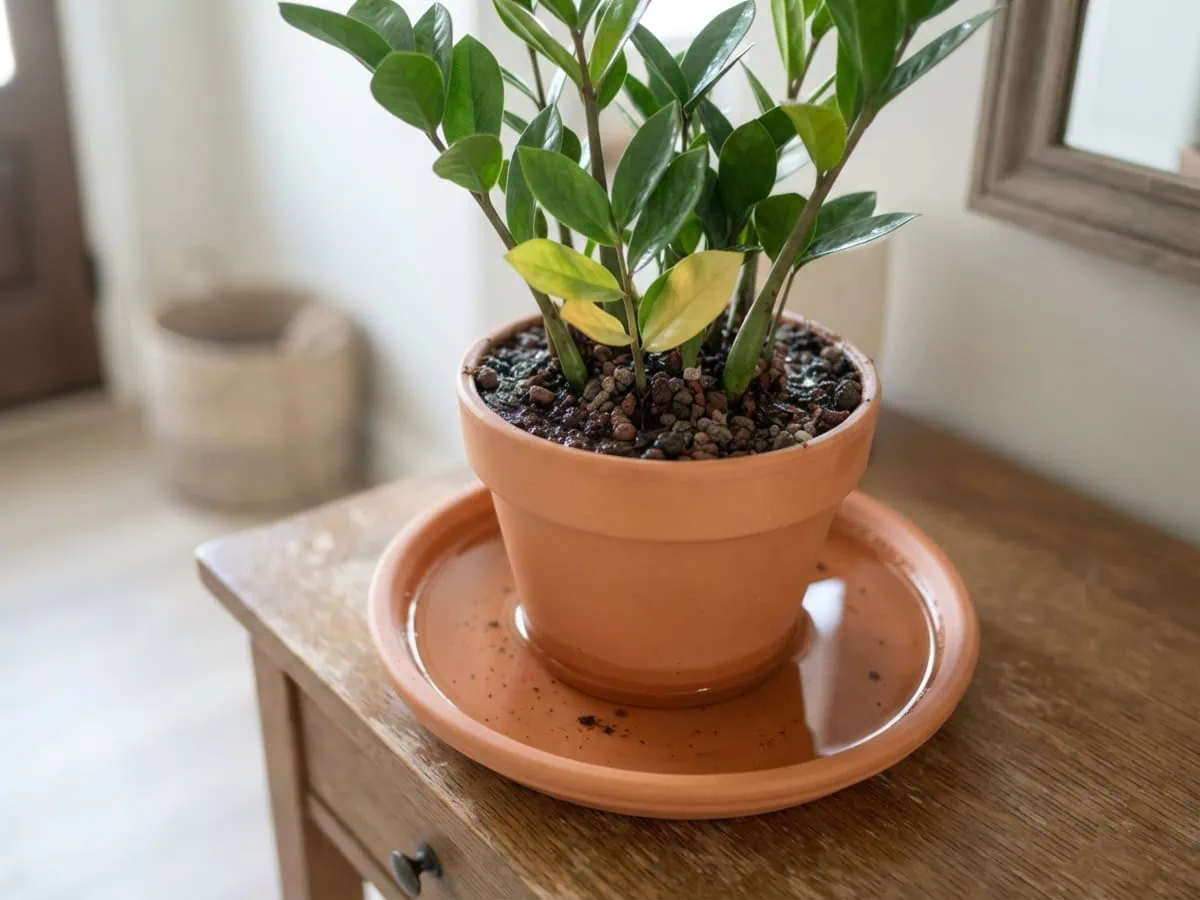
The clearest signs of an overwatered vs underwatered ZZ plant split on one axis: the pot’s weight. Yellowing lower leaves on a heavy, wet pot mean drowning roots; if it spreads fast, read why ZZ plant leaves turn yellow first.
That same droop hides two opposite causes. A firm droop on a pot that lifts light is honest thirst, gone a day after a soak — but rotted roots stop drinking, so an overwatered ZZ can wilt and mimic a parched one. If the stalks splay and topple outward instead, you have a drooping, floppy ZZ plant — a different, structural problem.
No skewer handy? Learn your pot’s dry weight by lifting it the instant a skewer reads powder-dry; water only when it feels near-weightless again.
Tap the button below to get more plant fixes in your Google Search results

The variables that shift your watering interval
A fixed interval is only a starting point, because a few conditions stretch or shrink it: light, warmth, pot size, and how fast the mix drains. A bright, warm room in a small terracotta pot can leave the soil bone-light within a week; a dim corner in a big plastic pot stays heavy for a month.
Get the mix wrong and none of the rest matters, which is why a fast-draining soil mix is the biggest lever of all. The two sections below sort the movable variables from the fixed ones.
Light and warmth set the pace
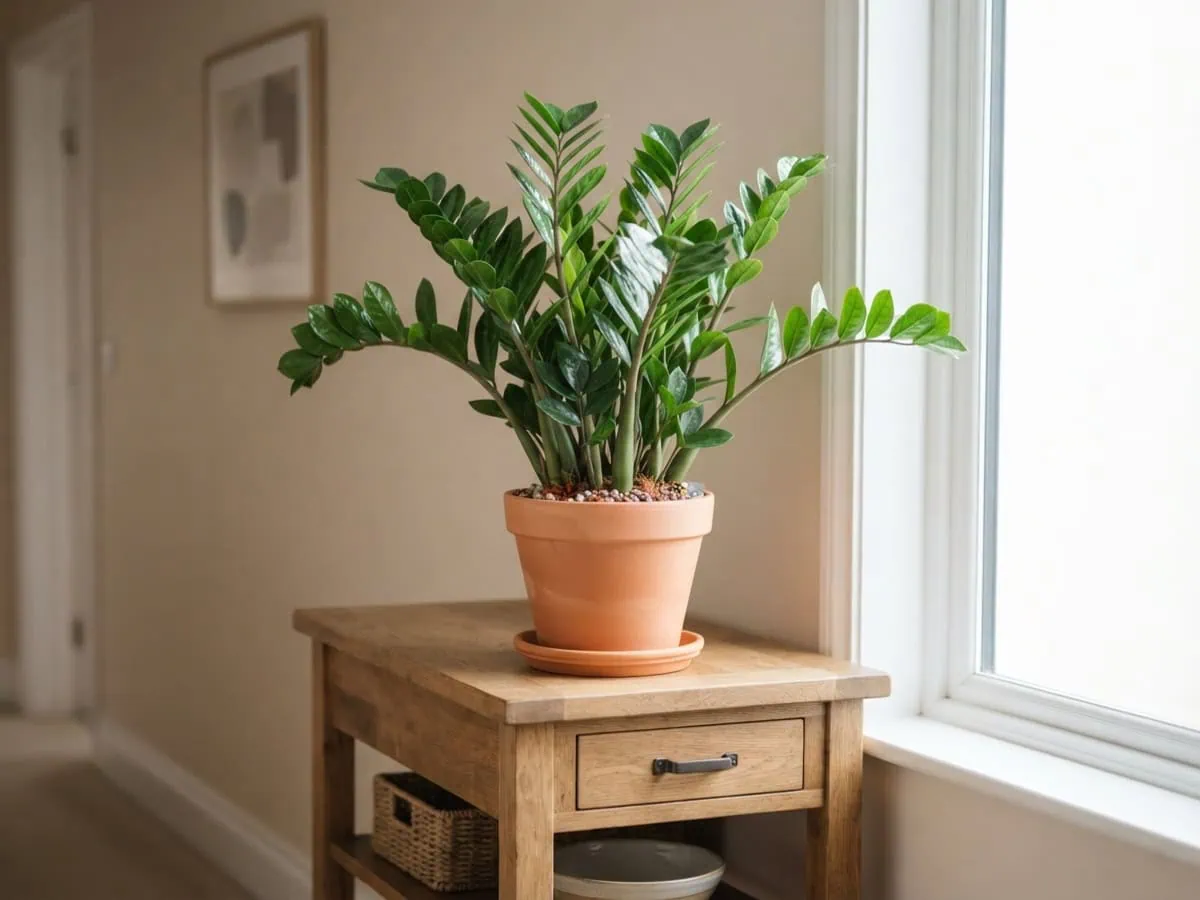
Light is the engine. In brighter, warmer conditions the plant grows and transpires faster, spends its reserve quicker, and needs water more often; in a dim, cool room the same soak lasts far longer.
I’m still figuring this out — how much of the swing is faster transpiration versus simply faster growth pulling on the stored water — because the research on this plant’s water economy is thin and the two are hard to separate at a windowsill.
The direction, though, is not in doubt. So take any move to a brighter spot as a cue to check the soil sooner, not a reason to hold the old schedule.
Winter and summer: follow the light, not the month
Here the calendar misleads most. ZZ plant watering in winter vs summer is really a light story: in low winter light the plant grows and drinks less, so most homes should stretch the interval, not shrink it — even with the heater drying the air.
That trips people up, because dry winter air feels like it should mean more watering. It does not, for this plant.
Low winter light slows growth more than dry heat pulls moisture out, so a ZZ in deep winter often needs no more water than it did at the height of summer. Read the skewer, and the seasons take care of themselves.
How to water a ZZ plant deeply — and how long it can wait
When the skewer reads dry, water like you mean it. Deep soaks with long dry gaps beat little sips, because a full soak wets the whole root ball, then lets it breathe as it dries. Below: the pour, the hands-off methods, and how long it can coast for.
Deep-water to runoff, then empty the saucer
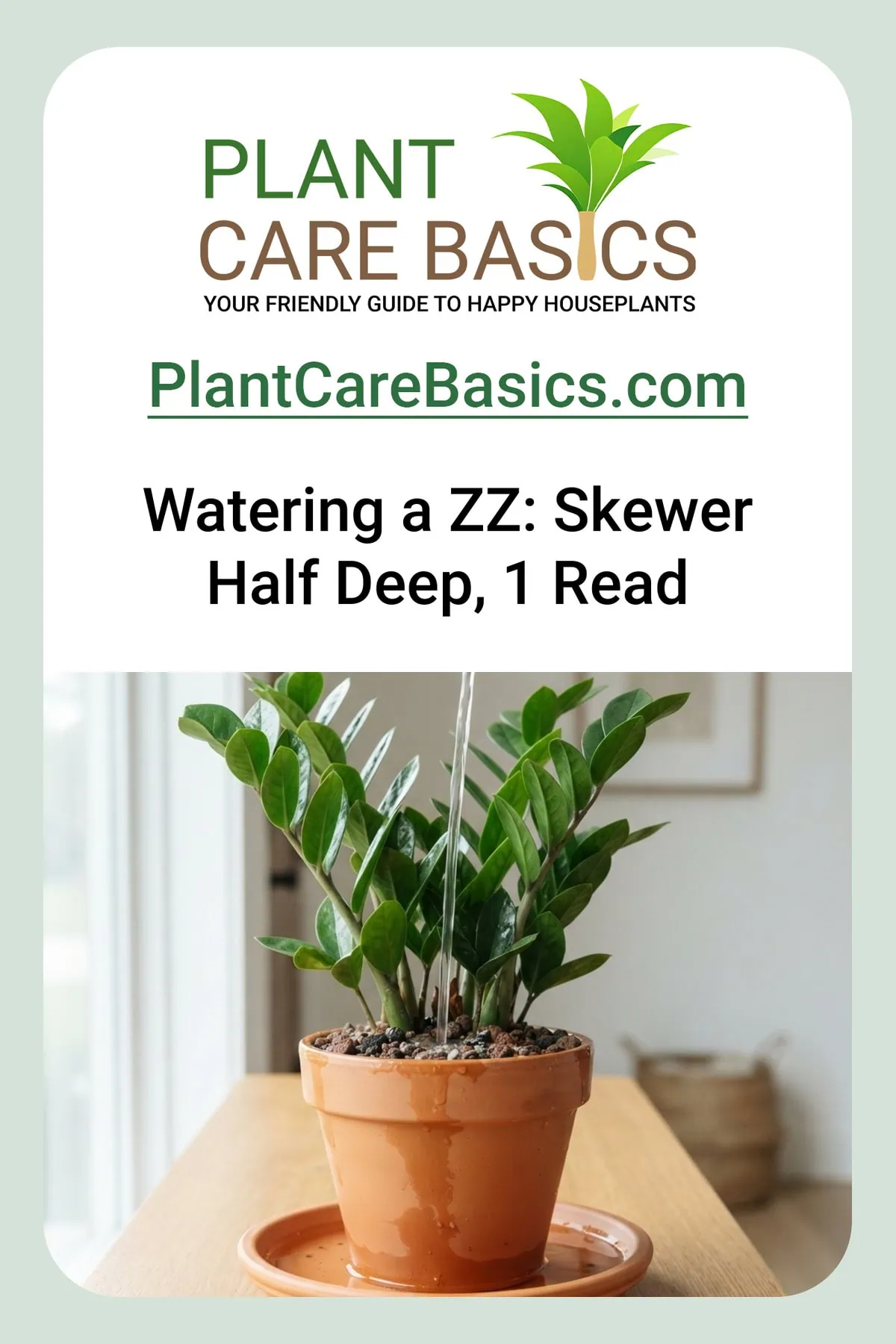
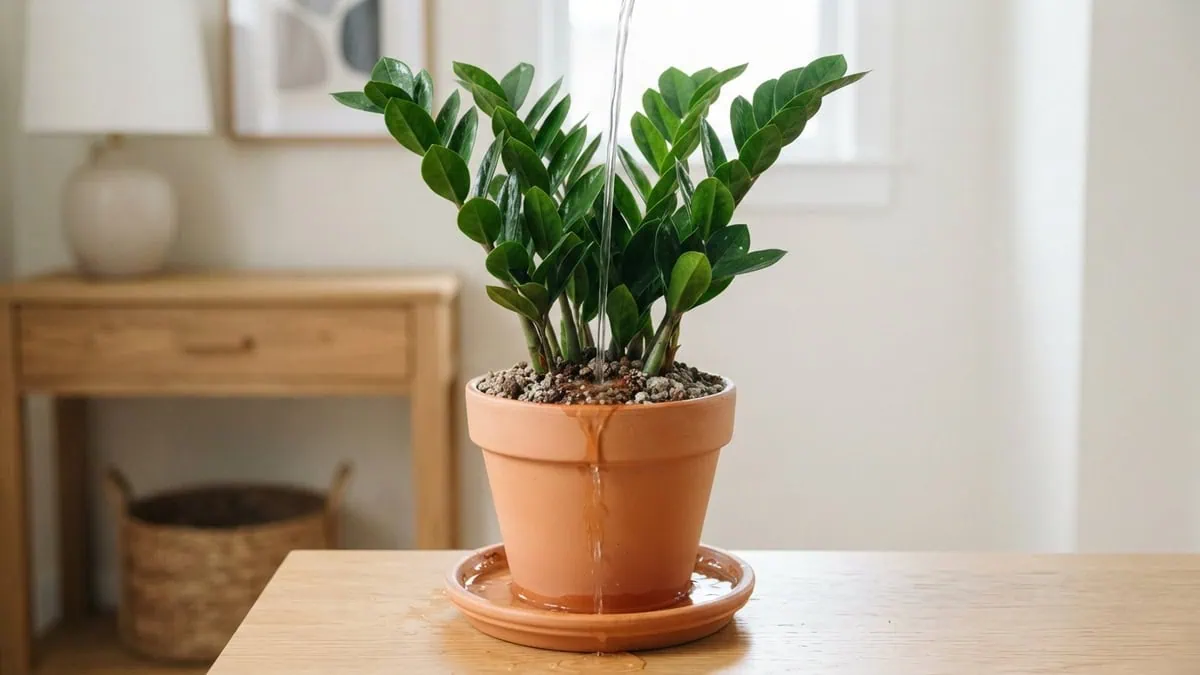
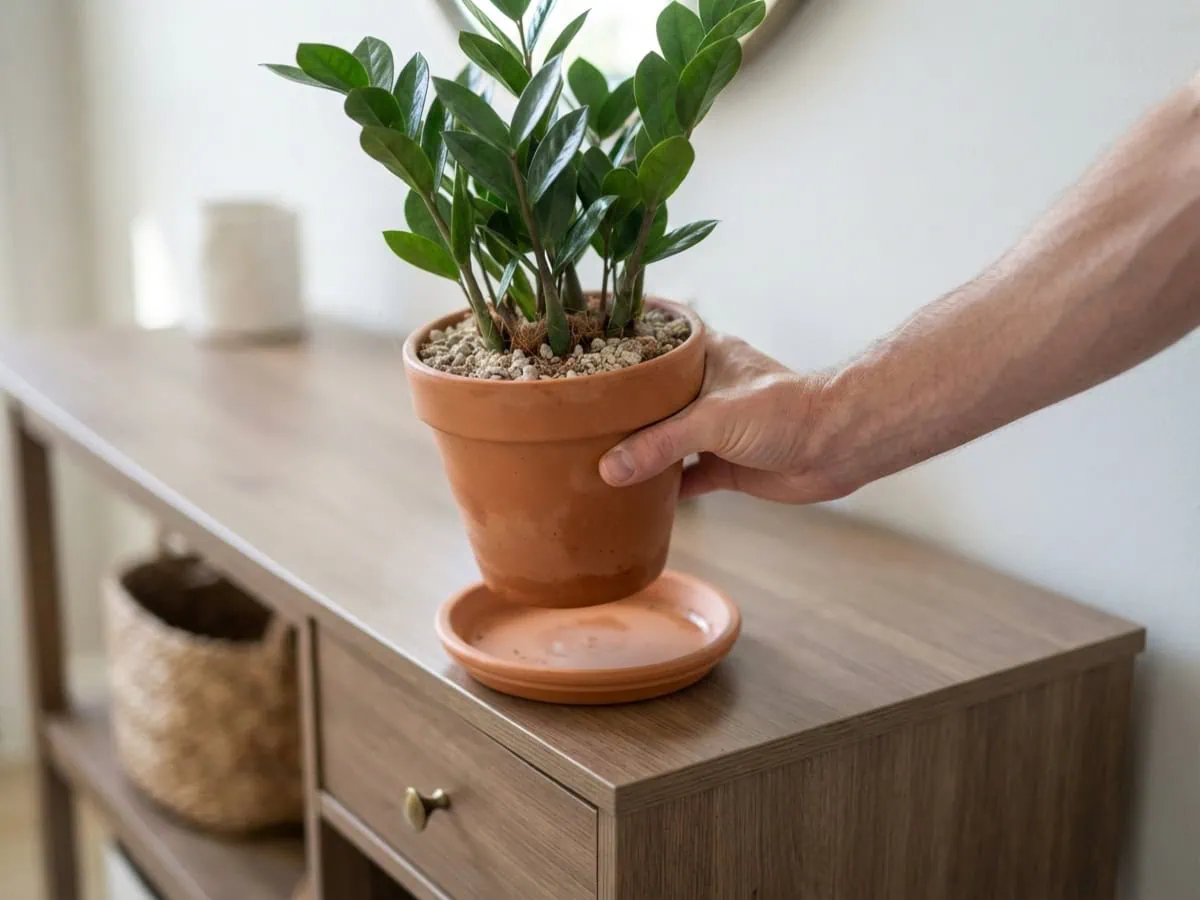
There is nothing fussy about how to properly deep water a ZZ plant: pour slowly from the top until water runs from the drainage holes, drain it, then tip out whatever pools in the saucer or cachepot (FYI — a pretty outer pot quietly fills with runoff, and the rhizomes wick it right back up).
Every couple of months, add a flush to rinse the salts tap water leaves behind. If the mix goes bone-dry, water in two or three batches so it soaks in rather than channeling straight out.
Never leave the pot standing in its own runoff. A ZZ sitting in a full saucer or a hole-less cachepot is the fastest route to the rot that kills more of these plants than anything else. Drain it, then dump the tray.
Bottom watering and self-watering pots
Both work, with one catch. A tray under the pot lets the mix wick moisture up, watering evenly and sparing the crown, but never flushes the salts, so alternate with a top-soak.
Self-watering pots suit a drought-tolerant plant only if you let the reservoir run fully dry between fills — a permanently wet base is the standing water the rhizome cannot survive.
How long a ZZ plant can go without water
That leaves the big one: how long can a ZZ plant go without water? Longer than almost any houseplant, though the honest answer is a range, not a number.
A deeply watered ZZ coasts through a 7-to-14-day absence, the pot still heavy on your return, because the rhizome banked the reserve. Pushed further, it sheds leaflets and lives off the swollen stalk bases until water returns — a survival state no source pins to a fixed number of days.
Common watering mistakes and myths
Truth is — most ZZ plants die from devotion, not neglect. The watering habits that kill them are the caring ones. Here are five worth unlearning.
The first is the calendar itself: watering every Sunday because it is Sunday ignores the only thing that matters, and a slow-draining pot can hold that Sunday water for a fortnight, stacking soak on soak until the starved roots suffocate.
But the summer overcorrection runs a close second — plenty of guides tell you to keep the soil moist through the warm months, which is exactly backwards for a plant that stores its own water and rots in constant wet, because warmth speeds its growth but the buried reserve still wants to run right down before the next drink.
The third is taking dry winter air as a reason to pour more; heaters make that tempting, and it is still wrong. The fourth is chasing a magic number, whether “two months untouched” or “every ten days,” since the real interval floats with light, warmth, and pot size.
And the last is the moisture meter you half-trust — a basic probe reads only the top inch and misses the deep zone where the rhizome actually sits and the water actually pools.
Myth: water a ZZ plant on a fixed weekly schedule and keep the soil moist through summer. Fact: a rigid calendar and constant moisture are the two fastest ways to rot the rhizome; the plant wants a deep soak followed by a full dry-down, whatever the day or the season.
None of these are careless errors; every one is a conscientious owner doing what feels right, on a plant that punishes precisely that instinct. A single lift of the pot, gauging whether it still feels heavy with last week’s water, tells you more than any date on a calendar.
Frequently asked questions about watering a ZZ plant
How do you know when a zz plant needs water?
You know a ZZ plant needs water when the mix is dry deep down, not just at the surface. Push a bamboo skewer to the bottom of the pot; clean and powder-dry means water, damp soil clinging means wait.
The pot’s weight confirms it — a ready-to-water ZZ feels startlingly light, a freshly watered one noticeably heavy. Skip the top-inch finger test, since the rhizomes hold moisture far below a fingertip’s reach.
How long can a zz plant go without water?
A healthy ZZ plant goes 7 to 14 days between waterings with no help, and far longer in a pinch. Because it banks water in an underground rhizome, a deep soak carries it through a two-week absence easily.
Pushed further, it survives by dropping leaflets and living off its reserve — a survival state, not a routine. The exact limit depends on light, warmth, and pot size, so no single number fits every home.
Is it better to bottom water ZZ plants?
Bottom watering ZZ plants works well and is gentle, but it is not clearly better than a deep top soak. Setting the pot in a tray wicks moisture up evenly without wetting the crown.
Its one drawback is that it never flushes out mineral salts, so alternate with a thorough top-watering. Let the mix dry fully first, and never leave the pot standing in water.
Do ZZ plants like self-watering pots?
ZZ plants tolerate self-watering pots better than most houseplants, thanks to their drought-adapted rhizomes, but they are not the ideal match.
A permanently wet reservoir keeps the base soggy, inviting the exact rot these plants are prone to. If you use one, let the reservoir run fully dry between refills. A plain pot with a drainage hole and a soak-then-dry rhythm is simpler.
Troubleshoot, assess, fix — the 10-second skewer test
Strip away the guesswork and watering this plant is simple. Troubleshoot the pot, not the plant. Lift it, and push a skewer to the bottom: powder-dry means pour, damp means wait.
Assess what you find, fix the one habit that matters — soak deeply, drain fully, then leave it alone until the mix dries through again — and the yellowing, the mush, and the flopping stalks mostly never start.
Once you stop asking how often to water a ZZ plant and start asking whether the soil is dry, you have already won. May your skewer come up powder-dry, your ZZ plant sit unbothered on a rhizome that banked its water weeks ago, and the calendar on your wall never once decide when you pour.
Tap the button below to get more plant fixes in your Google Search results