🎯 Quick Answer: what soil a ZZ plant needs
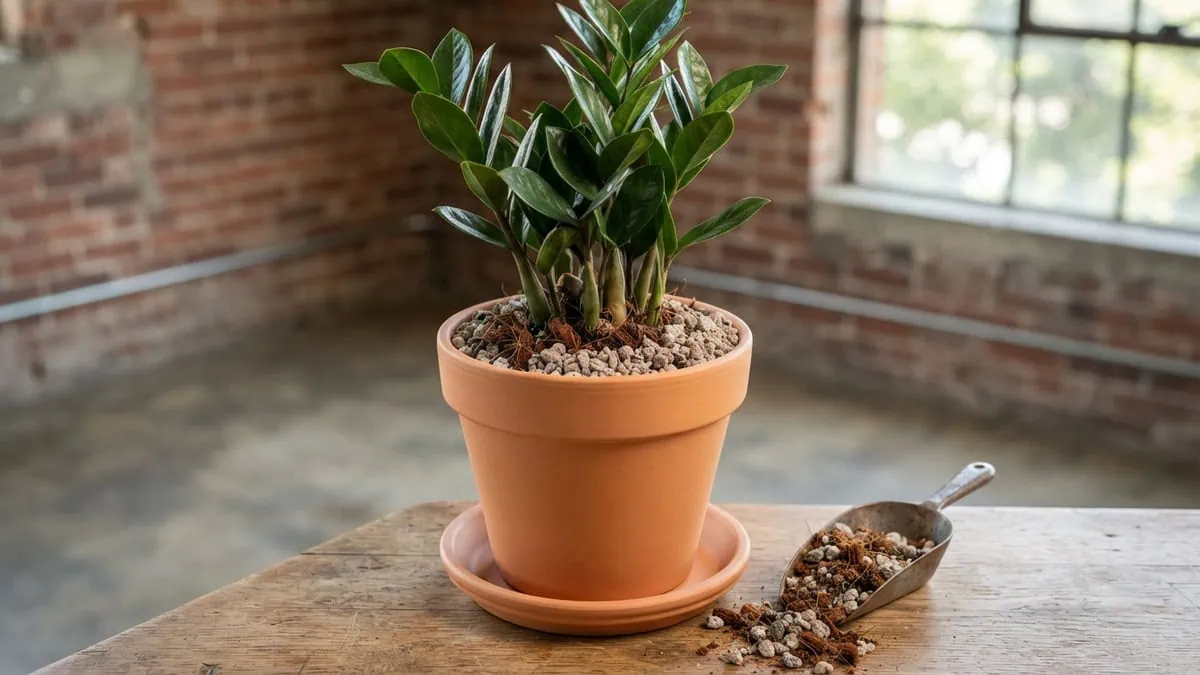
The best soil for a ZZ plant — Zamioculcas zamiifolia, family Araceae — depends on grit: roughly 2 parts coco coir to 1 part pumice. That grit keeps the rhizome breathing. Straight bagged potting soil packs down, stays wet, and rots the rhizome from the base.
- Grit fraction: keep at least a third of the mix inorganic by volume
- Drainage test: a fully soaked pot should run clear within five minutes
- Cactus mix: use it as a component, never as the whole pot
- Gravel myth: never layer pebbles in the pot bottom for drainage
- Organic matter: add only a small handful of compost, if any
The first stalks leaned before I understood why — thick, glossy spears tipping outward from the crown like a fan knocked sideways. I had repotted that ZZ plant a dozen times over a single year (and I say this confidently), always into the same dense, poor-draining bag of all-purpose soil, and every time the rhizome underneath went soft and dark instead of firm and pale.
I was treating root rot as a watering problem, but the real fix had nothing to do with that. It was the mix itself.
Strike that. It was one thing the mix provides or destroys — the aeration a woody, water-storing rhizome needs to breathe, versus a fine peat block that slumps into a saturated, airless wall the roots drown against.
Nail the substrate and the rest of the plant’s care suddenly forgives you — the watering, the light, the feeding, all of it laid out in the full indoor routine for this rhizome-storing aroid.
Quick aside: if your ZZ is already sulking in wet, packed soil, don’t panic — the following table lays out the exact mix, aerator, and pH to fix it.
What is the best soil for a ZZ plant: mix specs at a glance
| ZZ plant specs | Recommended soil |
|---|---|
| Mix base | Organic core of coco coir, cut heavily with coarse mineral grit |
| Signature aerator | Pumice; perlite is an interchangeable substitute |
| Soil pH | Near-neutral, roughly 6.0-7.0 |
| Drainage hole required? | Yes; the rhizome rots in a pot that cannot drain |
| Semi-hydro compatible? | No; a drought-storing rhizome fails in constant wet |
Tap the button below to get more plant fixes in your Google Search results

Table of Contents
What soil mix does a ZZ plant actually need?
A ZZ plant needs a fast-draining, gritty medium — an organic base cut heavily with coarse mineral aerator so water races through and air reaches the roots. Arizona State University reports it grows best in a fast-draining substrate of organic matter and pumice. A gritty, open mix is simply what this plant does best in.
The following sections give the ratio, the grit fraction, and where pH should land.
The base-plus-grit formula, by volume
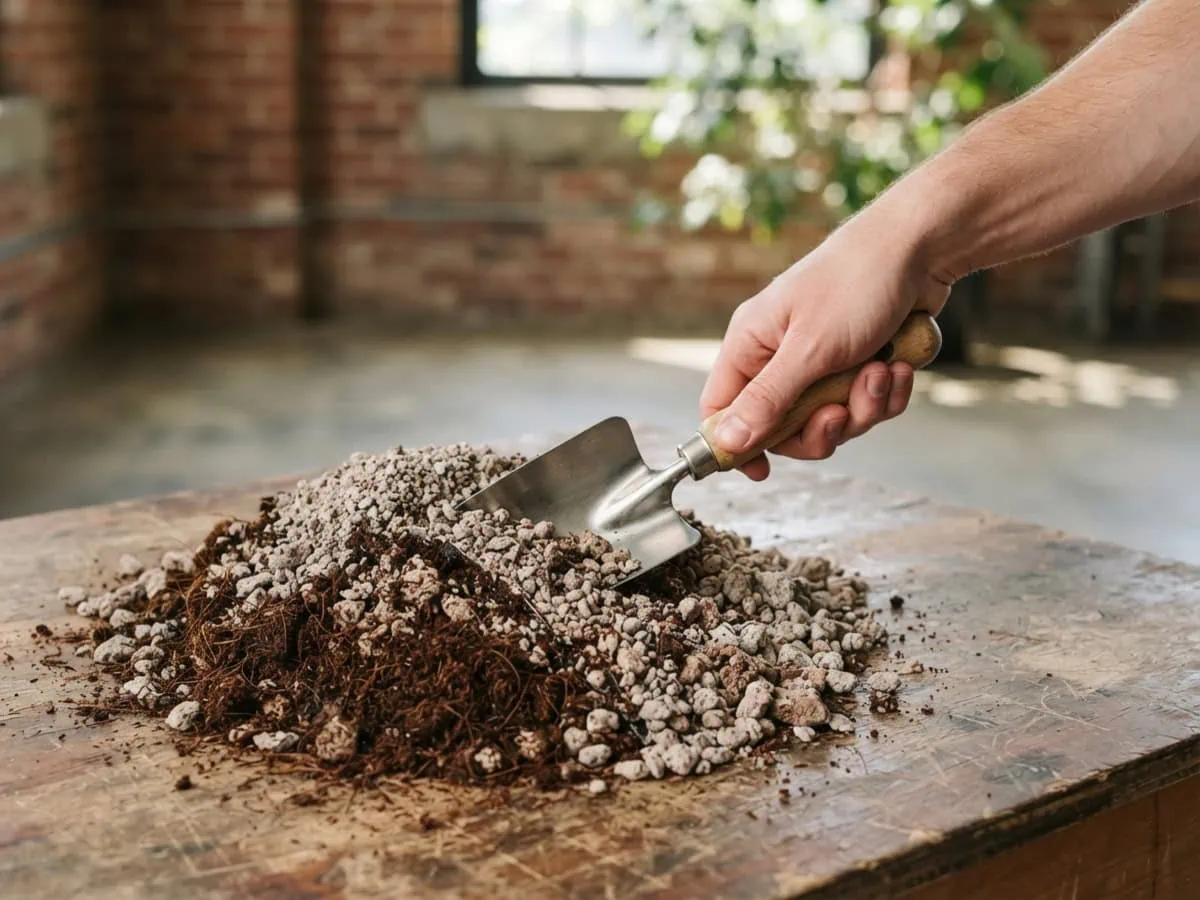
Build a fast-draining gritty mix of roughly 2 parts coco coir to 1 part pumice, top-dressed with a thin layer of coarse pumice grit. Grit, not fluff. That is the entire recipe: one moisture-holding base, one hard aerator, measured by volume rather than by weight or by brand name.
That also answers the “how much perlite to mix into ZZ plant soil” question — the same one-third grit fraction, and perlite substitutes for pumice one-for-one if that is what sits in your shed. New spears then push up straight and firm from an open mix, instead of tipping sideways as a packed base slowly softens beneath them.
Why at least a third of the mix stays inorganic
Aim to keep at least a third of the finished mix inorganic by volume. That figure is a practitioner benchmark rather than a laboratory measurement, and it is a useful floor: the mineral fraction holds the pore spaces open once the organic part settles and shrinks. A third is the floor.
Below a third grit a mix behaves like a sponge that never wrings out; at a third or more it drains like the seasonally dry ground where this rhizome storer evolved.
The pH band, and how much compost to add
ZZ plant soil should sit near-neutral, which any standard bagged base already delivers, so pH is genuinely the least of your worries here. Keep added compost modest — a single handful folded into a whole pot, if any — because a heavier organic load holds water longer and feeds the fungus gnats that breed in constantly damp soil.
If you do want the plant to earn back the grit, pay attention to how long to wait between drinks and let the mix dry down before you water again. Skip the compost entirely and nothing is lost. Grit does the heavy lifting.
Tap the button below to get more plant fixes in your Google Search results

Why dense soil rots the rhizome from the base up
Dense soil rots a ZZ plant from the base up because the woody rhizome that stores its water cannot survive sitting in it.
In a fine, packed mix the pore spaces collapse and stay flooded, the oxygen around the roots drops toward nothing, and the saturated tissue at the crown turns soft, dark, and sour — the root rot this plant dies from indoors.
Here is the cruel part. A rotted root can no longer draw water, so the canopy wilts and mimics thirst. The stalks lean and sink — and you reach for the watering can to finish the job.
Below, the mechanism first, then the tells, then a timed test anyone can run.
How fine particles collapse the air pockets
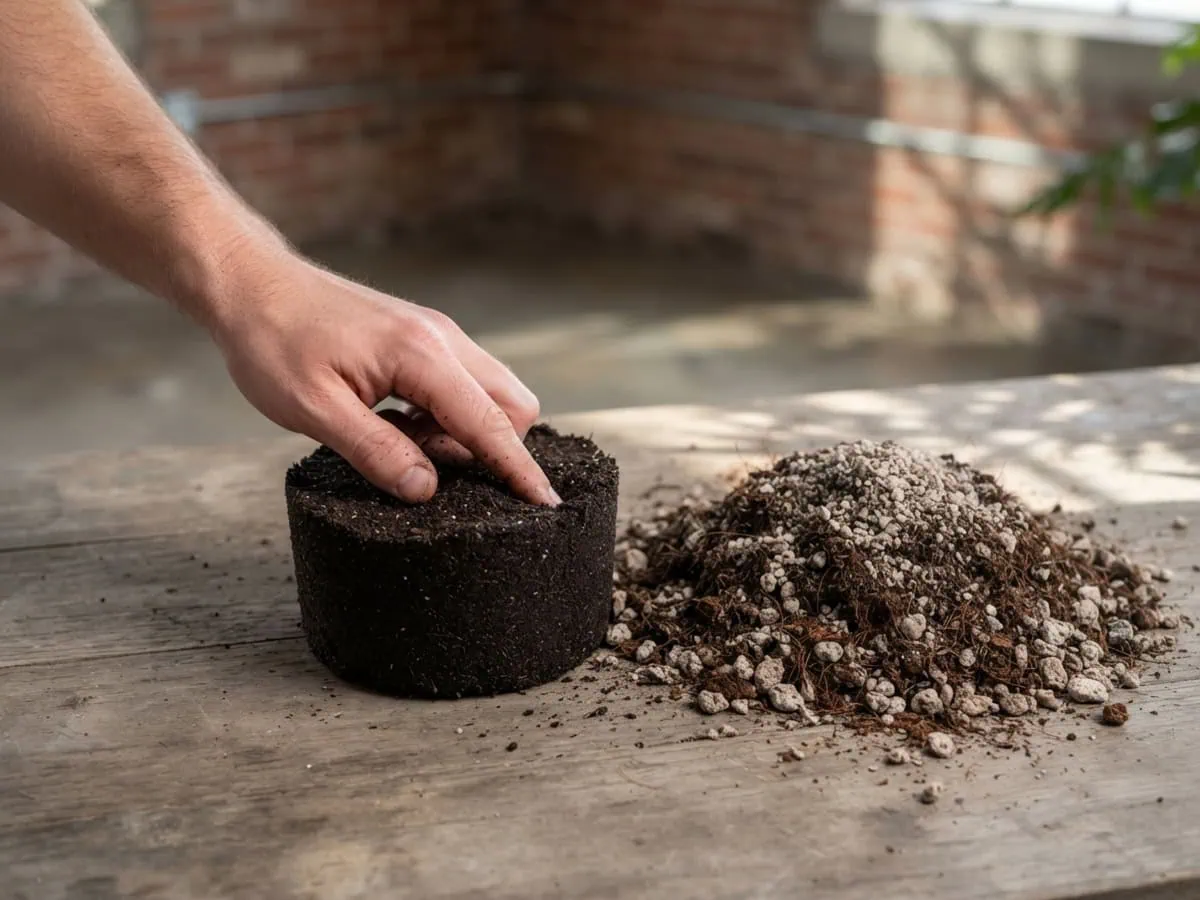
Fine peat and un-amended potting soil pack into tiny particles that squeeze out the soil air space a root needs and hold water by capillary action long after the surface looks dry. But add a third of coarse pumice and those particles can no longer nest.
The grit props open channels that stay full of air even when the mix is damp. I’m honestly not sure why this works — but it does: a third grit by volume keeps a pot draining for years. Water then leaves; air stays.
Signs your bagged mix is already too dense
That is really the “what makes potting soil too dense for a ZZ plant” question, and the tells are physical. A mix is too dense when it stays wet at depth for days, crusts or cracks on top as it dries, and shows no coarse particles when you rub it between your fingers.
Most all-purpose soils fail every one of those checks until you cut them with grit. If the rhizome has already gone soft, the mix is no longer the only problem — start with rescuing a rhizome that has already gone soft first.
The 5-minute pour-through test, and the gravel myth
Judge a mix with a timed pour-through. Soak a full pot and watch the bottom. Water should stream from the drainage holes within seconds and stop dripping within about five minutes.
If it still pools after thirty seconds, add more grit. This is where the “does a ZZ plant need a pot with drainage holes” question settles: yes, always, because a rhizome cannot outrun water it has no way to shed.
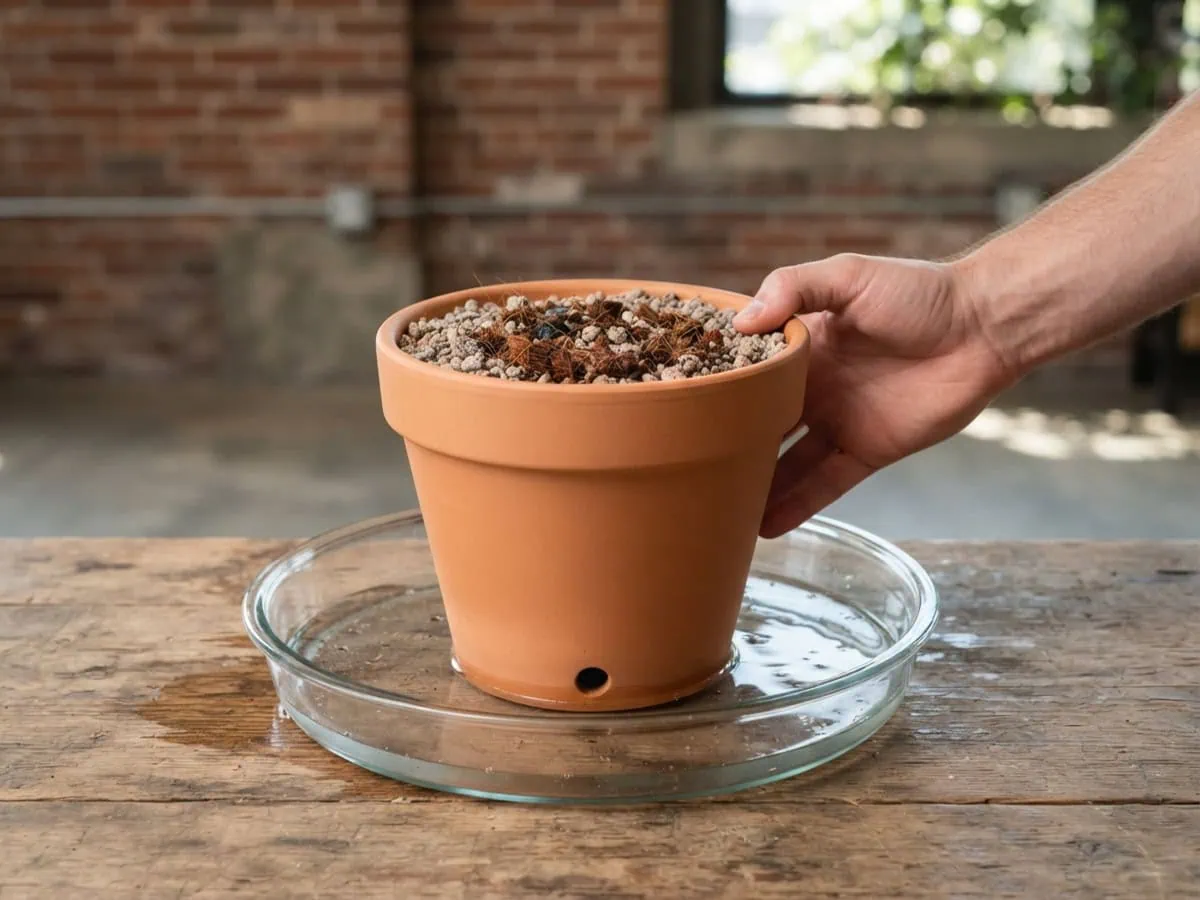
One popular repotting tip deserves a hard correction before you reach for a bag of pebbles, because it quietly recreates the exact wet zone you are trying to escape.
A common tip says to layer gravel or pebbles in the bottom of the pot “for drainage.” It does the opposite. The coarse layer creates a perched water table, where the fine soil above it stays saturated and sits the rhizome in the wet it was built to avoid. Skip the layer, use a gritty mix throughout, and let the drainage hole do its job.
Which bagged mixes work, and when to swap them?
Most bagged mixes work for a ZZ plant only after you cut them with grit; a couple get close on their own, but none is a drop-in answer straight off the shelf. So the real skill is knowing which bag to start from and what to add. Grit is the fix, always.
The following sections compare the common bases and the aerators side by side.
Cactus and succulent mix: component or whole pot?
The “can you use a cactus or succulent mix for a ZZ plant” question has a clean answer: yes, but as a component, not the whole pot (not joking). Used alone, a cactus bag drains so fast that a water-storing rhizome never gets the occasional deep soak it banks on between long dry spells.
Blend it roughly half-and-half with a coco-coir base, or simply use the cactus bag as the grit half of the base-plus-grit formula above. Either way you get quick drainage without robbing the plant of the slow drink it evolved to store underground.
All-purpose potting soil straight from the bag
The “is regular potting soil ok for a ZZ plant” question comes up constantly, and the honest answer is: only once you cut it heavily with grit. On its own, straight bagged potting soil is the most common way people rot this plant. It is built to hold water, not shed it.
So do not fight it with technique. If yours is already potted in dense soil and sulking, the fix is a new medium, not careful watering — here is how to go about moving the plant into a fresh pot without setting it back.
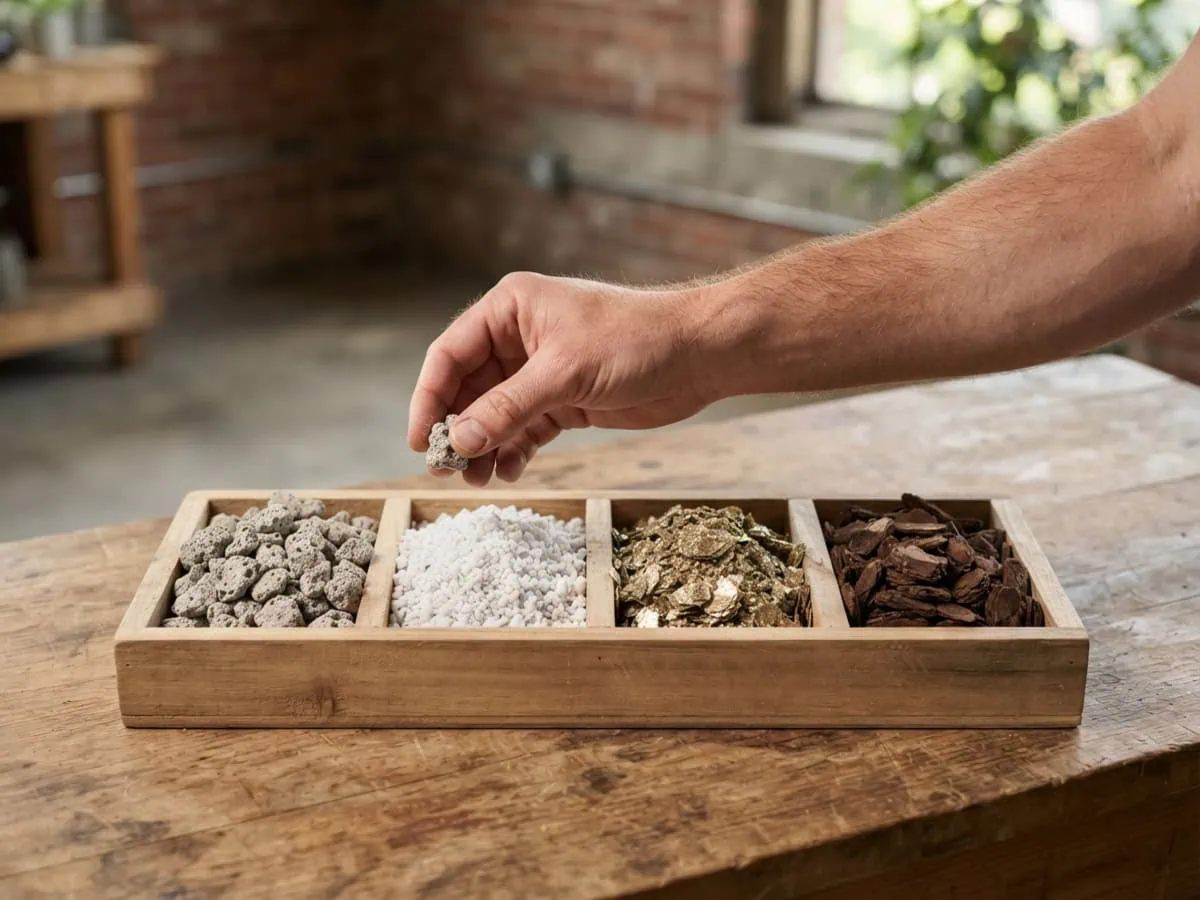
Perlite vs pumice vs vermiculite vs orchid bark
Among the aerators, pumice and perlite are the reliable picks; vermiculite and orchid bark are the ones to watch. The table below lines them up.
| Aerator | What it does | Verdict for a ZZ |
|---|---|---|
| Pumice | Heavy, porous grit that holds air and never floats | Best; the aerator growers name for this plant |
| Perlite | Light white grit; floats and migrates over time | Fine substitute for pumice |
| Vermiculite | Sponge-like flake that holds water, not air | Skip; too moisture-retentive |
| Orchid bark | Chunky bark that opens structure but breaks down | Optional chunk, not a base |
Verdict: reach for pumice first, perlite if that is what you have, and keep vermiculite out of a mix for a rot-prone storer. The same coarse pumice or perlite is exactly what you will want later for rooting new stalks from cuttings. One bag of grit does double duty.
Firm stalks follow good grit. A plant in the right grit holds its stalks upright for years, instead of splaying open as the base gives way.
If all you have is a bag of all-purpose potting soil, then cut it with at least a third pumice or perlite before it touches the pot. However, if you are starting from a cactus-and-succulent bag, then it is already gritty enough to use as the mineral half, and you only add a coco-coir base for water storage. Either way, the target is the same open, fast-draining structure — the bag is just your starting point.
Frequently asked questions about ZZ plant soil
What is the best potting mix for ZZ plants?
The best potting mix is a fast-draining, gritty one: an organic base like coco coir cut with about one-third pumice. That balance drains hard yet still holds a little moisture for the water-storing rhizome, unlike heavy bagged soil that stays wet and rots it.
Perlite works in place of pumice if that is what you have, and a drainage hole is non-negotiable. Aim to keep at least a third of the finished mix inorganic by volume, and skip any pot-bottom gravel layer, which only traps water where the rhizome sits.
Is all-purpose potting mix good for ZZ plants?
All-purpose potting mix is fine only after you cut it heavily with grit. Straight from the bag it holds too much water for a drought-adapted ZZ, so blend in at least a third perlite or pumice by volume before potting.
On its own, dense all-purpose soil is one of the most common ways people rot this plant, because it packs down over time and starves the rhizome of air. Test any batch with a soaked pot: if it still pools water on top after thirty seconds, add more grit.
Should I use cactus soil for my ZZ plant?
Cactus soil works as a component, not as the whole pot. Used alone it drains too fast for a rhizome that banks water between deep soaks, so blend it about half-and-half with a coco-coir base.
Used as the grit half of the mix, a cactus-and-succulent bag is a genuinely good starting point, since it already carries the coarse mineral fraction you would otherwise add as pumice. Just pair it with a moisture-holding base so the plant still gets its occasional deep drink.
How often should I change ZZ plant soil?
Fully refresh a ZZ plant’s soil only every two to three years, usually when you repot into the next pot size. The mix itself does not wear out quickly, so a fresh top-dressing and the occasional flush to clear built-up salts handle the years in between. Change it sooner if it has compacted into a solid block, smells sour, or the plant has had root rot, since a spent, airless mix quietly sets up the next round of trouble.
How to prepare soil for ZZ plant?
Prepare ZZ plant soil by blending roughly two parts coco coir with one part pumice, then top-dressing with a thin layer of coarse pumice grit. Mix it dry so the grit spreads evenly, moisten it lightly, and confirm a soaked pot drains fully within about five minutes before you plant. Add a small handful of compost only if you want a little extra richness, and keep it modest, because a heavy organic load holds water and feeds fungus gnats.
Can I use orchid mix for ZZ plant?
Orchid mix is too coarse to use on its own for a ZZ plant. It is built of large bark chunks that drain almost instantly and hold little water, so a rhizome would swing between bone-dry and briefly wet instead of getting the slow, occasional soak it stores. A few handfuls of that bark can help open up a finer, denser mix, but it works only as a chunky amendment, never as the main rooting base.
Can I reuse old soil for ZZ plants?
You can reuse old ZZ plant soil only if it is still open and healthy, never if it came from a rotted plant. Refresh it by mixing in new pumice or perlite to restore the grit that has broken down, and discard any soil that smells sour or feels slick and compacted between your fingers. Old mix from a diseased pot can carry the fungus that started the rot, so when in doubt, start fresh rather than risk a repeat.
Prove it yourself: the five-minute drainage test
Sidebar — you do not have to trust any recipe on faith, including mine. Pot up your gritty mix, soak it, and time the drain. Clear in five minutes and you have it.
Does it still pool after thirty seconds? It needs more pumice. Simple as that.
Over the next few months the plant confirms it, sending new spears up straight and firm instead of leaning and softening at the base.
That single test settles what is the best soil for a ZZ plant better than any label ever will. May your next mix run open and gritty, drain clear in five minutes, and keep your ZZ plant’s rhizomes firm, pale, and breathing in every pot you fill.
Tap the button below to get more plant fixes in your Google Search results