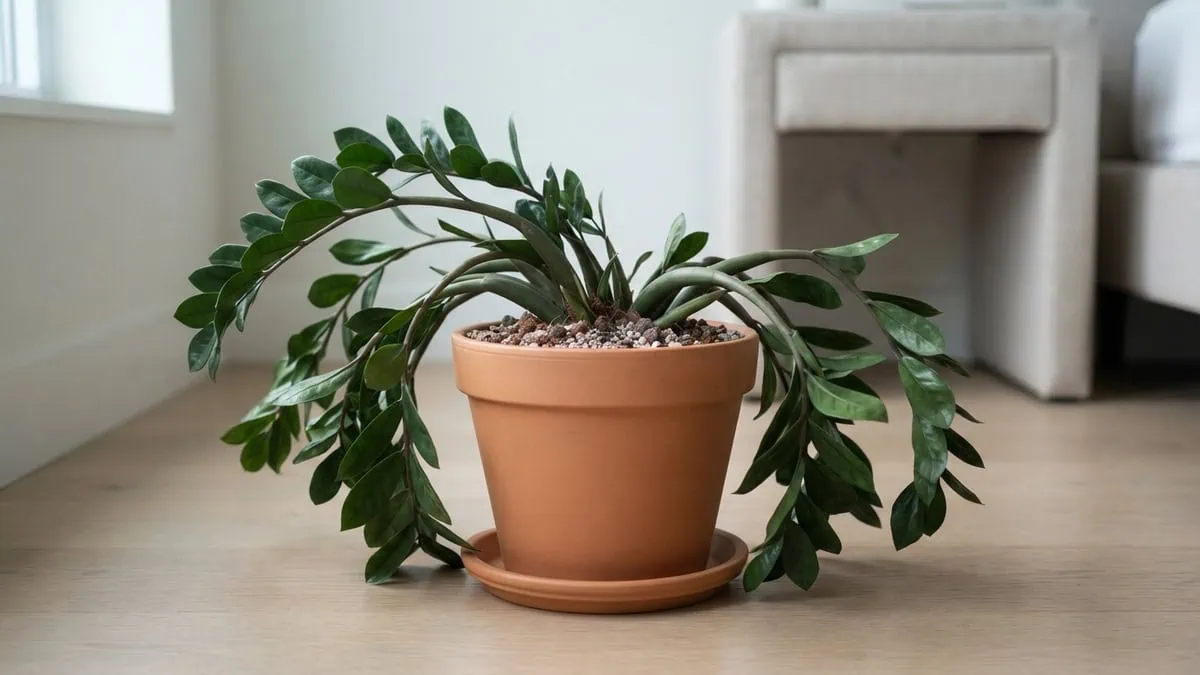
🚨 Emergency 30-Second Answer: Why is my ZZ plant drooping and falling over
Stop watering and feel the stalk base first: a drooping, tipping Zamioculcas zamiifolia (family Araceae) is usually rot from soil left wet for weeks, not thirst. A base that is soft, mushy, or sour means the rhizome is rotting, so act now.
A firm base points to a lighter cause: too little light, a rare deep thirst, or a top-heavy clump. Watering a rot-collapsed plant only feeds the rot.
For a firm, light-starved plant, move it to bright, indirect light to build sturdier stalks. Cut any soft rhizome back to firm tissue, but never stake a floppy stalk. Recovery runs in weeks, not days: new upright stalks push up from the rhizome.
- Light floor: 25 foot-candles merely survives; 500 and up builds firm stalks
- Sterile blade: wipe with 70% isopropyl alcohol before every single cut
- Recovery clock: weeks, not days — this species is documented slow
- Never stake a floppy stalk: the tie girdles soft tissue and hides the cause
- Feed, sand, and humidity: none of the three fixes a leaning stalk
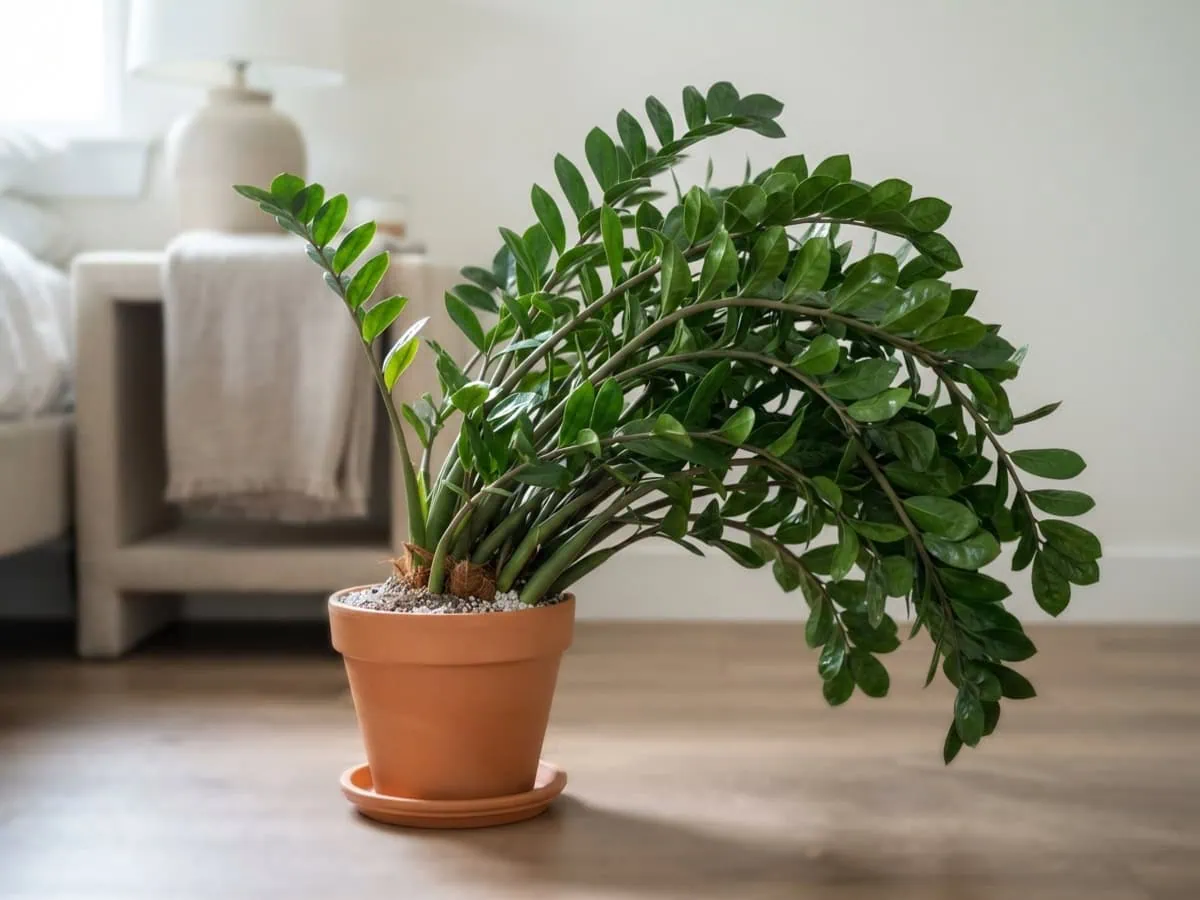
A ZZ plant that stood like a stiff green fountain last month can splay open almost overnight, its thick stalks bowing outward and one or two tipping clean over the pot rim. It looks like an emergency. Sometimes it is.
I assumed a floppy ZZ was always a thirsty ZZ — until watching enough of them keep collapsing after a good drink taught me the opposite. A stalk holds itself upright on two things at once: internal water pressure and the stiffening that only steady light builds, and a droop means one of those has quietly failed.
So before you reach for the watering can, read the plant first. For the everyday habits that keep it from ever reaching this point, dial in the full routine behind a sturdy, healthy ZZ plant.
Take a breath — a floppy ZZ is usually fixable once you know which cause you are dealing with. The table below walks you through the fast field triage.
Why is my ZZ plant drooping and falling over? A fast field triage
| What to check | What it means |
|---|---|
| First check: the stalk base | Firm base = light, thirst, or top-heavy; soft, giving base = rot. Act now. |
| Soil moisture read | Still wet 2+ weeks and drooping = rot; bone-dry to the pot’s bottom = thirst. |
| Stalk shape | Long, thin, pale, and floppy new growth = too little light. |
| Whole clump tips | Foliage mass has outgrown a small, light pot = top-heavy, not sick. |
| Wilt or droop | Wilt re-firms after watering; a droop or lean is postural and will not straighten. |
| Fixing a leggy stalk | Cut the whole stalk at soil level and raise the light; never trim the tips. |
| Stake or tie a splayed stalk? | No — a tie girdles the soft petiole and hides the real cause. |
| Can a rot-collapsed stalk stand again? | No — a rotted stalk is spent; new upright growth comes from the rhizome. |
Tap the button below to get more plant fixes in your Google Search results

Table of Contents
First, tell a wilt from a structural collapse
Sort a leaning ZZ into one of two piles first, because only one of them answers to a watering can:
- A wilt: lost water pressure — the stalk went soft, and it can firm back up.
- A structural collapse: the stalk stretched weak or outgrew its base, and watering will never straighten it.
The three reads below settle which pile you are in. One of them is a real emergency, and it hides behind the most innocent symptom of all.
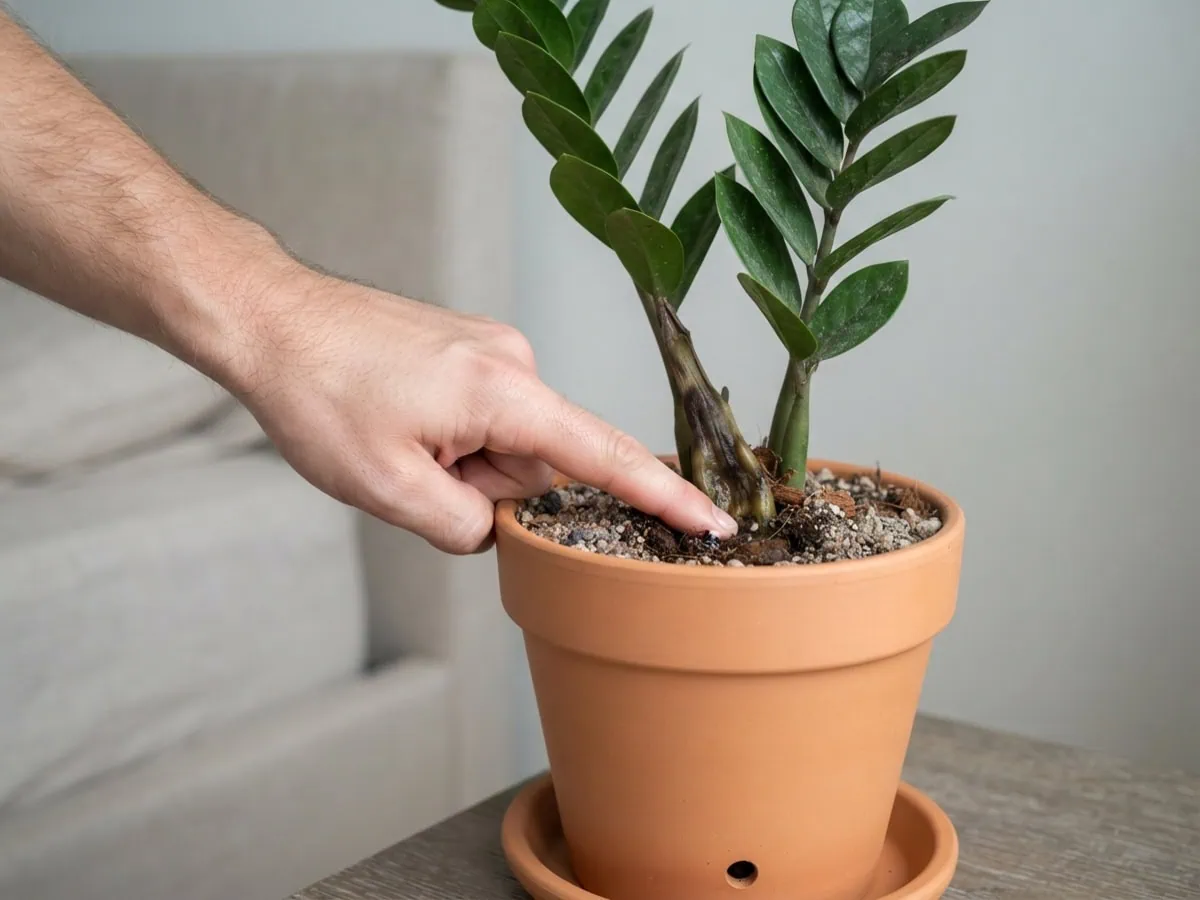
If the stalk base is soft, mushy, or gives under a gentle press — often with the bad odor a rotting rhizome carries, in soil that has sat wet for weeks rather than days — the rhizome is rotting from overwatering, the number-one cause of a collapsing ZZ plant. Stop watering now. A rot-collapsed stalk cannot be re-firmed or propped up; go straight to rescuing a ZZ plant whose rhizome is rotting.
Everything else is slower and far more forgiving. So once the base passes the firm test, you can work through the light, the pot, and the shape of the stalks calmly, without a rotting rhizome running the clock against you.
Wilting or drooping: which does watering fix?
Only one of the two answers to a watering can. When your ZZ plant stems won’t stand up straight, ask whether they went soft or grew into a shape water cannot correct.
| Wilting | Drooping or leaning |
|---|---|
| A loss of internal water pressure; the stalk goes soft. | A postural failure; the stalk stretched weak or outgrew its base. |
| Often reverses after a deep drink, or once rot is cut away. | Watering does nothing; it needs more light or a hard prune. |
Moist soil but still drooping? Read the stem base
Moist soil plus a drooping plant reads as thirst, but it is usually the reverse. Press the swollen base of a leaning stalk with one fingertip (trust me on this) — that single check settles more cases than anything else. The question “why are my ZZ plant stalks bending over” comes down to what that base feels like:
- Firm and solid, soil still wet: not thirst — ease off the water and improve the light.
- Soft, giving, or mushy, soil still wet: rot — stop watering and cut back to firm tissue.
- Firm, and a skewer comes out dry from the pot’s bottom: a rare true thirst — water deeply.
Turgor and lignin: what holds a stalk upright
A ZZ stalk stays vertical only while two supports hold at once. Each thick stalk is a semi-succulent leaf stem that stands the way a hose stands with the water on: full cells push outward and hold it firm, an internal pressure botanists call turgor.
Light builds the second support. Lignin is the material that thickens a stem’s secondary cell wall and gives that wall its mechanical support, and shade suppresses how much of it ever gets laid down.
A stalk grown in a dark corner is not merely long and pale. It is built weak. That is why light-starved growth comes up thin, over-long and floppy instead of standing stiffly upright — the response botanists call etiolation.
Lose the water pressure to rot or drought instead, and a stalk that was already firm just sags.
Either way, recovery runs on the ZZ’s own slow clock: new stalks push from the rhizome over weeks, not days. Early stillness is not failure. This one grows slowly even under the most ideal conditions.
Tap the button below to get more plant fixes in your Google Search results

What actually makes a ZZ plant bend, splay, and tip
Three causes account for nearly every drooping, falling-over ZZ plant, and they rank in a clear order: overwatering rot first, chronic low light second, a top-heavy clump a distant third.
Overwatering, rot, and thirst look-alikes
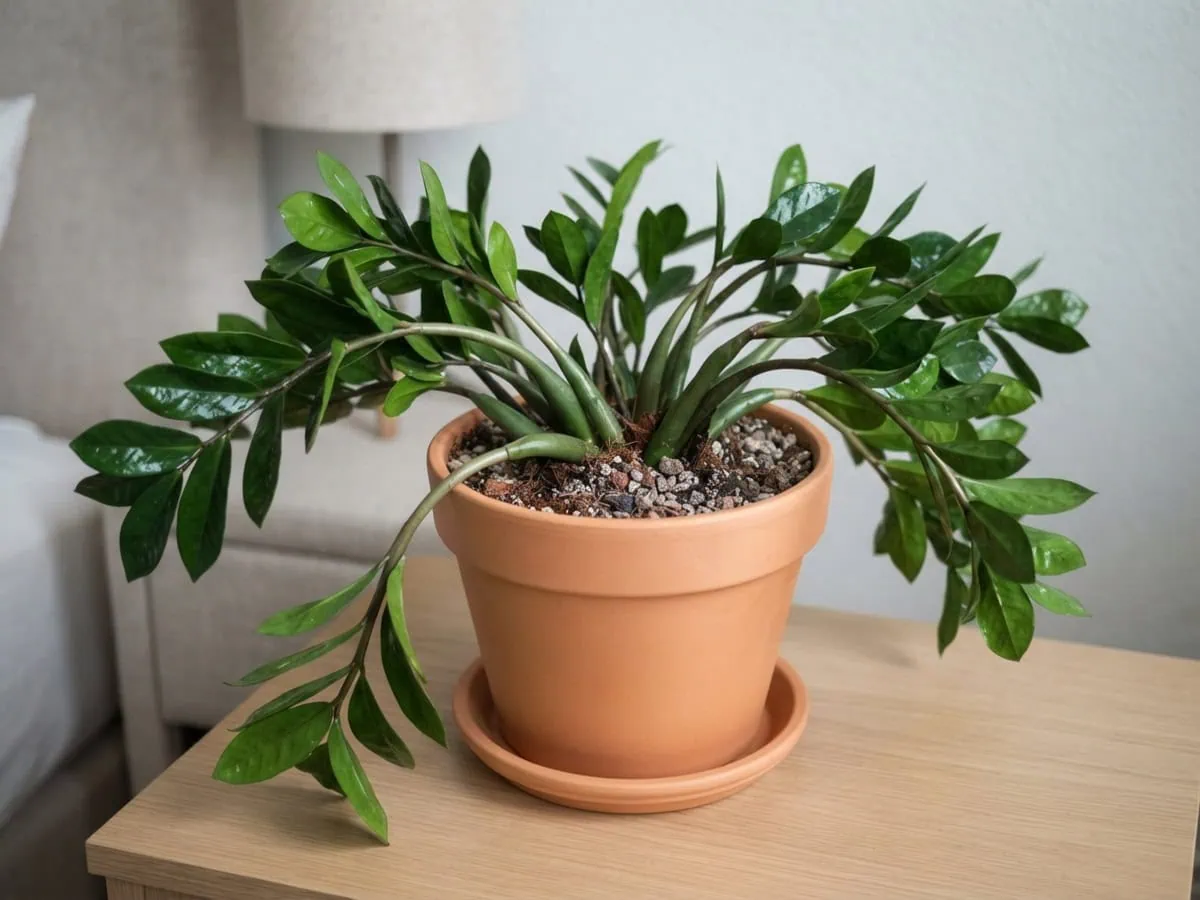
Overwatering leads the list, and its cruelest trick is that a rotting plant mimics a thirsty one almost exactly. Rotted roots cannot draw water up, so the canopy wilts while the soil sits wet.
Read the base and the soil together:
- Soft base, soil still wet weeks after a drink: rot.
- Firm base, and a skewer pushed to the pot’s bottom comes out dry: the rare genuine thirst.
The durable fix sits upstream, in getting the watering rhythm right so it never sits wet.
Too little light and leggy, splayed stalks
The second cause is chronic low light, which grows long, thin, pale stalks that lean and splay because they never firmed up. It is exactly the pattern behind ZZ plant stems splaying outward and falling open.
According to the University of Florida IFAS, how a stem elongates and pales in the absence of light is a well-documented response that plays out in any too-dark corner.
The ZZ even breaks the usual rule. Instead of leaning toward the window, a light-starved plant often bends away from it, and in a dim corner you can watch the newest stalks stretch a little longer and lean a little further each week.
So push the light well above the roughly 25 foot-candles it merely survives on, toward bright, indirect light of around 500 foot-candles and up, and see how much light a ZZ plant actually needs.
When a top-heavy clump outgrows its base
Sometimes a leaning ZZ is not sick at all. A big, healthy clump grows top-heavy and tips under its own weight, so the classic “ZZ plant top heavy and tipping over” complaint is a center-of-gravity problem, not a health one.
Weighting the pot or tying the stalks only postpones the next tip. The real fix has two halves:
- Reduce the top mass: take the overgrown clump apart instead of propping it up.
- Lower the center of gravity: a wider, heavier pot resists tipping on its own.
The first half is a project in itself, so hand it to the walkthrough on dividing an overgrown clump into new plants.
The second half pays twice over.
Repotting into a wider, better-draining pot both drops the center of gravity and gives the rot-prone rhizome the drainage it needed all along.
The floppy-fix mistakes that make it worse
The popular floppy fixes are mostly wrong, and several actively speed the collapse. Skip these three.
Why staking a splayed stalk backfires
Staking or tying a floppy stalk makes things worse. A ZZ stalk is soft, actively expanding succulent tissue, not a woody stem, so a tie or tape girdles it and opens a wound that rot can enter. Not support — an entry point.
Worse, propping a stalk upright hides the cause while the rot or the low light goes right on working underneath. A mature, healthy clump can arch outward from sheer mass, and that is fine — a stake, though, never nurses a rotting or light-starved plant back to health.
How to prune a leggy ZZ the right way
Prune a leggy ZZ by removing the whole offending stalk at soil level, never by trimming its tip, because a cut ZZ stalk does not re-branch.
New growth rises only from the rhizome at the base, so a topped stalk just sits there as a blunt stub, browning at the tip over the following weeks and never pushing a single new leaflet from the cut.
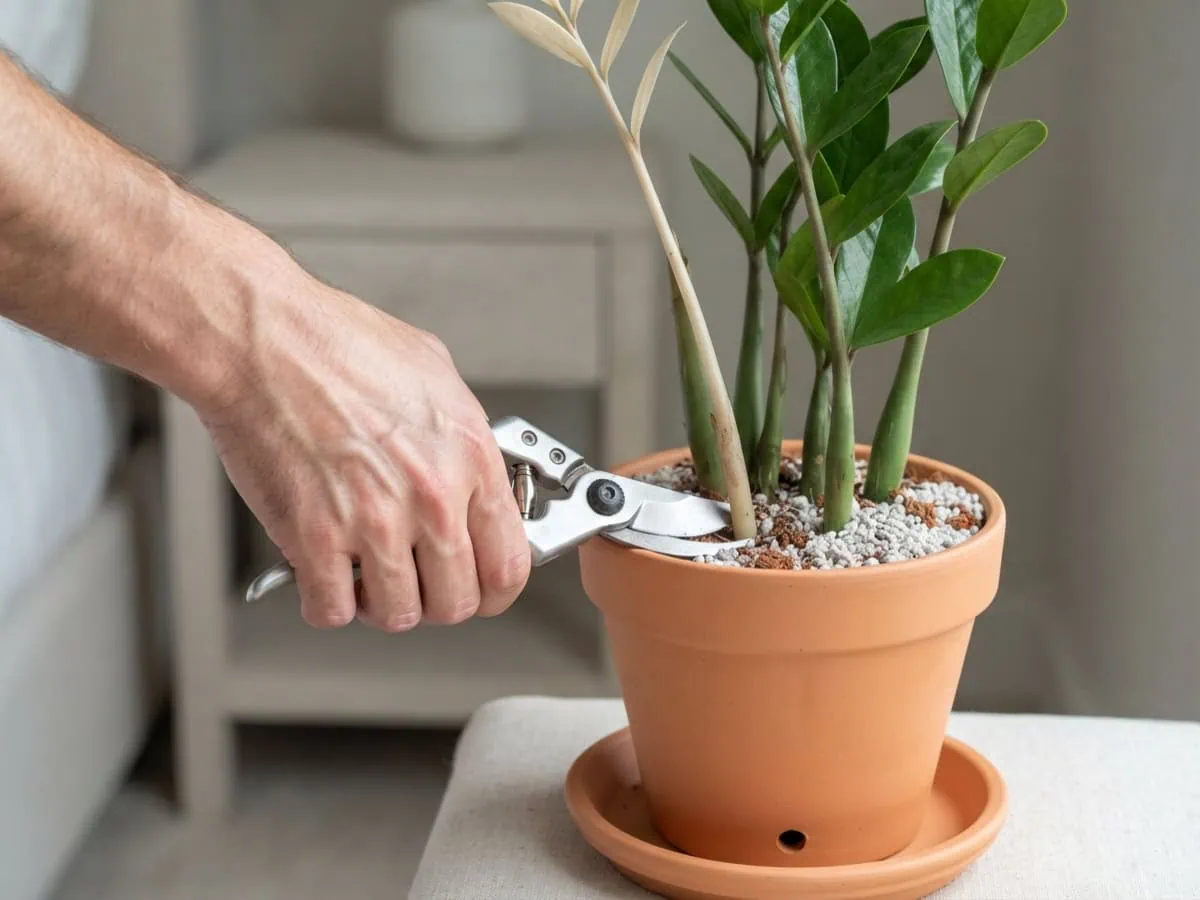
The real answer to how to prune an overgrown leggy ZZ plant is subtractive: take out the worst stalks entirely and let the base push sturdier ones. Wear gloves, because the cut sap irritates skin and eyes.
- Sterilize a sharp blade with 70% isopropyl alcohol.
- Cut the worst leggy stalks flush at soil level, never mid-stalk.
- Raise the light so the replacements grow firm, not floppy.
Feeding, sand, and humidity will not help
Feeding, adding sand, and raising humidity are the internet’s favorite droop remedies. None of the three touches why a ZZ leans.
- Feeding: a ZZ is a light feeder, and excess nitrogen pushes soft, poorly-stiffened growth — the opposite of what a weak stalk needs.
- Sand: it will not save a rhizome rotting in dense, airless soil; a gritty, fast-draining mix will.
- Humidity: beside the point for a plant built for dry air.
Each of those three is a fine habit in its own right — a weak feed in the growing season, grit in the mix, an ordinary dry room. None of them is a lever you can pull on a stalk that is already leaning.
Drooping and falling over: common questions
How do you fix a floppy ZZ plant?
Fix the cause, not the flop: press the stalk base first. A soft, giving base means rot, so stop watering and cut the rotted rhizome back to firm tissue. A firm base points to low light, so move the plant to bright, indirect light.
Never stake it, because a tie hides the cause instead of fixing it. New upright stalks come from the rhizome over weeks, not days.
How do I get my ZZ plant to stand up straight?
You cannot straighten an existing droop, because a leaned or stretched stalk stays leaned. Remove the worst stalks at soil level and raise the light so the rhizome pushes new, sturdier ones.
Firm, upright growth is built by light, not by ties or stakes, and it arrives on the plant’s own slow schedule. Expect the replacement stalks to take weeks to harden fully.
Why is my zz falling over?
Most often the rhizome is rotting from soil that stayed wet too long, which robs the stalks of the internal water pressure that holds them up. The next most common cause is chronic low light, which grows weak, over-long stalks that splay outward.
A large, healthy clump can also simply go top-heavy and tip under its own weight. Press the stalk base to tell those cases apart.
How to bring back a droopy plant?
Identify which support failed before acting. If the base is soft and the soil is wet, cut away the rot, repot into a gritty, fast-draining mix, and hold off watering.
If the base is firm and the soil is bone-dry, water deeply, because a true wilt often re-firms. If the stalks are pale and stretched, raise the light and cut the worst ones at the base.
What is the difference between wilting and drooping?
Wilting is a loss of internal water pressure: the tissue goes soft, and it can firm back up once the water supply is restored. Drooping or leaning is a postural failure, where the stalk stretched weak in low light or outgrew its base, and watering will not straighten it. Wilting answers to water or to clearing rot; drooping answers to light and pruning instead.
Can plants recover after wilting?
Yes, if the roots still work. A wilt from soil left bone-dry too long recovers once the plant is watered, because those stalks stayed firm and were only short of water.
A wilt caused by rotted roots will not reverse on its own, because the damaged tissue must be cut away first. Recovery then arrives as new growth from the rhizome over weeks, not as the old stalks firming back up.
Why is my plant drooping but the soil is moist?
Moist soil plus drooping usually means rot, not thirst. Rotted roots cannot draw water up, so the plant wilts while sitting in wet soil, and watering it again makes the rot worse.
Check the stalk base: soft and giving confirms rot. Stop watering, cut the rot back to firm tissue, and let the gritty mix dry out fully before the next drink.
Field-tested. Ready to read your own leaning stalks?
A floppy ZZ is not a mystery — it is a two-support failure with a three-second test. Press the base. Firm or soft.
Firm means you have time and a light problem; soft means you have a rot problem and should stop watering today.
Everything else follows from that one read: cut rot back to firm tissue, lift the light, take out the worst leggy stalks, and leave the stake in the drawer. Then wait — the stalks that push up from the rhizome take weeks to harden, and that slow, quiet firming is the sign it worked.
So the next time you ask why is my ZZ plant drooping and falling over, start at the base, not the watering can. May your ZZ plant stand tall on firm, pale stalks, lean only toward brighter light, and never wear a stake that hides what a softening base is trying to tell you.
Tap the button below to get more plant fixes in your Google Search results