🎯 Quick Answer: mealybugs and scale on Aloe vera
Solving how to get rid of mealybugs and scale on aloe vera step by step signals one number: 70% isopropyl alcohol on Aloe vera, family Asphodelaceae. Lift the white fluff first; live insects sit under it. Repeat that pass every 10 to 16 days.
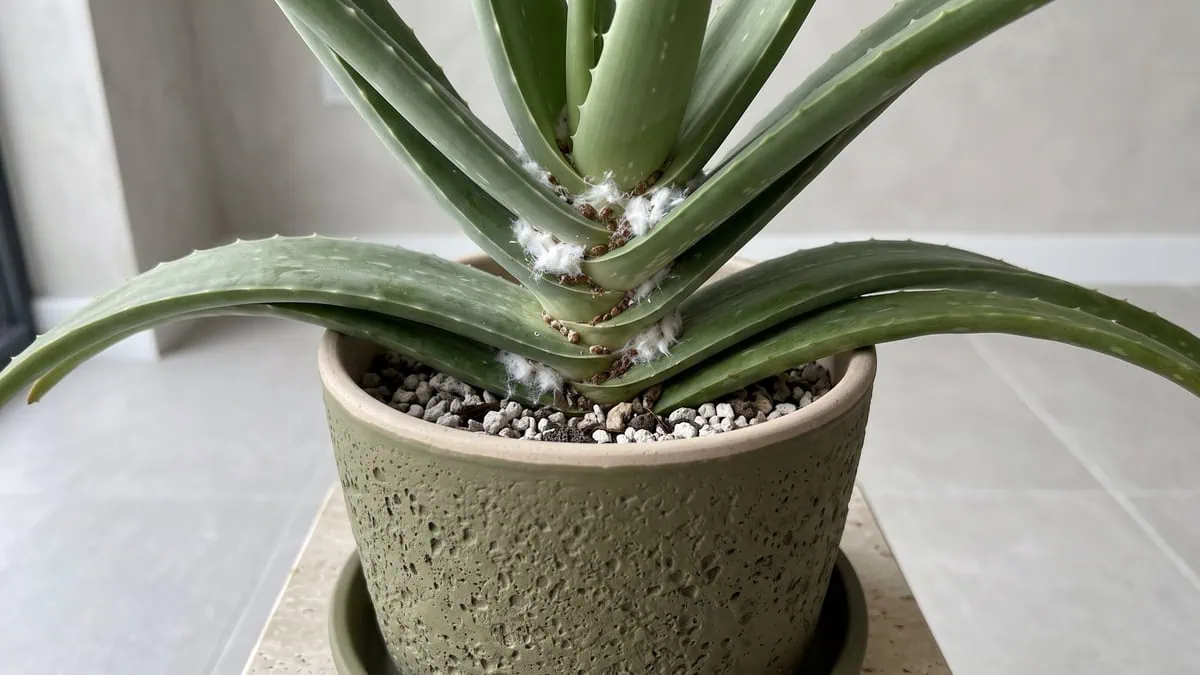
- Cottony fluff: lift it and look for insects or orange-pink eggs underneath
- Brown bumps: a scale cover scrapes or pries off; leaf tissue does not
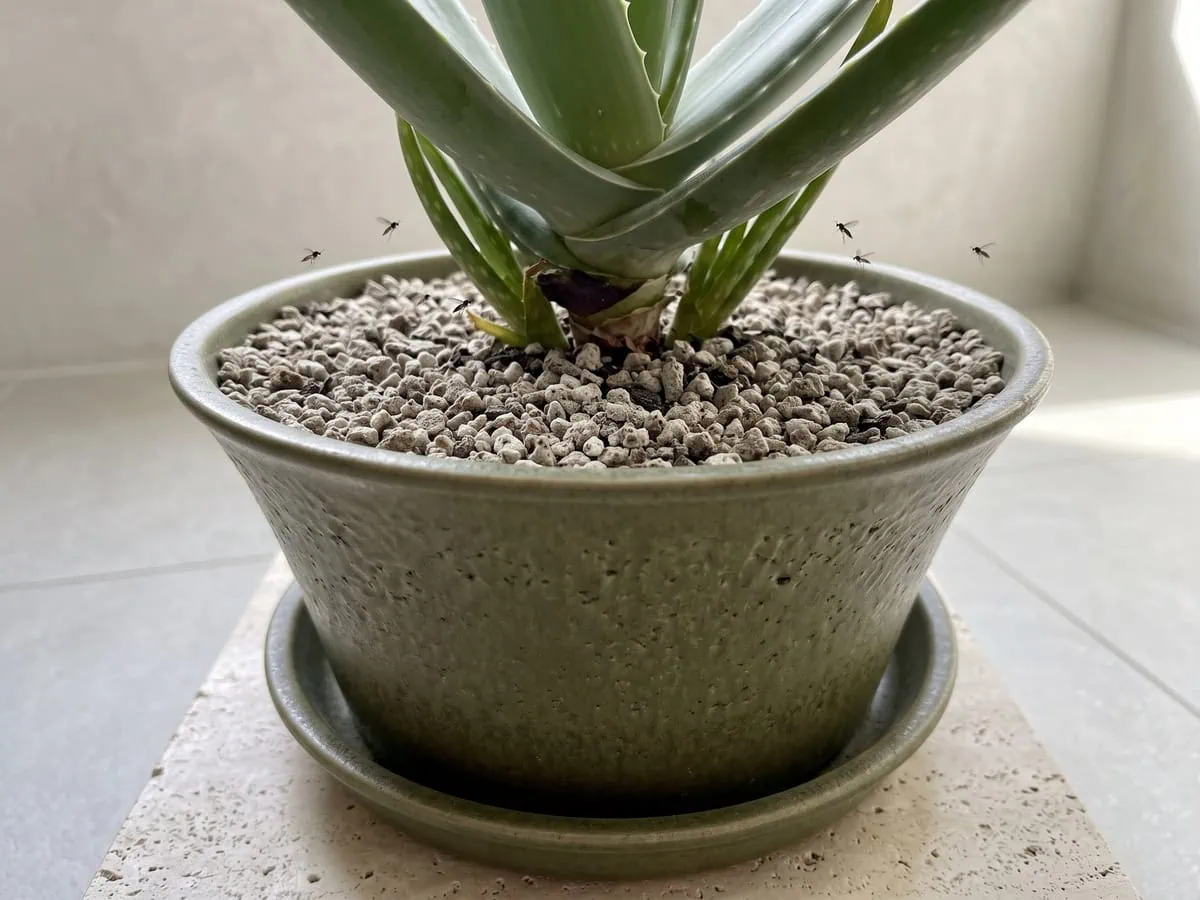
- Small dark flies: the larvae feed in the medium, so dry it down
- Dish detergent: its perfumes and dyes can harm plant tissue in concentrate
- Second look: eggs hatch in about two weeks, so inspect again then
Get the one-page care card for this guide, plus a printable A4 copy
We condense this guide into one card for your phone and a print version for the pot shelf. Enter your email and we send both to your inbox. Subscribe once, then request the card of any guide you read.
By subscribing you agree to get emails from Plant Care Basics about plant care guides, about once a week at most. Unsubscribe in one click. Privacy policy
White, waxy fluff sat wedged in the leaf axils of my Aloe vera, the tight joins where the blades cross the short stout stem. I lost rosettes to that fluff and to the brown scale insects beside it before I read either one correctly. Full stop.
I was treating mealybugs, but the real fix had nothing to do with that. It was the water sitting in the pot. Actually, I take that back — the fluff was real, and it kept coming back (FYI — this plant draws on a reserve already inside the leaf, so its medium stays damp far longer than a leafy houseplant’s does).
Tip that pot out and the answer reaches your nose first: a sour, stagnant smell off a mix that has stayed damp for weeks, nothing like the clean mineral smell of dry pumice grit. But clearing the insects only holds if the medium changes. If the rosette looks tired too, start with the full care picture for a healthy rosette.
Once the numbers are in front of you this stops being hard. The following table sets out the strengths, the intervals and the one step that comes first.
Pest control specs: how to get rid of mealybugs and scale on Aloe vera step by step
| Aloe specs | Working detail |
|---|---|
| Where they hide | Leaf joins at the rosette center, the leaf bases, and the mix surface |
| Working strength on the swab | 70% or less isopropyl alcohol, applied on a swab rather than sprayed |
| Soap wash mixing rate | Follow the product label rate; dilute a concentrate with distilled water |
| Isolate the plant first? | Yes – move it away from the collection before the first pass |
| Repeat schedule for the armored class | At least 2-3 applications, 10-16 days apart |
You are subscribed
Press the button and we prepare this guide's one-page care card and its A4 print copy and email both to you within a few minutes.
Tap the button below to get more plant fixes in your Google Search results

Table of Contents
Which pest is on your Aloe vera, and is it still alive?
Three things get called bugs on an Aloe vera rosette, and only two are insects. The following sections take the cottony deposit, the brown bump and the flier in turn.
| What you are looking at | What it is |
|---|---|
| White cottony fluff wedged in a leaf join | A soft-bodied sap feeder; lift it and insects or orange-pink eggs sit underneath |
| A small raised brown dome on the blade | An armored scale; it scrapes or pries off, and the leaf does not |
| Small dark flies lifting off the mix | Fungus gnats; the larvae feed in the top 2-3 inches of wet mix |
Verdict: work the leaf joins first, because only a deposit that stays put and leaves the surface tacky is feeding on the plant.
- Leaf axil: the tight join where a leaf meets the short central stem.
- Honeydew: the sticky sugar waste a sap-feeding insect leaves on the surface below it.
Cottony deposits, or the plant’s own coating?
Look up “what are the white cottony bugs in my aloe vera leaf joints” and you get pictures, not a test. One wipe settles it.
A dry bloom on the blade is the plant’s own waxy film (it wipes off on a cloth and leaves nothing), while the pest stays put and leaves the surface tacky; run a fingertip below the join and it drags, the way a fingerprint drags on cold glass.

Marks that sit inside the blade rather than on it belong to reading a marking that is part of the leaf itself.
Do the brown bumps scrape off? The lift-and-look test
The short answer to “do brown bumps on aloe vera scrape off or are they part of the plant” is yes. A scale cover lifts with a fingernail; the fleshy blade does not.
According to the Royal Horticultural Society, scale insects encrust leaves and stems and excrete honeydew, which shows on this matte blue-green surface as a glossy patch. Lift one (that is the whole test): a full, rounded body means a live colony, an empty shell means it has already gone.
Flying insects over the pot: what they mean
The answer to “why do gnats keep flying out of my aloe vera pot” is not on the leaves. The adults do no damage.
Their larvae feed in the top 2-3 inches of the mix, so this is a wetness reading, and a gritty mix for a desert-adapted root system should be dry at that depth. I went at a rosette with a swab twice. Let that layer dry, or fix the full dry-down watering interval.
Get the one-page care card for this guide, plus a printable A4 copy
We condense this guide into one card for your phone and a print version for the pot shelf. Enter your email and we send both to your inbox. Subscribe once, then request the card of any guide you read.
By subscribing you agree to get emails from Plant Care Basics about plant care guides, about once a week at most. Unsubscribe in one click. Privacy policy
Tap the button below to get more plant fixes in your Google Search results

Removing mealybugs and scale, step by step
Lift the insects off with a swab before you wet the whole plant. Isolation, the swab pass, the soap wash — in that order.
Isolate the plant and set up the swab
Move the rosette away from the collection first. Keep it apart until two inspections in a row come back clear, and wipe the blade or scissors you will use with rubbing alcohol between plants.
Gloves on. A snapped leaf releases a bitter yellow latex that sits just under the rind, and it can irritate skin, so rinse with cold water if it touches you. Lay out the swabs, the alcohol and a soft cloth before you start.
If a severe skin reaction develops (blistering or intense burning), seek medical attention immediately. For chemical exposure, you can also contact Poison Control (1-800-222-1222 in the US).
Working the leaf joins with rubbing alcohol
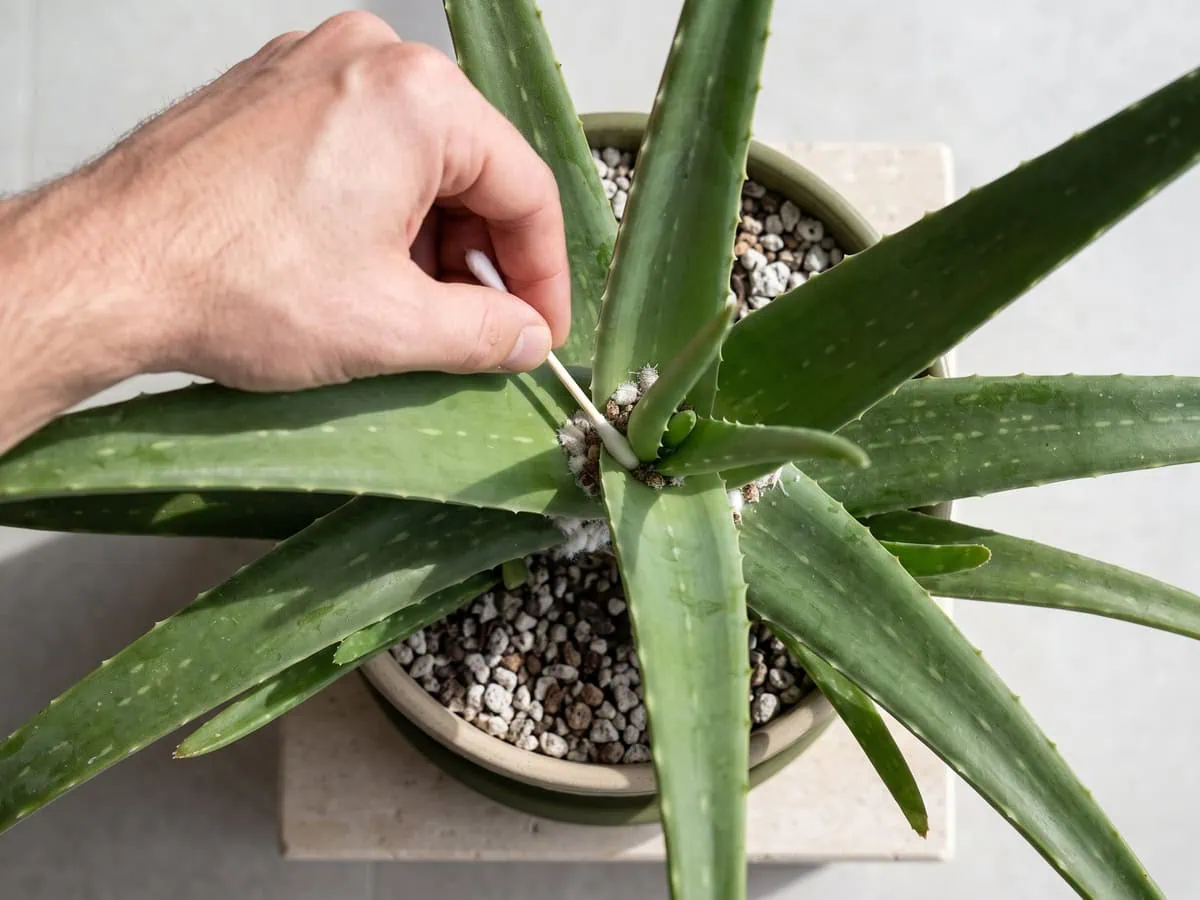
The one-line rule for “how to wipe mealybugs off aloe vera leaves with alcohol” is 70% or less isopropyl on a cotton swab, worked in rather than sprayed on.
Work the swab down into each join along the leaf rather than levering the leaves apart (a rosette has no stem to reach around, which is why the sprayed instructions written for stemmed houseplants miss the population entirely). The sharp solvent smell comes up off the warm blade a hand’s width from your face, ahead of any visible change.
The dilute soap wash, and what must never touch the leaf
Mix any wash at the product’s own label rate and no stronger, using distilled water for a concentrate. Test one leaf. Wait a day (the waxes in a succulent surface make soap riskier here than on a thin leaf).
Keep hydrogen peroxide off the roots, crown, leaves and stems of this plant. It belongs to empty containers and to blades. For a cut face on living tissue, powdered cinnamon is the finish this site uses instead.
Never run either liquid over the plant in direct sun or on a hot day. I lost a whole pass to a warm windowsill once. So work in the morning or the evening, when the blade is cool and the film stays wet long enough to reach the insect under it.
Stopping the return after the first clean round
One pass never finishes it, because a contact liquid reaches the insects it touches and not the eggs. Run a course, then check. The following sections trace the repeat interval, the root-zone check and the stopping point.
How long the repeat course must run
The whole of “how to stop aloe vera pests from coming back after cleaning” sits in one number: at least 2 to 3 passes, 10 to 16 days apart (the armored class sets that interval). Eggs hatch in about two weeks, which is why a single evening never holds.
And keep going past the point where you stop seeing them. Two clear rounds, not one. This is anecdotal, so weigh it against your own plant: the rounds I ended early were the ones that came back.
Checking the root zone with the plant out of its pot
Lift it only if the decline continues after the joins are clean. Support the rosette, not the leaves. Read the outer roots by feel: firm and light-colored is healthy, brown or black and soft is not.
White waxy patches clinging to the roots are the root-dwelling form of the same pest. A sour, low-oxygen smell coming off the root ball as you tip it out is the other reading, and that one is cutting away rot and replanting what survives.

What a cleared plant looks like, and when to stop
A cleared rosette looks like nothing in particular. Empty joins, a dry surface where the honeydew was, and no new specks on the swab after a wipe.
The plant itself will not look different for a while (these leaves are slow to replace). Watch the newest leaf at the center instead: growth resuming there is the signal.
Stop when two inspections a fortnight apart both come back empty. Keep the pot dry at depth and check the joins whenever you water, because a grittier mix holds that surface dry, which is choosing the mineral fraction of the mix.
Frequently asked questions about Aloe vera pests
How can I get rid of mealybugs from my Aloe vera plant?
Wipe them off with a swab of 70% or less isopropyl alcohol, join by join. That is the whole first pass: isolate the plant, work the swab into every leaf axil where the deposit sits, and cover the mix so you are not soaking it. Then repeat 10 to 16 days later, because the eggs are still there and unhatched.
What gets rid of mealybugs immediately?
Alcohol on a swab acts on contact, but immediate is only true for the insects it touches. The eggs and the youngest crawlers survive a single pass, which is why an overnight fix leaves the population to rebound. Plan a course of at least two or three passes instead, and judge it by empty joins rather than by the first evening.
How to get rid of scale on Aloe?
Scrape the covers off first, then swab the same spots with 70% or less isopropyl alcohol. An armored cover is a physical shield, so abrasion with a fingernail or a soft brush has to come before any liquid. Space the applications 10 to 16 days apart and expect at least two or three, because the interval is set by the insect’s development.
Will dish soap get rid of mealy bugs?
Not reliably, and on a succulent it carries its own risk. Household dish detergent carries perfumes and dyes that can harm plant tissue in concentrate, and the waxes in an Aloe leaf make soap riskier here than on a thin leaf. If you use one at all, mix at the label rate with distilled water, test one leaf, and wait a day.
Will mealy bugs ever go away?
Yes, they go away once the course outlasts the insect’s development period rather than your patience. A pass clears what it wets; the eggs hatch about two weeks later, so two or three passes 10 to 16 days apart is what empties the joins. Finish when two inspections a fortnight apart both come back clear, then check the same hiding places whenever you water.
What do Aloe mites look like?
They are too small to see, so the class is read from the plant: distorted, thickened growth at the growing point and on flower stalks. That presentation is described for the Aloe genus rather than measured on this species, so read it as a reason to look closely. The visible one is different: a cottony deposit in the joins is a sap feeder.
Is it bad to touch mealybugs?
No. They do not bite or sting, so handling the insects themselves is not the hazard. The materials are: alcohol belongs on a swab, gloves are worth wearing because a snapped Aloe leaf releases a bitter latex that can irritate skin, and dust or spray products stay out of your breathing zone.
Wash your hands when the pass is finished.
Stop spraying the whole plant, start working the joins
No point sugar-coating this. The hardest part is not the alcohol, it is believing that an empty-looking join still needs a second visit two weeks later. A cleared join smells of nothing an hour after the swab, where a fouled one carries a sour film.
Two passes are the floor. Run a third if the joins argue. Work the swab, keep the mix dry at depth, and check the same crevices whenever you water (yes, this sounds obsessive — bear with me, because the crevice you skip is the one a colony rebuilds from).
Learning how to get rid of mealybugs and scale on aloe vera step by step is really learning to look twice, a fortnight apart. Check the joins again two weeks from now; an empty crevice on that second look is what tells you the round actually held.

Get the one-page care card for this guide, plus a printable A4 copy
We condense this guide into one card for your phone and a print version for the pot shelf. Enter your email and we send both to your inbox. Subscribe once, then request the card of any guide you read.
By subscribing you agree to get emails from Plant Care Basics about plant care guides, about once a week at most. Unsubscribe in one click. Privacy policy
Tap the button below to get more plant fixes in your Google Search results