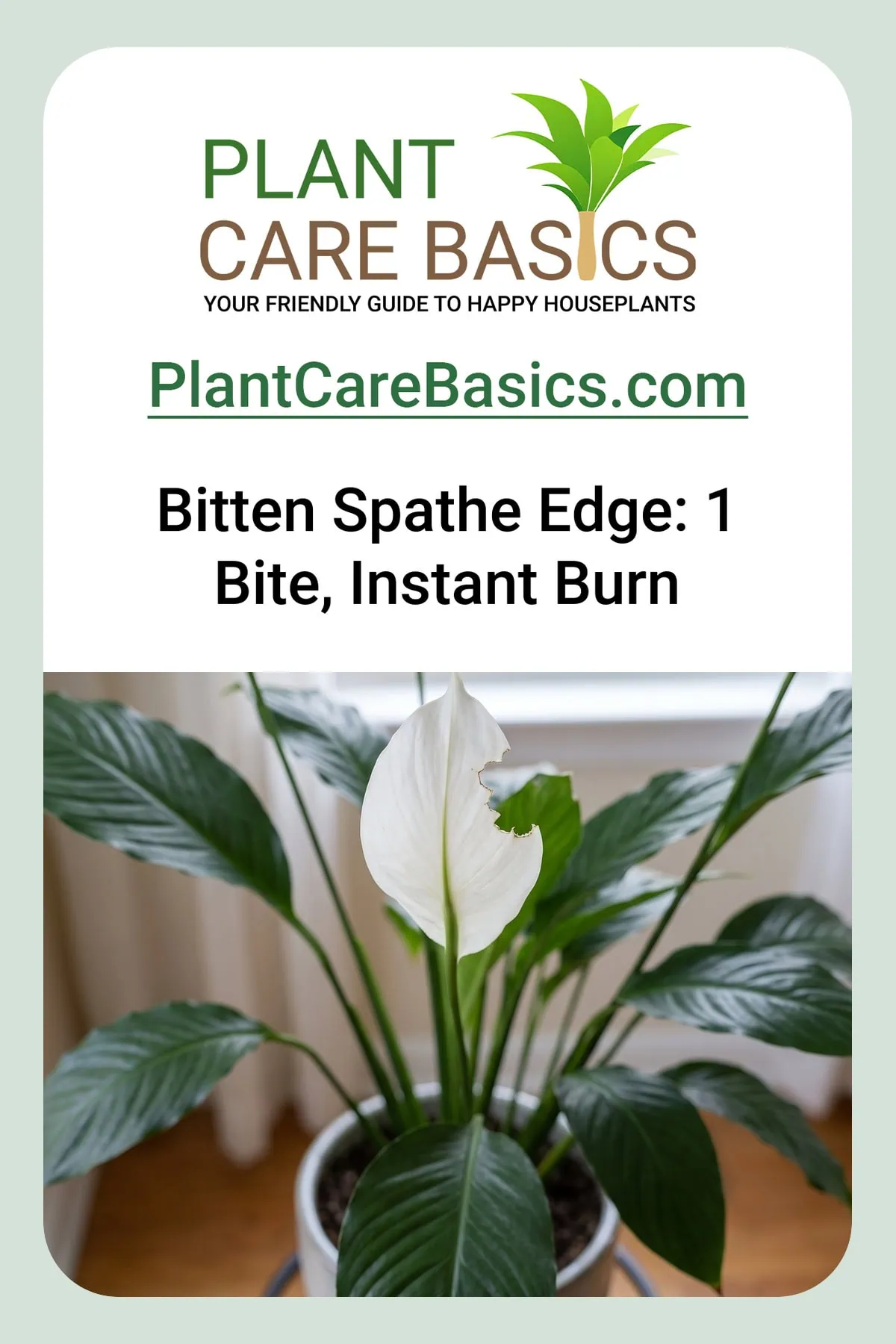
🎯 Quick Answer: peace lily toxicity in a cat or dog household
Yes, because chewed tissue releases insoluble calcium oxalate raphides straight into the mouth. Spathiphyllum, a member of the Araceae family, carries those crystals in flowers, leaves and stems. Owners searching “is a peace lily toxic to cats and dogs” get one answer for both.
- First move: wipe the mouth out, then rinse and spit with water
- Cool relief: ice chips, yogurt or applesauce ease the burning
- Call for help if: swelling blocks swallowing or breathing at any point
- Most exposures: stay mild enough to manage at home, not at a clinic
- Stop repeats: lift the pot high, sweep up every dropped leaf
Quick aside: the drool comes first — before anyone works out what happened. A cat backs away from a chewed white spathe, strings of saliva swinging off its chin, and the mouth it just closed on that leaf is already burning (yes, this sounds dramatic — bear with me).
Years of the same failure forced me to learn that this is mechanical, not chemical. Spathiphyllum tissue carries insoluble calcium oxalate crystals — raphides — that act like microscopic glass needles the instant a tooth breaks a leaf and the sap escapes.
Strike that. Every above-ground part carries them — flowers, leaves and stems alike.
That one fact decides the signs to expect, the call to make, and the two-handed lift that puts a damp, heavier-than-it-looks pot up on a stand. It also sits inside the wider job of living safely with this houseplant at home.
No panic needed here — with insoluble crystals the injury stays where it touches, and it fades. The following table puts the whole safety picture in one place.
Is a peace lily toxic to cats and dogs? The safety facts at a glance
| Peace lily specs | What the sources say |
|---|---|
| Pet safe? | No – toxic to cats, dogs and horses; insoluble calcium oxalate raphides cause oral irritation (ASPCA) |
| Toxic principle | Insoluble calcium oxalate raphides, needle crystals released from any chewed or broken tissue. |
| Parts that carry the crystals | Flowers, leaves and stems; no part is exempt. |
| Typical sign window in cats | 6-24 hours. |
| Kidney injury in cats | None – insoluble crystals stay in the tissue they pierce, well short of the blood. |
| Emergency route | Animals 888-426-4435; people 1-800-222-1222. |
Tap the button below to get more plant fixes in your Google Search results

Table of Contents
Insoluble calcium oxalate, the crystal behind the pain
The pain comes from a physical wound, not from a poison the body absorbs. Chewing releases microscopic needle crystals that stab the tissue they touch, and that single fact governs the signs, the timing and the response. The two sections below take the injury apart and then unpack the one word doing all the work.
I have lost 11 peace lilies over seven years, and not one of them to this crystal — but the division I handled bare-handed left my fingertips stinging for 1 hour, because I had assumed the sap was inert. That assumption is the common one. It is also the wrong one.
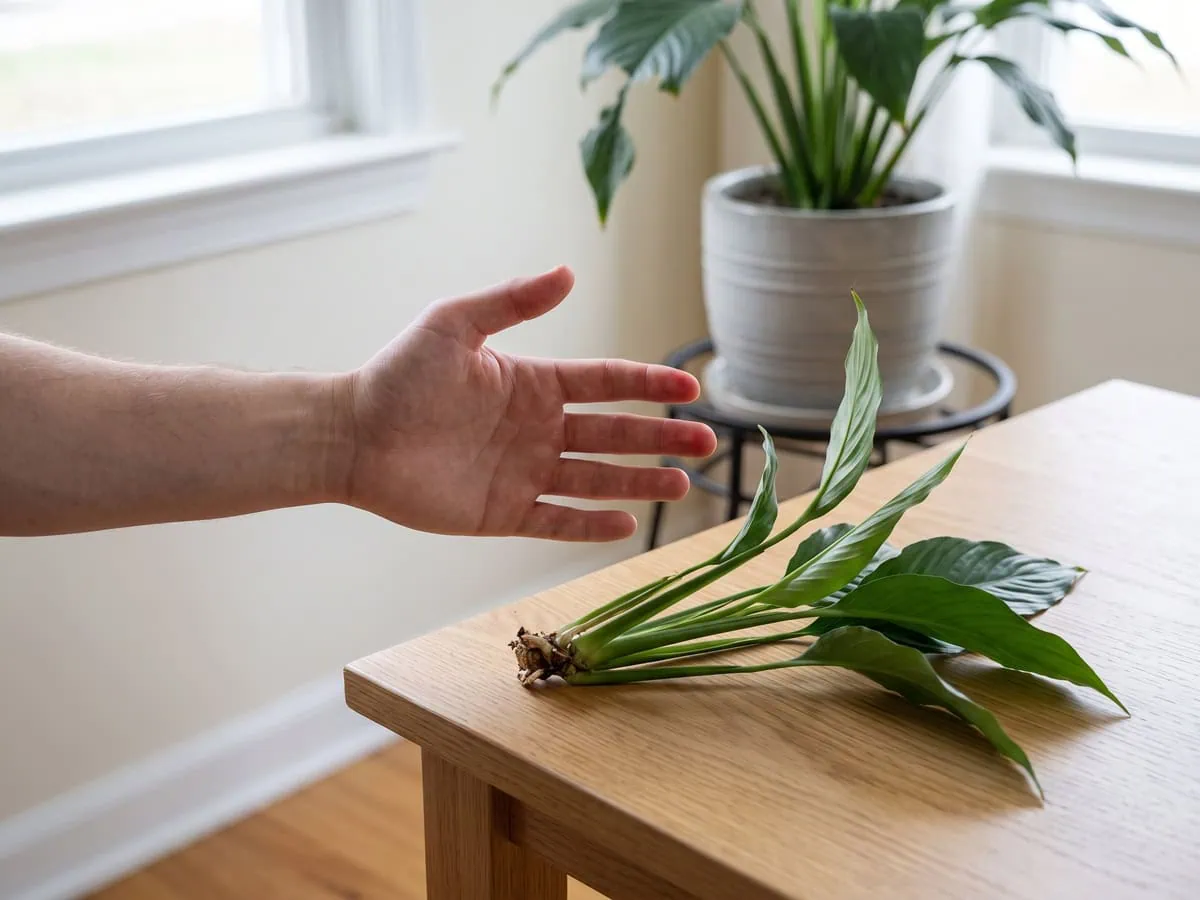
A bitten leaf weighs almost nothing in a gloved palm — lighter than a folded paper towel — and yet the wet tear across its blade is the whole hazard. According to Clemson Cooperative Extension, the exposed sap carries calcium oxalate crystals. Break the tissue and they are loose.
How raphide bundles injure mouth tissue on contact
The needles lodge in the tongue, gums and lips they touch, and poison control centers describe the sensation as biting into ground glass. Type “do peace lilies have calcium oxalate crystals” into a search bar and the whole first page agrees on the agent.
Almost none of it says what happens next. What an owner can see is the timing: the sting arrives with the first bite rather than building over hours, so the animal usually drops the leaf unprompted. No delay at all.
- Raphide: a needle-shaped crystal of calcium oxalate, packed in bundles inside the tissue.
- Insoluble: it does not dissolve, so it stays where it lands instead of entering the blood.
And that is why most exposures stay small: the animal registers the pain long before it has swallowed much.
Insoluble versus soluble oxalate, and why it matters
Insoluble means the crystal never dissolves, so it injures by contact alone and stops at the tissue it pierced — which is the axis this whole question turns on. Soluble oxalate behaves the other way entirely. The following table sets the two side by side.
| Property | Insoluble oxalate, the type in this plant | Soluble oxalate, a different chemistry |
|---|---|---|
| State after a bite | Stays a solid crystal; it does not dissolve. | Dissolves and is absorbed into the blood. |
| How it injures | Mechanically, by piercing the tissue it lands on. | Chemically, by binding calcium once absorbed. |
| Where the injury stops | At the mouth, lips and throat. | Past the mouth, at organs the blood reaches. |
| What the owner sees | Immediate pain at the first bite. | Delayed signs, after absorption. |
Verdict: the insoluble column is the one that applies here, so a bite hurts at once and the harm stays in the mouth that took it. That single word carries the whole answer.
Which parts of the plant carry the crystals
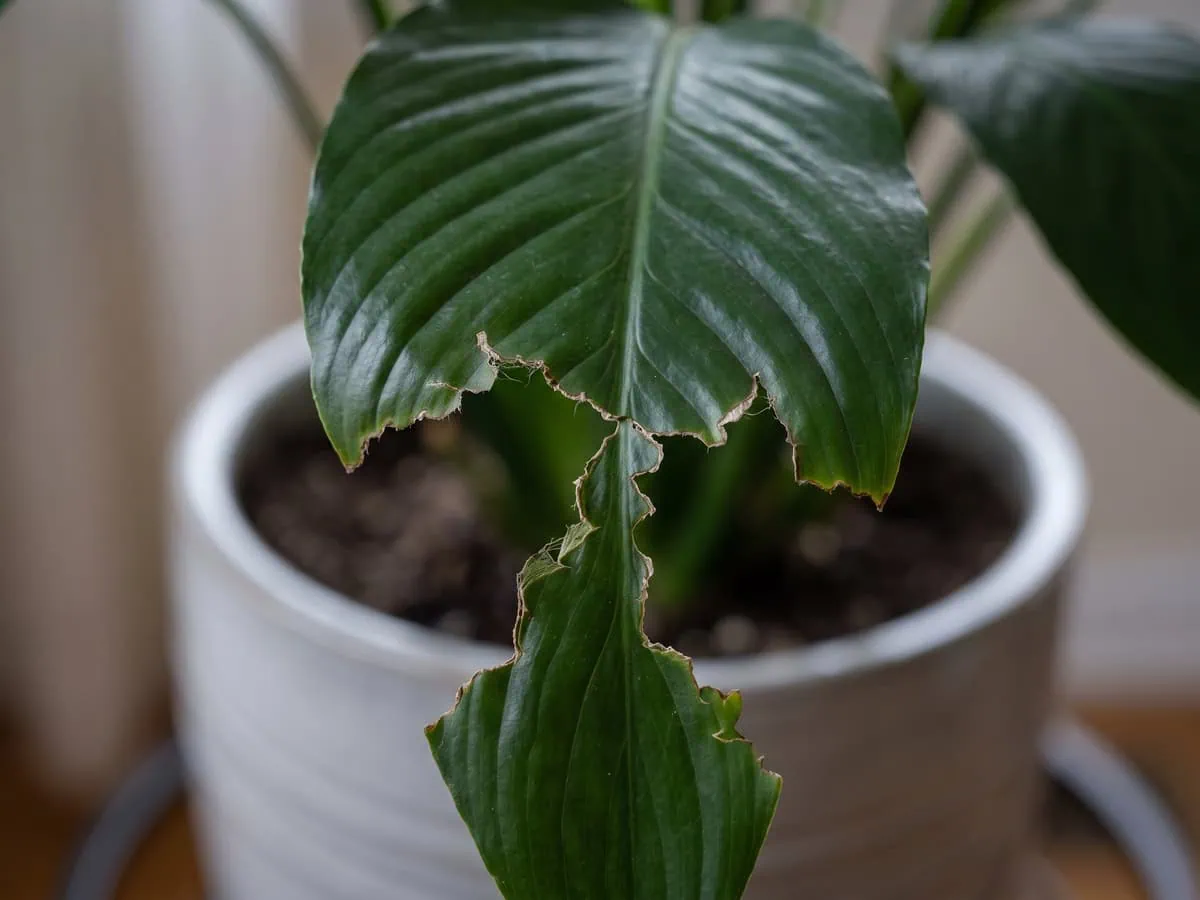
No part of this plant is safe to chew. The flowers, the leaves and the stems all carry the crystals, and the sap that escapes from any torn tissue carries them as well. The two sections below take the pollen question and the lily this plant is not.
The recorded part lists do not quite agree — most name the flowers, the leaves and the stems, while one stretches the list to the spathes and the roots.
I’m honestly not sure why this works — but it does: every version of that list ends in the same place, with no part marked safe, whatever the tag in front of you happens to enumerate.
But the mouth is not the only way in. Cut a stem and the sap wets your fingers, and I have felt that film turn tacky on a nitrile glove while I was still halfway through a division.
A glove that light gives no sense of how much sap it is carrying. Weight tells you nothing here. That is exactly the risk in dividing the clump, where the sap reaches bare hands.
Is the pollen a separate exposure route
Licking pollen off a coat can irritate the mouth the same way a chewed leaf does, and no authority ties that pollen to the kidney outcome owners fear. People searching “are peace lily flowers and pollen toxic to pets” are usually reading about a different plant group entirely.
Nobody has published how much this plant sheds indoors — or whether the spadix releases free pollen at all. So handle a dusted coat the way you would handle sap on a coat: wipe it off. Nothing more elaborate.
Not a true lily, and the kidney risk it does not carry
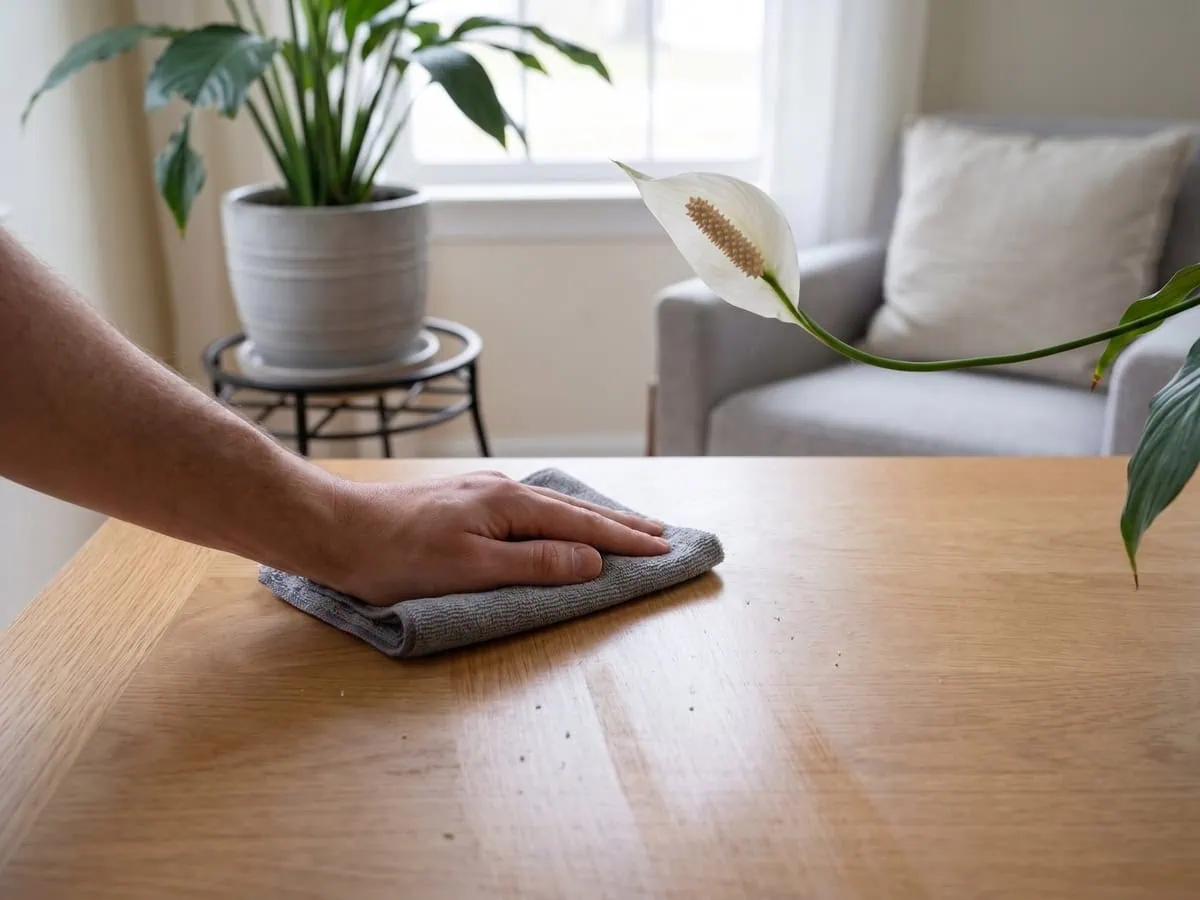
A peace lily is an aroid, a member of the family Araceae, and it is not related to the true lilies — the ones that send cats into kidney failure. The word they share is a shop-tag accident.
The ASPCA says as much: plenty of plants go by lily, and not all of them are dangerous to cats, which is exactly why the tag on the pot decides what happens next.
That distinction changes what you do next. A cat that chews a true lily is an emergency; a cat that chews this plant has a burning mouth and, in the published record, no kidney injury.
And one guide in almost every search still prints the opposite. Work out which plant is actually in the room before you act on anything you have read about lilies.
Tap the button below to get more plant fixes in your Google Search results

Signs after a bite, the first response, and the safety line
Signs arrive within minutes of the bite, not hours later, because a crystal that never dissolves injures on contact. The three sections below cover what you will see, what to do first, and how to keep the two apart.
A chewed spathe weighs less on a dustpan than the plastic tag that came with the pot, and that nothing-weight is exactly why a dropped one gets walked past.
Feline and canine signs, and the animal the sources add
The documented sign set is one list, not two — oral irritation, intense burning of the mouth, tongue and lips, excessive drooling, vomiting, difficulty swallowing. One list. The symptoms of peace lily poisoning in cats are the same ones a dog shows.
Horses belong on that list too, and almost no page says so; the sources add them and mark vomiting as the one sign a horse cannot produce. Onset and duration are separate questions. The only cat-scoped window anyone publishes runs 6 to 24 hours.
What to do first, and which line matches the patient
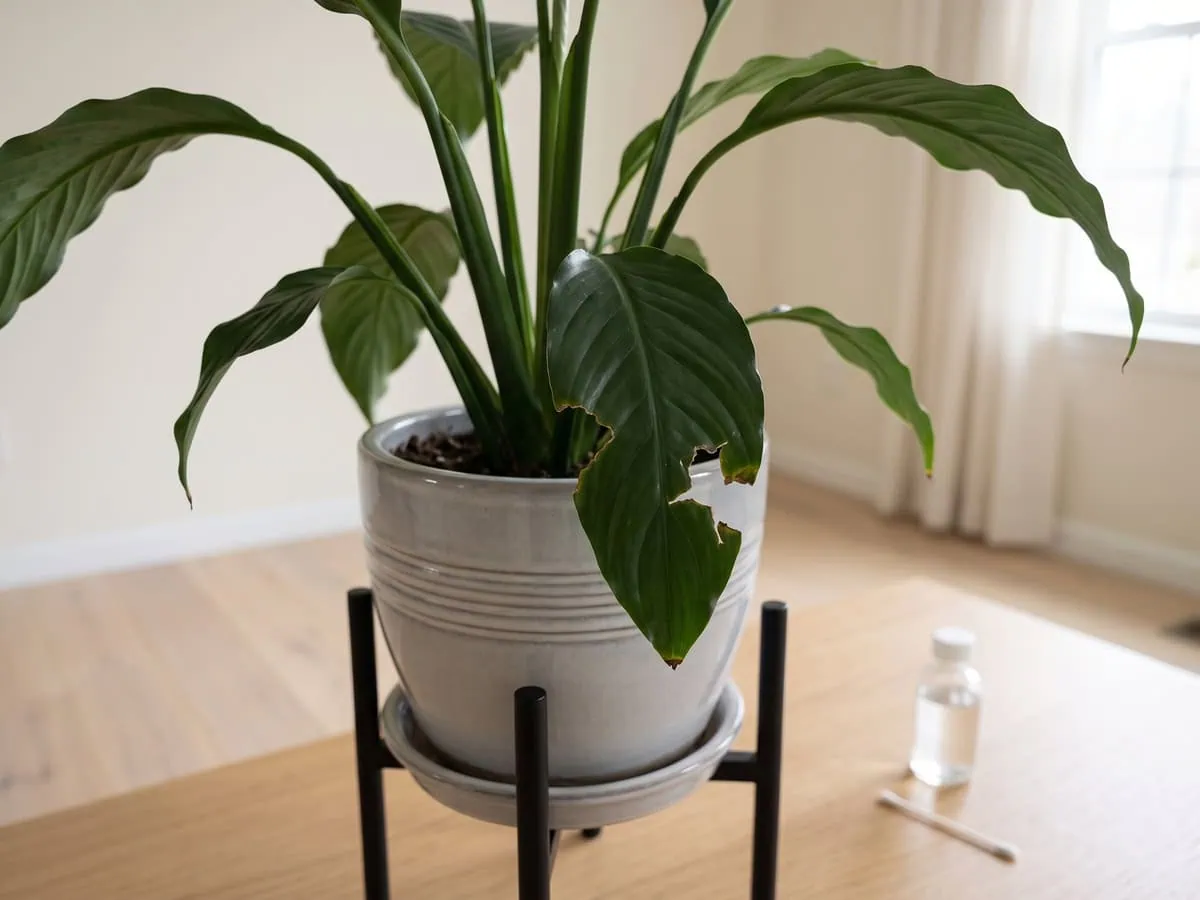
Stop the exposure, rinse the mouth, then call — in that order. Wipe the mouth gently, help them rinse and spit with water, then offer ice chips, yogurt or applesauce for the burning.
Two moves make it worse. Do not induce vomiting at home unless a veterinarian tells you to, and do not reach for milk; the pages covering this plant contradict each other on both.
Swelling that blocks swallowing or breathing is the one sign that changes the decision. It is rare, it follows a badly irritated throat rather than absorption, and it is where home observation stops.
Animals get one line, people get another, and the two are not interchangeable. Dial the matching one. For a cat, dog or horse, call the ASPCA Animal Poison Control Center at 888-426-4435. This information is for educational purposes only and is not a substitute for professional veterinary advice. If your pet ingests any part of this plant, seek immediate veterinary intervention or contact the ASPCA Animal Poison Control Center (888-426-4435) or the Pet Poison Helpline (855-764-7661) immediately.
People get a different number and one extra caution. For a child or an adult, call Poison Control at 1-800-222-1222, and hold off on large drinks while drooling is heavy or swallowing is hard. This content is for informational purposes only. If you experience a severe reaction, seek medical attention. For suspected ingestion by a child, contact Poison Control (1-800-222-1222 in the US) immediately.
Keeping the plant and the animal apart
Height is the only barrier that reliably works, and the clearance it needs is measured on your own plant, not on a chart, because that is where the number comes from. How far the clump arches past its rim sets your clearance, which is worth knowing when telling one peace lily selection from another.
Sweep the floor as often as you check the shelf. A shed leaf lands where the animal already walks, which is why advice on “how to keep pets away from a peace lily” that stops at shelf height still fails.
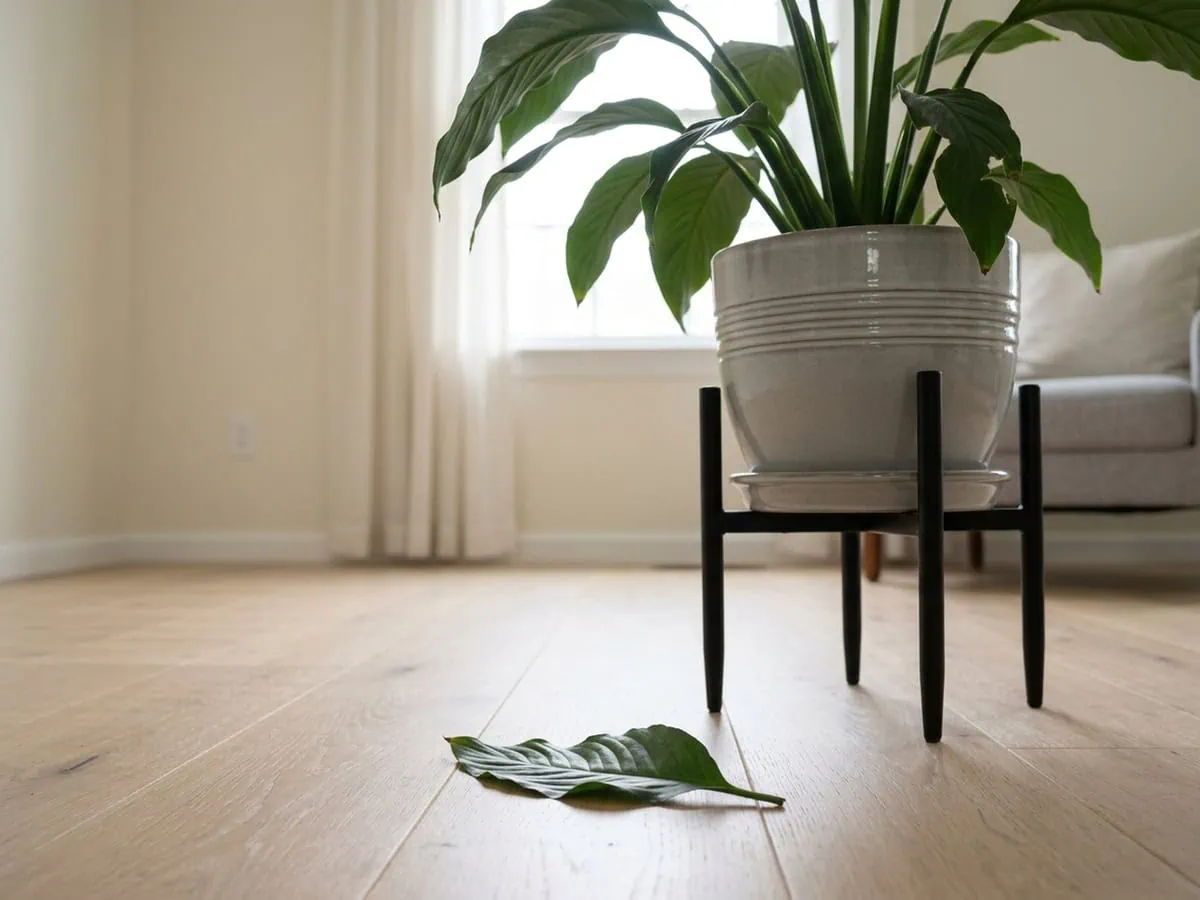
Repotting into a heavier container is what most owners do while re-siting the plant, and the weeks after carry rules of their own — worth reading on how a plant settles in once it is moved first.
Frequently asked questions about peace lilies and pets
Can I have a peace lily in the house with a cat?
Yes, provided the plant sits where the cat cannot reach it. The injury this plant causes is local and rarely serious, which is what makes sharing a home with one workable in the first place.
The barrier that actually holds is height, and the thing that defeats height is a shed leaf on the floor. Sweep around the stand as a habit, and keep the animal poison-control number somewhere you can find it in a hurry.
What happens if a cat licks a peace lily?
A lick that breaks no tissue usually does nothing, because the crystals stay locked inside the tissue until something tears it. A lick that crushes a leaf edge releases them, and the sting starts immediately.
Watch for drooling, pawing at the mouth and hesitation over food or water. Offer something cool and soft, then call the animal line if swallowing looks difficult at any point in the next few hours.
What are the downsides of having a peace lily?
On the safety side, the downside is that every above-ground part carries irritant crystals, so nothing on the plant is safe for a curious animal or a toddler to chew.
That places a permanent constraint on where the plant lives and on how fast dropped leaves get picked up. The wider growing drawbacks sit outside a pet-safety page and belong with the full care guide.
How long does peace lily poisoning last in cats?
The one cat-scoped window published in any care guide I compared runs 6 to 24 hours, and it rests on a single page rather than on a settled standard.
Onset is the part every source agrees on, because the pain starts at the first bite. Set a checkpoint instead of watching continuously, and call for advice if the animal is still off its food and water the next day.
How can I hang a peace lily?
For pet safety, hang it high enough that no chair back, sill or shelf offers a cat a route up to the foliage. Height without a clear approach is what a barrier means here.
Judge that clearance by route rather than by inches, because the climb your cat can make is what sets it. Hardware choice and watering an elevated plant are separate questions that this page does not answer.
What part of a peace lily is poisonous?
Every above-ground part carries them. The flowers, the leaves and the stems all hold insoluble calcium oxalate raphides, and the sap that escapes from any torn tissue carries them as well.
Published part lists differ at the margins, and one of them stretches the list to the spathes and the roots. Not one version marks any part as safe, so keep the whole plant out of reach of chewing.
My dog ate a peace lily leaf. What should I do?
Wipe and rinse the mouth, stop the exposure, then call the animal poison line before anything else. Do not induce vomiting at home unless a veterinarian specifically tells you to.
Offer cool water and something soft to eat while you wait for advice. Swelling that blocks swallowing or breathing is the sign that turns this from home observation into a clinic visit.
Is peace lily pollen toxic to cats?
Pollen licked off a coat can irritate the mouth the same way a chewed leaf does, and no authority ties this plant’s pollen to kidney injury.
The response is the same either way, so wipe a dusted coat off with a damp cloth exactly as you would wipe off sap, and wash your hands afterwards. Keep the pot high enough that a cat cannot reach the flower spike in the first place.
End the leave-it-and-hope era
Quick story: two moves of the pot, and the chewed blade still turned up on the rug — because the leaf came down, not the cat up. Height alone was never the whole answer. Sweep first.
An insoluble crystal is what makes that survivable — it injures where it lands and goes no further. A week of swept leaves fills a dustpan that still weighs less than the half-full watering can beside it.
The next question is which of your other plants belongs on that shelf too. The identification and post-repot guides above continue that trail.
If you came here asking is a peace lily toxic to cats and dogs, you now hold both halves: the crystal, and the first move. Set the pot where no paw or small hand can reach it, sweep up every fallen leaf, and those two emergency numbers stay nothing more than a note on your fridge.
Tap the button below to get more plant fixes in your Google Search results