

Skip to content
Plant Care Basics
  • Plants A-Z
  • Problems and Fixes
    • Root Rot and Overwatering
    • Pests and Diseases
    • Yellow Leaves
    • Brown Tips and Spots
    • Drooping and Wilting
    • Not Growing or Leggy
  • How-To Guides
    • Watering
    • Soil and Potting Mix
    • Repotting
    • Propagation
    • Pruning and Training
    • Light and Fertilizer
    • Identify and Compare
    • Complete Care Guides
    • More Guides
  • Pet Safety

Pang Nam Fui

Pang Nam Fui is the founder of Plant Care Basics, a friendly online resource dedicated to helping beginners grow happy and healthy houseplants. With a passion for demystifying plant care, he shares simple, practical, and well-researched advice to empower new plant parents with the confidence they need to thrive. His goal is to prove that everyone can develop a green thumb.

Home » Archives for Pang Nam Fui » Page 14

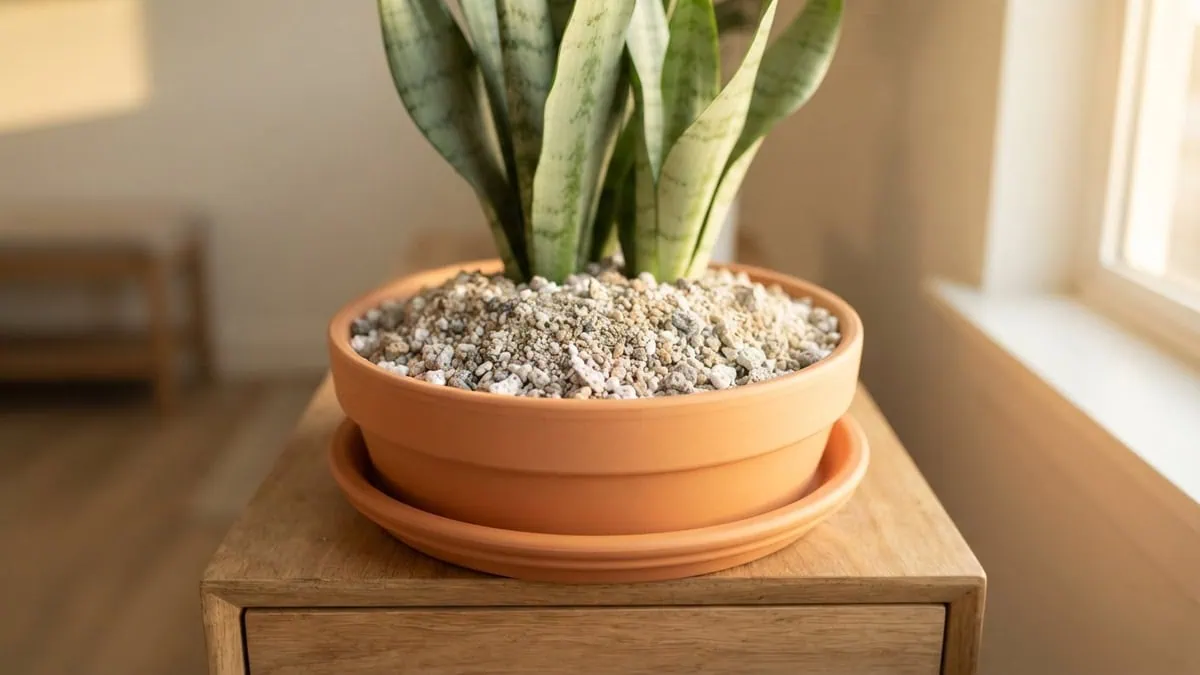
What is the best soil for a snake plant? A fast-draining, gritty mix that blocks rot
September 11, 2026 by Pang
What is the best soil for a snake plant? A gritty, fast-draining mix, shown here beside a potted Dracaena trifasciata.

I lost snake plants to a bag of ordinary potting soil before it clicked: the problem was never the brand, it was drainage. Now I build a lean, mostly mineral blend and skip the gravel-layer myth entirely. The payoff is roots that ride dry and firm between soaks.
Categories Snake Plant Care

Home » Archives for Pang Nam Fui » Page 14

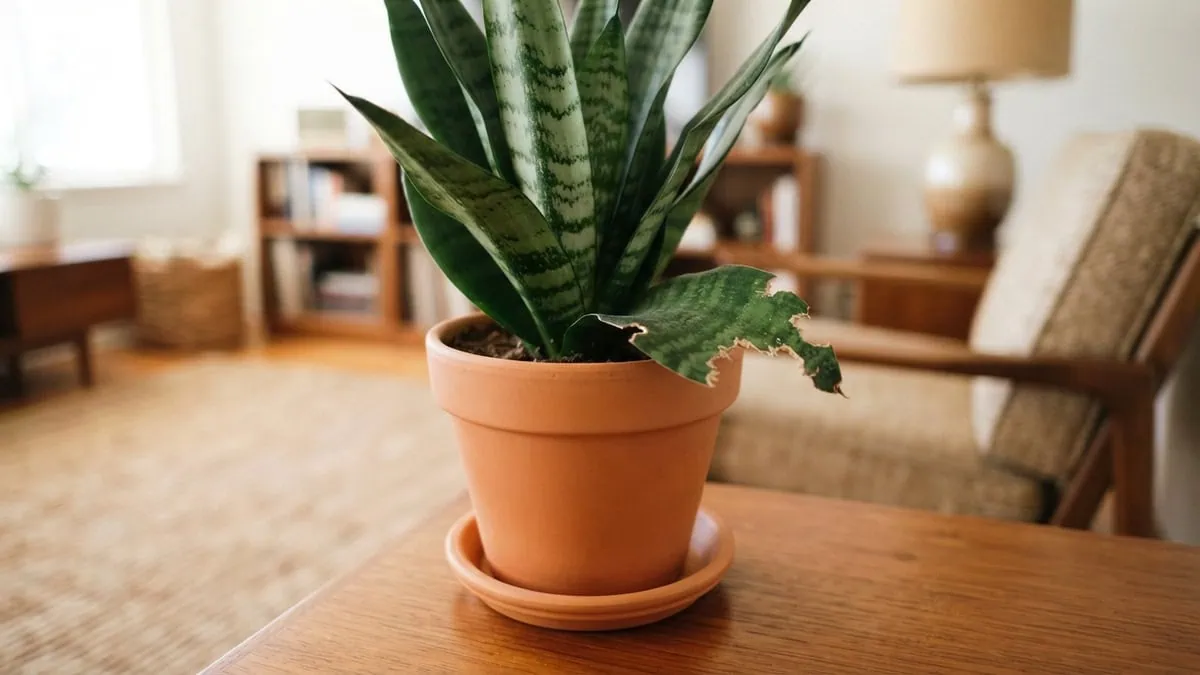
Is a snake plant toxic to cats and dogs? Yes, but rarely an emergency

August 22, 2026 by Pang
Is a snake plant toxic to cats and dogs? A Dracaena trifasciata with a pet-chewed lower leaf indoors.

My cat mouthed a low leaf, and I learned my snake plant is toxic to cats and dogs in a mild, soap-like way that upsets the gut for a day. I cover the poisoning symptoms, what to do at home, and the height trick that keeps my curious pets out of reach.

Categories Snake Plant Care
Newer posts
← Previous Page1 … Page13 Page14
Pang Nam Fui, founder of Plant Care Basics and plant care expert.

Hi, I'm Pang. Founder of Plant Care Basics. I share simple, well-researched advice to help beginners develop a green thumb. Welcome to my green corner!

You May Also Like

How to get rid of mealybugs and scale on Phalaenopsis orchids: cottony clusters on a moth orchid's leaf joints.

How to get rid of mealybugs and scale on Phalaenopsis orchids — what actually works

A cottony speck of mealybugs in a Phalaenopsis leaf joint is how the trouble starts, and I ignored mine far too long. Here I walk you through telling mealybugs, scale, and spider mites apart, then the swab-oil-repot rhythm that finally cleared my moth orchids for good.
What is the best soil for a peace lily: four separate heaps laid out in a row, the peat heap plainly the largest.

What is the best soil for a peace lily? The peat-and-bark ratio that stops root rot

A peace lily stores no water of its own, so everything the roots draw on has to come from the medium around them. No bag prints the number that actually decides it, which is how much air that blend still holds, and I have learned to settle it by hand.
How to repot a snake plant without killing it: a Dracaena trifasciata eased into fresh gritty mix in a new terracotta pot.

How to repot a snake plant without killing it: the snug-pot, dry-settle method

Repotting a snake plant goes wrong when the pot is too big and the first watering comes too soon. I match a barely-larger terracotta pot to the roots, mix in coarse grit, and keep everything bone-dry for a week so the rhizome knits back without rot.
How to train a Pothos on a moss pole: vine nodes pressed against damp moss and held by slack green ties.

How to train a Pothos on a moss pole: install, tie and moisture in order

Training this vine up a moss pole works by gripping rather than leaning, so a dry column gives its aerial roots nothing at all to hold. I wet the surface before anything else, press each joint against it, and leave every fastening loose.
Indoor Aloe vera plant care guide: a large healthy Aloe vera stands in an olive green pot beside a window.

Indoor Aloe vera plant care guide: proven light, water and cold limits (2026 Masterclass)

I lost my first Aloe vera to a watering can, not to a cold window. This guide sets out the light band, the dry-down interval, the cold floor and the gritty mix ratio I now use indoors, plus the check I run first when something looks wrong.
How to water a snake plant without overwatering: a clean stream soaks the gritty mix of a potted Dracaena trifasciata.

How to water a snake plant without overwatering: Read the soil, not the calendar

I lost my first few snake plants by watering them like any thirsty houseplant, on a calendar. What finally worked was learning to read the soil instead: let the mix dry deep, water in one deep soak, then drain every drop. This is the routine I trust.
What are the red dots and pale patches on new fiddle leaf fig leaves? Rust-red spots on one underside.

What are the red dots and pale patches on new fiddle leaf fig leaves? A 60-second check

A new leaf opens speckled and everybody assumes the worst, so I run one check that takes under a minute. This guide separates a burst-cell freckle from a hardened corky bump and from a film that wipes straight off, then says which of them fades as the leaf matures.
How to fix fiddle leaf fig root rot without repotting: lower leaves droop over a wet surface.

How to fix fiddle leaf fig root rot without repotting: the in-pot rescue

A plant that wilts while its mix is wet does not need a new pot, it needs air, and I can give it that where it stands. This guide stops the water, opens the drainage, separates rot from a rootball that dried too far, and takes off only what is fully gone.

  • Privacy Policy
  • Cookie Policy (EU)
  • Terms of Service
  • Image License
  • About Us
  • Contact Us
  • Sitemap
© 2026 Plant Care Basics. All Rights Reserved.
Manage Consent
To provide the best experiences, we use technologies like cookies to store and/or access device information. Consenting to these technologies will allow us to process data such as browsing behavior or unique IDs on this site. Not consenting or withdrawing consent, may adversely affect certain features and functions.
Functional Always active
The technical storage or access is strictly necessary for the legitimate purpose of enabling the use of a specific service explicitly requested by the subscriber or user, or for the sole purpose of carrying out the transmission of a communication over an electronic communications network.
Preferences
The technical storage or access is necessary for the legitimate purpose of storing preferences that are not requested by the subscriber or user.
Statistics
The technical storage or access that is used exclusively for statistical purposes. The technical storage or access that is used exclusively for anonymous statistical purposes. Without a subpoena, voluntary compliance on the part of your Internet Service Provider, or additional records from a third party, information stored or retrieved for this purpose alone cannot usually be used to identify you.
Marketing
The technical storage or access is required to create user profiles to send advertising, or to track the user on a website or across several websites for similar marketing purposes.
  • Manage options
  • Manage services
  • Manage {vendor_count} vendors
  • Read more about these purposes
View preferences
  • {title}
  • {title}
  • {title}