🎯 Quick Answer: Is a snake plant toxic to cats and dogs?
Yes, a snake plant is toxic to cats and dogs — but the reaction is usually mild, not a crisis. Dracaena trifasciata, a member of the Asparagaceae family, carries saponins that irritate a pet’s mouth and gut lining. Expect drooling, vomiting, or loose stool, and rarely worse.
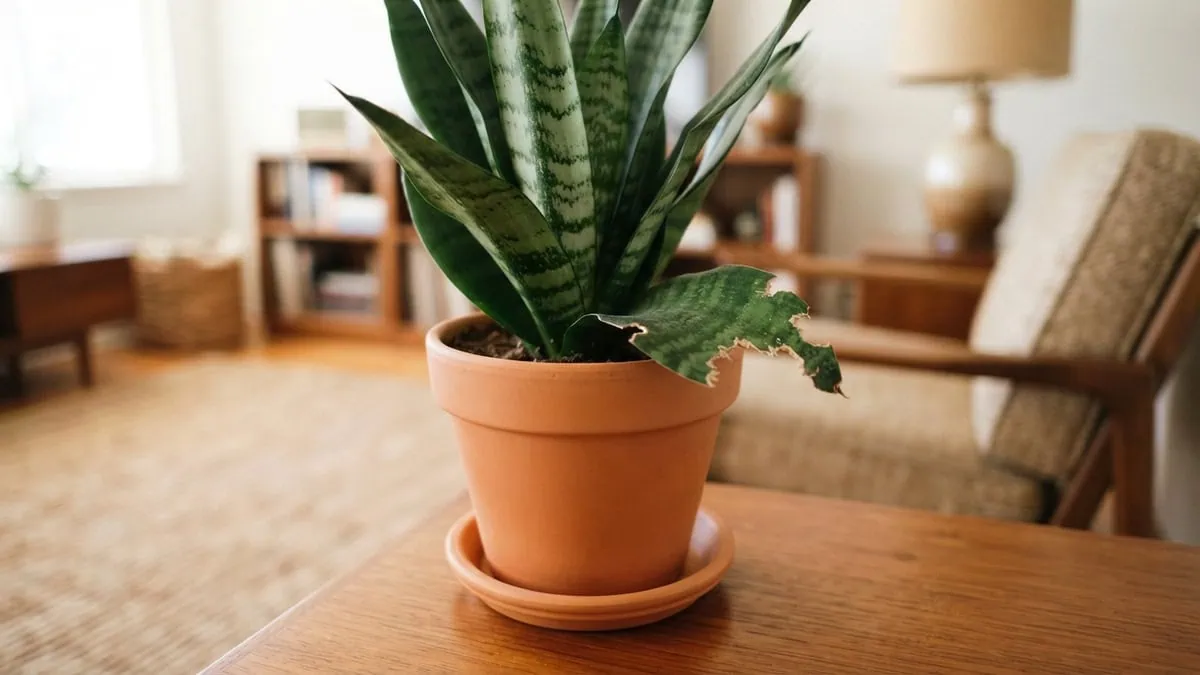
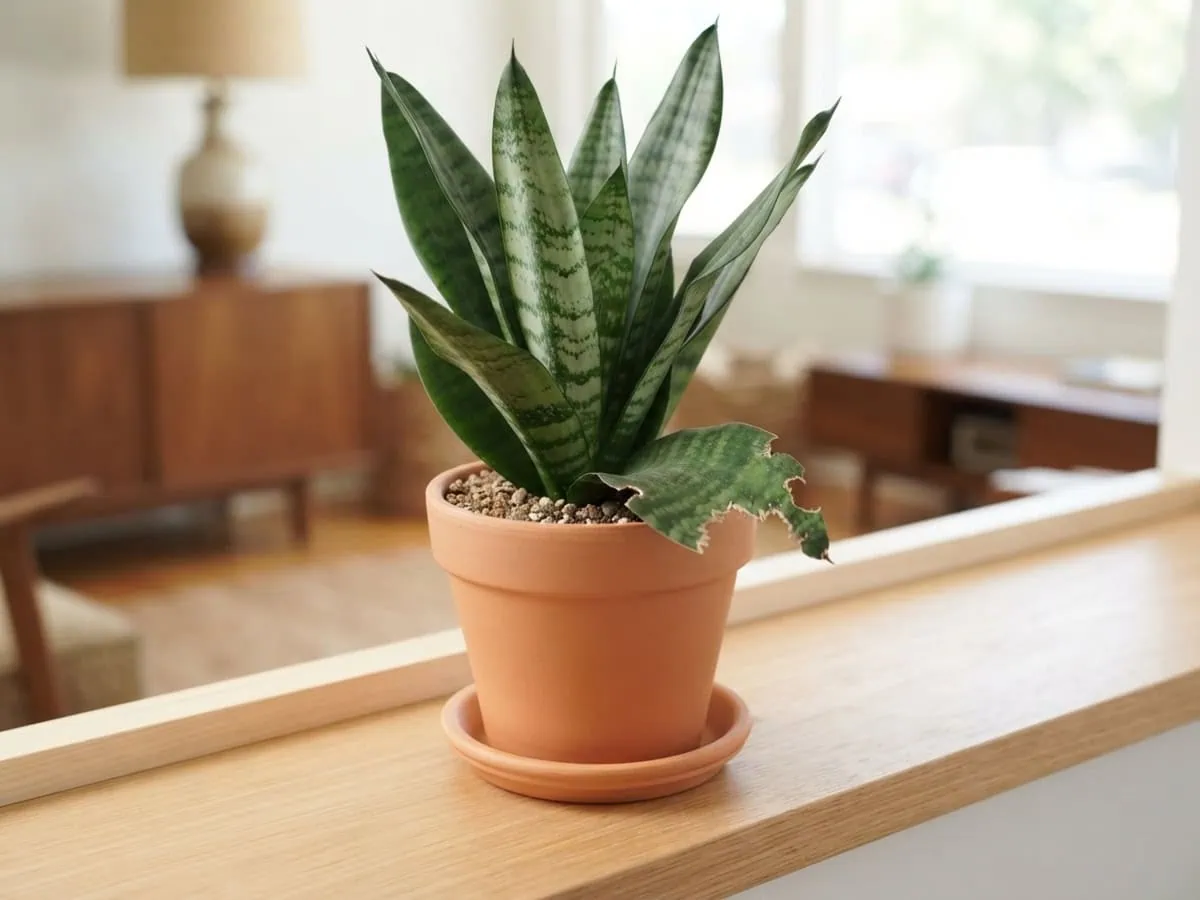
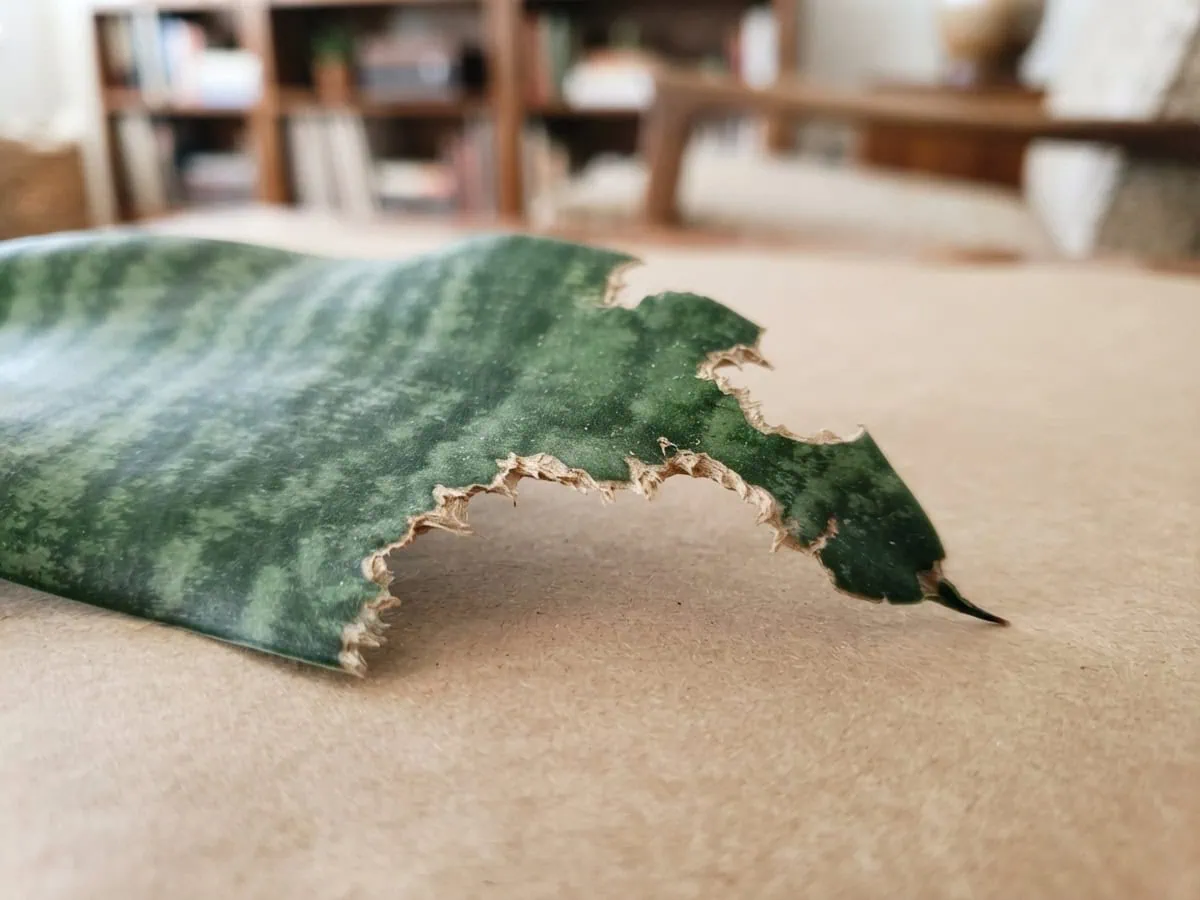
I spotted the chewed, ragged edges on a low leaf before I spotted the guilty cat. Two curious cats over five years, and that windowsill snake plant looked too tempting — so I lugged the heavy terracotta pot, dense as a full watering can, off the sill and called the vet.
Quick aside: the vet barely blinked. A snake plant (Dracaena trifasciata) is toxic to cats and dogs, but the irritant is a soap-like compound group called saponins — a nibble usually means drooling and a stomach upset, not the ER.
“A toxic plant means a poisoned pet” sounds right. It isn’t — what saponins actually do is gentler, irritating the mouth and gut lining like a weak detergent. Strike that: they irritate but barely absorb, so the upset stays local and short (yes, this sounds too reassuring — bear with me).
New here? Get the essentials of snake plant care down first, then come back for the pet side.
Take a breath — the panic fades once you see the real numbers. The following table lays out the whole toxicity picture at a glance.
Is a snake plant toxic to cats and dogs? At-a-glance facts
| Snake plant specs | Pet-safety details |
|---|---|
| Pet safe? | No — toxic to cats and dogs (steroidal saponins) |
| Toxic principle | Steroidal saponins — a natural, soap-like compound that irritates the mouth and gut lining |
| Which parts are toxic | All parts — the saponins run through the whole plant |
| Typical severity | Mild to moderate — a short, self-limiting stomach upset |
| Usually serious? | No — not in the amount a pet nibbles |
| Toxic to humans too? | Yes, mildly — the same stomach irritation; keep from small children |
| If a pet eats it | Remove access, watch symptoms, call your vet or ASPCA at (888) 426-4435; never force vomiting |
Tap the button below to get more plant fixes in your Google Search results

Table of Contents
How toxic is a snake plant, and what if a pet eats it?
A snake plant is toxic to cats and dogs, but for most pets it stays a short stomach upset. The ASPCA lists it as toxic to both; check any houseplant against the ASPCA’s database of plants that are toxic and non-toxic to pets. The sections below cover the toxin, the dose, the signs, and first aid.
What saponins do to a pet’s gut
Saponins are the whole story, in every part of the plant — leaf, root, and sap. On contact they act like a detergent, irritating the cells lining a pet’s mouth and gut.
That irritation is the drooling, retching, and loose stool — gone in a day or two. The gut clears it out.
Saponins: natural, soap-like plant compounds that foam in water and irritate the cells lining an animal’s mouth and gut.
You will also read that saponins “destroy red blood cells.” That is test-tube chemistry for concentrated saponin, not one chewed leaf — barely any absorbs, so the harm stays local.
This information is for educational purposes only and is not a substitute for professional veterinary advice. If your pet ingests any part of this plant, seek immediate veterinary intervention or contact the ASPCA Animal Poison Control Center immediately.
How much is harmful, and how serious can it get?
How serious it gets depends on three things:
- How much the pet actually swallowed
- The pet’s body size — a nibble is more to a kitten than to a big dog
- Its individual sensitivity
The exact question — “how much of a snake plant is toxic to pets” — turns on the size of the animal and the amount chewed rather than on a single figure. There is no measured toxic dose for these saponins in cats or dogs.
What saves most pets is the leaf itself: bitter and tough enough to turn them off after a taste. I’m honestly not sure why this works — but it does. A big, dangerous mouthful is genuinely rare.
What poisoning looks like in cats and dogs
The signs are the same in both species, and almost all are gut-related. If you have searched “what are the symptoms of snake plant poisoning in cats,” here is the list — and it reads the same for dogs:
- Drooling or hypersalivation
- Nausea, then vomiting
- Diarrhea or loose stool
- Low energy and a dip in appetite
- Rarely, after a large amount: belly pain or tremors
Signs usually show within a couple of hours. A thin thread of drool and a half-chewed leaf edge, ragged as if torn by pinking shears, is the classic scene. Messy, but minor.
First aid: what you do, and what the vet does
The “should I make it throw up?” confusion clears the moment you split the jobs in two. Your job at home:
- Take the plant away and stop any more eating
- Note what and how much was chewed; grab a leaf piece or a photo
- Do not make your pet vomit unless a professional tells you to
- Call your vet or a pet poison line and describe what happened
The clinic’s half is different. If the pet arrives soon after eating, the vet may induce vomiting or give activated charcoal, then supportive fluids until the upset settles. A lick or a single mouthing rarely needs any of that.
If your pet has eaten a lot or is already showing symptoms, take the plant away, do not make it vomit, and call your vet or the ASPCA Animal Poison Control Center at (888) 426-4435 or the Pet Poison Helpline at (855) 764-7661 right away.
Tap the button below to get more plant fixes in your Google Search results

Keeping curious pets away, and safer swaps
Keeping a curious pet away comes down to one move: put it out of reach. Taste, sprays, and training are backups, and the sections below rank them honestly.
Where to put it so paws can’t reach
If you have searched “how to keep cats away from a snake plant,” the honest answer starts with physical distance, not deterrents. In order of what works:
- Height first: a tall shelf, mantel, or hanging planter above the jump line
- A pet-free room it cannot enter
- Pebble top-dressing to stop soil-digging
- Bitter sprays or citrus peel at the base — weakest, least reliable
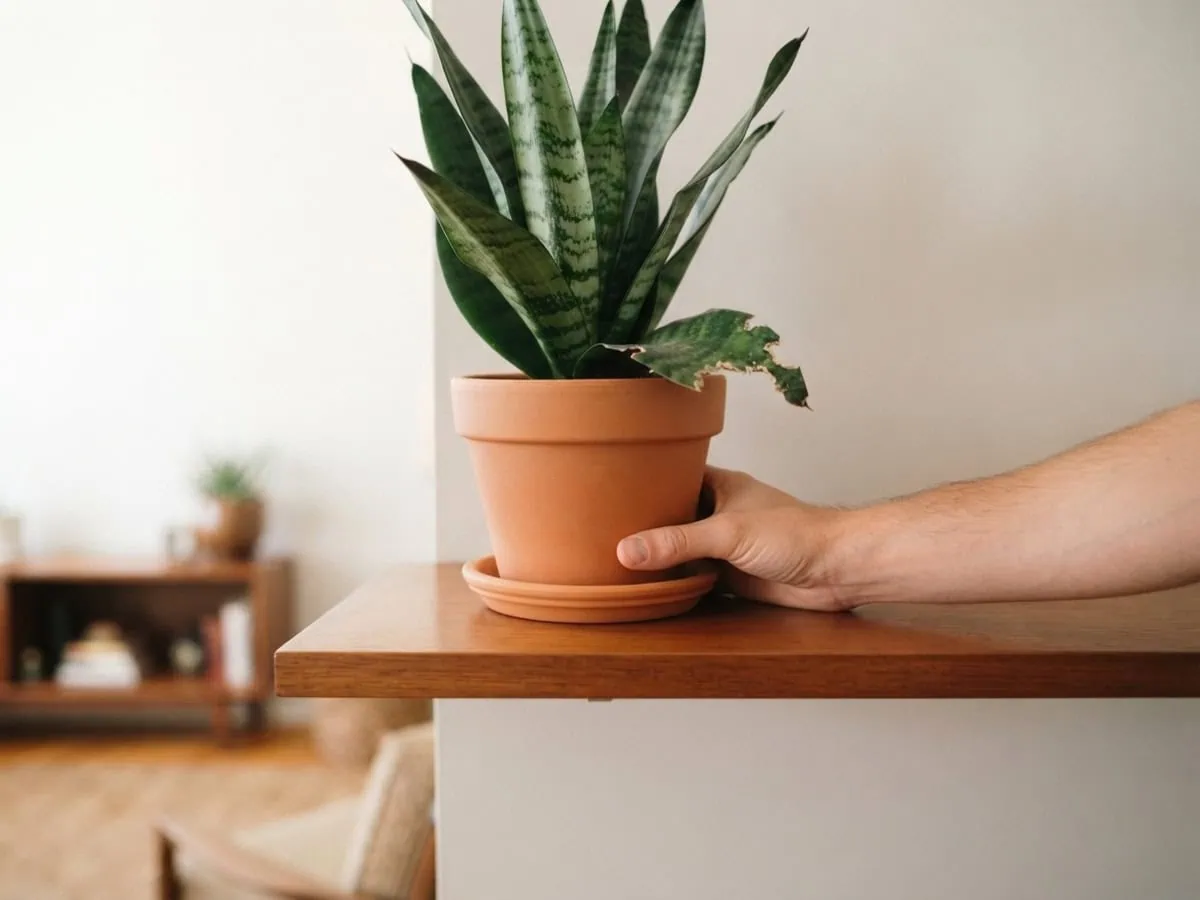
Lifting it surprises you — a mature snake plant in a terracotta pot rides heavy in both hands, like a full grocery bag, so settle it somewhere sturdy at head height. (FYI — every Sansevieria and Dracaena variety carries the same saponins, so no cultivar is the “safe” one.)
The one dependable deterrent is height. Set the plant on a high shelf or hanging planter, above a cat’s jump line and a dog’s reach. Bitterness and sprays are unreliable backups, not the main defense.
And keep the two problems separate, because getting a cat off the plant is a placement job, while clearing an actual bug problem off the leaves is a different task entirely.
Do pets instinctively avoid toxic plants?
Not reliably, no. The bitter taste turns many animals off after a lick, but plenty chew anyway out of boredom. I’ve watched cats go back to a plant they already spat out, purely out of habit, and puppies are nosier than older dogs.
A snake plant can still share a room with a mellow pet — but only if it sits out of reach. Taste is a hope, not a guarantee. Height is the fix.
Pet-safe alternatives with the same look
If you would rather not gamble, the fix is a trait-matched swap. Ask what you wanted “non toxic houseplant alternatives to a snake plant” for, then match that:
- Loved the tall, architectural sword leaves? The cast iron plant is the closest — upright, non-toxic, tough in low light.
- Loved the striped, upright foliage? A spider plant reads the same way, and is pet-safe.
- Wanted a lush, low-light floor plant? A calathea fills the corner without the toxicity.
- Wanted a sculptural, low-water shape? A ponytail palm is soft and non-toxic.
Re-check any pick against the ASPCA non-toxic list first — reputations drift over time.
People, other pets, and myths to skip
The snake plant’s toxicity reaches beyond cats and dogs, but it stays gentle across the board. A few loud myths make it sound scarier than it is. The following sections cover people, other animals, and the claims worth ignoring.
Is a snake plant poisonous to humans and children?
Yes, mildly — the same saponins irritate a person’s mouth and gut, so a chewed leaf brings a stomach ache, and a controlled study found no deaths in test animals even at very high oral doses. Low danger, not no danger.
This content is for informational purposes only. If you experience a severe reaction, seek medical attention. For suspected ingestion by a child, contact Poison Control (1-800-222-1222 in the US) immediately.
The realistic risk is a crawling toddler mouthing a low leaf. Keep it up high.
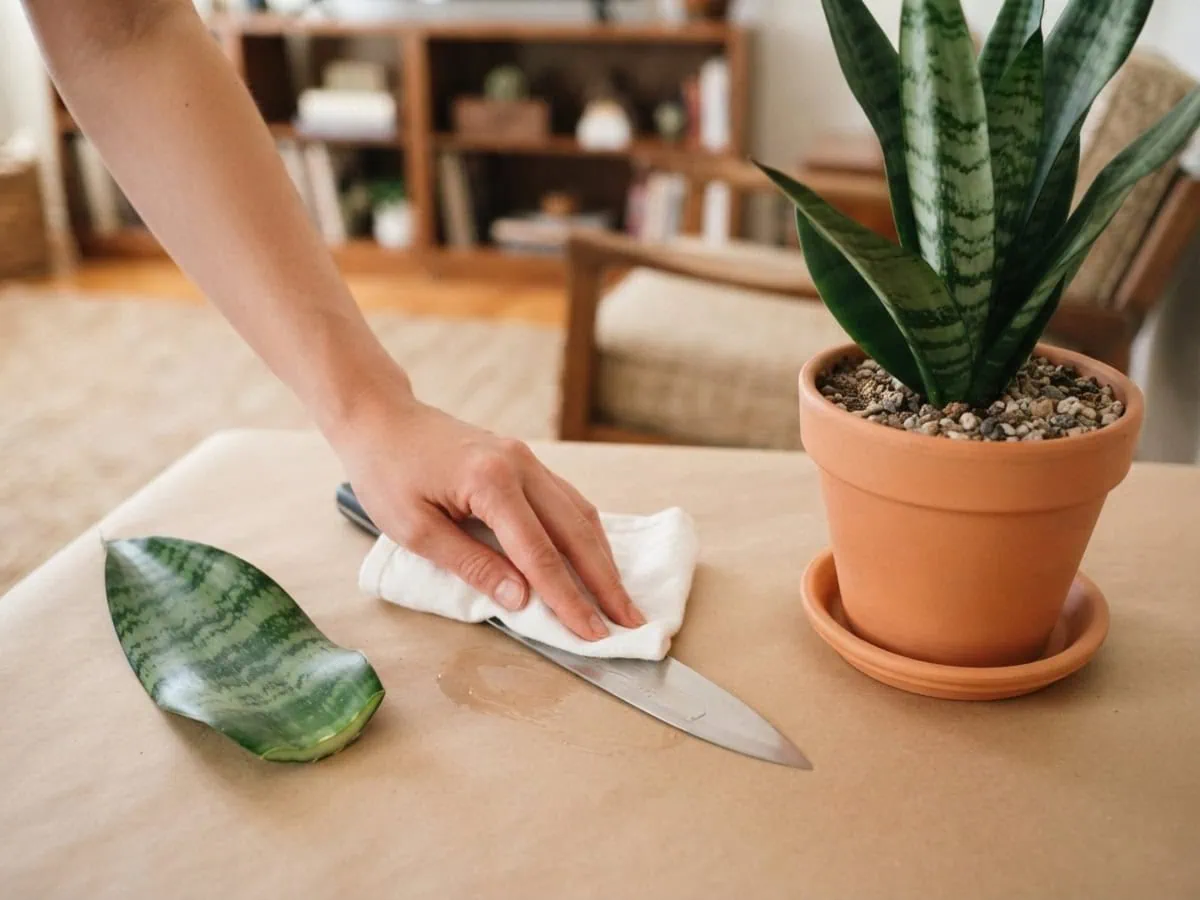
One handling note: cutting the plant releases sap that can mildly irritate skin. You meet it most when repotting it without stressing the roots. It is an awkward two-handed lift — the loaded terracotta pot rides as heavy as a full watering can.
Wear gloves or wash your hands after, and keep the sap out of your eyes.
Keep the plant out of a crawling child’s reach. If a child swallows a piece, call US Poison Control at 1-800-222-1222 right away, and watch for mouth irritation, drooling, or an upset stomach.
People also confuse the snake plant with dumb cane (Dieffenbachia), a far harsher plant whose crystals cause intense mouth burning and swelling. The snake plant is the gentler one — its saponins irritate, they do not sear.
Rabbits, birds, and other pets
Cats and dogs get the attention, but saponins deter all herbivores. So small plant-eaters are affected too:
- Rabbits are the one other species named directly — the saponins upset their gut the same way.
- Birds, reptiles, and small mammals: keep the plant fully off-limits and lean on the ASPCA, not forum stories.
The “a rabbit died from one leaf” tales online are anecdotes, and clinical experience puts the reaction at drooling and stomach upset instead.
Common myths about how toxic it is
Two claims get repeated far past what the science supports, making the snake plant sound more dangerous than it is. I’ve seen more than one owner toss a manageable plant over them. Both deserve a flat correction.
Myth: “It’s so toxic you should get rid of it.” Fact: the snake plant sits at the mild end of the houseplant spectrum — a short stomach upset. The plants that truly earn a rush to the vet are true lilies (kidney failure in cats), oleander, and sago palm.
And the often-repeated “jade and peace lily are true lilies” line is simply wrong: jade is a succulent, peace lily is an aroid, and neither is a Lilium.
Two more claims to drop:
- A single chewed leaf does not “destroy your pet’s red blood cells” — that is concentrated test-tube chemistry, not a nibble.
- The plant’s bitter taste is not a dependable guard, since plenty of pets chew regardless.
And if you are unsure which snake plant you own, it does not change the safety verdict. Telling the different snake plant varieties apart is about looks, not risk. Every one carries the same saponins.
Snake plant and pet safety: common questions
Can I have a snake plant in the same room as my dog?
Yes, as long as the plant sits out of your dog’s reach. A snake plant is toxic to dogs, but the reaction is a brief stomach upset, so sharing a room is fine when it sits up high, out of reach. Most dogs ignore it after one bitter taste, yet curiosity overrides that — so height, not flavor, keeps them safely together.
What happens if a cat licks a snake plant?
Very little — a lick is minimal contact, so most cats show no more than brief drooling, or nothing at all. An actual chew can bring drooling, vomiting, or loose stool within a couple of hours, but a single lick rarely reaches that point. Watch your cat for the rest of the day, offer water, and call your vet only if vomiting repeats.
What will a snake plant do to a dog?
A snake plant gives a dog a short bout of gastrointestinal upset — drooling, vomiting, and diarrhea are the usual signs. The saponins irritate the mouth and gut lining on contact, and the effect is gentle for most dogs, clearing within a day or two. A large mouthful, or a very small or young dog, warrants a vet call, but a nibble is rarely an emergency.
Do dogs know to avoid poisonous plants?
Not reliably — dogs have no dependable instinct for avoiding toxic plants. The snake plant’s bitter taste turns many dogs off after a lick, but plenty chew anyway out of boredom or teething, and puppies are especially prone to it. Because taste is only a hope, the safe approach is physical: keep the plant up high or in a room the dog cannot enter.
End the toxic-plant panic era
The calm version: a snake plant is toxic but mildly, and the risk is about access, not chemistry. Pause for a sec. The saponins sting a pet’s mouth and gut, the upset clears within a day, and the bitter leaf stops most pets early.
Your real job is height. That surprisingly heavy terracotta pot, up on a high shelf or hung out of reach, beats any spray — and it spares you the vet-panic I felt on day one.
When a friend asks, “Is a snake plant toxic to cats and dogs?” answer honestly: yes, but keep it up high and it stays a plant you can live with. May your snake plant stand tall and untouched, up where curious paws can’t reach, and may your cats and dogs stay safe and unbothered below.
Tap the button below to get more plant fixes in your Google Search results