⏱️ 30-Second Answer: What a snake plant needs to thrive
Snake plant (Dracaena trifasciata), a member of the Asparagaceae family, melts into soft root mush when soil stays wet below 55F. Sound snake plant care comes down to one rule: water only after the mix dries through. It is a drought-built succulent, not a thirsty tropical.
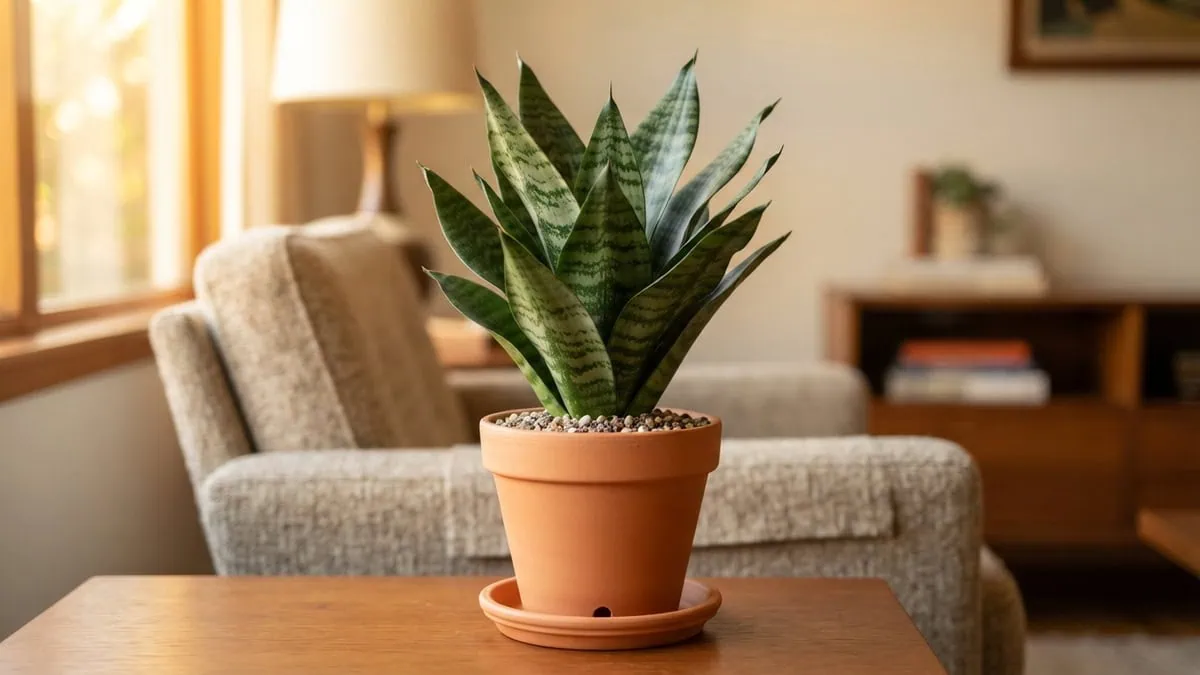
Give it bright indirect light, a fast-draining gritty mix, and an unglazed terracotta pot with a drainage hole. Keep it between 60F and 85F, feed it sparingly, and skip the humidifier entirely. It tolerates neglect, but it cannot survive a soggy pot.
- Water by feel: soak only after the mix dries several inches down
- Place it bright: an east or west window beats a dark corner
- Pot it lean: gritty cactus mix in unglazed terracotta with a hole
- Keep it warm: shield it from cold drafts and skip the humidifier
- Lift it high: the saponin-laced leaves sicken curious cats and dogs
The first time I unpotted a dying snake plant, the smell reached me before the roots did — a sour, swampy reek rising from soil that looked perfectly fine on top. Full stop. I had lost several of them (stay with me here), each one on the same proud weekly schedule, watered like clockwork.
Rather than neglect, I discovered the opposite: this is a desert succulent that banks water in its fleshy leaves and underground rhizome, then spends it through a slow night-shift metabolism. Actually, I take that back — forgetting to water was never the danger. Watering it like a fern was.
Because it carries its own reserve, the soil must dry through between soaks — or the tissue that stores that water rots from the roots up.
Get that one rhythm right and the rest falls into place — light, soil, pots, feeding, and the pet question all follow from how this plant drinks.
Take a breath — if your plant is sliding downhill right now, the following table distills every number you need to stabilize it onto one screen.
Snake plant care at a glance
| Snake plant specs | Recommended care |
|---|---|
| Light | Bright indirect light, about 500-1000 FC; survives near 100 FC with slow growth |
| Water | Only after the mix dries through to the lower roots; never on a calendar |
| Soil | Fast-draining cactus or succulent mix, roughly one part organic to two parts mineral |
| Temperature | 60-85F is ideal; keep it above 55F |
| Humidity | Dry indoor air is fine; no humidifier needed |
| Fertilizer | Balanced feed at one-quarter to one-half strength, monthly in spring and summer only |
| Pot | Unglazed terracotta with a drainage hole; step up only 1-2 inches |
| Pet safe? | No — toxic to cats and dogs (steroidal saponins) |
| Beginner friendly? | Yes — it tolerates low light and irregular watering |
Tap the button below to get more plant fixes in your Google Search results

Table of Contents
Native habitat and the biology of a tough houseplant
Below, the plant’s African desert origins explain every rule that follows — its roots, its rare bloom, and its toughness.
A drought plant from dry tropical Africa
The snake plant is a rhizome-rooted succulent from the seasonally dry tropics of West and Central Africa, built to bank water and ride out long droughts. According to Kew’s Plants of the World Online, the accepted name Dracaena trifasciata replaced the older Sansevieria trifasciata still printed on most plant tags.
It sits in the Asparagaceae, a family of tough, drought-tolerant plants. Its native range, from southern Nigeria across to Tanzania, swings between a wet stretch and a long dry one, so the plant lives on stored reserves rather than steady rain.
Geography is destiny here. That single fact maps straight onto your living room: it loves ordinary household warmth (60 to 85F) yet cannot take a cold snap, so keep it above 55F and off frosty winter glass.
The water-storage biology behind the reputation
The snake plant earns its indestructible name through three water-banking tricks working at once. Its stiff, fleshy leaves are packed with dedicated water-retention tissue, and a thick underground rhizome stores still more — a built-in reservoir it draws down for weeks. It is a living canteen.
On top of that it runs CAM photosynthesis (a water-thrifty, night-shift metabolism), opening its leaf pores only after dark to take in carbon dioxide when little moisture escapes. I could be wrong here, but I suspect that night shift is the real reason it coasts in a dim corner where thirstier plants sulk.
The flip side is brutal. A design built to hoard water fails in constant wetness, which is why a waterlogged pot turns that same storage tissue into the sour, swampy mush I met when I unpotted my first casualties.
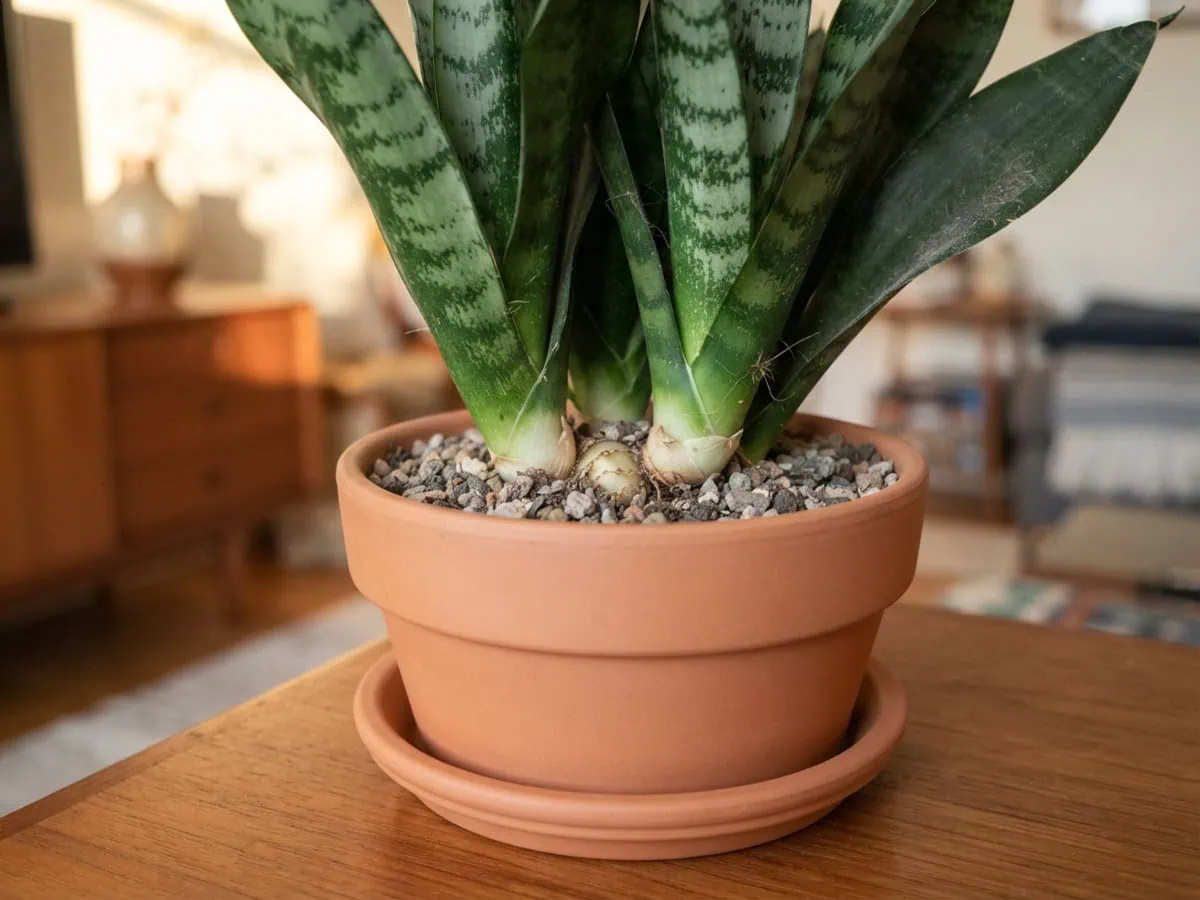
Aerial roots and a thick surface stalk are normal
Aerial roots and a thick surface stalk are normal, so if you have wondered are snake plant aerial roots normal, the answer is yes. Pause for a sec. Those pale roots arching above the soil are nothing to fear.
That chunky, layered stalk shouldering up out of the pot is a surfacing section of the underground rhizome (the horizontal storage stem that sprouts new leaf fans), reaching toward light or simply running out of room in a snug pot.
They are not rot, and they need no fix. A soft, brown, foul-smelling base would signal rot — but a firm, pale root or stalk is just the plant spreading the only way it knows how.
Tuck a surfaced rhizome back under fresh mix at the next repot, or leave it on display.
When a snake plant flowers
If you have ever wondered why is my snake plant flowering, the trigger is maturity plus a tight pot plus bright light — not anything you did wrong. That is a milestone, not a malfunction.
A well-established plant that has filled its container may push up a tall stalk of small, fragrant, greenish-white flowers, most often during a cool, low-light rest, though indoor blooms stay rare.
Those flowers weep clear, sticky droplets of nectar along the spike. That glossy bead is harmless plant sugar, not pest honeydew or disease — so wipe any drips and enjoy the rare event. Once the bloom fades, snip the spent stalk down at the base.
Watering: the overwatering trap that rots the roots
The sections below cover why overwatering is lethal, how to test for dryness, and how to read the leaves.
Why overwatering is the number-one killer
Overwatering kills more snake plants than every other cause combined, because waterlogged soil starves the roots of oxygen and rots the water-storing rhizome from the inside. The math is lopsided.
I lead with water for a blunt reason. Across owner reports asking for help, overwatering-driven root and rhizome rot is the number-one way these plants die indoors, far ahead of any pest, draft, or light problem.
Roots need air as much as moisture, so when they sit submerged they suffocate and anaerobic rot takes hold. Once you understand that, dialing in a safe watering rhythm becomes the single most valuable skill in snake plant care.
A soft, mushy base and a sour, swampy smell mean root or rhizome rot is already underway. Stop watering at once, unpot the plant, and cut every brown, slimy root back to firm pale tissue before the decay climbs into the crown.
The reassuring news is that the opposite mistake is nearly harmless. A snake plant can sit bone-dry for a month and bounce back the moment you water it, so when you are unsure, the safe move is always to wait.
Thirst wrinkles a leaf; wetness rots a root. Only one of those is reversible.
The deep dry-down test before you water
Go deep. Test deep in the pot, not just at the surface, before you ever reach for the watering can. The classic finger-to-two-inches check works for most houseplants, but two inches is not enough for this deep-drying succulent (its lower root zone can stay wet long after the top feels dry).
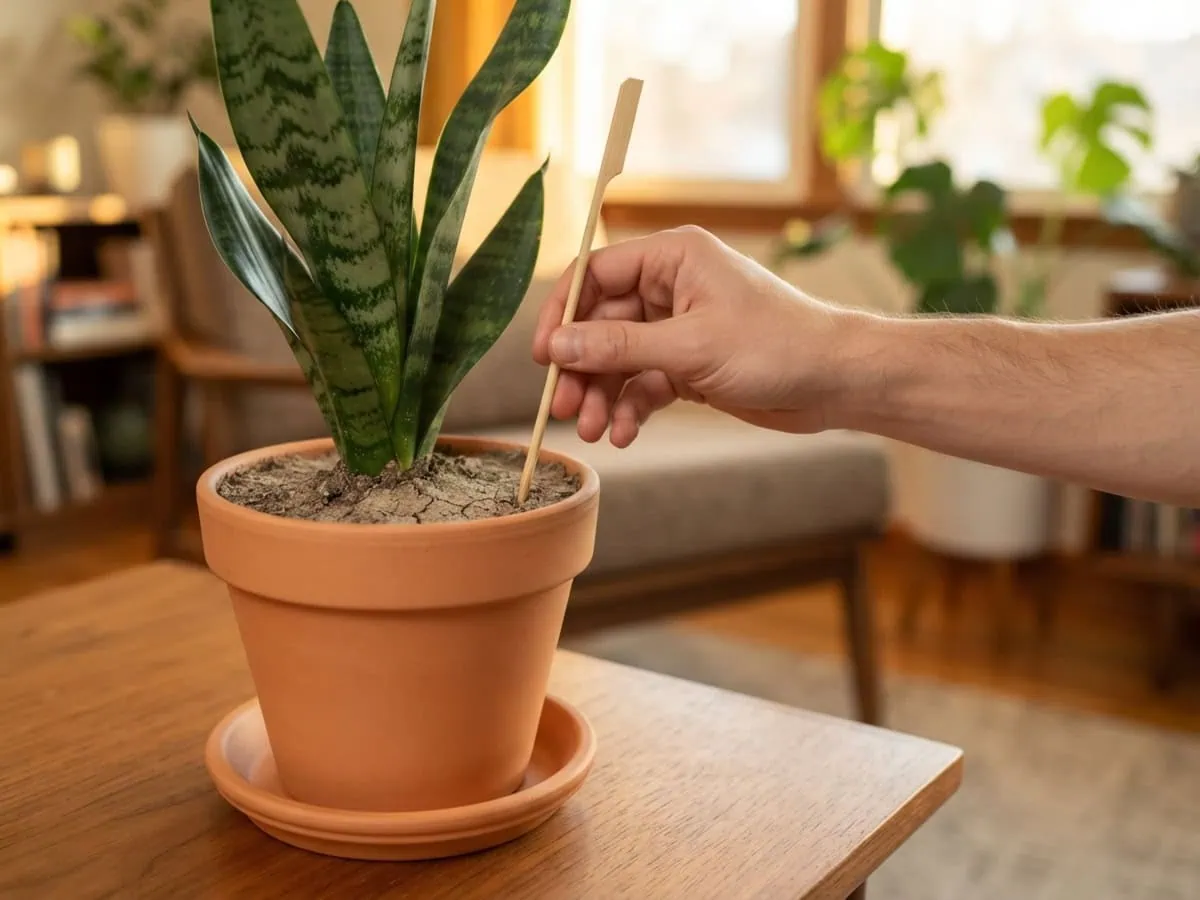
Push a long wooden skewer or chopstick (a kitchen chopstick works perfectly) most of the way to the bottom, wait a moment, then pull it out. If it slides out dry and clean, water thoroughly until it runs from the drainage hole.
If it comes out cool, dark, or clinging with damp grit, wait several more days and test again.
Overwatered versus underwatered: reading the leaves
Touch, don’t look. Texture and location tell the two apart faster than color ever will: an overwatered plant turns soft and mushy at the base, while a thirsty one wrinkles yet stays firm.
If the leaves are curling, yellowing, or drooping and you cannot yet tell which way they lean, reading curling, yellowing, and drooping leaves walks through each symptom in turn.
The following table lays the contrast side by side so you can act on the right one.
| Sign | Too wet (overwatered) | Too dry (underwatered) |
|---|---|---|
| Base and roots | Soft, mushy, foul-smelling | Firm and odorless |
| Leaves | Yellowing, then collapsing | Wrinkled and creased, still firm |
| Soil | Stays wet for many days | Bone-dry through the pot |
If the base already feels soft, you are past watering questions and into a rescue, and rescuing a plant that has started to rot follows its own unpot-and-trim protocol. A wrinkled, firm leaf, by contrast, just needs a thorough soak and a return to the dry-down rhythm.
Watering less in the low-light months
Water far less often in the dim, cool months, because a resting plant in weak light barely drinks. When winter heating runs and daylight shortens, indoor growth slows, the soil dries much more slowly, and a pot you watered every two weeks in summer may now go five or six weeks between drinks.
Let the skewer, not the calendar, set the schedule. Test, wait, and only water when the core runs dry — the reduced demand is your strongest defense against cold-season rot. Patience wins in winter.
Light: how much light a snake plant needs indoors
The sections below turn “bright indirect light” into real numbers, real windows, and the signs your plant is misplaced.
The three light tiers in foot-candles
So how much light does a snake plant need indoors? Think in three tiers measured in foot-candles (FC), the unit growers use for light intensity. Light is the dial.
It survives down around 25 to 100 FC — the famous dark-corner reputation — but at the very bottom it merely idles, and leaf tips can crinkle. It thrives at roughly 500 to 1,000 FC of bright, indirect light, where it pushes out firm new leaves.
It tolerates over 1,000 FC and some direct sun once acclimated, though unfiltered summer sun through hot glass can scorch it. According to Penn State Extension, this is a low-light generalist; their low-light houseplant guidance confirms it endures shade but grows best somewhere brighter.
No light meter? Use the shadow test. Hold your hand a foot above the leaves at midday: a sharp, crisp shadow means bright light near the sweet spot, while a soft, fuzzy shadow means you are down in low-light survival territory.
Matching the plant to your windows
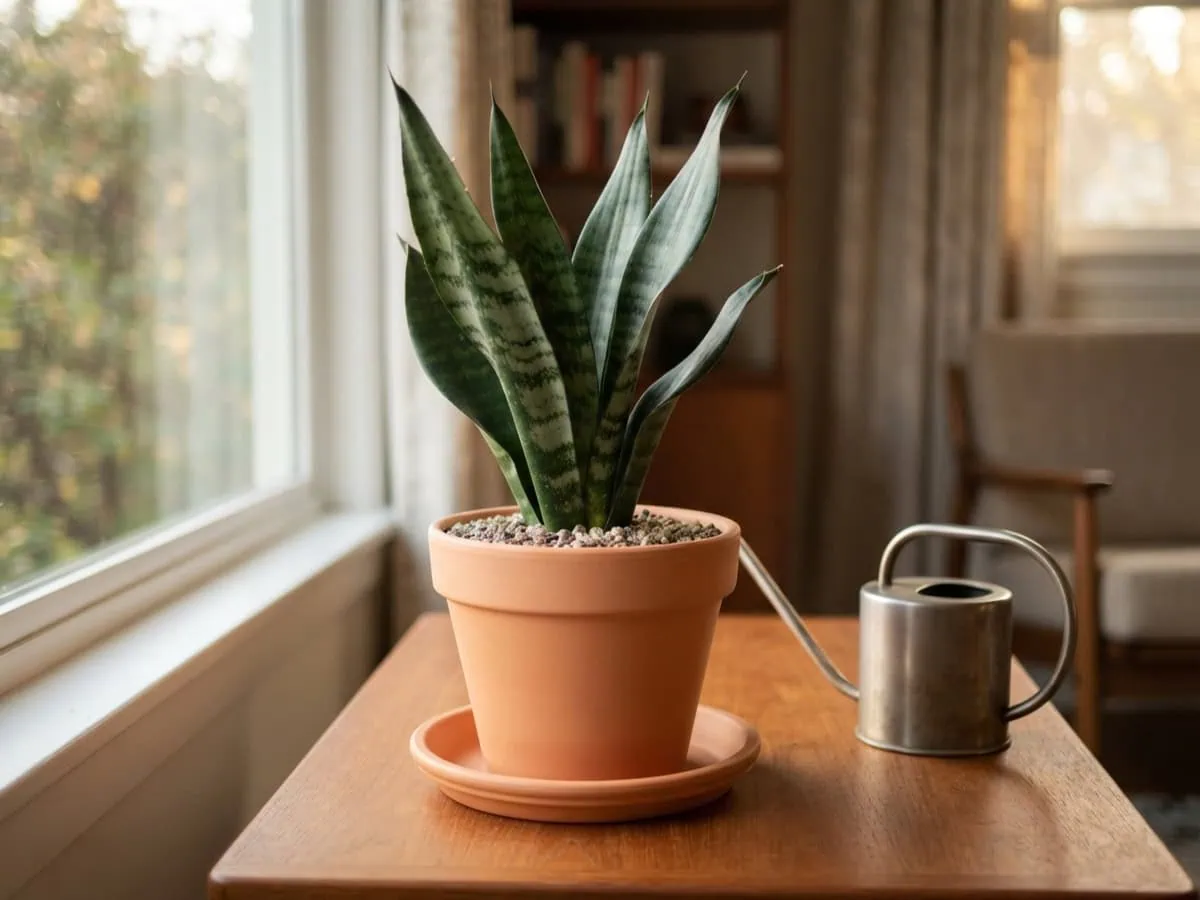
Match the plant to your brightest realistic window. An east- or west-facing window (Northern Hemisphere reference) lands it squarely in that 500-to-1,000 FC sweet spot and makes the best everyday home.
A north window keeps it alive but slow (think survival, not growth); a south window is often too intense at point-blank range, so set the pot a few feet back or behind a sheer curtain so harsh summer sun cannot scorch the leaves.
Distance from the glass is your dimmer — step back to soften the light, move closer to brighten it.
Dust on the leaves steals light
Dust is a quiet light thief on a plant with broad, flat blades. It steals growth. A film of dust blocks sunlight and lowers the leaf’s ability to photosynthesize, so the plant captures even less of the light it already fights for in a dim room.
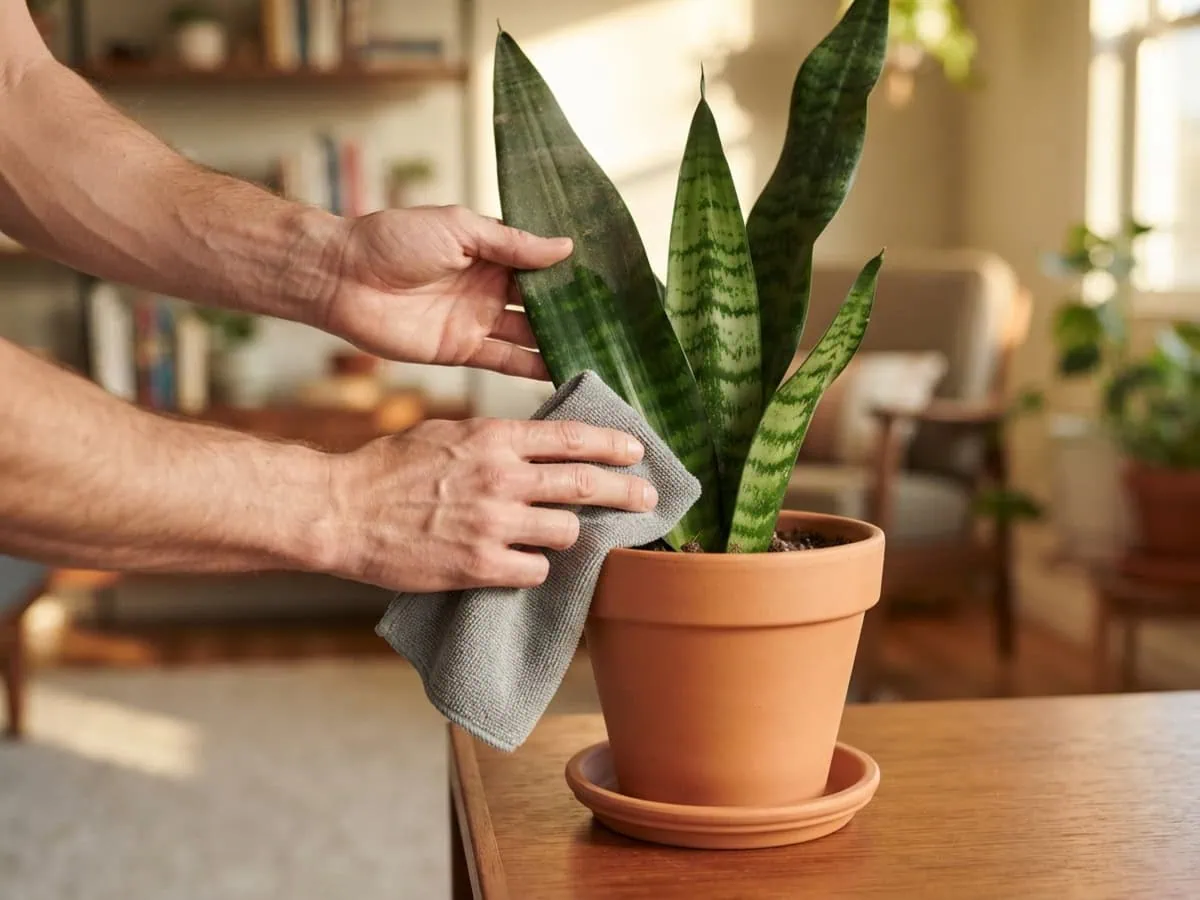
That makes how to clean dust off snake plant leaves a real care task, not just tidying: wipe both faces of each leaf with a soft cloth dampened in plain lukewarm water, steadying the leaf with your free hand.
Skip commercial leaf-shine sprays — their waxy residue clogs the pores the leaf breathes through and does more harm than the dust ever would. Clean whenever you can see or feel a coating.
Signs of too little or too much light
The clearest sign of too little light is stalled growth: months pass with no new leaf, and what does appear comes in narrow, soft, and pale — sometimes so thin you can almost see the wall straight through the plant.
Variegated types such as ‘Laurentii’ also fade their gold edges toward plain green in shade, which is one reason telling the varieties apart matters for light planning.
Take this with a grain of salt, because a stiff rosette complains more quietly than a vining plant, but a leaning, reaching posture points the same way. Too much light swings the other way: bleached, bronzed patches on the sun-facing side mean scorch, so pull the plant back from the glass. Watch the new leaves.
Tap the button below to get more plant fixes in your Google Search results

Soil, pots, and feeding without rot
Below, the mix, pot, feeding, and repotting all share one job: keeping the roots from sitting wet.
A fast-draining gritty mix
Pot a snake plant in a fast-draining, gritty mix, never a moisture-holding houseplant soil. Grit saves roots. The target is one part organic to two parts mineral — potting soil or coir cut with plenty of perlite, pumice, or coarse sand.
That mineral-heavy blend lets water rush straight through instead of pooling at the roots, and the fast dry-down starves the fungus gnats that breed in damp soil. Left wet too long, that mix turns dank and sour-smelling underground. Use coarse grit, not fine sand — it packs down and defeats the point.
On chemistry, this plant is pH-flexible and only dislikes a limey, strongly alkaline mix, so a slightly acidic cactus blend suits it fine. For the full breakdown of mixes, ratios, and store-bought options, there is a dedicated guide to picking a fast-draining potting mix.
- Unglazed terracotta pot with a drainage hole: the porous wall pulls moisture out and dries the mix fast.
- Gritty cactus or succulent mix: one part organic to two parts mineral so water drains right through.
- A long wooden skewer or chopstick: to read deep soil dryness before every watering.
- Clean, sharp scissors or shears: to take whole spent leaves at the base and divide the rhizome.
Why unglazed terracotta beats plastic
For a plant whose chief danger is staying wet, the pot material is a safety decision, not a style one. Material matters. Care guides split on this, so here is the contrast that resolves it:
- Unglazed terracotta: porous walls wick moisture outward and let air reach the roots, so the mix dries fast — exactly what a rot-prone succulent wants.
- Plastic or glazed ceramic: seals moisture in and dries slowly, which suits a thirsty tropical but keeps a snake plant dangerously soggy.
Verdict: choose unglazed terracotta for a snake plant, because its fast dry-down is the surest insurance against the rot that kills it. The trade-off is that clay dries quicker, so check it a little more often in summer.
Feeding sparingly and the salt-crust burn
Feed lightly or not at all. This slow grower needs very little, and overfeeding is far riskier than underfeeding. Use a balanced fertilizer (roughly even numbers, like a 10-10-10, not a phosphorus-heavy bloom formula) at one-quarter to one-half strength, about once a month in spring and summer.
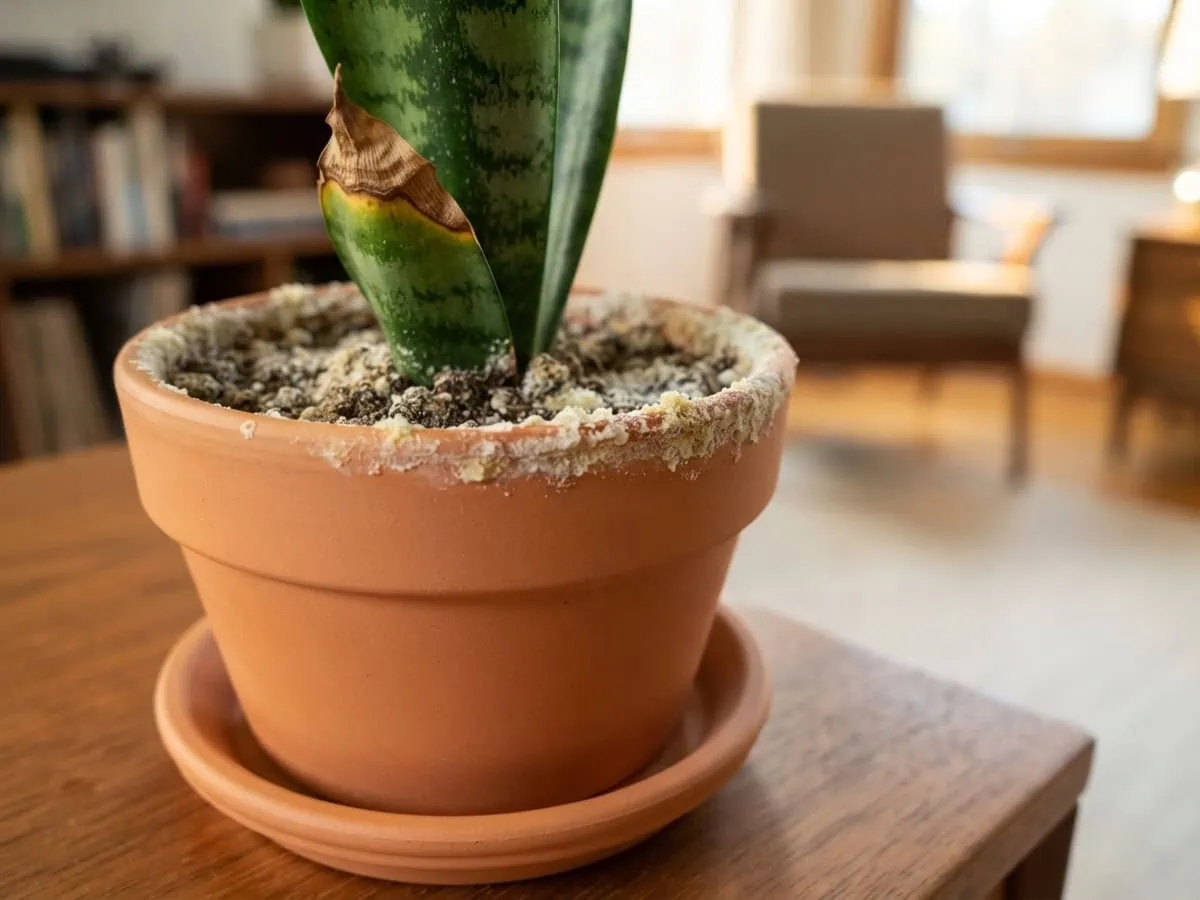
Stop completely in the dim, cool months when the plant is resting. Push too much and salts crust the soil surface and pot rim white-to-yellow, with brown, scorched leaf tips as the tell.
If that happens, stop feeding and flush the pot with plain water several times to wash the salts out.
Repotting and propagation basics
Repot only when the plant is genuinely pot-bound (not joking — a too-big pot full of wet soil is one of the fastest ways to rot this species), and even then step up only 1 to 2 inches in diameter. Snug beats roomy.
After repotting into fresh gritty mix, keep it dry for about five to seven days, then return to the normal dry-down rhythm; handling it like repotting without transplant shock means going snug, gritty, and restrained, never roomy and rich.
Give freshly disturbed roots a month or two before you feed again, and keep the plant in bright indirect light while it settles. A repot is one of the rare moments this drought-hardy plant is genuinely vulnerable.
To make more plants, you have two routes, and the choice matters. Division — pulling the clump apart so each piece keeps leaves and rhizome — is the only method that preserves the yellow edges of variegated types, while leaf-section cuttings revert to plain green.
For the full method, including the polarity notch and the roughly two-month wait for new pups, follow the step-by-step propagation walkthrough.
Is a snake plant toxic to cats, dogs, and children?
Below, the verdict from the ASPCA, the symptoms to watch for, and how to keep curious pets and toddlers clear; for the full pet-safety picture, the dedicated guide digs into whether it is safe around cats and dogs.
What the ASPCA actually says
If you are asking is a snake plant toxic to cats and dogs, the answer is a firm yes. The ASPCA lists it as toxic to both, naming steroidal saponins (the soap-like compounds the plant is built from) as the toxic principle; you can check the ASPCA’s toxic-plant listing for snake plant directly.
Think soap, not venom. Saponins are soap-like compounds (twelve distinct ones have been isolated from this plant) that irritate the gut the way a mouthful of soap would. Leaves are the part a pet or child actually reaches, though every part of the plant carries the compound.
Annoying, not deadly. The upside is that this is a low-severity toxicity: it reliably causes unpleasant stomach upset, not the organ-threatening emergency a lily poses to a cat. So the goal is sensible avoidance, not panic.
Symptoms if a pet or child chews a leaf
Watch the belly. Because saponins act on the gut, the signs are gastrointestinal and appear within hours of a chew. In both cats and dogs, expect nausea, vomiting, and diarrhea, often with drooling and lethargy; a larger mouthful can add abdominal pain, loss of appetite, and, rarely, tremors.
Cats sometimes also show dilated pupils or an unsteady, wobbly gait. For people, the same saponins make a swallowed piece taste foul and can cause stomach upset, yet human toxicity is genuinely low.
A controlled study recorded no mortality even at a very high oral dose (a strong sign of mild oral toxicity), so the realistic risk to a curious toddler is vomiting, not a medical crisis.
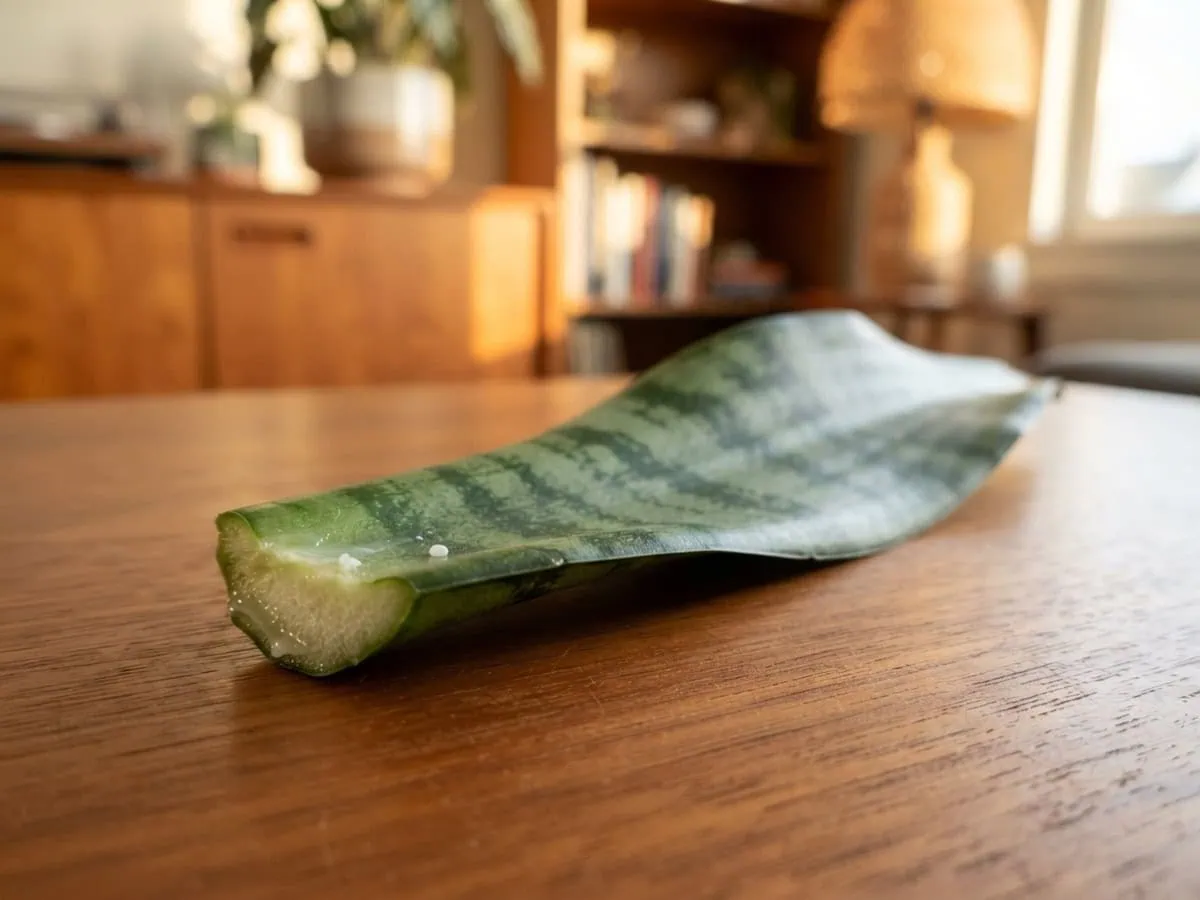
Every part carries the compound, including the cut sap you meet while repotting, so wash your hands afterward and keep the plant out of a crawling child’s reach. This information is for educational purposes only and is not a substitute for professional veterinary advice. If your pet ingests any part of this plant, seek immediate veterinary intervention or contact the ASPCA Animal Poison Control Center immediately.
If a pet has chewed a leaf, call the ASPCA Animal Poison Control Center at 888-426-4435 or the Pet Poison Helpline at 855-764-7661 for guidance. This content is for informational purposes only. If you experience a severe reaction, seek medical attention. For suspected ingestion by a child, contact Poison Control (1-800-222-1222 in the US) immediately.
Cats, scratching, and keeping the plant out of reach
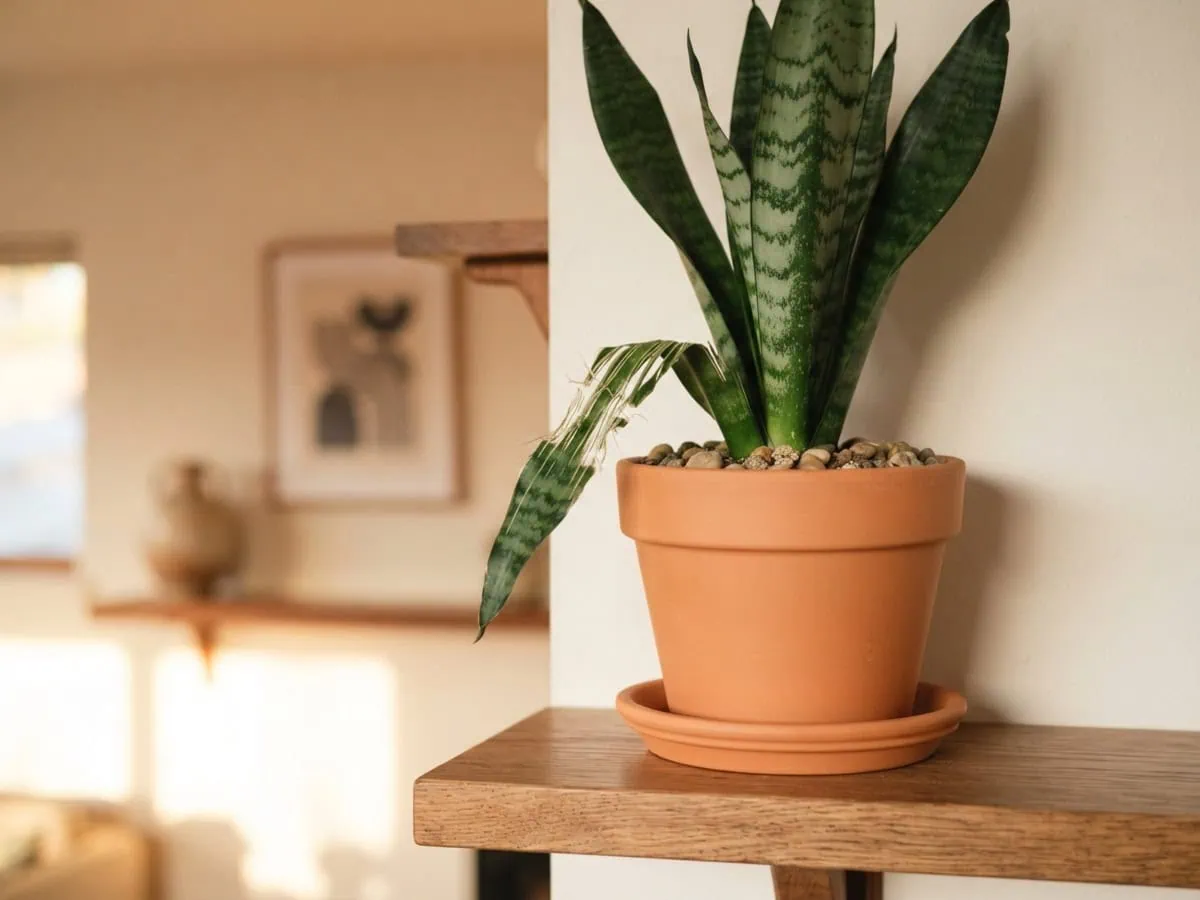
Beyond chewing, some cats use those stiff, upright leaves as a scratching post, shredding them lengthwise — a mechanical nuisance, not a poisoning, but hard on the plant. The fix for both problems is the same: put it up and out of reach. Height solves it.
Set it on a tall shelf, plant stand, or mantel above a cat’s jump line, or hang it in a basket, which the ASPCA recommends by name for keeping toxic plants away from pets. A layer of decorative pebbles over the soil discourages digging, and many cats steer clear of a citrus peel left at the base.
If a nibble does happen, it is a vet phone call, not an emergency-room dash — but keeping the plant physically out of reach spares you the worry entirely. In a home with a determined climber, elevation plus a hanging spot is the near-certain answer.
Common mistakes and the myths to skip
Below are the myths and well-meaning habits that sink the most plants, and where to turn when one runs deeper.
The air-purifier and bedroom myth
The biggest myth attached to this plant is that it meaningfully cleans your air and improves your sleep. It does not, at any realistic indoor scale.
Myth: a snake plant scrubs toxins from a room and boosts sleep quality. Fact: the famous NASA study, published in 1989, measured tiny gas changes in sealed lab chambers, and those numbers do not scale to a real home — you would need on the order of one plant per 100 square feet, and likely far more, to shift room air at all. Keep one in the bedroom if you like it and the light suits the spot, but choose that spot for light and pet safety, not for any health claim.
The oversized-pot mistake
The most common well-meaning error is potting up into a big, roomy container to give the roots space. It backfires badly here.
A sparse root system cannot drink a large volume of soil (it simply cannot reach it all), so the extra mix stays saturated for days and the roots sit in exactly the wet conditions that rot them. The first warning is often a stagnant, rotten-egg whiff rising from soil that never dries.
Smaller is safer here. This plant actively prefers to be snug, even slightly pot-bound, so resist the generous upgrade — step up only an inch or two when it has truly filled its pot, and no more.
Calendar watering and trimming the tips
Two habits quietly damage more snake plants than any pest. The first is calendar watering — pouring a drink every Sunday because the schedule says so, regardless of whether the soil is dry.
Ditch the schedule. The plant’s whole survival strategy runs on dry-down cycles, so a fixed schedule overrides the one signal that keeps it alive; read the soil, never the date.
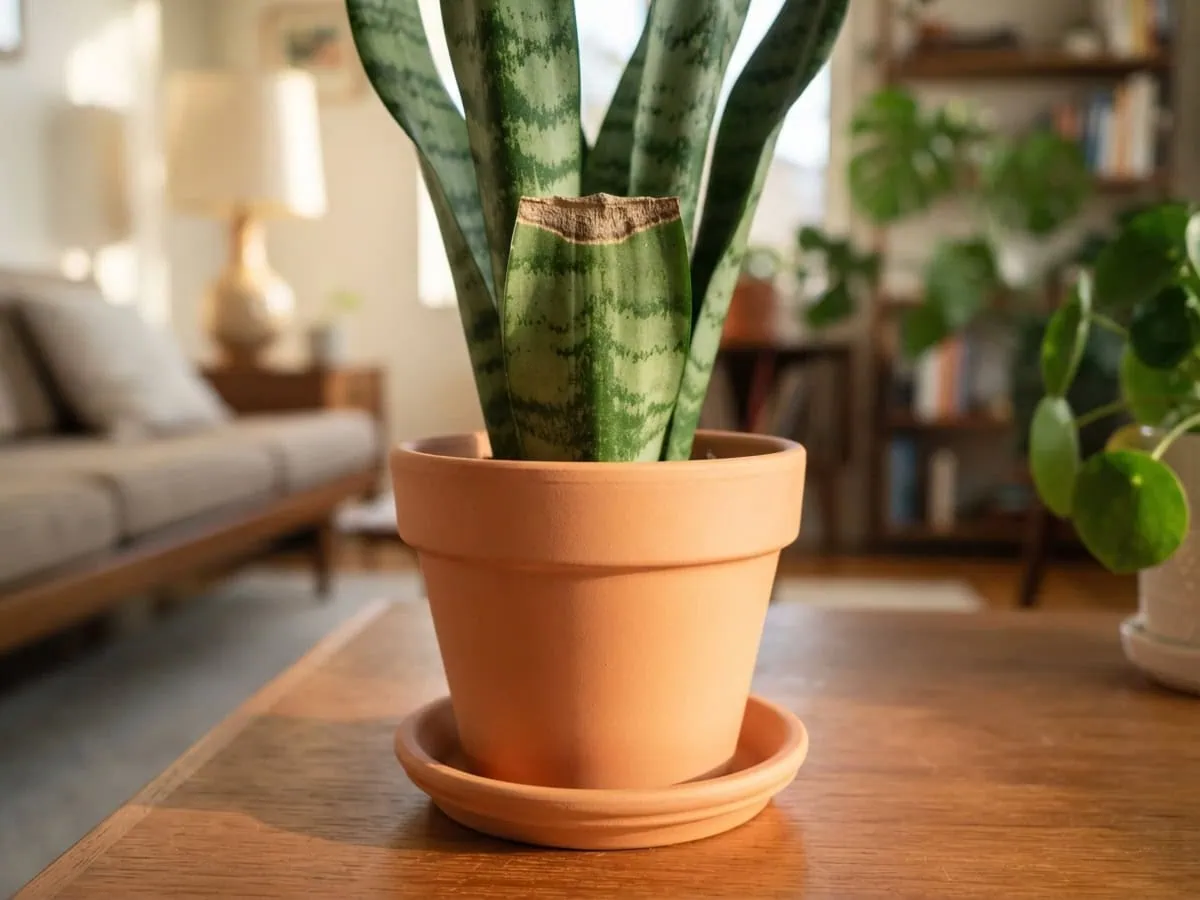
The second is trimming a brown or bent leaf tip to tidy it. A cut tip never re-seals into a point or regrows (the leaf grows only from the base) — it just leaves a permanent blunt, brown scar.
If a leaf is damaged or too tall, remove the whole leaf at the soil line instead of snipping the end.
When it is really pests, fungus, or a stubborn symptom
When the watering rhythm is right and the plant still struggles, the cause is usually biotic or structural, not thirst. This is a famously pest-resistant plant, so look closely before you reach for any spray.
White, cottony specks tucked into the leaf joints are mealybugs (the most likely intruder). A magnifier separates them from harmless mineral deposits, and clearing mealybugs and other indoor pests starts with isolating the plant from your collection.
Spider mites and fungus gnats show up less often, the gnats usually a sign the soil is staying too wet for too long.
Brown, sunken spots studded with tiny black dots point to a fungal leaf spot instead, and handling fungal leaf spots means cutting out the lesion, keeping the leaves dry, and improving airflow.
Keep water off the foliage and the air moving, and most fungal trouble fades without a fight.
If a once-stiff plant suddenly leans or keels out of its pot, the problem is structural; why a stiff plant suddenly leans or topples usually traces back to a rotten base or a long stretch toward weak light.
Frequently asked questions
Where is the best place to put a snake plant?
The best place is a few feet from a bright east- or west-facing window, where indirect light is strong but not scorching. That spot lands the plant in its 500-to-1,000 foot-candle sweet spot without the hot-glass sunburn risk of a south window.
Keep it in ordinary household warmth (60 to 85F), away from cold drafts and heating vents, and — because the leaves are toxic to cats and dogs — set it up high, out of a curious pet’s reach. A north window works too, just expect slower growth.
What makes a snake plant happy?
A snake plant is happiest when its soil dries out fully between waterings and its roots get plenty of air. Give it a fast-draining gritty mix in an unglazed terracotta pot with a drainage hole, bright indirect light, and warmth between 60 and 85F.
Feed it only lightly in spring and summer, skip the humidifier entirely, and resist the urge to water on a schedule. In short, it thrives on a little benign neglect — the surest way to make it unhappy is simply too much water.
What is the disadvantage of snake plants?
The main disadvantage is that snake plants are toxic to cats and dogs, so they suit homes where pets cannot graze on the leaves. They also grow slowly, so they will not fill a space quickly, and they are unforgiving of overwatering — a soggy pot rots the roots fast. None of these is a dealbreaker, though: keep the plant elevated away from pets, water only when the soil dries through, and its toughness more than makes up for the slow pace.
How often do we need to water a snake plant?
There is no fixed schedule — water only after the soil has dried through to the lower roots, which often means every two to three weeks in summer and every five to six weeks in the dim, cool months. Test with a finger or a long wooden skewer pushed deep into the pot, and water thoroughly only when it comes out dry. Because this drought-adapted succulent stores its own water, underwatering is nearly harmless, while overwatering is the leading cause of death.
What is the lifespan of a snake plant?
A well-kept snake plant lives for many years, often a decade or more, and an established clump can keep going almost indefinitely by producing new rhizome offsets. It grows slowly, taking roughly five to ten years to reach its mature height of two to four feet, so patience is part of the deal. The single biggest threat to that long life is overwatering, which rots the rhizome — keep the soil on the dry side and the plant will reward you for decades.
Is it good to sleep with a snake plant in your room?
It is perfectly fine to keep a snake plant in your bedroom, though not for the air-cleaning or sleep benefits often claimed online. Those benefits trace back to a NASA chamber study published in 1989, whose results do not scale to a real room.
The honest reasons to put one in a bedroom are simpler: it tolerates lower light, asks for little attention, and looks striking. Just give it some indirect light and, if you have pets, set it where they cannot chew the toxic leaves.
Where not to put a snake plant in Feng Shui?
Setting tradition aside, the spots to avoid are the practical ones. Do not put a snake plant in a dark, windowless corner where it will slowly idle and fade, and keep it off cold windowsills or out of the direct blast of a heating or cooling vent, both of which stress the leaves.
Avoid low, easy-reach spots near cats and dogs, since the leaves are toxic. The best placement is a bright, draft-free spot raised out of pets’ reach — that satisfies the plant’s biology regardless of any decorating philosophy.
What does an overwatered snake plant look like?
An overwatered snake plant looks soft and yellow at the base, with leaves that turn mushy, sag outward, and may topple from the center. Press the lowest leaves and the base near the soil — if they feel squishy rather than firm, and the potting mix smells sour or swampy, root rot is underway.
The roots themselves go brown, slimy, and foul-smelling. Catch it early by unpotting and cutting every mushy root back to firm pale tissue; left alone, the rot climbs into the crown and the plant collapses.
Prove it yourself: the deep skewer test
One habit carries this entire plant: let the soil dry through before you water, and almost nothing else can go badly wrong. Honestly? It is built to forgive you — it banks its own water and asks mainly that you not drown it.
So tonight, skip the watering can and push a wooden chopstick to the bottom of the pot (trust me on this). If it slides out dry, water deeply; if it comes out cool and damp with that faint earthy smell, walk away and test again in a week.
Do that one thing, and the rest of snake plant care becomes the easy, low-effort routine it was always meant to be. May your snake plant stand tall and firm, its roots bone-dry between every soak.
Tap the button below to get more plant fixes in your Google Search results