🚨 Emergency 30-Second Answer: how to save a snake plant from root rot
Stop watering and unpot today — Dracaena trifasciata, a member of the Asparagaceae family, rots roots-up, so cut to firm tissue and hold water about two weeks.
Rot is an oxygen-starvation collapse — the roots suffocate in wet, airless mix and turn soft. The plant can look fine up top while the base is already gone. Trust the soft base, not the green leaves.
Caught within days, a snake plant usually recovers. Lost the whole rhizome? Restart from a firm leaf or pup.
- Stop watering: a soft, sour base means rot, not thirst
- Unpot and inspect: firm white roots stay, brown mushy ones go
- Cut to firm tissue: sterilize the blade between every cut, dust cinnamon
- Replant snug and dry: a fast-draining gritty mix in terracotta, never oversized
- Hold the water: wait for new growth before the first drink
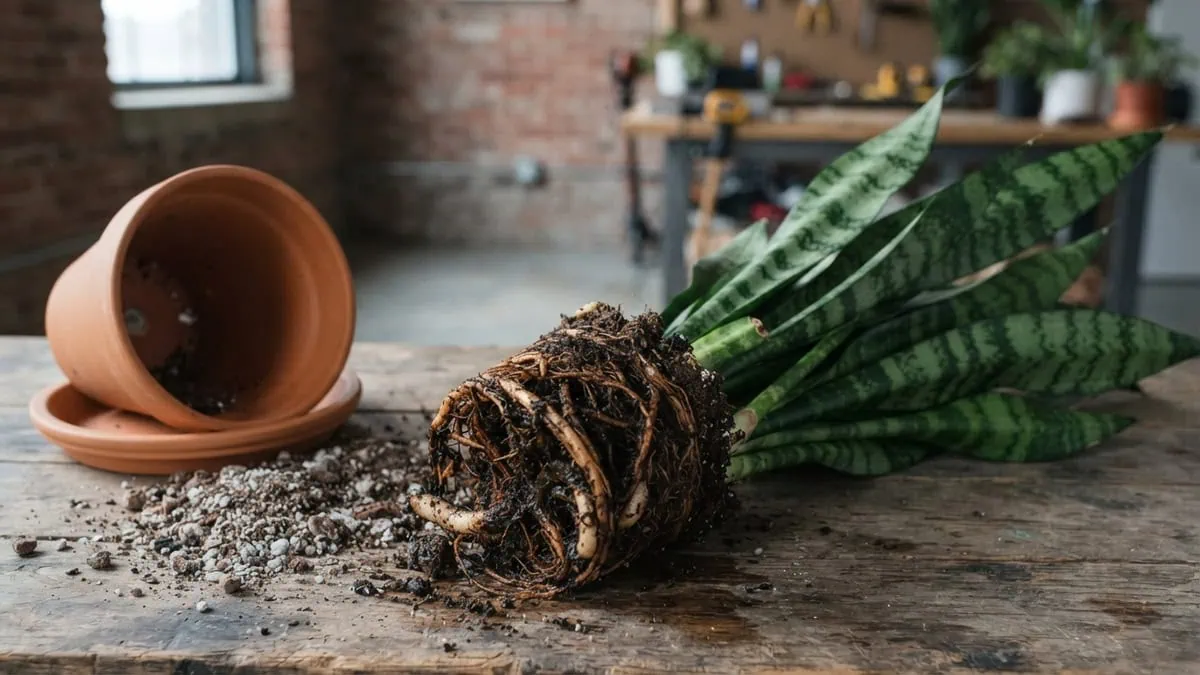
I tipped a snake plant out of its pot expecting firm white roots. I found a sour, collapsing base instead — mush that slid off the core in my fingers and stained them brown.
Waiting for the topsoil to dry before you water sounds right. It isn’t. Here is what this succulent’s water-storing leaves and thick rhizome do instead: they bank enough moisture to hold the blades upright and the surface bone-dry while the roots suffocate and rot in the wet layer below.
The firm green top is a decoy. The real story sits at root depth, and the only honest way to read it is to unpot the plant today and look. Caught early, a snake plant comes back.
The steps below are the exact rescue, in order. For the full picture beyond this emergency, read the complete guide to snake plant care.
Before the surgery, take a breath. The following table lays out the whole rescue at a glance — every move, in the order you will make it.
How to save a snake plant from root rot: the rescue at a glance
| Snake plant specs | Recommended care |
|---|---|
| First move when you suspect rot | Stop watering; unpot it today. |
| How rotted roots present | Brown to black, soft and mushy, foul-smelling. |
| Savable threshold | Firm crown plus some firm white root, or a clean pup. |
| Cut dressing for the wounds | Powdered cinnamon on callused cuts. |
| Hydrogen peroxide on living roots? | No (pots and tools only). |
| Can it recover if caught early? | Yes. |
| First watering after replanting | Hold until new growth shows. |
Tap the button below to get more plant fixes in your Google Search results

Table of Contents
Unpot now and confirm the root rot
Root rot is confirmed at the roots, not the leaves — so stop watering and lift the plant out of its pot today. A soft, collapsing base with a sour, swampy smell means the rhizome is rotting, and every hour in wet mix makes it worse.
A snake plant (Dracaena trifasciata, still sold as Sansevieria trifasciata) rots from the bottom up in wet, airless mix. The roots suffocate. Soil fungi move in fast and the storage tissue turns to mush, which is why the University of Wisconsin-Madison Extension catalogs the soil-borne fungi behind root rot.
Pull the plant and read the roots and rhizome
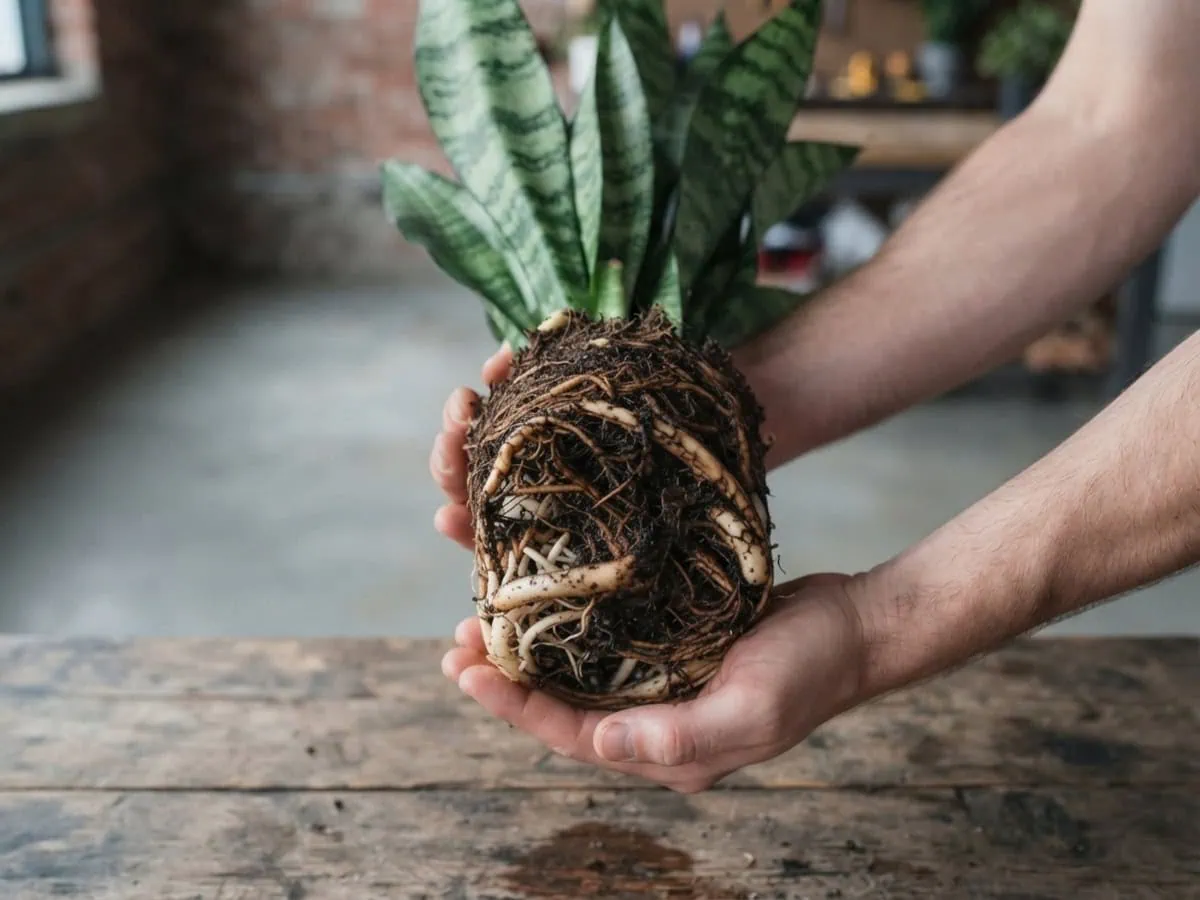
How to tell if my snake plant has root rot comes down to color, texture, and smell. Healthy roots are firm, pale, white-to-cream. Rotted roots are brown to black and slimy, and the outer sheath slides off a thread-like core the instant you pinch it.
The thick rhizome should feel firm — if it dents or smells foul, rot has reached the plant’s water-storage organ. Seeing yellow or toppling leaves too? Then read what curling or yellowing leaves are telling you.
Mushy plant but dry soil? Why it is still rot
Snake plant leaves mushy but soil is dry is the paradox that defeats the finger test — and it is still rot. This succulent banks water in its leaves and rhizome, holding the blades firm and the surface bone-dry while the deeper roots sit saturated and rotting. The top lies.
So softness, not surface moisture, is the signal. Weigh the pot. Weeks after the last watering it can still ride brick-heavy in both hands, and that dead weight is water trapped around dying roots — however dry the top inch feels.
Savable, or too far gone? Check the crown
The crown decides it. If the firm base where leaves meet roots is still solid and pale, with some white root or a clean pup, the plant is worth saving. But a soft, brown, foul crown with near-total root loss is past saving — that basal collapse is exactly what makes a snake plant lean and topple at the base, so you restart from a healthy piece instead.
Tap the button below to get more plant fixes in your Google Search results

Cut out the rot, dress the cuts, and replant
The rescue is surgery, not a soak. Remove every rotted segment, dress the cuts, and restart the plant in dry mix — one clean blade, over newspaper, so only living tissue is left behind.
Cut back to firm tissue with a sterile blade
Should I cut the rotted roots off my snake plant? Yes. Cut every soft, brown, mushy root and any collapsed leaf back to firm white tissue, and take a sliver into healthy tissue rather than leave a hopeful brown stub.
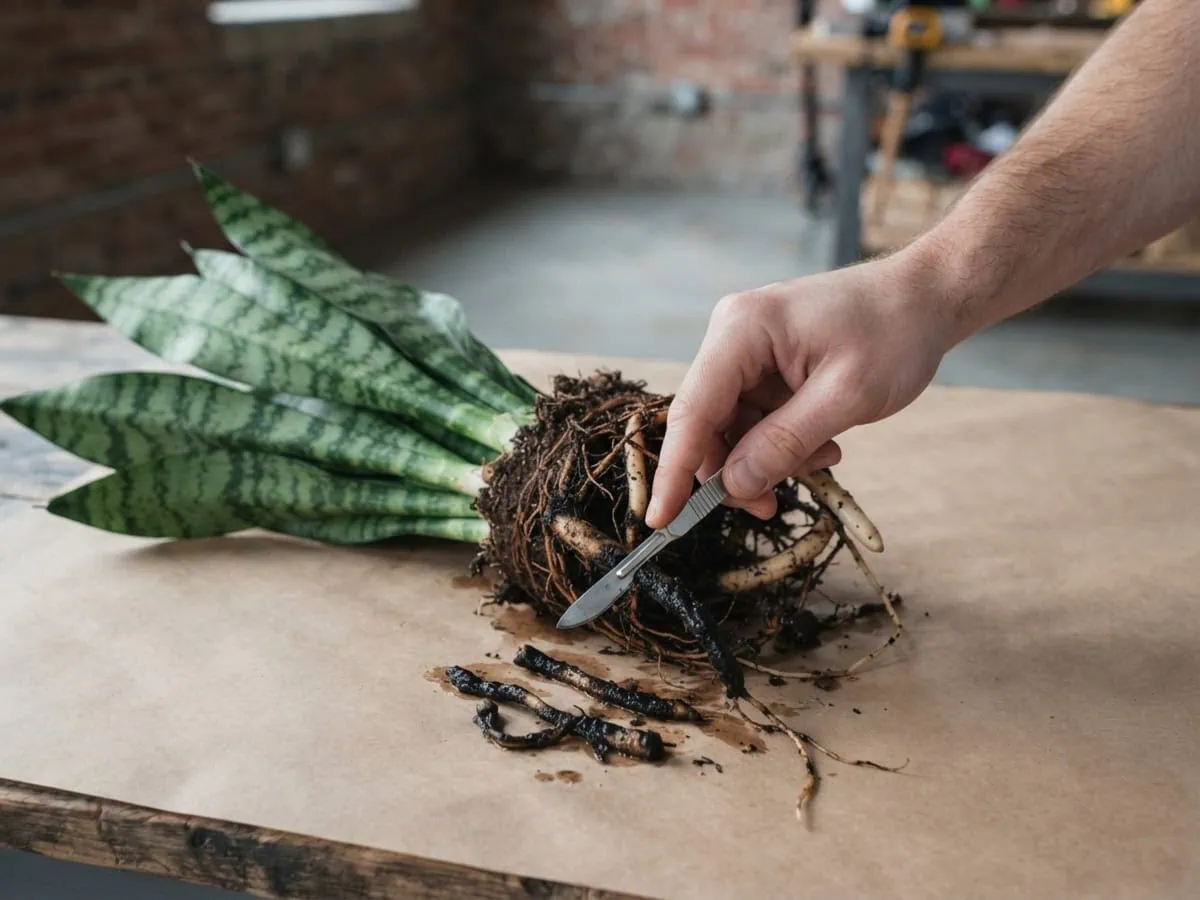
Sterilize the blade between every single cut. Otherwise you ferry rot from one root to the next. Wipe it with rubbing alcohol or a nine-parts-water-to-one-part-bleach dip, and scrub any reused pot in that same 1:9 bleach first.
Cinnamon, callus, then replant in dry mix
Dust every cut face with powdered cinnamon before it touches soil (low-key obsessed about this). The antifungal coat keeps rot from walking straight back into freshly injured cells. Skip the peroxide soak. On living tissue it oxidizes the very cells you are trying to save.
Let a root-pruned plant air-dry a few minutes to a couple of hours, so the cuts callus over. Then replant snug in fast-draining gritty mix — one part potting soil to two parts perlite, pumice, or coarse sand — in a terracotta pot with a drainage hole. Snug is the point.
An oversized pot holds a brick of wet soil the thin roots cannot drink, so repot a snake plant without root shock. Always test on a small area first. Results may vary depending on your specific conditions.
No roots left? Regrow from a leaf or pup
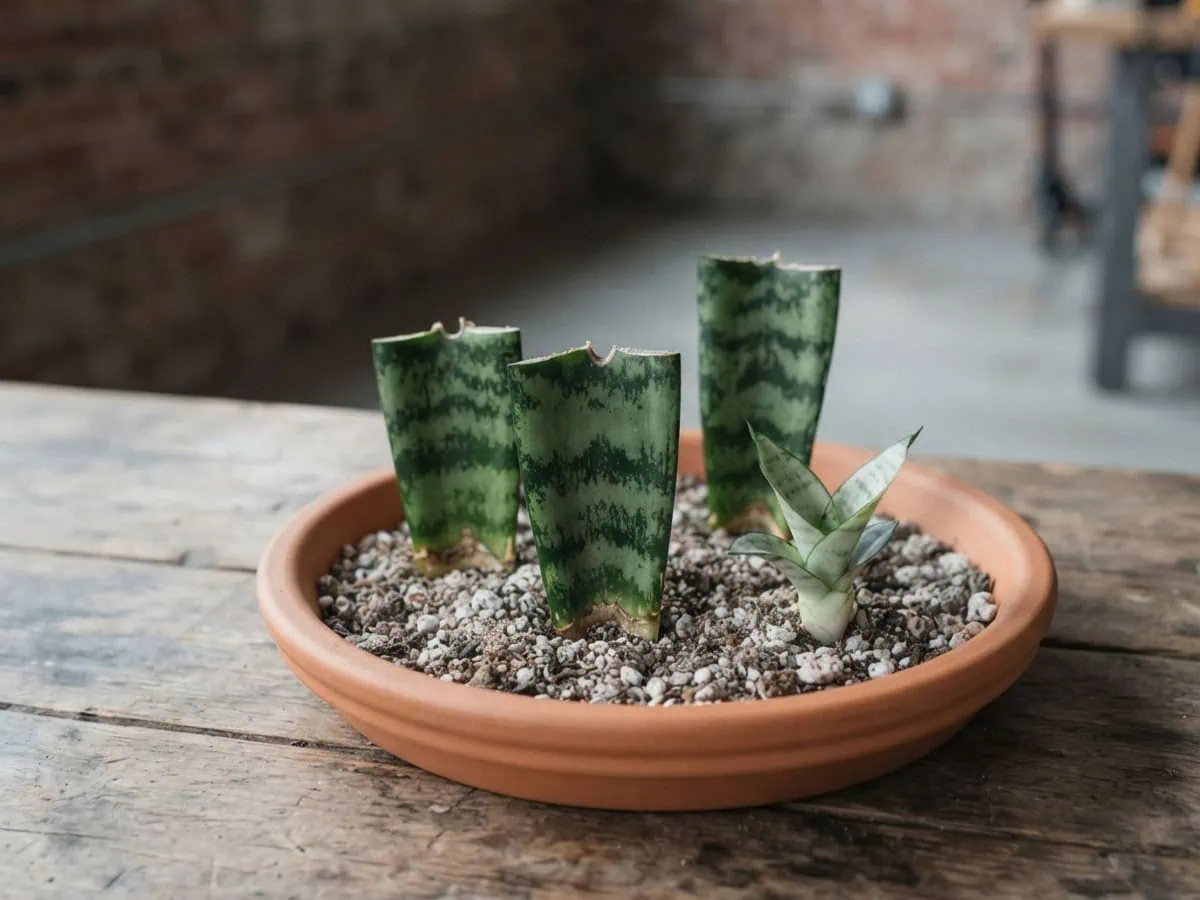
How to save a snake plant with no roots has two proven paths: a leaf-section cutting or a rooted pup. Cut a firm leaf into three-to-four-inch sections, notch the top so you know which way is up, callus them 2 to 3 days, then stand them in barely-moist gritty medium; plantlets push from the buried base in roughly two months at 65 to 75F.
A pup is faster. Lift one carrying four or five leaves and pot it dry. One exception: variegated snake plants lose their color from a leaf cutting, so divide a pup to keep the pattern.
Will it recover, and the rescue mistakes to skip
A snake plant recovers from root rot when firm tissue survives and you skip the shortcuts that re-drown it. Recovery is a waiting game now. It is measured in new growth, not in anything you pour on.
How long recovery takes, and what to watch
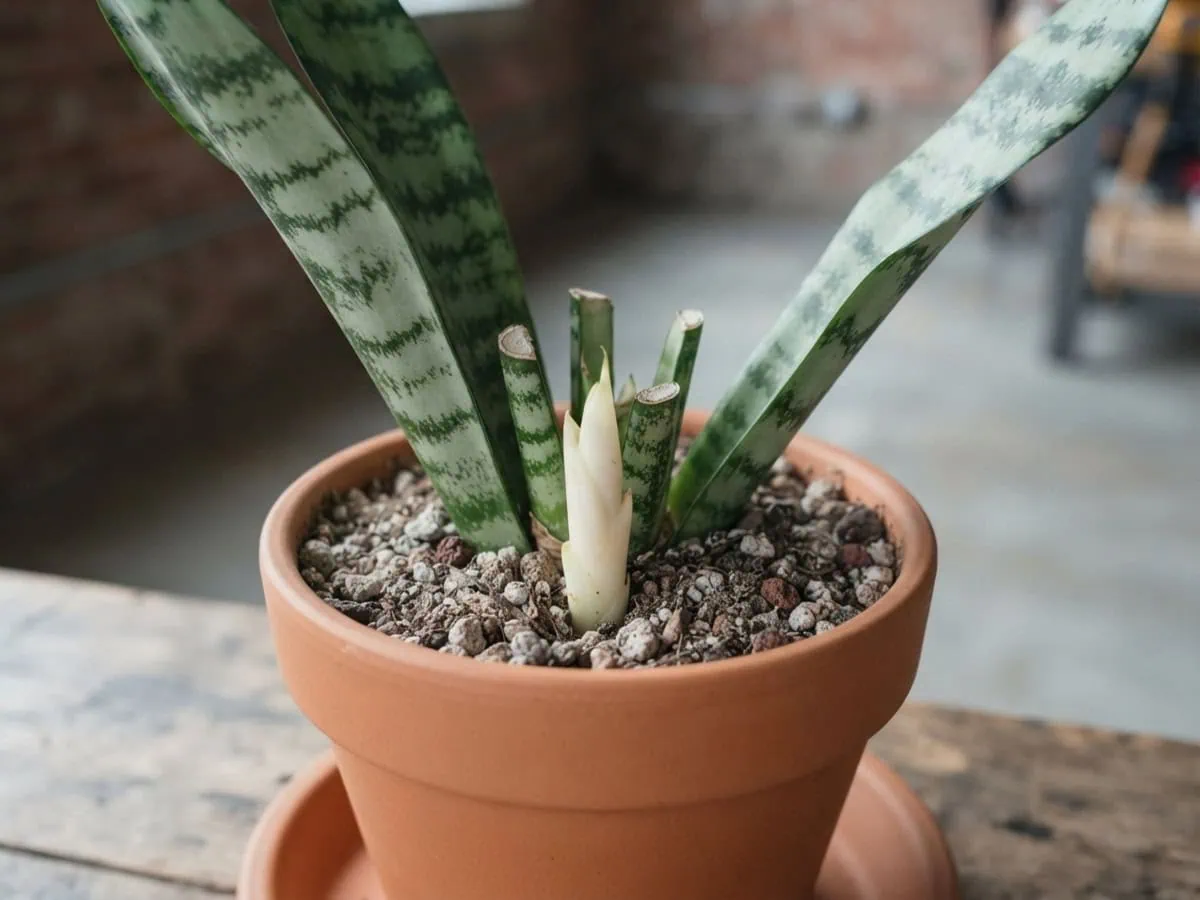
Can a snake plant recover from root rot? Yes — when a firm crown or a viable leaf section remains, recovery runs on the order of a month, longer if the room runs cool. Patience wins. Judge it by new growth, never the old leaves; firm new central growth, or a fresh pup, is your proof the roots have re-established.
Hold the first full watering until that new growth shows. Keep the gritty mix barely moist. Never let the pot stand in runoff — and notice it now lifts far lighter than the swampy weight it carried the day you unpotted it.
Skip the peroxide soak and the dry-it-out myth
Two popular fixes make rot worse. A hydrogen-peroxide soak on living roots burns the cells it claims to rescue, so keep peroxide for empty pots and tools. And drying the soil out in place will not reverse rot once it has set in — the affected roots are already gone, and only unpotting and cutting to firm tissue resets the plant.
Dry-down helps a merely over-wet plant. The moment the base turns soft or sour, surgery is the only fix that holds.
Never water a soft, wet-soil plant
Never water a snake plant whose base feels soft or whose pot still rides heavy. Watering a rotting plant just feeds the rot. And the dead roots cannot drink, so the water sits and the collapse speeds up.
Let weight be the gauge: lift before every watering, and pour only when it rides light and the soil is dry inches down. That habit ends rot for good — it is simply how you water a snake plant without drowning the roots in the first place.
Root rot rescue: questions growers ask
Can a snake plant recover from root rot?
Yes — a snake plant recovers from root rot whenever firm tissue remains and you act quickly. Cut every soft, brown root and rhizome segment back to firm white tissue, replant into dry, fast-draining gritty mix, and hold water until new growth appears. Recovery runs on the order of a month, measured by new roots and fresh central growth, not the old leaves. If the whole rhizome has gone soft, restart from a healthy leaf section or an offset pup.
How can I bring a snake plant back to life?
Unpot it, cut away the rot, and reset the environment. Remove every mushy, foul-smelling root back to firm tissue with a blade sterilized between cuts, dust the wounds with powdered cinnamon, and replant snug in dry, gritty cactus mix in a terracotta pot. Then leave it nearly dry: a snake plant lives on stored water for weeks, so the danger now is re-soaking it.
Will snake plant roots grow back?
Yes, snake plant roots grow back as long as a firm crown or a viable leaf section survives. New roots and shoots emerge from the base of the rhizome or the buried end of a leaf-section cutting, typically within about two months in warm rooms of 65 to 75F. Keep the rooting medium barely moist, never wet, and resist watering on a schedule. Firm new central growth signals the roots have re-established.
What is the safe way to treat root rot?
The safe way to treat root rot is mechanical, not chemical: cut it out and replant dry. Remove all soft, discolored root tissue back to firm white tissue, sterilize the blade between cuts, and dress the cuts with powdered cinnamon, a genuine antifungal. Keep hydrogen peroxide off living roots and the crown — its only role is sterilizing pots and tools. Replant into fast-draining mix, hold water until new growth shows, and fix the overwatering that caused it.
Stop drowning the rhizome, start reading the roots
Root rot reads like a lost cause. It rarely is — not for a plant built to bank its own water. The save is three honest moves: unpot and read the roots, cut every soft segment back to firm white tissue, then replant snug and dry and wait.
Skip the peroxide soak. Skip the dry-it-out shortcut. Cinnamon on a callused cut and a fast-draining terracotta pot do the real work. From here, pot weight is your gauge — lift before every watering, and pour only when it rides light and the soil is truly dry.
Master that one habit, and learning how to save a snake plant from root rot becomes a skill you never have to use twice. May your next unpotting reveal firm white roots, and your pot ride light in your hands until the soil is truly dry.
Tap the button below to get more plant fixes in your Google Search results