🚨 Emergency 30-Second Answer: snake plant leaves curling
Read the soil first — a curling snake plant (Dracaena trifasciata, Asparagaceae family) has lost leaf water once the deep mix goes dry or stays soggy. The short answer to why are my snake plant leaves curling is water, in one of two opposite directions.
Both extremes pull the same trick. Overwatering rots the roots until they cannot drink; underwatering just runs the leaf tank dry.
Test moisture by depth, not the dry surface. Push a wooden skewer to the pot’s base — dry and clean means water, still damp means wait. Below 55F, cold curls the newest leaves first.
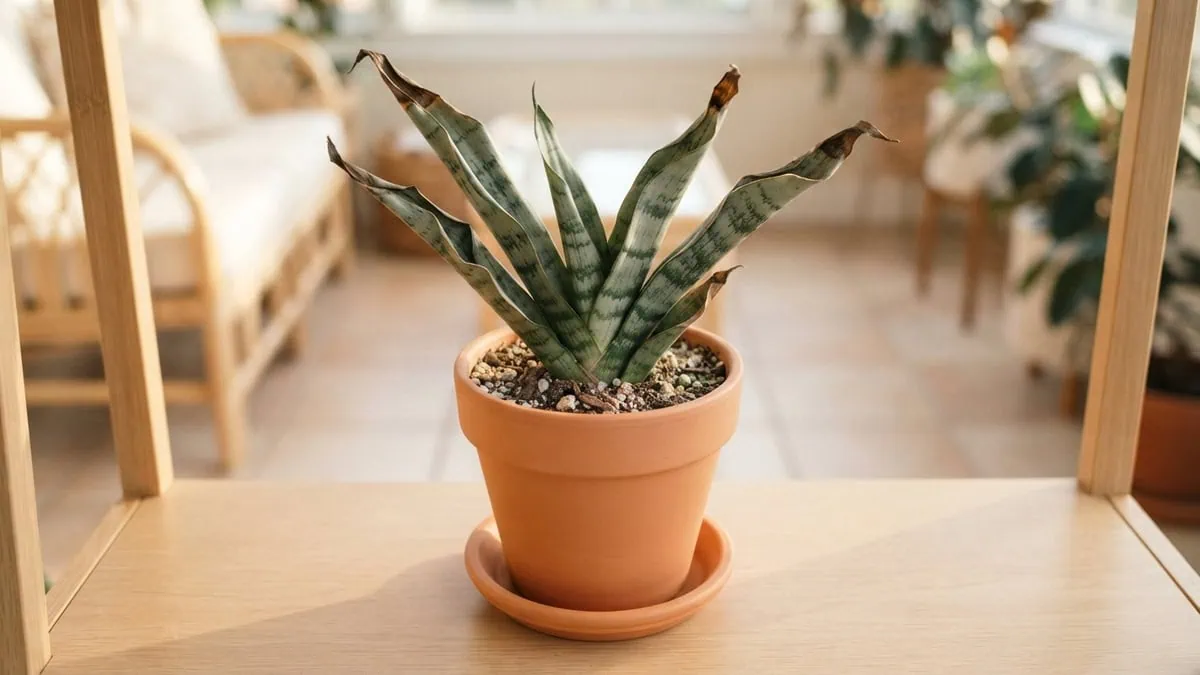
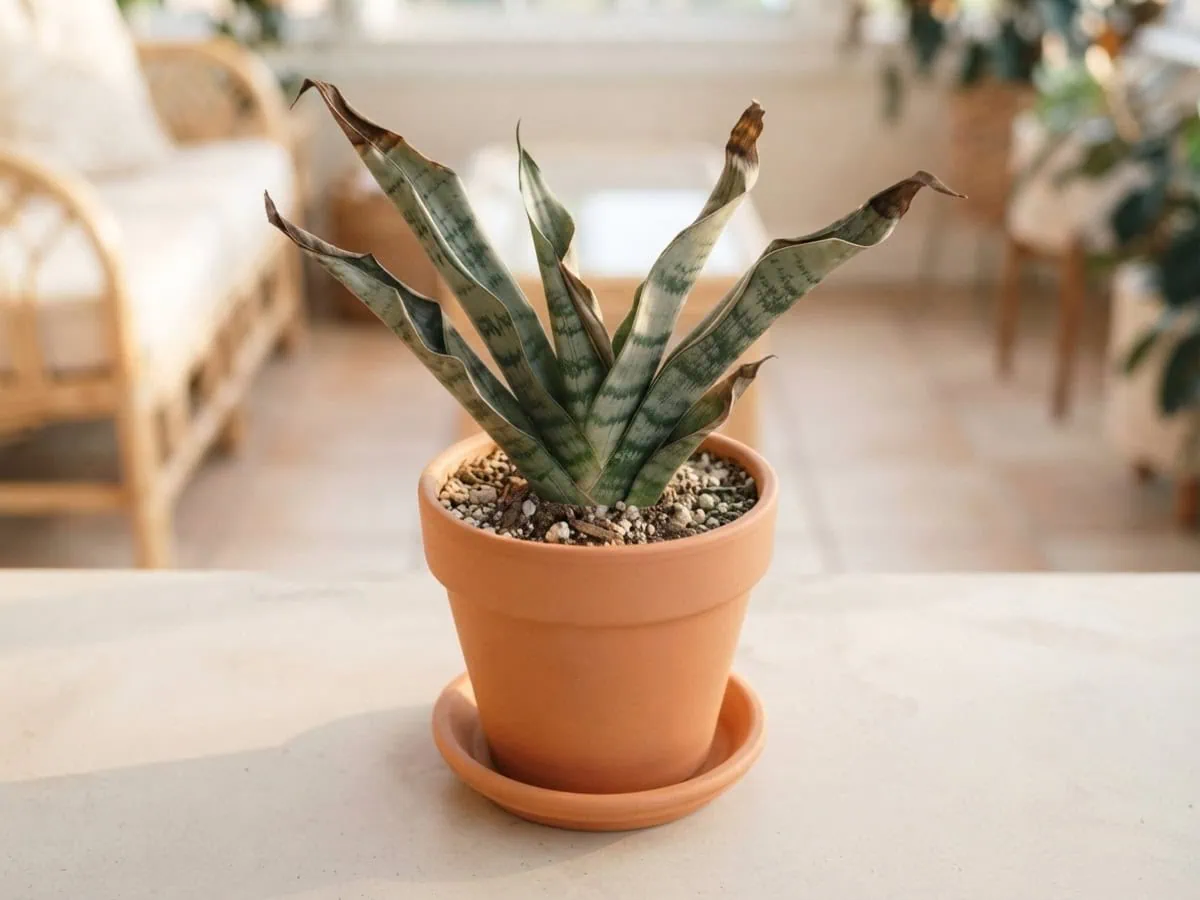
- Too dry: a tight inward curl with dry, crispy brown tips
- Too wet: soft, droopy blades folding near a soft, mushy base
- Low light: blades fold and lean toward the brightest window
- Cold under 55F: new leaves curl while older leaves stay upright
- Recovery: a curled leaf will not re-flatten; judge new growth instead
A curling snake plant looks like a plant begging for water. Often it is begging for the opposite.
The curl is the visible problem. The actual problem is a drop in turgor — the internal water pressure that keeps each thick, water-storing leaf standing rigid. Dracaena trifasciata banks its water in that succulent leaf tissue, so when the cells lose pressure, the blade folds inward to shrink its exposed surface.
Four faults drain that pressure: a bone-dry pot, rotted roots that can no longer drink, harsh light that pulls water out faster than the roots replace it, and a cold windowsill below 50F that ruptures the storage cells outright.
I read a curl as a water-pressure gauge, not a watering reminder. Sort the wet cause from the dry one first, then rule out light, cold, and leaf shape. For the full routine behind every number here, start with how to care for a snake plant.
Take a breath — you need to read, not act yet. The following table sets the numbers a healthy snake plant wants before you judge the curl.
Why are my snake plant leaves curling? The care numbers at a glance
| Snake plant specs | Recommended care |
|---|---|
| Optimal light | 500-1000 FC (bright, indirect) |
| When to water | Only when the mix is dry several inches down |
| Safe temperature | 60-85F; cold damage below ~55F |
| Humidity need | None; tolerates dry indoor air |
| Most common curl-to-collapse cause | Overwatering that rots the roots and rhizome |
| Does a curled or creased leaf flatten again? | No; recovery shows only in new growth |
Tap the button below to get more plant fixes in your Google Search results

Table of Contents
Start here: is your snake plant too wet or too dry?
First find the water level — both too-wet and too-dry roots print the same curl. Judge it by depth, not the dry surface.
Push a wooden skewer to the pot’s very bottom before you decide anything (not joking); the top inch dries days before the root zone. University of Illinois Extension teaches the two-inch finger test for soil moisture, and on this deep-drying succulent you read even lower.
If the base feels soft and mushy while the soil is still wet, stop watering now and check the roots. This is rot, and another drink finishes the job.
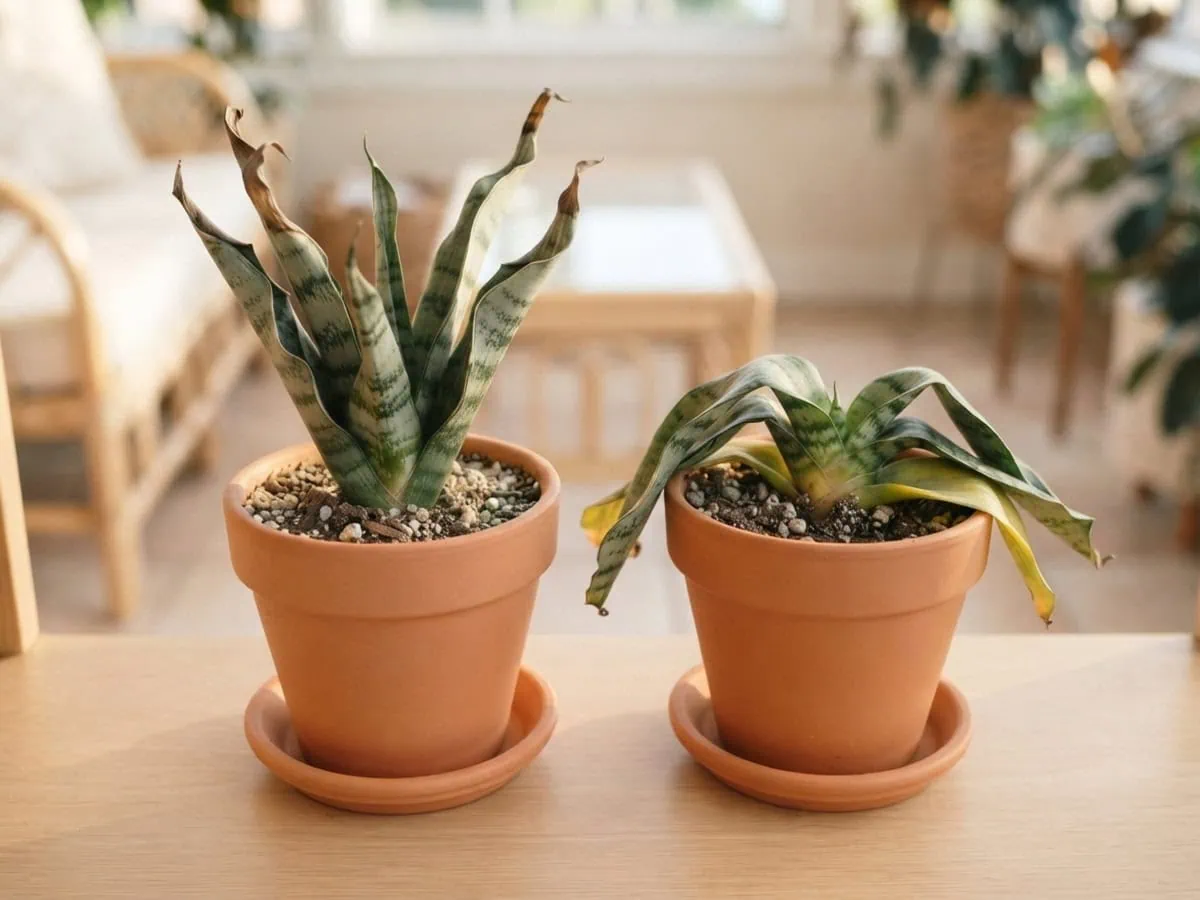
Too dry: tight curl with crispy brown tips
A too-dry snake plant curls hard and tight, and the tell sits at the edges.
If you have wondered why does my snake plant have brown tips, dehydration is the usual answer: the blade rolls inward, the margins go dry and crispy, and a pinched leaf feels warm, papery, and light, like an empty drinking straw left on a sunny sill.
The mix reads dry all the way down. The fix is one slow, thorough soak. This is thirst, not disease.
Too wet: soft, droopy blades that fold at the base
A too-wet snake plant fails from the bottom up. The classic sign is snake plant leaves soft and droopy, splaying outward and folding where each blade meets the soil.
Press the base with a fingertip: it gives like a wet sponge, the lower blades yellow and slump, and the mix often smells sour or sends up a cloud of tiny fungus gnats. That softness is rot — waterlogged roots suffocate and stop drinking, so the leaf dehydrates even in soggy mix.
Do not add water. If the roots are already brown and slimy, follow how to save it from root rot.
Yellowing plus curl: where it starts on the plant
Where the yellow starts tells you what it means. If you are asking why is my snake plant turning yellow, read the location: soft yellowing that climbs from the lowest, oldest leaves usually points back to soggy roots, while one old basal leaf fading slowly is ordinary age.
Firm, evenly green upper leaves with just one low yellow blade are rarely an emergency. Pair the color with the base-firmness test above, and the wet-or-dry verdict holds.
Tap the button below to get more plant fixes in your Google Search results

When water is not the cause: light, cold, and leaf shape
When the soil checks out and the base is firm, water is not the cause. Read light, then cold, then leaf shape.
Folding inward and leaning in low light
Low light bends a snake plant toward the nearest window. When you see snake plant leaves folding inward and the whole rosette tilting toward the glass, the plant is reaching for light it cannot find.
Firm, upright blades want 500-1000 FC of bright, indirect light; well below that the newest leaves come in thin, soft, and quick to fold or lean. Shift the pot to an east or west window and the fresh growth stiffens.
Leaning that begins at a soft, collapsing base is a different fault — see why a snake plant keeps falling over.
Cold air curls the new leaves first
Cold curls from the newest growth down. A snake plant chilled below 55F — a windowsill behind a winter curtain, the draft off an AC vent, the air by an often-opened door — first curls and softens its youngest central leaves while the older outer blades stay stiff and upright.
Below about 50F the water-storing cells rupture, and the tissue goes water-soaked, limp, and cold to the touch, like a leaf pulled from a refrigerator.
Move it somewhere steady and warm. Do not cut the curled new leaves yet, because the damage line is not final for days.
Wrinkling, creasing, and curls that are normal
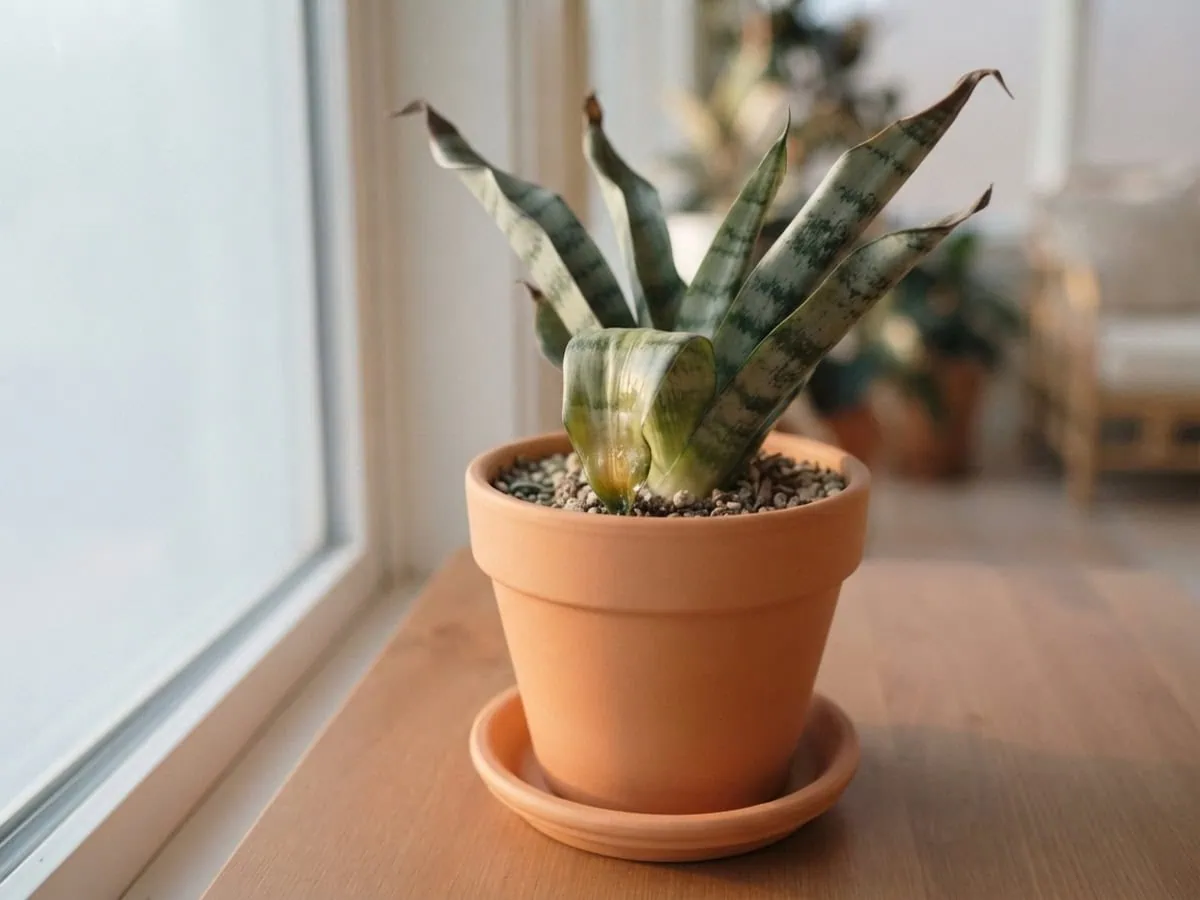
Not every crease is a warning. If you are asking why are my snake plant leaves wrinkling, check two harmless cases first.
A blade that wrinkles lengthwise but re-plumps within a day of a deep soak was simply thirsty — mild, reversible, no lasting mark. And some snake plants are naturally cylindrical or wavy by variety, not curled by stress; that permanent tube or ripple is just their leaf shape, so rule it out before you change anything.
A fresh, spreading wrinkle on a plant you have not moved or chilled sends you straight back to the moisture test above.
Curling mistakes that make it worse
Most curls are recoverable — until a well-meant fix makes them worse. Avoid these three.
Dry soil but mushy leaves? Do not add water
Dry soil plus mushy leaves is the one combination that breaks the finger test. When the top inch reads bone-dry but the blades are soft and folding, the roots have usually already rotted from an earlier overwatering — so they can no longer pull water up, and the leaf dehydrates even though the surface is dry.
Adding water here feeds the rot. Instead, tip the plant out and read the roots: firm and pale means dry it out and rebuild the habit in watering it without overwatering; brown and slimy means treat the root rot first.
Curled and yellowed leaves will not turn back
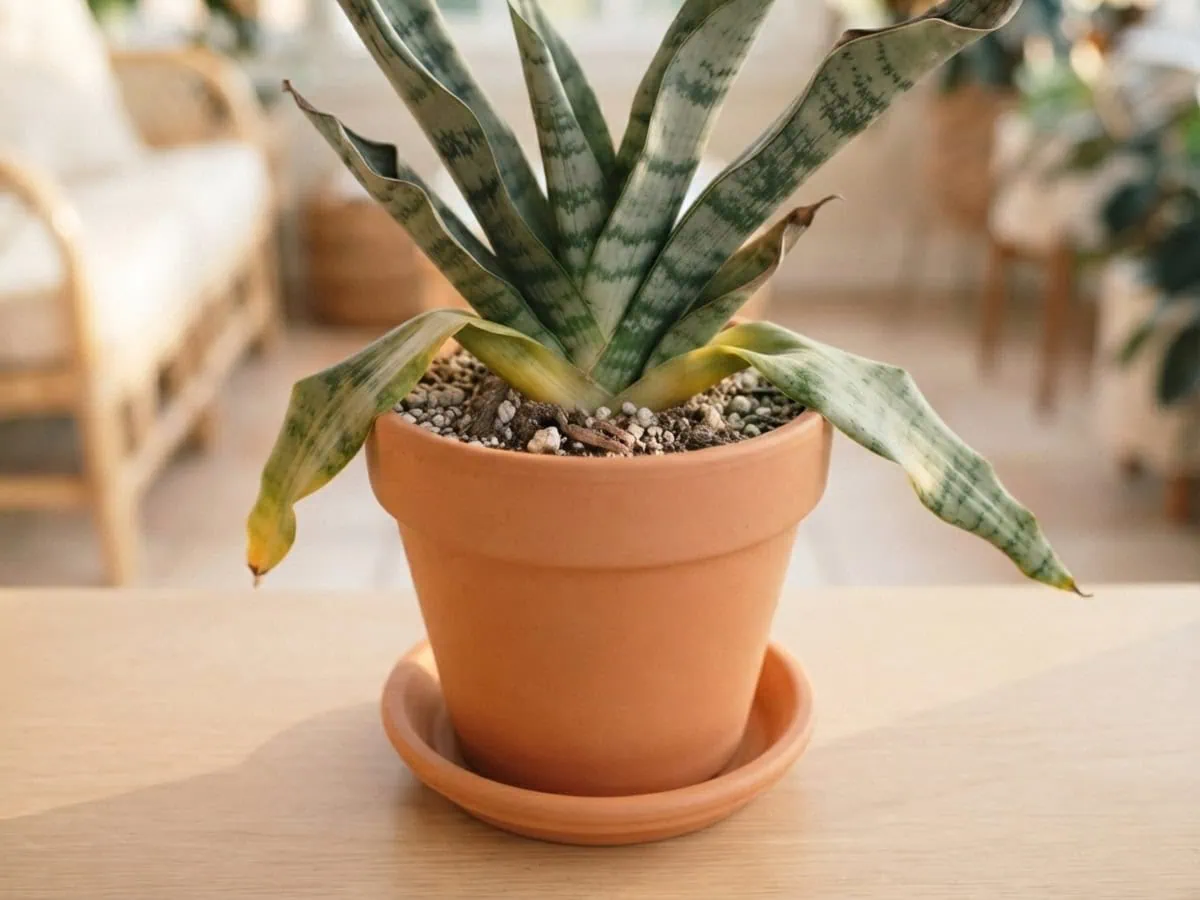
A curled or hard-creased leaf will not flatten again, and a fully yellowed one will not turn green. That blade is set. Once the water-storage cells crease or the chlorophyll is spent, recovery shows only in the next new leaf, never the damaged one.
So resist the urge to keep tinkering with an already-curled blade to force it flat. Fix the cause, then watch the center of the rosette — a firm, straight new leaf is your proof it worked.
Over-fixing it: feeding, misting, and harsh soaks
Over-care curls a snake plant too. A stressed plant does not want a rescue feeding — fertilizer salts in dry soil pull even more water out of the roots and scorch the tips, so hold all feed until it recovers.
Skip the misting as well; this is a dry-air succulent that needs no humidity, and wet blades in cool air only invite rot. And do not chase the curl with a harsh hydrogen-peroxide soak on the roots or leaves — keep peroxide for cleaning empty pots and tools only, and dust powdered cinnamon on any cut wound instead.
A blast of ice-cold tap water is its own small cold shock, so let water warm to room temperature first. If the mix stays soggy for days, the real fix is repotting it into a faster-draining mix.
Frequently asked questions
How do I fix my curling snake plant?
Fix the cause, not the curl: confirm whether the soil is wet or dry before you act. Read moisture at the pot’s base with a wooden skewer — dry means one deep, draining soak; damp while the blades are soft means stop watering and check the roots for rot. Then rule out low light (a bright window at 500-1000 FC) and cold below 55F. Old curled leaves stay curled; a firm new leaf proves the fix worked.
Should I cut off bent snake plant leaves?
Only cut a bent leaf if it is mushy, rotting, or badly damaged; a firm one can stay. A curled or creased blade never straightens again, yet it still feeds the plant, so removing it is cosmetic, not curative. If you do cut, take the whole leaf off at the soil line with a clean, sharp blade rather than trimming the tip, which leaves a blunt brown edge. Never remove cold-curled new leaves until the damage stops spreading.
What does a dehydrated snake plant look like?
A dehydrated snake plant looks tightly curled and wrinkled, with dry, crispy brown tips and edges. The blades feel warm, papery, and light, and often crease lengthwise like a deflating tube, while the soil reads dry several inches down. Unlike an overwatered plant, the base stays firm — not soft or mushy — with no sour smell. Give it one slow, draining soak; a mild wrinkle re-plumps within a day, but a hard crease is permanent.
How do you fix curling leaves on plants?
On any houseplant, match the response to the cause instead of reflexively watering. Read soil moisture at depth first: water only if it is genuinely dry, and check the roots when the leaves are soft while the soil stays wet. Next rule out too little light, a cold draft, or salt from over-feeding. For a water-storing succulent like the snake plant (Dracaena trifasciata), lean toward under- rather than over-watering, since its curl is more often soggy roots than thirst.
The 3-move snake plant curl protocol
You do not need to guess. Read the moisture at depth, rule out light and cold, then dodge the three over-fixes above — that is the whole protocol. Firm new growth at the center, over a base that stays cool and dry under your thumb, is your reward.
The old curl is just a scar the plant will live with. So slow down before you reach for the watering can.
Once the question why are my snake plant leaves curling resolves at a glance to “too wet” on one plant and “too dry” on the next, you have mastered the hardest call in snake plant care. May your next snake plant leaf rise straight and firm, and may every curl you meet tell you plainly whether it is parched or waterlogged.
Tap the button below to get more plant fixes in your Google Search results