⏱️ 30-Second Answer: what this palm needs indoors
How to care for a parlor palm indoors: Chamaedorea elegans, a member of the Arecaceae family, crashes from sap-feeding insects more often than from anything else. A wet root zone runs close behind and leads once container faults join it. Turn a frond over before you change anything else.
Let the top 1-2 inches of mix dry out before the next drink, and give the calendar no vote. Hold the room at 65-80F, with nights no lower than 61F. Keep light at 75-500 FC, bright but indirect, away from direct sun.
Aim for 40-60% relative humidity, which misting does not deliver. The ASPCA lists this palm as non-toxic to cats and dogs.
- First check: turn fronds over; fine webbing or moving specks means mites
- Soap spray: repeat insecticidal soap every 4-7 days rather than spraying once
- Salt flush: run water through until it drains, then repeat 2-3 hours later
- Feeding: dilute liquid feed monthly in growth, and none during the winter rest
- Pot step-up: move up one pot size only when roots fill the old one
The fronds on my first Chamaedorea elegans drooped a little lower each week, and their undersides carried a fine pale stippling that I read as a live colony. Over three years I lost seven stems (note to self: turn the frond over before reaching for the snips) to what I did next.
I was treating spider mites, but the real fix had nothing to do with that. It was the stippling itself, left by a colony already gone, while every green frond I cut left that stem’s single growing point with less chlorophyll to feed it.
Actually, I take that back… The mites on that plant were real. They had simply finished long before I noticed.
Chamaedorea elegans is an understory palm from Mexico and Central America, built for dim forest light, and each stem carries one bud it cannot replace. So the order of care here follows what actually ends these plants indoors, pests first.
Full stop. A frond that is already marked stays marked, and that says nothing about the plant you can still steer. The seven rows under this line set the targets for every stem.
How to care for a parlor palm indoors at a glance
| Parlor palm specs | Target or typical value |
|---|---|
| Light | 75-500 FC bright indirect, never direct sun |
| Water trigger | Top 1-2 inches of the mix dry to the touch |
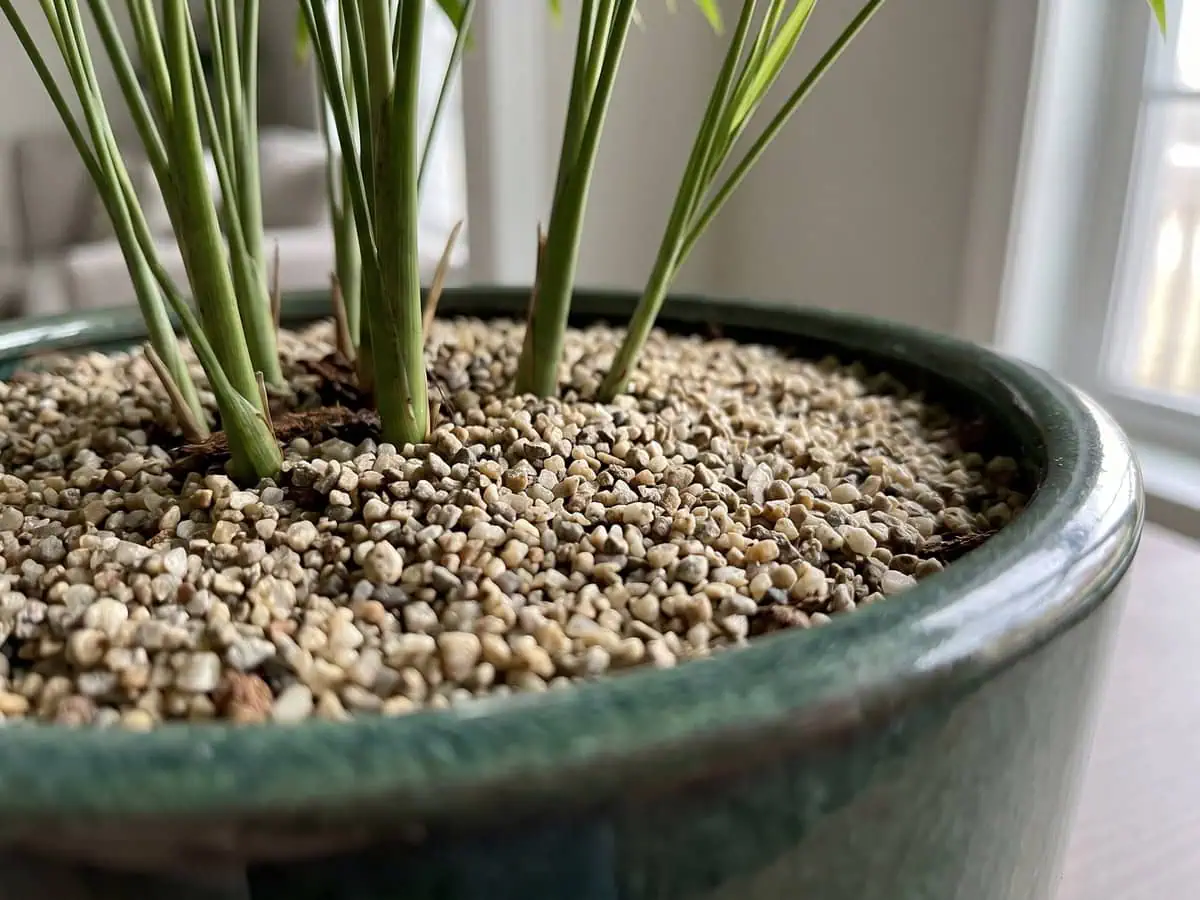
| Growing medium | A coarse free-draining palm mix of two parts coir to one part pine bark fines to one part coarse sand, top-dressed with a thin layer of the same coarse sand |
| Room temperature | 65-80F, heating-season night floor 61F |
| Air moisture | 40-60% relative humidity |
| Pet safe? | Yes – non-toxic to cats, dogs and horses (ASPCA) |
| Height indoors | 2-3 ft commonly, 8 ft or more possible (New York Botanical Garden) |
Tap the button below to get more plant fixes in your Google Search results

Table of Contents
Overview and habitat: what this palm is and who it is safe around
This palm is Chamaedorea elegans Mart., a true palm of the Arecaceae family, native from Mexico to Honduras and sold under several shelf names. The three sections below cover its rainforest-floor origin, the single growing point each stem carries, and the ASPCA listing that clears it for cats and dogs.
Where it grows wild, and what that fixes indoors
Kew records its native range as Mexico, Belize, Guatemala and Honduras, where it grows on the shaded rainforest floor. A peer-reviewed greenhouse study calls it a long-lived, shade-tolerant understory palm. Shade is home.
The plants are dioecious, with male and female flowers on separate individuals, so a lone houseplant rarely sets fruit even when it blooms. The sprays and seeds are covered under the small flower clusters and the fruit that follows.
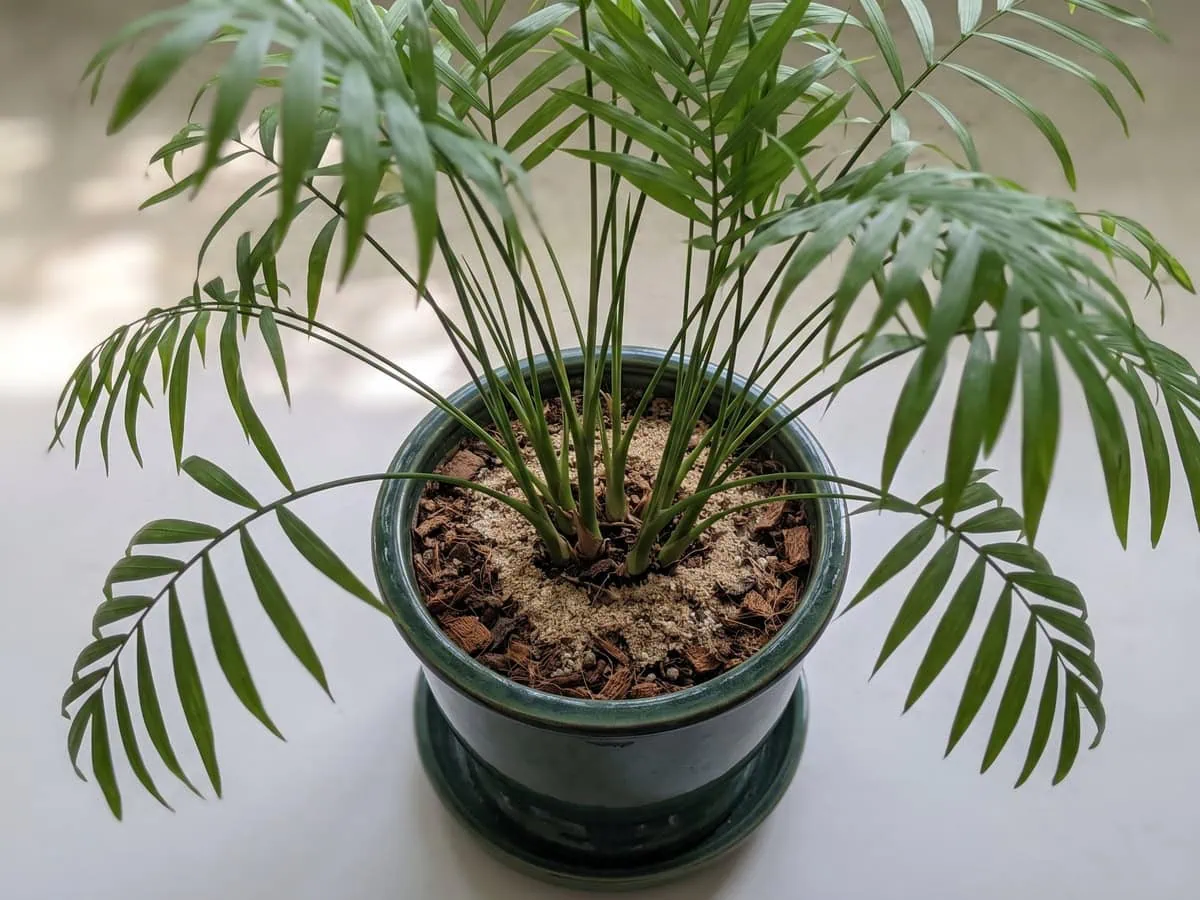
That forest origin sets two limits for a room. It takes dim light far better than most houseplants, but it has no cold tolerance to spare, and the RHS rates it H1A, a plant for heated glasshouse conditions all year. Cold, not shade, is the limit.
Shelf tags add confusion, because Neanthe Bella Palm, Good Luck Palm and Bamboo Palm all appear on them, and Bamboo Palm also names a separate cane-stemmed species. So telling this palm from the two it shares shelf labels with starts with counting stems, not reading labels.
One growing point per stem, and why it matters
One cane, one crown of fronds, one bud at the top — the bud UF/IFAS calls the heart. Palms have no lateral meristems. A stem that loses that bud cannot branch or regrow, so it ends for good.
The full look of a nursery pot comes from several seedlings sharing one container, not from one plant filling out. A pot that loses a stem does not refill, and splitting a shared container into separate plants is the only way to multiply what you have.
When I watched a new spear on one of my pots lift from near-vertical to its full arch over a few weeks, that spear was the whole year’s progress for its stem. Never cut near the top.
Safe around cats, dogs and children
Safety here rests on a single named authority, so according to the ASPCA Animal Poison Control Center, the non-toxic entry for this palm in the animal poison-control database lists it as non-toxic to cats and dogs, and a sibling entry adds horses. The dangerous look-alike is the unrelated sago palm, Cycas revoluta, which carries cycasin.
Non-toxic is a poisoning verdict, not a promise that eating a frond does nothing; a large wad of any fibrous foliage can upset a stomach. Animals: ASPCA Animal Poison Control, 888-426-4435, with Pet Poison Helpline as the second animal service. People: Poison Control, 1-800-222-1222. They are different services, so match the number to the victim.
For children, the listed uses point the same way: Kew records food uses for this species in its native range. Still, supervise any plant and any potting mix at crawling height. A coarse top-dressing stops a cat digging, and a raised stand keeps fronds away from a chewer.
Sap-feeding insects: the first cause to rule out
Sap-feeding insects come first, because spider mites, then mealybugs, thrips, scale and aphids, are the cause owners report most often on this palm. Soggy roots run second, and with container faults they form the larger family that decides most of these cases. The following sections check the fronds first.
The frond-underside check that takes ten seconds
Turn a frond over and look into the angles where each leaflet meets the midrib. Fine webbing there, or specks that move when you tap the frond over white paper, means a live spider mite colony. Stippling with nothing moving is old damage.
I once caught a colony only because a frond that had held its arch for months began sagging a few degrees lower each morning, and the underside told the rest. Look before you spray.
Mealybugs look different: oval, cottony white, one-fifth to one-third of an inch long, tucked into leaf joints. Scale forms small domed shells. The full rescue routine sits under clearing a sap-feeding population off the fronds.
Soap and oil: strength, coverage, repeat interval
Mix insecticidal soap as a 1-2% solution, which Clemson gives as 2.5-5 tablespoons per gallon. It works only on contact, so the spray has to wet the undersides where mites feed. Hard water weakens it, and one extension answer recommends distilled or purified water.
The residue does nothing once dry. So repeat every 4-7 days until nothing is left feeding, because a warm room can turn a spider mite generation over in as little as 8 days and anything that hatches after your last pass starts the count again.
Horticultural oil also covers mites, mealybugs, scale and thrips; follow the label for its strength. For a few mealybugs or scale, a cotton swab dipped in rubbing alcohol lifts them off by hand. Skip dish soap and detergent.
Do one leaflet cluster first and give it 24 hours before the rest of the plant gets any. A freshly sprayed palm belongs away from direct sun and grow lights, and a thirsty palm or a room over 90F means no spray at all that day.
Those limits matter more than the product, because a scorched frond never mends; only new growth at the top replaces it. Most sprays fail on coverage rather than chemistry. Turn each frond by hand and work the undersides first.
Spacing, quarantine and the dust route
Isolate any newly bought plant for two to three weeks before it joins the others, the window the Missouri Botanical Garden gives for indoor pests. Sleeves and air currents bring them in. Regular inspection is the real defense.
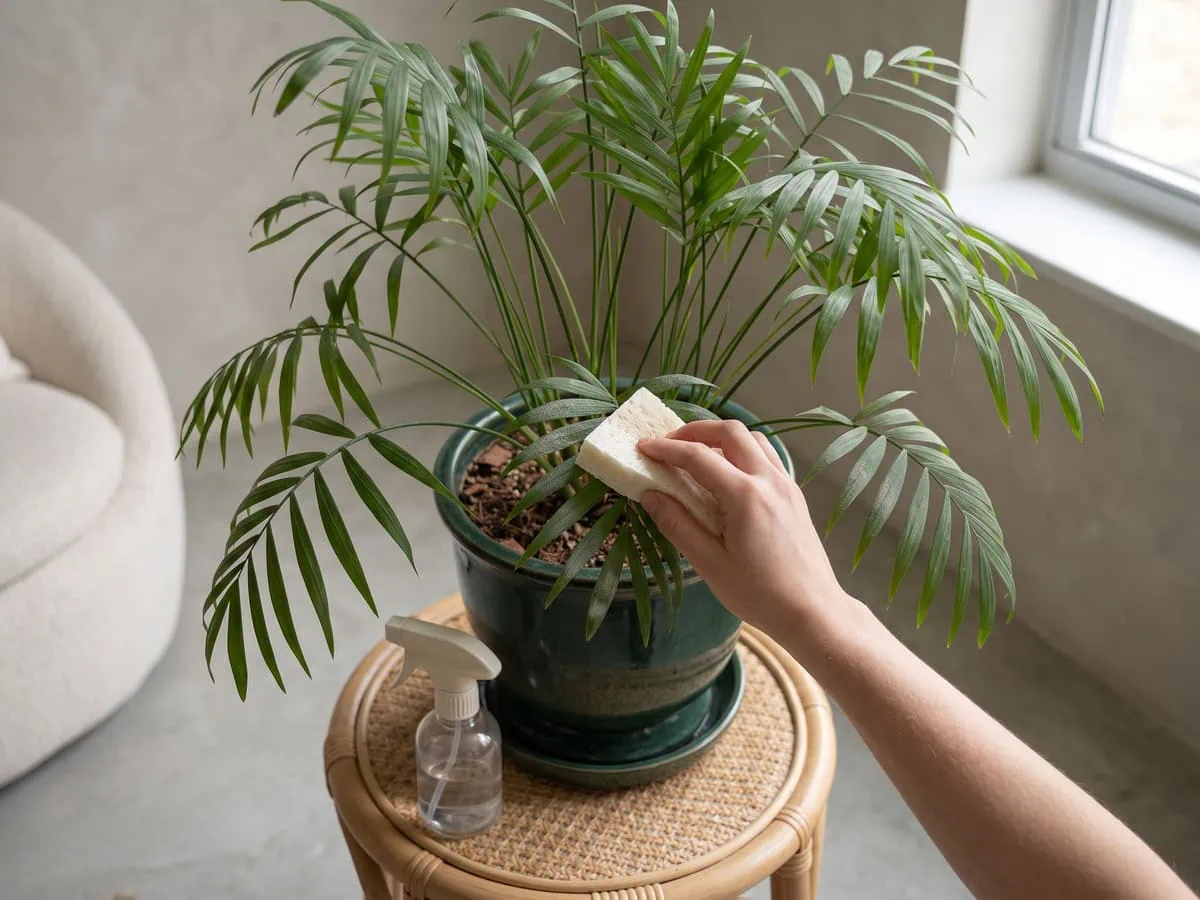
Dust favors mite outbreaks, and a shower rinse or a damp sponge on the fronds removes the dust and discourages the mites at the same time. Space the pots apart too, and isolate any plant showing mites at once to stop the spread. Mites prefer dry air, so raising the humidity helps here as well.
Room warmth, air moisture and the heating season
A parlor palm grows best at 65-80F with nights held at or above 61F, the winter minimum the RHS gives for this genus. The three sections below cover that floor, the 40-60% humidity band, and the passive fixes that hold it without wetting the fronds.
The 61 F floor and the draft that undercuts it
Readers who type “what temperature is too cold for a parlor palm” want one number, and the governing one is the 61F winter night minimum, not the 50F figure many care pages repeat. Below that floor the plant is stressed.
For palms as a family, chilling injury can begin at temperatures as high as 50F, with leaflet discoloration or dead tissue showing within days. Suddenness is the real indoor risk. A palm used to warm nights suffers more from one cold snap than from a gradual cool-down.
The air at the shelf, not the thermostat, is usually the problem: a vent, a single-pane window or an outside door can chill the nearest fronds. Cold on the trip home is its own risk, covered in the first weeks after a plant comes home.
If a cold spell has already marked the fronds, leave them on until the cold has passed. Even dead leaves insulate the growing point.
The 40 to 60 percent band, and what misting really does
The target is 40-60% relative humidity, the band university extension gives for most houseplants, and the RHS calls humid conditions necessary for this palm. Winter heating can pull indoor air below 30%. That is when brown leaflet tips tend to appear.
So the search “how often should I mist my parlor palm” deserves a direct answer: misting raises humidity only for the few minutes the water takes to evaporate. One species-level extension answer adds that it risks leaf infections.
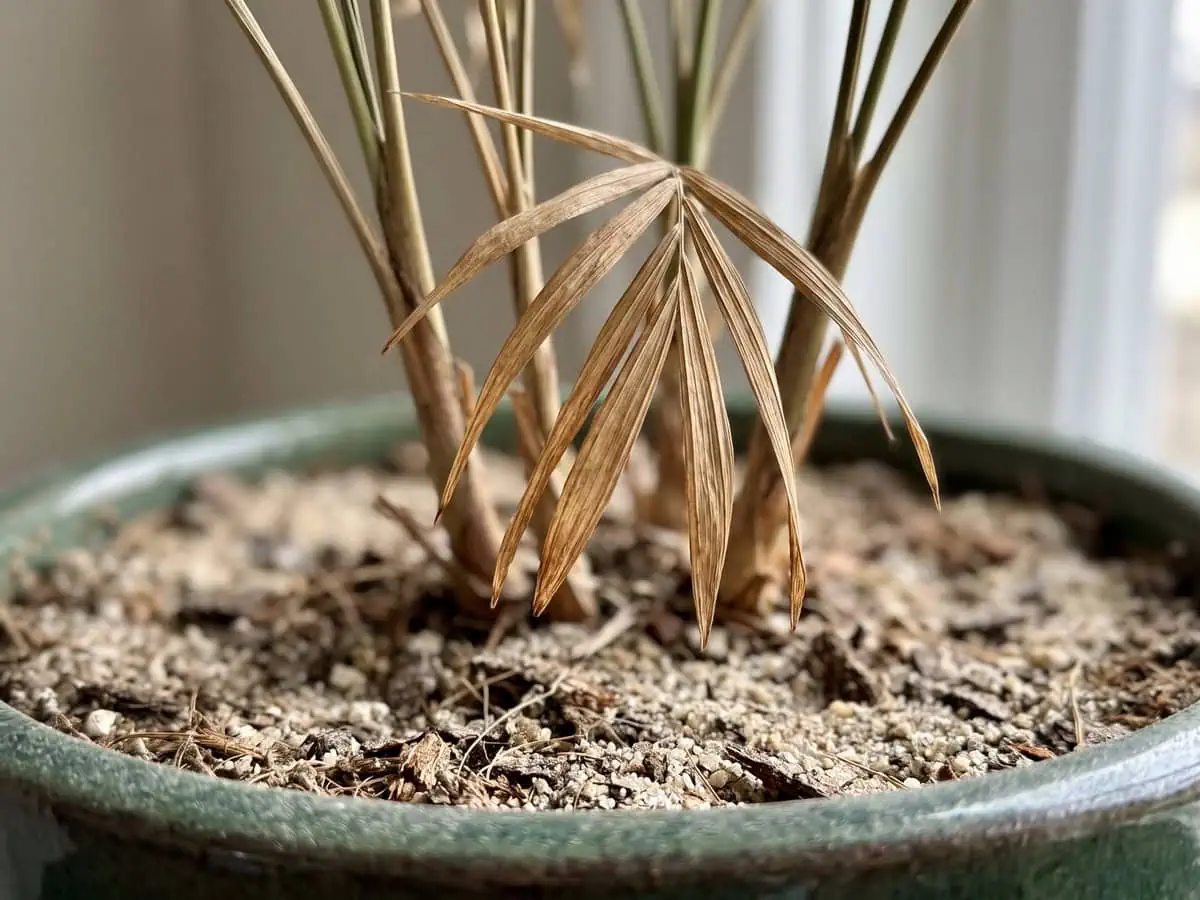
A hygrometer beside the pot tells you more than the leaf does. Inside the band, the plant has what it needs. Below it, change the air around the pot rather than wetting the fronds.
Passive ways to lift moisture around the pot
Grouping several plants in a small room with little airflow builds a shared humid pocket, and a pebble tray two to three inches deep, with the pot above the water line, adds a small lift (yes, this sounds modest — bear with me). A vented cloche holds more moisture. A humidifier near the plants usually runs several hours a day.
Rank the options by effect: a humidifier near the plants first, a cluster of plants on a pebble tray second, a pebble tray alone third. Misting sits last, since it changes the leaf surface, not the room air.
In my own heated rooms, the clearest sign of dry air was the newest frond, which opened with its leaflets held stiffly flat instead of arching outward. Higher humidity also slows spider mites. Keep the pot out of any heater’s stream, and the added moisture stays near the fronds.
Tap the button below to get more plant fixes in your Google Search results

Light and placement, from the dim end to the scorch line
A parlor palm needs bright but indirect light in the 75-500 FC range, survives at 25-75 FC, and scorches in direct sun. Per the PLOS ONE study on understory palm populations, the genus is a common subject of field research on understory palm populations on the dim forest floor. The two sections below turn that band into a spot.
Foot-candles: survival, sweet spot and ceiling
University of Georgia Extension classes this palm as a low-to-medium light plant, and its foot-candle bands give three tiers.
- Survival minimum: about 25 to 75 FC.
- Sweet spot: about 75 to 500 FC.
- Ceiling: roughly 500 FC of indirect light.
The sources set the ceiling as bright indirect light and never direct sun, which the RHS says will scorch the leaves. This is anecdotal, so… take it as one grower’s reading: the scorch I have seen came from a single afternoon of low winter sun through bare glass. It bleached only the side of each frond that faced the pane.
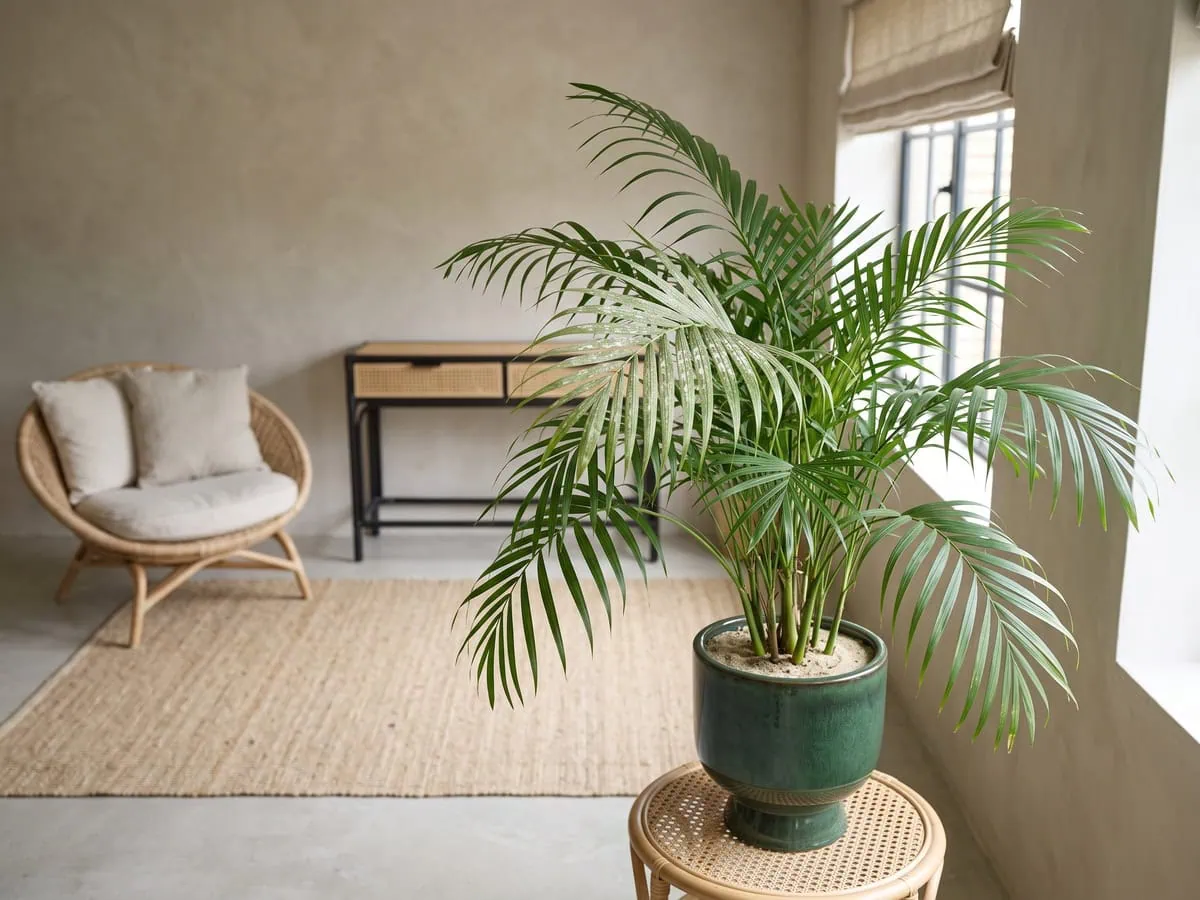
At the dim end the plant does not die quickly, but it stops growing. Each replacement leaf arrives a size down and a shade lighter, the spacing between them opens up, the stems tilt toward the window, and the oldest fronds give out.
Tolerating low light is not the same as growing well in it. The plant thins out at that end. Give it more light.
Which window, and how far back from the glass
Illinois Extension’s window map puts about 150 FC a few feet inside an east or west window, and about 300 FC directly in front of one. Both sit inside the sweet spot. A north window gives about 150 FC at the glass and 75 FC a few feet back, so keep the plant close.
A south window needs distance. Three to ten feet back gives about 150 FC, but the strip directly in front can carry 1500 FC of direct light and will scorch the fronds.
The best everyday spot is a few feet inside an east or west window, or right beside a north one. If a frond has already bleached after a move, see recovering a frond bleached by direct sun; new growth replaces the marked tissue.
A windowless room is not hopeless for this species, but an ordinary desk lamp will not do. Extension guidance points to purpose-built grow lights, fluorescent or full-spectrum LED, run 14-16 hours a day and never more than 16. Put it on a timer.
When I moved one pot from a north sill to a stand a few feet inside an east window, the next spear stood straighter instead of leaning toward the glass, which is the movement to watch for after any change. Make light changes in steps. A shade-grown plant scorches quickly when stronger light arrives all at once.
Water, medium and container: the failure rarely walked back
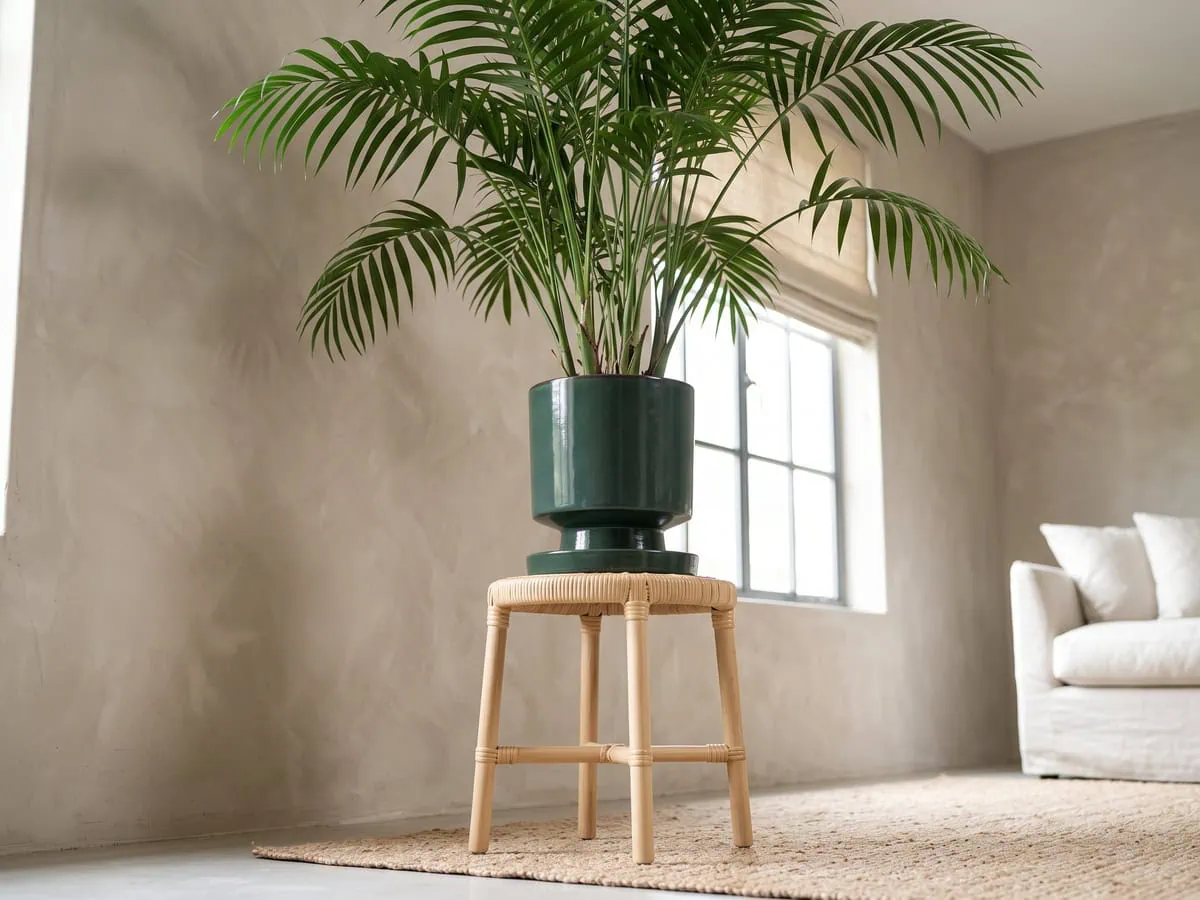
Water a parlor palm when the top 1-2 inches of mix are dry, in a free-draining mix and a pot with drainage holes. A root zone that stays wet is the one failure this plant rarely recovers from, and the three sections below cover timing, mix and container.
The depth trigger, and why no calendar works
This palm has no water-storage organ, yet its roots rot when the mix stays waterlogged. Per the International Society for Horticultural Science, measured daily water use in this species depends on canopy size and on the conditions in the room. A weekly schedule is the wrong tool.
A finger reaches far enough for this, though a quarter-inch wooden dowel goes deeper still and reads the lower half of the pot without tearing at the roots that are holding the plant upright. Damp soil clinging to it means wait. Clean and dry at one to two inches means water until it runs from the drainage holes.
The full method is in the watering method that keeps the root zone breathing. Tap water matters too, because this species reacts to boron in irrigation water with tan leaflet tips, and hard water also drifts the mix alkaline. Rainwater or distilled water avoids it.
Mix, air space and the pH ceiling
The target mix holds 10-15% air space and 30-40% water by volume, per UF/IFAS palm container guidance.
Coarse sand and pine bark fines each take one part against two parts coir, and a shallow skim of that same sand finishes the surface. It drains fast.
Keep the mix slightly acidic. Above the near-neutral mark, manganese becomes less available and palms show it first.
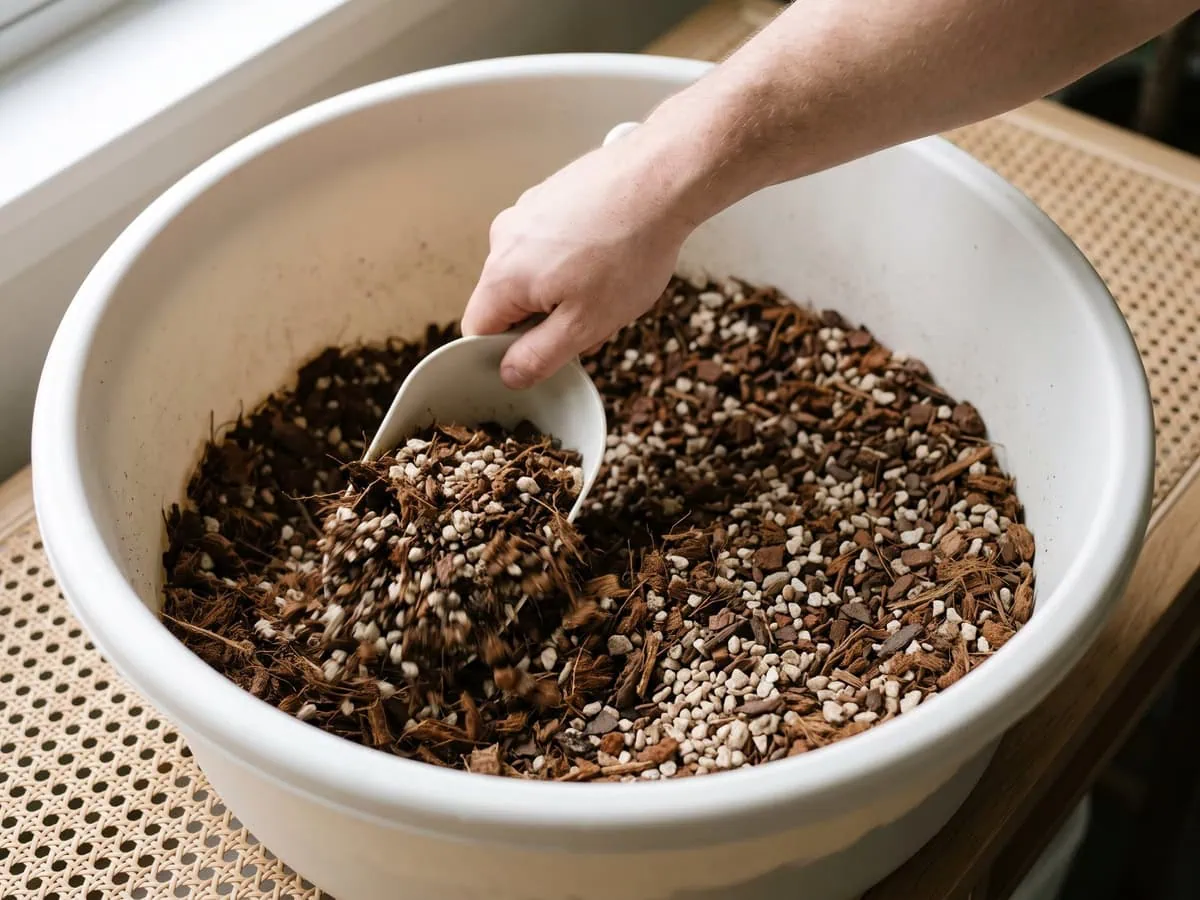
For mixing and adjusting the recipe, see building the potting mix this palm actually drains in.
Pot size, drainage and the cachepot trap
Move up one pot size at a time, only when roots circle the pot or grow out of the drainage hole. The species-level answer gives 4-5 inches, 6-8 inches and 8-10 inches as the steps.
| Factor | Unglazed porous pot | Plastic or glazed pot |
|---|---|---|
| Drying speed | Faster; the wall loses water | Slower; holds moisture longer |
| Salt buildup | Wall pulls salts from the mix | Salts stay in the mix |
| Rot risk if overwatered | Lower | Higher |
| Watering frequency | More often | Less often |
Verdict: Choose a porous liner with drainage holes for this palm because rot is the failure it rarely survives, and set it inside a decorative pot only as a sleeve.
Empty the decorative outer pot once the liner has finished draining, every time. Never put a gravel layer in the bottom of either pot; it perches water instead of draining it.
A sealed cachepot hides the drainage and holds the roots in standing water, which is how many gift plants die. Tip the outer pot after every watering.
After repotting, give the plant time; settling the plant again after a move into new medium covers the first two weeks.
Feeding waits too.
For strength, timing and flushing, see feeding without letting mineral salts collect in the pot.
Normal or fault: size, pace, lifespan and lower fronds
Slow growth, a modest indoor height, a long life and the loss of the lowest fronds are all normal for this palm. The following sections separate that ordinary turnover from the browning pattern that does signal a fault on this palm. Read the position first.
How big it gets indoors, and how slowly
The New York Botanical Garden states that this palm can reach 8 feet or more but usually stays at 2 to 3 feet indoors. An extension record grades its growth rate as Slow and its maintenance as Low.
So the answer to “why does my parlor palm grow so slowly” is that slow is the species, not a fault. Height that has outgrown the room is a separate question, handled in height, legginess and what may safely be shortened.
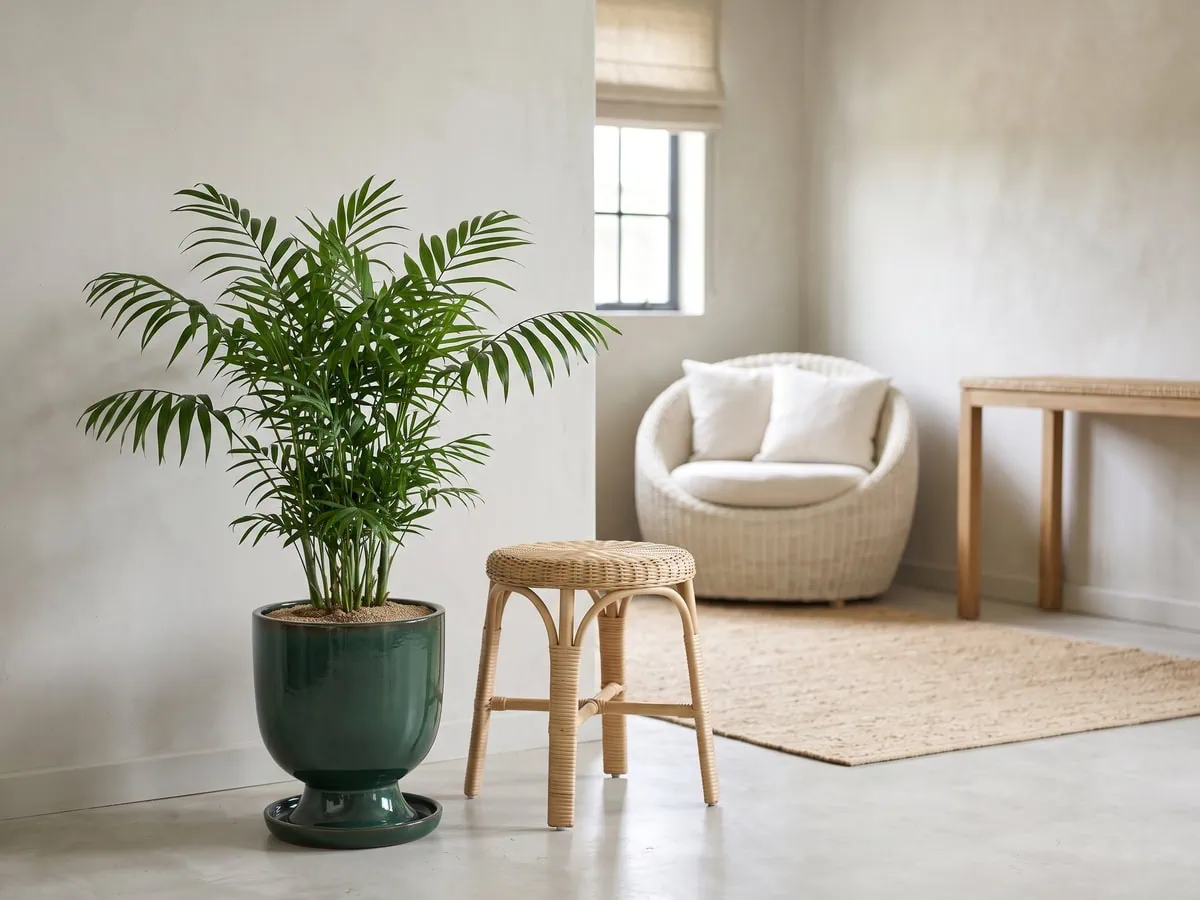
In my experience — though n=1 — a healthy plant can look unchanged for months. The only honest progress marker is a new spear opening at the crown at normal size. If none has opened for many weeks, look at light first.
How long it lives in a room
A reader searching “what is the normal lifespan of a parlor palm kept in a room” gets one published span from horticultural care publications: at least 10 to 20 years, with 40 years or more possible under good care.
Plan on decades, not years.
Lower fronds browning: turnover or trouble
Readers ask “is it normal for the bottom fronds of a parlor palm to turn brown”, and the answer is yes when only the lowest tier browns while new spears keep opening above. Old base fronds brown off, and care sources call removing them routine upkeep. Browning anywhere else, or while nothing new opens, is a fault.
The growing point sits at the top of each stem and cannot be replaced. Remove brown fronds with clean snips, but never cut green tissue and never cut into the top of a stem.
The Fairchild garden rule for palms is plain: trimming brown leaves is permissible, and green leaves should never be pruned. Dry tips on otherwise green leaflets have their own causes, read one by one in reading dry brown tips on the leaflets.
Where to look first when readings compete
Work in one order: the frond undersides for insects, then the bottom of the pot for moisture, then what changed in the room over the last two weeks. That order follows the ranked causes on this plant and saves you from fixing the wrong cause. Insects, then water, then change.
| What you see | Reading that separates it |
|---|---|
| Fine speckling or webbing | Specks moving means mites; still means old damage |
| Stems drooping or limp | Sodden at the pot bottom is wet; light and dry is dry |
| Pale fronds, small new growth | Stems leaning toward light points to low light |
| Spots on green fronds | Clean-edged mark is contact; stippled halo is feeding |
Verdict: Check undersides first because insects are the most commonly reported cause, then feel the bottom of the pot because a wet root zone is the close runner-up.
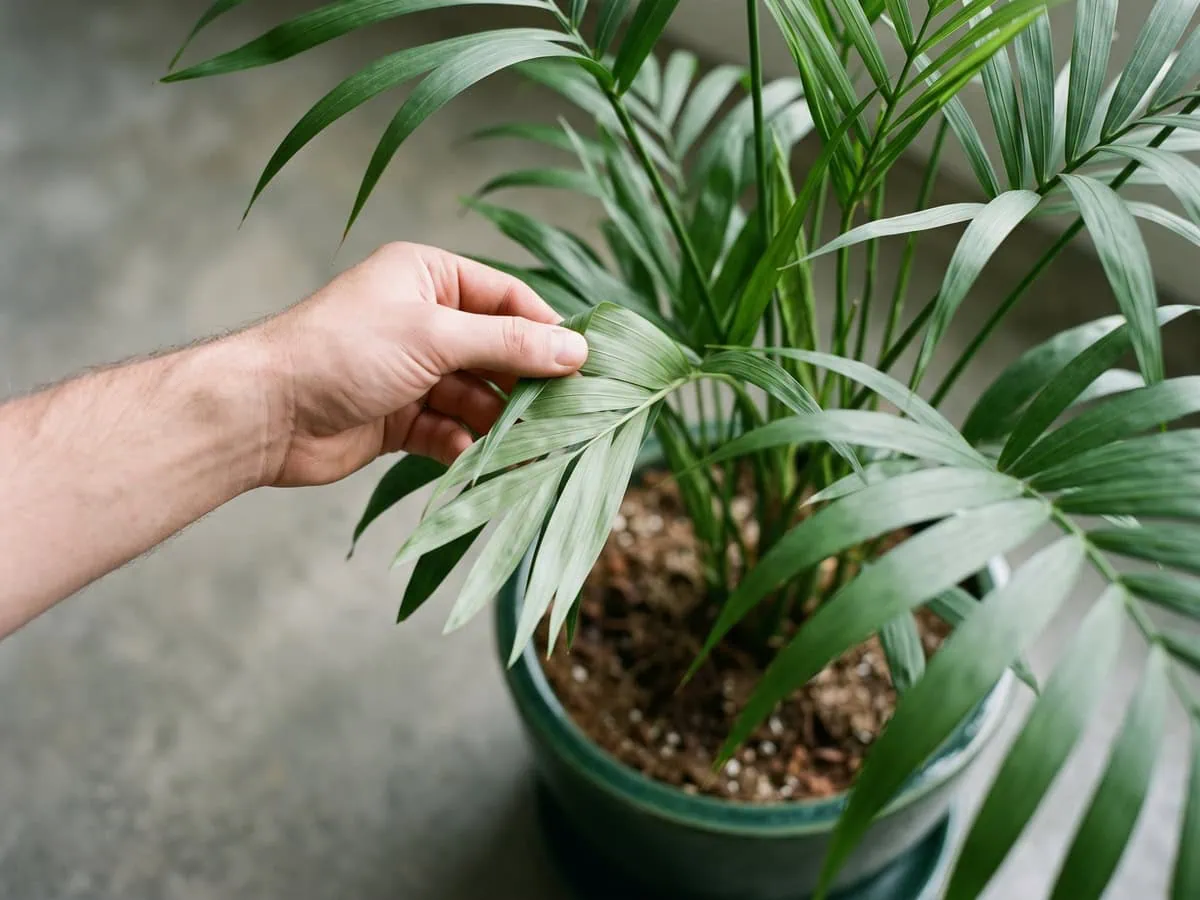
Plant-pathology guidance documents a leaf-spot pathogen for this species, with new spots brown, round and smaller than 1/25 of an inch, yet owner reports point to other causes first. For pale fronds carrying fine white speckling, look elsewhere. A wet pot bottom under drooping fronds means stop watering.
Four things about this palm the evidence does not support
Four popular claims about this palm fail against the extension and garden sources: that misting raises humidity, that it cleans room air, that there are varieties to choose from, and that easy means succulent-style watering. The sections below take each in turn.
Misting raises the air moisture
Most care guides tell readers to mist, without saying what it does to the air or for how long. Penn State Extension answers it directly: the humidity rise lasts only until the water evaporates, often a matter of minutes. Minutes, not hours.
The number that governs this plant is a room reading in the 40-60% band. Use a hygrometer. Spraying fronds to knock off insects is a separate job, covered in the pest section above.
Myth: a daily mist keeps the palm humid. Fact: the moisture is gone within minutes, and a species-level extension answer warns misting risks leaf infections; change the room air instead.
If the tips look dry in a heated room, read the hygrometer before you reach for water of any kind. A reading inside the band means the cause lies elsewhere, most often in the pot.
It cleans the air in the room
Many care guides sell this palm on cleaner indoor air, each without a room size, a plant count or an exposure time. Air quality is not a reason to keep it. The checkable reasons show in your own room: it accepts low light, needs little upkeep, and raises no pet-safety question.
There are varieties to choose between
Kew holds its one named variety only as a synonym, and the trade sells the plant as the plain type species, with no cultivar group behind it. One white-variegated selection, ‘Variegata’, appears in an extension toolbox as rarely seen. A second RHS name is unresolved.
Neanthe Bella is a trade name from a superseded genus placement, not a cultivar. The plants some pages list as types are other species altogether, and the one that matters at the shelf is the separate species also sold as Bamboo Palm.
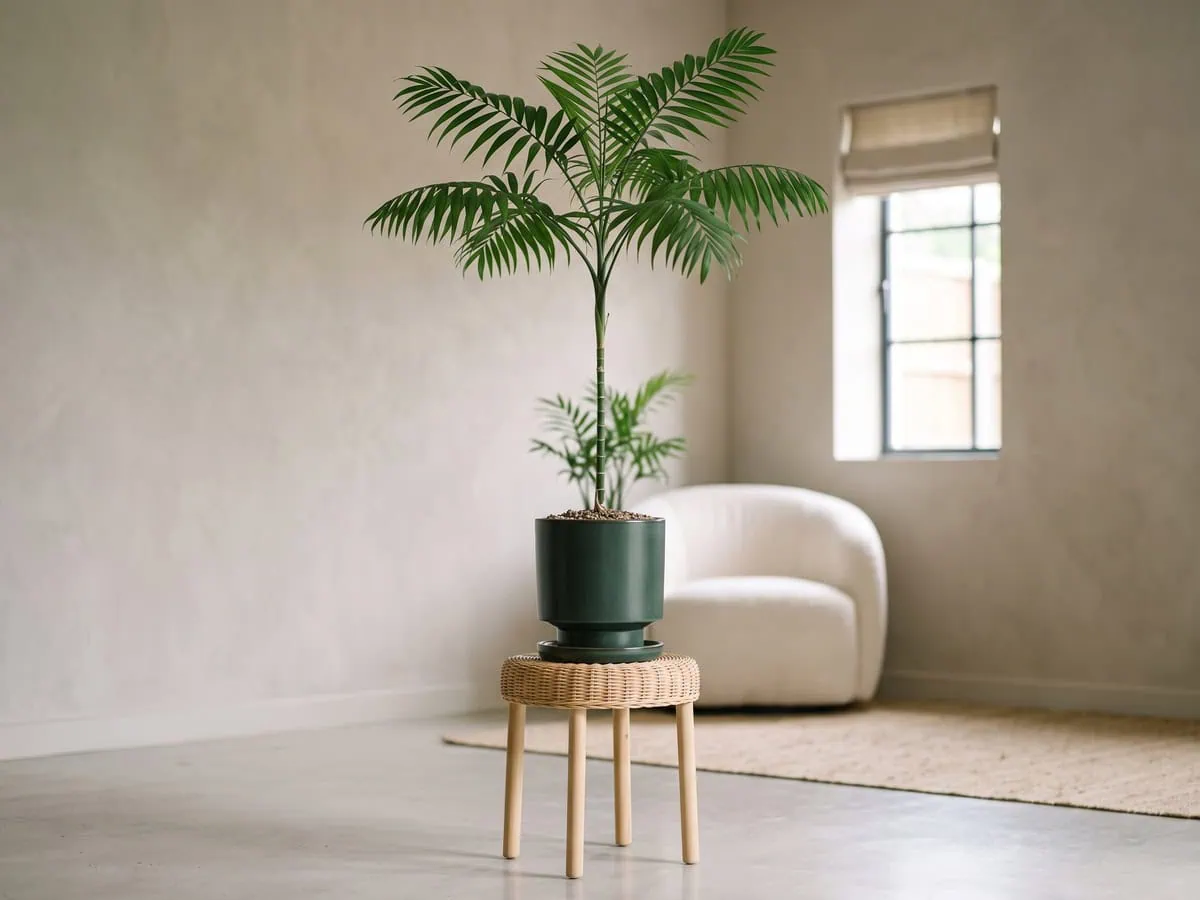
Easy means it can be watered like a succulent
Care guides widely rate this palm easy, and that rating is sometimes grounded in calling it a succulent, which it is not. It has no caudex, no tuber and no succulent stem. Extension guidance says it should never dry out completely or stand in water.
The ease is real within one condition: the mix stays evenly moist but drained. In my own pots it stayed easy right up to the week the bottom of the pot stayed wet, the boundary the easy rating never mentions. Then it was not.
That is where a forgiving palm stops forgiving, because rot in its fibrous roots rarely reverses. Care instructions for a different genus sometimes appear under this plant’s name, so a reader cross-checking results may be reading about another species. Check the genus first.
Frequently asked questions about keeping this palm
What is the lifespan of a Parlor Palm?
A parlor palm lives for decades indoors, and one published span gives at least 10 to 20 years. The same source adds that 40 years or more is possible under good care.
That span comes from care publications rather than a measured botanical study. Accounts of plants kept for decades and passed between generations agree on the scale if not the figure.
How do you keep a Parlor Palm happy?
Keep it in bright indirect light of 75-500 FC, water when the top 1-2 inches are dry, and hold the room at 65-80F.
Keep nights at or above 61F and check the frond undersides for spider mites each time you water. Use a free-draining mix in a pot with drainage holes, and empty any outer pot.
What are common Parlour Palm problems?
The most common problems are sap-feeding insects, led by spider mites, followed by a root zone that stays wet. Dry brown tips, pale fronds and scorch from direct sun come after those two.
Check in one order: frond undersides first, then the moisture at the bottom of the pot, then any change in the room. That order matches how often each cause turns up.
Should I cut the brown tips off my Parlor Palm?
You can trim fully brown fronds at the base with clean snips, but never cut green tissue or the top of a stem. The growing point there cannot be replaced.
Brown tips on otherwise green leaflets have several causes, from dry air to salts in the mix. The dedicated guide to brown crispy tips reads them one by one and explains when trimming helps.
What are the advantages of having Parlor Palms?
The checkable advantages are tolerance of low indoor light, low upkeep, and a non-toxic listing for cats and dogs. It also stays compact, commonly 2 to 3 feet tall indoors.
Claims that it cleans room air arrive without the room size, plant count or exposure time a real claim needs. Keep it for the light tolerance and the easy routine, not for air quality.
How to tell if a palm tree is male or female?
This palm is dioecious, meaning each plant carries either male or female flowers, never both. You can only tell which one you have once it flowers, which indoors needs maturity and good light.
A solitary houseplant rarely sets fruit because no plant carrying the other flower type grows nearby. The guide to the flower clusters and seeds shows what each spray looks like.
How big do Parlor Palms get?
Indoors a parlor palm is commonly 2 to 3 feet tall, according to the New York Botanical Garden. The same guide notes it can reach 8 feet or more, which is rare in a room.
Growth is graded slow, so the size you buy is close to the size you keep for years. Plan for the lower height, but leave some headroom in case yours keeps climbing.
How to revive a dying Parlor Palm?
Start by finding the cause: check the frond undersides for insects, then feel the mix at the bottom of the pot. Wet mix with drooping stems means stop watering first.
If the roots are brown and mushy, cut back to firm tissue and repot into fresh free-draining mix. Where most of the root mass has rotted, save the healthy stems in the pot.
Win your next battle for clean fronds
The whole routine comes down to two looks and one number: the frond undersides, the bottom of the pot, and a 61F night floor. No softening it. Most losses I have seen on this palm started with one of those three skipped.
A palm with a single growing point per stem forgives very little at the top. Check before acting. That habit protects every stem you own, and it carries over to any palm you bring home.
Next, the question most readers reach is how to clear a colony once the underside shows one, and the pest guide above walks through it. Knowing how to care for a parlor palm indoors means watching the fronds lift and arch month by month, not watching the calendar.
May your parlor palm keep lifting one clean frond from every growing point, and may each underside you turn over come up clear of stippling.
Tap the button below to get more plant fixes in your Google Search results