🎯 Quick Answer: cutting back a leggy parlor palm
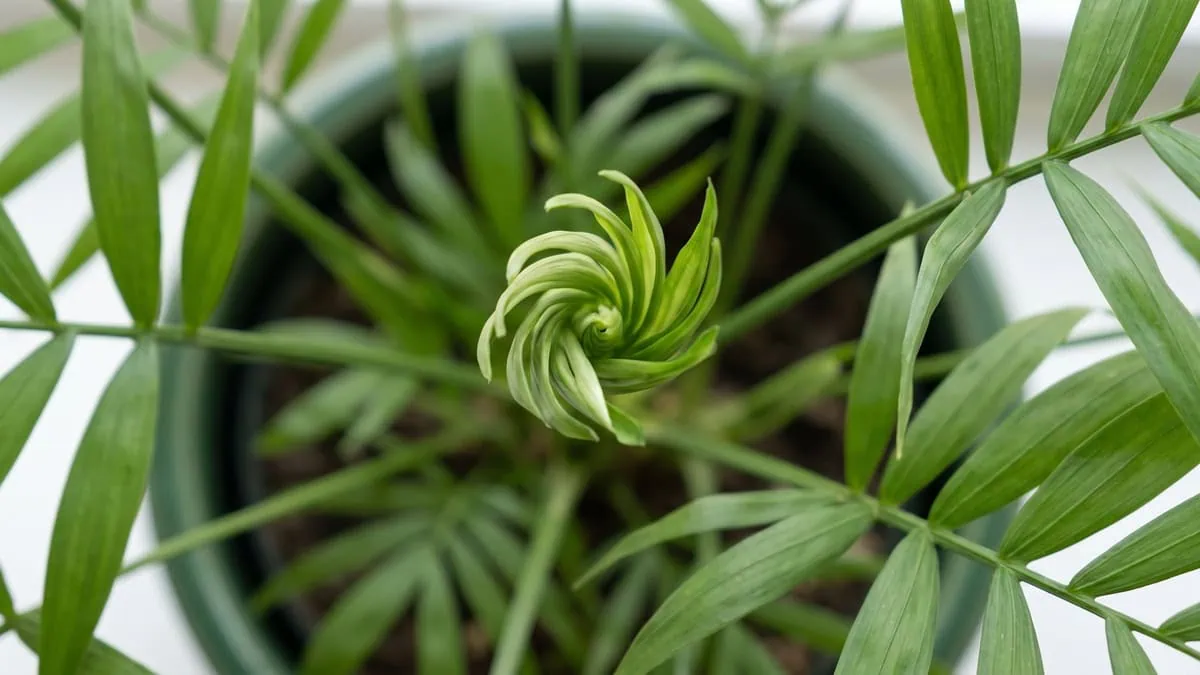
No, a cut stem never regrows – each carries one growing point at its tip. Chamaedorea elegans, a member of the Arecaceae family, makes every new frond there.
Can you cut back a parlor palm that is too tall and leggy? Air-layer 12-18 inches below the tip instead.
- Growing point: the single bud at each stem’s very tip
- After topping: that stem holds its leaves, then makes none
- Runaway stem: wide frond spacing reads as too little light
- Bare cane: no spear opening at the tip means it is finished
- Stop new stretch: move it to brighter indirect light, not a cut
The tallest stem in my pot carried four inches of bare cane between fronds. That bare span is where snips start to feel reasonable.
Six stems in one pot settled it: I topped the first, watched it hold fronds four months, then quit. The stub stayed green and stayed empty.
Conventional height advice nearly lost me the rest of the pot. The real fix was reading the shoot apical meristem – the single bud at each stem’s tip that forms all the leaf primordia it will ever carry (a term worth keeping), and its phyllotaxy fixes every frond that follows. Backtrack: that bud is not one growing point among several.
Run a thumb up that cane: smooth and hard, like a wooden dowel sanded free of grain. Nothing there can break into leaf.
Indoors this palm sits at two to three feet, rarely the eight feet on record — where the long-term ownership guide for this plant picks up.
Quick story: I kept a tape measure in the pot for a season before I trusted the numbers below.
Can you cut back a parlor palm that is too tall and leggy: the numbers at a glance
| Parlor palm specs | What the guidance says |
|---|---|
| Will a cut stem grow again? | No – each stem carries one growing point, and removing it ends that stem |
| Height indoors | 2-3 ft commonly, 8 ft or more possible (New York Botanical Garden) |
| Does it need a stake or a moss pole? | No – single stemmed, one leaf cluster per stem, no staking regime required |
| What may come off | Dead and brown tissue only; green fronds stay on the plant |
| Blade hygiene before any cut | Wipe or dip in 70 percent isopropyl alcohol, no dilution and no soak |
| Route that shortens a living stem | Air layering, cut placed 12-18 inches below the shoot tip |
Tap the button below to get more plant fixes in your Google Search results

Table of Contents
Why a cut stem never comes back
A parlor palm stem never comes back from a cut through its top, because each stem carries exactly one growing point and that bud is the only place on the stem where new fronds form. Remove it and the stem is finished. Still green for a while — but finished.
The following sections take the bud, the stub it leaves, and the blade in that order.
This cut is not reversible on this plant. A palm has no lateral meristems and no vascular cambium, so a stem wound is permanent and a lost bud is never rebuilt from lower down. Read the next two sections before the snips come out.
One growing point per stem, and no spare
Each stem holds a single bud at its tip — Chamaedorea elegans is single stemmed and produces one cluster of leaves. According to Annals of Botany, the single shoot apical meristem that builds a palm’s whole above-ground structure initiates every leaf the plant will hold, so the count is one bud per stem and never two.
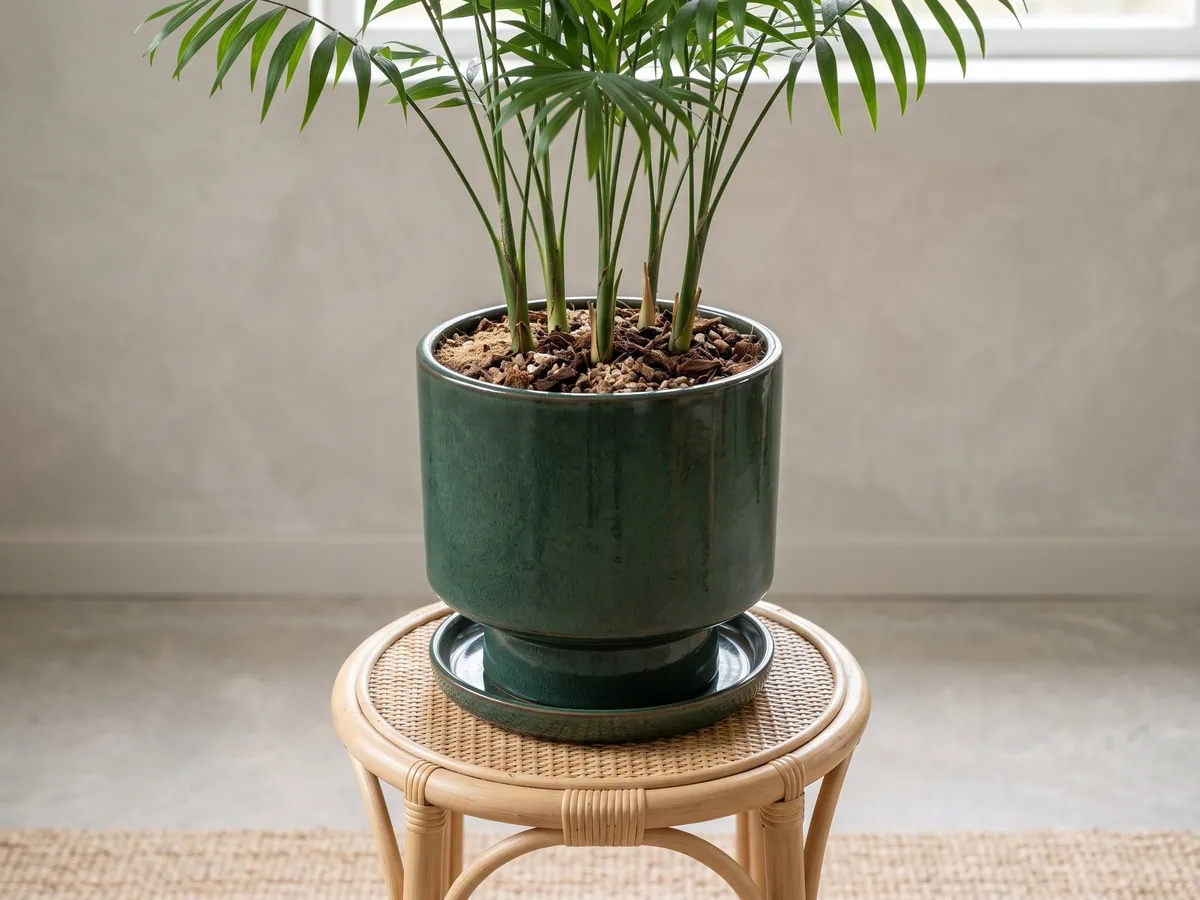
What looks like a bushy clump is several separate seedlings sharing one container. Count the stems at the mix surface. Each one is its own plant with its own single bud, and each can be lifted out whole.
What the stem does after the top is gone
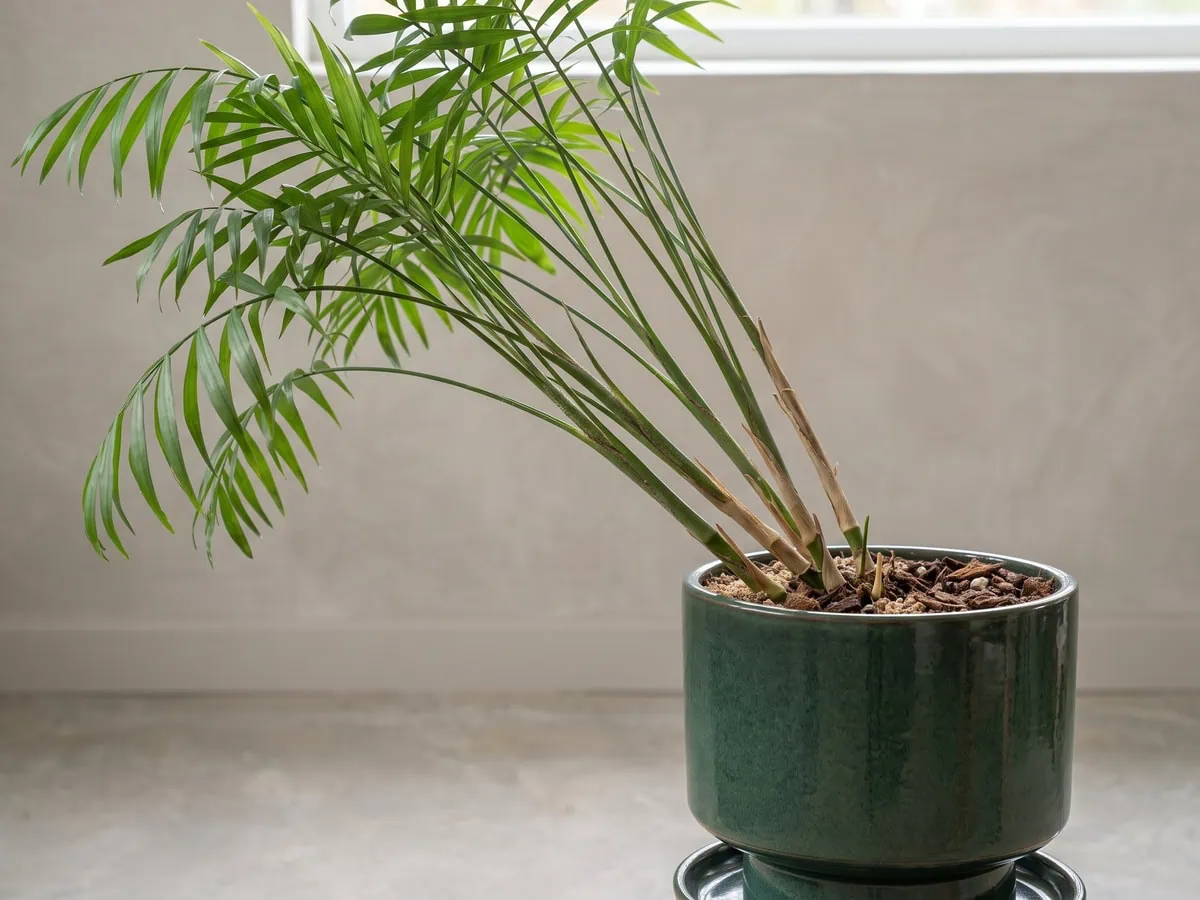
The “what happens if I cut the top off a parlor palm stem” question has one answer. That stem keeps the fronds it already has, holds them for weeks or months, and then makes nothing at all — no side shoot, no replacement bud, no branching.
I have watched a topped stub stay green for four months and then quit, which is the point owners miss: green tissue on a topped stem is stored leaf rather than fresh growth.
Wipe the blade with alcohol before any cut
Every cut opens tissue this plant cannot seal over. The blade goes in clean. Dirt and sap come off the snips first, and only then does the 70 percent isopropyl alcohol go on, undiluted and without a soak.
Between plants is the minimum frequency. The edge should feel dry and faintly tacky against a fingertip rather than slick, because slick means the debris is still sitting on the steel.
Tap the button below to get more plant fixes in your Google Search results

What to do when a parlor palm outgrows its spot
When a parlor palm outgrows its spot the answer is to move it, air-layer it, or support it — never to shorten a stem from the top, whatever its height. Height here is usually a light reading rather than a size problem.
Real indoor height comes first, then the single shortening route, then leaning stems.
How tall it really gets indoors
Two to three feet is the height this palm is usually seen at indoors, and 8 feet or more is the documented ceiling it only rarely reaches. So, “what do I do when a parlor palm reaches the ceiling”? Almost nothing — the plant that tall is exceptional, and yours is probably years away from it.
Caveat: this might be wrong for an unusually old specimen — I have seen one pass five feet exactly once, and it had stood a long stretch in the same container. Published guidance separates the height reached indoors from the species capability, so judge your own plant by the height it stands at rather than by the ceiling it could reach.
Air layering: the one route that shortens a living stem
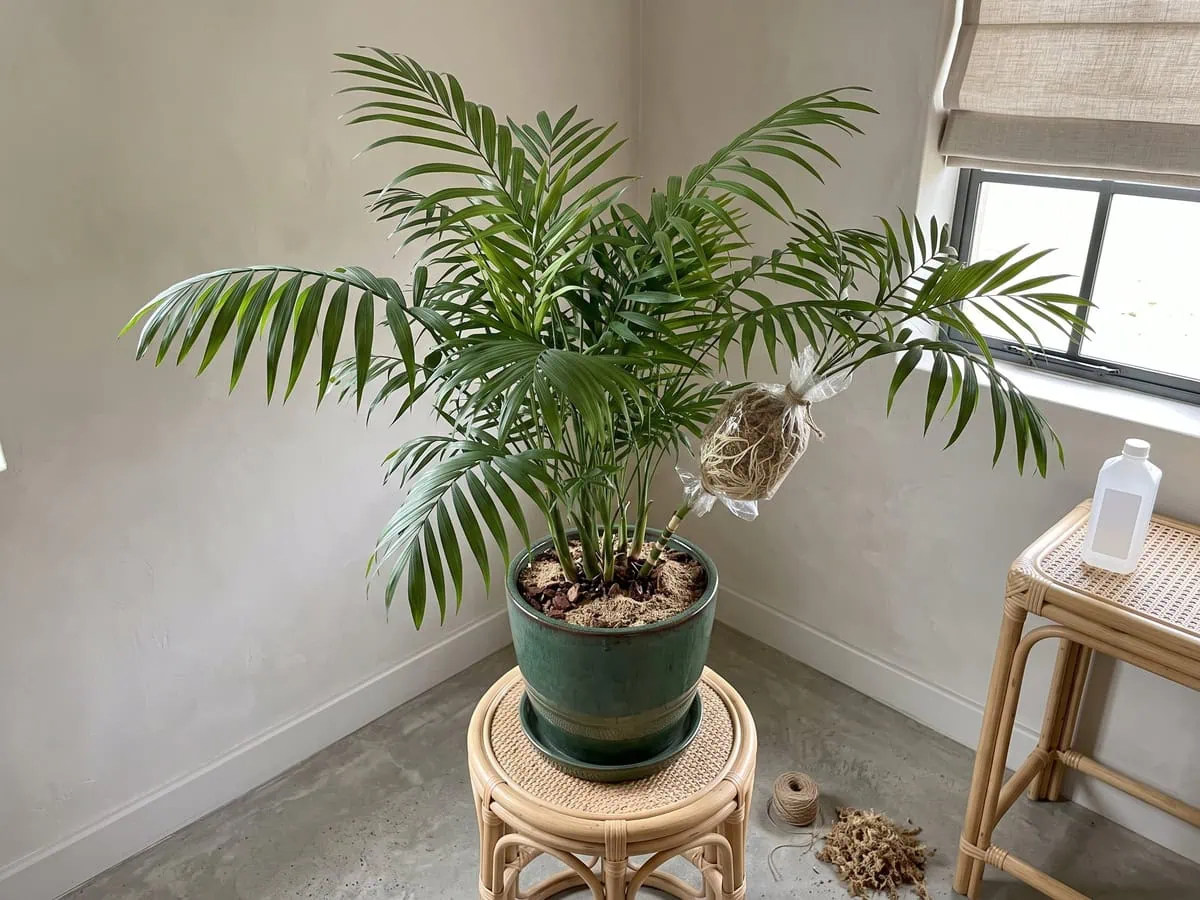
Air layering is the only documented procedure that leaves you a shorter plant and a living plant at the same time. A houseplant-general method, not one tested on this species. The numbers below belong to the procedure.
- Pick a point 12-18 inches below the shoot tip.
- Cut into the stem about one third of its diameter.
- Hold the wound open with a toothpick and work rooting powder into it.
- Pack moist un-milled sphagnum moss around the wound, wrap it in clear plastic, then tie above and below.
- Cut below the bottom tie once roots several inches long show, and pot the rooted piece.
Roots take several weeks — sometimes months. The detached top then becomes its own plant. That is the same outcome as raising a fresh plant from a detached stem.
Supporting a stem that leans instead of cutting it
“How do I stake a parlor palm that is leaning over”? Mostly you do not. This species is single stemmed and carries one leaf cluster per stem, so the published position is that no training or staking is required.
A leaning stem still feels like firm wood. A limp stem is a different reading — check a root zone that has run dry under a limp stem before reaching for a stake or the snips.
Trimming myths that end a stem for good
Most trimming advice written for outdoor palms will end a stem on this plant, because it assumes a crown that regrows and a clump that fills back in from the base over the following season. But neither is true here.
Bare cane against stretched stem, the runaway stem and canopy limits follow in the sections below.
The myth is that this palm sheds its own dead fronds and needs no help. It does not. Old lower fronds die off as new ones open above, and they stay attached until you cut them away — dead tissue on a palm stays put until it is removed.
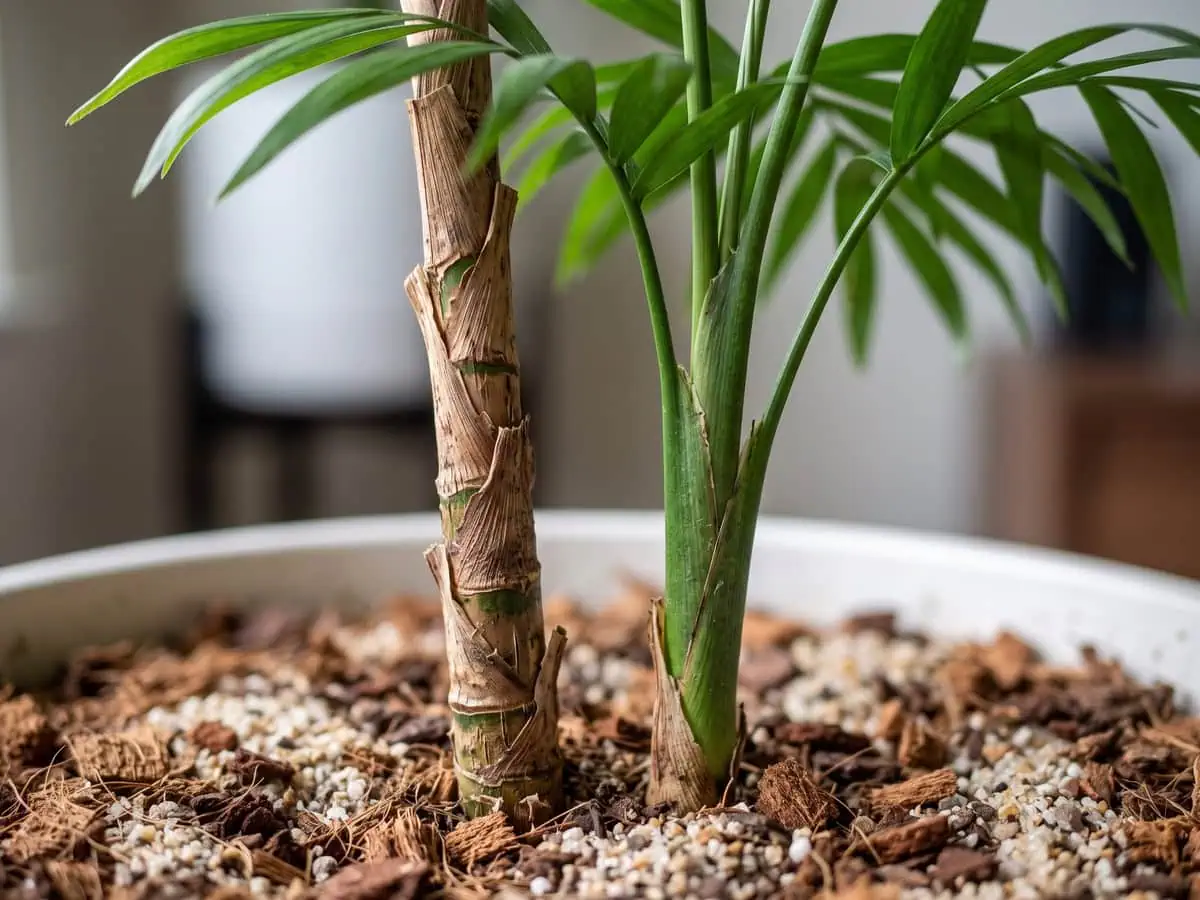
Bare cane or stretched stem: telling the two apart
“Should I remove a parlor palm stem that has lost all its fronds”? Read the tip, not the cane. The health reading on this species is the condition of the opening spear rather than the state of the oldest frond, so a stem with a live spear is still working even when its lower half looks spent.
| Bare cane | Stretched stem |
|---|---|
| No spear opening at the tip | A spear still opening at the tip |
| Every frond gone, cane dry and hard | Fronds present but widely spaced |
| Nothing left for the stem to recover from | Light, not a cut, is the fix |
Verdict: Take the bare cane off at the mix surface — and leave the stretched stem standing.
Why one stem runs ahead of the others
“Why is a single parlor palm stem outgrowing the others in the pot”? That one is reaching further for the same window (yes, this sounds anticlimactic — bear with me). Wide spacing between fronds is a light reading on this species rather than a pruning problem, and the stems sharing one pot are separate plants that never shared a growing point.
So the fix sits at the window, not in your hand. Start with the light level behind stretched growth.
How much of the canopy can come off
The limit on this plant is a color, not a percentage: dead and brown tissue comes off, and green fronds stay on. Pruning green fronds takes nutrients from the palm and opens it to pests and disease, which is why the boundary is a color rather than a count.
When you trim a dead tip, stop short of the green part of the leaf. Work one frond at a time and keep the blade wiped between stems, because a topped clump cannot replace what a careless cut removes.
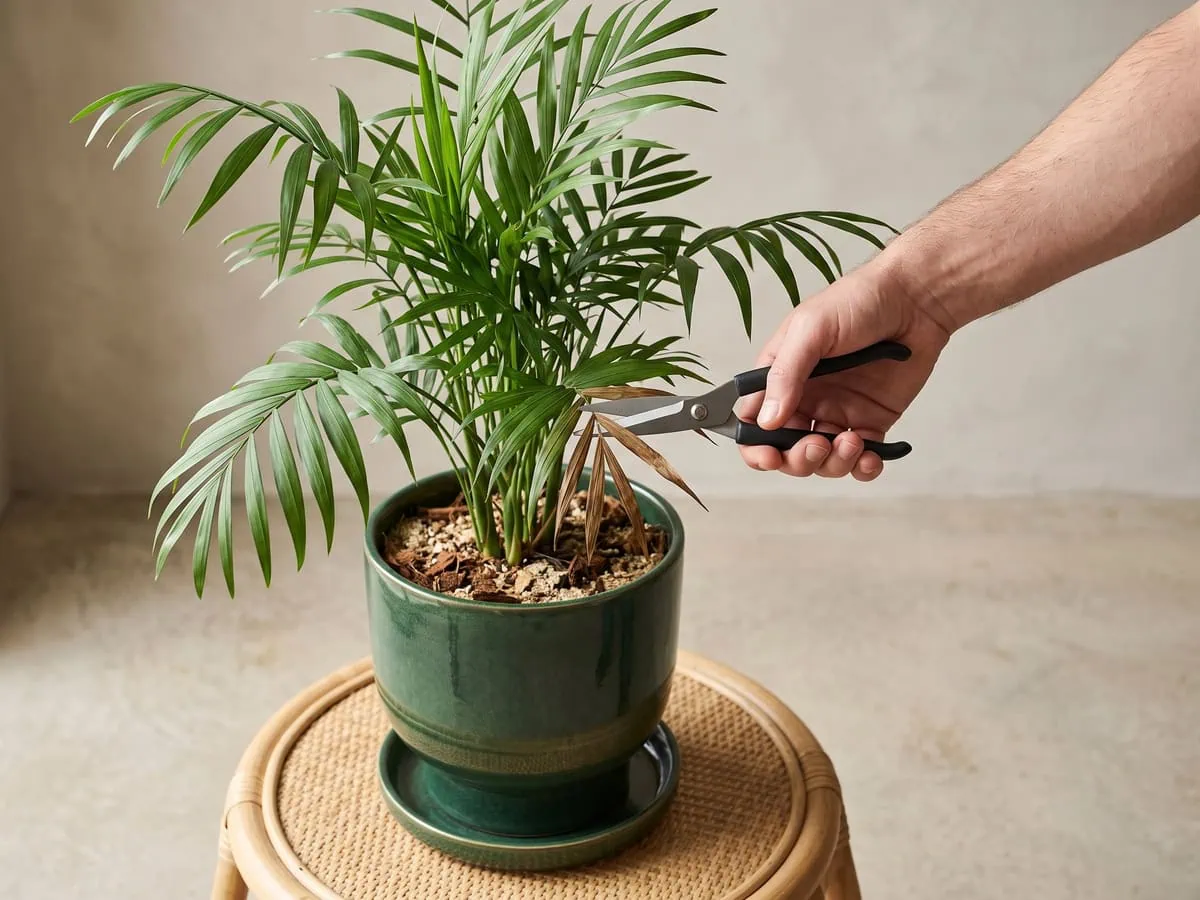
That leaves the harder call, which frond is spent enough to go — choosing which browned fronds to take off is a reading of its own.
Frequently asked questions
What do I do if my palm tree is too tall?
Move it, air-layer it, or live with it — do not shorten the stem from the top. A parlor palm carries one growing point per stem, so a cut above that bud ends the stem rather than reducing it.
One documented route keeps a shorter plant alive: the cut goes 12-18 inches below the shoot tip, about a third of the way into the stem, and the wrapped wound roots over several weeks. If the plant is simply reaching, moving it to brighter indirect light is the simpler answer.
Can a Parlor Palm be cut back?
No. A parlor palm cannot be cut shorter and left to regrow. The stems can be thinned by removing a whole spent cane at the mix surface, and dead or brown frond tissue can come off at any time, but no stem is shortened and left to regrow.
Each stem is a separate plant with a single apical bud at its tip. Remove that bud and the stem holds its remaining fronds for a while, then stops for good, because a palm has no lateral meristems to break from lower down.
What happens if you cut off the top of a palm tree?
On a single-stemmed palm the plant dies with the bud. The stem keeps its existing fronds for weeks or months, makes no side shoot and no replacement bud, and then browns from the cut downward.
This is the reason topping is the one operation never worth trying on a parlor palm. There is no recovery route from it, and a stem wound on a palm stays open rather than sealing over.
Why do some palm trees get so tall?
Height on a palm comes from one bud stacking leaves upward, with no branching to spread the growth sideways. A parlor palm is documented at 8 feet or more, though indoors it is usually seen at two to three feet.
Indoor light is the brake. The same plant that can reach eight feet stalls well below it under interior light, which is why a stretched indoor stem is a light reading rather than a sign of vigor.
How to cut down a tall palm?
For a houseplant, the answer is to remove the whole stem at the mix surface rather than shorten it. That stem is finished either way once its bud is gone, so taking it out at the base leaves a tidier clump and no dying stub.
Clean the steel of dirt, then wet the blade with undiluted 70 percent isopropyl alcohol and cut without letting it soak. Then cut the neighboring stems only if they too have lost their crowns.
How far back can you trim a palm tree?
You can trim only as far as the dead tissue goes. The published limit on this plant is a color boundary rather than a percentage: dead and brown tissue comes off, and green fronds stay on the plant.
Leave the green part of the leaf untouched when you trim a brown tip. Cutting into green tissue takes nutrients from the palm and opens it to pests and disease, which is the whole reason the boundary exists.
Skip the myth, use the science
Short answer first. The question “can you cut back a parlor palm that is too tall and leggy” has a one-word answer, and everything useful sits in what you do instead. One bud per stem, no spare, no branching — that single fact decides every cut you will make on this plant.
Take off what is dead. Leave every green frond standing. Move the pot toward better light before you reach for the snips, because a stretched stem is answering the window rather than asking for a blade.
Press a fingernail against a spent frond base. It gives with a dry crumble instead of a green snap — that is the only cut this palm ever needs from you. May every stem you keep earn its height honestly, and may you never hand one a cut it cannot grow back from.
Tap the button below to get more plant fixes in your Google Search results