🎯 Quick Answer: confirm first, then spray the right product
This is how to get rid of spider mites and scale on a parlor palm, Chamaedorea elegans in Arecaceae: soap drops mites, repeated every 4-7 days. Tap a frond over white paper first. Moving specks mean a spray course starts, and alcohol swabs lift scale shells.
- Stippling: pale specks stay on the frond even after the mites are gone
- Shell stage: crawlers are exposed, while settled scale hides under a hard dome
- Sticky film: honeydew under scale feeds black sooty mold on lower fronds
- Rinse rhythm: shower the undersides daily while specks move, then weekly after
- Stop point: end the course one interval after the first clean paper check
The first sign on my parlor palm was never a bug — just fine pale stippling across the upper leaflets, like static on an old television, spreading further each week. Pause for a sec. Spider mites less than one-twentieth of an inch long had spun faint webbing between leaflet and rachis, visible only when I tilted the frond.
I assumed every speckled frond meant mites were still feeding — until a dish-soap spray I mixed myself scorched 8 fronds over 4 months and taught me that a palm never repairs a marked leaflet. Let me try that again… it replaces whole fronds from the one growing point at the top of each stem (more on this below).
So this routine starts with proof. Confirm a live population first, then match the product to the pest that is actually there. Watering, light and feeding live in my guide to everyday indoor care for this palm.
Six rows follow in one table, and its second row decides whether you ever open that spray bottle at all.
How to get rid of spider mites and scale on a parlor palm at a glance
| Parlor palm specs | Control detail |
|---|---|
| Organisms in scope | Spider mites first, then armored and soft scales; mealybugs and thrips too |
| Live population confirmed before any product goes on? | Yes, required |
| Confirming tool | A 10x hand lens; adult mites under 1/20 inch read as moving dots |
| Product class | Insecticidal soap at a 1-2% solution, 2.5-5 tablespoons per gallon, or horticultural oil |
| Repeat interval | Every 4-7 days at the label rate until the population clears |
| Application ceiling | Below 90F for soap or oil; 85F outdoors; never on a thirsty plant |
Tap the button below to get more plant fixes in your Google Search results

Table of Contents
Confirm the mites are still alive before you spray
Spray only after a live population is confirmed, because stippled leaflets keep their marks long after the spider mites have gone. According to the UC Statewide Integrated Pest Management Program, whose guidance on spider mite identification and management sets the rule, mites must be present on the plant before any soap or oil goes on.
Most care pages skip that check. That wastes product — and on a palm, every extra spray is one more chance to scorch a leaflet.
Mites reach a palm on air currents and clothing. Still, if a plant came home recently, check what a newly bought palm does in its first weeks too.
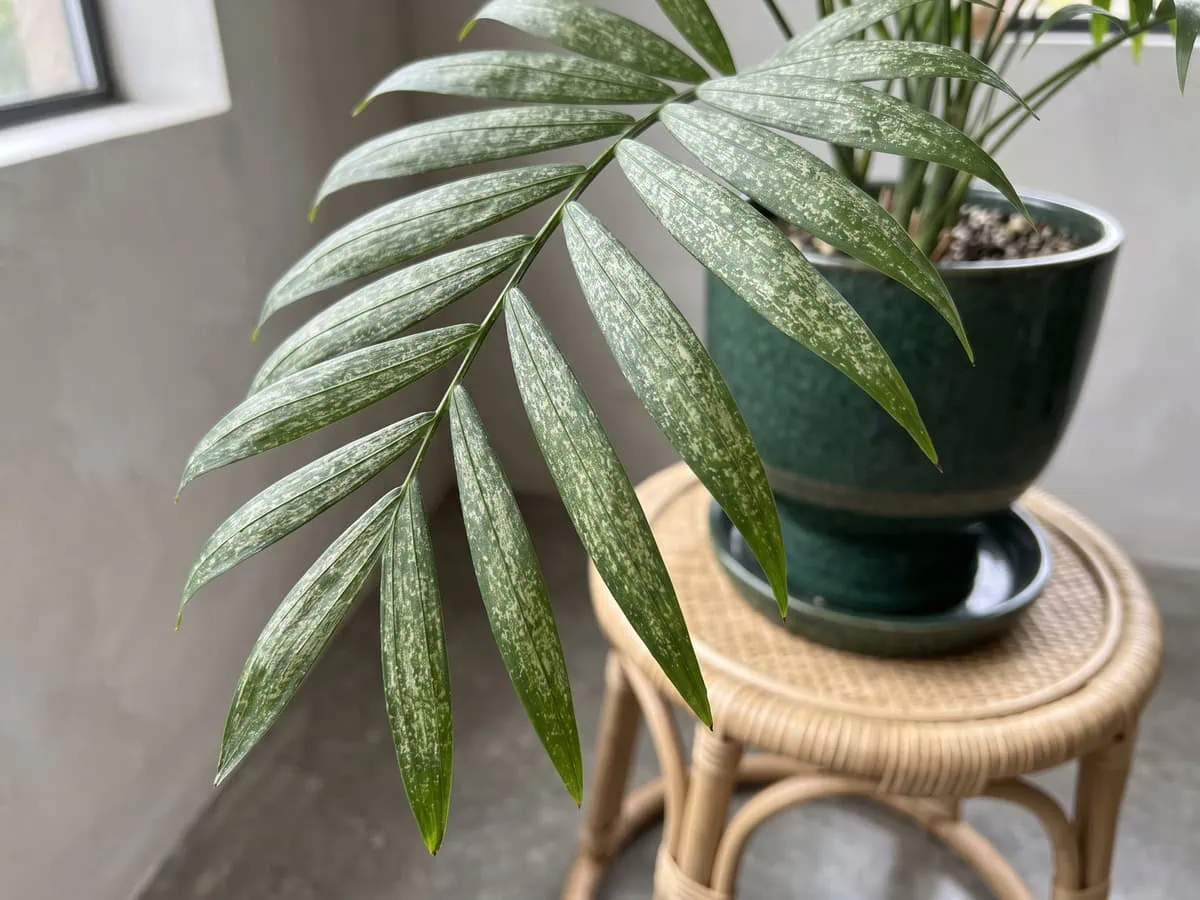
People who type “what does mite damage look like on parlor palm fronds” are already holding the answer: fine pale specks on the upper leaflet surface, and sometimes a faint web where leaflet meets rachis. The following sections cover the tap test, the lens and the marks that stay.
The white-paper tap test
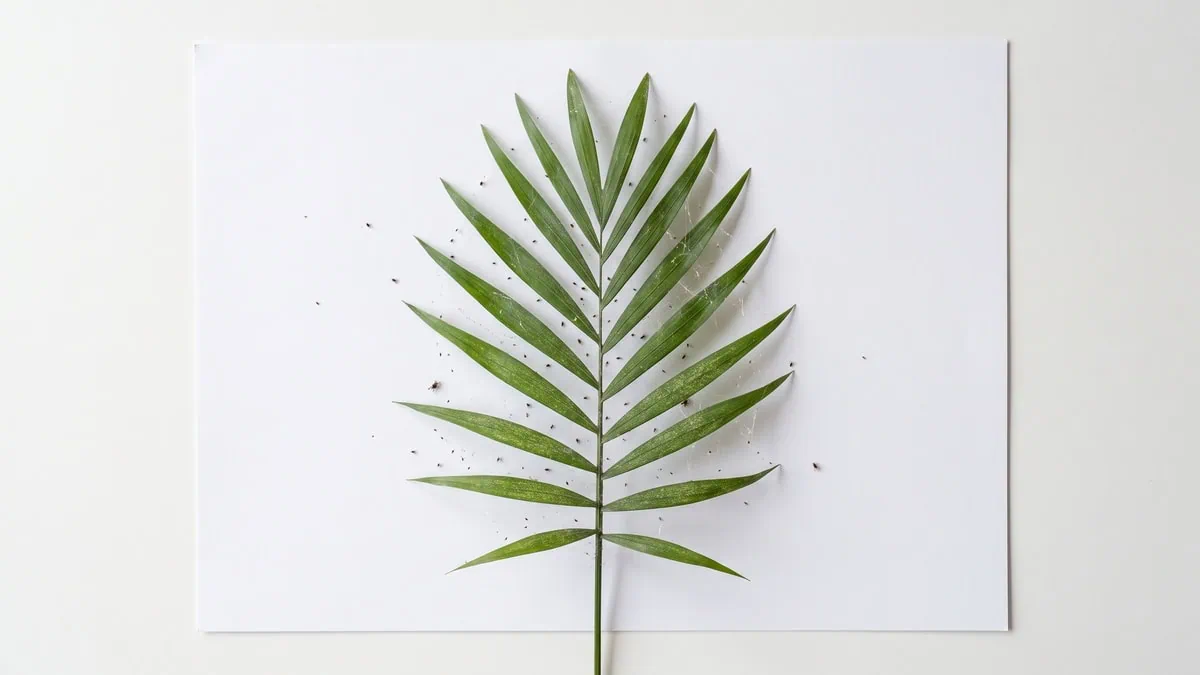
Hold plain white paper under a frond and tap it. Watch for a full minute. Movement on the sheet means a live population — the spray schedule begins today, and the palm stays apart from other plants until one interval after the specks stop.
No movement means old injury. Re-check in a week instead of starting a course.
What a 10x hand lens actually shows
A 10x hand lens turns a moving dot into a readable mite. The adult is under one-twentieth of an inch, only a crawling speck to the unaided eye.
When I tilted a marked leaflet under the lens, the specks started walking within seconds — pale dust never does. Predatory mites are longer-legged, faster and teardrop-shaped. Leave those alone.
Stippled tissue never recovers
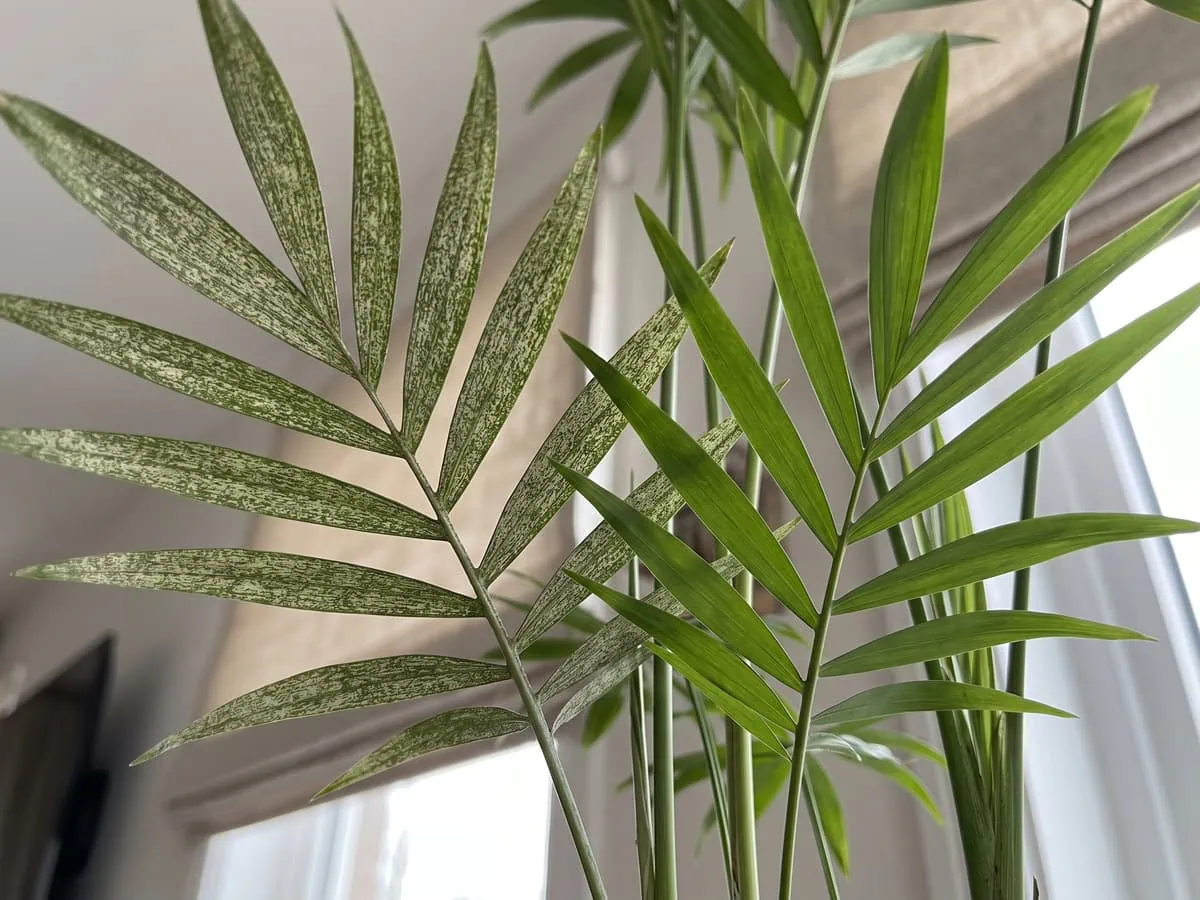
The pale stippling stays for good, and the palm grows past it with new fronds instead of repairing the marked leaflets. Weeks after the mites are gone, the specks look exactly as they did the day you found them.
So a heavily marked plant with no live mites is kept. Published guidance on ornamentals calls mite injury mainly a looks problem. Not every pale mark comes from mites, though — if the frond carries a yellow cast, compare it against reading pale speckling on the fronds first.
Tap the button below to get more plant fixes in your Google Search results

Soap, oil or alcohol: choosing what to put on a parlor palm
Insecticidal soap comes first for spider mites on a parlor palm, with horticultural oil as the backup and a rubbing-alcohol swab for scale. All three work only where they land — dry residue does little, so soak the leaflet undersides where the mites feed. A population spread across most of the plant gets the same course, with every frond covered.
Anyone asking “how many times should I spray a parlor palm for mites” gets two numbers from published soap guidance: a 1-2% mix, repeated every 4-7 days. Stop one interval after the first clean paper tap.
| Product | Best use on this palm |
|---|---|
| Insecticidal soap | Mites, mealybugs, thrips and scale crawlers at a 1-2% solution |
| Horticultural oil | Mites and settled scale; mix and apply it at the label rate |
| Rubbing alcohol swab | A few scale shells or mealybugs lifted off by hand |
Verdict: Pick soap for mites because it reaches their soft bodies, and save the swab for scale you can see.
Next come dish soap, heat limits and the spray that backfires, in the following sections.
Insecticidal soap is not dish soap
Insecticidal soap is a potassium fatty-acid product, not a kitchen detergent. Dish soaps can carry additives that harm plants.
So when readers search “can insecticidal soap clear mites off a parlor palm,” the answer is yes on contact, as long as it is mixed with distilled or purified water — hard water weakens it. I mix 2.5-5 tablespoons per gallon. Then I spray the undersides until every leaflet glistens.
Temperature limits that decide the day
Room heat decides whether today is a spray day. The two heat limits stay separate.
Do not spray soap or oil above 90F or on a palm already short of water. Where the plant is sprayed outdoors, stay below 85F. Keep a wet plant out of direct sun and away from bright grow lights, or the leaflets can scorch.
Water the palm the day before. Then test a few leaflets and wait 24 hours — a clean patch clears the whole plant.
Why a broad-spectrum insect spray backfires
A general insect spray can leave more mites than before, because it wipes out the predatory mites that hold spider mites down.
Speculative, but lab work on some products reports a named ingredient that raised mite reproduction above untreated levels.
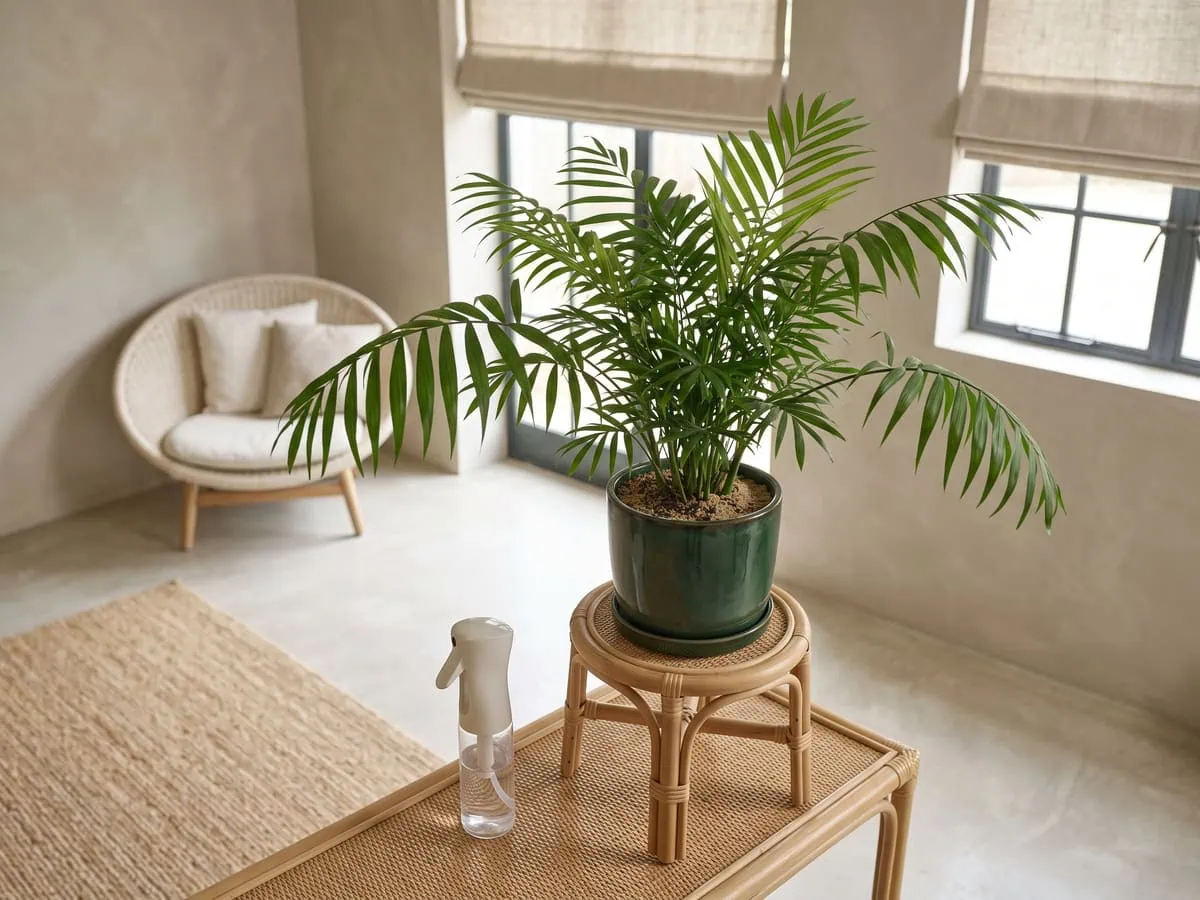
The lesson is the direction. A mite count that is higher two weeks after a broad-spectrum spray means stop that product — never raise the dose.
Hard brown shells, sticky film, and knowing when the job is done
Hard brown shells on the stem are scale insects, and the sticky film around them is honeydew they excrete while feeding. Armored bodies sit under a hard dome while soft ones stay unshelled, and the deposit both leave is what sooty mold grows on. Brown lumps, a tacky floor, a palm that looks fine from across the room.
Armored scales wear a shell about 1/16-3/8 inch across. Soft scales stay unshelled and drip more honeydew. Rub one with a fingernail (yes, this sounds fussy — bear with me): a body that resists and leaves a stain is still feeding.
Both scale stages, the black film and the stop rule fill the following sections.
The crawler stage and the settled shell
Scale is easiest to control at the crawler stage, when the young are mobile, six-legged and smaller than a pinhead, before a dome-shaped shell forms over each settled body and shields it from sprays.
That is the answer to “what are the little brown shells stuck to my parlor palm stem” — settled scale. Swab them off with isopropyl alcohol on a cotton swab. White, cottony bodies 1/5-1/3 inch long tucked into leaflet joints are mealybugs, and the same swab lifts a few.
The black film that grows on the deposit
A black film on lower fronds is sooty mold, and honeydew is what the mold grows on. Removing the scale stops new deposit. The old film stays.
I touch a filmed leaflet a day after the scale is gone — fresh deposit turns tacky again, while an old patch stays dry. Mold on the mix itself is covered under growth on the surface of the potting medium.
Rinsing rhythm and the stop condition
Shower the leaflet undersides daily while the paper tap still shows moving specks, then weekly once it comes back clean. The goal is dislodging mites, not raising humidity.
That rhythm answers “how often should I shower a parlor palm to keep mites away.” Dry, still air favors spider mites, and crisp tips in that same air are covered in dry brown frond tips and what causes them.
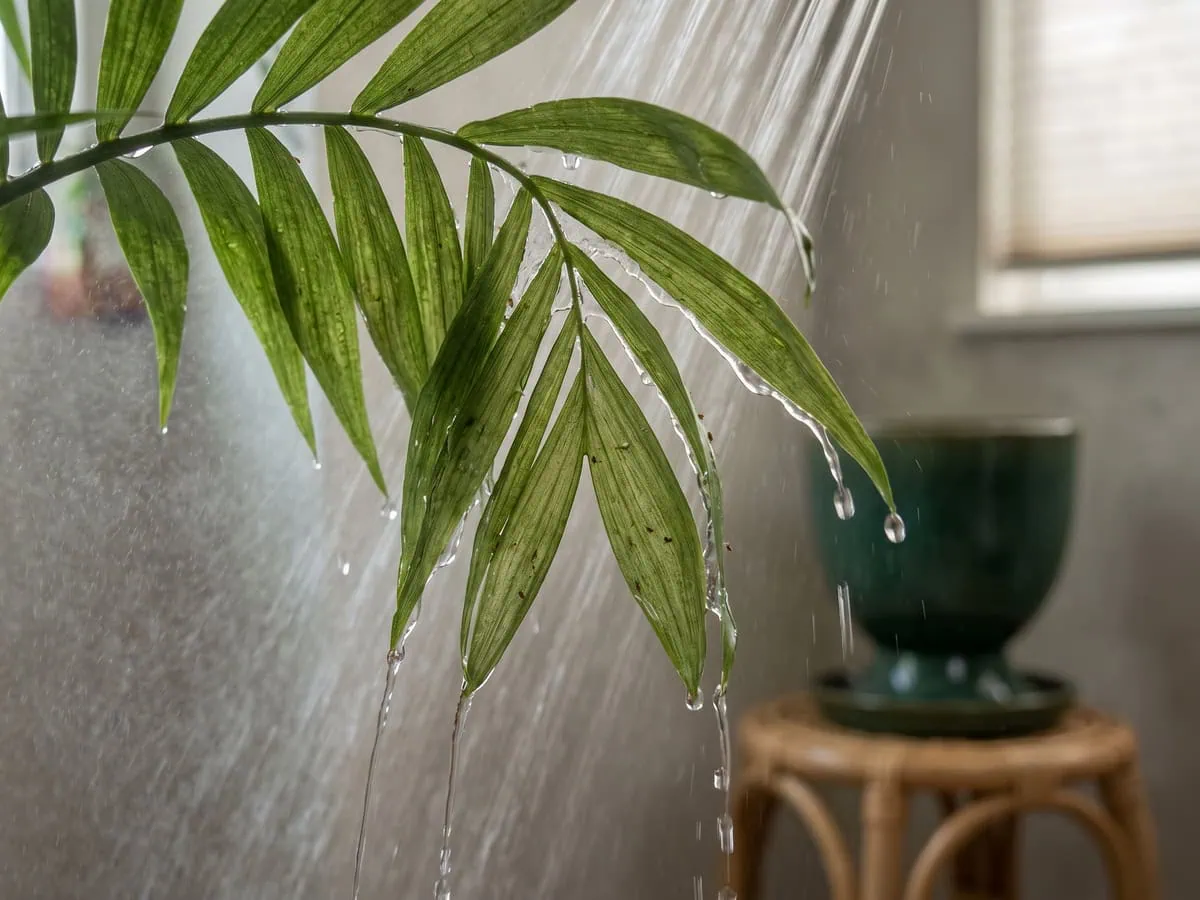
Stop spraying one interval after the first tap that yields nothing. Old stippling is a record, not a reason to restart. Small dark flies over the mix are fungus gnats, whose whitish larvae with shiny black heads feed in the medium, not on the fronds.
Frequently asked questions about spider mites and scale on a parlor palm
How can I get rid of spider mites on my parlor palm?
Confirm the mites are alive, then spray a 1-2% insecticidal soap over every leaflet underside. Repeat at the label interval, which for a soap spray runs every 4-7 days.
Water the plant the day before each round and keep the room below 90F. End the course one interval after a white-paper tap shows no moving specks, and keep showering the undersides weekly afterward.
What gets rid of spider mites immediately?
Nothing clears a whole population in one pass, because soap and oil act only on the mites they touch. A shower rinse over the leaflet undersides dislodges many at once.
Eggs left behind hatch later, and a mite generation can run as short as 8 days in a warm room. That is why a soap spray course repeats every 4-7 days.
Will dish soap get rid of spider mites?
No. Kitchen detergents can carry plant-harmful additives, and published guidance says to use a commercial insecticidal soap instead.
That soap is a potassium fatty-acid product made for foliage, while dry dish detergent and laundry detergents are far too harsh for leaves. If a homemade mix already went on, rinse the fronds with plain water and watch the leaflet tips over the next few days.
How to treat spider mites on palms?
Use a product whose label names mites, test it on a few leaflets, and wait 24 hours before spraying the whole palm at the label interval.
Palms react to soaps and oils more readily than many houseplants, so keep a wet plant out of direct sun and never spray a thirsty palm. Skip broad-spectrum insect sprays, which can leave more mites behind than they remove.
Will spider mites eventually go away?
Not on their own while the air stays dry and still, which is the condition that favors them indoors.
The stippling stays either way, so it cannot tell you whether they have left. Once a week, hold white paper under a frond and tap it, then read a clean sheet after a full minute as a finished population. Moving specks mean the spray course starts or resumes that day.
Which houseplants are most prone to spider mites?
Palms rank high, and mites are reported to settle on a palm first when it shares a window with a broad-leaved houseplant.
That is a single report rather than a settled ranking, but it still gives a working rule. If your parlor palm shares a windowsill, check it first and most often, and read a clean neighbor as no proof that the palm is clear.
How to get rid of spider mites permanently?
No single spray keeps a plant mite-free for good, because mites reach indoor plants on moving air and on the clothing of whoever walks past.
Lasting control is a routine rather than a product: a weekly shower rinse over the undersides, a white-paper tap on a steady schedule, and 2-3 weeks apart for any newly bought plant before it joins the others.
Field-tested on a parlor palm — ready to try the paper tap?
No dressing it up. Most of this job is watching, not spraying. Confirm movement on white paper, match soap or an alcohol swab to the pest you actually found, and keep the room under the spray ceiling on the day you work.
Old stippling, still on the frond. New fronds arriving week after week show the plant has moved on.
And the weekly shower rhythm is how to get rid of spider mites and scale on a parlor palm without spraying a clean plant. Tap one frond over white paper before you reach for the bottle, and let whatever moves on that sheet decide whether your parlor palm needs a spray at all.
Tap the button below to get more plant fixes in your Google Search results