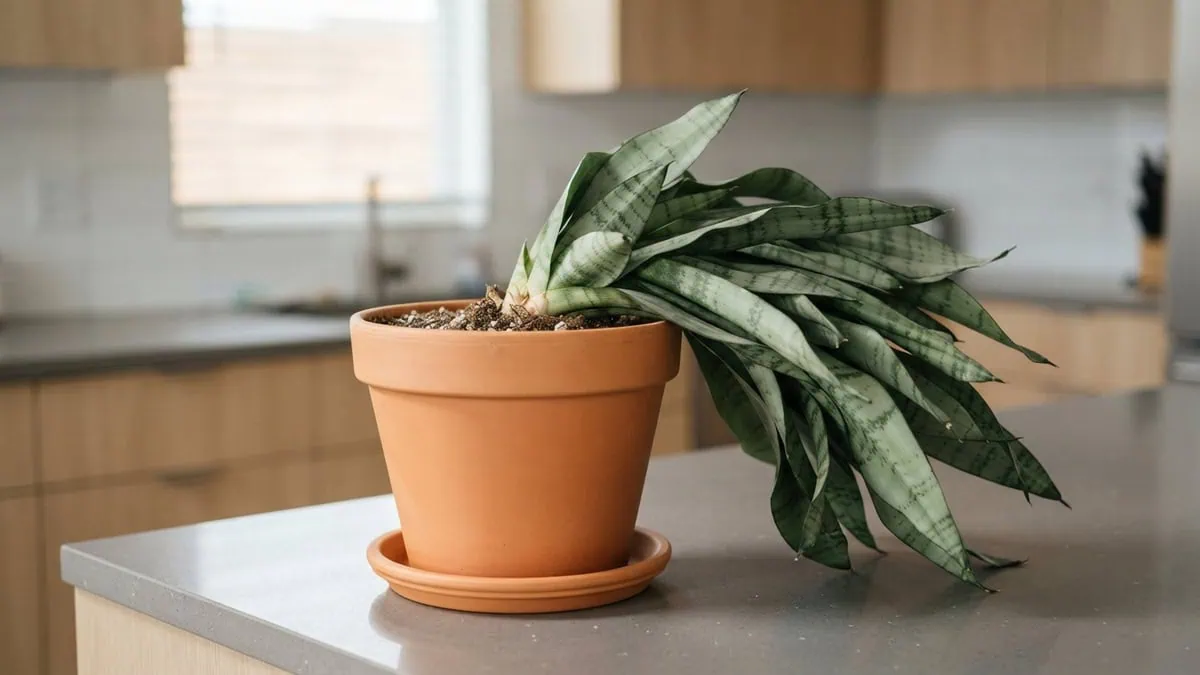
🚨 Emergency 30-Second Answer: Why is my snake plant falling over
Feel the base before you stake or water it — a snake plant (Dracaena trifasciata, family Asparagaceae) topples from four different causes that need opposite fixes. A soft, mushy base is root or rhizome rot. A firm base points to weak, light-starved growth, a top-heavy pot, or packed roots.
Press the base first. If it is soft and sour-smelling, stop watering and rescue the roots. If it is firm, the plant is starving for light. Move it into 500-1000 FC of bright, indirect light and rotate the pot weekly. A stake only hides the real cause.
- Soft, mushy base: that is rot, so stop watering and unpot it now
- Firm but leaning: too little light, so shift it to a brighter indirect spot
- Tall and top-heavy: repot into a heavier pot with a snugger fit
- Roots packed the pot: spreading rhizomes slowly heave the whole plant upward
- Stake test: a healthy snake plant should never need one
A snake plant — still labeled Sansevieria trifasciata on many tags — leaning at a hard angle, its tallest leaves splaying away from the center, looks alarming, and the first instinct is to reach for the watering can or a stake.
For a long time I was treating root rot on reflex whenever one toppled, soaking the soil and second-guessing every drink. The real fix had nothing to do with that. It was light — and the quiet physics of how a heavy, water-filled leaf stays upright.
A snake plant leaf is a column of water-storage tissue that stays firm only when there is enough light to build dense, well-fed cells. Starve it of light and new growth comes in pale, thin, and floppy.
Get the light right. The plant carries itself. For the full care picture, start with how to keep a snake plant thriving.
Take a breath — a toppled snake plant is almost always fixable once you know which cause you are facing. The following table sorts all four at a glance.
Why is my snake plant falling over? The quick checklist
| Snake plant specs | Recommended care |
|---|---|
| Optimal light | 500-1000 FC (bright, indirect) |
| Practical low-light floor | ~100 FC baseline; survives ~25 FC but weak, with crinkling leaf tips |
| Best pot for a top-heavy plant | Heavy unglazed terracotta, mandatory drainage hole, snug fit |
| Pot size step-up | Only 1-2 inches larger in diameter than the root ball |
| #1 cause of a soft, collapsing base | Overwatering that rots the roots and rhizome |
| Does it need a stake to stand up? | No; correct the light and root depth instead |
This information is for educational purposes only and is not a substitute for professional veterinary advice. If your pet ingests any part of this plant, seek immediate veterinary intervention or contact the ASPCA Animal Poison Control Center or the Pet Poison Helpline immediately.
Tap the button below to get more plant fixes in your Google Search results

Table of Contents
Start here: feel the base before you prop it up
Before you stake or water anything, press the base first — its firmness names the cause. That single check decides everything that follows, so do not skip it (trust me on this).
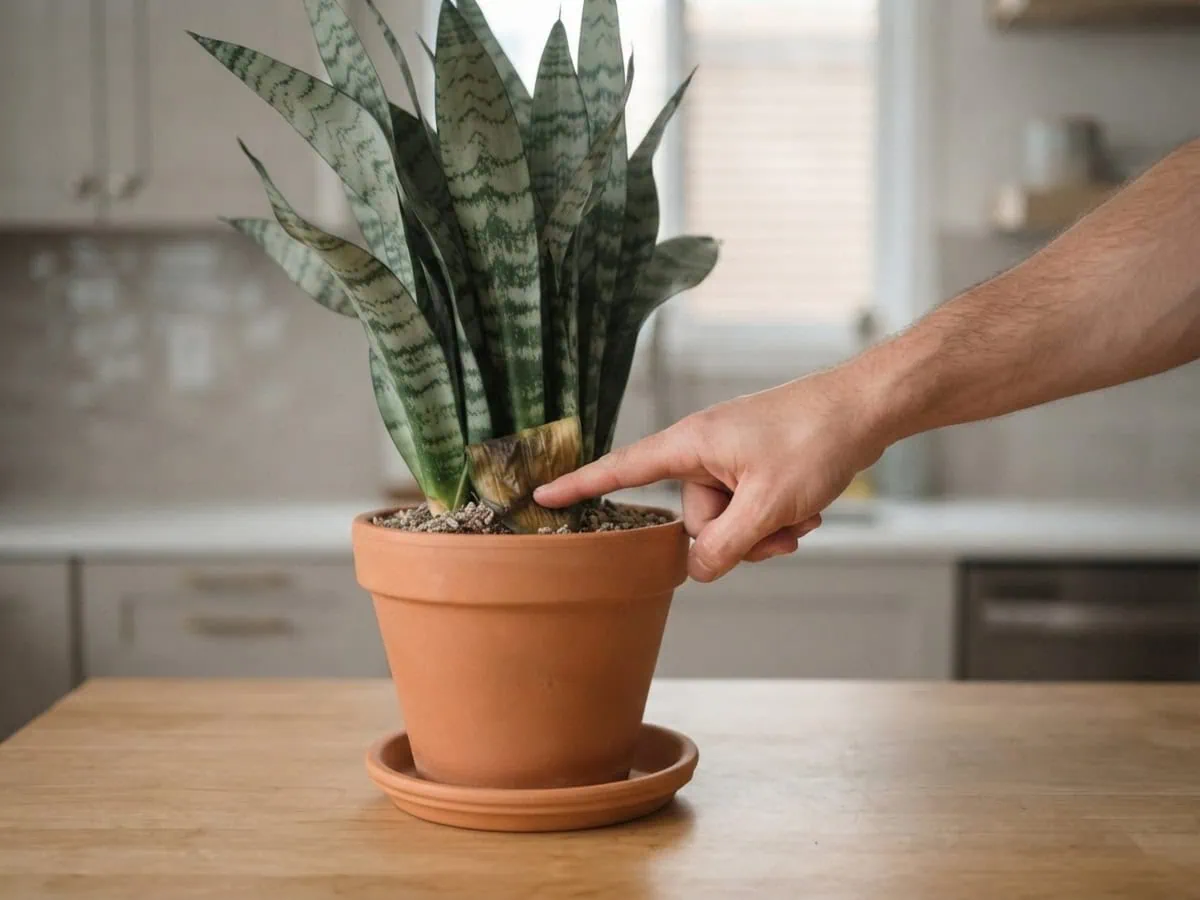
Do not stake a leaning snake plant before you check the base. Press a finger into the soil line where the leaves emerge. A soft, mushy, foul-smelling base is rot — stop watering right away. A firm base means the cause is light, weight, or crowded roots.
A mushy base means rot, not a weak stem
A soft, collapsing base is the most dangerous cause — it is decay, not weakness. Overwatering is the number one killer of this plant: kept too wet, the roots and rhizome suffocate and rot until the base can no longer hold the leaves up.
The color tells the story. Healthy roots are firm and pale, while rotting tissue slides from cream to brown to black, turns to mush, and smells sour.
This is a rescue, not a propping job. Unpot the plant, cut every mushy segment back to firm tissue, and replant in fast-draining mix — the steps are in how to rescue a rotting base.
Top-heavy: when the pot tips and the plant follows
A firm-based plant can still go over because it is top-heavy. Mature leaves reach two to four feet, yet the roots stay shallow and short, so a tall plant in a small, light pot keeps most of its weight up high with little below to anchor it. It does not tip because it is sick. It tips because physics wins.
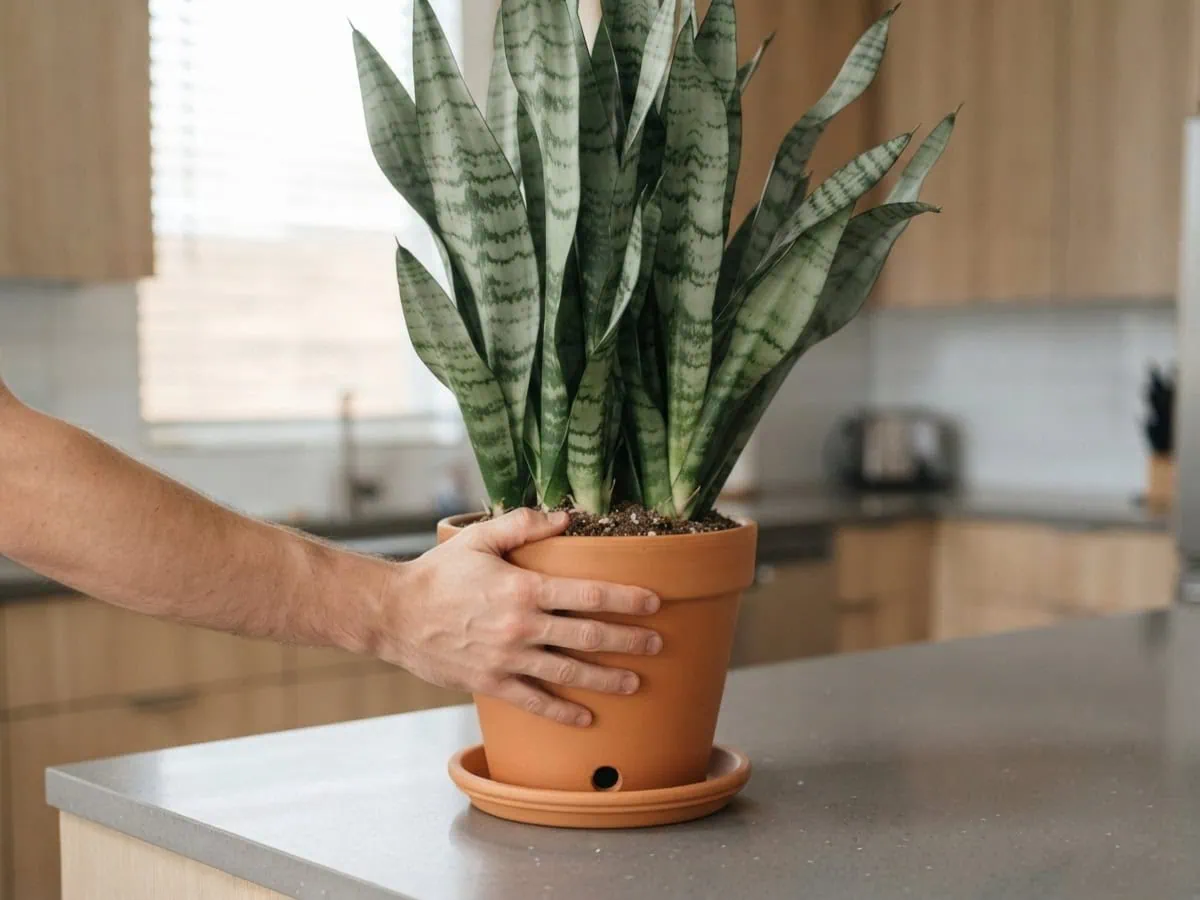
But the fix is weight and a snug fit, not a stake. Repot into a heavy unglazed terracotta pot with a drainage hole (the porous clay also dries the mix faster), only one to two inches wider than the root ball — see repotting it into a stable, snug pot.
Pot-bound roots that heave the plant upward
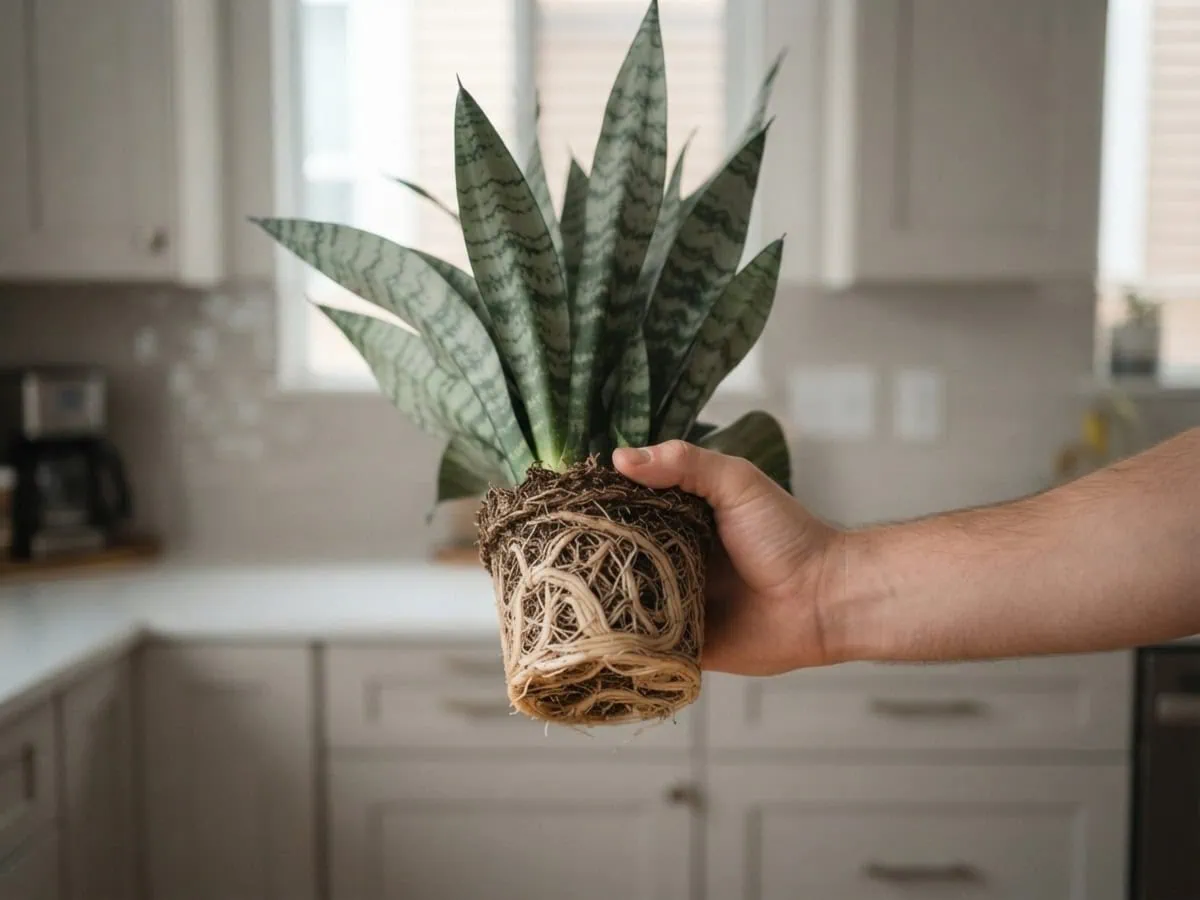
Sometimes the plant lifts itself out of level. Snake plants spread by thick horizontal rhizomes, and once they run out of room, those rhizomes push up against the soil surface, heaving leaves sideways and even bulging a rigid pot.
Move it into a pot one to two inches wider, or split the clump into rooted sections (division also keeps a variegated edge from reverting to plain green). Replant at the same depth, and it steadies quickly.
Tap the button below to get more plant fixes in your Google Search results

Low light: the real reason a snake plant stretches and leans
Once the base is firm, read the light — too little is the most common cause of weak, leaning leaves.
Thin, narrow, stretched leaves: the mechanism
If you are wondering why are my snake plant leaves thin and narrow, the answer is light starvation. The University of Florida IFAS documents how low light causes etiolation: growth without enough light yields small, unexpanded leaves, elongated shoots, and lost chlorophyll.
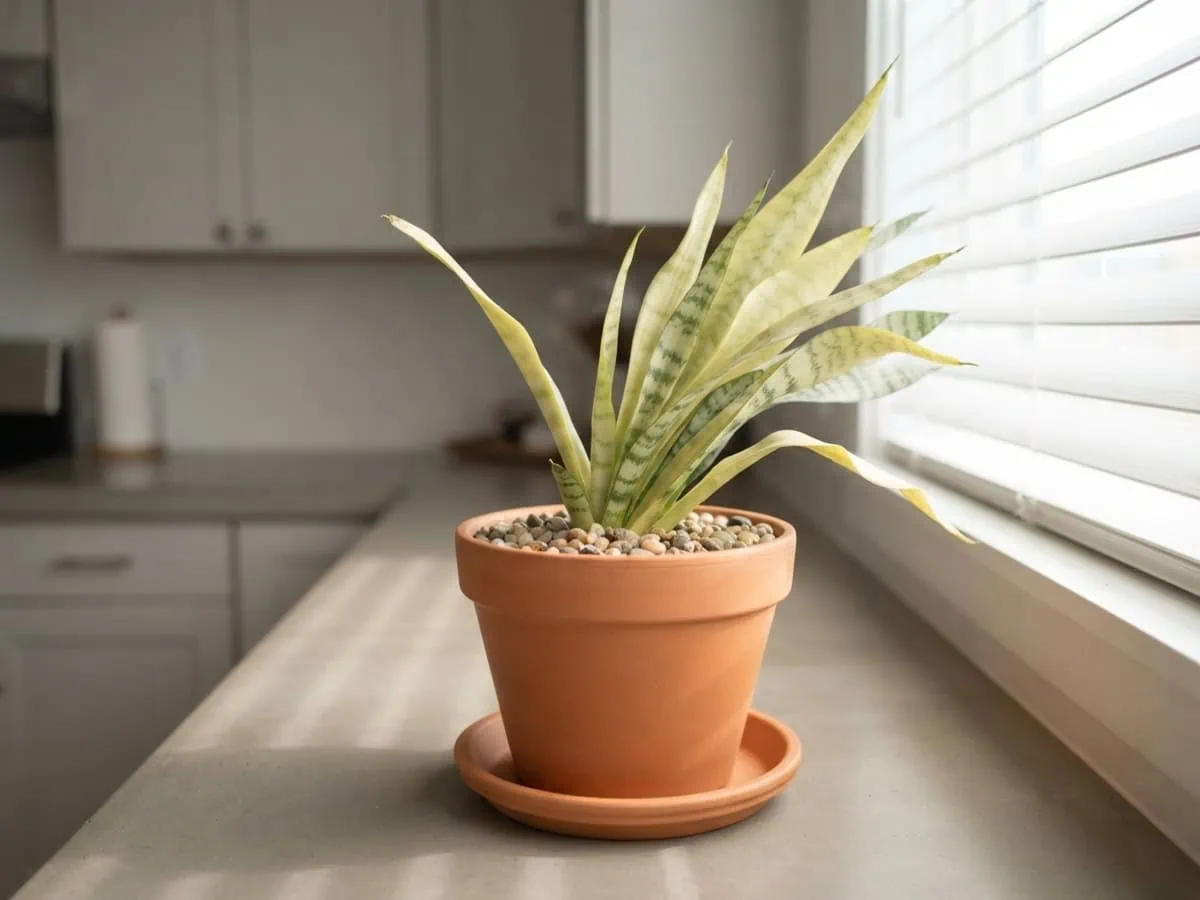
In dim light the plant cannot build the dense, well-fed tissue that stiffens a leaf, so it stretches toward the window into long, pale, under-built blades. A leaf is a water-filled column — without light to fund that tissue it fills but never firms, drifting from deep green to a washed-out yellow-green before it leans.
The light number to hit, and the scorch limit
Aim for 500-1000 FC of bright, indirect light — the band where leaves grow firm and upright. It survives far lower (around 100 FC, and briefly near 25 FC, where the tips crinkle), but surviving is not standing up. An east- or west-facing window, or a spot a few feet inside a bright room, hits that range.
Owners also ask, can a snake plant get too much direct sun? Yes. Harsh midday sun through hot glass (well above 1000 FC) scorches leaves into pale, dry, bronzed patches, so set the plant back or filter it. Bright and indirect is the target. Baked is not.
Leaning to one side? Rotate the pot a quarter turn
Wondering why is my snake plant leaning to one side? It is chasing the light. Plants bend toward the brightest source through a growth response called phototropism, so the whole blade tilts toward the window.
The fix is simple: give the pot a quarter turn once a week (a small, steady rotation) so every side gets equal light and the plant grows straight up.
Why overwatering is not the only cause
Most advice blames a falling snake plant on overwatering alone. The full picture is messier. Overwatering is the top killer, but reading every topple as root rot backfires — a firm-based, light-starved plant “rescued” with less water only sits longer in the dark and leans further.
So match the fix to the cause. If watering habits really are the issue, fixing an overwatering habit is the durable answer.
The fixes, and the mistakes that make it worse
With the cause identified, the fixes that work are simple — and a few popular ones quietly make a topple worse.
Drainage rocks and no-hole pots backfire
Two popular “drainage” habits actually cause the soft base that topples a plant. A gravel layer does not improve drainage — water perches in the soil just above it (right where the roots sit), staying wet longer. And a pot with no drainage hole lets water pool at the base, which is how the rhizome rots.
The rule is blunt. The growing pot needs a drainage hole, and skip the bottom gravel. For a no-hole cachepot, keep the plant in a nursery pot you can lift out to drain.
Firming up a leggy plant: what will not un-bend
Here is the honest part of how to fix a leggy stretched snake plant: a bent leaf will not straighten back out. It stays where it is. Better light fixes the next leaf, not the last — new growth is firm, deep-green, and upright while old blades keep their washed-out color.
Move it into 500-1000 FC of bright, indirect light, then cut the worst old leaves off at the soil line with a clean blade (a snake plant never regrows from a trimmed tip, so remove the whole leaf, not the end).
No new leaves: dormant, starved, or root-bound?
Wondering why is my snake plant not growing new leaves? Stalled growth is not one problem but three. In low light and the cool rest period, slow growth is normal — do not force it with water or feed. Months without growth in bright light mean starvation; roots out the drainage holes mean root-bound.
Match the response to the reason: a dormant plant wants patience, a starved one wants light, a crowded one wants a slightly bigger pot to grow into. If the leaves are also curling or wrinkling, that is a moisture signal — what curling leaves mean covers that branch.
Flopping right after a repot: transplant shock
A snake plant that leans for a week or two after repotting is usually in transplant shock, not failing — disturbed roots need time to re-anchor, and this species resents being handled.
Help it recover by doing less. Replant at the same depth, wait several dry days before watering (soaked, freshly disturbed roots rot fastest), hold off on fertilizer, and give it one to five weeks in bright, indirect light to firm up.
Frequently asked questions
How to fix a snake plant that’s falling over?
Start by feeling the base. A soft, mushy base means rot: unpot the plant, cut away the rotten tissue, and replant in fast-draining mix. A firm base points elsewhere — move it into 500-1000 FC of bright, indirect light if it is pale and stretched, repot into a heavier, snug pot if it is top-heavy, or size up if roots have packed it. Skip the stake.
How do I get my snake plant to stand up straight?
Correct the light and the pot, not the posture. Give it 500-1000 FC of bright, indirect light and rotate it a quarter turn each week so it grows evenly upright instead of leaning. For a top-heavy plant, repot into a heavy pot only one to two inches wider than the root ball. Already-bent leaves will not straighten, but new growth comes in firm and vertical.
How to revive a floppy snake plant?
First find out why it is floppy, because the fixes are opposite. If the base is soft and sour-smelling, it is rot: unpot it, cut back to firm tissue, and replant in gritty, fast-draining mix in a pot with a drainage hole. If the base is firm and the leaves are pale and stretched, it is light-starved: move it somewhere brighter. Do not water a plant that has stopped growing.
Do snake plants get transplant shock?
Yes. A snake plant can droop or stall for one to five weeks after repotting, especially when its roots were disturbed, because this species dislikes root handling. Support it by replanting at the same depth, waiting several dry days before the first watering, holding off on fertilizer, and keeping it in bright, indirect light. Recovery comes from patience, not extra water.
Master the four-cause check, skip the wrong fix
A falling snake plant is not one problem with one fix — it is four, and the base tells you which you are dealing with. Press it first. A soft, sour base is rot; a firm base sends you to light, pot weight, or crowded roots.
Get that read right and the rest is easy: the correct light, a heavier and snugger pot, a weekly quarter turn, and a little patience while firm new growth replaces the old lean.
Skip the stake and the guesswork. The next time you catch yourself asking why is my snake plant falling over, start at the base and let its firmness point you to the right fix. May your snake plant stand straight and steady on its own – a firm base below, honest light above, and not a stake in sight.
Tap the button below to get more plant fixes in your Google Search results