🎯 Quick Answer: why a healthy peace lily still will not bloom
Why is my peace lily not flowering – bloom relies on 150-500 FC, and Spathiphyllum wallisii is a member of the Araceae family. At 50-100 FC the plant survives and stays green, but it stops producing spathes. Move it brighter, out of direct sun, then wait a full growth cycle.
- Read the light where the plant sits: window-glass readings run far higher than the plant’s spot
- Move one step brighter: a north or east window, never a bare south pane
- Change one thing at a time: hold the new spot for a full growth cycle
- Under lamps, run 12-16 hours: on a timer, intensity set by fixture distance
- Windowless rooms still work: a cool-white LED grow bulb, adequate output, not decorative
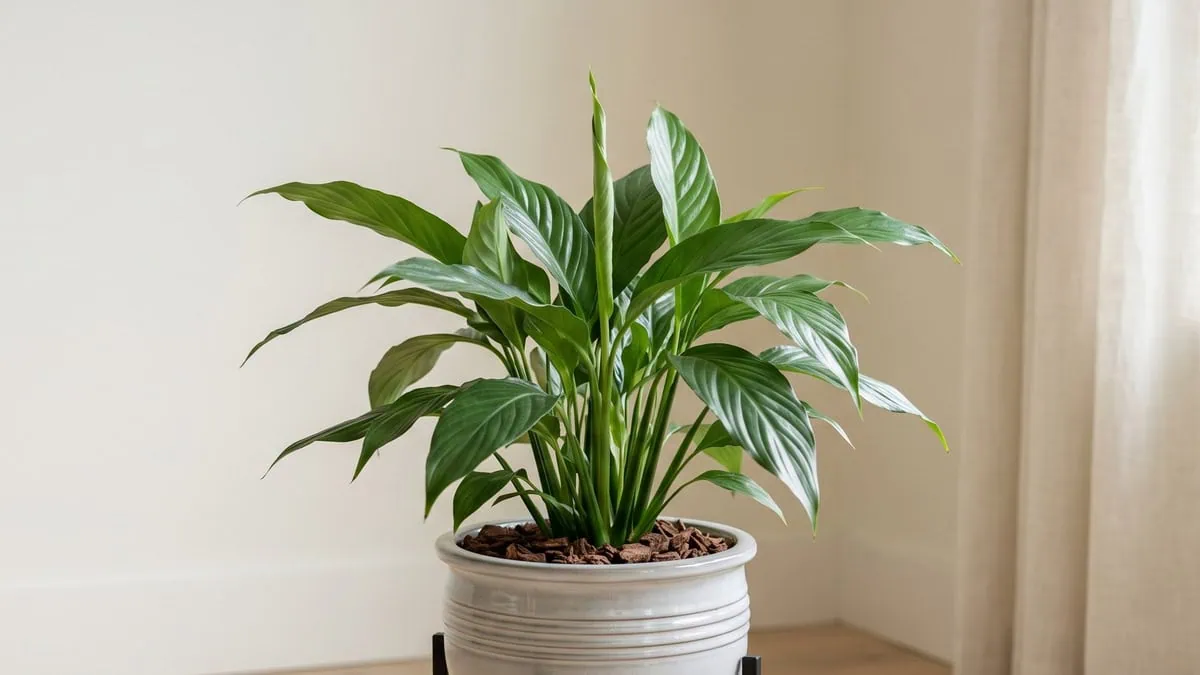
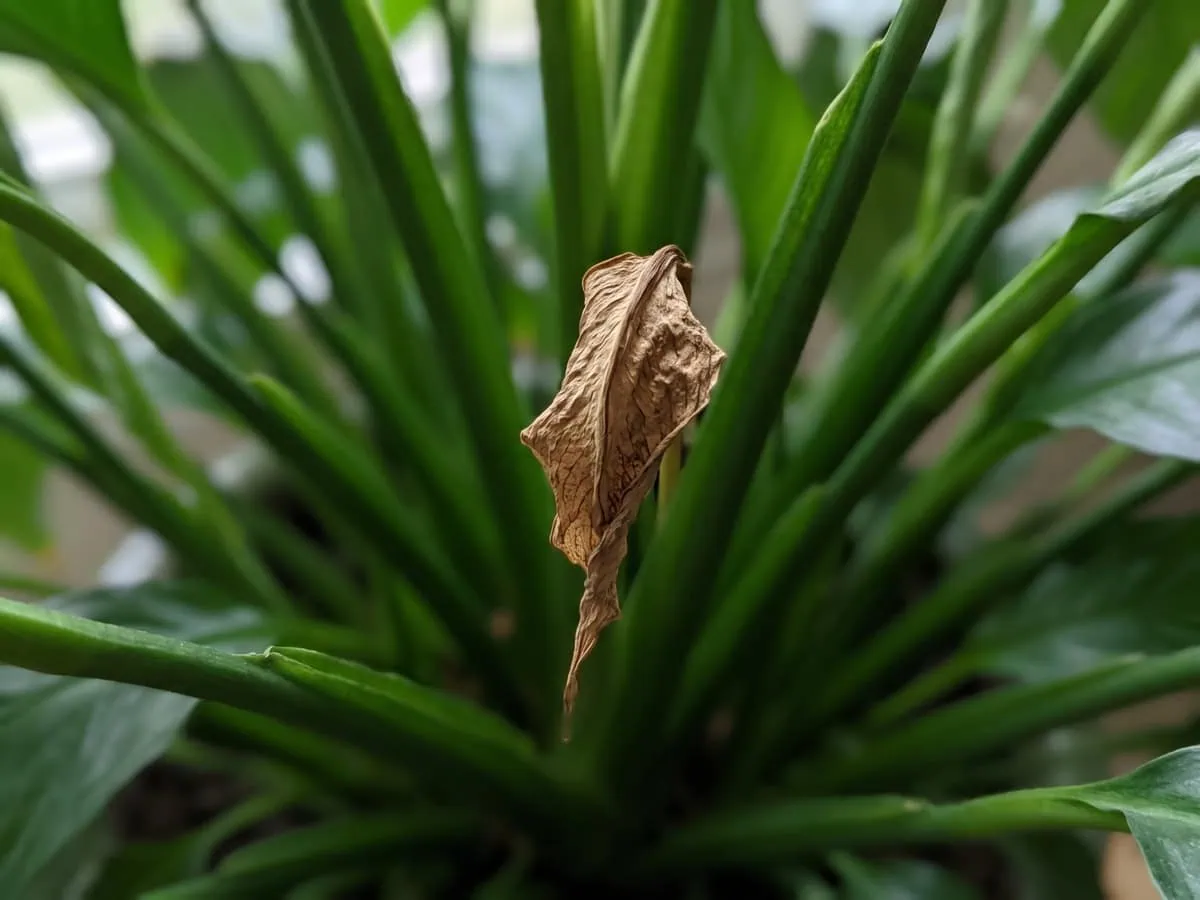
Look closer at what is actually there: the crown is glossy, the newest leaf still furled into a pale spear, and there is not one spathe in the pot (low-key baffled about this). The pot reads cold to the palm on a north sill, colder than the room, and no peduncle has come up in months.
The mistake I kept making was reading that stillness as damage. The plant was not failing to build an inflorescence; it was never funded to start one. Let me try that again — what fixed it was light, not care.
Spathiphyllum wallisii is a forest-floor plant. Its shade adaptation is real: it keeps full green blades on a dim shelf, and also why the spadix stalls: a canopy plant holds leaves on far less light than it needs to fund a flower.
Two things decide it, light level and maturity, and the rest of the routine sits in the light, water and feeding baseline.
This one is a light problem, not a lost cause. The table below carries the light, age and feeding numbers I check before touching anything else.
Why is my peace lily not flowering? The numbers at a glance
| Peace lily specs | What it takes to bloom |
|---|---|
| Light for reliable bloom | 150-500 FC, bright indirect; never direct sun |
| Light floor for survival only | 50-100 FC; leaves hold, spathes stop |
| Age to first bloom | About 1 year or older; the clump fills out over 2-5 years |
| Bloom season lean | Spring to early summer, Northern Hemisphere reference |
| Feeding while in active growth | Nitrogen-leaning 3-1-2, roughly monthly; none during the short-day rest |
| Does it need direct sun to bloom? | No – bright indirect only; direct sun scorches the blades |
| Does a bigger pot bring flowers? | No – unused wet soil around the roots invites rot instead |
Tap the button below to get more plant fixes in your Google Search results

Table of Contents
The light level a peace lily needs to bloom, not just survive
A peace lily needs 150-500 FC of bright indirect light to open a spathe, and only 50-100 FC to hold its leaves. That gap between the two bands is the entire answer to a green, healthy plant that never flowers. Survival and flowering run on two different light levels.
Nothing in the foliage tells you which level your plant is on (not joking). Leaves keep coming, each on its own stalk out of the middle of the clump, and no spike rises among them. I watched that picture hold for a year on a shelf that read bright to my eye.
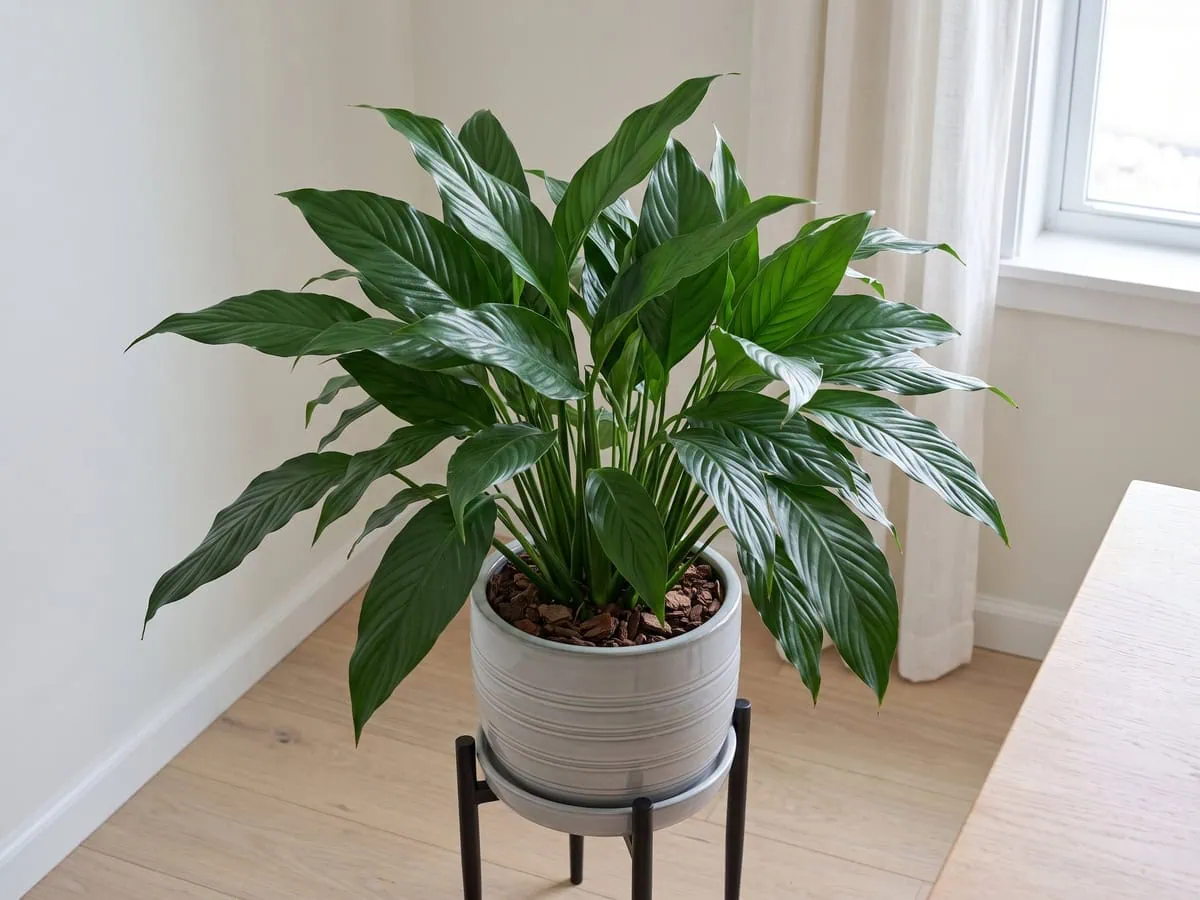
The sections below split that gap into a number you can measure and a spot you can use.
Survival light versus bloom light in foot-candles
Type “do peace lilies need sunlight to bloom” into a search bar and the answers come back as adjectives. The measurable version is short: no direct sun, but far more light than a dim corner delivers. The eye adapts to a dim room; the plant does not.
| Light band at the leaves | What the plant does there |
|---|---|
| 150-500 FC, bright indirect | Good growth; the band that funds spathes |
| 50-100 FC, low light | Foliage holds; flowering stops |
| Direct sun on the blades | Scorch, whatever the reading says |
Take the reading where the leaves actually are, because that number and the one at the glass are rarely the same:
- At leaf height, not at the window pane, and with the meter facing the light
- On an ordinary day, so a single bright hour does not flatter the spot
- Under lamps, run 12-16 hours daily and set intensity by moving the fixture
Where to set the pot, by window direction
North and east windows carry this plant at bloom light without scorching it; south and west windows do it only from a distance or behind a sheer curtain:
- North (Northern Hemisphere reference) – the easy one; near the glass or a few feet back
- East – soft morning light, plant set a few feet back from the pane
- West – 3-10 feet back, or behind a sheer curtain
- South – 15-20 feet back from an unshaded pane, never in the beam
Test the spot with the back of your hand before the meter arrives. Held flat against the pane at leaf height, the glass runs cold, noticeably colder than the wall two feet inside the room, and that chilled band is where a peace lily should not sit even when the reading there looks generous.
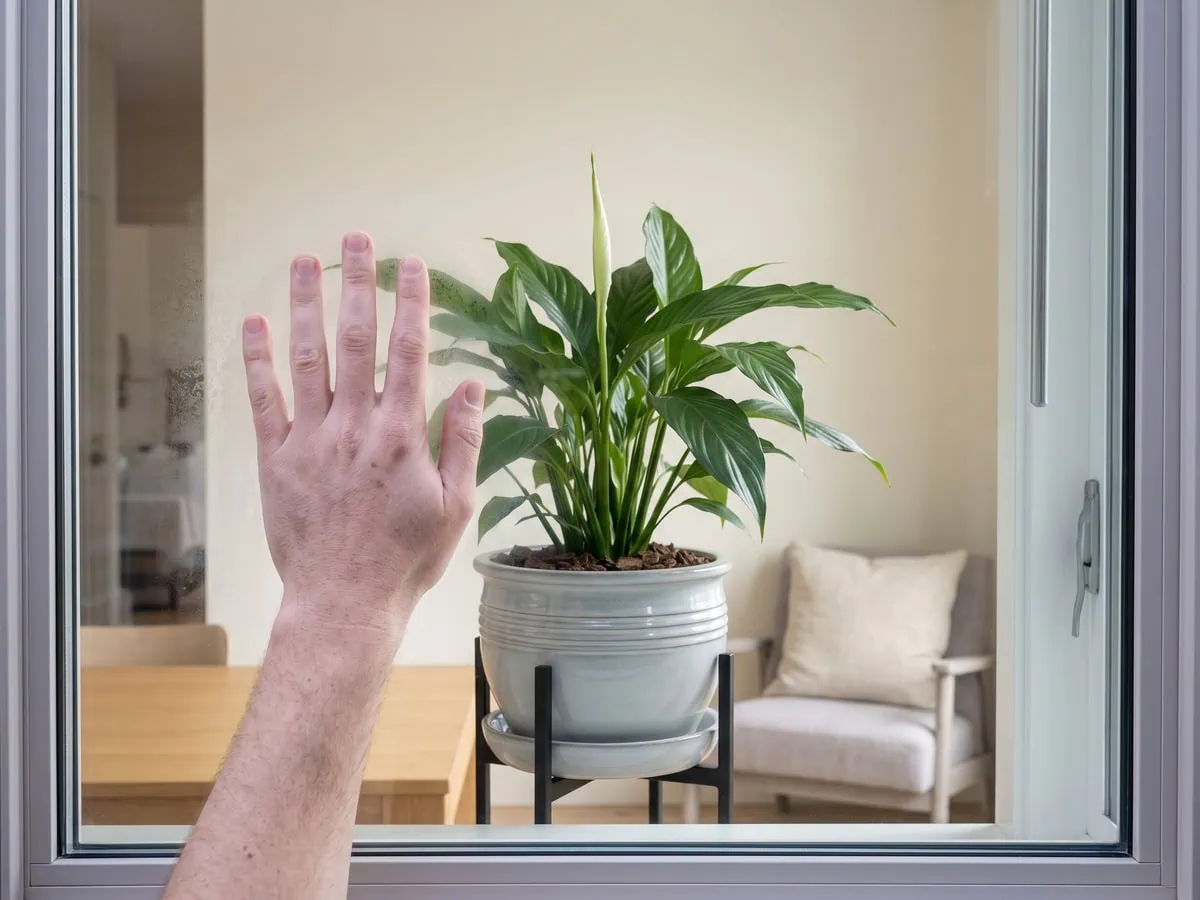
Never in the beam. So filter a south sill rather than surrender the light, and if the plant has also gone tall and floppy, read the light first, because stretched, floppy growth in low light is the same shortage showing in the leaves instead of the spathes.
Tap the button below to get more plant fixes in your Google Search results

Age, pot size, and the bloom that came with the plant
A peace lily under roughly a year old will not flower whatever you do for it, and the two things owners change first, container and feeding, are the two that matter least. Age comes first. Then light.
I ran twelve peace lilies through a single year to settle this, every one bought in flower and repotted the week it came home. Eleven stopped inside two months. The fault was mine: I read a shelf bloom as proof of a mature clump.
The three sections below take the age question, the pot question, and the store-bloom question in turn.
How to judge maturity without knowing the age
Nobody remembers a purchase date, so “how long does it take a peace lily to flower” is the wrong instrument here. The floor is about one year. The clump then fills out over 2-5 years.
Read the clump instead of the calendar:
- Several distinct leaf fans, not one tuft
- A well-filled 6-8 inch pot, the size an established multi-crown plant sits in
- Leaves near cultivar height, about 2 feet for the large-leaved kind
Why a bigger pot can stall the flowers
Move this plant into a much larger pot and its roots get more wet soil than they can drink, which is the waterlogging it rots in:
- Step up about 2 inches of diameter – a 3-inch plant into a 5-inch pot
- Repot on the trigger, roots out of the drainage holes, never on a schedule
- Never jump two sizes to chase flowers; the spare soil stays wet
Lift the inner pot out a few days after watering and run a finger down its side. The lower third reads cool and damp on an over-potted plant, clearly cooler than the rim under your thumb, and that cool band is soil no root has reached.
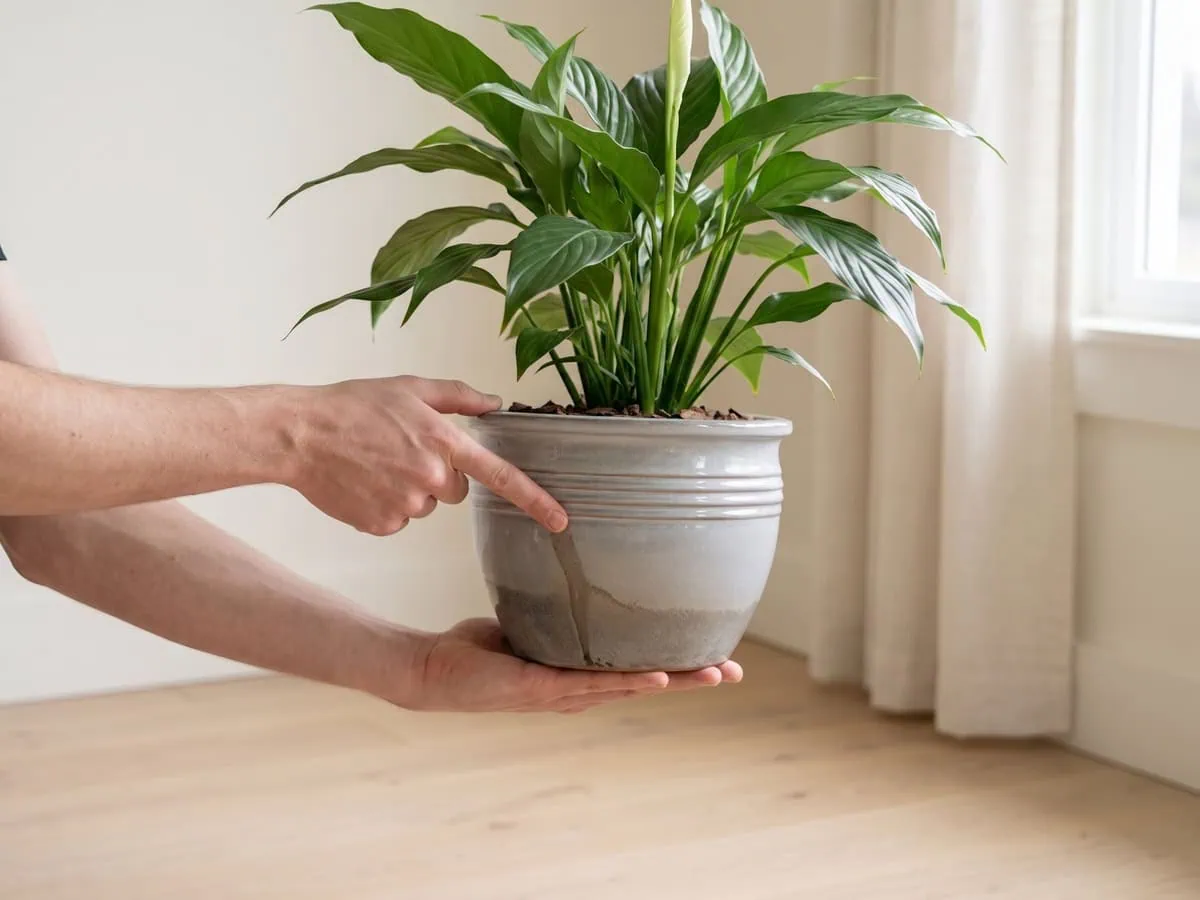
And a crowded pot is not the flower switch the internet says it is. The documented levers for this genus are light, maturity and day length. Snug is fine.
The store bloom and why it did not repeat
If you are asking “why won’t my peace lily rebloom after the first flowers”, the answer usually predates your care. Growers bring this crop into flower on schedule with a single foliar hormone spray, and the flowers open 70-110 days later, whatever the time of year. That bloom was bought, not grown.
The University of Florida IFAS Extension publishes the protocol behind that gibberellic acid flower induction.
The myth says a plant that bloomed at the shop and then stopped has been let down by its new owner. In fact that bloom was timed in production, and the plant then reverts to its own clock, where light and age govern the next spathe. One spathe holds white about ten days, greens, and stays presentable a month or more.
So the honest review interval is seasons, not weeks. Give a corrected plant one full growth cycle before judging it. That wait is where most owners run out of patience.
What actually triggers the next spathe
Light and maturity open the gate, but the trigger that starts a spathe is day length: buds initiate through the short-day, long-night stretch and open as days lengthen again. Nothing on a sill overrides that clock.
Change one thing and hold it. If you are searching “how to make a peace lily bloom again”, the answer is a sequence, not a list: fix the light, then leave the rest alone long enough for the plant to answer.
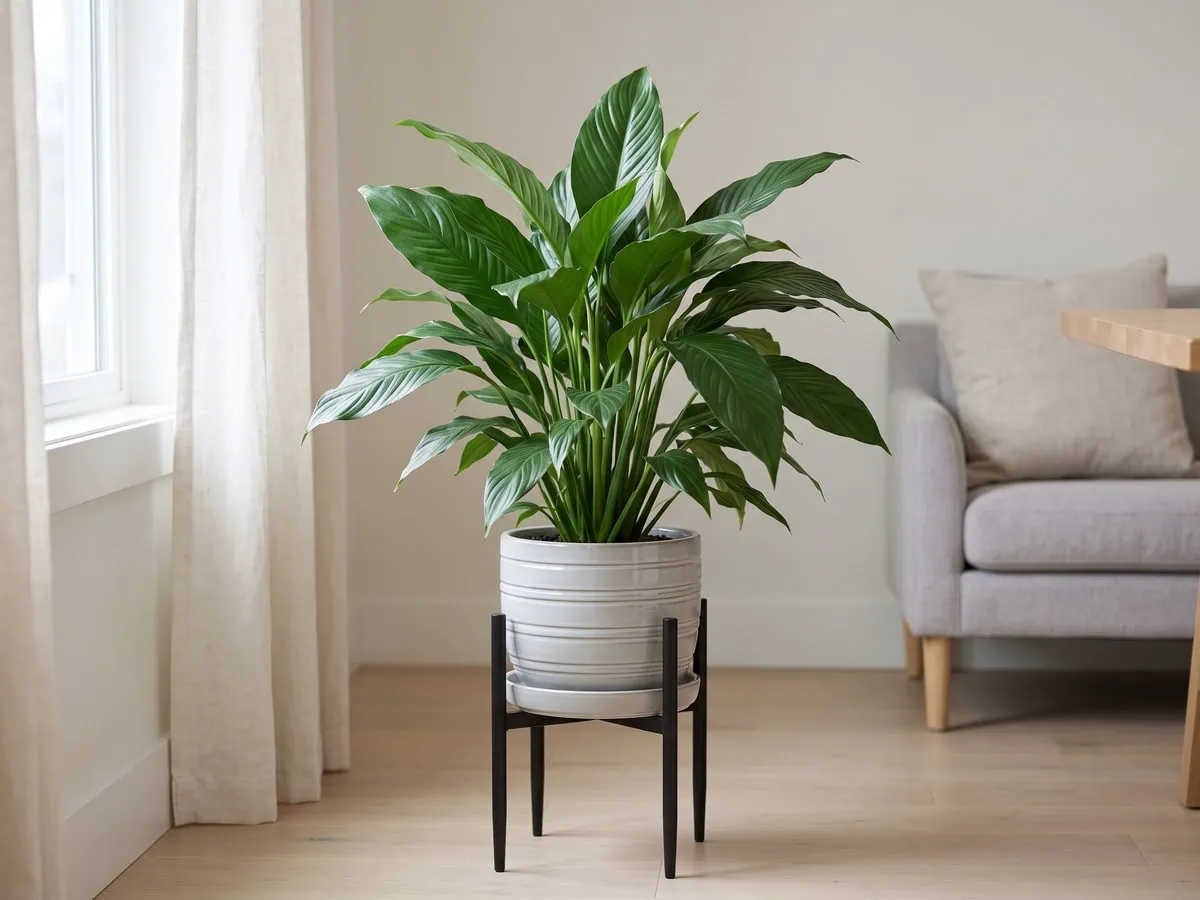
Each section below names one lever: the season, the green spathe, the leafy-plant habits.
Season, day length, and the cool-period claim
Peace lilies set buds in the short-day half of the year and open them as light returns, which is why a spring flush is usual in the Northern Hemisphere.
Speculative, but the cool-period claim is where the evidence splits. One protocol holds a plant near 54F for a few weeks to bring flowering forward, while this plant’s own chilling study puts the no-injury floor at 52F and records visible damage at 45F. Cool it too far and you buy tissue damage, not a spathe.
Lay a hand flat on a blade after a cold night: it reads cooler than your palm and cooler than the mix, and that chill is the plant’s own reading of the room.
Cool, not cold.
- Working band: room warmth, 65-80F, where it grows and flowers
- Injury line: clean at 52F, visible damage by 45F
Green spathes and spikes that dry before opening
A spathe that greens is finishing, not failing. Type “why did my peace lily flowers turn green” into a search bar and three incompatible answers come back; the plant’s clock settles it, because a white spathe pales about ten days in and holds a month or more.
Two pictures sit behind one complaint. One is a spike that pushed up and dried before it opened; the other is a crown that never raised a spike at all. Only the second is a light question.
Cultivar matters here too: spathe size and holding time vary between selections, and the florets on the spadix are what that hood wrapped around. If yours never matched the label, start with telling the cultivars apart.
Common mistakes that keep a plant leafy
Give any change one full growth cycle before judging it. Move the pot, then touch nothing else until the season turns; four fixes at once teach you nothing about which one worked.
Feeding is the weakest lever here, and care guides cannot agree which way to push it. Use a nitrogen-leaning 3-1-2 monthly while leaves are coming, and stop once growth stalls under short days.
- Watering harder: a heavier schedule funds rot, not a spathe
- Buying a bloom formula: the ratio is the last lever
- Changing four things at once: nothing afterwards is attributable
So the leafy plant is often the one that was helped too often. If your instinct under a flowerless crown is to water more, start with reading the pot before the next drink.
Frequently asked questions about a peace lily that will not bloom
Why is my peace lily growing leaves but not flowers?
Leaves and spathes run on two different light levels. Foliage holds at 50-100 FC, while a spathe needs the brighter 150-500 FC band, so a plant parked at its survival floor stays green and never flowers.
That is why the leaves look fine. The plant is not unwell; it is under-funded, and the fix is a brighter indirect spot rather than feeding or a bigger container. Age matters too: under about a year old, no light level produces a spathe.
What month do peace lilies bloom?
There is no fixed month. This plant has no strict bloom calendar and flowers freely whenever conditions allow, with a documented lean toward spring and early summer in the Northern Hemisphere.
Buds initiate in the short-day, long-night stretch and open as day length increases, which is what produces that lean. Southern Hemisphere readers should shift the same pattern by roughly six months, because the trigger is day length rather than the date.
How to encourage peace lily to flower?
Move it into 150-500 FC of bright indirect light and hold that spot for a full growth cycle. Light is the primary lever; maturity and day length do the rest.
Feed a nitrogen-leaning 3-1-2 about monthly while new leaves are coming, and stop once growth stalls under short days. Keep it out of direct sun at every step, because scorched tissue never recovers and the plant loses more than the extra light gives back.
What to do if peace lily doesn’t bloom?
Work one variable at a time, starting with light. Take a reading at leaf height rather than at the glass, move the plant one step brighter, and change nothing else until the next cycle.
Then check maturity against the pot: an established, multi-crown clump filling a 6-8 inch container is the readable sign that the plant is old enough to flower. A single small division is simply too young, whatever else you correct.
Will my peace lily ever flower again?
Yes, in most cases. This is one of the few foliage plants documented to flower repeatedly indoors, and a mature clump in adequate light produces spathes year after year.
Recovery is measured in seasons rather than weeks, so a corrected plant is judged after a full growth cycle. A clump takes 2-5 years to fill out, and very old plants do slow down, but a healthy plant in the right light is not finished.
Stop feeding a shady corner, start moving the pot
Truth is — nothing was ever wrong with it. This species keeps its foliage on a fraction of what a spathe demands, so a thriving specimen in a dark room is doing exactly what its biology allows. Move it.
If the mix holds water for days after a drink, sort out the potting mix it grows in first, because a soggy root zone undoes every hour of extra light you arrange.
Run a finger down a leaf stalk on a cold morning: it feels cooler than the blade above it. Not a rescue, a relocation. So the honest answer to why is my peace lily not flowering is a brighter indirect spot and the patience to leave it there.
Give it the light it has been asking for, and the spathe will come up on its own schedule.
Tap the button below to get more plant fixes in your Google Search results