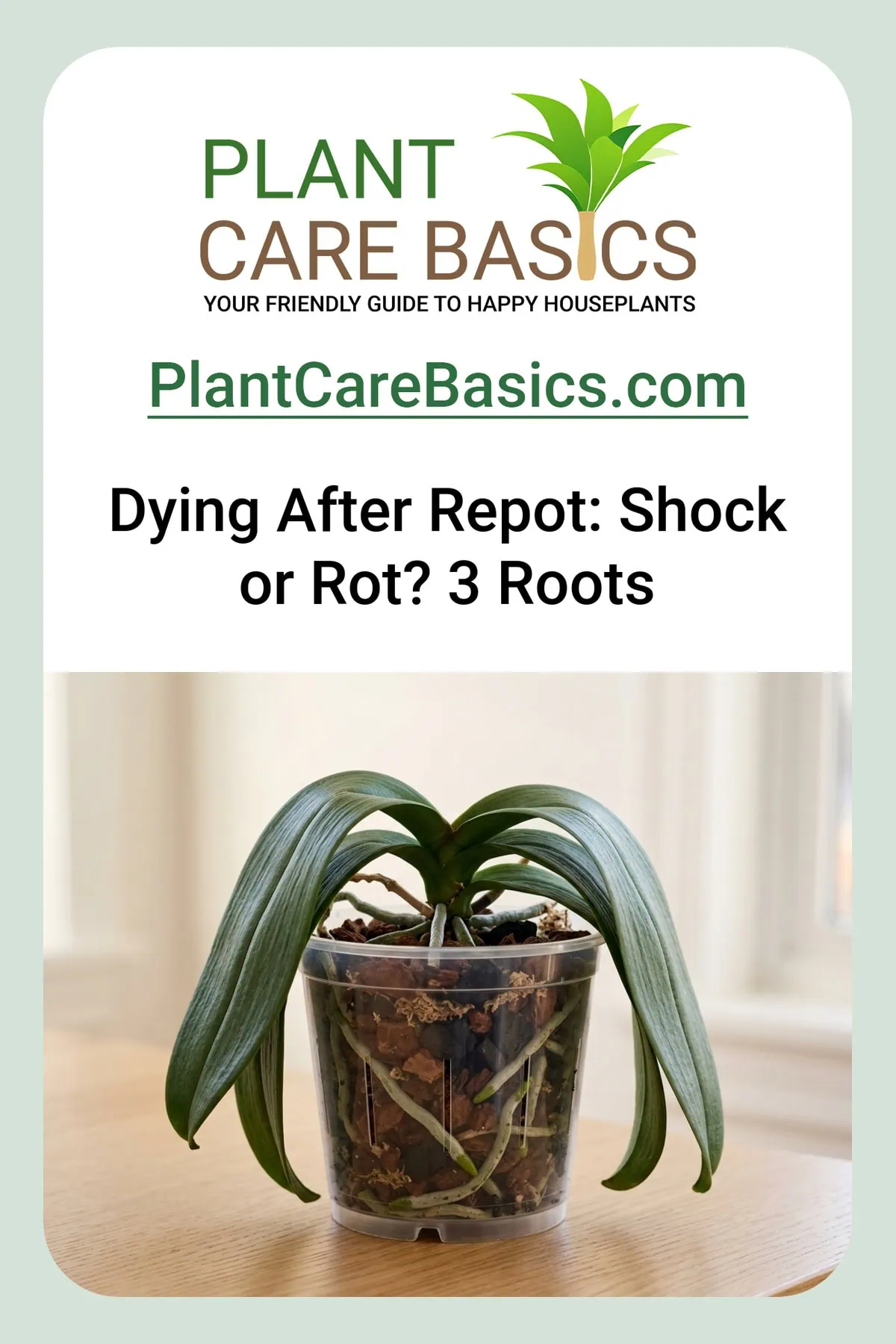
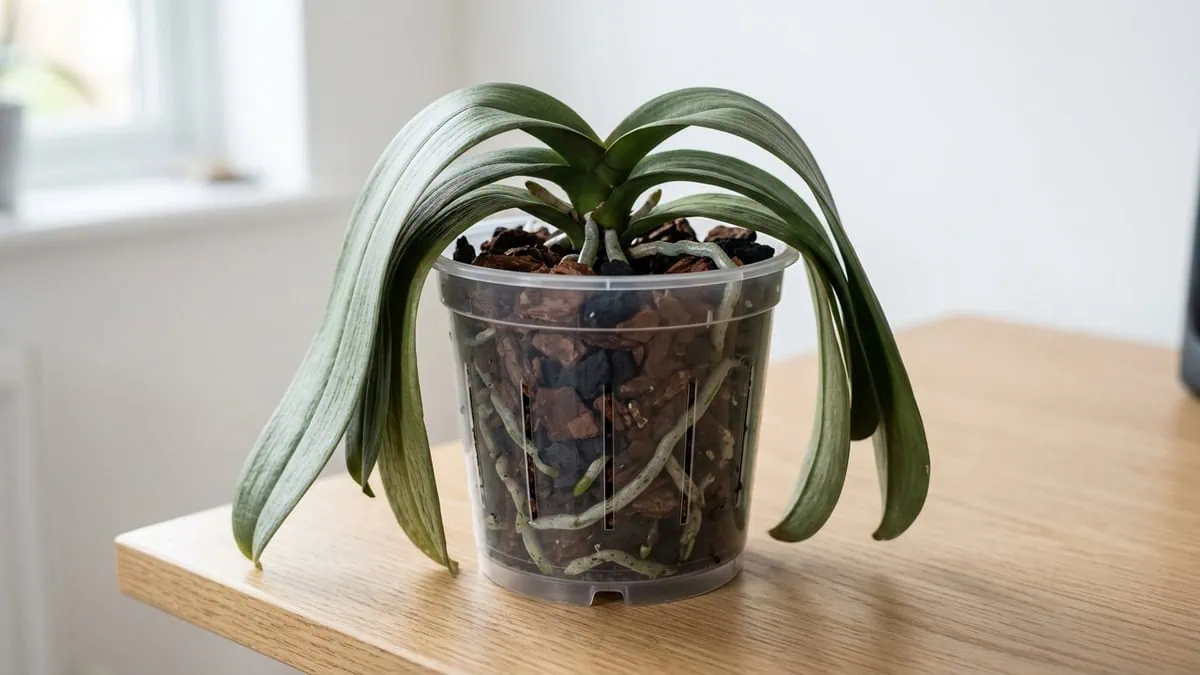
🚨 Emergency 30-Second Answer: a moth orchid wilting after a repot
Stop watering now — a wilting Phalaenopsis, a member of the Orchidaceae family, is usually in transplant shock that lifts in 4 to 6 weeks. The leaves are lagging behind the roots, nothing more.
Here is how to fix a Phalaenopsis orchid dying after repotting: read the roots, not the leaves. Firm, silvery roots mean shock, so give air and time. Mushy brown roots mean rot, so withhold and re-trim. Dry, shriveled roots mean thirst, so soak once. The roots set the pace.
- Read the roots first: firm and silvery, or soft, brown, and mushy
- Handling shock: give the plant air and time, never a flood
- Recovery window: about four to six weeks to show new growth
- Light and food: keep light gentle and indirect, and skip fertilizer
- Hydrogen peroxide: reserve it for empty pots and tools, never roots
A freshly repotted moth orchid that suddenly goes limp looks like a lost cause — soft, drooping leaves standing over a pot of clean new bark. The panic is real. And the urge to fix it fast hits even harder.
A while back I repotted a healthy Phalaenopsis, watched it wilt within days, and reached straight for the watering can. Instead of rescuing it, I realized I was drowning the very velamen — the spongy silver root layer — that needed open air to rebuild after the disturbance.
That one shift, from watering to waiting, is what turns most post-repot crashes around. Read the roots, match the right response to each root state, and give the plant the weeks it actually needs. If you want the full picture first, start with the moth orchid care fundamentals.
Take a breath before you touch anything — the following table sorts the panic into three root states, matching your moth orchid’s exact problem to its fix.
How to fix a Phalaenopsis orchid dying after repotting, at a glance
| Moth orchid specs | Recommended care |
|---|---|
| Handling shock (limp leaves, firm roots) | Give air and time, not water |
| Rot (mushy, brown roots) | Withhold water, re-trim, repot dry |
| Dehydration (dry, wrinkled roots) | Soak the medium thoroughly once |
| Recovery window | About 4 to 6 weeks; judge by new green root tips, not the calendar |
| Light and feeding | Gentle indirect light; hold fertilizer until new growth |
| Crash causes | An oversized pot or an abrupt sphagnum-to-bark switch |
| Water a wilting repot more? | No — read the roots first |
| Hydrogen peroxide safe on roots? | No — pots and tools only |
Tap the button below to get more plant fixes in your Google Search results

Table of Contents
First: tell shock from rot from dehydration
A wilting moth orchid after a repot is usually in transplant shock, not dying, so do not flood it. Slide the plant out of its pot, hold the root mass up to the light, and read the color: firm and silvery means shock, brown and mushy means rot, dry and shriveled means thirst. Keep hydrogen peroxide for empty pots and tools only, never on living roots, and dust any cut surface with ground cinnamon instead.
Why are my Phalaenopsis leaves wilting after I repotted it? A repot scuffs the velamen, the spongy outer root layer that normally soaks up water within seconds, and until it regrows the roots cannot drink. So the leaves drain their own reserves and go soft. The wilt starts at the roots, not in the leaves.
Should I water a Phalaenopsis right after repotting? Let the root state decide, never the clock. When roots were trimmed, rotted, or have shut down, keep the bark only barely damp (FYI — damp to the touch, never wet enough to bead a drop) for several days while the cuts close. A full soak suits only intact, clearly thirsty roots.
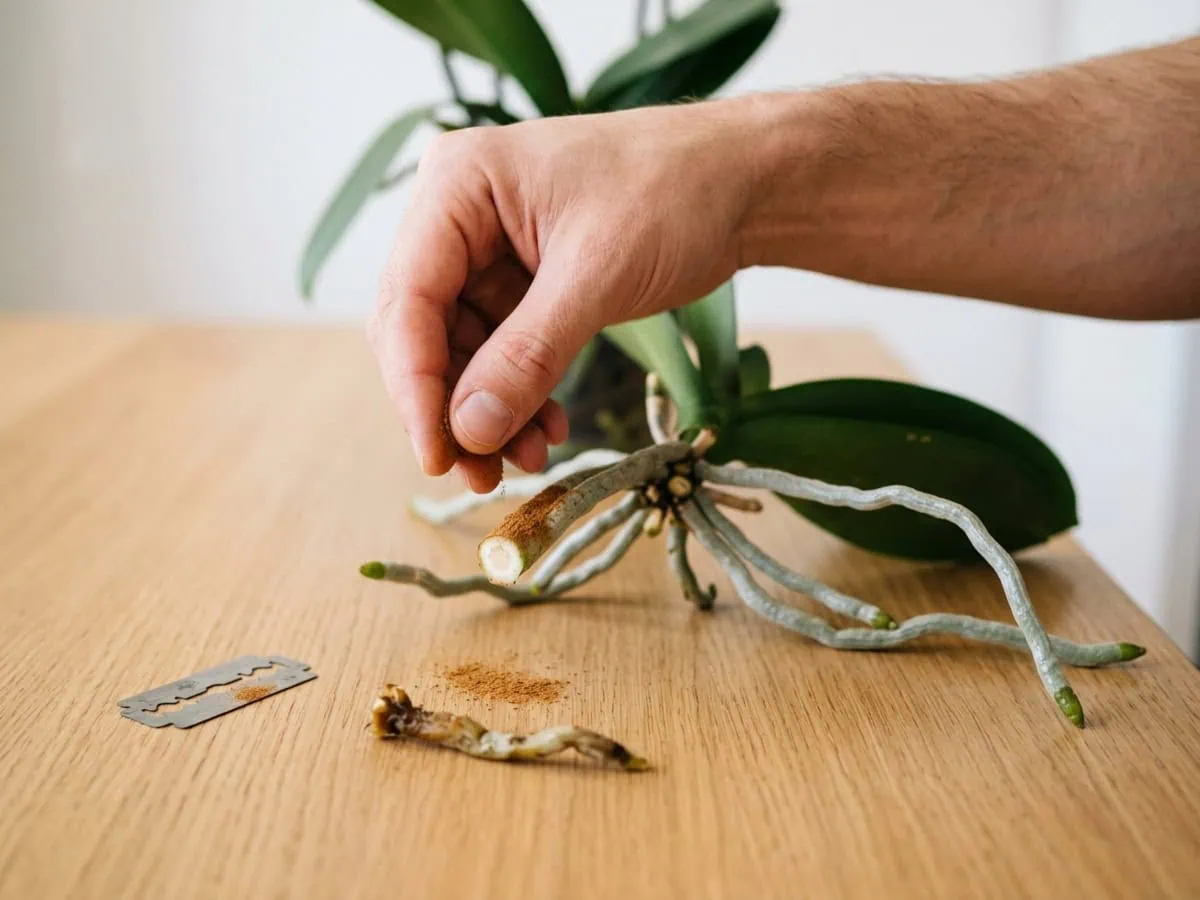
Those cuts need a moment to seal first. Here is how to help an orchid root callus over after trimming: cut with a sterilized blade, leave the plant dry for a few days, and dust the cut tips with ground cinnamon as a dry antifungal. Watering a fresh cut on day one only invites rot into the opening. Individual results may vary based on your specific growing environment.
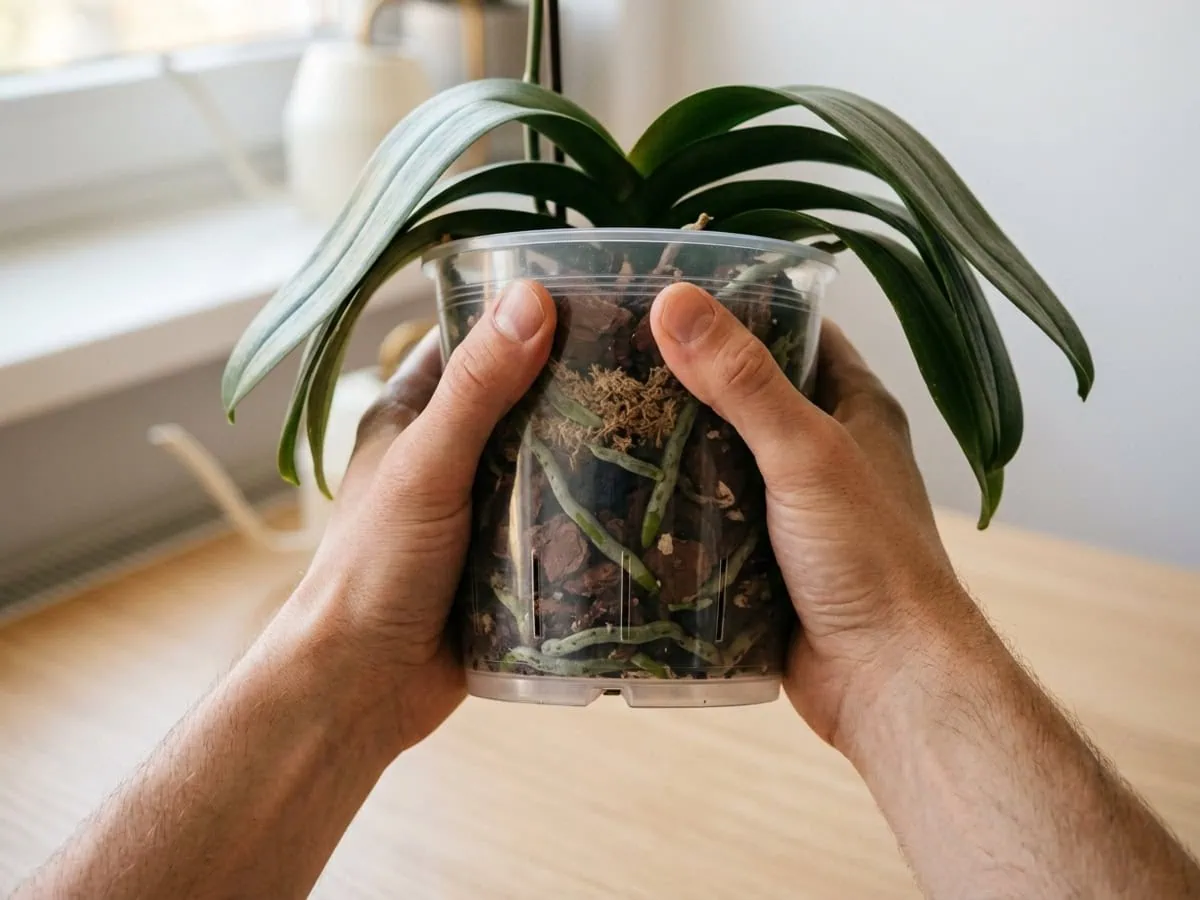
The three root states below each call for a different move.
Limp leaves + firm roots: handling shock
Limp leaves above firm, silvery-green roots is the recoverable case, and the only honest fix is patience. The roots paused their water uptake but are alive and rebuilding, so give gentle light, ease off watering, and wait; if they flush from dull silver to bright green after a light misting, the plumbing is coming back. This is the state the panic-water reflex ruins most.
The same soft, drooping look can appear on a plant you never repotted, where a watering or root problem is to blame. For that wider picture, the guide to limp leaves after a move covers every cause.
Mushy roots: rot, withhold and re-trim
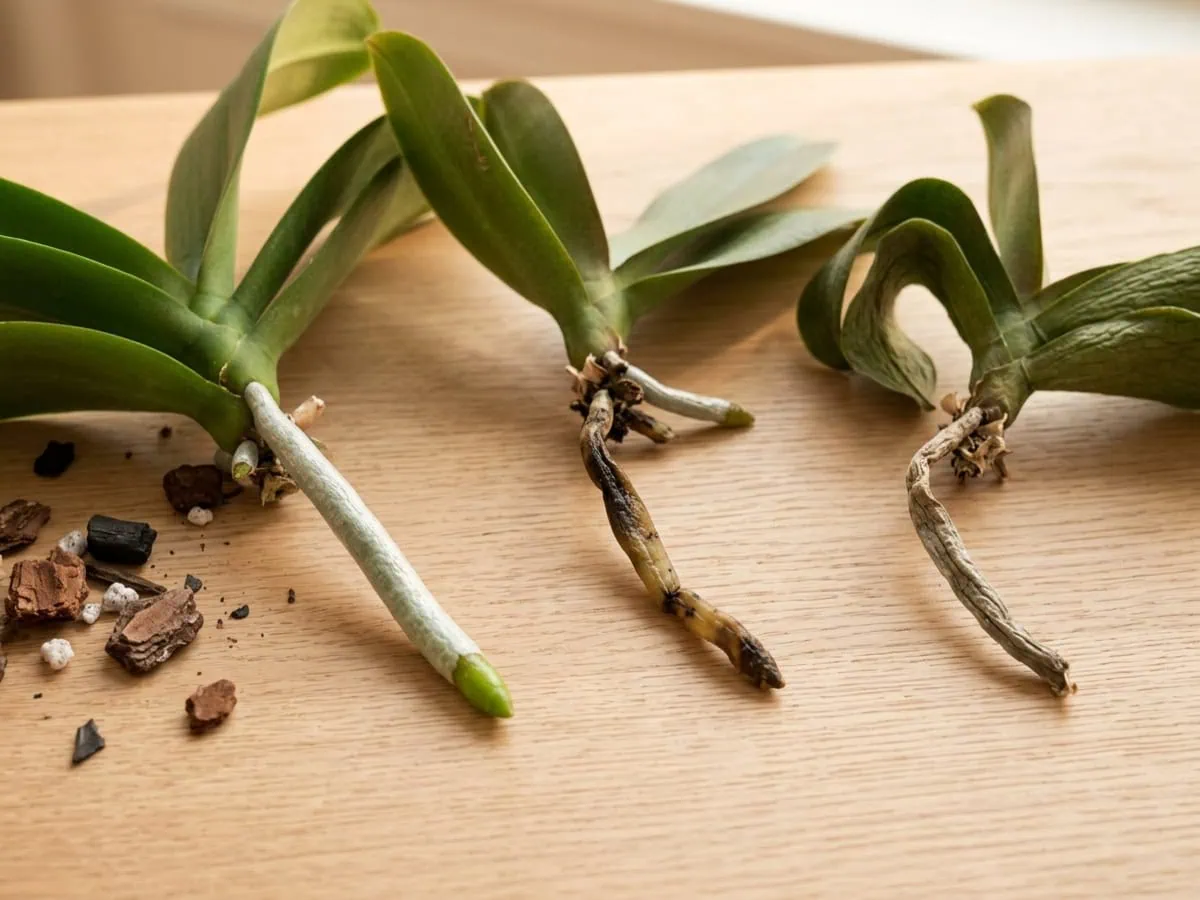
The signs of transplant shock vs root rot in a Phalaenopsis come down to one squeeze: a healthy root is firm and plump, while a rotted one collapses into a hollow, brown thread. Mushy, blackened roots mean active rot, so withhold water, cut back to firm pale tissue with a sterile blade, and repot into fresh, barely-damp bark. Re-trim now, before the rot climbs the stem.
Dry, wrinkled roots: dehydration, soak
Dry, wrinkled roots gone papery and gray tell the opposite story: this plant is genuinely thirsty. Lower the whole pot into tepid water until the bark is saturated through, then drain it fully, and watch the roots shift from dull silver to deep green as the velamen rehydrates. Only this state earns an immediate, generous drink.
Tap the button below to get more plant fixes in your Google Search results

The recovery routine, and why it stalled
A repotted moth orchid recovers on the roots’ schedule, not yours, and most stalls come from interfering before the new roots are ready. According to Michigan State University Extension’s guidance on orchid repotting aftercare and recovery, healthy orchid roots are firm and greenish-white, so you clip away the dead ones and let the plant resettle.
Once fresh green tips push from that healthy tissue, the plant has re-anchored and resumed feeding.
Until then, the repot is an open wound: clean tools, a clean pot, a cinnamon-sealed cut edge, and steady airflow keep bacteria out of the freshly cut tissue while it knits. Sterile cuts resist rot.
4-6 weeks to respond: watch the root tips
So how long until a Phalaenopsis recovers from repotting shock? Plan on about four to six weeks before a struggling plant responds, and measure that recovery by new growth rather than by days on a calendar. New green root tips and leaves that slowly re-firm are the real proof, while cooler rooms and dim light stretch the window longer. When the plant clearly turns the corner, ease back to your normal watering rhythm and reintroduce fertilizer at quarter strength.
Withhold fertilizer, gentle light, soak by need
While the roots rebuild, feed nothing. Fertilizer salts only scorch the tender new root tips that cannot absorb them yet, so a well-meant feeding deepens the very crash you are trying to reverse. Keep the plant in bright but indirect light, never direct sun, hold it in stable warmth away from heating vents and cold drafts, and water strictly by root state instead of by habit. The whole routine is deliberately dull, and that is exactly the point.
An oversized pot or an abrupt bark switch
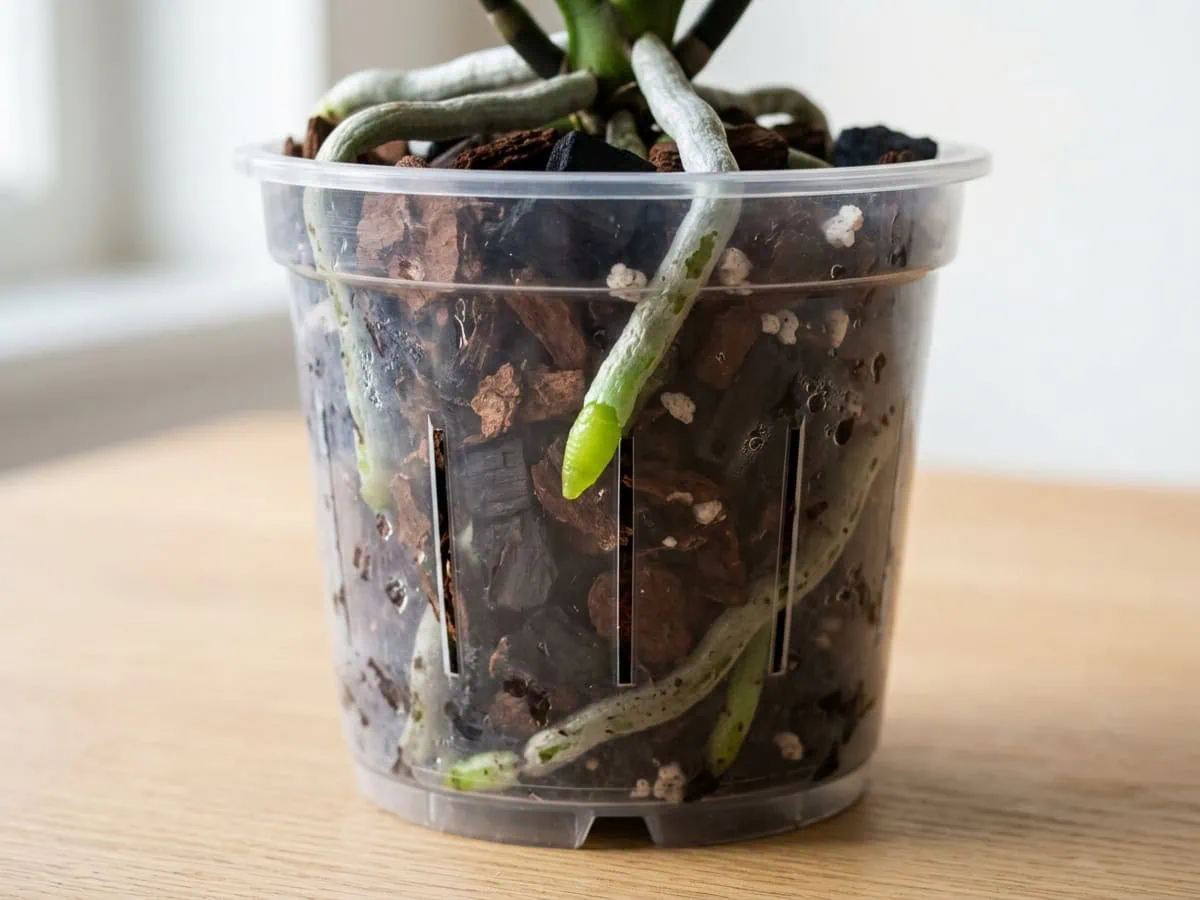
Two repotting choices quietly cause the post-repot crash on their own. An oversized pot wraps the roots in wet medium that never fully dries, and that stagnant moisture rots the very roots the repot was meant to refresh, so size the pot only about an inch wider than the root mass. Snug beats roomy.
The second trigger is an abrupt move from sphagnum moss into chunky bark, which the roots find genuinely stressful, so transition gradually or match the medium the plant already knew. If you are unsure of the sequence, revisit the repotting steps themselves before the next attempt.
Post-repot myths: more water and peroxide
Two pieces of rescue advice make a shaky repot worse, and both feel like pure common sense in the moment of panic. Each one fusses over the leaves when the real action is down at the roots. The two corrections below separate the reflex from the fix that actually works.
Adding water to a wilting repot is wrong
Reaching for the watering can the moment the leaves droop is the most common post-repot mistake, and it quietly turns a recoverable plant into a rotted one. Because the disturbed roots have paused their water uptake, anything you pour in simply sits in the fresh bark, drives the air out of the medium, and suffocates the roots that were about to bounce back.
Water drowns recovery. Limp leaves over firm roots are not thirsty. They are waiting.
A pot that already feels heavy in your hand is telling you the bark is still wet, whatever the foliage looks like. So when the urge to water hits, lift the pot, judge its weight, and read the roots before a single drop goes in.
Peroxide on roots: pots and tools only
Pouring hydrogen peroxide over the roots is the second myth, and it punishes the exact tissue you are trying to save. The fizzing rinse oxidizes and damages the delicate, regenerating root-tip cells, so peroxide belongs only on inert surfaces such as empty pots and metal blades, never on living roots, leaves, or the crown.
For an actual cut surface, reach for powdered cinnamon instead, because a dry dusting shields the open wound with a natural antifungal while it hardens and closes. Cinnamon seals; peroxide burns.
And if the rot has already climbed past the roots into the center of the plant, no surface rinse can reach it; that is rot reaching the crown, a deeper problem with its own rescue.
Match the fix to the wound, not to the wilt, and a repot stops feeling like a gamble.
Post-repot recovery questions, answered
Why is my orchid dying after I repotted it?
It is usually transplant shock, not death. Repotting disturbs the roots, which briefly stop drinking, so the leaves wilt while the plant stays alive. Read the roots before anything else: firm and silvery means shock that needs air and time, while mushy and brown means rot that needs a trim. Resist the urge to add more water, because that is what tips a stalled plant into rot.
How do I revive my Phalaenopsis orchid?
Start by reading the roots, because the rescue depends entirely on what you find. For shock, give gentle indirect light, barely-damp bark, and four to six weeks of patience. For rot, trim mushy roots back to firm tissue with a sterile blade, dust the cuts with cinnamon, and repot into fresh dry bark. Hold all fertilizer until you see new green growth.
Do orchids go into shock after repotting?
Yes, transplant shock is normal and expected. Moving a moth orchid into fresh medium disturbs the velamen and briefly halts water uptake, so limp or wrinkled leaves during the first few weeks are common. A plant with firm roots is simply adjusting, not failing. Keep conditions stable, hold off on heavy watering, and let it recover on its own rather than intervening.
Do orchids come back after dying?
It depends on whether any living tissue remains. A moth orchid with even a few firm roots or one healthy central crown can regrow over several months, provided you fix the underlying cause and keep conditions stable. Once every root has gone mushy and the crown has rotted through, recovery is no longer realistic. Check for firm, pale tissue before you decide.
How do you help orchid roots recover after repotting?
Give the new roots air, stability, and zero stress. Keep the bark only barely damp, set the plant in bright indirect light away from vents and drafts, and withhold fertilizer until fresh root tips appear. Sterile cuts sealed with cinnamon keep the wounds clean while they callus. New greenish-white tips, usually within four to six weeks, confirm the roots are back to work.
From anxious to confident in about six weeks
A limp moth orchid after a repot is rarely the emergency it looks like. The leaves panic first, but the roots are usually just rebuilding the velamen they need to drink again. Read them, match your response to what you find, then do the hardest thing of all and wait while the new tips push out.
If a squeeze test turns up soft, browning roots instead, you have crossed from shock into rot versus shock in the roots, which calls for the dedicated root rescue. Otherwise, gentle light, barely-damp bark, and patience are the whole protocol, because knowing how to fix a Phalaenopsis orchid dying after repotting is mostly knowing when to leave it alone. May your repotted roots knit quietly, flush green at the tips, and never meet the watering can a day too early.
Tap the button below to get more plant fixes in your Google Search results