🎯 Quick Answer: the growth pause, read in one pass
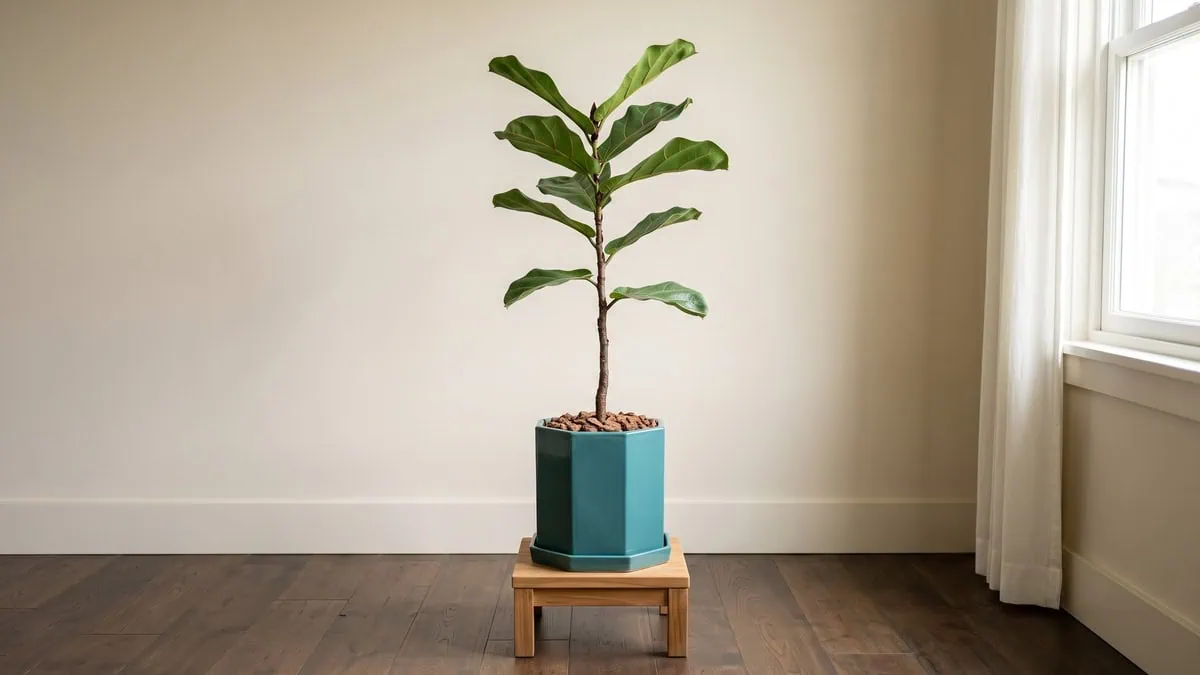
The answer to why is my fiddle leaf fig not growing new leaves: growth collapses below 500 FC in Ficus lyrata, a Moraceae-family fig. A pause is not a fault. Light duration and light intensity decide whether the next flush arrives at all.
- Check light before anything else: a north sill reading near 200 FC starves new growth.
- Wipe the blades: a film of dust on a broad leaf cuts what reaches the tissue.
- Flex a bare stem: still supple means the flush is coming, brittle means gone.
- Leave the pot alone: this fig holds new leaves while slightly root-bound.
- Feed only once growth returns: nitrogen cannot buy a leaf light never funded.
Get the one-page care card for this guide, plus a printable A4 copy
We condense this guide into one card for your phone and a print version for the pot shelf. Enter your email and we send both to your inbox. Subscribe once, then request the card of any guide you read.
By subscribing you agree to get emails from Plant Care Basics about plant care guides, about once a week at most. Unsubscribe in one click. Privacy policy
Confession time: I have watched a fiddle leaf fig sit still for a full year, and I fed nitrogen first. It never pushed a leaf, and the stem still bent under my thumb instead of the dry snap of a brittle stem.
Conventional advice feeds a stalled plant – the real fix is light. Nothing else. Hmm, on reflection, that is too flat: nitrogen matters, but only once light intensity funds photosynthesis.
This fig banks no water and no starch organ (I have counted the leaves), so every new leaf is bought with light the canopy collected in the weeks before, and a dark corner never pays.
Read the pause first, and the plant names the input it is short of. This species moves in flushes tied to day length, not steady monthly increments. If the stall is part of a wider pattern, the broader care picture a stalled specimen sits in carries the rest.
No change to a thing is being asked for yet. The five-row summary here separates a fig resting between flushes from one short of light.
Why is my fiddle leaf fig not growing new leaves, at a glance
| Fiddle leaf fig specs | What the published sources show |
|---|---|
| Indoor growth speed | Slow indoors, arriving in flushes rather than at a steady monthly increment |
| Light that funds new growth | 500-1000 FC is the thriving band; about 100 FC holds a plant alive and stretched |
| Is a months-long pause with a firm, full canopy a fault? | No – it reads as a flush interval until the canopy itself declines |
| Feeding while a plant is stalled | Monthly at label strength through the long-daylight season, none through the short-daylight rest |
| Repot trigger | Roots circling the ball, surfacing, or out the drainage hole – then one size up |
You are subscribed
Press the button and we prepare this guide's one-page care card and its A4 print copy and email both to you within a few minutes.
Tap the button below to get more plant fixes in your Google Search results

Table of Contents
Why a fiddle leaf fig stops making new leaves
New leaves stop arriving when the light this fig collects no longer pays for building one. Growth here arrives in flushes, so a gap between them is the normal shape of the year. The following sections separate a pause that is normal from one that is a fault.
How long a growth pause stays normal
Plenty of advice and almost no numbers come back under “how long can a fiddle leaf fig go without pushing new growth”. Your own plant is the better instrument.
I have a hunch about this but no peer-reviewed source: the honest split is by history, not by weeks. Two clocks run. A plant that has just changed rooms, pots or owners has earned a longer wait than one that has stood in the same corner all year.

- Recently moved or repotted: weeks of settling before anything is owed.
- Undisturbed for a year: a silent canopy is worth an inspection.
Where a new leaf can actually appear
Every new leaf on this fig comes from one of two places: the growing point at the top of the stem, or a bud sitting at a node further down. But a leaf scar is not a node. Nothing reopens where a leaf has already fallen away.
On the main stem those nodes sit about 3 inches apart, which is why a bare trunk offers fewer sites than it looks like it should. Counting them tells you how many places your own plant could break from, and placing new growth lower on the trunk with a cut is the separate question of choosing between them.
When a stalled canopy points at the root zone
A pause becomes a fault when the canopy goes with it. Roots next. Tip the pot: a sound root snaps when you bend it back, while a rotted one pulls apart in your palm with no sound at all and smears dark across the skin.
- Color: white to silvery is sound, brown to black is not.
- Feel: firm and springy is sound, soft and mushy is not.
- Smell: a sour note over the mix means suffocation, not hunger.
Most advice sends a stalled plant straight to light, food or a bigger container, and skips the question of whether the roots can still fund a leaf. So check the roots first. A minute spent checking the mix before the watering can comes out settles more of these cases than any feeding change.
One of mine held eleven leaves and made no twelfth for five months. The canopy stayed firm the whole time, so I left it alone, and the flush arrived once the days lengthened.
Get the one-page care card for this guide, plus a printable A4 copy
We condense this guide into one card for your phone and a print version for the pot shelf. Enter your email and we send both to your inbox. Subscribe once, then request the card of any guide you read.
By subscribing you agree to get emails from Plant Care Basics about plant care guides, about once a week at most. Unsubscribe in one click. Privacy policy
Tap the button below to get more plant fixes in your Google Search results

Light is what funds a new leaf
Light intensity decides whether a fiddle leaf fig can fund a new leaf at all. Yes covers “does more light make a fiddle leaf fig push out new leaves”, until the plant already sits inside its band. The following sections give the band, the losses, and the order to change one thing.
The band is 500-1,000 FC, while about 100 FC only holds a plant alive and stretched. According to Penn State Extension, how indoor light is measured in foot candles comes down to a meter reading taken at the leaf, not an impression formed at the window. The room feels brighter than it reads.

- About 100 FC: alive and stretched, with no flush to show for it.
- 500 to 1,000 FC: the band that funds a full-sized leaf.
One input moves at a time (slow, I know, but it is the only clean read), because two changes at once leave you guessing which one the plant answered. Change nothing else that week. Light first.
What a smaller newest leaf tells you
A newest leaf smaller than the one below it is a light reading, not a growth stage. The first honest signal this plant sends is what sits behind “why is the newest fiddle leaf fig leaf smaller than the last one”, and owners are looking at the first honest signal this plant sends. But the same shrinkage appears when a pot-bound root system can no longer supply the leaf it started.
Dust on the blade is a light problem
A dust film cuts the light reaching the blade and the food the plant manufactures from it. On leaves this large the loss runs high. It also stays silent.
Wipe both surfaces with a soft cloth dampened in plain water, every few weeks or whenever a film is visible.
The cloth reports first: a clean blade goes quiet under it, while a dusty one answers with a faint dry rasp that stops the instant the film lifts. Skip shine products, because their residue interferes with air exchange and adds a waxy layer to the very loss the wipe was meant to undo.
Feeding follows growth, not the other way round
Fertilizer feeds growth that light has already funded, so it cannot start a flush by itself. I fed a stalled fig monthly for a whole season once and watched it answer with nothing but a crust on the mix. Nitrogen and micronutrients matter once leaves are moving, and not before.
- Long-daylight months: monthly, at the strength the label states.
- Short-daylight rest: nothing at all, however still the plant looks.
Order matters here. Feeding harder into a stall only leaves you reading salt injury from an over-strength feed instead of a new leaf.

What not to do while the plant is standing still
A stalled fiddle leaf fig is damaged more often by the fixes than by the stall itself. The three moves below are what owners reach for first, and each takes more from the plant than it returns. All three are answered from published guidance rather than from habit.
The interval between one leaf and the next is set by light and day length. So watch the canopy instead. Not the calendar.
- Firm canopy, supple stem: a flush interval, not a fault.
- Declining canopy: read the root zone before changing an input.
The myth says a stalled plant has outgrown its pot, so a bigger container will restart it. Published guidance says the opposite: this species holds growth best while its roots are tight, and a repot is earned only once roots come through the drainage hole.
The bigger pot that does not restart growth
A bigger pot adds water-holding volume rather than growth. Once roots are circling and surfacing, one size up is the documented step, never two. A large volume of fresh medium around a small root mass stays wet far longer than the roots have any use for, and the medium a container fig roots into decides how long that wetness lasts.
The dry sheath at the growing tip
The papery sheath wrapped around each emerging leaf is a stipule, an ornamental feature of these figs. It dries and browns while the leaf inside expands. Owners typing “why did the new fiddle leaf fig bud turn brown and stop” are usually reading that dried sheath as a dead bud.
Listen before deciding: a spent sheath rustles dry and loose against the stem, while the folded leaf under it stays green. Leave it where it is.

Notching the trunk
- Skip it: notching is not the lever for this species.
- Documented instead: growth moves lower after a late-winter reduction.
That is the whole answer to “does notching the trunk force a fiddle leaf fig to grow”: the documented lever on this species is the cut, not the notch. New growth is pushed from below a late-winter reduction, which is separate work with its own guide.
And none of it helps while light is still the limiting input. Fix the light. Then let the plant spend it.
Frequently asked questions
How do I get my fiddle fig to grow new leaves?
Put the plant in 500 to 1,000 FC of light and leave every other input alone for now. That band is what funds a new leaf on this species, and below about 100 FC a plant stays alive but stretched.
Wipe both leaf surfaces with a damp cloth so the light already in the room reaches the blade. Feed monthly at label strength through the long-daylight months only, because fertilizer supports growth that light has already funded.
How long does it take for a fiddle leaf fig to grow a new leaf?
Growth on this species arrives in flushes tied to day length rather than on a monthly schedule, so the gap swings widely from plant to plant. Day length and light intensity set it, not a fixed number of weeks.
A pause of several months with a firm, full canopy reads as a flush interval rather than a fault. The reading that matters is the canopy: leaves that stay firm and a stem that stays supple.
Can a fiddle leaf fig recover from no leaves?
It can, so long as the stem is still supple and the root system is sound. A bare stem carries buds at its nodes, and new growth can break from those nodes as well as from the growing tip.
A leaf scar is not a node, so nothing reopens where a leaf has already fallen away. The root check settles it: white to silvery and firm is sound, brown to black and soft is not.
Why is my fiddle leaf fig not growing?
Light is the first input to check, because growth stops once the canopy no longer collects enough of it to build a leaf. Readings near 100 FC hold a plant alive without funding new growth.
After light, the root zone is the next place to look, and the feeding cadence after that. Hold every other input steady, or the plant’s answer cannot be read.
How to make fiddle fig grow faster?
Faster growth on this species comes from more light, never from more fertilizer. Move the plant into the 500 to 1,000 FC band and keep dust off both leaf surfaces so the light reaching the blade is not lost.
Through the long-daylight months feed monthly at label strength, then stop for the short-daylight rest. Growth speed here is slow by nature and arrives in flushes rather than steady increments.
Prove it yourself: the two-week light test
Plainly, then. Stop reading and take one measurement. Put a meter at the blade, note the number, then move the plant to the brightest spot the room offers and note it again.
Give the new position two full weeks before judging anything, because a flush is funded well before it appears. Change nothing else. Watch the canopy while you wait: firm leaves, a supple stem, and no dry tick of a shed leaf landing on the floor.
That single reading answers why is my fiddle leaf fig not growing new leaves more honestly than any watering schedule can. A fiddle leaf fig makes its next leaf out of light it collected weeks ago, so move it toward the window and let the flush arrive on its own.
Get the one-page care card for this guide, plus a printable A4 copy
We condense this guide into one card for your phone and a print version for the pot shelf. Enter your email and we send both to your inbox. Subscribe once, then request the card of any guide you read.
By subscribing you agree to get emails from Plant Care Basics about plant care guides, about once a week at most. Unsubscribe in one click. Privacy policy
Tap the button below to get more plant fixes in your Google Search results