🎯 Quick Answer: the two weeks after a container change
How to help a parlor palm recover after repotting stabilizes Chamaedorea elegans, a member of the Arecaceae family, inside 1-2 inches of fresh container diameter. That family adds growth at one tip. Water it in once, then leave it alone. Hold feeding for six to eight weeks.
- Check first: was the plant actually pot-bound before you moved it?
- Lift test: judge weight, not fronds, before the next watering
- Hands off: tease roots loose, cut only dead brown tissue
- Crown stays: never shorten a stem to balance lost roots
- Light: bright indirect only, no direct sun on stressed fronds
Repotting is the job I have got wrong most often: five parlor palms in a row, and four sulked for weeks afterward. Fronds paled. The potting media stayed dark and heavy long after I expected it to dry, and the smell rising off it turned faintly sour by the second week.
It took five years of that before I understood what a repotted palm is actually asking for. Strike that. It forced me to learn what it does not need, which is more water and a pot that was never pot-bound to begin with.
Chamaedorea elegans carries no water store, and its roots emerge at full diameter and never thicken. A torn root system therefore rebuilds slowly. Quick aside: the replacement mix holds more water than that shrunken root system can drink, so the plant looks thirsty while it drowns.
A palm that was already struggling before the move needs the baseline regimen every article here assumes fixed first.
Nothing here is a rescue. The following table is the whole settling protocol in five numbers, so you can act tonight and stop guessing.
How to help a parlor palm recover after repotting: the numbers at a glance
| Parlor palm specs | What the move calls for |
|---|---|
| Step up per move | 1-2 inches of container diameter, one pot size at a time |
| Depth in the new pot | The old soil line, level with the surrounding medium |
| First watering after the move | Water in at once, then wait until the top 1-2 inches are dry |
| Settling window | A month or more before recovery is under way, owner-reported |
| Feed at the move? | No – hold feeding 6-8 weeks after potting |
Tap the button below to get more plant fixes in your Google Search results

Table of Contents
The first two weeks after the move: what is happening
A repotted parlor palm sulks because the move cut its water supply while its water demand stayed exactly where it was, and the fine roots that carried that supply take weeks to rebuild. Mechanism first, then the timeline, then the watering rule.
Why a repotted palm sulks: supply cut, demand unchanged
Palm roots are all adventitious. Each one comes out at full width and stays there, so a torn root hair is simply lost rather than mended the way a broadleaf plant mends it.
Meanwhile the crown above is unchanged, transpiring at the rate it did the day before. That mismatch is the whole disorder. Supply fell; demand did not.
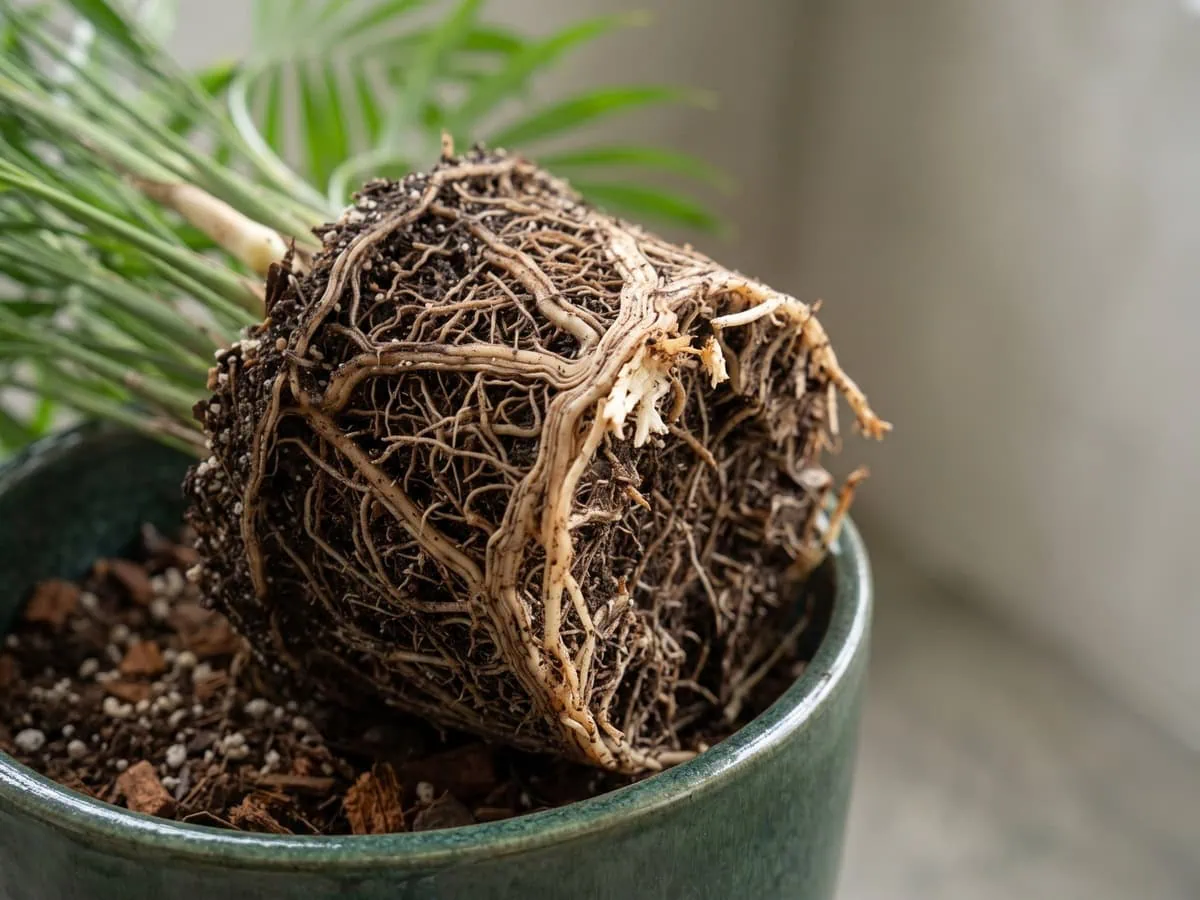
I lost one cane out of five that way, and it went from the base upward while its neighbors held. So count the canes on the day you move the plant. They are separate plants sharing one container, so one can end while the rest settle normally.
How long the settling window runs
Owners of this species report a month or more before recovery is under way, not the fortnight most pages promise. That figure is owner-reported rather than an authority measurement.
Marking the day of the move on the pot is the trick that carries me through it, and I’m honestly not sure why this works — but it does. Judged against yesterday, a sulking palm looks like it is dying. Judged against day one, it looks like it is holding.
Type “how long does transplant shock last on a parlor palm” into a search bar and every result says about two weeks. The growers who kept these plants for years say a month.
When to water again, and the lift test
Water the plant in once at the move, then wait until the top 1-2 inches of the mix are dry before you water again. The trap is that a settling palm droops exactly when it must not be watered.
So the answer to “when do I water a parlor palm that was just moved to a new pot” is not a day count at all. Lift the container.
Still heavy, surface still dark: wait. When it goes light and the surface pales, water it. Fresh mix holds more water than a shrunken root system can drink, which is why a drooping palm in week one is almost never thirsty.
Weigh the pot in your hands the day you finish the move, then weigh it the same way every second morning. The change in weight tells you what the fronds cannot: whether the mix is still holding the water you gave it. A pot that has not lightened in four days is a pot that is not drinking.
Tap the button below to get more plant fixes in your Google Search results

Pot size, depth, and whether the move was needed at all
A parlor palm earns a container change only when roots are out of the drainage holes and the pot dries faster than it used to, and then only by one size. The decision, the increment and the depth each get a section of their own.
Was the move needed? Two signs and the reversible step
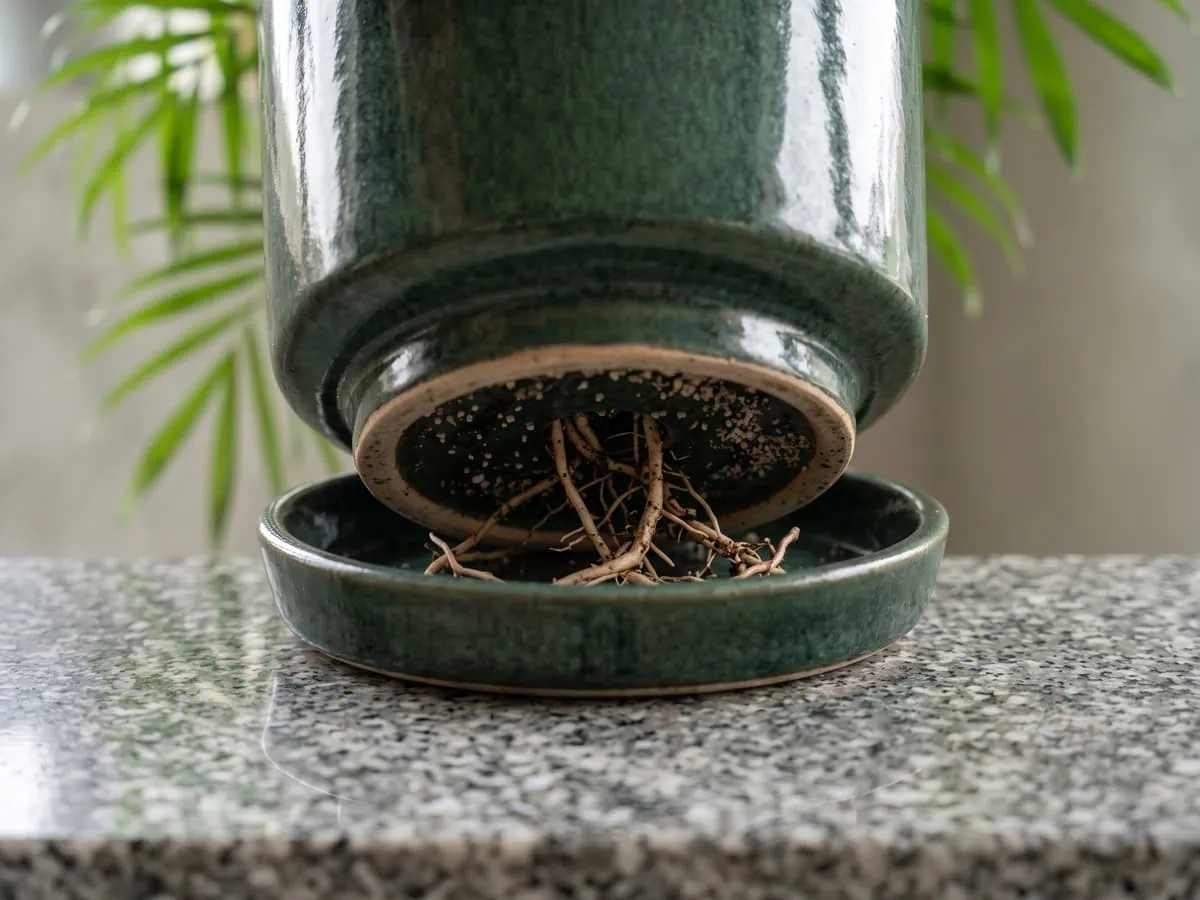
Every list of repotting signs you will meet is unordered, so one sign reads as sufficient. It is not. Ask “does my parlor palm actually need repotting” and the honest answer is: only if both signs are present at once, because either sign on its own also shows up on plants that are perfectly settled.
Roots through the drainage holes, and a pot drying faster than last season. Before you move anything, take the reversible step: lift off the top two inches of old medium and replace it with fresh. This species prefers to stay snug, and repotting a plant that did not need it is itself a reported cause of decline.
One container size, and what that is in inches
The question people type is “should a parlor palm move up only one container size”, and the answer is yes. A 4-inch pot steps to a 5-inch, a 6-inch to an 8-inch, an 8-inch to a 10-inch. In inches of diameter that is 1-2 inches, never more.
Overpotting is the failure this limit blocks. Medium the roots cannot reach stays wet through a whole drying cycle. The International Society for Horticultural Science measures air-filled porosity in a container medium as it dries, which is the mechanism behind holding each move to a single container size (yeah, learned this the hard way).
Two fingers of added medium around the old root ball is the limit. But a hand’s width is past it. The tell that the pot is too big is medium at the base that is still dark and cold when the surface has dried.
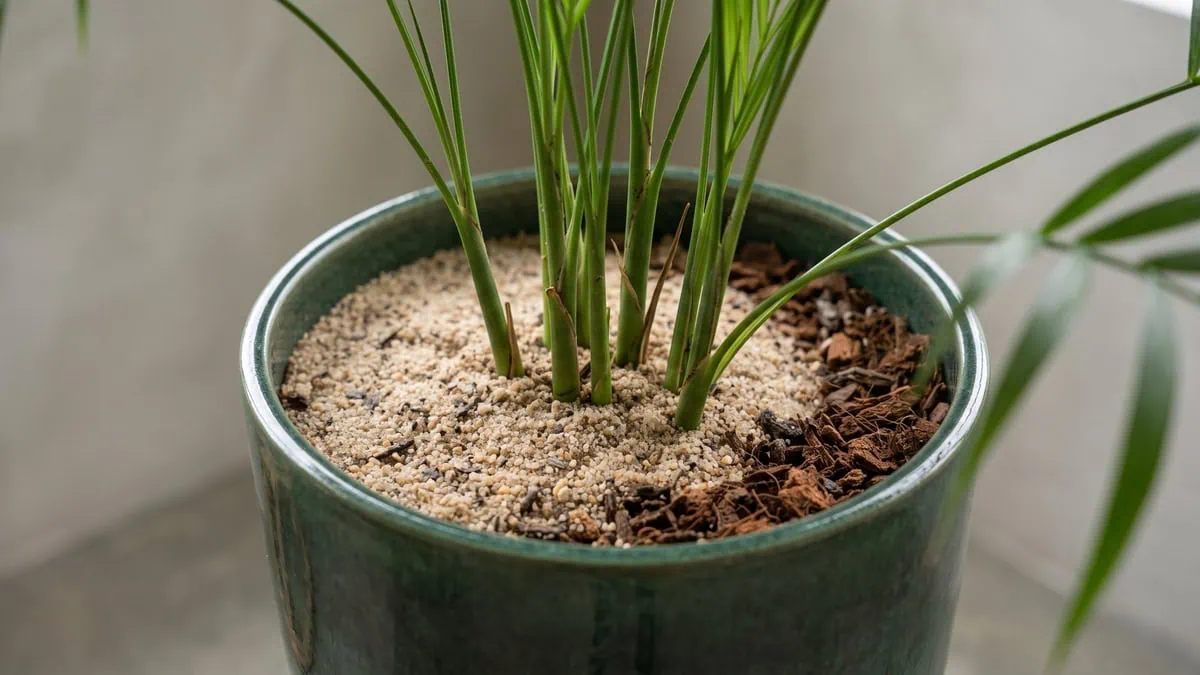
Set the root ball back to its old soil line
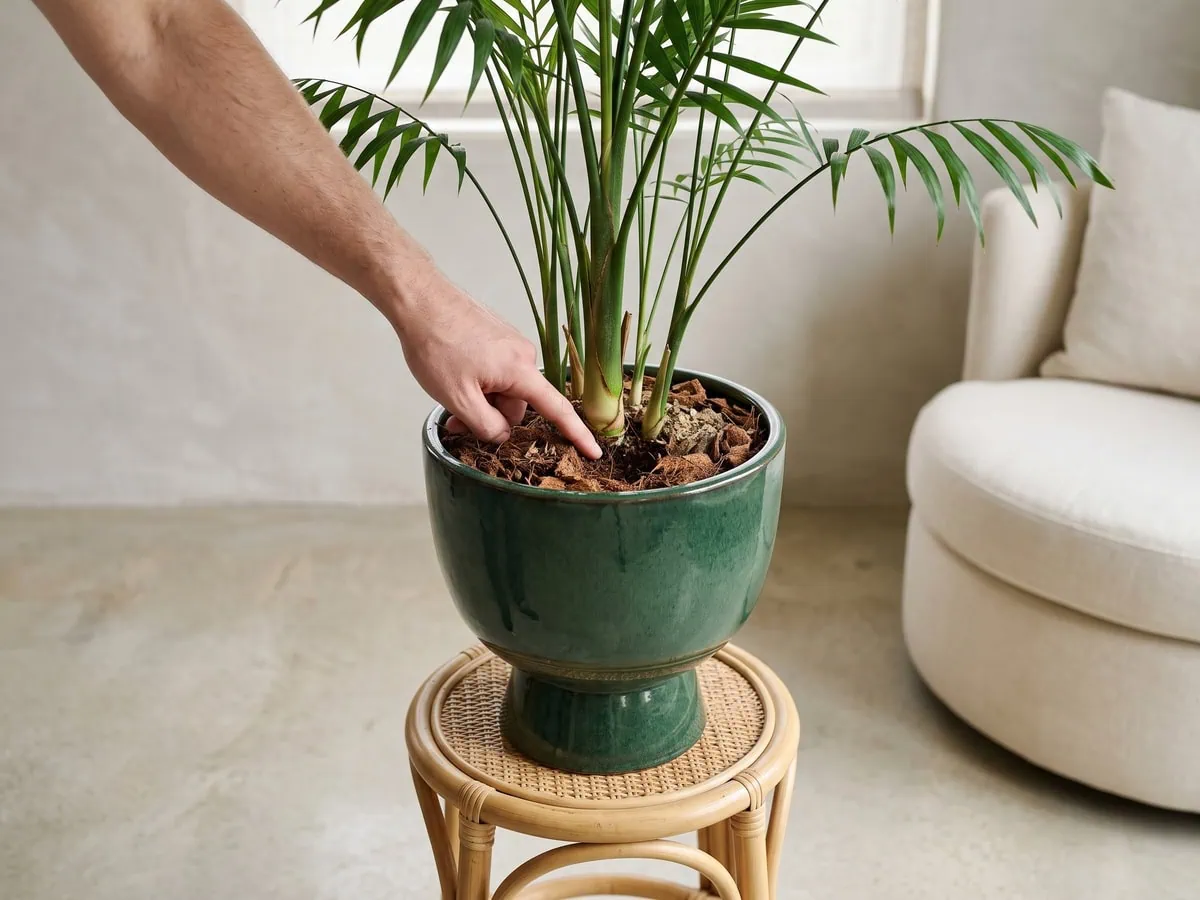
One question comes up more than any other: “should I bury the rootball deeper when I repot a parlor palm”. The answer is no. Set it back to the height it sat at before, level with the surrounding medium — in what goes into the mix this palm is moved into, not deeper.
The landmark survives the medium going in: on each cane there is a point where green tissue changes to the paler tissue that stood below the old surface. That line returns to the surface, not under it. Brush the surface back with a finger at the base of one cane afterwards and check.
If the paler tissue is buried, lift the whole plant out and take medium away from underneath rather than scraping it off the top, because scraping only lowers the surface. Separating a crowded container is a different operation. It has its own window — see dividing the rootball into stand-alone pots.
What not to do while a parlor palm settles
The three things that undo a settling parlor palm are all things you add: fertilizer, a pair of shears, and a tidy-up of the crown, each of which asks the plant for work it cannot do yet. They are taken in that order.
Feeding: hold it until new growth shows
Do not feed. Hold the feed for six to eight weeks after potting, because a disturbed root system meets dissolved salts with a shrunken absorbing surface, and that is the whole reason the rule exists. Put the bottle away on the day of the move.
Bring it back on a sign, not a date. The sign is a new frond opening, which on a slow palm can be months rather than weeks. If you have already fed, flush the container with plain water until it runs freely from the base, then pick up the routine watering rhythm once the plant has settled.
Do not cut a healthy crown to balance the roots
Crown reduction at the transplant is standard advice for palms lifted out of the ground with severed roots, and it does not carry over to a container plant whose root ball came out whole. Leave every green frond. Take off only what is already brown.
One growing point sits at the tip of each stem, and that is all there is. There is no second bud behind it, no cambium, and nothing lower down that can replace a cluster you remove, so cutting a stem back to balance the roots ends it. Cut the brown frond at its base, and stop short of the green when you trim a dead tip.
The myth is that a repotted palm should have its crown thinned by half so the fronds left behind match the roots that survived. That instruction was written for field-grown palms dug out of soil, and published guidance for this plant says the opposite: take off dried, browned or yellowed fronds only, and leave an otherwise healthy plant uncut.
Counting canes before the move
Write the number down. I lost the count on one pot and could not tell, weeks later, whether it started with four canes or five. A container sold under this name holds several separate plants rather than one plant with many stems, so the unit of judgment in the settling window is the cane, not the pot.
A decline that began the week you carried the plant home is instead the settling-in failures of a brand new purchase, not this.
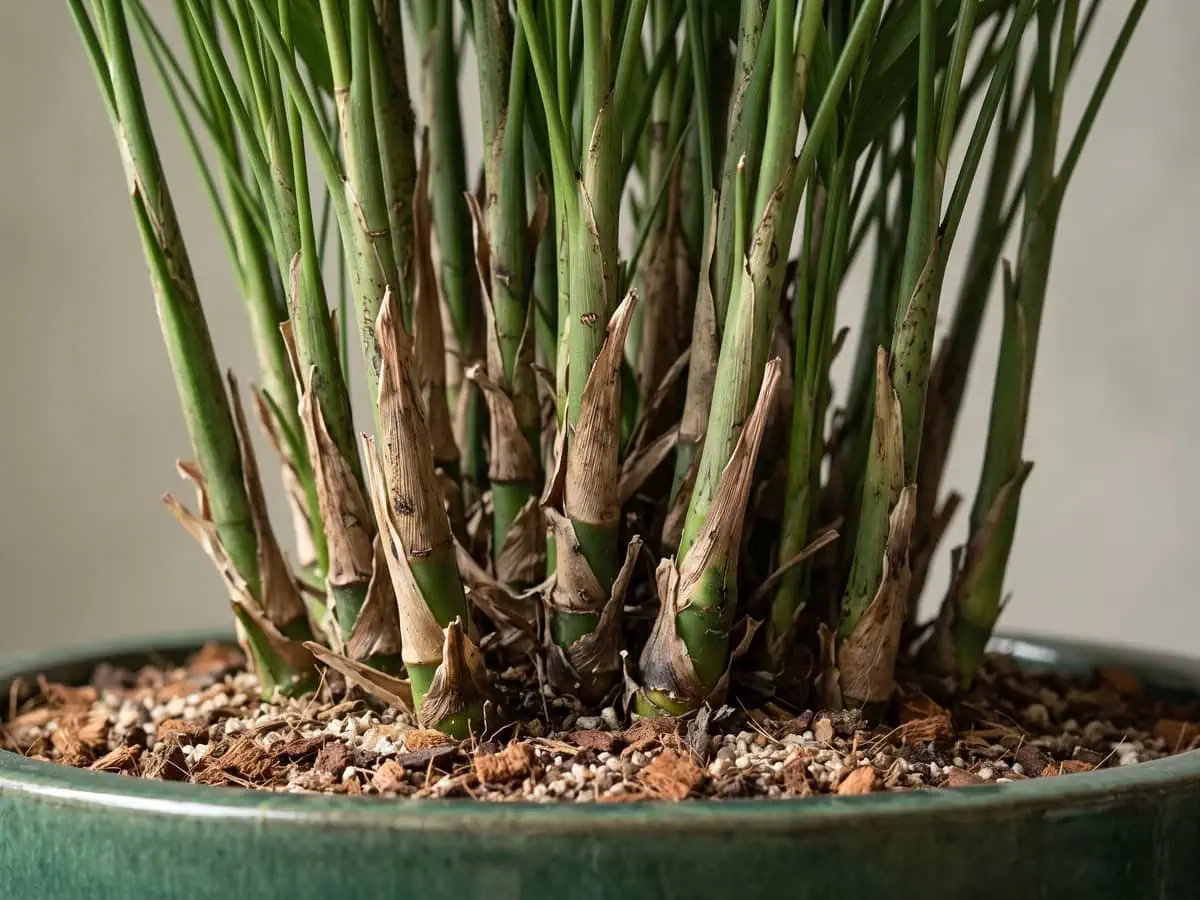
One cane yellowing from its base upward while its neighbors hold is one plant ending. Every cane softening at once — something else entirely. A container that loses a cane does not refill it either, because each loss is a whole plant gone, not a branch to grow back from.
Frequently asked questions about a parlor palm after repotting
How long does a plant stay in shock after replanting?
Expect a month or more before recovery is clearly under way, which is longer than the fortnight most pages quote. The number comes from owners rather than from a published measurement, so hold it as the working expectation rather than a guarantee.
Mark the day of the move and judge the plant against that day. A droop that holds steady while the mix dries on schedule is a plant settling; a droop that deepens while the mix stays wet is not.
What is transplant shock in palms?
It is an interruption of supply. The move tears the fine absorbing surface off a root system whose roots emerge at full diameter and never thicken, while the crown above keeps losing water at the rate it did before.
Supply falls and demand does not, so the fronds droop even though the mix is wet. Every step in the recovery window either lowers that demand or protects what is left of the supply.
Is there a way to bring a palm tree back to life?
Within the settling window, yes: hold the water, hold the feed, and leave every green frond in place. Beyond it, the answer depends on why the plant declined in the first place.
A plant that has been struggling since the day you bought it is a different problem with its own article, and a stem whose single growing point has died cannot be restarted. Judge each cane separately before deciding.
How long should I wait before fertilizing a parlor palm after repotting it?
Six to eight weeks after potting, and then only once a new frond has opened. Fresh mix usually carries a nutrient charge already, and a shrunken root system cannot take up what you add.
Feeding into that window concentrates dissolved salts around roots that are still rebuilding. Where the feed has already gone in, flush the container with plain water until it runs freely from the base and start the count again.
End the watering-a-drooping-palm era
The awkward part? The correct action here looks exactly like neglect. You water once, you step away, and for a month nothing visibly rewards you.
But the plant is doing the only work that matters (yes, this sounds passive — bear with me), rebuilding an absorbing surface it cannot buy back with a drink. Nothing else.
Mark the move day on the pot. Lift the pot instead of reading the fronds, keep the feed on the shelf for six to eight weeks, and count the canes so one loss does not read as a whole failure.
Once it is settled, knowing how to help a parlor palm recover after repotting turns into the ordinary rhythm the rest of this palm’s care runs on. Write the date on the pot, then give this palm the one thing it actually needs from you: a long stretch in which nothing happens at all.
Tap the button below to get more plant fixes in your Google Search results