🚨 Emergency 30-Second Answer: brown crispy tips on a parlor palm
Stop watering on a schedule: Chamaedorea elegans, a member of the Arecaceae family, crisps its tips when the mix stays wet past the top 1-2 inches. Readers type “why is my parlor palm getting brown crispy tips” and expect a leaf answer. The leaf is the record, not the cause.
Three readings settle it: mix moisture, air movement, and salt crust on the rim. On this palm the tan necrosis creeps up the leaflet, so each reading points at a different correction. Cut nothing until a reading names the cause.
- Stop first: hold water until the top 1-2 inches are dry
- Check the air: move the pot off any vent or draft line
- Flush the pot: pour water through until it runs from the drainage holes
- Leave the frond: a half-brown frond still feeds the plant, so keep it
- Trim later: cut dead brown tissue only, never into living green
The first parlor palm I kept under a west window went tan at every leaflet tip within a month, and I kept trimming. Same tan edge, every time.
Instead of reading the leaf, I realized the record was in the pot: this palm carries no water store at all, so the mix decides what the leaflet tips do.
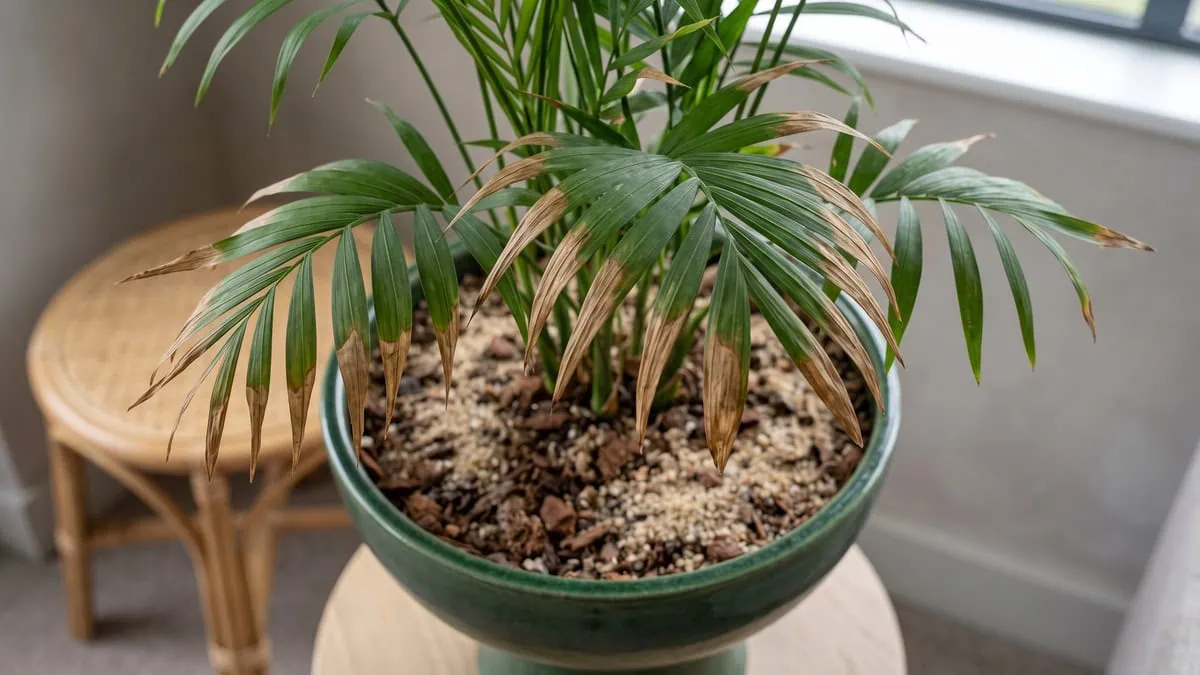
Brown leaf tips and dry leaf margins are a ledger, not a verdict — on this palm the tan runs inward along the leaflet, logging low relative humidity, a salt load, or a root zone that stayed wet. Run your thumb along a browned margin and it crumbles like a dry husk, while the living tissue beside it still feels waxy.
Three readings sort it, and none of them is the frond you are looking at. So start there, and pair it with the wider set of habits that keep it healthy.
You are standing over a half-browned frond with the snips already open. The following table holds the four readings that come first.
Why is my parlor palm getting brown crispy tips: the quick readings
| What to check | What the reading says |
|---|---|
| Moisture check depth | Top 1-2 inches dry to the touch, tested with a finger or a wooden dowel |
| Do browned leaflet tips turn green again? | No – the marked tissue stays marked |
| Room air target | 40-60% relative humidity |
| What may be cut | Dead brown tissue only, never living green tissue |
Tap the button below to get more plant fixes in your Google Search results

Table of Contents
Start with the root zone: three checks that name the cause
Brown crispy tips on a parlor palm start in the root zone, not on the frond, because a blade only crisps at its far edge once the roots feeding it have stopped delivering water fast enough. Three checks separate them, in a fixed order. The following sections take them one at a time.
Stop feeding and stop schedule watering until the three checks are done. A palm fed while the mix already holds salt browns faster, because those salts concentrate in a pot that cannot leach.
Check one: the mix 1 to 2 inches down
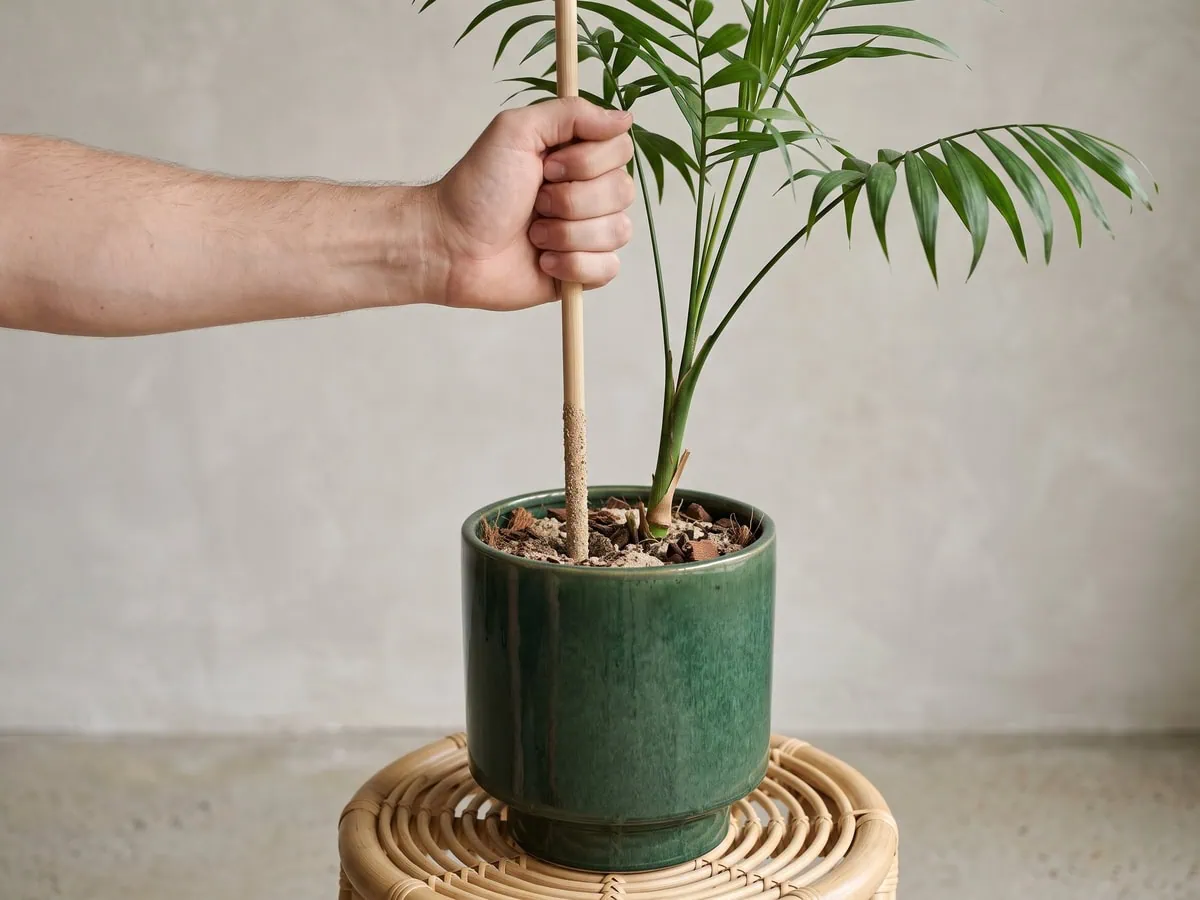
A quarter-inch skewer goes straight down through the mix, and whatever comes back on the wood is the reading. It comes out gritty and pale when the mix is dry, and dark and clinging when it is not. The dowel settles it.
Dry at 1-2 inches means the palm went thirsty; still damp there after a week means it never drained. That reading answers “is the browning on my parlor palm from too much or too little water” before deciding when the pot next needs a drink.
(FYI — this palm keeps no water store, so a dry spell shows on the leaflet within weeks.)
Check two: the air moving around the plant
Hold the back of your hand where the fronds sit and wait. Ten seconds is enough. Moving air you can feel is the reading; a vent, a radiator, or a drafty door dries the leaflet faster than the roots refill it.
Room air at 40-60% relative humidity suits this palm, and below that band the tips go first. So move the pot off the airflow line first. Not the mister.
- Feel for moving air at frond height, not at the floor
- Keep the pot off the line between a vent and a doorway
Check three: pale crust on the mix and the rim
Look at the rim and the top of the mix in raking light. A white to gray crust there is a salt load, and salt moves to the leaflet tips and margins and burns them from the outside in, which is why the oldest fronds usually carry the worst of it.
Flush the pot at the sink until water runs freely from the drainage holes, then repeat the flush the next day. Scrape the crust off the surface and empty the saucer, and check the strength and timing of liquid feed before the next one.
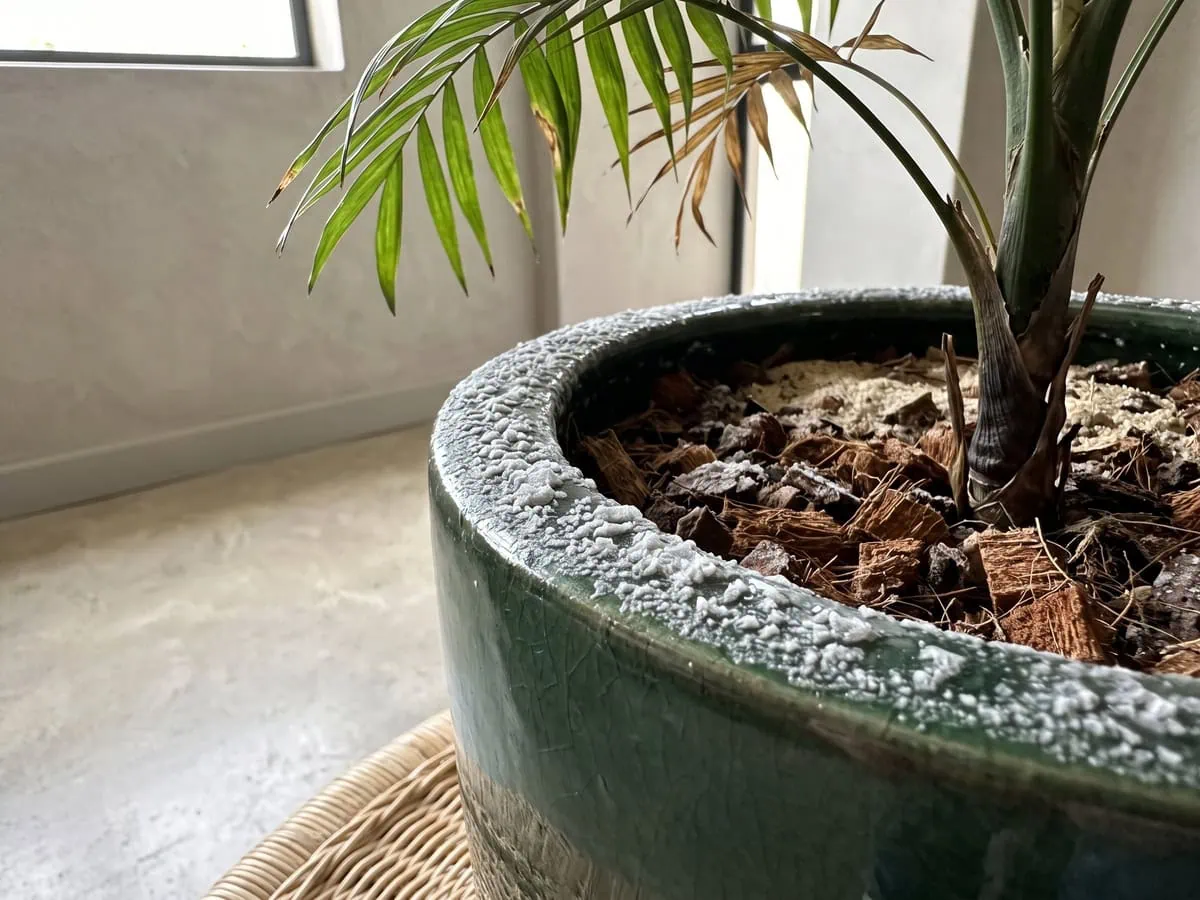
- White crust on the rim: flush, then flush again the next day
- Crust returning within weeks: switch to rainwater or distilled water
Tap the button below to get more plant fixes in your Google Search results

What comes off the plant, and where the cut lands
Only dead brown tissue comes off a parlor palm, and green tissue stays on the plant whatever it looks like, because every green cell is still feeding the single growing point that makes the next frond. That single boundary settles every cut below. The following sections take the three cases in turn.
The half-brown frond stays on the plant
The honest answer to “should I cut off a parlor palm frond that is half brown” is no. A frond that still carries green is still feeding the plant, and this palm has no water store to fall back on while it rebuilds.
Take the whole frond only when it is brown end to end. Until then it earns its place.
- Green anywhere on the frond: leave it attached
- Brown from tip to base, no green left: remove it whole
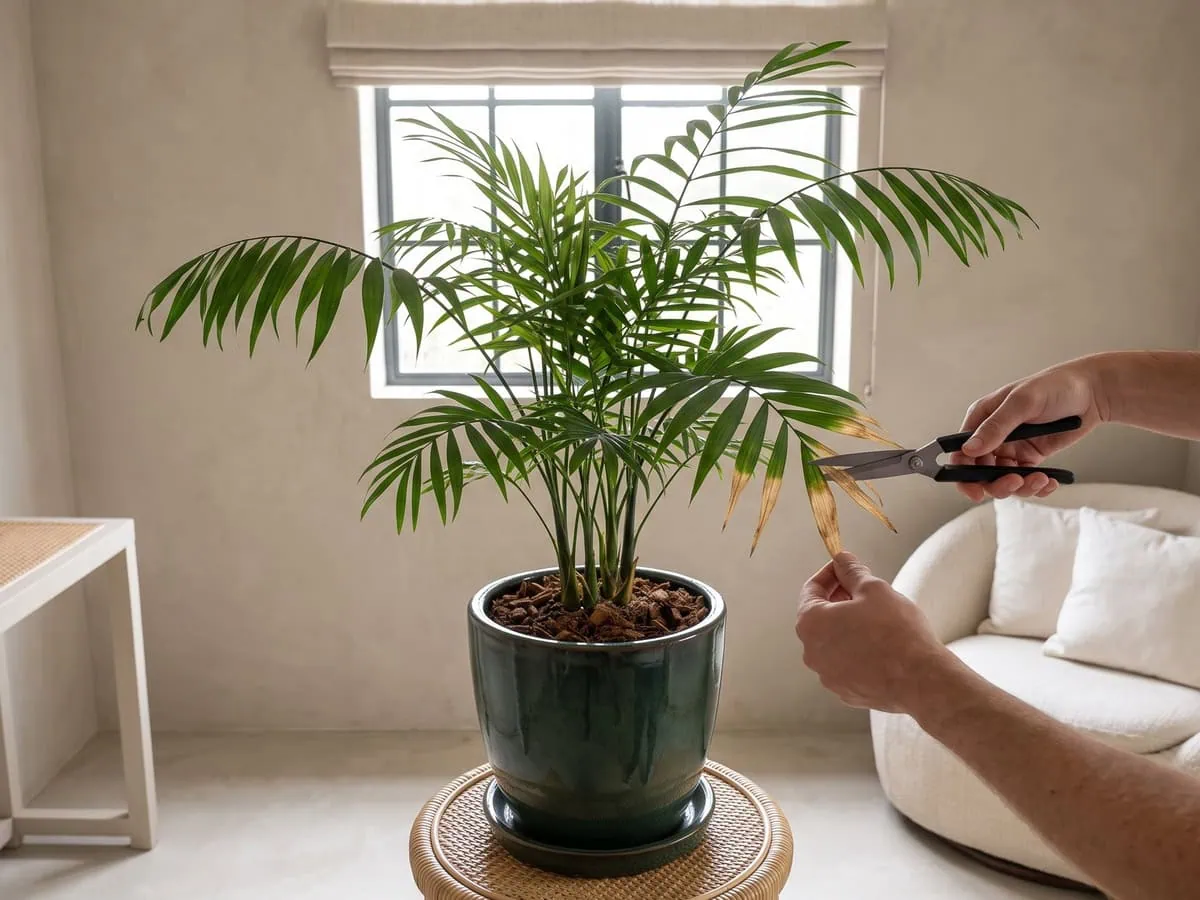
Trim to the brown edge, never into the green
Hold the leaflet up and find the line where dry tan meets living green. Cut just inside the tan, leaving a hair of dead tissue rather than nicking the green, because a cut into green tissue opens the frond to rot and denies the palm nutrients it will not get back.
I run a thumb along the edge: the dead part is papery and dry, and the green beside it is still waxy and cool. Wipe the snips with 70 percent isopropyl before the first cut and again between plants, and cut rather than pull.
How many fronds to take in one session
Color decides this one, not a count, so “which fronds should I remove from a parlor palm” comes down to what is brown. Every fully brown frond may go in one sitting; every frond carrying green stays.
Restraint matters more on this palm than on a fast houseplant, because palms grown indoors put out only one or two new fronds a year and this species is graded slow. What comes off today is not replaced this season.
- Fully brown fronds: take as many as there are
- Part-green fronds: none, regardless of how they look
Readings that are not tip browning
Brown on a parlor palm is not automatically tip browning: two other readings begin at the stem base or the oldest fronds, each with a cause and a response unlike the one this section covers. Sorting them first stops a wasted cut. Each of the three is taken up in its own turn.
A darkening stem base is a separate reading
A reader asking “why is the base of my parlor palm stem turning dark” is looking at a different failure from tip browning. Dark, soft tissue low on a stem points at the root zone, and that reading rests on one owner report rather than on published guidance.
Check it by touch, not by eye. Firm and dry means the color is surface staining; soft and giving means the stem itself is failing, and no amount of tip trimming reaches it.
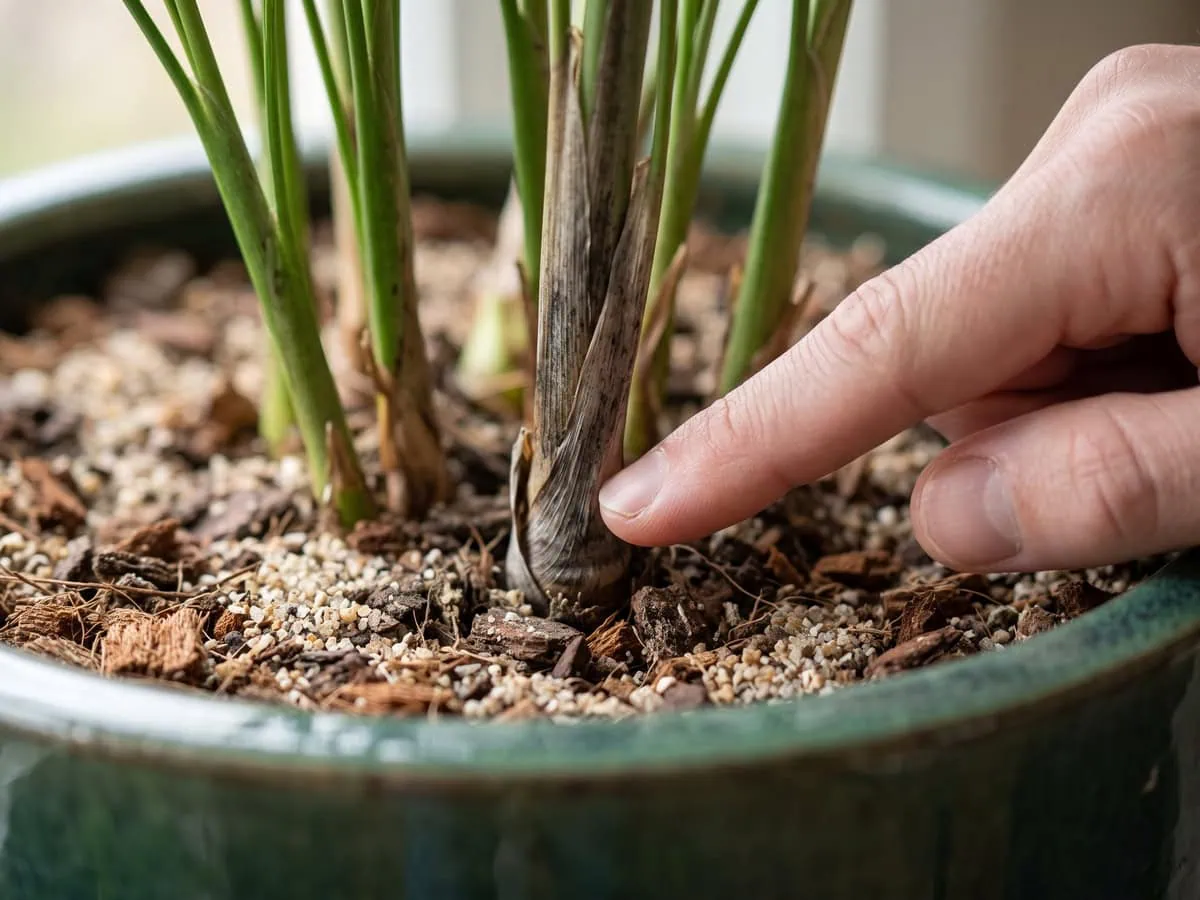
- Firm and dry at the stem base: surface staining only
- Soft and giving: the root zone, not the tips
Normal aging on the oldest, lowest fronds
The lowest fronds on a stem yellow and go brown with age, and that is the plant closing them down rather than a fault. Frontiers in Plant Science describes the same process as degreening in leaf senescence, which is the ordered loss of chlorophyll that happens at the end of a leaf’s life.
Aging browns from the whole frond inward and takes the oldest first. Tip browning starts at the leaflet ends on fronds of any age.
If the pale is spreading as speckles instead, read pale, yellowed and speckled fronds.
Common mistakes and myths about brown tips
The most repeated myth is that a browned tip recovers. It does not: readers ask “do browned parlor palm fronds ever turn green again” and the answer is no, because the marked tissue is dead and dead tissue holds its record.
Two more myths do real damage. Misting does not raise room humidity and encourages leaf infections, and moving a browning palm into stronger light scorches it, so check light placement and recovery from sun damage before the pot moves.
- Browned tip turning green again: no, the tissue is dead
- Misting to fix tips: no, it wets foliage without changing the air
Frequently asked questions about brown crispy tips
Can a plant recover from brown tips?
The plant does recover; the browned tip does not. The marked tissue is dead and stays marked, so recovery shows as new fronds opening clean rather than as old damage fading.
Correct the cause first, then judge progress by the next frond the palm opens. On a slow grower that is a matter of months, not days, so an unchanged old frond is not evidence that the correction failed.
How do you fix brown tips on palm trees?
Fix the growing conditions, not the leaf. Read the mix at 1-2 inches down, check for moving air at frond height, and look for a pale salt crust on the rim before anything is cut.
Each reading points at a different correction: more frequent watering, a move off the airflow line, or a flush at the sink. The watering routine itself is handled in full in the watering guide for this palm.
Why are my palm tips turning brown?
Brown tips follow one of four conditions: a mix that dried out, a mix that stayed wet, dry moving air, or salt built up in the pot. The tan runs inward along the leaflet here in every case.
The pattern does not name the cause on its own, which is why the three checks run in a fixed order. Take the readings before deciding which correction applies.
Should I trim off brown leaf tips?
Trim a brown tip only up to the edge of the dead tissue, and never into the green. Leaving a hair of tan is correct; nicking living tissue opens the frond and takes nutrients the palm cannot replace quickly.
Wipe the blades with 70 percent isopropyl before the first cut and again between plants. Never pull a frond off, because a pull can tear at the single growing point that stem depends on.
What to do when plant tips turn brown?
Take the three readings before the watering can comes out again. Mix moisture at 1-2 inches, air movement at frond height, and crust on the rim between them cover the causes that produce tip browning indoors.
Only then does anything come off the plant, and only dead brown tissue does. The corrective watering routine that follows a wet-mix reading belongs to the watering guide for this palm.
Does overwatering cause brown leaf tips?
Yes. A root zone held wet past the top 1-2 inches damages the fine roots, and a palm that cannot take up water browns at the leaflet tips exactly as a dry one does.
That is why the finger or dowel reading comes before any watering change. Damp at depth after a week points at drainage rather than at thirst, and watering more at that point makes the browning worse.
How do you fix indoor plant leaves turning brown and crispy?
Work through the same three readings: the mix at 1-2 inches, moving air at the leaves, and salt crust on the pot rim. Each one has its own correction, and only one of the three is a watering change.
Where a crust is present, flush the pot at the sink and move it off the airflow line; with no water store, the leaflet tips crisp first. Watering rhythm itself is covered in the watering guide for this palm.
Why do leaf tips go brown?
Tips go brown because they sit at the end of the water supply line, so any shortfall shows there first. Salt carried in the water concentrates at the same point, which is why over-fertilized and hard-watered pots brown at the tips and margins.
On the oldest, lowest fronds a slow whole-frond browning is aging instead, and that one is normal. Tip damage starts at the leaflet ends on fronds of any age.
Read, act, and win back the next frond
The three readings do the work: mix moisture, moving air, salt crust. Each has one correction. But none is a cut: the leaflet tip only records what the mix did.
Act on the one reading that came back positive, then leave the plant alone long enough for it to answer. A palm that opens one or two fronds a year answers slowly, so the next frond to unroll is the result you are waiting for, and it comes out smooth-edged and waxy rather than papery at the tip.
That is the whole of why is my parlor palm getting brown crispy tips, and it is settled at the pot. Brown tissue keeps its record, so read the mix two inches down before the snips ever come out.
Tap the button below to get more plant fixes in your Google Search results